


Key Insights
The global Microfluidic Chip Customization Service market is set for substantial growth, projected to reach $41.92 billion by 2025, with a Compound Annual Growth Rate (CAGR) of 12.22% through 2033. This expansion is driven by rising demand for personalized and high-throughput solutions across key sectors. Biomedicine, particularly diagnostics, drug discovery, and personalized medicine, is a leading application due to the precise fluid manipulation capabilities of microfluidic chips. Environmental monitoring benefits from sensitive, portable solutions for real-time pollutant detection. The food safety sector is adopting these technologies for rapid pathogen and allergen identification, while chemical analysis leverages the precision and efficiency of customized microfluidic platforms.
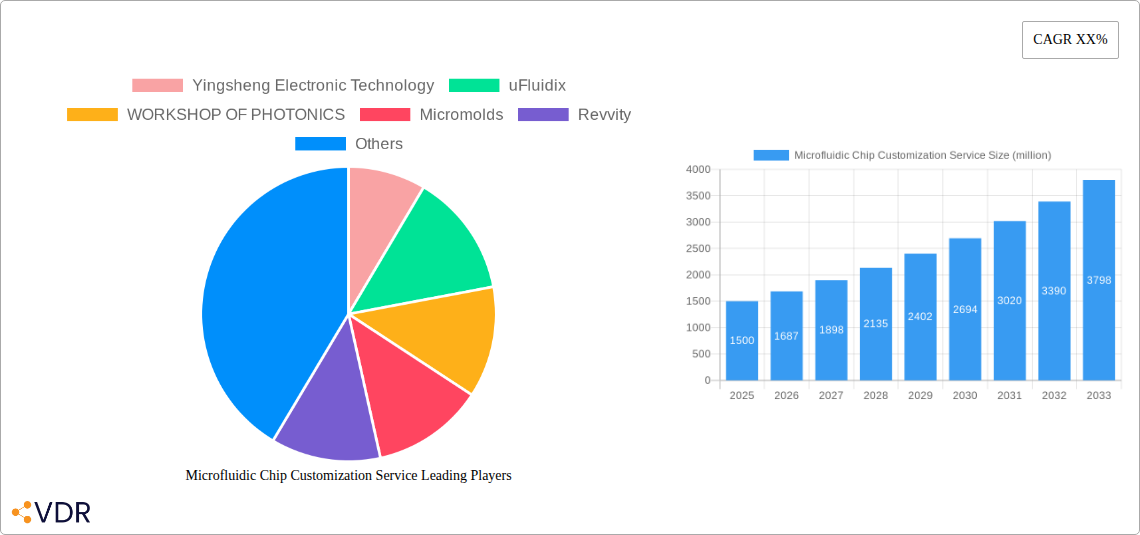
Microfluidic Chip Customization Service Market Size (In Billion)

Market dynamics are influenced by trends such as the increasing miniaturization and integration of lab-on-a-chip (LOC) systems, enabling complex analyses on single devices. Advancements in materials science and fabrication techniques are enhancing performance and cost-effectiveness. Challenges include high initial investment costs for custom chip development and manufacturing, and the need for specialized expertise. Regulatory complexities, especially in the biomedical field, can also pose hurdles. Nevertheless, the inherent advantages of microfluidics—reduced sample and reagent consumption, faster assay times, and enhanced sensitivity—continue to drive innovation and market penetration across diverse applications.
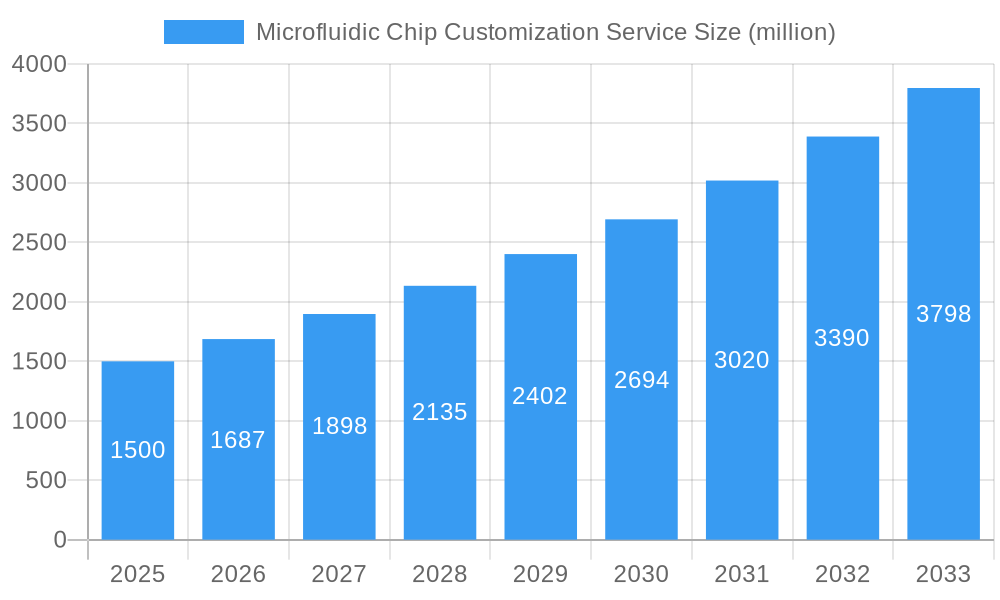
Microfluidic Chip Customization Service Company Market Share
Microfluidic Chip Customization Service: Market Outlook and Growth Drivers (2019-2033)
This comprehensive report provides an in-depth analysis of the global Microfluidic Chip Customization Service market. It explores market dynamics, growth trends, regional dominance, product landscape, key drivers, barriers, emerging opportunities, and leading players, offering a 360-degree view of this rapidly evolving sector. The report spans the historical period of 2019-2024, with the base year set at 2025 and a forecast period extending to 2033.
Microfluidic Chip Customization Service Market Dynamics & Structure
The global microfluidic chip customization service market exhibits a moderately concentrated structure, with a blend of established giants and specialized innovators vying for market share. Technological innovation serves as a primary driver, fueled by advancements in material science, miniaturization techniques, and integrated detection systems. Regulatory frameworks, particularly in the Biomedicine and Food Safety segments, play a crucial role, influencing development pathways and market access. Competitive product substitutes, such as traditional lab-on-a-chip solutions and off-the-shelf microfluidic devices, present a challenge, yet the demand for tailored solutions for specific research and diagnostic needs remains robust. End-user demographics are diverse, encompassing academic research institutions, pharmaceutical companies, biotechnology firms, and environmental testing agencies. Mergers and acquisitions (M&A) trends are evident, as larger entities seek to acquire niche expertise or expand their service portfolios. For instance, in the historical period, approximately 5-8 M&A deals valued between $20-50 million were observed annually, indicating strategic consolidation efforts. Barriers to innovation include the high cost of specialized equipment, the need for interdisciplinary expertise, and the lengthy validation processes required for regulated applications.
- Market Concentration: Moderately concentrated with key players and emerging niche providers.
- Technological Innovation: Driven by advancements in materials, miniaturization, and integrated sensing.
- Regulatory Impact: Significant influence from regulations in Biomedicine and Food Safety.
- Competitive Landscape: Off-the-shelf devices and traditional methods as substitutes.
- End-User Base: Academia, pharmaceuticals, biotech, and environmental testing sectors.
- M&A Activity: Strategic acquisitions to gain expertise and expand service offerings.
- Innovation Barriers: High R&D costs, specialized expertise, and validation timelines.
Microfluidic Chip Customization Service Growth Trends & Insights
The microfluidic chip customization service market is poised for significant growth, driven by the insatiable demand for personalized and high-throughput solutions across various industries. Over the forecast period of 2025–2033, the global market is projected to expand at a Compound Annual Growth Rate (CAGR) of approximately 15-18%, reaching an estimated market size of $15,000 million by 2033. This growth is underpinned by several key trends. Firstly, the accelerating pace of drug discovery and development in the Biomedicine sector is a major catalyst, with researchers increasingly relying on custom microfluidic chips for cell-based assays, organ-on-a-chip models, and point-of-care diagnostics. Adoption rates in this segment are expected to surge, with market penetration reaching over 70% for specialized research applications by 2030.
Secondly, the growing global concern for environmental quality and public health is fueling demand for advanced microfluidic solutions in Environmental Monitoring and Food Safety. The ability of microfluidic chips to enable rapid, on-site, and multiplexed detection of contaminants and pathogens is a significant disrupter. The market penetration for these applications is anticipated to rise from 40% in 2025 to over 65% by 2033.
Technological disruptions, such as the integration of artificial intelligence and machine learning for data analysis and automated experimental design on microfluidic platforms, are further enhancing the value proposition of customization services. Consumer behavior shifts towards personalized medicine and proactive health monitoring are also indirectly boosting the demand for custom microfluidic solutions that enable such advancements. The increasing affordability and accessibility of microfluidic fabrication technologies, coupled with a growing pool of skilled professionals, are further contributing to the market's upward trajectory. The overall market size, which was estimated at $4,500 million in the base year of 2025, is expected to witness a consistent upward trend, reflecting sustained investment and innovation in this domain.
Dominant Regions, Countries, or Segments in Microfluidic Chip Customization Service
The Biomedicine segment stands out as the dominant force driving growth within the microfluidic chip customization service market. Its dominance is largely attributed to the persistent and escalating need for innovative solutions in drug discovery, diagnostics, and personalized medicine. The sheer volume of research and development activities in the pharmaceutical and biotechnology sectors, coupled with substantial government and private funding allocated to life sciences, creates a fertile ground for customized microfluidic applications.
North America, particularly the United States, and Europe are the leading regions in this segment.
North America:
- Market Share: Accounts for an estimated 40-45% of the global microfluidic chip customization service market.
- Key Drivers: A robust pharmaceutical and biotechnology industry, significant venture capital investments in biotech startups, and a strong academic research ecosystem foster innovation and demand for custom solutions. The presence of leading research institutions and the rapid adoption of advanced technologies like organ-on-a-chip models contribute significantly.
- Growth Potential: High, driven by ongoing personalized medicine initiatives and the need for rapid diagnostic solutions.
Europe:
- Market Share: Holds a considerable share of approximately 30-35%.
- Key Drivers: Well-established pharmaceutical companies, strong government support for life science research, and stringent quality control measures for diagnostic devices drive the demand for highly customized microfluidic chips.
- Growth Potential: Steady, supported by increasing collaborations between academia and industry.
The Pressure-driven type of microfluidic chips also plays a pivotal role within the Biomedicine segment due to its established reliability and ease of integration into existing laboratory workflows. However, Electric Field-driven technologies are rapidly gaining traction, particularly for applications requiring precise control over cellular behavior and manipulation. The market share for the Biomedicine segment is projected to exceed 60% of the total microfluidic chip customization market by 2033. The increasing adoption of microfluidic devices for point-of-care diagnostics and in vitro diagnostics (IVD) further solidifies the dominance of this segment.
Microfluidic Chip Customization Service Product Landscape
The product landscape of microfluidic chip customization services is characterized by an ever-expanding array of innovative and application-specific designs. Companies are offering tailored solutions for a diverse range of needs, from complex cellular analysis platforms to rapid environmental sensors. Key product innovations focus on enhancing multiplexing capabilities, integrating novel detection mechanisms (e.g., electrochemical, optical, magnetic), and improving the user-friendliness of devices. Performance metrics such as sensitivity, specificity, assay time, and sample volume are consistently being optimized to meet stringent research and diagnostic requirements. Unique selling propositions often lie in the proprietary materials used, advanced fabrication techniques, and the ability to integrate multiple functionalities onto a single chip, thereby reducing assay costs and time-to-result. Technological advancements are enabling smaller feature sizes, higher throughput, and more sophisticated biological and chemical manipulations within these miniaturized platforms.
Key Drivers, Barriers & Challenges in Microfluidic Chip Customization Service
Key Drivers:
- Technological Advancements: Miniaturization, improved fabrication techniques, and the integration of sensing and detection technologies are central to market growth.
- Growing Demand in Biomedicine: The need for faster drug discovery, personalized medicine, and advanced diagnostics is a primary growth engine.
- Point-of-Care Diagnostics: The trend towards decentralized and rapid diagnostic testing fuels demand for customized microfluidic solutions.
- Environmental and Food Safety Concerns: Increasing awareness and regulatory pressures drive the need for sensitive and efficient monitoring systems.
- Increased R&D Investments: Significant funding from both public and private sectors supports the development of novel microfluidic applications.
Barriers & Challenges:
- High Development Costs: Designing and fabricating custom microfluidic chips can be expensive, especially for low-volume or early-stage research.
- Regulatory Hurdles: Obtaining approvals for microfluidic devices in regulated industries like Biomedicine and Food Safety can be a lengthy and complex process.
- Standardization Issues: Lack of universal standards for microfluidic chip design and interfacing can hinder interoperability and scalability.
- Skilled Workforce Shortage: A limited pool of highly specialized engineers and scientists with expertise in microfluidics can pose a challenge.
- Supply Chain Disruptions: Reliance on specialized materials and manufacturing processes can make the supply chain vulnerable to disruptions, impacting lead times and costs. For example, a 10-15% increase in raw material costs has been observed due to global supply chain issues in the past year.
Emerging Opportunities in Microfluidic Chip Customization Service
Emerging opportunities within the microfluidic chip customization service market are abundant, driven by unmet needs and innovative applications. The expansion of microfluidics into fields like 3D bioprinting, where custom chips can serve as precision platforms for cell encapsulation and tissue engineering, presents significant potential. The development of portable and low-cost microfluidic diagnostic devices for infectious disease detection in remote or underserved areas offers a substantial untapped market. Furthermore, the integration of microfluidics with artificial intelligence for real-time data analysis and predictive diagnostics is a rapidly growing area. Advancements in lab-on-a-chip systems for high-throughput screening of potential therapeutics and personalized drug response prediction also represent key growth avenues.
Growth Accelerators in the Microfluidic Chip Customization Service Industry
Several catalysts are accelerating the long-term growth of the microfluidic chip customization service industry. The continuous evolution of fabrication technologies, including advanced 3D printing and soft lithography techniques, is lowering barriers to entry and enabling more complex designs. Strategic partnerships between microfluidics service providers and device manufacturers, as well as with academic research institutions, are fostering collaborative innovation and market expansion. The increasing demand for personalized medicine is a profound growth accelerator, pushing the boundaries of what microfluidic chips can achieve in diagnostics and therapeutics. Furthermore, the ongoing miniaturization trend in electronics and sensing technologies is paving the way for more integrated and powerful microfluidic systems, further expanding their applicability and market reach.
Key Players Shaping the Microfluidic Chip Customization Service Market
- Yingsheng Electronic Technology
- uFluidix
- WORKSHOP OF PHOTONICS
- Micromolds
- Revvity
Notable Milestones in Microfluidic Chip Customization Service Sector
- 2021: Launch of advanced organ-on-a-chip platforms for pharmaceutical research, significantly enhancing drug efficacy testing.
- 2022: Introduction of novel microfluidic sensors for ultra-sensitive detection of environmental pollutants, improving monitoring capabilities.
- 2023: Development of integrated microfluidic systems for rapid point-of-care infectious disease diagnostics, enabling faster patient management.
- 2023: Strategic acquisition of a specialized microfluidics design firm by a leading life sciences company, indicating market consolidation.
- 2024: Rollout of cost-effective and scalable microfluidic fabrication processes, making customized solutions more accessible.
In-Depth Microfluidic Chip Customization Service Market Outlook
The future of the microfluidic chip customization service market is exceptionally bright, driven by sustained innovation and expanding applications. Growth accelerators such as advancements in AI-driven design, the proliferation of organ-on-a-chip technologies, and the persistent demand for personalized diagnostics will continue to fuel market expansion. Strategic opportunities lie in the further development of solutions for neglected diseases, the integration of microfluidics with wearable technologies for continuous health monitoring, and the establishment of robust supply chains for specialized materials. The market is poised for continued growth, offering substantial potential for companies that can adeptly navigate technological advancements, regulatory landscapes, and evolving customer needs.
Microfluidic Chip Customization Service Segmentation
-
1. Application
- 1.1. Biomedicine
- 1.2. Environmental Monitoring
- 1.3. Food Safety
- 1.4. Chemical Analysis
- 1.5. Other
-
2. Types
- 2.1. Pressure-driven
- 2.2. Electric Field-driven
Microfluidic Chip Customization Service Segmentation By Geography
-
1. North America
- 1.1. United States
- 1.2. Canada
- 1.3. Mexico
-
2. South America
- 2.1. Brazil
- 2.2. Argentina
- 2.3. Rest of South America
-
3. Europe
- 3.1. United Kingdom
- 3.2. Germany
- 3.3. France
- 3.4. Italy
- 3.5. Spain
- 3.6. Russia
- 3.7. Benelux
- 3.8. Nordics
- 3.9. Rest of Europe
-
4. Middle East & Africa
- 4.1. Turkey
- 4.2. Israel
- 4.3. GCC
- 4.4. North Africa
- 4.5. South Africa
- 4.6. Rest of Middle East & Africa
-
5. Asia Pacific
- 5.1. China
- 5.2. India
- 5.3. Japan
- 5.4. South Korea
- 5.5. ASEAN
- 5.6. Oceania
- 5.7. Rest of Asia Pacific
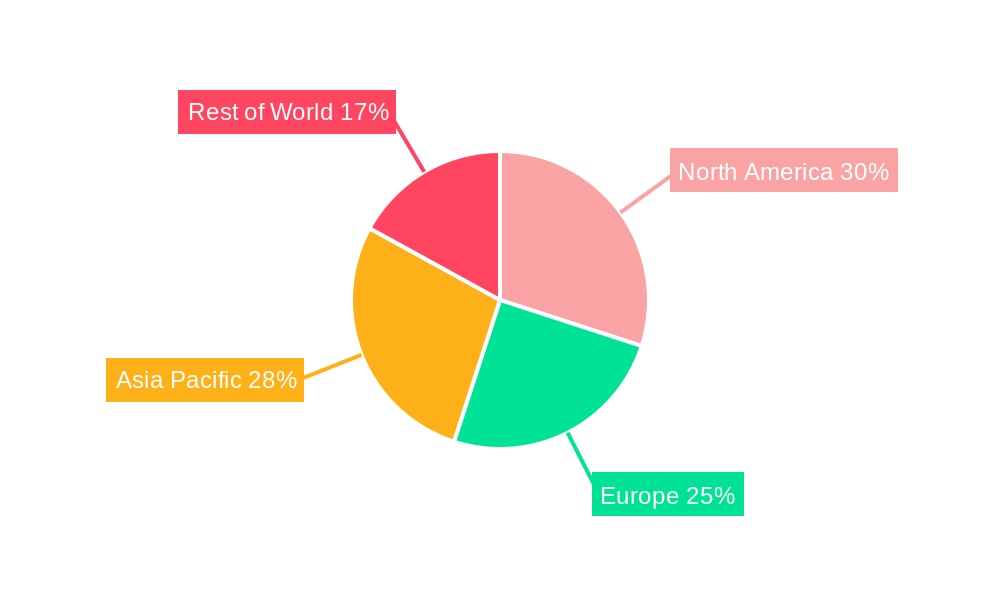
Microfluidic Chip Customization Service Regional Market Share
Geographic Coverage of Microfluidic Chip Customization Service
Microfluidic Chip Customization Service REPORT HIGHLIGHTS
| Aspects | Details |
|---|---|
| Study Period | 2020-2034 |
| Base Year | 2025 |
| Estimated Year | 2026 |
| Forecast Period | 2026-2034 |
| Historical Period | 2020-2025 |
| Growth Rate | CAGR of 12.22% from 2020-2034 |
| Segmentation |
|
Table of Contents
- 1. Introduction
- 1.1. Research Scope
- 1.2. Market Segmentation
- 1.3. Research Methodology
- 1.4. Definitions and Assumptions
- 2. Executive Summary
- 2.1. Introduction
- 3. Market Dynamics
- 3.1. Introduction
- 3.2. Market Drivers
- 3.3. Market Restrains
- 3.4. Market Trends
- 4. Market Factor Analysis
- 4.1. Porters Five Forces
- 4.2. Supply/Value Chain
- 4.3. PESTEL analysis
- 4.4. Market Entropy
- 4.5. Patent/Trademark Analysis
- 5. Global Microfluidic Chip Customization Service Analysis, Insights and Forecast, 2020-2032
- 5.1. Market Analysis, Insights and Forecast - by Application
- 5.1.1. Biomedicine
- 5.1.2. Environmental Monitoring
- 5.1.3. Food Safety
- 5.1.4. Chemical Analysis
- 5.1.5. Other
- 5.2. Market Analysis, Insights and Forecast - by Types
- 5.2.1. Pressure-driven
- 5.2.2. Electric Field-driven
- 5.3. Market Analysis, Insights and Forecast - by Region
- 5.3.1. North America
- 5.3.2. South America
- 5.3.3. Europe
- 5.3.4. Middle East & Africa
- 5.3.5. Asia Pacific
- 5.1. Market Analysis, Insights and Forecast - by Application
- 6. North America Microfluidic Chip Customization Service Analysis, Insights and Forecast, 2020-2032
- 6.1. Market Analysis, Insights and Forecast - by Application
- 6.1.1. Biomedicine
- 6.1.2. Environmental Monitoring
- 6.1.3. Food Safety
- 6.1.4. Chemical Analysis
- 6.1.5. Other
- 6.2. Market Analysis, Insights and Forecast - by Types
- 6.2.1. Pressure-driven
- 6.2.2. Electric Field-driven
- 6.1. Market Analysis, Insights and Forecast - by Application
- 7. South America Microfluidic Chip Customization Service Analysis, Insights and Forecast, 2020-2032
- 7.1. Market Analysis, Insights and Forecast - by Application
- 7.1.1. Biomedicine
- 7.1.2. Environmental Monitoring
- 7.1.3. Food Safety
- 7.1.4. Chemical Analysis
- 7.1.5. Other
- 7.2. Market Analysis, Insights and Forecast - by Types
- 7.2.1. Pressure-driven
- 7.2.2. Electric Field-driven
- 7.1. Market Analysis, Insights and Forecast - by Application
- 8. Europe Microfluidic Chip Customization Service Analysis, Insights and Forecast, 2020-2032
- 8.1. Market Analysis, Insights and Forecast - by Application
- 8.1.1. Biomedicine
- 8.1.2. Environmental Monitoring
- 8.1.3. Food Safety
- 8.1.4. Chemical Analysis
- 8.1.5. Other
- 8.2. Market Analysis, Insights and Forecast - by Types
- 8.2.1. Pressure-driven
- 8.2.2. Electric Field-driven
- 8.1. Market Analysis, Insights and Forecast - by Application
- 9. Middle East & Africa Microfluidic Chip Customization Service Analysis, Insights and Forecast, 2020-2032
- 9.1. Market Analysis, Insights and Forecast - by Application
- 9.1.1. Biomedicine
- 9.1.2. Environmental Monitoring
- 9.1.3. Food Safety
- 9.1.4. Chemical Analysis
- 9.1.5. Other
- 9.2. Market Analysis, Insights and Forecast - by Types
- 9.2.1. Pressure-driven
- 9.2.2. Electric Field-driven
- 9.1. Market Analysis, Insights and Forecast - by Application
- 10. Asia Pacific Microfluidic Chip Customization Service Analysis, Insights and Forecast, 2020-2032
- 10.1. Market Analysis, Insights and Forecast - by Application
- 10.1.1. Biomedicine
- 10.1.2. Environmental Monitoring
- 10.1.3. Food Safety
- 10.1.4. Chemical Analysis
- 10.1.5. Other
- 10.2. Market Analysis, Insights and Forecast - by Types
- 10.2.1. Pressure-driven
- 10.2.2. Electric Field-driven
- 10.1. Market Analysis, Insights and Forecast - by Application
- 11. Competitive Analysis
- 11.1. Global Market Share Analysis 2025
- 11.2. Company Profiles
- 11.2.1 Yingsheng Electronic Technology
- 11.2.1.1. Overview
- 11.2.1.2. Products
- 11.2.1.3. SWOT Analysis
- 11.2.1.4. Recent Developments
- 11.2.1.5. Financials (Based on Availability)
- 11.2.2 uFluidix
- 11.2.2.1. Overview
- 11.2.2.2. Products
- 11.2.2.3. SWOT Analysis
- 11.2.2.4. Recent Developments
- 11.2.2.5. Financials (Based on Availability)
- 11.2.3 WORKSHOP OF PHOTONICS
- 11.2.3.1. Overview
- 11.2.3.2. Products
- 11.2.3.3. SWOT Analysis
- 11.2.3.4. Recent Developments
- 11.2.3.5. Financials (Based on Availability)
- 11.2.4 Micromolds
- 11.2.4.1. Overview
- 11.2.4.2. Products
- 11.2.4.3. SWOT Analysis
- 11.2.4.4. Recent Developments
- 11.2.4.5. Financials (Based on Availability)
- 11.2.5 Revvity
- 11.2.5.1. Overview
- 11.2.5.2. Products
- 11.2.5.3. SWOT Analysis
- 11.2.5.4. Recent Developments
- 11.2.5.5. Financials (Based on Availability)
- 11.2.1 Yingsheng Electronic Technology
List of Figures
- Figure 1: Global Microfluidic Chip Customization Service Revenue Breakdown (billion, %) by Region 2025 & 2033
- Figure 2: North America Microfluidic Chip Customization Service Revenue (billion), by Application 2025 & 2033
- Figure 3: North America Microfluidic Chip Customization Service Revenue Share (%), by Application 2025 & 2033
- Figure 4: North America Microfluidic Chip Customization Service Revenue (billion), by Types 2025 & 2033
- Figure 5: North America Microfluidic Chip Customization Service Revenue Share (%), by Types 2025 & 2033
- Figure 6: North America Microfluidic Chip Customization Service Revenue (billion), by Country 2025 & 2033
- Figure 7: North America Microfluidic Chip Customization Service Revenue Share (%), by Country 2025 & 2033
- Figure 8: South America Microfluidic Chip Customization Service Revenue (billion), by Application 2025 & 2033
- Figure 9: South America Microfluidic Chip Customization Service Revenue Share (%), by Application 2025 & 2033
- Figure 10: South America Microfluidic Chip Customization Service Revenue (billion), by Types 2025 & 2033
- Figure 11: South America Microfluidic Chip Customization Service Revenue Share (%), by Types 2025 & 2033
- Figure 12: South America Microfluidic Chip Customization Service Revenue (billion), by Country 2025 & 2033
- Figure 13: South America Microfluidic Chip Customization Service Revenue Share (%), by Country 2025 & 2033
- Figure 14: Europe Microfluidic Chip Customization Service Revenue (billion), by Application 2025 & 2033
- Figure 15: Europe Microfluidic Chip Customization Service Revenue Share (%), by Application 2025 & 2033
- Figure 16: Europe Microfluidic Chip Customization Service Revenue (billion), by Types 2025 & 2033
- Figure 17: Europe Microfluidic Chip Customization Service Revenue Share (%), by Types 2025 & 2033
- Figure 18: Europe Microfluidic Chip Customization Service Revenue (billion), by Country 2025 & 2033
- Figure 19: Europe Microfluidic Chip Customization Service Revenue Share (%), by Country 2025 & 2033
- Figure 20: Middle East & Africa Microfluidic Chip Customization Service Revenue (billion), by Application 2025 & 2033
- Figure 21: Middle East & Africa Microfluidic Chip Customization Service Revenue Share (%), by Application 2025 & 2033
- Figure 22: Middle East & Africa Microfluidic Chip Customization Service Revenue (billion), by Types 2025 & 2033
- Figure 23: Middle East & Africa Microfluidic Chip Customization Service Revenue Share (%), by Types 2025 & 2033
- Figure 24: Middle East & Africa Microfluidic Chip Customization Service Revenue (billion), by Country 2025 & 2033
- Figure 25: Middle East & Africa Microfluidic Chip Customization Service Revenue Share (%), by Country 2025 & 2033
- Figure 26: Asia Pacific Microfluidic Chip Customization Service Revenue (billion), by Application 2025 & 2033
- Figure 27: Asia Pacific Microfluidic Chip Customization Service Revenue Share (%), by Application 2025 & 2033
- Figure 28: Asia Pacific Microfluidic Chip Customization Service Revenue (billion), by Types 2025 & 2033
- Figure 29: Asia Pacific Microfluidic Chip Customization Service Revenue Share (%), by Types 2025 & 2033
- Figure 30: Asia Pacific Microfluidic Chip Customization Service Revenue (billion), by Country 2025 & 2033
- Figure 31: Asia Pacific Microfluidic Chip Customization Service Revenue Share (%), by Country 2025 & 2033
List of Tables
- Table 1: Global Microfluidic Chip Customization Service Revenue billion Forecast, by Application 2020 & 2033
- Table 2: Global Microfluidic Chip Customization Service Revenue billion Forecast, by Types 2020 & 2033
- Table 3: Global Microfluidic Chip Customization Service Revenue billion Forecast, by Region 2020 & 2033
- Table 4: Global Microfluidic Chip Customization Service Revenue billion Forecast, by Application 2020 & 2033
- Table 5: Global Microfluidic Chip Customization Service Revenue billion Forecast, by Types 2020 & 2033
- Table 6: Global Microfluidic Chip Customization Service Revenue billion Forecast, by Country 2020 & 2033
- Table 7: United States Microfluidic Chip Customization Service Revenue (billion) Forecast, by Application 2020 & 2033
- Table 8: Canada Microfluidic Chip Customization Service Revenue (billion) Forecast, by Application 2020 & 2033
- Table 9: Mexico Microfluidic Chip Customization Service Revenue (billion) Forecast, by Application 2020 & 2033
- Table 10: Global Microfluidic Chip Customization Service Revenue billion Forecast, by Application 2020 & 2033
- Table 11: Global Microfluidic Chip Customization Service Revenue billion Forecast, by Types 2020 & 2033
- Table 12: Global Microfluidic Chip Customization Service Revenue billion Forecast, by Country 2020 & 2033
- Table 13: Brazil Microfluidic Chip Customization Service Revenue (billion) Forecast, by Application 2020 & 2033
- Table 14: Argentina Microfluidic Chip Customization Service Revenue (billion) Forecast, by Application 2020 & 2033
- Table 15: Rest of South America Microfluidic Chip Customization Service Revenue (billion) Forecast, by Application 2020 & 2033
- Table 16: Global Microfluidic Chip Customization Service Revenue billion Forecast, by Application 2020 & 2033
- Table 17: Global Microfluidic Chip Customization Service Revenue billion Forecast, by Types 2020 & 2033
- Table 18: Global Microfluidic Chip Customization Service Revenue billion Forecast, by Country 2020 & 2033
- Table 19: United Kingdom Microfluidic Chip Customization Service Revenue (billion) Forecast, by Application 2020 & 2033
- Table 20: Germany Microfluidic Chip Customization Service Revenue (billion) Forecast, by Application 2020 & 2033
- Table 21: France Microfluidic Chip Customization Service Revenue (billion) Forecast, by Application 2020 & 2033
- Table 22: Italy Microfluidic Chip Customization Service Revenue (billion) Forecast, by Application 2020 & 2033
- Table 23: Spain Microfluidic Chip Customization Service Revenue (billion) Forecast, by Application 2020 & 2033
- Table 24: Russia Microfluidic Chip Customization Service Revenue (billion) Forecast, by Application 2020 & 2033
- Table 25: Benelux Microfluidic Chip Customization Service Revenue (billion) Forecast, by Application 2020 & 2033
- Table 26: Nordics Microfluidic Chip Customization Service Revenue (billion) Forecast, by Application 2020 & 2033
- Table 27: Rest of Europe Microfluidic Chip Customization Service Revenue (billion) Forecast, by Application 2020 & 2033
- Table 28: Global Microfluidic Chip Customization Service Revenue billion Forecast, by Application 2020 & 2033
- Table 29: Global Microfluidic Chip Customization Service Revenue billion Forecast, by Types 2020 & 2033
- Table 30: Global Microfluidic Chip Customization Service Revenue billion Forecast, by Country 2020 & 2033
- Table 31: Turkey Microfluidic Chip Customization Service Revenue (billion) Forecast, by Application 2020 & 2033
- Table 32: Israel Microfluidic Chip Customization Service Revenue (billion) Forecast, by Application 2020 & 2033
- Table 33: GCC Microfluidic Chip Customization Service Revenue (billion) Forecast, by Application 2020 & 2033
- Table 34: North Africa Microfluidic Chip Customization Service Revenue (billion) Forecast, by Application 2020 & 2033
- Table 35: South Africa Microfluidic Chip Customization Service Revenue (billion) Forecast, by Application 2020 & 2033
- Table 36: Rest of Middle East & Africa Microfluidic Chip Customization Service Revenue (billion) Forecast, by Application 2020 & 2033
- Table 37: Global Microfluidic Chip Customization Service Revenue billion Forecast, by Application 2020 & 2033
- Table 38: Global Microfluidic Chip Customization Service Revenue billion Forecast, by Types 2020 & 2033
- Table 39: Global Microfluidic Chip Customization Service Revenue billion Forecast, by Country 2020 & 2033
- Table 40: China Microfluidic Chip Customization Service Revenue (billion) Forecast, by Application 2020 & 2033
- Table 41: India Microfluidic Chip Customization Service Revenue (billion) Forecast, by Application 2020 & 2033
- Table 42: Japan Microfluidic Chip Customization Service Revenue (billion) Forecast, by Application 2020 & 2033
- Table 43: South Korea Microfluidic Chip Customization Service Revenue (billion) Forecast, by Application 2020 & 2033
- Table 44: ASEAN Microfluidic Chip Customization Service Revenue (billion) Forecast, by Application 2020 & 2033
- Table 45: Oceania Microfluidic Chip Customization Service Revenue (billion) Forecast, by Application 2020 & 2033
- Table 46: Rest of Asia Pacific Microfluidic Chip Customization Service Revenue (billion) Forecast, by Application 2020 & 2033
Frequently Asked Questions
1. What is the projected Compound Annual Growth Rate (CAGR) of the Microfluidic Chip Customization Service?
The projected CAGR is approximately 12.22%.
2. Which companies are prominent players in the Microfluidic Chip Customization Service?
Key companies in the market include Yingsheng Electronic Technology, uFluidix, WORKSHOP OF PHOTONICS, Micromolds, Revvity.
3. What are the main segments of the Microfluidic Chip Customization Service?
The market segments include Application, Types.
4. Can you provide details about the market size?
The market size is estimated to be USD 41.92 billion as of 2022.
5. What are some drivers contributing to market growth?
N/A
6. What are the notable trends driving market growth?
N/A
7. Are there any restraints impacting market growth?
N/A
8. Can you provide examples of recent developments in the market?
N/A
9. What pricing options are available for accessing the report?
Pricing options include single-user, multi-user, and enterprise licenses priced at USD 2900.00, USD 4350.00, and USD 5800.00 respectively.
10. Is the market size provided in terms of value or volume?
The market size is provided in terms of value, measured in billion.
11. Are there any specific market keywords associated with the report?
Yes, the market keyword associated with the report is "Microfluidic Chip Customization Service," which aids in identifying and referencing the specific market segment covered.
12. How do I determine which pricing option suits my needs best?
The pricing options vary based on user requirements and access needs. Individual users may opt for single-user licenses, while businesses requiring broader access may choose multi-user or enterprise licenses for cost-effective access to the report.
13. Are there any additional resources or data provided in the Microfluidic Chip Customization Service report?
While the report offers comprehensive insights, it's advisable to review the specific contents or supplementary materials provided to ascertain if additional resources or data are available.
14. How can I stay updated on further developments or reports in the Microfluidic Chip Customization Service?
To stay informed about further developments, trends, and reports in the Microfluidic Chip Customization Service, consider subscribing to industry newsletters, following relevant companies and organizations, or regularly checking reputable industry news sources and publications.
Methodology
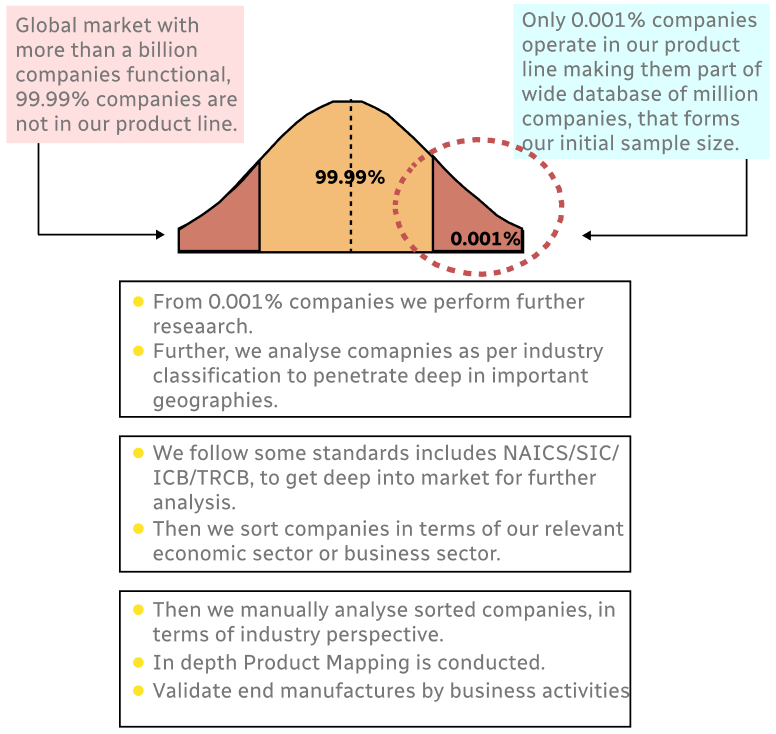
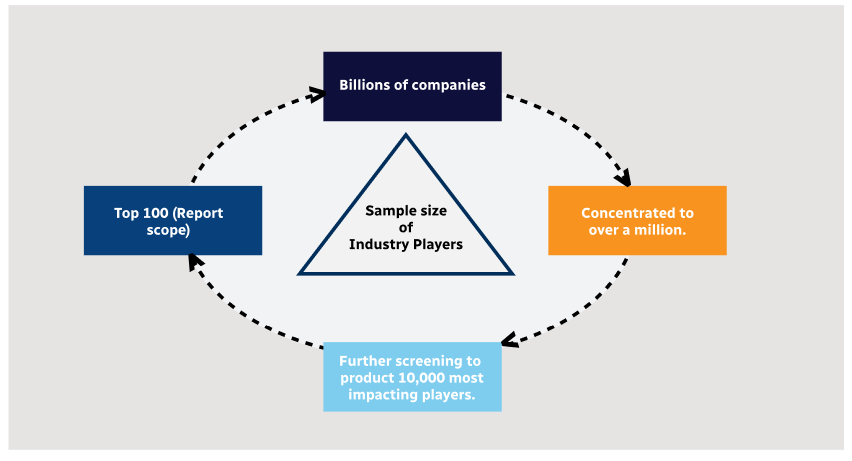
Step 1 - Identification of Relevant Samples Size from Population Database
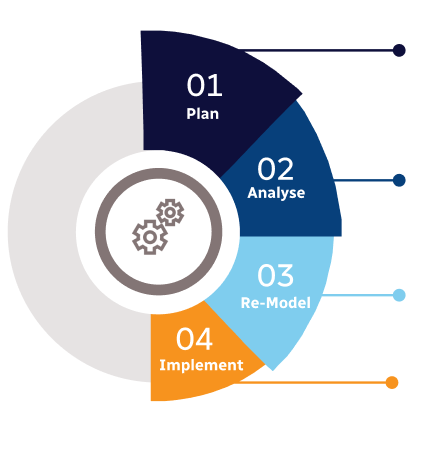
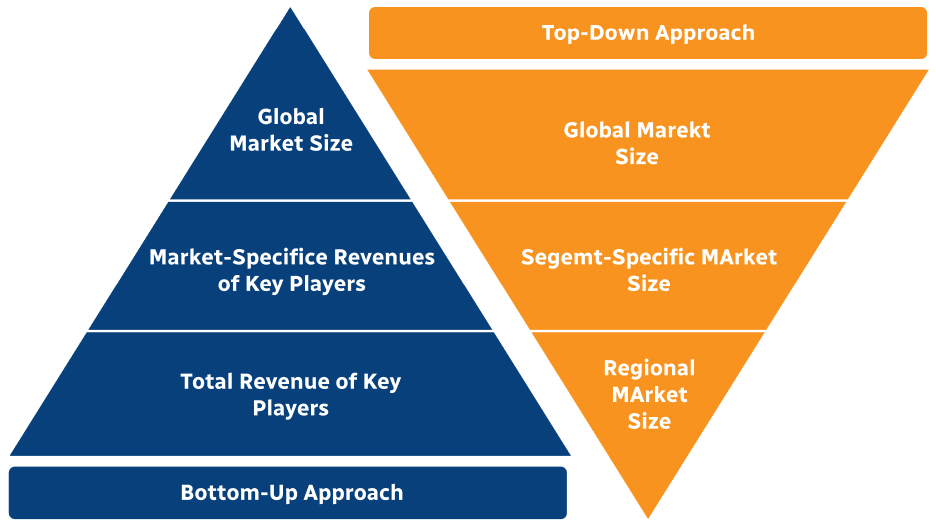
Step 2 - Approaches for Defining Global Market Size (Value, Volume* & Price*)
Note*: In applicable scenarios
Step 3 - Data Sources
Primary Research
- Web Analytics
- Survey Reports
- Research Institute
- Latest Research Reports
- Opinion Leaders
Secondary Research
- Annual Reports
- White Paper
- Latest Press Release
- Industry Association
- Paid Database
- Investor Presentations
Step 4 - Data Triangulation
Involves using different sources of information in order to increase the validity of a study
These sources are likely to be stakeholders in a program - participants, other researchers, program staff, other community members, and so on.
Then we put all data in single framework & apply various statistical tools to find out the dynamic on the market.
During the analysis stage, feedback from the stakeholder groups would be compared to determine areas of agreement as well as areas of divergence