


Key Insights
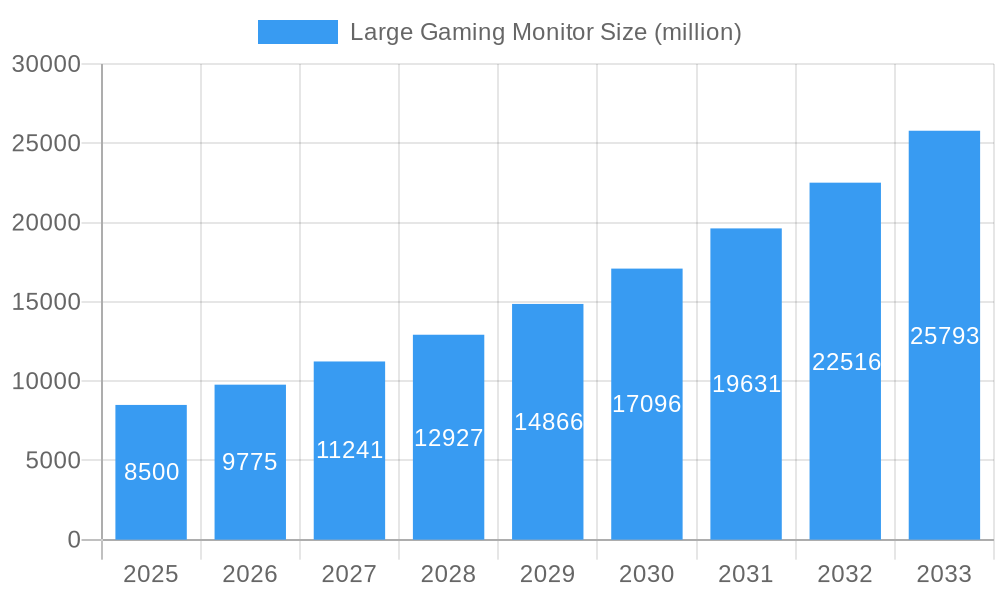
The global large gaming monitor market is poised for substantial expansion, projected to reach an estimated market size of $8,500 million by 2025, with a robust Compound Annual Growth Rate (CAGR) of 15% anticipated throughout the forecast period (2025-2033). This remarkable growth is underpinned by several key drivers, most notably the escalating popularity of e-sports and competitive gaming worldwide, which fuels a continuous demand for high-performance, immersive display solutions. The increasing disposable income in emerging economies further contributes to market expansion as more consumers can afford premium gaming peripherals. Technological advancements, such as the integration of higher refresh rates, lower response times, and advanced display technologies like OLED and Mini-LED, are also pivotal in driving consumer adoption of larger screen sizes that offer a more engaging and competitive gaming experience. The shift towards online sales channels continues to dominate, facilitated by the convenience of e-commerce platforms and the wider reach they provide to consumers globally, while offline sales remain relevant for consumers who prefer hands-on experience before purchasing.
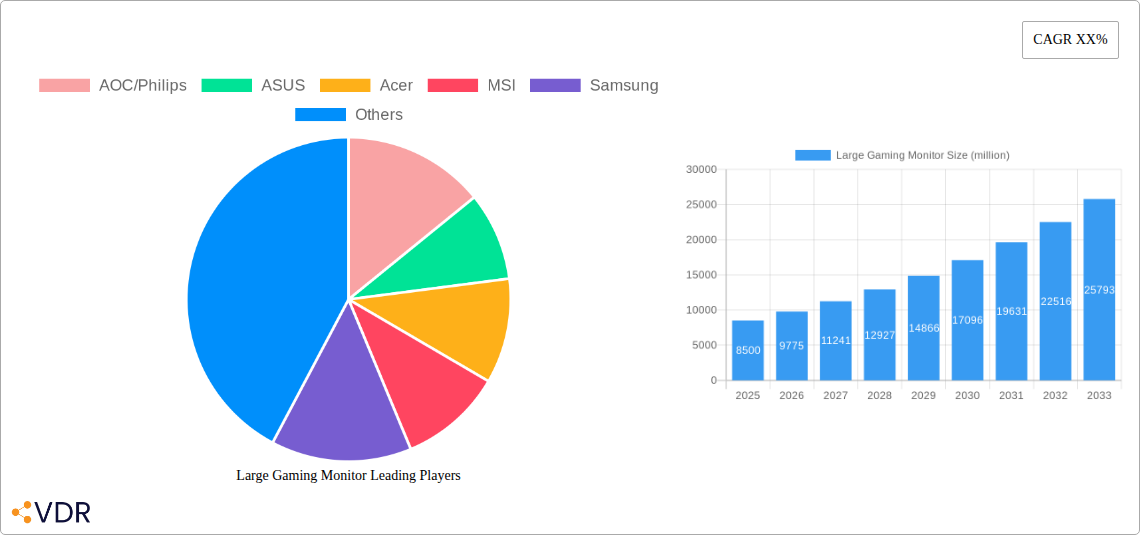
Large Gaming Monitor Market Size (In Billion)

The market for large gaming monitors is characterized by distinct trends and some restraining factors that warrant attention. Emerging trends include the growing preference for ultra-wide aspect ratios, curved displays for enhanced immersion, and smart monitor functionalities that blend gaming with productivity and entertainment. The increasing adoption of cloud gaming services also indirectly supports the demand for high-fidelity displays capable of showcasing the detailed graphics offered by these platforms. However, the market faces restraints such as the high cost associated with premium gaming monitor technologies, which can limit accessibility for budget-conscious gamers. Supply chain disruptions and the increasing price of raw materials for display manufacturing can also impact production costs and ultimately, consumer prices. Despite these challenges, the concerted efforts by leading companies like ASUS, Acer, MSI, Samsung, and Dell to innovate and introduce competitive offerings across various screen sizes, including 27-inch and 32-inch segments, are expected to drive sustained market growth. The strategic presence and expansion plans of these key players across major regions like Asia Pacific, North America, and Europe are crucial for capturing a significant share of this dynamic market.
Large Gaming Monitor Company Market Share
Large Gaming Monitor Market Dynamics & Structure
The large gaming monitor market is characterized by a dynamic and moderately concentrated competitive landscape, with key players like Samsung, LG, ASUS, and Acer holding significant market shares. Technological innovation is the primary driver, fueled by the relentless pursuit of higher refresh rates, lower response times, advanced display technologies (OLED, Mini-LED), and enhanced color accuracy to cater to the demands of professional gamers and esports enthusiasts. Regulatory frameworks primarily revolve around energy efficiency standards and display safety certifications, with minimal direct impact on market entry. Competitive product substitutes include high-end TVs with gaming modes, but dedicated gaming monitors offer superior performance and specialized features. End-user demographics are increasingly skewing towards younger, tech-savvy consumers aged 18-35 who are actively engaged in PC gaming, esports, and content creation. Mergers and acquisitions (M&A) have been sporadic, with companies focusing more on organic growth and product development.
- Market Concentration: Moderately concentrated, with top 5 players estimated to hold over 50% of the market share by 2025.
- Technological Innovation Drivers: High refresh rates (240Hz+), low response times (1ms GTG), OLED and Mini-LED technology adoption, HDR support, and variable refresh rate technologies (G-Sync, FreeSync).
- Regulatory Frameworks: Primarily focused on energy efficiency (e.g., Energy Star) and safety certifications.
- Competitive Product Substitutes: High-end televisions with gaming features, VR headsets.
- End-User Demographics: Predominantly males aged 18-35, professional gamers, streamers, esports athletes, and PC enthusiasts.
- M&A Trends: Limited, with strategic partnerships and technology licensing being more prevalent.
Large Gaming Monitor Growth Trends & Insights
The large gaming monitor market is poised for substantial growth, driven by an escalating global demand for immersive and high-performance gaming experiences. The market size, projected to reach an estimated $10,500 million units by 2025, is expected to witness a Compound Annual Growth Rate (CAGR) of 14.8% during the forecast period of 2025–2033. This robust expansion is fueled by an increasing adoption rate of gaming PCs and consoles, coupled with a growing appreciation for premium display technologies among a wider consumer base. Technological disruptions, such as the widespread integration of OLED and Mini-LED panels, are revolutionizing visual fidelity, offering unparalleled contrast ratios and vibrant color reproduction that significantly enhance gameplay. Furthermore, the burgeoning esports industry, with its escalating viewership and professional leagues, creates a continuous demand for top-tier gaming peripherals, including large gaming monitors that provide a competitive edge.
Consumer behavior shifts are also playing a pivotal role. Gamers are increasingly willing to invest in high-end equipment that elevates their gaming sessions, moving beyond basic functionality to prioritize features that offer visual superiority and responsiveness. The rise of content creation, including live streaming and video editing, further amplifies the demand for large, color-accurate displays. The 27-inch segment currently dominates market penetration, projected to account for approximately 45% of the total market share by 2025, due to its optimal balance of screen real estate and desk footprint. However, the 32-inch segment is rapidly gaining traction, anticipated to grow at a CAGR of 17.2% during the forecast period, as gamers seek more expansive and immersive viewing experiences. The "Others" category, encompassing sizes above 32 inches and ultrawide formats, also presents a significant growth opportunity, albeit from a smaller base, as these displays cater to a niche but highly engaged segment of enthusiasts. Online sales channels have become increasingly dominant, accounting for an estimated 62% of total sales in 2025, reflecting the convenience and competitive pricing offered through e-commerce platforms. Offline sales, while still significant, are expected to see a slower growth rate as brick-and-mortar retailers adapt to omnichannel strategies. The continuous evolution of gaming genres, from fast-paced shooters to visually stunning RPGs, necessitates display technologies that can keep pace, driving innovation and consumer upgrades.
Dominant Regions, Countries, or Segments in Large Gaming Monitor
The Asia-Pacific region is poised to maintain its dominance in the global large gaming monitor market, driven by a confluence of strong economic growth, a rapidly expanding middle class with increasing disposable income, and a deeply ingrained gaming culture. Within this region, China stands out as the leading country, representing an estimated 35% of the global market share by 2025. This dominance is underpinned by a massive consumer base actively participating in PC gaming and esports, supported by robust government initiatives promoting digital entertainment and technological advancement. The availability of a vast manufacturing ecosystem also contributes to competitive pricing and product accessibility. The 27-inch segment is the primary growth driver within the application categories, projected to capture 48% of the Asia-Pacific market share by 2025. This size offers an ideal balance between immersive visuals and practical desk space, appealing to a broad spectrum of gamers, from casual players to aspiring professionals.
Online Sales in the Asia-Pacific region, particularly in China, are expected to account for approximately 68% of total sales by 2025, a testament to the widespread adoption of e-commerce platforms and the preference for competitive online pricing. Key drivers for this segment include the convenience of doorstep delivery, extensive product comparison capabilities, and exclusive online promotions. Furthermore, the burgeoning esports infrastructure, with numerous professional gaming arenas and online tournaments, consistently fuels the demand for high-performance gaming monitors. Economic policies in countries like South Korea and Japan, which have long-standing gaming traditions and significant R&D investments, also contribute to the region's leadership. The availability of advanced display technologies, such as OLED and high refresh rate panels, at relatively more accessible price points compared to other regions, further bolsters market growth. The 32-inch segment is also experiencing significant growth in the Asia-Pacific, with a projected CAGR of 16.5% from 2025 to 2033, as gamers increasingly seek larger displays for an even more immersive experience. The rapid digitalization across emerging economies within the region is creating new consumer segments eager to adopt gaming as a form of entertainment and social interaction, further solidifying the Asia-Pacific's leadership in the large gaming monitor market.
Large Gaming Monitor Product Landscape
The large gaming monitor product landscape is defined by relentless innovation focused on delivering unparalleled visual fidelity and responsiveness. Key advancements include the widespread adoption of OLED technology, offering perfect blacks and infinite contrast, alongside the emerging dominance of Mini-LED backlighting in LCD panels for enhanced brightness and HDR performance. Refresh rates are pushing past 240Hz, with some models reaching 360Hz, providing exceptionally smooth motion crucial for competitive play. Response times are as low as 1ms GTG, virtually eliminating motion blur. High dynamic range (HDR) support, with HDR1000 and beyond, is becoming standard, offering a wider spectrum of colors and greater contrast. Innovations also extend to ergonomic designs, with advanced stands offering extensive adjustability, and smart features like built-in KVM switches and customizable RGB lighting.
Key Drivers, Barriers & Challenges in Large Gaming Monitor
Key Drivers:
- Growing Popularity of Esports and Competitive Gaming: The massive global viewership and participation in esports demand high-performance, responsive displays.
- Advancements in Display Technology: Innovations like OLED, Mini-LED, higher refresh rates, and lower response times directly enhance the gaming experience.
- Increasing Disposable Income and Gaming PC Adoption: More consumers can afford premium gaming peripherals as PC gaming gains traction.
- Content Creation and Streaming Boom: Streamers and content creators require large, high-resolution, color-accurate monitors.
Key Barriers & Challenges:
- High Cost of Premium Technology: Cutting-edge display technologies, especially OLED, still carry a premium price tag, limiting accessibility for budget-conscious consumers.
- Supply Chain Disruptions and Component Shortages: Geopolitical events and manufacturing challenges can impact component availability and pricing.
- Intense Competition and Price Wars: The market is highly competitive, leading to pressure on profit margins.
- Rapid Technological Obsolescence: The fast pace of innovation means newer, better models can quickly make existing ones appear outdated.
- Energy Consumption Concerns: High-performance monitors can be energy-intensive, potentially facing future regulatory scrutiny.
Emerging Opportunities in Large Gaming Monitor
Emerging opportunities in the large gaming monitor sector lie in catering to the growing demand for ultra-wide and super ultra-wide displays, which offer an even more immersive panoramic gaming experience and significant productivity benefits for multitasking. The integration of advanced AI-powered features, such as intelligent image optimization based on game genre and real-time performance analysis, presents a novel avenue for product differentiation. Furthermore, the development of more sustainable and energy-efficient high-performance monitors, utilizing eco-friendly materials and advanced power management, will appeal to an increasingly environmentally conscious consumer base. The expansion of gaming into cloud-based services also opens up opportunities for monitors optimized for low-latency streaming and seamless connectivity.
Growth Accelerators in the Large Gaming Monitor Industry
The large gaming monitor industry's long-term growth is being significantly accelerated by strategic partnerships between monitor manufacturers and game developers, leading to optimized display settings and features tailored for specific AAA titles. Technological breakthroughs in panel manufacturing, enabling higher yields and reduced production costs for advanced technologies like OLED and Mini-LED, are crucial for driving wider adoption. Furthermore, the increasing presence of gaming in mainstream entertainment, with major events and brand endorsements, is expanding the addressable market. Market expansion strategies targeting emerging economies with a growing middle class and increasing internet penetration will also serve as significant growth catalysts.
Key Players Shaping the Large Gaming Monitor Market
- Samsung
- LG
- ASUS
- Acer
- MSI
- Dell
- Lenovo
- HP
- AOC/Philips
- Viewsonic
- BenQ ZOWIE
- Gigabyte
- Razer
- HKC
- SANC
Notable Milestones in Large Gaming Monitor Sector
- 2019: Introduction of 240Hz OLED gaming monitors, setting a new benchmark for response times and visual quality.
- 2020: Increased adoption of G-Sync Ultimate and FreeSync Premium Pro certifications, ensuring advanced variable refresh rate performance.
- 2021: Rise of Mini-LED technology in gaming monitors, offering superior contrast and brightness over traditional LCDs.
- 2022: Significant growth in the 32-inch gaming monitor segment and the emergence of super ultra-wide displays (e.g., 49-inch).
- 2023: Enhanced HDR capabilities becoming a standard feature, with HDR1000 and beyond widely implemented.
- 2024: Increased focus on sustainability in manufacturing and product design.
In-Depth Large Gaming Monitor Market Outlook
The future of the large gaming monitor market is exceptionally bright, driven by an ongoing convergence of technological innovation and escalating consumer demand for premium gaming experiences. Key growth accelerators, including the continued evolution of display technologies like QD-OLED and Micro-LED, alongside advancements in refresh rates and response times, will ensure that monitors remain at the forefront of immersive entertainment. Strategic collaborations between hardware manufacturers and software developers will further personalize and optimize gaming performance. The expansion into untapped markets and the development of more sustainable products will cater to a broader and more discerning consumer base, solidifying the industry's trajectory for sustained and robust growth.
Large Gaming Monitor Segmentation
-
1. Application
- 1.1. Online Sales
- 1.2. Offline Sales
-
2. Types
- 2.1. 24"
- 2.2. 27"
- 2.3. 32"
- 2.4. Others
Large Gaming Monitor Segmentation By Geography
-
1. North America
- 1.1. United States
- 1.2. Canada
- 1.3. Mexico
-
2. South America
- 2.1. Brazil
- 2.2. Argentina
- 2.3. Rest of South America
-
3. Europe
- 3.1. United Kingdom
- 3.2. Germany
- 3.3. France
- 3.4. Italy
- 3.5. Spain
- 3.6. Russia
- 3.7. Benelux
- 3.8. Nordics
- 3.9. Rest of Europe
-
4. Middle East & Africa
- 4.1. Turkey
- 4.2. Israel
- 4.3. GCC
- 4.4. North Africa
- 4.5. South Africa
- 4.6. Rest of Middle East & Africa
-
5. Asia Pacific
- 5.1. China
- 5.2. India
- 5.3. Japan
- 5.4. South Korea
- 5.5. ASEAN
- 5.6. Oceania
- 5.7. Rest of Asia Pacific
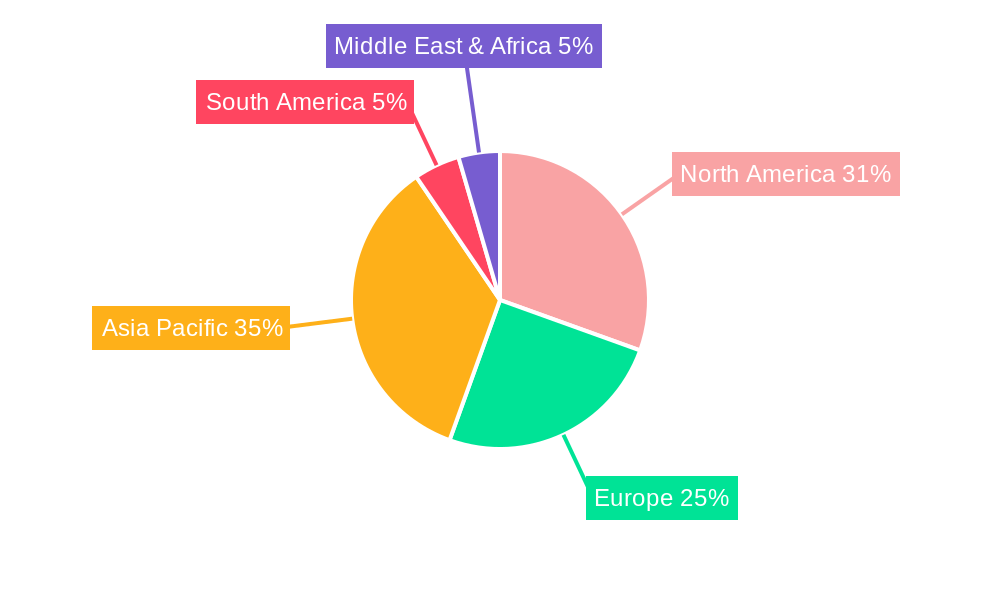
Large Gaming Monitor Regional Market Share
Geographic Coverage of Large Gaming Monitor
Large Gaming Monitor REPORT HIGHLIGHTS
| Aspects | Details |
|---|---|
| Study Period | 2020-2034 |
| Base Year | 2025 |
| Estimated Year | 2026 |
| Forecast Period | 2026-2034 |
| Historical Period | 2020-2025 |
| Growth Rate | CAGR of XX% from 2020-2034 |
| Segmentation |
|
Table of Contents
- 1. Introduction
- 1.1. Research Scope
- 1.2. Market Segmentation
- 1.3. Research Methodology
- 1.4. Definitions and Assumptions
- 2. Executive Summary
- 2.1. Introduction
- 3. Market Dynamics
- 3.1. Introduction
- 3.2. Market Drivers
- 3.3. Market Restrains
- 3.4. Market Trends
- 4. Market Factor Analysis
- 4.1. Porters Five Forces
- 4.2. Supply/Value Chain
- 4.3. PESTEL analysis
- 4.4. Market Entropy
- 4.5. Patent/Trademark Analysis
- 5. Global Large Gaming Monitor Analysis, Insights and Forecast, 2020-2032
- 5.1. Market Analysis, Insights and Forecast - by Application
- 5.1.1. Online Sales
- 5.1.2. Offline Sales
- 5.2. Market Analysis, Insights and Forecast - by Types
- 5.2.1. 24"
- 5.2.2. 27"
- 5.2.3. 32"
- 5.2.4. Others
- 5.3. Market Analysis, Insights and Forecast - by Region
- 5.3.1. North America
- 5.3.2. South America
- 5.3.3. Europe
- 5.3.4. Middle East & Africa
- 5.3.5. Asia Pacific
- 5.1. Market Analysis, Insights and Forecast - by Application
- 6. North America Large Gaming Monitor Analysis, Insights and Forecast, 2020-2032
- 6.1. Market Analysis, Insights and Forecast - by Application
- 6.1.1. Online Sales
- 6.1.2. Offline Sales
- 6.2. Market Analysis, Insights and Forecast - by Types
- 6.2.1. 24"
- 6.2.2. 27"
- 6.2.3. 32"
- 6.2.4. Others
- 6.1. Market Analysis, Insights and Forecast - by Application
- 7. South America Large Gaming Monitor Analysis, Insights and Forecast, 2020-2032
- 7.1. Market Analysis, Insights and Forecast - by Application
- 7.1.1. Online Sales
- 7.1.2. Offline Sales
- 7.2. Market Analysis, Insights and Forecast - by Types
- 7.2.1. 24"
- 7.2.2. 27"
- 7.2.3. 32"
- 7.2.4. Others
- 7.1. Market Analysis, Insights and Forecast - by Application
- 8. Europe Large Gaming Monitor Analysis, Insights and Forecast, 2020-2032
- 8.1. Market Analysis, Insights and Forecast - by Application
- 8.1.1. Online Sales
- 8.1.2. Offline Sales
- 8.2. Market Analysis, Insights and Forecast - by Types
- 8.2.1. 24"
- 8.2.2. 27"
- 8.2.3. 32"
- 8.2.4. Others
- 8.1. Market Analysis, Insights and Forecast - by Application
- 9. Middle East & Africa Large Gaming Monitor Analysis, Insights and Forecast, 2020-2032
- 9.1. Market Analysis, Insights and Forecast - by Application
- 9.1.1. Online Sales
- 9.1.2. Offline Sales
- 9.2. Market Analysis, Insights and Forecast - by Types
- 9.2.1. 24"
- 9.2.2. 27"
- 9.2.3. 32"
- 9.2.4. Others
- 9.1. Market Analysis, Insights and Forecast - by Application
- 10. Asia Pacific Large Gaming Monitor Analysis, Insights and Forecast, 2020-2032
- 10.1. Market Analysis, Insights and Forecast - by Application
- 10.1.1. Online Sales
- 10.1.2. Offline Sales
- 10.2. Market Analysis, Insights and Forecast - by Types
- 10.2.1. 24"
- 10.2.2. 27"
- 10.2.3. 32"
- 10.2.4. Others
- 10.1. Market Analysis, Insights and Forecast - by Application
- 11. Competitive Analysis
- 11.1. Global Market Share Analysis 2025
- 11.2. Company Profiles
- 11.2.1 AOC/Philips
- 11.2.1.1. Overview
- 11.2.1.2. Products
- 11.2.1.3. SWOT Analysis
- 11.2.1.4. Recent Developments
- 11.2.1.5. Financials (Based on Availability)
- 11.2.2 ASUS
- 11.2.2.1. Overview
- 11.2.2.2. Products
- 11.2.2.3. SWOT Analysis
- 11.2.2.4. Recent Developments
- 11.2.2.5. Financials (Based on Availability)
- 11.2.3 Acer
- 11.2.3.1. Overview
- 11.2.3.2. Products
- 11.2.3.3. SWOT Analysis
- 11.2.3.4. Recent Developments
- 11.2.3.5. Financials (Based on Availability)
- 11.2.4 MSI
- 11.2.4.1. Overview
- 11.2.4.2. Products
- 11.2.4.3. SWOT Analysis
- 11.2.4.4. Recent Developments
- 11.2.4.5. Financials (Based on Availability)
- 11.2.5 Samsung
- 11.2.5.1. Overview
- 11.2.5.2. Products
- 11.2.5.3. SWOT Analysis
- 11.2.5.4. Recent Developments
- 11.2.5.5. Financials (Based on Availability)
- 11.2.6 Dell
- 11.2.6.1. Overview
- 11.2.6.2. Products
- 11.2.6.3. SWOT Analysis
- 11.2.6.4. Recent Developments
- 11.2.6.5. Financials (Based on Availability)
- 11.2.7 LG
- 11.2.7.1. Overview
- 11.2.7.2. Products
- 11.2.7.3. SWOT Analysis
- 11.2.7.4. Recent Developments
- 11.2.7.5. Financials (Based on Availability)
- 11.2.8 Lenovo
- 11.2.8.1. Overview
- 11.2.8.2. Products
- 11.2.8.3. SWOT Analysis
- 11.2.8.4. Recent Developments
- 11.2.8.5. Financials (Based on Availability)
- 11.2.9 HP
- 11.2.9.1. Overview
- 11.2.9.2. Products
- 11.2.9.3. SWOT Analysis
- 11.2.9.4. Recent Developments
- 11.2.9.5. Financials (Based on Availability)
- 11.2.10 HKC
- 11.2.10.1. Overview
- 11.2.10.2. Products
- 11.2.10.3. SWOT Analysis
- 11.2.10.4. Recent Developments
- 11.2.10.5. Financials (Based on Availability)
- 11.2.11 BenQ ZOWIE
- 11.2.11.1. Overview
- 11.2.11.2. Products
- 11.2.11.3. SWOT Analysis
- 11.2.11.4. Recent Developments
- 11.2.11.5. Financials (Based on Availability)
- 11.2.12 Viewsonic
- 11.2.12.1. Overview
- 11.2.12.2. Products
- 11.2.12.3. SWOT Analysis
- 11.2.12.4. Recent Developments
- 11.2.12.5. Financials (Based on Availability)
- 11.2.13 Razer
- 11.2.13.1. Overview
- 11.2.13.2. Products
- 11.2.13.3. SWOT Analysis
- 11.2.13.4. Recent Developments
- 11.2.13.5. Financials (Based on Availability)
- 11.2.14 Gigabyte
- 11.2.14.1. Overview
- 11.2.14.2. Products
- 11.2.14.3. SWOT Analysis
- 11.2.14.4. Recent Developments
- 11.2.14.5. Financials (Based on Availability)
- 11.2.15 SANC
- 11.2.15.1. Overview
- 11.2.15.2. Products
- 11.2.15.3. SWOT Analysis
- 11.2.15.4. Recent Developments
- 11.2.15.5. Financials (Based on Availability)
- 11.2.1 AOC/Philips
List of Figures
- Figure 1: Global Large Gaming Monitor Revenue Breakdown (million, %) by Region 2025 & 2033
- Figure 2: North America Large Gaming Monitor Revenue (million), by Application 2025 & 2033
- Figure 3: North America Large Gaming Monitor Revenue Share (%), by Application 2025 & 2033
- Figure 4: North America Large Gaming Monitor Revenue (million), by Types 2025 & 2033
- Figure 5: North America Large Gaming Monitor Revenue Share (%), by Types 2025 & 2033
- Figure 6: North America Large Gaming Monitor Revenue (million), by Country 2025 & 2033
- Figure 7: North America Large Gaming Monitor Revenue Share (%), by Country 2025 & 2033
- Figure 8: South America Large Gaming Monitor Revenue (million), by Application 2025 & 2033
- Figure 9: South America Large Gaming Monitor Revenue Share (%), by Application 2025 & 2033
- Figure 10: South America Large Gaming Monitor Revenue (million), by Types 2025 & 2033
- Figure 11: South America Large Gaming Monitor Revenue Share (%), by Types 2025 & 2033
- Figure 12: South America Large Gaming Monitor Revenue (million), by Country 2025 & 2033
- Figure 13: South America Large Gaming Monitor Revenue Share (%), by Country 2025 & 2033
- Figure 14: Europe Large Gaming Monitor Revenue (million), by Application 2025 & 2033
- Figure 15: Europe Large Gaming Monitor Revenue Share (%), by Application 2025 & 2033
- Figure 16: Europe Large Gaming Monitor Revenue (million), by Types 2025 & 2033
- Figure 17: Europe Large Gaming Monitor Revenue Share (%), by Types 2025 & 2033
- Figure 18: Europe Large Gaming Monitor Revenue (million), by Country 2025 & 2033
- Figure 19: Europe Large Gaming Monitor Revenue Share (%), by Country 2025 & 2033
- Figure 20: Middle East & Africa Large Gaming Monitor Revenue (million), by Application 2025 & 2033
- Figure 21: Middle East & Africa Large Gaming Monitor Revenue Share (%), by Application 2025 & 2033
- Figure 22: Middle East & Africa Large Gaming Monitor Revenue (million), by Types 2025 & 2033
- Figure 23: Middle East & Africa Large Gaming Monitor Revenue Share (%), by Types 2025 & 2033
- Figure 24: Middle East & Africa Large Gaming Monitor Revenue (million), by Country 2025 & 2033
- Figure 25: Middle East & Africa Large Gaming Monitor Revenue Share (%), by Country 2025 & 2033
- Figure 26: Asia Pacific Large Gaming Monitor Revenue (million), by Application 2025 & 2033
- Figure 27: Asia Pacific Large Gaming Monitor Revenue Share (%), by Application 2025 & 2033
- Figure 28: Asia Pacific Large Gaming Monitor Revenue (million), by Types 2025 & 2033
- Figure 29: Asia Pacific Large Gaming Monitor Revenue Share (%), by Types 2025 & 2033
- Figure 30: Asia Pacific Large Gaming Monitor Revenue (million), by Country 2025 & 2033
- Figure 31: Asia Pacific Large Gaming Monitor Revenue Share (%), by Country 2025 & 2033
List of Tables
- Table 1: Global Large Gaming Monitor Revenue million Forecast, by Application 2020 & 2033
- Table 2: Global Large Gaming Monitor Revenue million Forecast, by Types 2020 & 2033
- Table 3: Global Large Gaming Monitor Revenue million Forecast, by Region 2020 & 2033
- Table 4: Global Large Gaming Monitor Revenue million Forecast, by Application 2020 & 2033
- Table 5: Global Large Gaming Monitor Revenue million Forecast, by Types 2020 & 2033
- Table 6: Global Large Gaming Monitor Revenue million Forecast, by Country 2020 & 2033
- Table 7: United States Large Gaming Monitor Revenue (million) Forecast, by Application 2020 & 2033
- Table 8: Canada Large Gaming Monitor Revenue (million) Forecast, by Application 2020 & 2033
- Table 9: Mexico Large Gaming Monitor Revenue (million) Forecast, by Application 2020 & 2033
- Table 10: Global Large Gaming Monitor Revenue million Forecast, by Application 2020 & 2033
- Table 11: Global Large Gaming Monitor Revenue million Forecast, by Types 2020 & 2033
- Table 12: Global Large Gaming Monitor Revenue million Forecast, by Country 2020 & 2033
- Table 13: Brazil Large Gaming Monitor Revenue (million) Forecast, by Application 2020 & 2033
- Table 14: Argentina Large Gaming Monitor Revenue (million) Forecast, by Application 2020 & 2033
- Table 15: Rest of South America Large Gaming Monitor Revenue (million) Forecast, by Application 2020 & 2033
- Table 16: Global Large Gaming Monitor Revenue million Forecast, by Application 2020 & 2033
- Table 17: Global Large Gaming Monitor Revenue million Forecast, by Types 2020 & 2033
- Table 18: Global Large Gaming Monitor Revenue million Forecast, by Country 2020 & 2033
- Table 19: United Kingdom Large Gaming Monitor Revenue (million) Forecast, by Application 2020 & 2033
- Table 20: Germany Large Gaming Monitor Revenue (million) Forecast, by Application 2020 & 2033
- Table 21: France Large Gaming Monitor Revenue (million) Forecast, by Application 2020 & 2033
- Table 22: Italy Large Gaming Monitor Revenue (million) Forecast, by Application 2020 & 2033
- Table 23: Spain Large Gaming Monitor Revenue (million) Forecast, by Application 2020 & 2033
- Table 24: Russia Large Gaming Monitor Revenue (million) Forecast, by Application 2020 & 2033
- Table 25: Benelux Large Gaming Monitor Revenue (million) Forecast, by Application 2020 & 2033
- Table 26: Nordics Large Gaming Monitor Revenue (million) Forecast, by Application 2020 & 2033
- Table 27: Rest of Europe Large Gaming Monitor Revenue (million) Forecast, by Application 2020 & 2033
- Table 28: Global Large Gaming Monitor Revenue million Forecast, by Application 2020 & 2033
- Table 29: Global Large Gaming Monitor Revenue million Forecast, by Types 2020 & 2033
- Table 30: Global Large Gaming Monitor Revenue million Forecast, by Country 2020 & 2033
- Table 31: Turkey Large Gaming Monitor Revenue (million) Forecast, by Application 2020 & 2033
- Table 32: Israel Large Gaming Monitor Revenue (million) Forecast, by Application 2020 & 2033
- Table 33: GCC Large Gaming Monitor Revenue (million) Forecast, by Application 2020 & 2033
- Table 34: North Africa Large Gaming Monitor Revenue (million) Forecast, by Application 2020 & 2033
- Table 35: South Africa Large Gaming Monitor Revenue (million) Forecast, by Application 2020 & 2033
- Table 36: Rest of Middle East & Africa Large Gaming Monitor Revenue (million) Forecast, by Application 2020 & 2033
- Table 37: Global Large Gaming Monitor Revenue million Forecast, by Application 2020 & 2033
- Table 38: Global Large Gaming Monitor Revenue million Forecast, by Types 2020 & 2033
- Table 39: Global Large Gaming Monitor Revenue million Forecast, by Country 2020 & 2033
- Table 40: China Large Gaming Monitor Revenue (million) Forecast, by Application 2020 & 2033
- Table 41: India Large Gaming Monitor Revenue (million) Forecast, by Application 2020 & 2033
- Table 42: Japan Large Gaming Monitor Revenue (million) Forecast, by Application 2020 & 2033
- Table 43: South Korea Large Gaming Monitor Revenue (million) Forecast, by Application 2020 & 2033
- Table 44: ASEAN Large Gaming Monitor Revenue (million) Forecast, by Application 2020 & 2033
- Table 45: Oceania Large Gaming Monitor Revenue (million) Forecast, by Application 2020 & 2033
- Table 46: Rest of Asia Pacific Large Gaming Monitor Revenue (million) Forecast, by Application 2020 & 2033
Frequently Asked Questions
1. What is the projected Compound Annual Growth Rate (CAGR) of the Large Gaming Monitor?
The projected CAGR is approximately XX%.
2. Which companies are prominent players in the Large Gaming Monitor?
Key companies in the market include AOC/Philips, ASUS, Acer, MSI, Samsung, Dell, LG, Lenovo, HP, HKC, BenQ ZOWIE, Viewsonic, Razer, Gigabyte, SANC.
3. What are the main segments of the Large Gaming Monitor?
The market segments include Application, Types.
4. Can you provide details about the market size?
The market size is estimated to be USD XXX million as of 2022.
5. What are some drivers contributing to market growth?
N/A
6. What are the notable trends driving market growth?
N/A
7. Are there any restraints impacting market growth?
N/A
8. Can you provide examples of recent developments in the market?
N/A
9. What pricing options are available for accessing the report?
Pricing options include single-user, multi-user, and enterprise licenses priced at USD 2900.00, USD 4350.00, and USD 5800.00 respectively.
10. Is the market size provided in terms of value or volume?
The market size is provided in terms of value, measured in million.
11. Are there any specific market keywords associated with the report?
Yes, the market keyword associated with the report is "Large Gaming Monitor," which aids in identifying and referencing the specific market segment covered.
12. How do I determine which pricing option suits my needs best?
The pricing options vary based on user requirements and access needs. Individual users may opt for single-user licenses, while businesses requiring broader access may choose multi-user or enterprise licenses for cost-effective access to the report.
13. Are there any additional resources or data provided in the Large Gaming Monitor report?
While the report offers comprehensive insights, it's advisable to review the specific contents or supplementary materials provided to ascertain if additional resources or data are available.
14. How can I stay updated on further developments or reports in the Large Gaming Monitor?
To stay informed about further developments, trends, and reports in the Large Gaming Monitor, consider subscribing to industry newsletters, following relevant companies and organizations, or regularly checking reputable industry news sources and publications.
Methodology
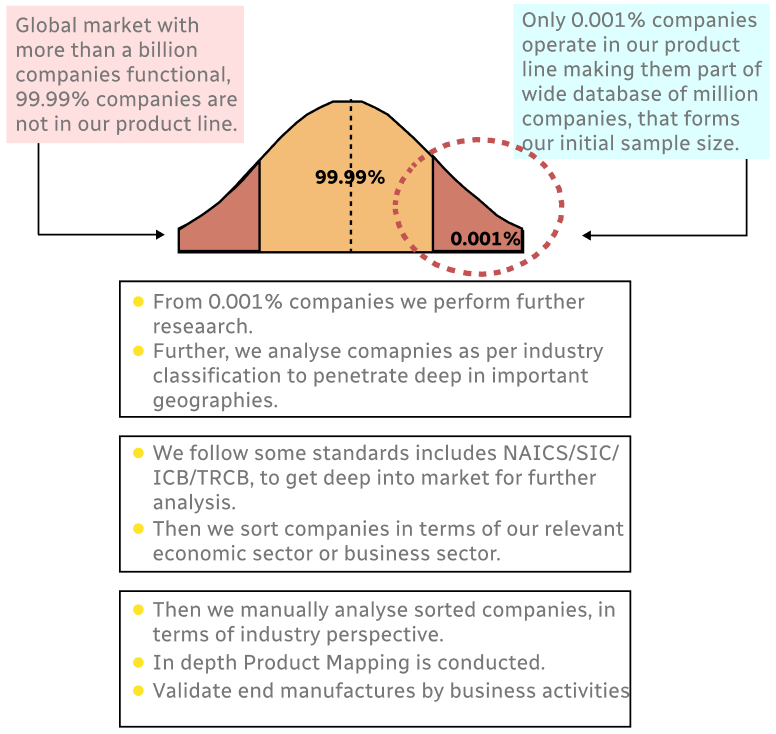
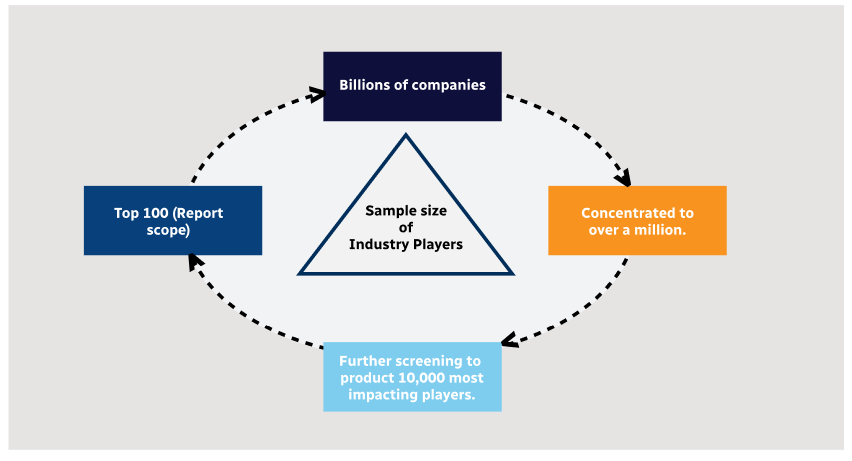
Step 1 - Identification of Relevant Samples Size from Population Database
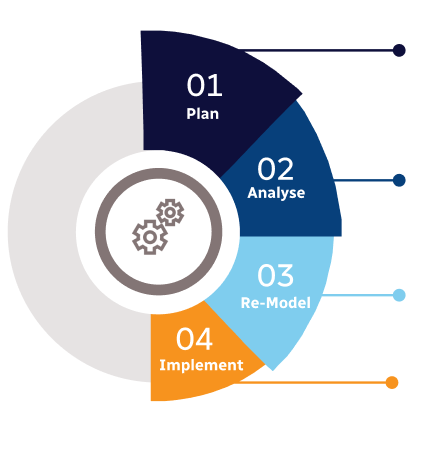
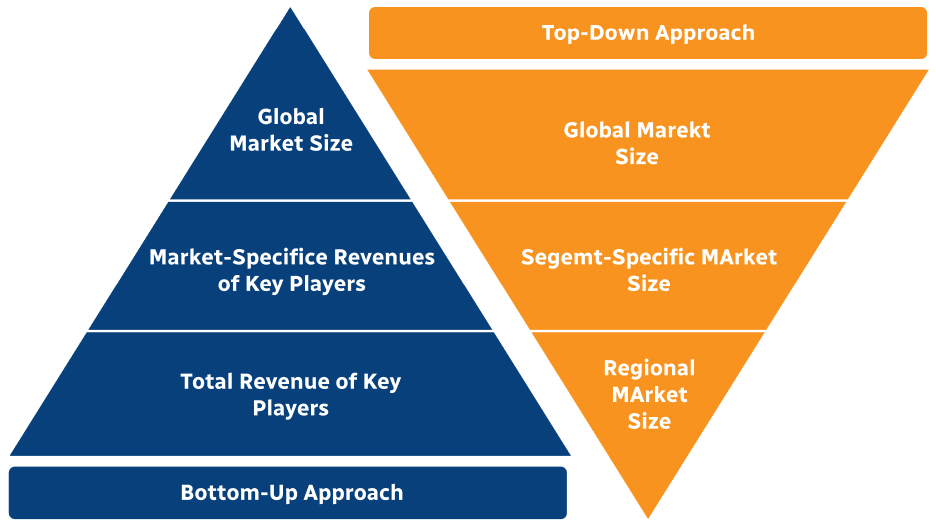
Step 2 - Approaches for Defining Global Market Size (Value, Volume* & Price*)
Note*: In applicable scenarios
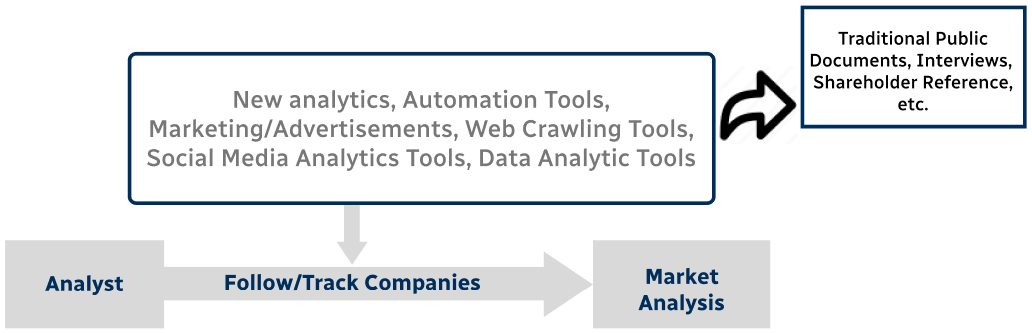
Step 3 - Data Sources
Primary Research
- Web Analytics
- Survey Reports
- Research Institute
- Latest Research Reports
- Opinion Leaders
Secondary Research
- Annual Reports
- White Paper
- Latest Press Release
- Industry Association
- Paid Database
- Investor Presentations
Step 4 - Data Triangulation
Involves using different sources of information in order to increase the validity of a study
These sources are likely to be stakeholders in a program - participants, other researchers, program staff, other community members, and so on.
Then we put all data in single framework & apply various statistical tools to find out the dynamic on the market.
During the analysis stage, feedback from the stakeholder groups would be compared to determine areas of agreement as well as areas of divergence