


Key Insights
The Korean language learning software market is experiencing robust growth, driven by increasing globalization, the popularity of Korean culture (K-pop, K-dramas), and a rising demand for multilingual proficiency in both personal and professional settings. While precise market sizing data is unavailable, a reasonable estimate based on the growth of the broader language learning software market and the significant cultural influence of Korea suggests a current market value (2025) in the range of $150 million. Considering a moderate Compound Annual Growth Rate (CAGR) of 15% – reflecting both market expansion and potential market saturation – the market is projected to reach approximately $350 million by 2033. Key drivers include the accessibility and affordability of mobile apps, the incorporation of gamified learning techniques, and the availability of diverse learning resources catering to different proficiency levels. The market is segmented by platform (iOS, Android, web), learning style (self-paced, instructor-led), and target audience (beginners, intermediate, advanced learners). Leading companies like Duolingo, Memrise, and HelloTalk leverage innovative technology and strong branding to capture market share. However, increasing competition, potential free or low-cost alternatives, and varying levels of app quality pose restraints to consistent, uniform growth.
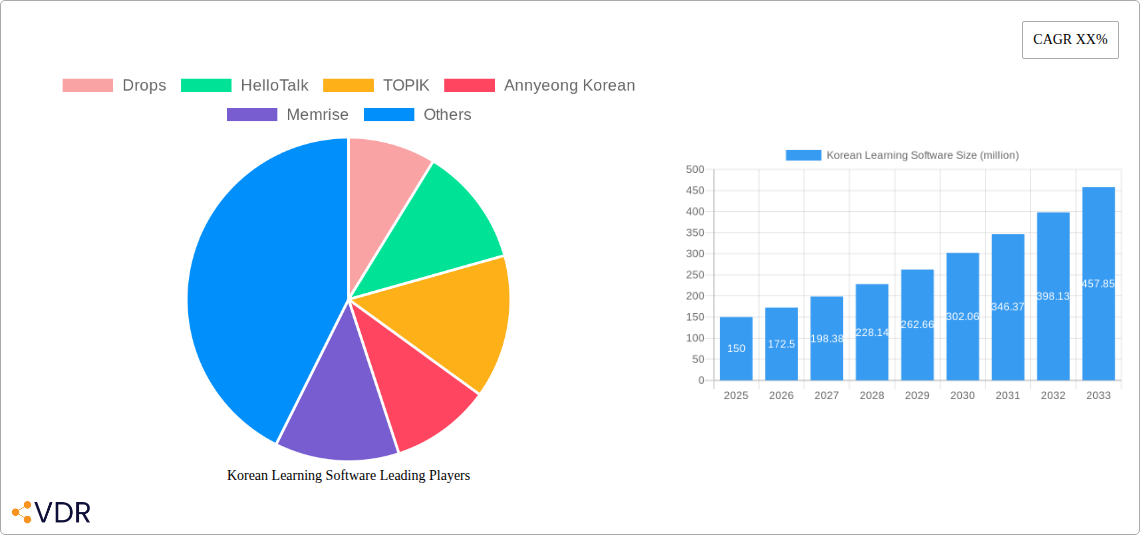
Korean Learning Software Market Size (In Million)

The competitive landscape is highly fragmented, with both established players and emerging startups vying for market share. The success of individual companies depends on factors such as user experience, curriculum quality, marketing effectiveness, and the ability to adapt to evolving technological advancements and learning preferences. Regional variations in market penetration are expected, with regions exhibiting strong engagement with Korean culture and a higher demand for multilingual skills, such as North America and parts of Asia, experiencing higher growth rates. Ongoing innovations in Artificial Intelligence (AI)-powered language learning tools and personalized learning pathways will further shape the market's trajectory. Future growth will depend on successfully addressing challenges such as ensuring high-quality content, maintaining user engagement, and adapting to the evolving needs and expectations of learners.
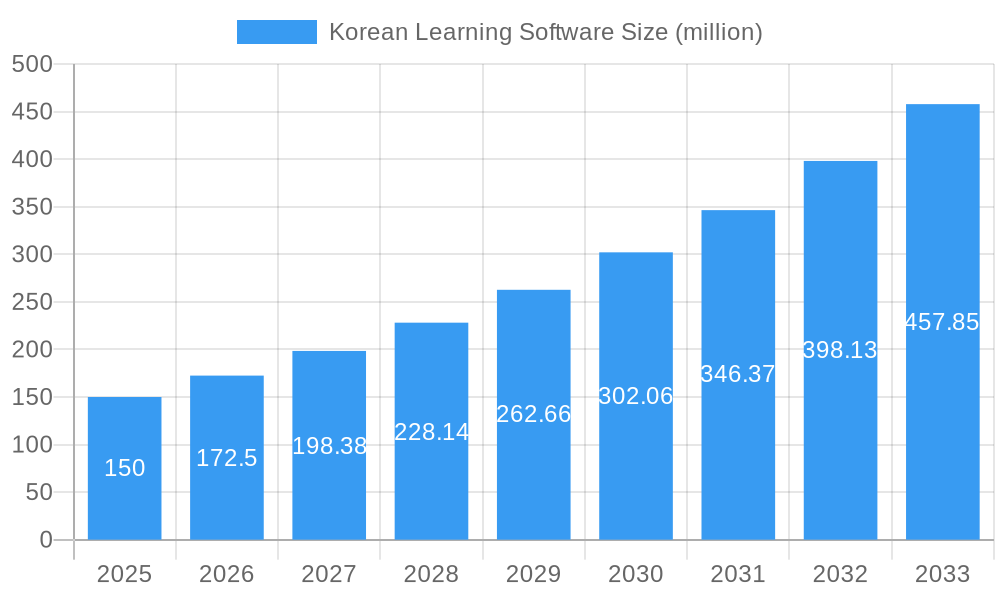
Korean Learning Software Company Market Share
Korean Learning Software Market Report: 2019-2033
This comprehensive report provides a detailed analysis of the Korean learning software market, covering market dynamics, growth trends, regional analysis, competitive landscape, and future outlook. The study period spans from 2019 to 2033, with 2025 serving as both the base and estimated year. This report is invaluable for industry professionals, investors, and anyone seeking to understand this rapidly evolving market. The report projects a market size of xx million USD in 2025, and a CAGR of xx% during the forecast period (2025-2033). The parent market is the broader language learning software market, while the child market focuses specifically on Korean language acquisition software.
Korean Learning Software Market Dynamics & Structure
The Korean learning software market exhibits a moderately fragmented structure with several key players vying for market share. Market concentration is relatively low, with no single dominant player controlling a significant majority. Technological innovation, particularly in AI-powered personalized learning and gamified educational approaches, is a key driver. Regulatory frameworks, while not overly restrictive, influence data privacy and educational content standards. Competitive substitutes include traditional language learning methods (e.g., in-person classes, textbooks), impacting market penetration. The end-user demographic is diverse, encompassing students, professionals, and hobbyists of varying age groups and proficiency levels. M&A activity has been moderate, with a projected xx number of deals in 2025, driven by a need for expansion and technological integration.
- Market Concentration: Low to moderate, with top 5 players holding approximately xx% market share in 2025.
- Technological Innovation: AI-powered personalization, gamification, and VR/AR integration are key drivers.
- Regulatory Framework: Focus on data privacy and educational content standards.
- Competitive Substitutes: Traditional language learning methods pose a competitive threat.
- End-User Demographics: Diverse, spanning students, professionals, and hobbyists.
- M&A Activity: Moderate, with xx M&A deals projected in 2025.
Korean Learning Software Growth Trends & Insights
The Korean language learning software market experienced significant growth during the historical period (2019-2024), driven by increasing globalization, the popularity of Korean culture (K-pop, K-dramas), and the rising demand for language proficiency in professional settings. The market size expanded from xx million USD in 2019 to xx million USD in 2024. Adoption rates have increased steadily, particularly among younger demographics, reflecting a shift towards digital learning methods. Technological disruptions, such as the incorporation of AI and gamification, have significantly enhanced user engagement and learning outcomes. Consumer behavior shifts towards personalized learning experiences and on-demand access to educational resources further fuel market expansion. The market is projected to reach xx million USD by 2033, with a CAGR of xx% during the forecast period (2025-2033), indicating sustained growth. Market penetration is expected to reach xx% by 2033.
Dominant Regions, Countries, or Segments in Korean Learning Software
North America and Asia (particularly South Korea and China) are the dominant regions driving the Korean learning software market's growth. North America's growth is fueled by high demand for language proficiency in diverse professional sectors and a growing interest in Korean culture. Asia's dominance stems from a large population base and a strong educational focus on language acquisition. Within Asia, South Korea benefits from a sophisticated domestic market, while China leverages its vast population eager to learn foreign languages.
- North America: High demand for language skills and growing interest in Korean culture.
- Asia (South Korea & China): Large population base, strong educational focus, and developed digital infrastructure.
- Market Share: North America holds approximately xx% market share, while Asia holds approximately xx% in 2025.
- Growth Potential: Both regions exhibit strong future growth potential, with Asia predicted to show higher growth rates.
Korean Learning Software Product Landscape
Korean learning software products range from basic vocabulary builders to comprehensive courses covering all aspects of the language, including grammar, pronunciation, and cultural context. Many incorporate innovative features like AI-powered personalized learning paths, interactive exercises, and gamified challenges to enhance user engagement and learning effectiveness. Key performance metrics include user engagement rates, course completion rates, and learner proficiency gains, often tracked through assessments and progress tracking tools. Unique selling propositions include features such as speech recognition technology, personalized feedback mechanisms, and integration with other language learning tools or platforms.
Key Drivers, Barriers & Challenges in Korean Learning Software
Key Drivers: The rising popularity of Korean culture globally, the increasing demand for multilingual professionals, and advancements in AI-powered language learning technologies are major drivers. Government initiatives promoting language learning in certain regions further boost market growth.
Challenges: High initial investment costs for developing sophisticated software, competition from free or low-cost alternatives, and ensuring consistent quality control across diverse learning platforms are key challenges. The need to cater to diverse learner needs and preferences, including varying proficiency levels and learning styles, also presents a significant hurdle.
Emerging Opportunities in Korean Learning Software
Emerging opportunities lie in integrating Virtual Reality (VR) and Augmented Reality (AR) technologies to create immersive learning experiences. The growing demand for corporate language training programs offers potential for specialized software solutions. Expansion into untapped markets in Africa and Latin America presents significant growth potential. Furthermore, focusing on niche areas such as Korean business language or Korean for specific professions can open new market segments.
Growth Accelerators in the Korean Learning Software Industry
Strategic partnerships between language learning software providers and educational institutions can significantly accelerate market growth. Continuous technological advancements, particularly in AI and machine learning, will improve personalization and learning outcomes. Expanding into new geographical markets and offering diverse learning packages tailored to specific needs will also fuel market expansion.
Key Players Shaping the Korean Learning Software Market
- Drops
- HelloTalk
- TOPIK
- Annyeong Korean
- Memrise
- Mango Languages
- Learn Korean
- LingoDeer
- Dongsa
- TenguGo Hangul
- Eggbun
- Duolingo
- Teuida
- Mondly
- Learn Korean Language
- Write It Korean
Notable Milestones in Korean Learning Software Sector
- 2020: Memrise launched a comprehensive Korean course incorporating AI-powered personalization.
- 2021: Duolingo introduced a new Korean course with enhanced speech recognition technology.
- 2022: Several mergers and acquisitions occurred, consolidating market share among key players. (xx number of M&A deals)
- 2023: Drops introduced a new gamified approach in its Korean language learning app.
In-Depth Korean Learning Software Market Outlook
The Korean learning software market is poised for continued strong growth, fueled by technological advancements, expanding global interest in Korean culture, and the increasing demand for language proficiency. Strategic investments in R&D, fostering strategic partnerships, and expanding into untapped markets represent key strategic opportunities for players seeking to capitalize on this promising sector. The market is expected to witness continuous innovation in pedagogical approaches and technological integrations, further enhancing the effectiveness and accessibility of Korean language learning software.
Korean Learning Software Segmentation
-
1. Application
- 1.1. International Students
- 1.2. Foreigners in Korea
- 1.3. Korean Language Enthusiasts
- 1.4. Other
-
2. Types
- 2.1. Android System
- 2.2. IOS System
Korean Learning Software Segmentation By Geography
-
1. North America
- 1.1. United States
- 1.2. Canada
- 1.3. Mexico
-
2. South America
- 2.1. Brazil
- 2.2. Argentina
- 2.3. Rest of South America
-
3. Europe
- 3.1. United Kingdom
- 3.2. Germany
- 3.3. France
- 3.4. Italy
- 3.5. Spain
- 3.6. Russia
- 3.7. Benelux
- 3.8. Nordics
- 3.9. Rest of Europe
-
4. Middle East & Africa
- 4.1. Turkey
- 4.2. Israel
- 4.3. GCC
- 4.4. North Africa
- 4.5. South Africa
- 4.6. Rest of Middle East & Africa
-
5. Asia Pacific
- 5.1. China
- 5.2. India
- 5.3. Japan
- 5.4. South Korea
- 5.5. ASEAN
- 5.6. Oceania
- 5.7. Rest of Asia Pacific
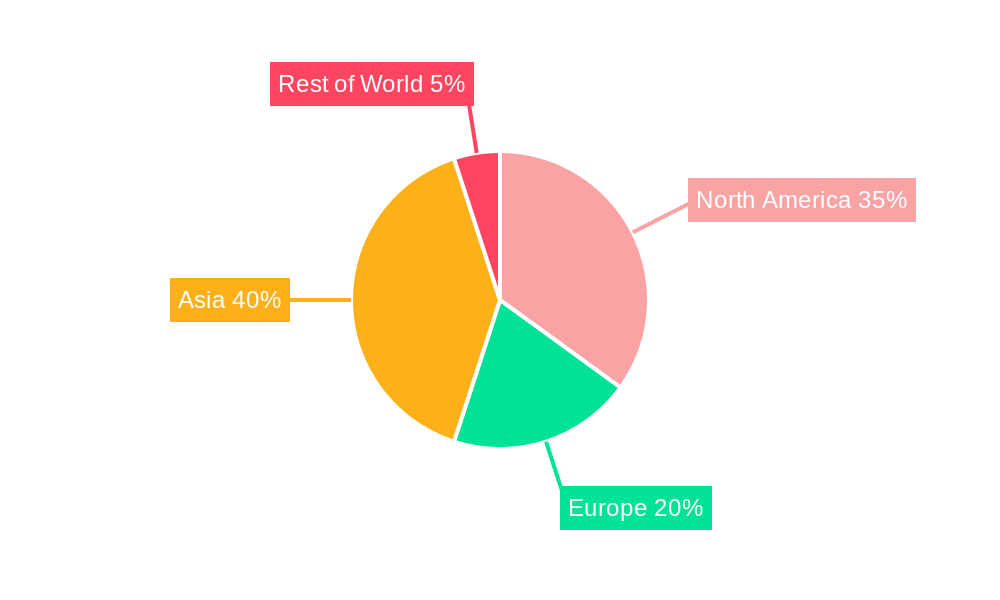
Korean Learning Software Regional Market Share
Geographic Coverage of Korean Learning Software
Korean Learning Software REPORT HIGHLIGHTS
| Aspects | Details |
|---|---|
| Study Period | 2020-2034 |
| Base Year | 2025 |
| Estimated Year | 2026 |
| Forecast Period | 2026-2034 |
| Historical Period | 2020-2025 |
| Growth Rate | CAGR of XX% from 2020-2034 |
| Segmentation |
|
Table of Contents
- 1. Introduction
- 1.1. Research Scope
- 1.2. Market Segmentation
- 1.3. Research Methodology
- 1.4. Definitions and Assumptions
- 2. Executive Summary
- 2.1. Introduction
- 3. Market Dynamics
- 3.1. Introduction
- 3.2. Market Drivers
- 3.3. Market Restrains
- 3.4. Market Trends
- 4. Market Factor Analysis
- 4.1. Porters Five Forces
- 4.2. Supply/Value Chain
- 4.3. PESTEL analysis
- 4.4. Market Entropy
- 4.5. Patent/Trademark Analysis
- 5. Global Korean Learning Software Analysis, Insights and Forecast, 2020-2032
- 5.1. Market Analysis, Insights and Forecast - by Application
- 5.1.1. International Students
- 5.1.2. Foreigners in Korea
- 5.1.3. Korean Language Enthusiasts
- 5.1.4. Other
- 5.2. Market Analysis, Insights and Forecast - by Types
- 5.2.1. Android System
- 5.2.2. IOS System
- 5.3. Market Analysis, Insights and Forecast - by Region
- 5.3.1. North America
- 5.3.2. South America
- 5.3.3. Europe
- 5.3.4. Middle East & Africa
- 5.3.5. Asia Pacific
- 5.1. Market Analysis, Insights and Forecast - by Application
- 6. North America Korean Learning Software Analysis, Insights and Forecast, 2020-2032
- 6.1. Market Analysis, Insights and Forecast - by Application
- 6.1.1. International Students
- 6.1.2. Foreigners in Korea
- 6.1.3. Korean Language Enthusiasts
- 6.1.4. Other
- 6.2. Market Analysis, Insights and Forecast - by Types
- 6.2.1. Android System
- 6.2.2. IOS System
- 6.1. Market Analysis, Insights and Forecast - by Application
- 7. South America Korean Learning Software Analysis, Insights and Forecast, 2020-2032
- 7.1. Market Analysis, Insights and Forecast - by Application
- 7.1.1. International Students
- 7.1.2. Foreigners in Korea
- 7.1.3. Korean Language Enthusiasts
- 7.1.4. Other
- 7.2. Market Analysis, Insights and Forecast - by Types
- 7.2.1. Android System
- 7.2.2. IOS System
- 7.1. Market Analysis, Insights and Forecast - by Application
- 8. Europe Korean Learning Software Analysis, Insights and Forecast, 2020-2032
- 8.1. Market Analysis, Insights and Forecast - by Application
- 8.1.1. International Students
- 8.1.2. Foreigners in Korea
- 8.1.3. Korean Language Enthusiasts
- 8.1.4. Other
- 8.2. Market Analysis, Insights and Forecast - by Types
- 8.2.1. Android System
- 8.2.2. IOS System
- 8.1. Market Analysis, Insights and Forecast - by Application
- 9. Middle East & Africa Korean Learning Software Analysis, Insights and Forecast, 2020-2032
- 9.1. Market Analysis, Insights and Forecast - by Application
- 9.1.1. International Students
- 9.1.2. Foreigners in Korea
- 9.1.3. Korean Language Enthusiasts
- 9.1.4. Other
- 9.2. Market Analysis, Insights and Forecast - by Types
- 9.2.1. Android System
- 9.2.2. IOS System
- 9.1. Market Analysis, Insights and Forecast - by Application
- 10. Asia Pacific Korean Learning Software Analysis, Insights and Forecast, 2020-2032
- 10.1. Market Analysis, Insights and Forecast - by Application
- 10.1.1. International Students
- 10.1.2. Foreigners in Korea
- 10.1.3. Korean Language Enthusiasts
- 10.1.4. Other
- 10.2. Market Analysis, Insights and Forecast - by Types
- 10.2.1. Android System
- 10.2.2. IOS System
- 10.1. Market Analysis, Insights and Forecast - by Application
- 11. Competitive Analysis
- 11.1. Global Market Share Analysis 2025
- 11.2. Company Profiles
- 11.2.1 Drops
- 11.2.1.1. Overview
- 11.2.1.2. Products
- 11.2.1.3. SWOT Analysis
- 11.2.1.4. Recent Developments
- 11.2.1.5. Financials (Based on Availability)
- 11.2.2 HelloTalk
- 11.2.2.1. Overview
- 11.2.2.2. Products
- 11.2.2.3. SWOT Analysis
- 11.2.2.4. Recent Developments
- 11.2.2.5. Financials (Based on Availability)
- 11.2.3 TOPIK
- 11.2.3.1. Overview
- 11.2.3.2. Products
- 11.2.3.3. SWOT Analysis
- 11.2.3.4. Recent Developments
- 11.2.3.5. Financials (Based on Availability)
- 11.2.4 Annyeong Korean
- 11.2.4.1. Overview
- 11.2.4.2. Products
- 11.2.4.3. SWOT Analysis
- 11.2.4.4. Recent Developments
- 11.2.4.5. Financials (Based on Availability)
- 11.2.5 Memrise
- 11.2.5.1. Overview
- 11.2.5.2. Products
- 11.2.5.3. SWOT Analysis
- 11.2.5.4. Recent Developments
- 11.2.5.5. Financials (Based on Availability)
- 11.2.6 Mango Languages
- 11.2.6.1. Overview
- 11.2.6.2. Products
- 11.2.6.3. SWOT Analysis
- 11.2.6.4. Recent Developments
- 11.2.6.5. Financials (Based on Availability)
- 11.2.7 Learn Korean
- 11.2.7.1. Overview
- 11.2.7.2. Products
- 11.2.7.3. SWOT Analysis
- 11.2.7.4. Recent Developments
- 11.2.7.5. Financials (Based on Availability)
- 11.2.8 LingoDeer
- 11.2.8.1. Overview
- 11.2.8.2. Products
- 11.2.8.3. SWOT Analysis
- 11.2.8.4. Recent Developments
- 11.2.8.5. Financials (Based on Availability)
- 11.2.9 Dongsa
- 11.2.9.1. Overview
- 11.2.9.2. Products
- 11.2.9.3. SWOT Analysis
- 11.2.9.4. Recent Developments
- 11.2.9.5. Financials (Based on Availability)
- 11.2.10 TenguGo Hangul
- 11.2.10.1. Overview
- 11.2.10.2. Products
- 11.2.10.3. SWOT Analysis
- 11.2.10.4. Recent Developments
- 11.2.10.5. Financials (Based on Availability)
- 11.2.11 Eggbun
- 11.2.11.1. Overview
- 11.2.11.2. Products
- 11.2.11.3. SWOT Analysis
- 11.2.11.4. Recent Developments
- 11.2.11.5. Financials (Based on Availability)
- 11.2.12 Duolingo
- 11.2.12.1. Overview
- 11.2.12.2. Products
- 11.2.12.3. SWOT Analysis
- 11.2.12.4. Recent Developments
- 11.2.12.5. Financials (Based on Availability)
- 11.2.13 Teuida
- 11.2.13.1. Overview
- 11.2.13.2. Products
- 11.2.13.3. SWOT Analysis
- 11.2.13.4. Recent Developments
- 11.2.13.5. Financials (Based on Availability)
- 11.2.14 Mondly
- 11.2.14.1. Overview
- 11.2.14.2. Products
- 11.2.14.3. SWOT Analysis
- 11.2.14.4. Recent Developments
- 11.2.14.5. Financials (Based on Availability)
- 11.2.15 Learn Korean Language
- 11.2.15.1. Overview
- 11.2.15.2. Products
- 11.2.15.3. SWOT Analysis
- 11.2.15.4. Recent Developments
- 11.2.15.5. Financials (Based on Availability)
- 11.2.16 Write It Korean
- 11.2.16.1. Overview
- 11.2.16.2. Products
- 11.2.16.3. SWOT Analysis
- 11.2.16.4. Recent Developments
- 11.2.16.5. Financials (Based on Availability)
- 11.2.1 Drops
List of Figures
- Figure 1: Global Korean Learning Software Revenue Breakdown (million, %) by Region 2025 & 2033
- Figure 2: North America Korean Learning Software Revenue (million), by Application 2025 & 2033
- Figure 3: North America Korean Learning Software Revenue Share (%), by Application 2025 & 2033
- Figure 4: North America Korean Learning Software Revenue (million), by Types 2025 & 2033
- Figure 5: North America Korean Learning Software Revenue Share (%), by Types 2025 & 2033
- Figure 6: North America Korean Learning Software Revenue (million), by Country 2025 & 2033
- Figure 7: North America Korean Learning Software Revenue Share (%), by Country 2025 & 2033
- Figure 8: South America Korean Learning Software Revenue (million), by Application 2025 & 2033
- Figure 9: South America Korean Learning Software Revenue Share (%), by Application 2025 & 2033
- Figure 10: South America Korean Learning Software Revenue (million), by Types 2025 & 2033
- Figure 11: South America Korean Learning Software Revenue Share (%), by Types 2025 & 2033
- Figure 12: South America Korean Learning Software Revenue (million), by Country 2025 & 2033
- Figure 13: South America Korean Learning Software Revenue Share (%), by Country 2025 & 2033
- Figure 14: Europe Korean Learning Software Revenue (million), by Application 2025 & 2033
- Figure 15: Europe Korean Learning Software Revenue Share (%), by Application 2025 & 2033
- Figure 16: Europe Korean Learning Software Revenue (million), by Types 2025 & 2033
- Figure 17: Europe Korean Learning Software Revenue Share (%), by Types 2025 & 2033
- Figure 18: Europe Korean Learning Software Revenue (million), by Country 2025 & 2033
- Figure 19: Europe Korean Learning Software Revenue Share (%), by Country 2025 & 2033
- Figure 20: Middle East & Africa Korean Learning Software Revenue (million), by Application 2025 & 2033
- Figure 21: Middle East & Africa Korean Learning Software Revenue Share (%), by Application 2025 & 2033
- Figure 22: Middle East & Africa Korean Learning Software Revenue (million), by Types 2025 & 2033
- Figure 23: Middle East & Africa Korean Learning Software Revenue Share (%), by Types 2025 & 2033
- Figure 24: Middle East & Africa Korean Learning Software Revenue (million), by Country 2025 & 2033
- Figure 25: Middle East & Africa Korean Learning Software Revenue Share (%), by Country 2025 & 2033
- Figure 26: Asia Pacific Korean Learning Software Revenue (million), by Application 2025 & 2033
- Figure 27: Asia Pacific Korean Learning Software Revenue Share (%), by Application 2025 & 2033
- Figure 28: Asia Pacific Korean Learning Software Revenue (million), by Types 2025 & 2033
- Figure 29: Asia Pacific Korean Learning Software Revenue Share (%), by Types 2025 & 2033
- Figure 30: Asia Pacific Korean Learning Software Revenue (million), by Country 2025 & 2033
- Figure 31: Asia Pacific Korean Learning Software Revenue Share (%), by Country 2025 & 2033
List of Tables
- Table 1: Global Korean Learning Software Revenue million Forecast, by Application 2020 & 2033
- Table 2: Global Korean Learning Software Revenue million Forecast, by Types 2020 & 2033
- Table 3: Global Korean Learning Software Revenue million Forecast, by Region 2020 & 2033
- Table 4: Global Korean Learning Software Revenue million Forecast, by Application 2020 & 2033
- Table 5: Global Korean Learning Software Revenue million Forecast, by Types 2020 & 2033
- Table 6: Global Korean Learning Software Revenue million Forecast, by Country 2020 & 2033
- Table 7: United States Korean Learning Software Revenue (million) Forecast, by Application 2020 & 2033
- Table 8: Canada Korean Learning Software Revenue (million) Forecast, by Application 2020 & 2033
- Table 9: Mexico Korean Learning Software Revenue (million) Forecast, by Application 2020 & 2033
- Table 10: Global Korean Learning Software Revenue million Forecast, by Application 2020 & 2033
- Table 11: Global Korean Learning Software Revenue million Forecast, by Types 2020 & 2033
- Table 12: Global Korean Learning Software Revenue million Forecast, by Country 2020 & 2033
- Table 13: Brazil Korean Learning Software Revenue (million) Forecast, by Application 2020 & 2033
- Table 14: Argentina Korean Learning Software Revenue (million) Forecast, by Application 2020 & 2033
- Table 15: Rest of South America Korean Learning Software Revenue (million) Forecast, by Application 2020 & 2033
- Table 16: Global Korean Learning Software Revenue million Forecast, by Application 2020 & 2033
- Table 17: Global Korean Learning Software Revenue million Forecast, by Types 2020 & 2033
- Table 18: Global Korean Learning Software Revenue million Forecast, by Country 2020 & 2033
- Table 19: United Kingdom Korean Learning Software Revenue (million) Forecast, by Application 2020 & 2033
- Table 20: Germany Korean Learning Software Revenue (million) Forecast, by Application 2020 & 2033
- Table 21: France Korean Learning Software Revenue (million) Forecast, by Application 2020 & 2033
- Table 22: Italy Korean Learning Software Revenue (million) Forecast, by Application 2020 & 2033
- Table 23: Spain Korean Learning Software Revenue (million) Forecast, by Application 2020 & 2033
- Table 24: Russia Korean Learning Software Revenue (million) Forecast, by Application 2020 & 2033
- Table 25: Benelux Korean Learning Software Revenue (million) Forecast, by Application 2020 & 2033
- Table 26: Nordics Korean Learning Software Revenue (million) Forecast, by Application 2020 & 2033
- Table 27: Rest of Europe Korean Learning Software Revenue (million) Forecast, by Application 2020 & 2033
- Table 28: Global Korean Learning Software Revenue million Forecast, by Application 2020 & 2033
- Table 29: Global Korean Learning Software Revenue million Forecast, by Types 2020 & 2033
- Table 30: Global Korean Learning Software Revenue million Forecast, by Country 2020 & 2033
- Table 31: Turkey Korean Learning Software Revenue (million) Forecast, by Application 2020 & 2033
- Table 32: Israel Korean Learning Software Revenue (million) Forecast, by Application 2020 & 2033
- Table 33: GCC Korean Learning Software Revenue (million) Forecast, by Application 2020 & 2033
- Table 34: North Africa Korean Learning Software Revenue (million) Forecast, by Application 2020 & 2033
- Table 35: South Africa Korean Learning Software Revenue (million) Forecast, by Application 2020 & 2033
- Table 36: Rest of Middle East & Africa Korean Learning Software Revenue (million) Forecast, by Application 2020 & 2033
- Table 37: Global Korean Learning Software Revenue million Forecast, by Application 2020 & 2033
- Table 38: Global Korean Learning Software Revenue million Forecast, by Types 2020 & 2033
- Table 39: Global Korean Learning Software Revenue million Forecast, by Country 2020 & 2033
- Table 40: China Korean Learning Software Revenue (million) Forecast, by Application 2020 & 2033
- Table 41: India Korean Learning Software Revenue (million) Forecast, by Application 2020 & 2033
- Table 42: Japan Korean Learning Software Revenue (million) Forecast, by Application 2020 & 2033
- Table 43: South Korea Korean Learning Software Revenue (million) Forecast, by Application 2020 & 2033
- Table 44: ASEAN Korean Learning Software Revenue (million) Forecast, by Application 2020 & 2033
- Table 45: Oceania Korean Learning Software Revenue (million) Forecast, by Application 2020 & 2033
- Table 46: Rest of Asia Pacific Korean Learning Software Revenue (million) Forecast, by Application 2020 & 2033
Frequently Asked Questions
1. What is the projected Compound Annual Growth Rate (CAGR) of the Korean Learning Software?
The projected CAGR is approximately XX%.
2. Which companies are prominent players in the Korean Learning Software?
Key companies in the market include Drops, HelloTalk, TOPIK, Annyeong Korean, Memrise, Mango Languages, Learn Korean, LingoDeer, Dongsa, TenguGo Hangul, Eggbun, Duolingo, Teuida, Mondly, Learn Korean Language, Write It Korean.
3. What are the main segments of the Korean Learning Software?
The market segments include Application, Types.
4. Can you provide details about the market size?
The market size is estimated to be USD XXX million as of 2022.
5. What are some drivers contributing to market growth?
N/A
6. What are the notable trends driving market growth?
N/A
7. Are there any restraints impacting market growth?
N/A
8. Can you provide examples of recent developments in the market?
N/A
9. What pricing options are available for accessing the report?
Pricing options include single-user, multi-user, and enterprise licenses priced at USD 3950.00, USD 5925.00, and USD 7900.00 respectively.
10. Is the market size provided in terms of value or volume?
The market size is provided in terms of value, measured in million.
11. Are there any specific market keywords associated with the report?
Yes, the market keyword associated with the report is "Korean Learning Software," which aids in identifying and referencing the specific market segment covered.
12. How do I determine which pricing option suits my needs best?
The pricing options vary based on user requirements and access needs. Individual users may opt for single-user licenses, while businesses requiring broader access may choose multi-user or enterprise licenses for cost-effective access to the report.
13. Are there any additional resources or data provided in the Korean Learning Software report?
While the report offers comprehensive insights, it's advisable to review the specific contents or supplementary materials provided to ascertain if additional resources or data are available.
14. How can I stay updated on further developments or reports in the Korean Learning Software?
To stay informed about further developments, trends, and reports in the Korean Learning Software, consider subscribing to industry newsletters, following relevant companies and organizations, or regularly checking reputable industry news sources and publications.
Methodology
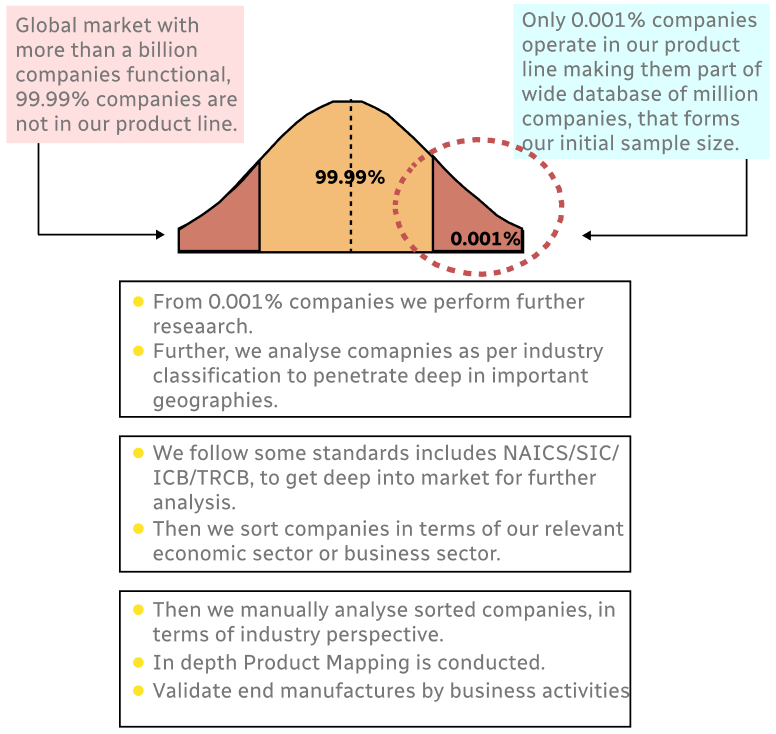
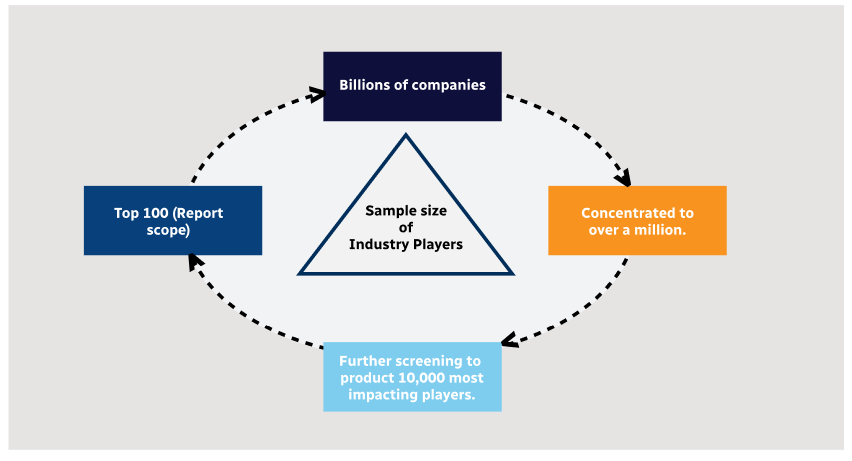
Step 1 - Identification of Relevant Samples Size from Population Database
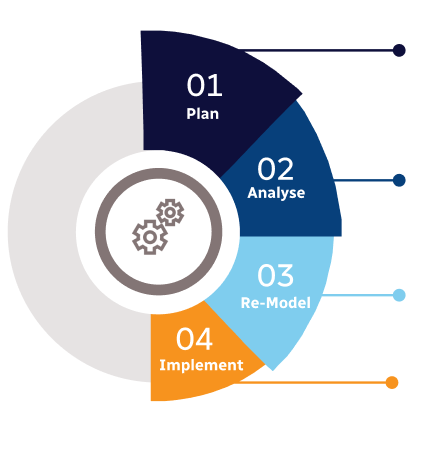
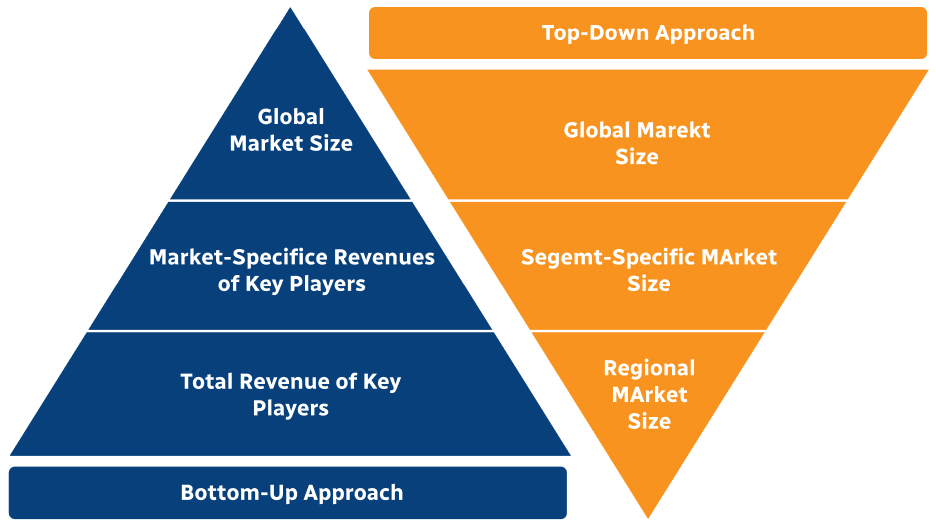
Step 2 - Approaches for Defining Global Market Size (Value, Volume* & Price*)
Note*: In applicable scenarios
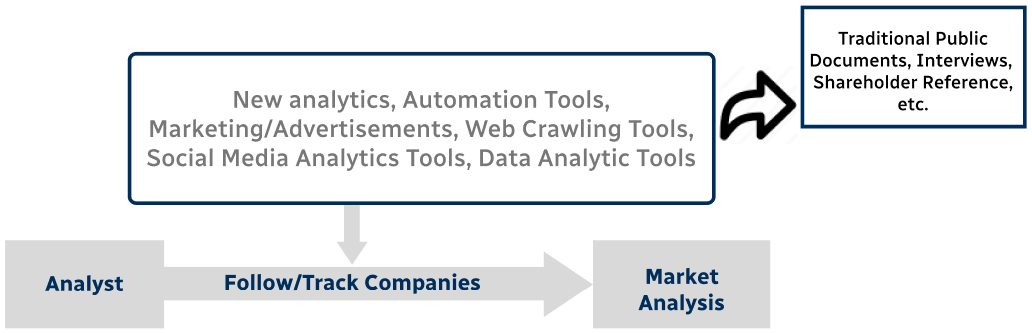
Step 3 - Data Sources
Primary Research
- Web Analytics
- Survey Reports
- Research Institute
- Latest Research Reports
- Opinion Leaders
Secondary Research
- Annual Reports
- White Paper
- Latest Press Release
- Industry Association
- Paid Database
- Investor Presentations
Step 4 - Data Triangulation
Involves using different sources of information in order to increase the validity of a study
These sources are likely to be stakeholders in a program - participants, other researchers, program staff, other community members, and so on.
Then we put all data in single framework & apply various statistical tools to find out the dynamic on the market.
During the analysis stage, feedback from the stakeholder groups would be compared to determine areas of agreement as well as areas of divergence