


Key Insights
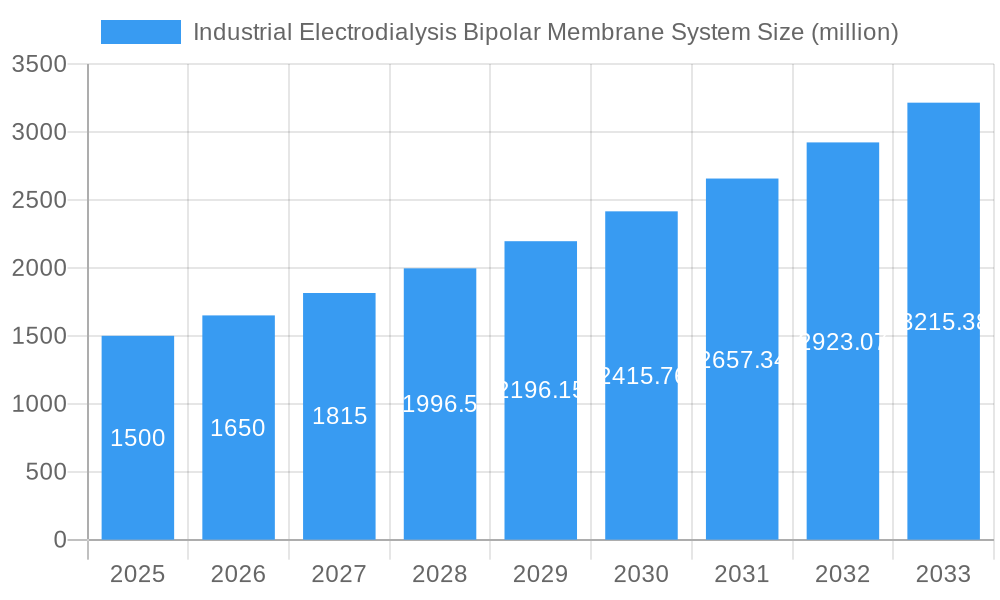
The Industrial Electrodialysis Bipolar Membrane System market is projected for robust growth, estimated to reach $1.5 billion by 2025, with a Compound Annual Growth Rate (CAGR) of 7%. This expansion is driven by increasing global demand for purified water in arid regions and industrial applications, coupled with the inherent efficiency and sustainability of electrodialysis technology. Stricter environmental regulations on wastewater discharge are further accelerating adoption. Key growth sectors include the food and pharmaceutical industries, requiring high-purity water and advanced separation solutions, alongside emerging applications in research laboratories and niche industrial segments.
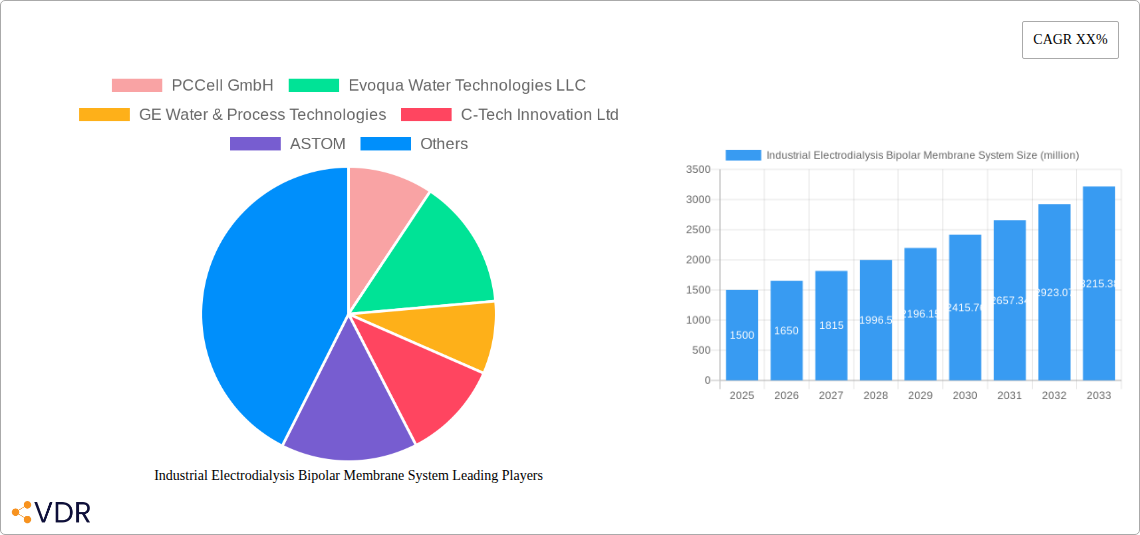
Industrial Electrodialysis Bipolar Membrane System Market Size (In Billion)

Ongoing advancements in membrane technology, focusing on enhanced efficiency, reduced energy consumption, and improved durability, are crucial for making these systems more cost-effective and accessible. While initial capital investment may present a barrier, long-term operational savings and environmental advantages are becoming increasingly compelling. Innovations in electrode materials and stack designs are also addressing energy efficiency challenges. Geographically, Asia Pacific is anticipated to lead market growth due to rapid industrialization and water scarcity. North America and Europe, with established industries and a strong emphasis on sustainability, will remain significant markets. The development of compact, modular systems is broadening the technology's applicability across diverse regions and uses.
Industrial Electrodialysis Bipolar Membrane System Company Market Share
Industrial Electrodialysis Bipolar Membrane System Market Dynamics & Structure
The industrial electrodialysis bipolar membrane (EDBM) system market is characterized by a moderate to high concentration, with key players like PCCell GmbH, Evoqua Water Technologies LLC, and GE Water & Process Technologies holding significant market shares. Technological innovation is a primary driver, fueled by the increasing demand for efficient water treatment, chemical production, and resource recovery. The development of advanced bipolar membranes with improved selectivity and durability is a critical area of R&D. Regulatory frameworks, particularly concerning water quality standards and environmental discharge limits, are increasingly stringent, pushing industries to adopt advanced separation technologies like EDBM. Competitive product substitutes, such as reverse osmosis and conventional ion exchange, are present, but EDBM offers distinct advantages in specific applications, particularly in acid/base recovery and high-salinity water treatment. End-user demographics are expanding beyond traditional chemical and water treatment sectors to include food & beverage, pharmaceuticals, and even renewable energy (e.g., battery recycling). Mergers and acquisitions (M&A) are a notable trend, with larger companies acquiring specialized EDBM technology providers to enhance their portfolios and market reach. For instance, an estimated 3-5 significant M&A deals in the advanced membrane separation technology sector are anticipated between 2024 and 2026, signaling consolidation and strategic growth. Barriers to innovation include the high capital expenditure required for advanced EDBM systems and the need for skilled personnel for operation and maintenance.
- Market Concentration: Moderate to High, dominated by a few key players.
- Technological Innovation Drivers: Demand for efficient water treatment, resource recovery, and chemical synthesis.
- Regulatory Frameworks: Increasingly stringent environmental and water quality standards.
- Competitive Substitutes: Reverse osmosis, conventional ion exchange, nanofiltration.
- End-User Demographics: Expanding to include food, pharma, and renewable energy sectors.
- M&A Trends: Active consolidation, with an estimated 3-5 deals anticipated between 2024-2026.
- Innovation Barriers: High capital costs and requirement for skilled labor.
Industrial Electrodialysis Bipolar Membrane System Growth Trends & Insights
The global Industrial Electrodialysis Bipolar Membrane System market is poised for substantial growth, projected to expand from an estimated market size of $450 million in 2024 to $820 million by 2033, exhibiting a compound annual growth rate (CAGR) of approximately 7.1% during the forecast period of 2025–2033. This robust growth trajectory is underpinned by several interconnected trends. The escalating global water scarcity, coupled with tightening regulations on industrial wastewater discharge, is a primary catalyst. EDBM systems offer a sustainable and energy-efficient solution for desalination and water reuse, making them increasingly attractive across various industries. The parent market of advanced water treatment technologies, valued at an estimated $25 billion in 2024, provides a fertile ground for EDBM's expansion. Within this parent market, EDBM represents a significant and growing child market.
Furthermore, the drive towards a circular economy and resource recovery is propelling EDBM adoption. Industries are actively seeking ways to recover valuable chemicals, such as acids and bases, from waste streams, thereby reducing raw material costs and minimizing environmental impact. For instance, the recovery of sulfuric acid from spent acid streams in the steel industry, a key application of EDBM, is gaining significant traction. The food and pharmaceutical industries are also witnessing an increased adoption of EDBM for product purification, concentration, and demineralization, owing to its mild operating conditions which preserve product integrity. Technological advancements, including the development of more robust and selective bipolar membranes, improved system designs for higher efficiency, and integration with renewable energy sources, are further accelerating market penetration. Consumer behavior shifts towards sustainable products and processes are also indirectly influencing industrial choices, favoring technologies like EDBM that align with environmental responsibility. Market penetration is expected to rise from an estimated 4.5% in 2024 to over 8.0% by 2033 within its relevant sub-segments. The economic viability of EDBM systems, driven by reduced operational costs and potential revenue from recovered resources, further enhances adoption rates.
Dominant Regions, Countries, or Segments in Industrial Electrodialysis Bipolar Membrane System
The Asia Pacific region is emerging as a dominant force in the Industrial Electrodialysis Bipolar Membrane System market, driven by a confluence of rapid industrialization, burgeoning populations, and a strong emphasis on sustainable water management. Countries like China, India, and South Korea are at the forefront of this growth, propelled by supportive government policies, substantial investments in infrastructure, and the presence of a large manufacturing base across diverse sectors. The application segment of Seawater Desalination is a significant growth engine, particularly in water-stressed coastal regions of Asia, the Middle East, and North Africa. The market share for EDBM in this segment is projected to grow from an estimated 35% in 2024 to over 45% by 2033 within the broader desalination market. This is attributed to the increasing need for reliable and cost-effective freshwater sources to support growing populations and industrial activities.
The Foods and Pharmaceutical application segment also holds considerable sway, fueled by the stringent quality requirements and the growing demand for high-purity ingredients and products. Countries with advanced food processing and pharmaceutical manufacturing industries, such as the United States, Germany, and Japan, are significant contributors to this segment's growth. The continuous development and adoption of Continuous Electrodialysis Systems over Batch Electrodialysis Systems is another key trend contributing to regional dominance. Continuous systems offer higher throughput, better process control, and improved energy efficiency, making them more suitable for large-scale industrial operations. For example, in Europe, the strong regulatory push towards reducing industrial wastewater and recovering valuable by-products, coupled with the established chemical industry, is fostering the adoption of continuous EDBM systems. The economic policies promoting green technologies and the development of advanced manufacturing capabilities within these regions are critical factors underpinning their leading position and projected market share.
- Dominant Region: Asia Pacific, followed by North America and Europe.
- Key Countries: China, India, United States, South Korea, Germany, Japan.
- Leading Application Segment: Seawater Desalination, Foods and Pharmaceutical.
- Dominant Type: Continuous Electrodialysis Systems.
- Key Drivers: Industrialization, water scarcity, supportive government policies, infrastructure development, strict regulations, circular economy initiatives.
- Market Share in Seawater Desalination: Projected to increase from 35% (2024) to over 45% (2033) within the desalination sub-market.
Industrial Electrodialysis Bipolar Membrane System Product Landscape
The Industrial Electrodialysis Bipolar Membrane System product landscape is evolving rapidly with a focus on enhanced performance and application-specific customization. Innovations center around the development of advanced bipolar membranes exhibiting superior ion selectivity, higher flux rates, and improved chemical and thermal stability, leading to reduced energy consumption and extended system lifespan. Manufacturers are offering integrated EDBM systems designed for modularity and scalability, allowing for flexible deployment across various industrial scales. Key product innovations include the introduction of EDBM systems optimized for specific chemical recovery processes, such as the regeneration of sulfuric acid or the production of formic acid. Performance metrics like energy efficiency (kWh/m³ of treated water or product) are consistently improving, with leading systems now achieving efficiencies below 2 kWh/m³. Unique selling propositions often revolve around the ability of these systems to handle high-salinity brines and produce high-purity acids and bases with minimal by-product generation, offering a sustainable alternative to conventional chemical processes.
Key Drivers, Barriers & Challenges in Industrial Electrodialysis Bipolar Membrane System
The Industrial Electrodialysis Bipolar Membrane System market is propelled by several key drivers. Increasing global water stress and the urgent need for efficient desalination and water reuse solutions are paramount. The growing emphasis on sustainability and the circular economy is driving demand for resource recovery applications, particularly the regeneration of acids and bases from industrial wastewater, which can lead to significant cost savings and reduced environmental impact. Stricter environmental regulations worldwide, mandating lower discharge limits for pollutants and encouraging water conservation, further incentivize the adoption of advanced separation technologies like EDBM. Furthermore, technological advancements in membrane materials and system design are leading to improved performance, energy efficiency, and reduced operational costs, making EDBM systems more economically viable for a wider range of industries. The projected market growth of 7.1% CAGR is a direct indicator of these drivers.
However, the market also faces significant barriers and challenges. The high initial capital investment for EDBM systems can be a deterrent for small and medium-sized enterprises. The complexity of operation and maintenance, requiring skilled personnel, poses another hurdle. Availability and cost of replacement membranes can also impact the total cost of ownership. Competition from established technologies like reverse osmosis and conventional ion exchange, which have a longer track record and lower perceived risk, remains a challenge. Variability in feed water composition can affect system performance and membrane longevity, requiring robust pre-treatment strategies. Supply chain disruptions for critical components and raw materials, especially for advanced membrane materials, could also pose short-term challenges, impacting project timelines and costs. The estimated impact of these challenges on market growth could be a reduction of 0.5-1.0% in the projected CAGR if not effectively addressed.
Emerging Opportunities in Industrial Electrodialysis Bipolar Membrane System
Emerging opportunities for Industrial Electrodialysis Bipolar Membrane Systems lie in several burgeoning areas. The increasing demand for lithium recovery from brines and wastewater, driven by the booming electric vehicle market, presents a significant untapped market. EDBM's ability to selectively extract ions makes it well-suited for this application. Furthermore, the food and beverage industry's push for cleaner labels and natural processing opens doors for EDBM in demineralization and protein concentration without the use of harsh chemicals. The pharmaceutical industry's need for high-purity APIs (Active Pharmaceutical Ingredients) and the reduction of solvent waste also offer substantial growth potential. Moreover, the development of compact, skid-mounted EDBM systems for decentralized water treatment and localized resource recovery is gaining traction, catering to remote industrial sites and niche applications. The growing focus on recycling and resource recovery from electronic waste and battery manufacturing by-products is another promising avenue where EDBM's selective separation capabilities can be leveraged.
Growth Accelerators in the Industrial Electrodialysis Bipolar Membrane System Industry
Several catalysts are accelerating the long-term growth of the Industrial Electrodialysis Bipolar Membrane System industry. Breakthroughs in membrane material science, leading to membranes with enhanced selectivity, flux, and lifespan, are continuously improving system efficiency and reducing operational costs. The integration of EDBM systems with renewable energy sources, such as solar and wind power, is making these solutions more sustainable and economically attractive, aligning with global decarbonization efforts. Strategic partnerships and collaborations between EDBM manufacturers, engineering firms, and end-users are fostering customized solutions and accelerating market adoption. For example, joint ventures focusing on pilot projects for novel applications are crucial. Furthermore, expansion into emerging economies with rapidly industrializing sectors and increasing water scarcity will significantly boost market penetration. The increasing recognition of EDBM as a key technology for achieving circular economy goals and achieving stringent environmental targets will also act as a powerful growth accelerator.
Key Players Shaping the Industrial Electrodialysis Bipolar Membrane System Market
- PCCell GmbH
- Evoqua Water Technologies LLC
- GE Water & Process Technologies
- C-Tech Innovation Ltd
- ASTOM
- AGC ENGINEERING
- FuMA-Tech
- MEGA
- Hangzhou Iontech Environmental Technology Co
- EURODIA
- Saltworks Technologies Inc
- Electrosynthesis Company
- WGM Sistemas
- Doromil
- Innovative Enterprise
Notable Milestones in Industrial Electrodialysis Bipolar Membrane System Sector
- 2020: Launch of next-generation bipolar membranes with significantly improved acid recovery efficiency by a leading manufacturer, impacting the chemical processing segment.
- 2021: A major water technology company acquired a specialized EDBM innovator, signaling industry consolidation and strategic investment in advanced separation technologies.
- 2022: Successful large-scale pilot project demonstrating the viability of EDBM for lithium recovery from geothermal brines, opening new avenues in the critical minerals sector.
- 2023: Introduction of highly energy-efficient EDBM systems for seawater desalination, achieving benchmark performance metrics and reducing operational costs by an estimated 15%.
- 2024: Increased government incentives and grants for water reuse and resource recovery technologies, further boosting the adoption of EDBM systems globally.
In-Depth Industrial Electrodialysis Bipolar Membrane System Market Outlook
The Industrial Electrodialysis Bipolar Membrane System market is projected to witness sustained robust growth, driven by an increasing global imperative for sustainable water management and resource recovery. The synergy between technological advancements in membrane science, the growing adoption of circular economy principles, and supportive regulatory frameworks will continue to fuel market expansion. Strategic investments in emerging applications like critical mineral extraction and advanced food processing, coupled with the development of more energy-efficient and cost-effective EDBM solutions, will pave the way for significant market penetration. The outlook is highly positive, with continued innovation and market expansion expected to unlock substantial opportunities across diverse industrial sectors.
Industrial Electrodialysis Bipolar Membrane System Segmentation
-
1. Application
- 1.1. Seawater Desalination
- 1.2. Foods and Pharmaceutical
- 1.3. Laboratory and Research
- 1.4. Others
-
2. Types
- 2.1. Continuous Electrodialysis Systems
- 2.2. Batch Electrodialysis Systems
Industrial Electrodialysis Bipolar Membrane System Segmentation By Geography
-
1. North America
- 1.1. United States
- 1.2. Canada
- 1.3. Mexico
-
2. South America
- 2.1. Brazil
- 2.2. Argentina
- 2.3. Rest of South America
-
3. Europe
- 3.1. United Kingdom
- 3.2. Germany
- 3.3. France
- 3.4. Italy
- 3.5. Spain
- 3.6. Russia
- 3.7. Benelux
- 3.8. Nordics
- 3.9. Rest of Europe
-
4. Middle East & Africa
- 4.1. Turkey
- 4.2. Israel
- 4.3. GCC
- 4.4. North Africa
- 4.5. South Africa
- 4.6. Rest of Middle East & Africa
-
5. Asia Pacific
- 5.1. China
- 5.2. India
- 5.3. Japan
- 5.4. South Korea
- 5.5. ASEAN
- 5.6. Oceania
- 5.7. Rest of Asia Pacific
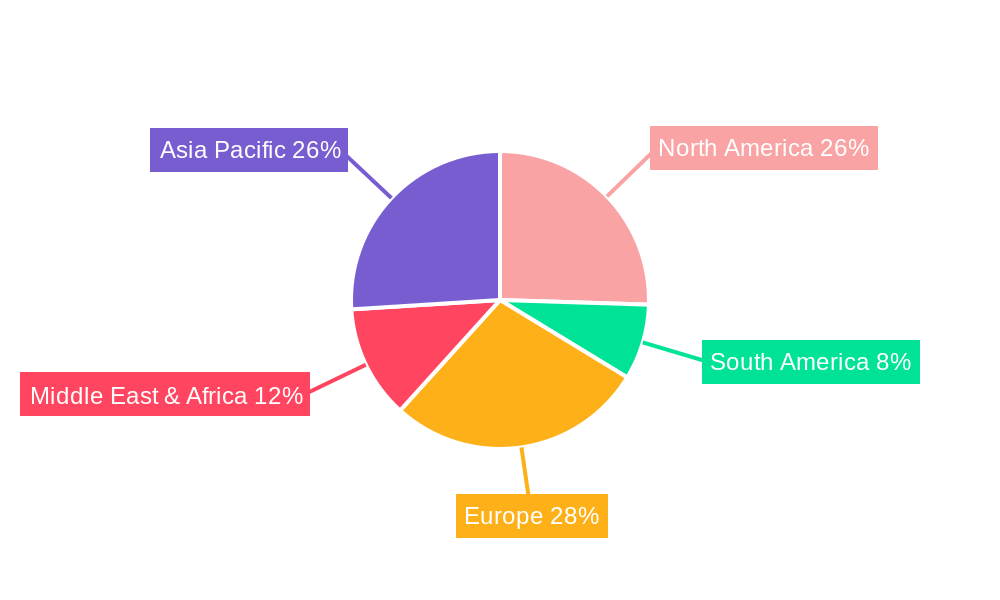
Industrial Electrodialysis Bipolar Membrane System Regional Market Share
Geographic Coverage of Industrial Electrodialysis Bipolar Membrane System
Industrial Electrodialysis Bipolar Membrane System REPORT HIGHLIGHTS
| Aspects | Details |
|---|---|
| Study Period | 2020-2034 |
| Base Year | 2025 |
| Estimated Year | 2026 |
| Forecast Period | 2026-2034 |
| Historical Period | 2020-2025 |
| Growth Rate | CAGR of 7% from 2020-2034 |
| Segmentation |
|
Table of Contents
- 1. Introduction
- 1.1. Research Scope
- 1.2. Market Segmentation
- 1.3. Research Methodology
- 1.4. Definitions and Assumptions
- 2. Executive Summary
- 2.1. Introduction
- 3. Market Dynamics
- 3.1. Introduction
- 3.2. Market Drivers
- 3.3. Market Restrains
- 3.4. Market Trends
- 4. Market Factor Analysis
- 4.1. Porters Five Forces
- 4.2. Supply/Value Chain
- 4.3. PESTEL analysis
- 4.4. Market Entropy
- 4.5. Patent/Trademark Analysis
- 5. Global Industrial Electrodialysis Bipolar Membrane System Analysis, Insights and Forecast, 2020-2032
- 5.1. Market Analysis, Insights and Forecast - by Application
- 5.1.1. Seawater Desalination
- 5.1.2. Foods and Pharmaceutical
- 5.1.3. Laboratory and Research
- 5.1.4. Others
- 5.2. Market Analysis, Insights and Forecast - by Types
- 5.2.1. Continuous Electrodialysis Systems
- 5.2.2. Batch Electrodialysis Systems
- 5.3. Market Analysis, Insights and Forecast - by Region
- 5.3.1. North America
- 5.3.2. South America
- 5.3.3. Europe
- 5.3.4. Middle East & Africa
- 5.3.5. Asia Pacific
- 5.1. Market Analysis, Insights and Forecast - by Application
- 6. North America Industrial Electrodialysis Bipolar Membrane System Analysis, Insights and Forecast, 2020-2032
- 6.1. Market Analysis, Insights and Forecast - by Application
- 6.1.1. Seawater Desalination
- 6.1.2. Foods and Pharmaceutical
- 6.1.3. Laboratory and Research
- 6.1.4. Others
- 6.2. Market Analysis, Insights and Forecast - by Types
- 6.2.1. Continuous Electrodialysis Systems
- 6.2.2. Batch Electrodialysis Systems
- 6.1. Market Analysis, Insights and Forecast - by Application
- 7. South America Industrial Electrodialysis Bipolar Membrane System Analysis, Insights and Forecast, 2020-2032
- 7.1. Market Analysis, Insights and Forecast - by Application
- 7.1.1. Seawater Desalination
- 7.1.2. Foods and Pharmaceutical
- 7.1.3. Laboratory and Research
- 7.1.4. Others
- 7.2. Market Analysis, Insights and Forecast - by Types
- 7.2.1. Continuous Electrodialysis Systems
- 7.2.2. Batch Electrodialysis Systems
- 7.1. Market Analysis, Insights and Forecast - by Application
- 8. Europe Industrial Electrodialysis Bipolar Membrane System Analysis, Insights and Forecast, 2020-2032
- 8.1. Market Analysis, Insights and Forecast - by Application
- 8.1.1. Seawater Desalination
- 8.1.2. Foods and Pharmaceutical
- 8.1.3. Laboratory and Research
- 8.1.4. Others
- 8.2. Market Analysis, Insights and Forecast - by Types
- 8.2.1. Continuous Electrodialysis Systems
- 8.2.2. Batch Electrodialysis Systems
- 8.1. Market Analysis, Insights and Forecast - by Application
- 9. Middle East & Africa Industrial Electrodialysis Bipolar Membrane System Analysis, Insights and Forecast, 2020-2032
- 9.1. Market Analysis, Insights and Forecast - by Application
- 9.1.1. Seawater Desalination
- 9.1.2. Foods and Pharmaceutical
- 9.1.3. Laboratory and Research
- 9.1.4. Others
- 9.2. Market Analysis, Insights and Forecast - by Types
- 9.2.1. Continuous Electrodialysis Systems
- 9.2.2. Batch Electrodialysis Systems
- 9.1. Market Analysis, Insights and Forecast - by Application
- 10. Asia Pacific Industrial Electrodialysis Bipolar Membrane System Analysis, Insights and Forecast, 2020-2032
- 10.1. Market Analysis, Insights and Forecast - by Application
- 10.1.1. Seawater Desalination
- 10.1.2. Foods and Pharmaceutical
- 10.1.3. Laboratory and Research
- 10.1.4. Others
- 10.2. Market Analysis, Insights and Forecast - by Types
- 10.2.1. Continuous Electrodialysis Systems
- 10.2.2. Batch Electrodialysis Systems
- 10.1. Market Analysis, Insights and Forecast - by Application
- 11. Competitive Analysis
- 11.1. Global Market Share Analysis 2025
- 11.2. Company Profiles
- 11.2.1 PCCell GmbH
- 11.2.1.1. Overview
- 11.2.1.2. Products
- 11.2.1.3. SWOT Analysis
- 11.2.1.4. Recent Developments
- 11.2.1.5. Financials (Based on Availability)
- 11.2.2 Evoqua Water Technologies LLC
- 11.2.2.1. Overview
- 11.2.2.2. Products
- 11.2.2.3. SWOT Analysis
- 11.2.2.4. Recent Developments
- 11.2.2.5. Financials (Based on Availability)
- 11.2.3 GE Water & Process Technologies
- 11.2.3.1. Overview
- 11.2.3.2. Products
- 11.2.3.3. SWOT Analysis
- 11.2.3.4. Recent Developments
- 11.2.3.5. Financials (Based on Availability)
- 11.2.4 C-Tech Innovation Ltd
- 11.2.4.1. Overview
- 11.2.4.2. Products
- 11.2.4.3. SWOT Analysis
- 11.2.4.4. Recent Developments
- 11.2.4.5. Financials (Based on Availability)
- 11.2.5 ASTOM
- 11.2.5.1. Overview
- 11.2.5.2. Products
- 11.2.5.3. SWOT Analysis
- 11.2.5.4. Recent Developments
- 11.2.5.5. Financials (Based on Availability)
- 11.2.6 AGC ENGINEERING
- 11.2.6.1. Overview
- 11.2.6.2. Products
- 11.2.6.3. SWOT Analysis
- 11.2.6.4. Recent Developments
- 11.2.6.5. Financials (Based on Availability)
- 11.2.7 FuMA-Tech
- 11.2.7.1. Overview
- 11.2.7.2. Products
- 11.2.7.3. SWOT Analysis
- 11.2.7.4. Recent Developments
- 11.2.7.5. Financials (Based on Availability)
- 11.2.8 MEGA
- 11.2.8.1. Overview
- 11.2.8.2. Products
- 11.2.8.3. SWOT Analysis
- 11.2.8.4. Recent Developments
- 11.2.8.5. Financials (Based on Availability)
- 11.2.9 Hangzhou Iontech Environmental Technology Co
- 11.2.9.1. Overview
- 11.2.9.2. Products
- 11.2.9.3. SWOT Analysis
- 11.2.9.4. Recent Developments
- 11.2.9.5. Financials (Based on Availability)
- 11.2.10 EURODIA
- 11.2.10.1. Overview
- 11.2.10.2. Products
- 11.2.10.3. SWOT Analysis
- 11.2.10.4. Recent Developments
- 11.2.10.5. Financials (Based on Availability)
- 11.2.11 Saltworks Technologies Inc
- 11.2.11.1. Overview
- 11.2.11.2. Products
- 11.2.11.3. SWOT Analysis
- 11.2.11.4. Recent Developments
- 11.2.11.5. Financials (Based on Availability)
- 11.2.12 Electrosynthesis Company
- 11.2.12.1. Overview
- 11.2.12.2. Products
- 11.2.12.3. SWOT Analysis
- 11.2.12.4. Recent Developments
- 11.2.12.5. Financials (Based on Availability)
- 11.2.13 WGM Sistemas
- 11.2.13.1. Overview
- 11.2.13.2. Products
- 11.2.13.3. SWOT Analysis
- 11.2.13.4. Recent Developments
- 11.2.13.5. Financials (Based on Availability)
- 11.2.14 Doromil
- 11.2.14.1. Overview
- 11.2.14.2. Products
- 11.2.14.3. SWOT Analysis
- 11.2.14.4. Recent Developments
- 11.2.14.5. Financials (Based on Availability)
- 11.2.15 Innovative Enterprise
- 11.2.15.1. Overview
- 11.2.15.2. Products
- 11.2.15.3. SWOT Analysis
- 11.2.15.4. Recent Developments
- 11.2.15.5. Financials (Based on Availability)
- 11.2.1 PCCell GmbH
List of Figures
- Figure 1: Global Industrial Electrodialysis Bipolar Membrane System Revenue Breakdown (billion, %) by Region 2025 & 2033
- Figure 2: North America Industrial Electrodialysis Bipolar Membrane System Revenue (billion), by Application 2025 & 2033
- Figure 3: North America Industrial Electrodialysis Bipolar Membrane System Revenue Share (%), by Application 2025 & 2033
- Figure 4: North America Industrial Electrodialysis Bipolar Membrane System Revenue (billion), by Types 2025 & 2033
- Figure 5: North America Industrial Electrodialysis Bipolar Membrane System Revenue Share (%), by Types 2025 & 2033
- Figure 6: North America Industrial Electrodialysis Bipolar Membrane System Revenue (billion), by Country 2025 & 2033
- Figure 7: North America Industrial Electrodialysis Bipolar Membrane System Revenue Share (%), by Country 2025 & 2033
- Figure 8: South America Industrial Electrodialysis Bipolar Membrane System Revenue (billion), by Application 2025 & 2033
- Figure 9: South America Industrial Electrodialysis Bipolar Membrane System Revenue Share (%), by Application 2025 & 2033
- Figure 10: South America Industrial Electrodialysis Bipolar Membrane System Revenue (billion), by Types 2025 & 2033
- Figure 11: South America Industrial Electrodialysis Bipolar Membrane System Revenue Share (%), by Types 2025 & 2033
- Figure 12: South America Industrial Electrodialysis Bipolar Membrane System Revenue (billion), by Country 2025 & 2033
- Figure 13: South America Industrial Electrodialysis Bipolar Membrane System Revenue Share (%), by Country 2025 & 2033
- Figure 14: Europe Industrial Electrodialysis Bipolar Membrane System Revenue (billion), by Application 2025 & 2033
- Figure 15: Europe Industrial Electrodialysis Bipolar Membrane System Revenue Share (%), by Application 2025 & 2033
- Figure 16: Europe Industrial Electrodialysis Bipolar Membrane System Revenue (billion), by Types 2025 & 2033
- Figure 17: Europe Industrial Electrodialysis Bipolar Membrane System Revenue Share (%), by Types 2025 & 2033
- Figure 18: Europe Industrial Electrodialysis Bipolar Membrane System Revenue (billion), by Country 2025 & 2033
- Figure 19: Europe Industrial Electrodialysis Bipolar Membrane System Revenue Share (%), by Country 2025 & 2033
- Figure 20: Middle East & Africa Industrial Electrodialysis Bipolar Membrane System Revenue (billion), by Application 2025 & 2033
- Figure 21: Middle East & Africa Industrial Electrodialysis Bipolar Membrane System Revenue Share (%), by Application 2025 & 2033
- Figure 22: Middle East & Africa Industrial Electrodialysis Bipolar Membrane System Revenue (billion), by Types 2025 & 2033
- Figure 23: Middle East & Africa Industrial Electrodialysis Bipolar Membrane System Revenue Share (%), by Types 2025 & 2033
- Figure 24: Middle East & Africa Industrial Electrodialysis Bipolar Membrane System Revenue (billion), by Country 2025 & 2033
- Figure 25: Middle East & Africa Industrial Electrodialysis Bipolar Membrane System Revenue Share (%), by Country 2025 & 2033
- Figure 26: Asia Pacific Industrial Electrodialysis Bipolar Membrane System Revenue (billion), by Application 2025 & 2033
- Figure 27: Asia Pacific Industrial Electrodialysis Bipolar Membrane System Revenue Share (%), by Application 2025 & 2033
- Figure 28: Asia Pacific Industrial Electrodialysis Bipolar Membrane System Revenue (billion), by Types 2025 & 2033
- Figure 29: Asia Pacific Industrial Electrodialysis Bipolar Membrane System Revenue Share (%), by Types 2025 & 2033
- Figure 30: Asia Pacific Industrial Electrodialysis Bipolar Membrane System Revenue (billion), by Country 2025 & 2033
- Figure 31: Asia Pacific Industrial Electrodialysis Bipolar Membrane System Revenue Share (%), by Country 2025 & 2033
List of Tables
- Table 1: Global Industrial Electrodialysis Bipolar Membrane System Revenue billion Forecast, by Application 2020 & 2033
- Table 2: Global Industrial Electrodialysis Bipolar Membrane System Revenue billion Forecast, by Types 2020 & 2033
- Table 3: Global Industrial Electrodialysis Bipolar Membrane System Revenue billion Forecast, by Region 2020 & 2033
- Table 4: Global Industrial Electrodialysis Bipolar Membrane System Revenue billion Forecast, by Application 2020 & 2033
- Table 5: Global Industrial Electrodialysis Bipolar Membrane System Revenue billion Forecast, by Types 2020 & 2033
- Table 6: Global Industrial Electrodialysis Bipolar Membrane System Revenue billion Forecast, by Country 2020 & 2033
- Table 7: United States Industrial Electrodialysis Bipolar Membrane System Revenue (billion) Forecast, by Application 2020 & 2033
- Table 8: Canada Industrial Electrodialysis Bipolar Membrane System Revenue (billion) Forecast, by Application 2020 & 2033
- Table 9: Mexico Industrial Electrodialysis Bipolar Membrane System Revenue (billion) Forecast, by Application 2020 & 2033
- Table 10: Global Industrial Electrodialysis Bipolar Membrane System Revenue billion Forecast, by Application 2020 & 2033
- Table 11: Global Industrial Electrodialysis Bipolar Membrane System Revenue billion Forecast, by Types 2020 & 2033
- Table 12: Global Industrial Electrodialysis Bipolar Membrane System Revenue billion Forecast, by Country 2020 & 2033
- Table 13: Brazil Industrial Electrodialysis Bipolar Membrane System Revenue (billion) Forecast, by Application 2020 & 2033
- Table 14: Argentina Industrial Electrodialysis Bipolar Membrane System Revenue (billion) Forecast, by Application 2020 & 2033
- Table 15: Rest of South America Industrial Electrodialysis Bipolar Membrane System Revenue (billion) Forecast, by Application 2020 & 2033
- Table 16: Global Industrial Electrodialysis Bipolar Membrane System Revenue billion Forecast, by Application 2020 & 2033
- Table 17: Global Industrial Electrodialysis Bipolar Membrane System Revenue billion Forecast, by Types 2020 & 2033
- Table 18: Global Industrial Electrodialysis Bipolar Membrane System Revenue billion Forecast, by Country 2020 & 2033
- Table 19: United Kingdom Industrial Electrodialysis Bipolar Membrane System Revenue (billion) Forecast, by Application 2020 & 2033
- Table 20: Germany Industrial Electrodialysis Bipolar Membrane System Revenue (billion) Forecast, by Application 2020 & 2033
- Table 21: France Industrial Electrodialysis Bipolar Membrane System Revenue (billion) Forecast, by Application 2020 & 2033
- Table 22: Italy Industrial Electrodialysis Bipolar Membrane System Revenue (billion) Forecast, by Application 2020 & 2033
- Table 23: Spain Industrial Electrodialysis Bipolar Membrane System Revenue (billion) Forecast, by Application 2020 & 2033
- Table 24: Russia Industrial Electrodialysis Bipolar Membrane System Revenue (billion) Forecast, by Application 2020 & 2033
- Table 25: Benelux Industrial Electrodialysis Bipolar Membrane System Revenue (billion) Forecast, by Application 2020 & 2033
- Table 26: Nordics Industrial Electrodialysis Bipolar Membrane System Revenue (billion) Forecast, by Application 2020 & 2033
- Table 27: Rest of Europe Industrial Electrodialysis Bipolar Membrane System Revenue (billion) Forecast, by Application 2020 & 2033
- Table 28: Global Industrial Electrodialysis Bipolar Membrane System Revenue billion Forecast, by Application 2020 & 2033
- Table 29: Global Industrial Electrodialysis Bipolar Membrane System Revenue billion Forecast, by Types 2020 & 2033
- Table 30: Global Industrial Electrodialysis Bipolar Membrane System Revenue billion Forecast, by Country 2020 & 2033
- Table 31: Turkey Industrial Electrodialysis Bipolar Membrane System Revenue (billion) Forecast, by Application 2020 & 2033
- Table 32: Israel Industrial Electrodialysis Bipolar Membrane System Revenue (billion) Forecast, by Application 2020 & 2033
- Table 33: GCC Industrial Electrodialysis Bipolar Membrane System Revenue (billion) Forecast, by Application 2020 & 2033
- Table 34: North Africa Industrial Electrodialysis Bipolar Membrane System Revenue (billion) Forecast, by Application 2020 & 2033
- Table 35: South Africa Industrial Electrodialysis Bipolar Membrane System Revenue (billion) Forecast, by Application 2020 & 2033
- Table 36: Rest of Middle East & Africa Industrial Electrodialysis Bipolar Membrane System Revenue (billion) Forecast, by Application 2020 & 2033
- Table 37: Global Industrial Electrodialysis Bipolar Membrane System Revenue billion Forecast, by Application 2020 & 2033
- Table 38: Global Industrial Electrodialysis Bipolar Membrane System Revenue billion Forecast, by Types 2020 & 2033
- Table 39: Global Industrial Electrodialysis Bipolar Membrane System Revenue billion Forecast, by Country 2020 & 2033
- Table 40: China Industrial Electrodialysis Bipolar Membrane System Revenue (billion) Forecast, by Application 2020 & 2033
- Table 41: India Industrial Electrodialysis Bipolar Membrane System Revenue (billion) Forecast, by Application 2020 & 2033
- Table 42: Japan Industrial Electrodialysis Bipolar Membrane System Revenue (billion) Forecast, by Application 2020 & 2033
- Table 43: South Korea Industrial Electrodialysis Bipolar Membrane System Revenue (billion) Forecast, by Application 2020 & 2033
- Table 44: ASEAN Industrial Electrodialysis Bipolar Membrane System Revenue (billion) Forecast, by Application 2020 & 2033
- Table 45: Oceania Industrial Electrodialysis Bipolar Membrane System Revenue (billion) Forecast, by Application 2020 & 2033
- Table 46: Rest of Asia Pacific Industrial Electrodialysis Bipolar Membrane System Revenue (billion) Forecast, by Application 2020 & 2033
Frequently Asked Questions
1. What is the projected Compound Annual Growth Rate (CAGR) of the Industrial Electrodialysis Bipolar Membrane System?
The projected CAGR is approximately 7%.
2. Which companies are prominent players in the Industrial Electrodialysis Bipolar Membrane System?
Key companies in the market include PCCell GmbH, Evoqua Water Technologies LLC, GE Water & Process Technologies, C-Tech Innovation Ltd, ASTOM, AGC ENGINEERING, FuMA-Tech, MEGA, Hangzhou Iontech Environmental Technology Co, EURODIA, Saltworks Technologies Inc, Electrosynthesis Company, WGM Sistemas, Doromil, Innovative Enterprise.
3. What are the main segments of the Industrial Electrodialysis Bipolar Membrane System?
The market segments include Application, Types.
4. Can you provide details about the market size?
The market size is estimated to be USD 1.5 billion as of 2022.
5. What are some drivers contributing to market growth?
N/A
6. What are the notable trends driving market growth?
N/A
7. Are there any restraints impacting market growth?
N/A
8. Can you provide examples of recent developments in the market?
N/A
9. What pricing options are available for accessing the report?
Pricing options include single-user, multi-user, and enterprise licenses priced at USD 3350.00, USD 5025.00, and USD 6700.00 respectively.
10. Is the market size provided in terms of value or volume?
The market size is provided in terms of value, measured in billion.
11. Are there any specific market keywords associated with the report?
Yes, the market keyword associated with the report is "Industrial Electrodialysis Bipolar Membrane System," which aids in identifying and referencing the specific market segment covered.
12. How do I determine which pricing option suits my needs best?
The pricing options vary based on user requirements and access needs. Individual users may opt for single-user licenses, while businesses requiring broader access may choose multi-user or enterprise licenses for cost-effective access to the report.
13. Are there any additional resources or data provided in the Industrial Electrodialysis Bipolar Membrane System report?
While the report offers comprehensive insights, it's advisable to review the specific contents or supplementary materials provided to ascertain if additional resources or data are available.
14. How can I stay updated on further developments or reports in the Industrial Electrodialysis Bipolar Membrane System?
To stay informed about further developments, trends, and reports in the Industrial Electrodialysis Bipolar Membrane System, consider subscribing to industry newsletters, following relevant companies and organizations, or regularly checking reputable industry news sources and publications.
Methodology
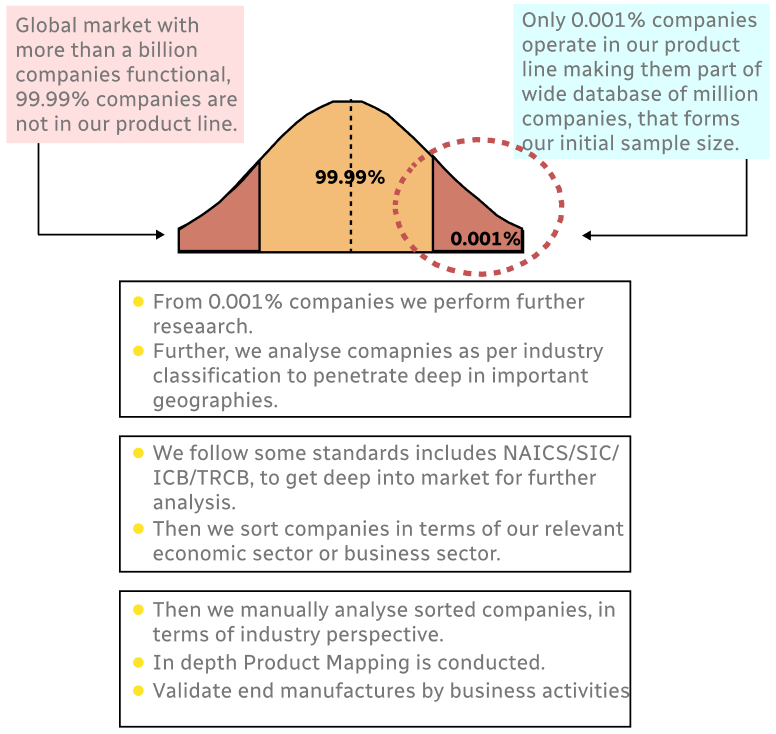
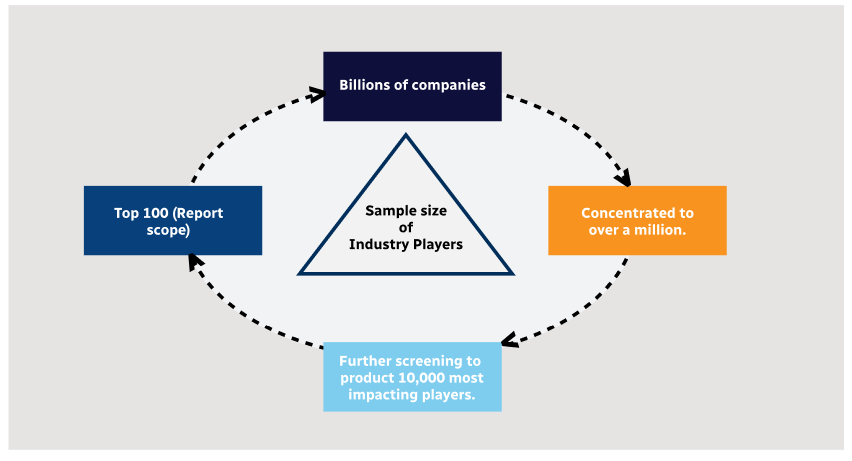
Step 1 - Identification of Relevant Samples Size from Population Database
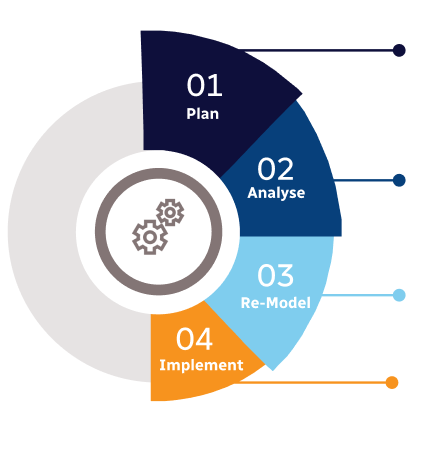
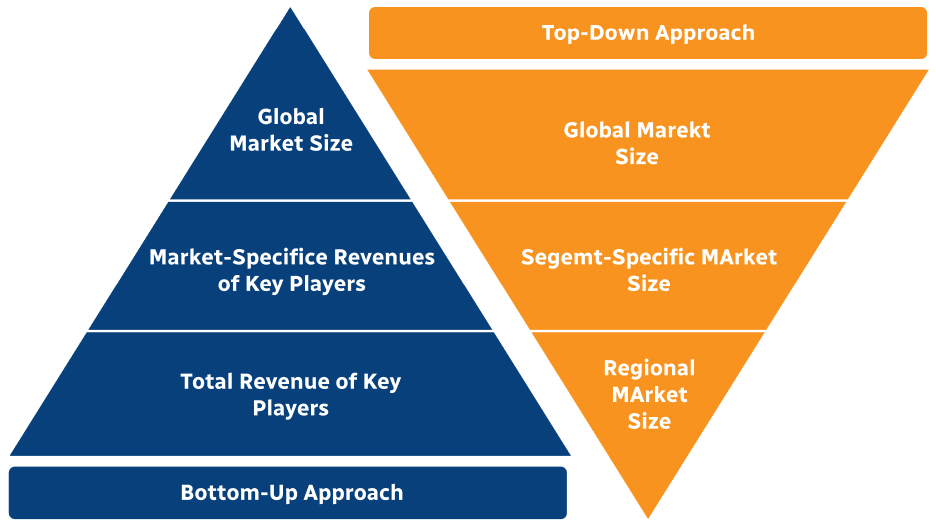
Step 2 - Approaches for Defining Global Market Size (Value, Volume* & Price*)
Note*: In applicable scenarios
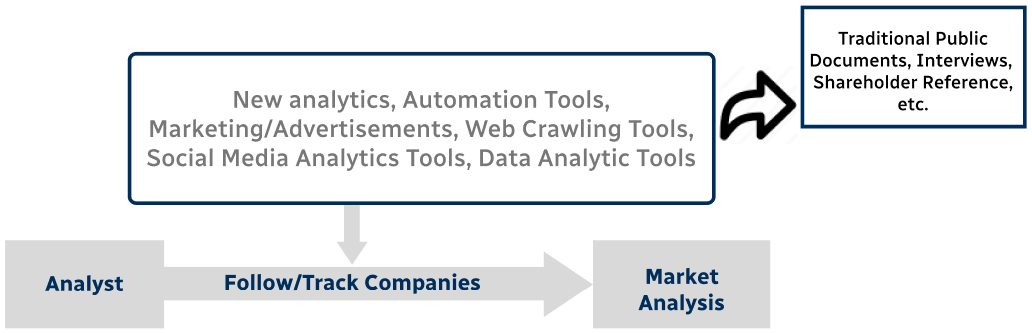
Step 3 - Data Sources
Primary Research
- Web Analytics
- Survey Reports
- Research Institute
- Latest Research Reports
- Opinion Leaders
Secondary Research
- Annual Reports
- White Paper
- Latest Press Release
- Industry Association
- Paid Database
- Investor Presentations
Step 4 - Data Triangulation
Involves using different sources of information in order to increase the validity of a study
These sources are likely to be stakeholders in a program - participants, other researchers, program staff, other community members, and so on.
Then we put all data in single framework & apply various statistical tools to find out the dynamic on the market.
During the analysis stage, feedback from the stakeholder groups would be compared to determine areas of agreement as well as areas of divergence