


Key Insights
The global in-car Wi-Fi market is poised for significant expansion, projected to reach $18.3 billion by 2024, with a compound annual growth rate (CAGR) of 9.4% through 2033. This growth is driven by escalating demand for connected car services, enhanced passenger entertainment, and advanced telematics integration. As vehicle connectivity becomes a standard expectation, consumers seek seamless internet access for work, entertainment, and navigation. Key growth drivers include the proliferation of streaming services, the need for real-time traffic updates, and the increasing adoption of over-the-air (OTA) software updates. Leading automotive manufacturers like AUDI, BMW, Daimler, FCA, Ford, and General Motors are investing in sophisticated in-car Wi-Fi systems to meet future automotive demands and gain a competitive edge.
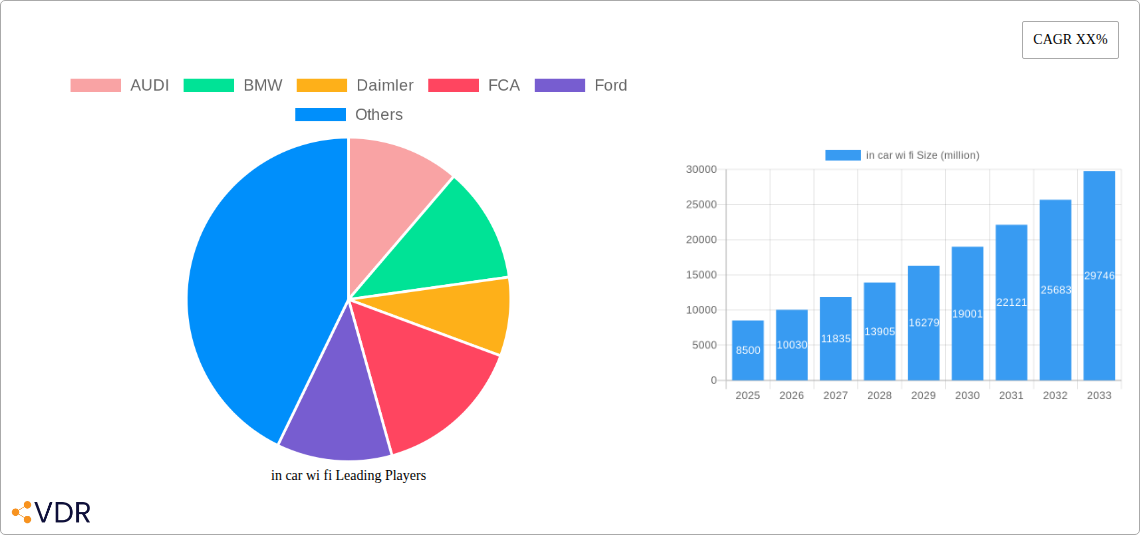
in car wi fi Market Size (In Billion)

Evolving consumer expectations and technological advancements will further shape the market. The advent of 5G connectivity will accelerate data transfer speeds, enabling more data-intensive in-car applications and services, thereby driving the adoption of premium Wi-Fi solutions. Emerging applications such as remote diagnostics, in-car productivity tools, and advanced infotainment systems will also propel market growth. While opportunities are substantial, implementation costs and the necessity for robust cybersecurity measures to protect user data present challenges. North America and Europe are expected to lead, driven by high disposable incomes, early adoption of connected technologies, and a strong automotive presence. The entertainment and navigation segments are anticipated to dominate application-based segmentation, while embedded Wi-Fi solutions are expected to outpace tethered options in type segmentation.
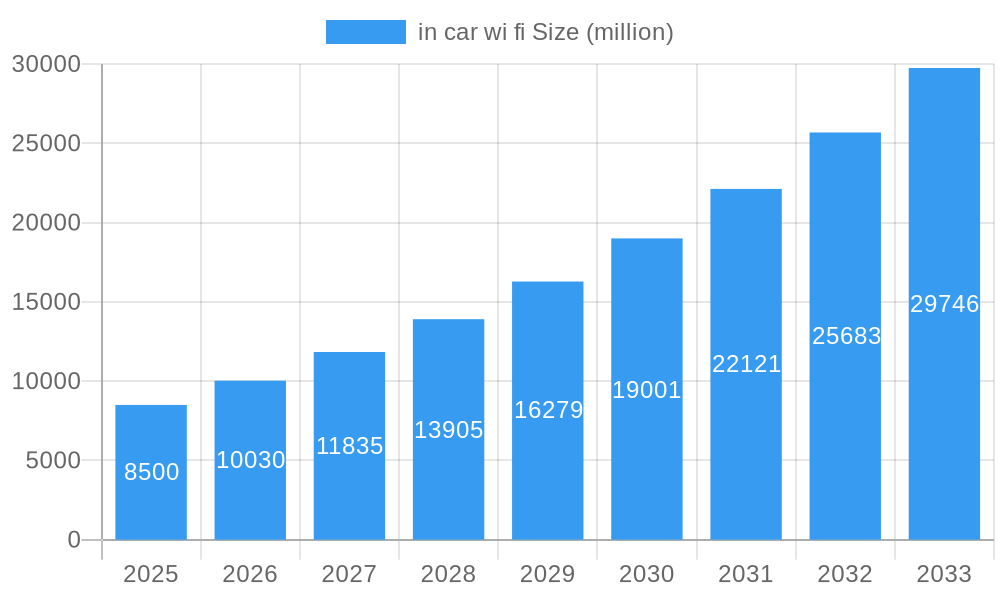
in car wi fi Company Market Share
The in-car Wi-Fi market exhibits a moderately concentrated structure, with major automotive players actively investing in integrated connectivity. Technological innovation, fueled by the demand for seamless internet access for infotainment, navigation, and OTA updates, is a primary driver. Regulatory frameworks concerning data privacy and cybersecurity are increasingly influencing market offerings. While competitive substitutes like mobile hotspots and smartphone tethering exist, their market share is diminishing as integrated solutions improve. Tech-savvy consumers, particularly millennials and Gen Z, expect always-on connectivity as a standard feature. Merger and acquisition (M&A) trends indicate consolidation aimed at acquiring advanced connectivity technologies and expanding market reach. The penetration of embedded Wi-Fi is projected to rise significantly, reflecting evolving consumer expectations. Innovation barriers include the high cost of integrating telematics units and complex cellular network infrastructure for consistent coverage.
in car wi fi Growth Trends & Insights
The global in-car Wi-Fi market is poised for substantial expansion, driven by an insatiable consumer appetite for connected experiences on the go. The market size is projected to surge from an estimated $5.2 billion in 2019 to $18.7 billion by 2033, exhibiting a robust Compound Annual Growth Rate (CAGR) of approximately 10.2%. This trajectory is underpinned by a dramatic increase in adoption rates, with embedded Wi-Fi solutions transitioning from a premium feature to an expectation in new vehicle purchases. The study forecasts that by the base year of 2025, over 70 million new vehicles will be equipped with in-car Wi-Fi capabilities, representing a significant leap from the 35 million units in 2019. Technological disruptions are at the forefront of this growth, with advancements in 5G connectivity promising faster speeds, lower latency, and enhanced reliability for in-car services. This will enable a richer array of applications, from immersive entertainment and advanced driver-assistance systems (ADAS) to real-time traffic management and personalized in-car digital assistants. Consumer behavior shifts are equally impactful; as consumers become accustomed to ubiquitous connectivity in their daily lives, their demand for an integrated and uninterrupted digital experience within their vehicles is intensifying. The convenience of accessing streaming services, staying productive with cloud-based tools, and ensuring passengers are entertained during journeys are primary motivators for this demand. Furthermore, the evolving landscape of autonomous driving and the associated data requirements for vehicle-to-everything (V2X) communication will necessitate increasingly sophisticated in-car connectivity solutions, further accelerating market growth. The forecast period of 2025–2033 is anticipated to witness the most significant uptake, with market penetration expected to exceed 85% of new vehicle sales by the end of this period. The historical period of 2019–2024 laid the groundwork, with initial adoption driven by luxury segments and a gradual trickle-down to mass-market vehicles. This sustained growth is further bolstered by the development of new business models, such as subscription-based data plans and in-car commerce platforms, which are creating recurring revenue streams for automotive manufacturers and service providers, thereby incentivizing continued investment and innovation in the in-car Wi-Fi ecosystem.
Dominant Regions, Countries, or Segments in in car wi fi
North America is currently emerging as the dominant region in the in-car Wi-Fi market, with the United States leading the charge as the primary country driving market growth. This dominance is attributed to a confluence of factors, including high disposable incomes, a strong predisposition towards adopting new technologies, and a well-established automotive industry with a keen focus on innovative features. The Application segment of 'Infotainment and Entertainment' is unequivocally the largest and most influential, accounting for an estimated 55% of the total in-car Wi-Fi market share. This segment encompasses a wide range of services, including music and video streaming, online gaming, social media access, and e-reading, all of which have become integral to the modern driving experience, particularly for families and younger demographics.
Within the Types segment, embedded LTE/4G solutions currently hold the largest market share, representing approximately 60%. However, the rapid rollout of 5G infrastructure is poised to significantly shift this dynamic. The Forecast Period (2025–2033) will witness a substantial increase in 5G-enabled in-car Wi-Fi systems, driven by the demand for higher bandwidth and lower latency crucial for advanced automotive applications. Economic policies in North America, such as tax incentives for technology adoption and robust investments in broadband infrastructure, further catalyze this growth. Leading automotive manufacturers like Ford and General Motors have aggressively integrated advanced connectivity features into their vehicle lineups, often making in-car Wi-Fi a standard offering across a wider range of models, thereby increasing market penetration significantly. The competitive landscape in the US is marked by strong demand for premium connected services, pushing manufacturers to offer compelling data plans and integrated solutions that rival home broadband experiences. The market share of embedded solutions in the US is projected to reach 75% of new vehicle sales by 2025, a testament to its leadership. Furthermore, the growing trend of car-sharing services and ride-hailing platforms in major US cities also contributes to the demand for reliable in-car Wi-Fi, as it enhances the passenger experience and provides a crucial amenity for drivers. The increasing prevalence of smart cities and the associated development of V2X communication further solidify North America's position, as these initiatives necessitate seamless and high-speed connectivity, with in-car Wi-Fi serving as a foundational element.
in car wi fi Product Landscape
The in-car Wi-Fi product landscape is rapidly evolving, marked by the introduction of more integrated and powerful telematics control units (TCUs) that support multiple cellular bands and Wi-Fi standards. Innovations focus on enhancing user experience through seamless connectivity, robust security protocols, and personalized content delivery. Key applications include over-the-air (OTA) software updates for vehicle systems, advanced navigation with real-time traffic data, and a rich ecosystem of infotainment services. Performance metrics are increasingly measured by data throughput, connection stability, and latency reduction, especially with the advent of 5G. Unique selling propositions often revolve around bundled data plans, extended warranty services for connectivity, and the integration of proprietary infotainment platforms. Technological advancements are geared towards miniaturization, power efficiency, and the development of more resilient antenna designs to ensure consistent signal strength in diverse environments. The market is witnessing a shift towards Software-Defined Networking (SDN) and Network Function Virtualization (NFV) to enable greater flexibility and scalability in managing in-car network services.
Key Drivers, Barriers & Challenges in in car wi fi
Key Drivers: The in-car Wi-Fi market is propelled by an escalating consumer demand for connected experiences, akin to their home and mobile environments. Technological advancements in 5G, offering higher speeds and lower latency, are crucial enablers. The increasing integration of connected car services, including infotainment, navigation, and over-the-air (OTA) updates, necessitates robust internet access. Furthermore, the growing adoption of autonomous driving features and the associated data exchange requirements for V2X communication are significant growth catalysts.
Barriers & Challenges: High implementation costs for manufacturers, including hardware and software integration, present a substantial barrier. Regulatory hurdles concerning data privacy, cybersecurity, and spectrum allocation can also impede rapid deployment. The need for consistent and widespread cellular network coverage remains a challenge, particularly in rural areas. Supply chain disruptions for critical components can affect production timelines and costs. Competitive pressures from mobile hotspot solutions and smartphone tethering, although diminishing, still influence market dynamics. The complexity of managing data plans and service agreements for consumers also adds a layer of challenge.
Emerging Opportunities in in car wi fi
Emerging opportunities in the in-car Wi-Fi sector are centered around the development of hyper-personalized connected services. This includes leveraging in-car Wi-Fi for advanced driver assistance systems (ADAS) that utilize real-time external data, enhanced in-car commerce platforms offering tailored shopping and service experiences, and the integration of augmented reality (AR) navigation overlays. The untapped market of fleet management and commercial vehicle connectivity also presents significant potential for optimized operations and enhanced driver productivity. Furthermore, the development of robust in-car gaming and entertainment platforms that offer console-quality experiences is a burgeoning area. The increasing focus on predictive maintenance powered by real-time data transmission through in-car Wi-Fi offers a proactive approach to vehicle servicing, creating value for both consumers and manufacturers.
Growth Accelerators in the in car wi fi Industry
The long-term growth of the in-car Wi-Fi industry is being significantly accelerated by groundbreaking technological breakthroughs, particularly the widespread deployment of 5G networks, which are fundamentally transforming the speed and capability of in-car connectivity. Strategic partnerships between automotive OEMs, telecommunications providers, and technology companies are crucial for developing integrated solutions and innovative service offerings, such as seamless data roaming and bundled subscription packages. Market expansion strategies, including the increasing adoption of embedded Wi-Fi in mid-range and budget vehicle segments, are broadening the addressable market and driving mass adoption. The continuous evolution of vehicle software, enabling more sophisticated connected features and services, also acts as a potent growth accelerator, ensuring that in-car Wi-Fi remains an indispensable component of the modern vehicle.
Key Players Shaping the in car wi fi Market
AUDI BMW Daimler FCA Ford General Motors
Notable Milestones in in car wi fi Sector
- 2019: Introduction of advanced 4G LTE embedded Wi-Fi modules by major automotive suppliers, enabling consistent connectivity for a wider range of infotainment features.
- 2020: Several OEMs began offering complimentary in-car Wi-Fi data plans for the first year of ownership, driving consumer adoption and awareness.
- 2021: Significant advancements in antenna technology for vehicles, improving signal strength and reliability of in-car Wi-Fi even in challenging environments.
- 2022: Launch of initial 5G-capable telematics units by leading automotive manufacturers, paving the way for future high-speed connectivity applications.
- 2023: Increased focus on cybersecurity protocols for in-car Wi-Fi networks, addressing growing concerns about data protection and vehicle safety.
- January 2024: Ford announced plans to expand its connected services, including enhanced in-car Wi-Fi capabilities, across its entire vehicle portfolio by 2025.
- March 2024: BMW showcased advanced in-car entertainment solutions powered by high-speed Wi-Fi, demonstrating immersive gaming and streaming experiences.
In-Depth in car wi fi Market Outlook
The future outlook for the in-car Wi-Fi market is exceptionally robust, driven by continuous technological innovation and evolving consumer expectations. The ongoing expansion of 5G infrastructure will unlock unprecedented possibilities for in-car connectivity, enabling real-time data exchange for autonomous driving, advanced infotainment, and seamless integration with smart city ecosystems. Strategic partnerships between automotive manufacturers and telecommunication giants will be pivotal in developing comprehensive and user-centric connectivity solutions. The market's trajectory indicates a strong shift towards ubiquitous connectivity as a standard vehicle feature, moving beyond luxury segments to mass-market adoption. This sustained growth presents significant strategic opportunities for service providers, content developers, and technology integrators to innovate and capture value in this dynamic and expanding market.
in car wi fi Segmentation
- 1. Application
- 2. Types
in car wi fi Segmentation By Geography
- 1. CA
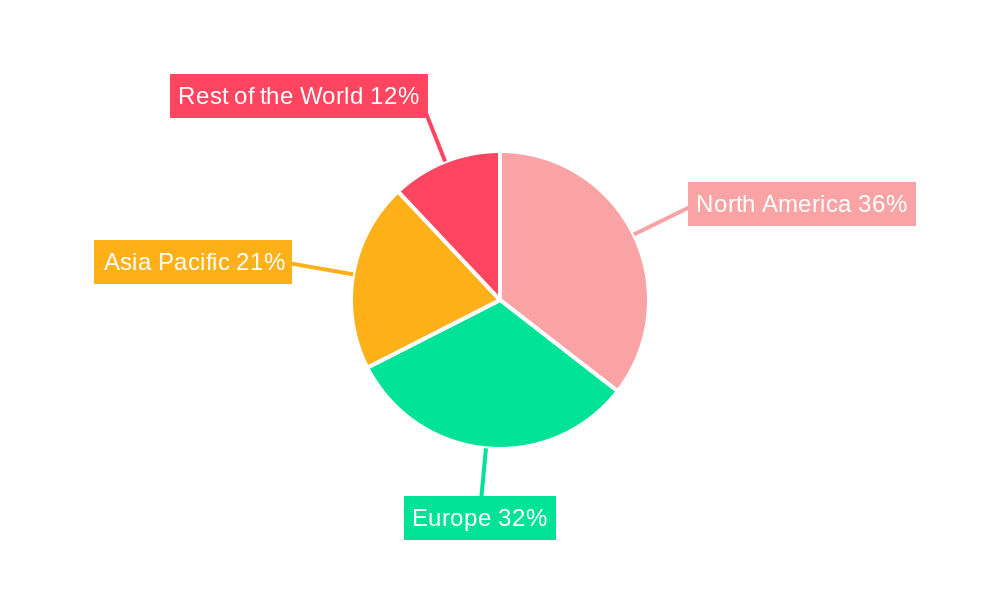
in car wi fi Regional Market Share
Geographic Coverage of in car wi fi
in car wi fi REPORT HIGHLIGHTS
| Aspects | Details |
|---|---|
| Study Period | 2020-2034 |
| Base Year | 2025 |
| Estimated Year | 2026 |
| Forecast Period | 2026-2034 |
| Historical Period | 2020-2025 |
| Growth Rate | CAGR of 9.4% from 2020-2034 |
| Segmentation |
|
Table of Contents
- 1. Introduction
- 1.1. Research Scope
- 1.2. Market Segmentation
- 1.3. Research Methodology
- 1.4. Definitions and Assumptions
- 2. Executive Summary
- 2.1. Introduction
- 3. Market Dynamics
- 3.1. Introduction
- 3.2. Market Drivers
- 3.3. Market Restrains
- 3.4. Market Trends
- 4. Market Factor Analysis
- 4.1. Porters Five Forces
- 4.2. Supply/Value Chain
- 4.3. PESTEL analysis
- 4.4. Market Entropy
- 4.5. Patent/Trademark Analysis
- 5. in car wi fi Analysis, Insights and Forecast, 2020-2032
- 5.1. Market Analysis, Insights and Forecast - by Application
- 5.2. Market Analysis, Insights and Forecast - by Types
- 5.3. Market Analysis, Insights and Forecast - by Region
- 5.3.1. CA
- 5.1. Market Analysis, Insights and Forecast - by Application
- 6. Competitive Analysis
- 6.1. Market Share Analysis 2025
- 6.2. Company Profiles
- 6.2.1 AUDI
- 6.2.1.1. Overview
- 6.2.1.2. Products
- 6.2.1.3. SWOT Analysis
- 6.2.1.4. Recent Developments
- 6.2.1.5. Financials (Based on Availability)
- 6.2.2 BMW
- 6.2.2.1. Overview
- 6.2.2.2. Products
- 6.2.2.3. SWOT Analysis
- 6.2.2.4. Recent Developments
- 6.2.2.5. Financials (Based on Availability)
- 6.2.3 Daimler
- 6.2.3.1. Overview
- 6.2.3.2. Products
- 6.2.3.3. SWOT Analysis
- 6.2.3.4. Recent Developments
- 6.2.3.5. Financials (Based on Availability)
- 6.2.4 FCA
- 6.2.4.1. Overview
- 6.2.4.2. Products
- 6.2.4.3. SWOT Analysis
- 6.2.4.4. Recent Developments
- 6.2.4.5. Financials (Based on Availability)
- 6.2.5 Ford
- 6.2.5.1. Overview
- 6.2.5.2. Products
- 6.2.5.3. SWOT Analysis
- 6.2.5.4. Recent Developments
- 6.2.5.5. Financials (Based on Availability)
- 6.2.6 General Motors
- 6.2.6.1. Overview
- 6.2.6.2. Products
- 6.2.6.3. SWOT Analysis
- 6.2.6.4. Recent Developments
- 6.2.6.5. Financials (Based on Availability)
- 6.2.1 AUDI
List of Figures
- Figure 1: in car wi fi Revenue Breakdown (billion, %) by Product 2025 & 2033
- Figure 2: in car wi fi Share (%) by Company 2025
List of Tables
- Table 1: in car wi fi Revenue billion Forecast, by Application 2020 & 2033
- Table 2: in car wi fi Revenue billion Forecast, by Types 2020 & 2033
- Table 3: in car wi fi Revenue billion Forecast, by Region 2020 & 2033
- Table 4: in car wi fi Revenue billion Forecast, by Application 2020 & 2033
- Table 5: in car wi fi Revenue billion Forecast, by Types 2020 & 2033
- Table 6: in car wi fi Revenue billion Forecast, by Country 2020 & 2033
Frequently Asked Questions
1. What is the projected Compound Annual Growth Rate (CAGR) of the in car wi fi?
The projected CAGR is approximately 9.4%.
2. Which companies are prominent players in the in car wi fi?
Key companies in the market include AUDI, BMW, Daimler, FCA, Ford, General Motors.
3. What are the main segments of the in car wi fi?
The market segments include Application, Types.
4. Can you provide details about the market size?
The market size is estimated to be USD 18.3 billion as of 2022.
5. What are some drivers contributing to market growth?
N/A
6. What are the notable trends driving market growth?
N/A
7. Are there any restraints impacting market growth?
N/A
8. Can you provide examples of recent developments in the market?
N/A
9. What pricing options are available for accessing the report?
Pricing options include single-user, multi-user, and enterprise licenses priced at USD 3400.00, USD 5100.00, and USD 6800.00 respectively.
10. Is the market size provided in terms of value or volume?
The market size is provided in terms of value, measured in billion.
11. Are there any specific market keywords associated with the report?
Yes, the market keyword associated with the report is "in car wi fi," which aids in identifying and referencing the specific market segment covered.
12. How do I determine which pricing option suits my needs best?
The pricing options vary based on user requirements and access needs. Individual users may opt for single-user licenses, while businesses requiring broader access may choose multi-user or enterprise licenses for cost-effective access to the report.
13. Are there any additional resources or data provided in the in car wi fi report?
While the report offers comprehensive insights, it's advisable to review the specific contents or supplementary materials provided to ascertain if additional resources or data are available.
14. How can I stay updated on further developments or reports in the in car wi fi?
To stay informed about further developments, trends, and reports in the in car wi fi, consider subscribing to industry newsletters, following relevant companies and organizations, or regularly checking reputable industry news sources and publications.
Methodology
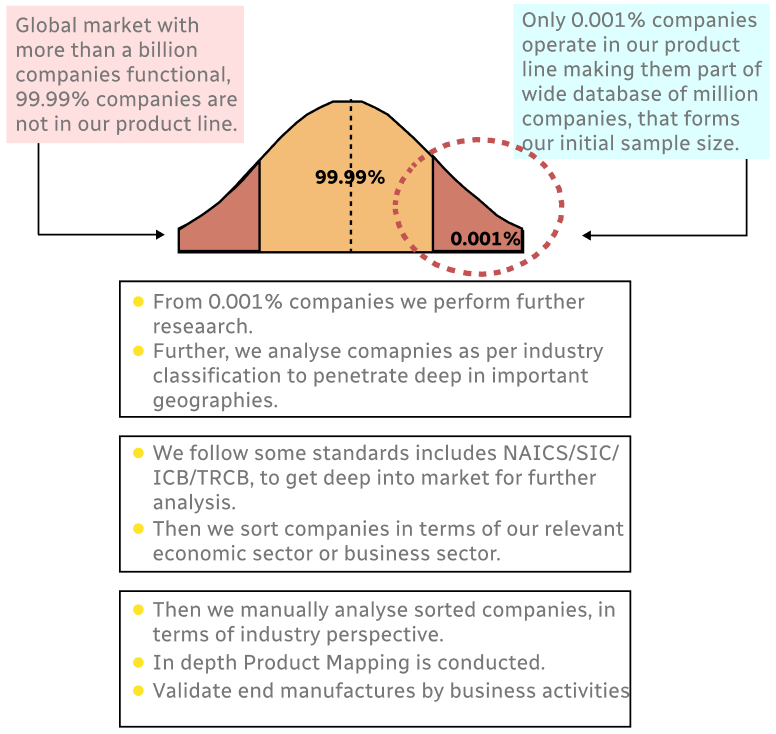
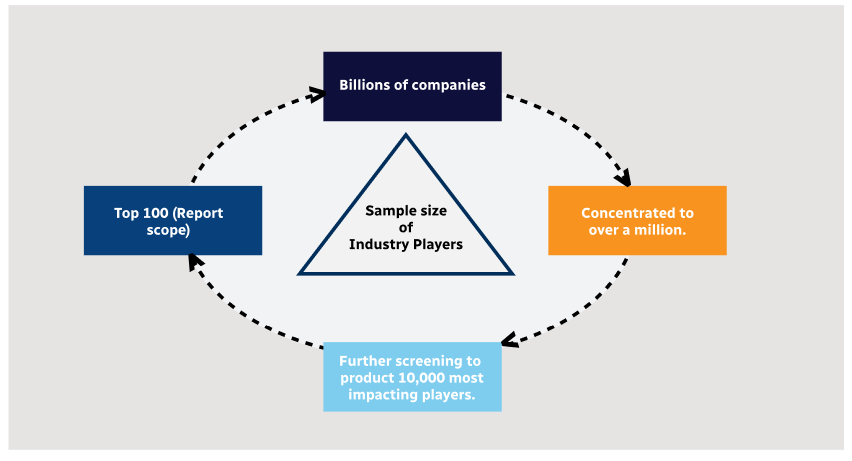
Step 1 - Identification of Relevant Samples Size from Population Database
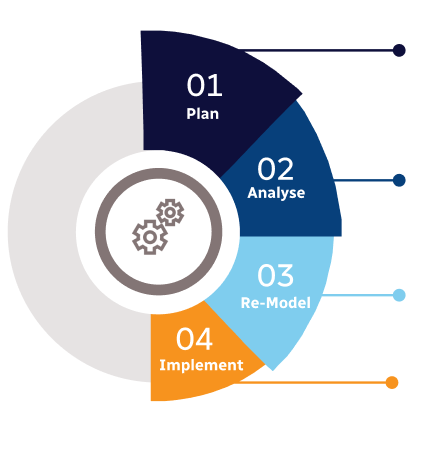
Step 2 - Approaches for Defining Global Market Size (Value, Volume* & Price*)
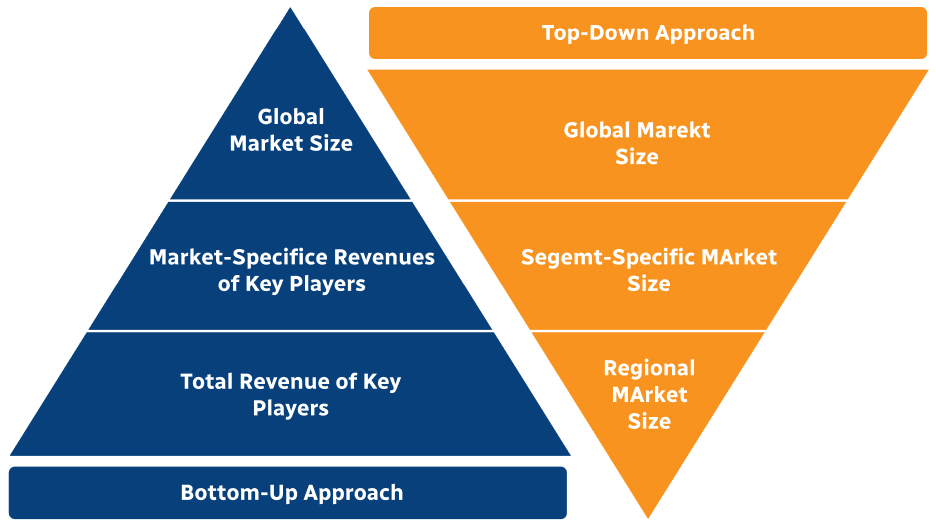
Note*: In applicable scenarios
Step 3 - Data Sources
Primary Research
- Web Analytics
- Survey Reports
- Research Institute
- Latest Research Reports
- Opinion Leaders
Secondary Research
- Annual Reports
- White Paper
- Latest Press Release
- Industry Association
- Paid Database
- Investor Presentations
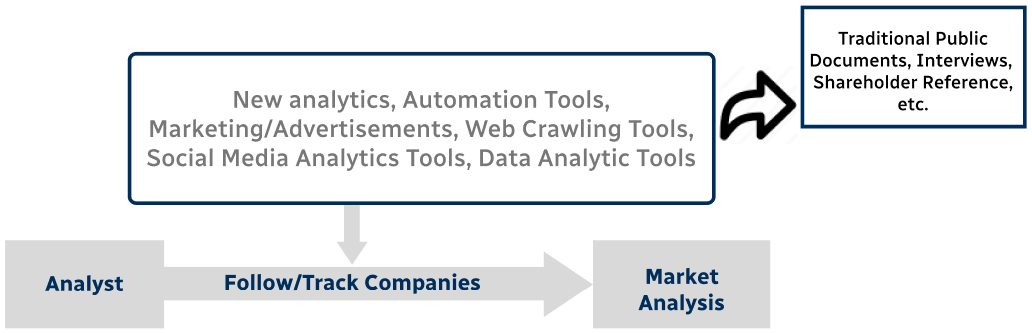
Step 4 - Data Triangulation
Involves using different sources of information in order to increase the validity of a study
These sources are likely to be stakeholders in a program - participants, other researchers, program staff, other community members, and so on.
Then we put all data in single framework & apply various statistical tools to find out the dynamic on the market.
During the analysis stage, feedback from the stakeholder groups would be compared to determine areas of agreement as well as areas of divergence