


Key Insights
The immersive advertising market is poised for explosive growth, projected to reach USD 9.03 billion by 2025. This surge is fueled by a remarkable CAGR of 18.4% from 2019 to 2033, indicating a sustained upward trajectory. The increasing adoption of augmented reality (AR) and virtual reality (VR) technologies across diverse applications, from small and medium-sized enterprises (SMEs) to large corporations, is a primary driver. Advertisers are recognizing the unparalleled engagement and brand recall that immersive experiences offer, moving beyond traditional static ads to create memorable, interactive campaigns. This shift is particularly evident as consumers become more accustomed to AR filters on social media and VR experiences in gaming and entertainment, creating a fertile ground for innovative advertising solutions.
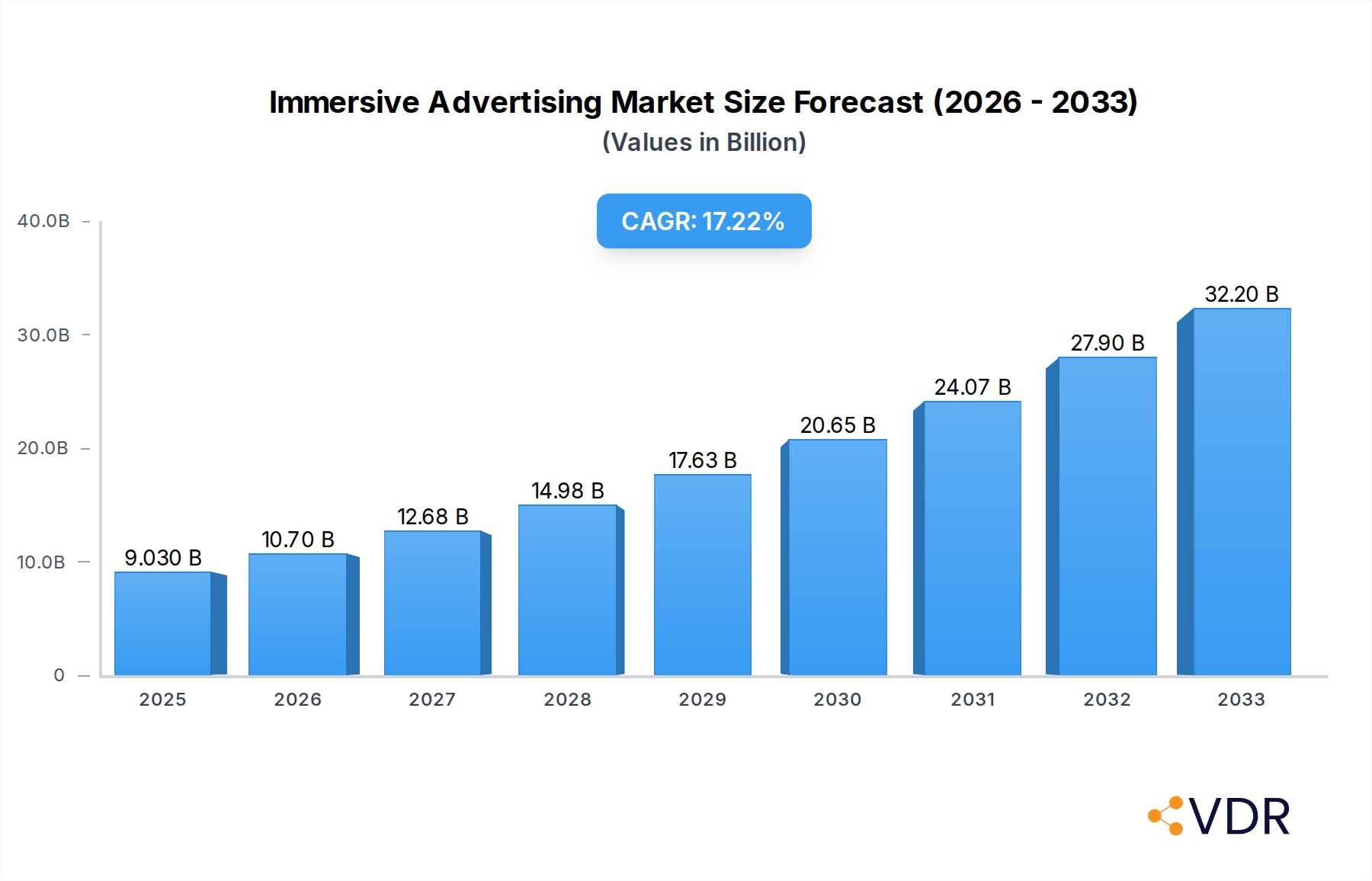
Immersive Advertising Market Size (In Billion)

Key market drivers include the rapid advancements in AR/VR hardware and software, making these technologies more accessible and affordable. The growing demand for personalized and interactive advertising experiences by consumers further propels this market. Trends such as the integration of AI for hyper-targeted ad delivery within immersive environments, the rise of metaverse advertising, and the development of sophisticated AR advertising platforms by major tech players like Meta, Unity Technologies, and Apple are shaping the future landscape. While the market is expanding rapidly, potential restraints could include the initial cost of developing high-quality immersive content, the need for greater standardization in immersive ad formats, and addressing user privacy concerns within these new digital frontiers. Companies like Groove Jones, Varjo, VIVE, and Microsoft are at the forefront of innovating and providing solutions within this dynamic ecosystem.

Immersive Advertising Company Market Share
Immersive Advertising Market Dynamics & Structure
The immersive advertising market is characterized by a dynamic and evolving landscape, with a moderate concentration of key players leveraging technological innovation to drive adoption. Major companies like Meta, Apple, and Microsoft are at the forefront, investing heavily in AR and VR technologies that serve as the foundation for immersive ad experiences. The competitive product substitute landscape includes traditional digital advertising, offering established reach but lacking the engagement of immersive formats. End-user demographics are shifting, with early adopters in tech-savvy younger generations and a growing interest from SMEs and Large Enterprises seeking novel ways to connect with consumers. M&A trends indicate consolidation and strategic acquisitions as established tech giants aim to bolster their immersive capabilities. For instance, the acquisition of AR development studios by leading hardware manufacturers underscores this trend. Regulatory frameworks are still nascent, presenting both challenges and opportunities as standards and guidelines for data privacy and content within immersive environments are developed. Innovation barriers include the high cost of content creation and the current limitations in widespread consumer hardware adoption, though this is rapidly improving. The market is poised for significant growth as these factors align to create a more robust and accessible ecosystem for immersive advertising.
- Market Concentration: Moderate, with key players like Meta, Apple, and Microsoft dominating investment and development.
- Technological Innovation Drivers: Advancements in AR/VR hardware, AI-powered content creation, and real-time rendering are key.
- Regulatory Frameworks: Emerging, with a focus on data privacy, ethical advertising practices, and content moderation in XR environments.
- Competitive Product Substitutes: Traditional digital ads (display, video), interactive content, and experiential marketing.
- End-User Demographics: Tech-savvy consumers, younger generations, and a growing interest from SMEs and Large Enterprises for enhanced customer engagement.
- M&A Trends: Strategic acquisitions of AR/VR tech companies and content studios to enhance platform capabilities.
Immersive Advertising Growth Trends & Insights
The immersive advertising market is projected to experience substantial growth over the forecast period, driven by escalating adoption rates and significant technological disruptions that are reshaping consumer behavior. Market size is estimated to reach approximately \$250 billion by 2025, with a projected Compound Annual Growth Rate (CAGR) of 35% between 2025 and 2033. This robust expansion is fueled by the increasing sophistication and accessibility of Augmented Reality (AR) and Virtual Reality (VR) technologies. As hardware becomes more affordable and user-friendly, coupled with a proliferation of compelling content, consumer adoption is accelerating. The base year, 2025, marks a pivotal point where early experimentation transitions into widespread integration across various industries. Technological advancements, including photorealistic rendering, AI-driven personalization, and the metaverse's emergent infrastructure, are creating richer, more engaging advertising experiences. Consumers are demonstrating a growing preference for interactive and experiential content over passive advertising formats. This shift is compelling brands to invest in immersive campaigns that offer deeper brand immersion and a more memorable connection with their target audience. Furthermore, the increasing demand for targeted and personalized advertising solutions aligns perfectly with the capabilities of immersive platforms, allowing for hyper-relevant ad delivery based on user behavior and context within AR and VR environments. The development of standardized measurement metrics for immersive advertising is also crucial for attracting larger marketing budgets, bridging the gap between creative potential and tangible ROI. As the metaverse ecosystem matures, offering persistent virtual worlds and interoperable experiences, the opportunities for brands to establish a significant presence and engage consumers in novel ways will multiply exponentially. This evolution is not merely an incremental improvement but a paradigm shift in how brands can connect with their audiences, fostering a more profound and lasting impact. The integration of haptic feedback and advanced sensory technologies will further enhance the realism and emotional resonance of immersive ads, pushing the boundaries of what is currently imaginable in advertising. The increasing investment from venture capital and major tech players signifies a strong belief in the long-term viability and transformative potential of immersive advertising, promising a dynamic and rewarding future for advertisers and consumers alike.
Dominant Regions, Countries, or Segments in Immersive Advertising
The North American region is currently emerging as the dominant force in the immersive advertising market, propelled by a confluence of factors including robust technological infrastructure, a high concentration of early adopter consumers, and significant investment from leading tech giants. Within North America, the United States stands out as the primary growth engine, owing to its advanced digital economy, a thriving startup ecosystem focused on AR/VR development, and a substantial consumer base that readily embraces new technologies. The application segment of Large Enterprises is a significant contributor to this dominance. These organizations possess the financial resources and strategic vision to invest in cutting-edge immersive campaigns, leveraging platforms like Unity Technologies and VIVE to create sophisticated brand experiences. For instance, major automotive companies are utilizing VR for virtual test drives and AR for interactive product visualizations, demonstrating the powerful impact on consumer purchasing decisions.
In terms of types, Augmented Reality (AR) is currently leading the charge in driving market growth. AR's inherent advantage lies in its ability to overlay digital information onto the real world, making it more accessible and less disruptive for everyday consumer use. Applications like AR-powered product try-ons, interactive retail experiences, and location-based advertising are gaining significant traction, with companies like MOBKOI and ImmersiveAds specializing in delivering these tailored solutions. The economic policies in North America, such as tax incentives for tech innovation and government support for digital infrastructure development, further accelerate this growth. The presence of key players like Apple, with its Vision Pro headset, and Microsoft, with its HoloLens technology, underscores the region's commitment to pushing the boundaries of AR and VR.
Furthermore, the widespread adoption of smartphones and high-speed internet connectivity in North America provides a fertile ground for AR advertising to flourish. SMEs are increasingly recognizing the potential of immersive advertising to level the playing field, enabling them to compete with larger brands through innovative and engaging campaigns delivered via platforms such as ConsoliAds. The growing prevalence of the metaverse concept, actively being developed by companies like Meta, is also a significant growth accelerator, creating new frontiers for brand engagement and advertising opportunities. The sheer volume of innovation, coupled with a consumer appetite for novel experiences, positions North America, particularly the US, as the undisputed leader in the immersive advertising sector, with AR applications serving as the primary catalyst for immediate market expansion.
- Dominant Region: North America
- Dominant Country: United States
- Dominant Application Segment: Large Enterprises
- Dominant Type: AR (Augmented Reality)
- Key Drivers in North America:
- High AR/VR adoption rates among consumers.
- Significant investment from major tech companies (Meta, Apple, Microsoft).
- Robust digital infrastructure and high-speed internet penetration.
- Supportive economic policies and R&D initiatives.
- A thriving ecosystem of AR/VR development studios and platforms.
- Dominance Factors for Large Enterprises:
- Capacity for substantial investment in immersive content and campaigns.
- Strategic utilization for enhanced customer engagement and brand loyalty.
- Early adoption of advanced AR/VR technologies for product showcases and marketing.
- Dominance Factors for AR:
- Greater accessibility and integration into daily life via smartphones.
- Practical applications in e-commerce, retail, and information overlay.
- Lower barrier to entry for consumers compared to full VR experiences.
Immersive Advertising Product Landscape
The immersive advertising product landscape is rapidly evolving, driven by continuous innovation in AR and VR technologies. Companies like Groove Jones are at the forefront, developing highly interactive and visually stunning AR experiences that allow brands to showcase products in novel ways, such as virtual try-ons for fashion or interactive product demonstrations for electronics. VR advertising, exemplified by immersive brand storytelling from companies like Unity Technologies, offers unparalleled depth of engagement, transporting consumers into brand narratives and virtual environments. These products are designed for high performance, delivering seamless user experiences with low latency and stunning visual fidelity, even on mobile devices. Unique selling propositions include the ability to create hyper-realistic product visualizations, foster emotional connections through sensory immersion, and provide measurable engagement metrics that go beyond traditional click-through rates.
Key Drivers, Barriers & Challenges in Immersive Advertising
Key Drivers:
The immersive advertising market is propelled by several critical drivers. Technological advancements in AR/VR hardware, such as lighter headsets and more powerful mobile processors, are making immersive experiences more accessible. The increasing consumer demand for interactive and engaging content fuels the adoption of AR and VR advertising. The development of the metaverse concept by giants like Meta is creating new, persistent virtual worlds for brands to inhabit. Furthermore, the growing ability of platforms like ConsoliAds to deliver targeted immersive campaigns is attracting advertisers seeking higher engagement rates.
Barriers & Challenges:
Despite its potential, the market faces significant barriers. The high cost of developing high-quality immersive content remains a challenge for many businesses, particularly SMEs. Widespread consumer adoption of dedicated VR hardware is still a barrier, though AR on smartphones mitigates this. Regulatory uncertainty surrounding data privacy and advertising standards in XR environments poses a hurdle. Supply chain issues for hardware components can impact availability and cost. Finally, the competitive pressure from established digital advertising channels requires clear demonstration of ROI for immersive formats.
Emerging Opportunities in Immersive Advertising
Emerging opportunities in immersive advertising lie in the untapped potential of personalized AR experiences and the expanding metaverse. As AI becomes more sophisticated, the ability to dynamically tailor AR ads to individual user context and preferences will become a significant differentiator. This includes hyper-localized AR experiences that provide real-time information and offers based on a user's physical location. The ongoing development of interoperable metaverse platforms presents a vast frontier for brands to establish virtual storefronts, host immersive events, and engage consumers in persistent digital worlds, moving beyond temporary campaigns to building long-term brand presence. The integration of gamification into immersive ads is also poised to drive higher engagement and retention rates.
Growth Accelerators in the Immersive Advertising Industry
Several catalysts are accelerating the growth of the immersive advertising industry. Strategic partnerships between hardware manufacturers like Apple and VIVE and content creators are fostering a richer ecosystem of immersive experiences. Technological breakthroughs in real-time rendering and AI-driven content generation are reducing production costs and increasing the scalability of immersive ads. Market expansion into new verticals, beyond entertainment and gaming, such as e-commerce, education, and healthcare, is broadening the appeal and applicability of immersive advertising. The increasing availability of affordable AR development tools and platforms is empowering a wider range of businesses to experiment with and implement immersive campaigns.
Key Players Shaping the Immersive Advertising Market
- Groove Jones
- Meta
- Unity Technologies
- Apple
- Varjo
- VIVE
- Microsoft
- ConsoliAds
- MOBKOI
- ImmersiveAds
Notable Milestones in Immersive Advertising Sector
- 2019: Increased investment in AR advertising SDKs by mobile operating system providers.
- 2020: Launch of more sophisticated AR filters and lenses by social media platforms, driving mainstream adoption.
- 2021: Significant breakthroughs in VR headset technology, offering higher fidelity and comfort for extended use.
- 2022: The rise of the "metaverse" concept gains traction, with major tech companies announcing substantial investments.
- 2023: Advancements in AI for 3D asset creation and real-time AR rendering accelerate content development.
- 2024: The emergence of commercially viable AR glasses and more integrated VR advertising platforms.
In-Depth Immersive Advertising Market Outlook
The future outlook for the immersive advertising market is exceptionally promising, driven by continued technological innovation and evolving consumer behavior. Growth accelerators such as strategic partnerships between hardware and software providers, coupled with advancements in AI for content creation and personalization, will unlock new levels of engagement. The expansion of immersive advertising into sectors beyond traditional digital realms, including e-commerce, education, and healthcare, will broaden its market reach. The increasing accessibility of AR on smartphones and the ongoing development of the metaverse provide vast opportunities for brands to create persistent, interactive, and deeply engaging advertising experiences that drive significant ROI and redefine brand-consumer relationships in the digital age.
Immersive Advertising Segmentation
-
1. Application
- 1.1. SMEs
- 1.2. Large Enterprises
-
2. Types
- 2.1. AR (Augmented Reality)
- 2.2. VR (Virtual Reality)
Immersive Advertising Segmentation By Geography
-
1. North America
- 1.1. United States
- 1.2. Canada
- 1.3. Mexico
-
2. South America
- 2.1. Brazil
- 2.2. Argentina
- 2.3. Rest of South America
-
3. Europe
- 3.1. United Kingdom
- 3.2. Germany
- 3.3. France
- 3.4. Italy
- 3.5. Spain
- 3.6. Russia
- 3.7. Benelux
- 3.8. Nordics
- 3.9. Rest of Europe
-
4. Middle East & Africa
- 4.1. Turkey
- 4.2. Israel
- 4.3. GCC
- 4.4. North Africa
- 4.5. South Africa
- 4.6. Rest of Middle East & Africa
-
5. Asia Pacific
- 5.1. China
- 5.2. India
- 5.3. Japan
- 5.4. South Korea
- 5.5. ASEAN
- 5.6. Oceania
- 5.7. Rest of Asia Pacific
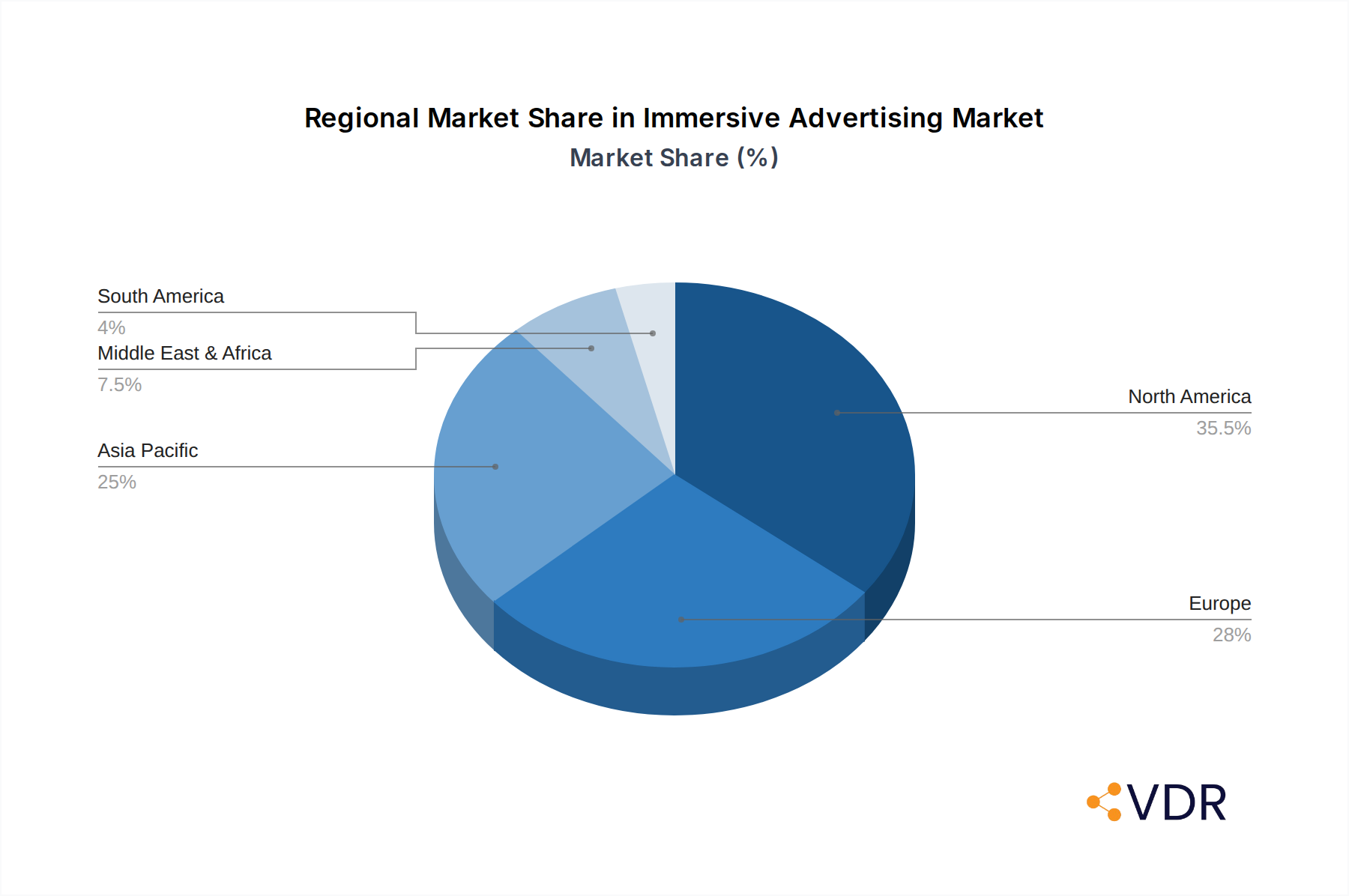
Immersive Advertising Regional Market Share
Geographic Coverage of Immersive Advertising
Immersive Advertising REPORT HIGHLIGHTS
| Aspects | Details |
|---|---|
| Study Period | 2020-2034 |
| Base Year | 2025 |
| Estimated Year | 2026 |
| Forecast Period | 2026-2034 |
| Historical Period | 2020-2025 |
| Growth Rate | CAGR of 18.4% from 2020-2034 |
| Segmentation |
|
Table of Contents
- 1. Introduction
- 1.1. Research Scope
- 1.2. Market Segmentation
- 1.3. Research Methodology
- 1.4. Definitions and Assumptions
- 2. Executive Summary
- 2.1. Introduction
- 3. Market Dynamics
- 3.1. Introduction
- 3.2. Market Drivers
- 3.3. Market Restrains
- 3.4. Market Trends
- 4. Market Factor Analysis
- 4.1. Porters Five Forces
- 4.2. Supply/Value Chain
- 4.3. PESTEL analysis
- 4.4. Market Entropy
- 4.5. Patent/Trademark Analysis
- 5. Global Immersive Advertising Analysis, Insights and Forecast, 2020-2032
- 5.1. Market Analysis, Insights and Forecast - by Application
- 5.1.1. SMEs
- 5.1.2. Large Enterprises
- 5.2. Market Analysis, Insights and Forecast - by Types
- 5.2.1. AR (Augmented Reality)
- 5.2.2. VR (Virtual Reality)
- 5.3. Market Analysis, Insights and Forecast - by Region
- 5.3.1. North America
- 5.3.2. South America
- 5.3.3. Europe
- 5.3.4. Middle East & Africa
- 5.3.5. Asia Pacific
- 5.1. Market Analysis, Insights and Forecast - by Application
- 6. North America Immersive Advertising Analysis, Insights and Forecast, 2020-2032
- 6.1. Market Analysis, Insights and Forecast - by Application
- 6.1.1. SMEs
- 6.1.2. Large Enterprises
- 6.2. Market Analysis, Insights and Forecast - by Types
- 6.2.1. AR (Augmented Reality)
- 6.2.2. VR (Virtual Reality)
- 6.1. Market Analysis, Insights and Forecast - by Application
- 7. South America Immersive Advertising Analysis, Insights and Forecast, 2020-2032
- 7.1. Market Analysis, Insights and Forecast - by Application
- 7.1.1. SMEs
- 7.1.2. Large Enterprises
- 7.2. Market Analysis, Insights and Forecast - by Types
- 7.2.1. AR (Augmented Reality)
- 7.2.2. VR (Virtual Reality)
- 7.1. Market Analysis, Insights and Forecast - by Application
- 8. Europe Immersive Advertising Analysis, Insights and Forecast, 2020-2032
- 8.1. Market Analysis, Insights and Forecast - by Application
- 8.1.1. SMEs
- 8.1.2. Large Enterprises
- 8.2. Market Analysis, Insights and Forecast - by Types
- 8.2.1. AR (Augmented Reality)
- 8.2.2. VR (Virtual Reality)
- 8.1. Market Analysis, Insights and Forecast - by Application
- 9. Middle East & Africa Immersive Advertising Analysis, Insights and Forecast, 2020-2032
- 9.1. Market Analysis, Insights and Forecast - by Application
- 9.1.1. SMEs
- 9.1.2. Large Enterprises
- 9.2. Market Analysis, Insights and Forecast - by Types
- 9.2.1. AR (Augmented Reality)
- 9.2.2. VR (Virtual Reality)
- 9.1. Market Analysis, Insights and Forecast - by Application
- 10. Asia Pacific Immersive Advertising Analysis, Insights and Forecast, 2020-2032
- 10.1. Market Analysis, Insights and Forecast - by Application
- 10.1.1. SMEs
- 10.1.2. Large Enterprises
- 10.2. Market Analysis, Insights and Forecast - by Types
- 10.2.1. AR (Augmented Reality)
- 10.2.2. VR (Virtual Reality)
- 10.1. Market Analysis, Insights and Forecast - by Application
- 11. Competitive Analysis
- 11.1. Global Market Share Analysis 2025
- 11.2. Company Profiles
- 11.2.1 Groove Jones
- 11.2.1.1. Overview
- 11.2.1.2. Products
- 11.2.1.3. SWOT Analysis
- 11.2.1.4. Recent Developments
- 11.2.1.5. Financials (Based on Availability)
- 11.2.2 Meta
- 11.2.2.1. Overview
- 11.2.2.2. Products
- 11.2.2.3. SWOT Analysis
- 11.2.2.4. Recent Developments
- 11.2.2.5. Financials (Based on Availability)
- 11.2.3 Unity Technologies
- 11.2.3.1. Overview
- 11.2.3.2. Products
- 11.2.3.3. SWOT Analysis
- 11.2.3.4. Recent Developments
- 11.2.3.5. Financials (Based on Availability)
- 11.2.4 Apple
- 11.2.4.1. Overview
- 11.2.4.2. Products
- 11.2.4.3. SWOT Analysis
- 11.2.4.4. Recent Developments
- 11.2.4.5. Financials (Based on Availability)
- 11.2.5 Varjo
- 11.2.5.1. Overview
- 11.2.5.2. Products
- 11.2.5.3. SWOT Analysis
- 11.2.5.4. Recent Developments
- 11.2.5.5. Financials (Based on Availability)
- 11.2.6 VIVE
- 11.2.6.1. Overview
- 11.2.6.2. Products
- 11.2.6.3. SWOT Analysis
- 11.2.6.4. Recent Developments
- 11.2.6.5. Financials (Based on Availability)
- 11.2.7 Microsoft
- 11.2.7.1. Overview
- 11.2.7.2. Products
- 11.2.7.3. SWOT Analysis
- 11.2.7.4. Recent Developments
- 11.2.7.5. Financials (Based on Availability)
- 11.2.8 ConsoliAds
- 11.2.8.1. Overview
- 11.2.8.2. Products
- 11.2.8.3. SWOT Analysis
- 11.2.8.4. Recent Developments
- 11.2.8.5. Financials (Based on Availability)
- 11.2.9 MOBKOI
- 11.2.9.1. Overview
- 11.2.9.2. Products
- 11.2.9.3. SWOT Analysis
- 11.2.9.4. Recent Developments
- 11.2.9.5. Financials (Based on Availability)
- 11.2.10 ImmersiveAds
- 11.2.10.1. Overview
- 11.2.10.2. Products
- 11.2.10.3. SWOT Analysis
- 11.2.10.4. Recent Developments
- 11.2.10.5. Financials (Based on Availability)
- 11.2.1 Groove Jones
List of Figures
- Figure 1: Global Immersive Advertising Revenue Breakdown (billion, %) by Region 2025 & 2033
- Figure 2: North America Immersive Advertising Revenue (billion), by Application 2025 & 2033
- Figure 3: North America Immersive Advertising Revenue Share (%), by Application 2025 & 2033
- Figure 4: North America Immersive Advertising Revenue (billion), by Types 2025 & 2033
- Figure 5: North America Immersive Advertising Revenue Share (%), by Types 2025 & 2033
- Figure 6: North America Immersive Advertising Revenue (billion), by Country 2025 & 2033
- Figure 7: North America Immersive Advertising Revenue Share (%), by Country 2025 & 2033
- Figure 8: South America Immersive Advertising Revenue (billion), by Application 2025 & 2033
- Figure 9: South America Immersive Advertising Revenue Share (%), by Application 2025 & 2033
- Figure 10: South America Immersive Advertising Revenue (billion), by Types 2025 & 2033
- Figure 11: South America Immersive Advertising Revenue Share (%), by Types 2025 & 2033
- Figure 12: South America Immersive Advertising Revenue (billion), by Country 2025 & 2033
- Figure 13: South America Immersive Advertising Revenue Share (%), by Country 2025 & 2033
- Figure 14: Europe Immersive Advertising Revenue (billion), by Application 2025 & 2033
- Figure 15: Europe Immersive Advertising Revenue Share (%), by Application 2025 & 2033
- Figure 16: Europe Immersive Advertising Revenue (billion), by Types 2025 & 2033
- Figure 17: Europe Immersive Advertising Revenue Share (%), by Types 2025 & 2033
- Figure 18: Europe Immersive Advertising Revenue (billion), by Country 2025 & 2033
- Figure 19: Europe Immersive Advertising Revenue Share (%), by Country 2025 & 2033
- Figure 20: Middle East & Africa Immersive Advertising Revenue (billion), by Application 2025 & 2033
- Figure 21: Middle East & Africa Immersive Advertising Revenue Share (%), by Application 2025 & 2033
- Figure 22: Middle East & Africa Immersive Advertising Revenue (billion), by Types 2025 & 2033
- Figure 23: Middle East & Africa Immersive Advertising Revenue Share (%), by Types 2025 & 2033
- Figure 24: Middle East & Africa Immersive Advertising Revenue (billion), by Country 2025 & 2033
- Figure 25: Middle East & Africa Immersive Advertising Revenue Share (%), by Country 2025 & 2033
- Figure 26: Asia Pacific Immersive Advertising Revenue (billion), by Application 2025 & 2033
- Figure 27: Asia Pacific Immersive Advertising Revenue Share (%), by Application 2025 & 2033
- Figure 28: Asia Pacific Immersive Advertising Revenue (billion), by Types 2025 & 2033
- Figure 29: Asia Pacific Immersive Advertising Revenue Share (%), by Types 2025 & 2033
- Figure 30: Asia Pacific Immersive Advertising Revenue (billion), by Country 2025 & 2033
- Figure 31: Asia Pacific Immersive Advertising Revenue Share (%), by Country 2025 & 2033
List of Tables
- Table 1: Global Immersive Advertising Revenue billion Forecast, by Application 2020 & 2033
- Table 2: Global Immersive Advertising Revenue billion Forecast, by Types 2020 & 2033
- Table 3: Global Immersive Advertising Revenue billion Forecast, by Region 2020 & 2033
- Table 4: Global Immersive Advertising Revenue billion Forecast, by Application 2020 & 2033
- Table 5: Global Immersive Advertising Revenue billion Forecast, by Types 2020 & 2033
- Table 6: Global Immersive Advertising Revenue billion Forecast, by Country 2020 & 2033
- Table 7: United States Immersive Advertising Revenue (billion) Forecast, by Application 2020 & 2033
- Table 8: Canada Immersive Advertising Revenue (billion) Forecast, by Application 2020 & 2033
- Table 9: Mexico Immersive Advertising Revenue (billion) Forecast, by Application 2020 & 2033
- Table 10: Global Immersive Advertising Revenue billion Forecast, by Application 2020 & 2033
- Table 11: Global Immersive Advertising Revenue billion Forecast, by Types 2020 & 2033
- Table 12: Global Immersive Advertising Revenue billion Forecast, by Country 2020 & 2033
- Table 13: Brazil Immersive Advertising Revenue (billion) Forecast, by Application 2020 & 2033
- Table 14: Argentina Immersive Advertising Revenue (billion) Forecast, by Application 2020 & 2033
- Table 15: Rest of South America Immersive Advertising Revenue (billion) Forecast, by Application 2020 & 2033
- Table 16: Global Immersive Advertising Revenue billion Forecast, by Application 2020 & 2033
- Table 17: Global Immersive Advertising Revenue billion Forecast, by Types 2020 & 2033
- Table 18: Global Immersive Advertising Revenue billion Forecast, by Country 2020 & 2033
- Table 19: United Kingdom Immersive Advertising Revenue (billion) Forecast, by Application 2020 & 2033
- Table 20: Germany Immersive Advertising Revenue (billion) Forecast, by Application 2020 & 2033
- Table 21: France Immersive Advertising Revenue (billion) Forecast, by Application 2020 & 2033
- Table 22: Italy Immersive Advertising Revenue (billion) Forecast, by Application 2020 & 2033
- Table 23: Spain Immersive Advertising Revenue (billion) Forecast, by Application 2020 & 2033
- Table 24: Russia Immersive Advertising Revenue (billion) Forecast, by Application 2020 & 2033
- Table 25: Benelux Immersive Advertising Revenue (billion) Forecast, by Application 2020 & 2033
- Table 26: Nordics Immersive Advertising Revenue (billion) Forecast, by Application 2020 & 2033
- Table 27: Rest of Europe Immersive Advertising Revenue (billion) Forecast, by Application 2020 & 2033
- Table 28: Global Immersive Advertising Revenue billion Forecast, by Application 2020 & 2033
- Table 29: Global Immersive Advertising Revenue billion Forecast, by Types 2020 & 2033
- Table 30: Global Immersive Advertising Revenue billion Forecast, by Country 2020 & 2033
- Table 31: Turkey Immersive Advertising Revenue (billion) Forecast, by Application 2020 & 2033
- Table 32: Israel Immersive Advertising Revenue (billion) Forecast, by Application 2020 & 2033
- Table 33: GCC Immersive Advertising Revenue (billion) Forecast, by Application 2020 & 2033
- Table 34: North Africa Immersive Advertising Revenue (billion) Forecast, by Application 2020 & 2033
- Table 35: South Africa Immersive Advertising Revenue (billion) Forecast, by Application 2020 & 2033
- Table 36: Rest of Middle East & Africa Immersive Advertising Revenue (billion) Forecast, by Application 2020 & 2033
- Table 37: Global Immersive Advertising Revenue billion Forecast, by Application 2020 & 2033
- Table 38: Global Immersive Advertising Revenue billion Forecast, by Types 2020 & 2033
- Table 39: Global Immersive Advertising Revenue billion Forecast, by Country 2020 & 2033
- Table 40: China Immersive Advertising Revenue (billion) Forecast, by Application 2020 & 2033
- Table 41: India Immersive Advertising Revenue (billion) Forecast, by Application 2020 & 2033
- Table 42: Japan Immersive Advertising Revenue (billion) Forecast, by Application 2020 & 2033
- Table 43: South Korea Immersive Advertising Revenue (billion) Forecast, by Application 2020 & 2033
- Table 44: ASEAN Immersive Advertising Revenue (billion) Forecast, by Application 2020 & 2033
- Table 45: Oceania Immersive Advertising Revenue (billion) Forecast, by Application 2020 & 2033
- Table 46: Rest of Asia Pacific Immersive Advertising Revenue (billion) Forecast, by Application 2020 & 2033
Frequently Asked Questions
1. What is the projected Compound Annual Growth Rate (CAGR) of the Immersive Advertising?
The projected CAGR is approximately 18.4%.
2. Which companies are prominent players in the Immersive Advertising?
Key companies in the market include Groove Jones, Meta, Unity Technologies, Apple, Varjo, VIVE, Microsoft, ConsoliAds, MOBKOI, ImmersiveAds.
3. What are the main segments of the Immersive Advertising?
The market segments include Application, Types.
4. Can you provide details about the market size?
The market size is estimated to be USD 9.03 billion as of 2022.
5. What are some drivers contributing to market growth?
N/A
6. What are the notable trends driving market growth?
N/A
7. Are there any restraints impacting market growth?
N/A
8. Can you provide examples of recent developments in the market?
N/A
9. What pricing options are available for accessing the report?
Pricing options include single-user, multi-user, and enterprise licenses priced at USD 4350.00, USD 6525.00, and USD 8700.00 respectively.
10. Is the market size provided in terms of value or volume?
The market size is provided in terms of value, measured in billion.
11. Are there any specific market keywords associated with the report?
Yes, the market keyword associated with the report is "Immersive Advertising," which aids in identifying and referencing the specific market segment covered.
12. How do I determine which pricing option suits my needs best?
The pricing options vary based on user requirements and access needs. Individual users may opt for single-user licenses, while businesses requiring broader access may choose multi-user or enterprise licenses for cost-effective access to the report.
13. Are there any additional resources or data provided in the Immersive Advertising report?
While the report offers comprehensive insights, it's advisable to review the specific contents or supplementary materials provided to ascertain if additional resources or data are available.
14. How can I stay updated on further developments or reports in the Immersive Advertising?
To stay informed about further developments, trends, and reports in the Immersive Advertising, consider subscribing to industry newsletters, following relevant companies and organizations, or regularly checking reputable industry news sources and publications.
Methodology
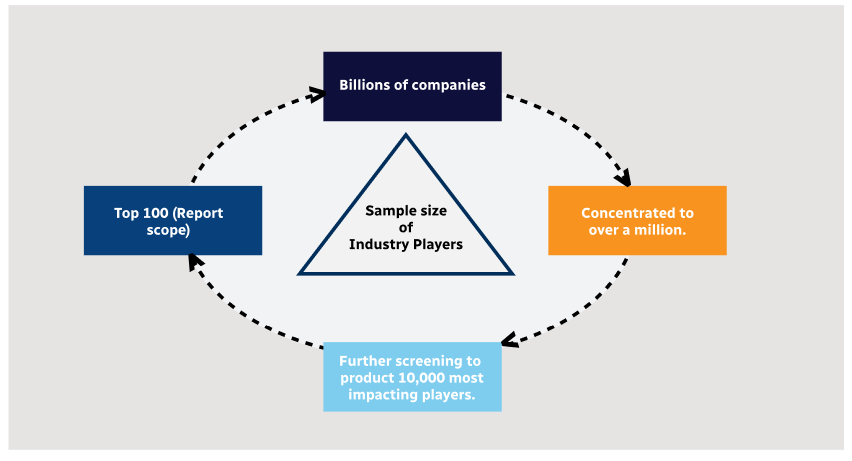
Step 1 - Identification of Relevant Samples Size from Population Database
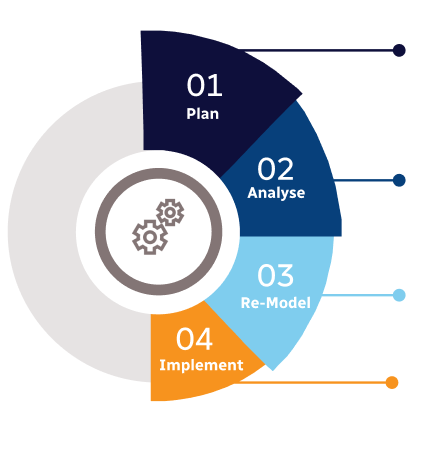
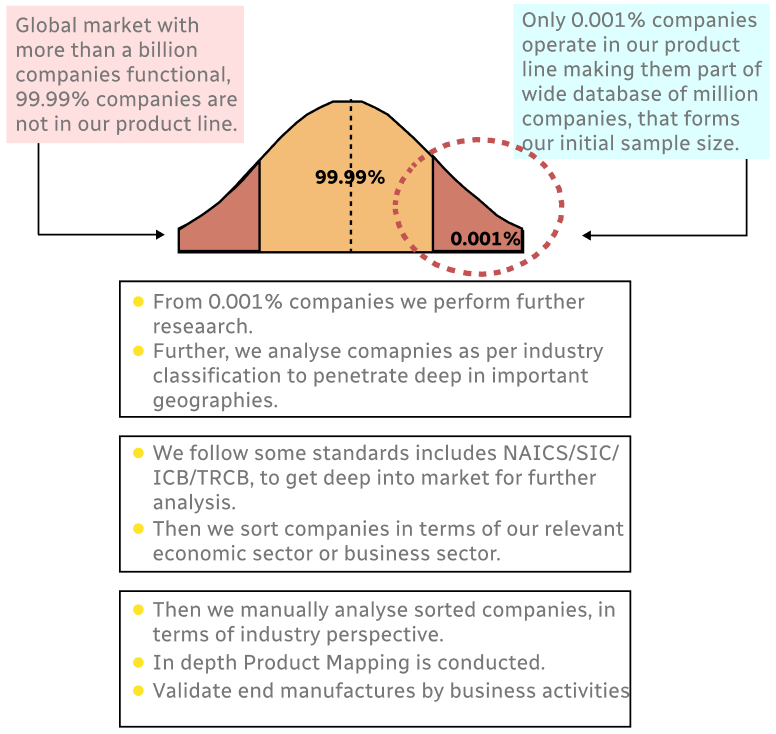
Step 2 - Approaches for Defining Global Market Size (Value, Volume* & Price*)
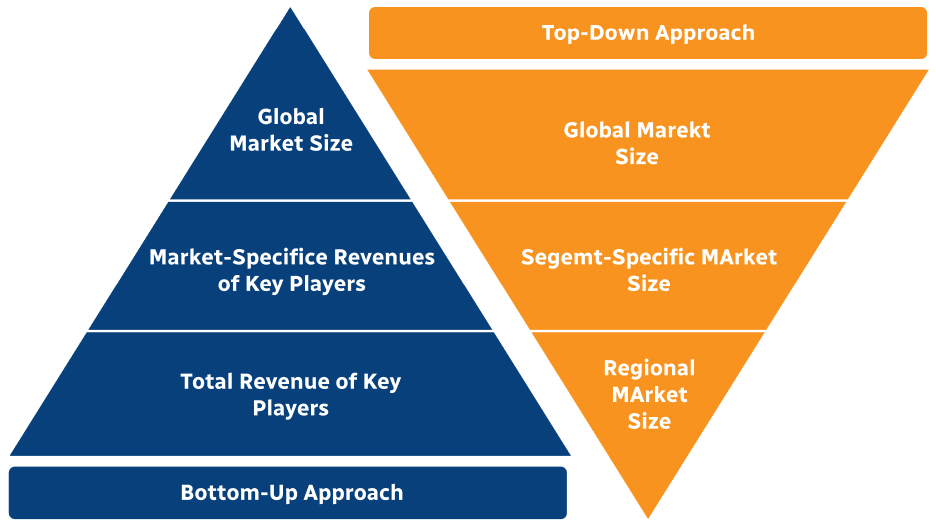
Note*: In applicable scenarios
Step 3 - Data Sources
Primary Research
- Web Analytics
- Survey Reports
- Research Institute
- Latest Research Reports
- Opinion Leaders
Secondary Research
- Annual Reports
- White Paper
- Latest Press Release
- Industry Association
- Paid Database
- Investor Presentations
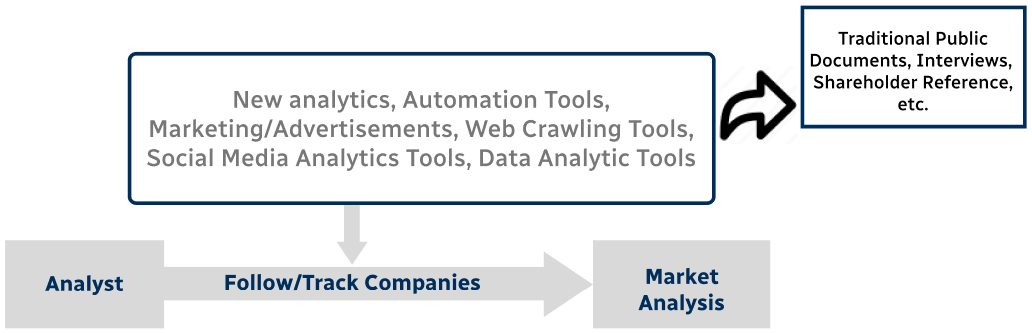
Step 4 - Data Triangulation
Involves using different sources of information in order to increase the validity of a study
These sources are likely to be stakeholders in a program - participants, other researchers, program staff, other community members, and so on.
Then we put all data in single framework & apply various statistical tools to find out the dynamic on the market.
During the analysis stage, feedback from the stakeholder groups would be compared to determine areas of agreement as well as areas of divergence