
Key Insights
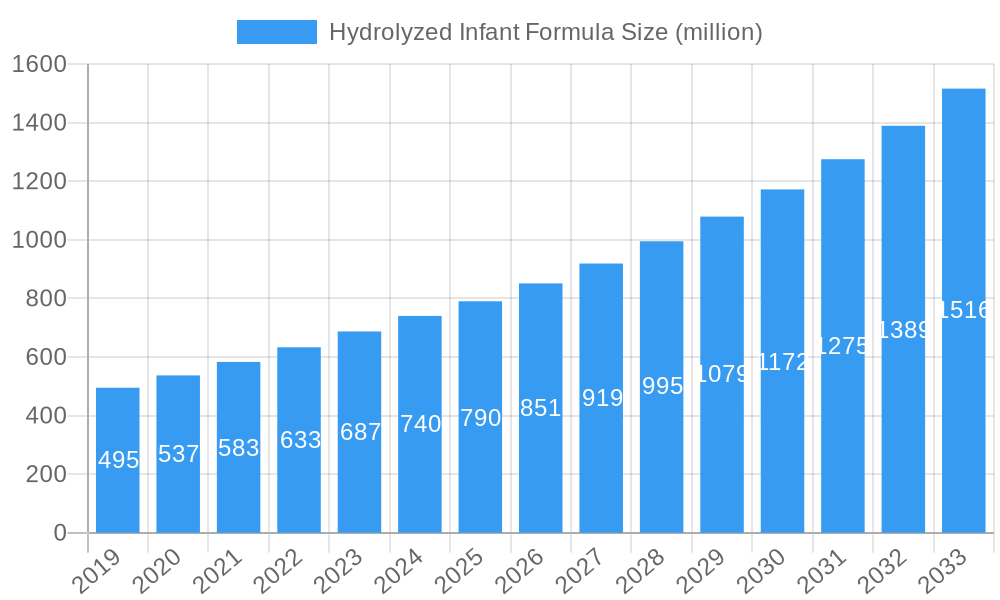
The global Hydrolyzed Infant Formula market is poised for robust expansion, projected to reach a substantial USD 790 million by 2025, with a Compound Annual Growth Rate (CAGR) of 8.5% anticipated over the forecast period from 2025 to 2033. This dynamic growth is primarily fueled by an increasing awareness among parents regarding the benefits of hydrolyzed formulas in managing infant allergies and digestive sensitivities, such as cow's milk protein allergy and lactose intolerance. The escalating incidence of these conditions globally, coupled with a heightened demand for specialized infant nutrition, acts as a significant market driver. Furthermore, advancements in product formulation, leading to improved palatability and efficacy, are attracting a broader consumer base. The online sales channel is witnessing a remarkable surge, driven by convenience and wider product availability, while offline retail remains a strong contributor, particularly in emerging economies.
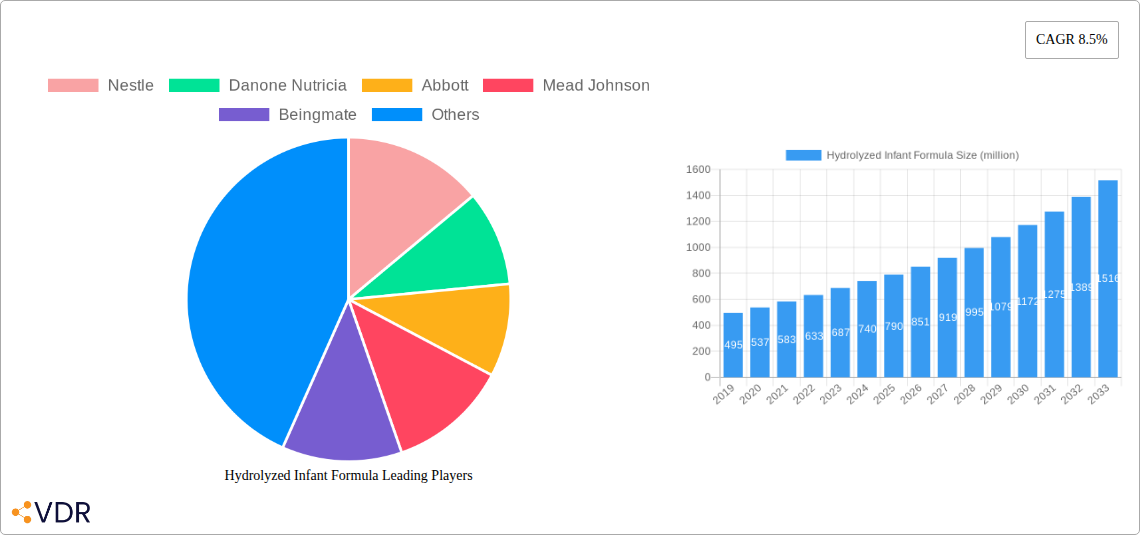
Hydrolyzed Infant Formula Market Size (In Million)

The market segmentation reveals a strong emphasis on both completely hydrolyzed and partially hydrolyzed formulas, catering to a spectrum of infant needs. Leading players like Nestle, Danone Nutricia, and Abbott are actively investing in research and development to innovate their product offerings and expand their market reach. Geographically, the Asia Pacific region, particularly China and India, is emerging as a key growth engine due to a burgeoning population, rising disposable incomes, and increasing parental spending on infant health and nutrition. However, certain restraints, such as the premium pricing of specialized formulas compared to standard infant milk, might pose a challenge in price-sensitive markets. Despite these hurdles, the overarching trend of prioritizing infant digestive health and allergen management will continue to propel the market forward.
Hydrolyzed Infant Formula Company Market Share
Hydrolyzed Infant Formula Market: Comprehensive Analysis & Future Outlook (2019–2033)
This in-depth report offers a detailed examination of the global hydrolyzed infant formula market, a critical segment within the broader infant nutrition industry. Covering the historical period of 2019–2024, base year 2025, and a robust forecast period extending to 2033, this analysis provides actionable insights for manufacturers, investors, and stakeholders. Leveraging extensive data and expert analysis, we dissect market dynamics, growth trends, regional dominance, product innovation, and future opportunities. This report targets industry professionals seeking a comprehensive understanding of the hydrolyzed infant formula market, including its parent and child market nuances, to inform strategic decision-making. We present all quantitative values in million units.
Hydrolyzed Infant Formula Market Dynamics & Structure
The hydrolyzed infant formula market exhibits a moderate to high concentration, with key global players such as Nestle, Danone Nutricia, Abbott, Mead Johnson, Beingmate, Synutra International, and Maeil dominating a significant portion of the market share. Technological innovation is a primary driver, particularly in developing hypoallergenic and easily digestible formulas to address growing infant allergies and digestive sensitivities. Regulatory frameworks, including stringent quality control and labeling standards set by bodies like the FDA and EFSA, significantly influence product development and market entry. Competitive product substitutes, such as breast milk and other specialized infant formulas, present a constant challenge, necessitating continuous innovation and differentiation. End-user demographics are shifting towards a more health-conscious parent base, with increased awareness of the benefits of hydrolyzed formulas for infants with specific dietary needs. Mergers and acquisitions (M&A) trends are observed, with larger companies acquiring smaller, innovative startups to expand their product portfolios and market reach.
- Market Concentration: Dominated by a few key global players, with approximately 65% market share held by the top five companies.
- Technological Innovation Drivers: Development of advanced hydrolysis techniques, novel ingredient sourcing, and enhanced nutrient profiles to improve digestibility and allergenicity.
- Regulatory Frameworks: Strict adherence to global and regional infant formula regulations regarding safety, nutritional content, and allergen labeling.
- Competitive Product Substitutes: Breast milk, standard infant formulas, and specialized lactose-free or soy-based formulas.
- End-User Demographics: Growing prevalence of infant allergies (e.g., cow's milk protein allergy), digestive issues, and parental preference for specialized nutrition.
- M&A Trends: Strategic acquisitions to gain access to specialized technologies and expand into emerging markets; an average of 3-5 significant M&A deals annually in the last five years.
Hydrolyzed Infant Formula Growth Trends & Insights
The global hydrolyzed infant formula market has witnessed consistent growth throughout the historical period of 2019–2024, a trend projected to accelerate significantly through the forecast period of 2025–2033. This expansion is intrinsically linked to the burgeoning awareness among parents regarding infant digestive health and the increasing incidence of allergies such as cow's milk protein allergy (CMPA). In 2025, the market is estimated to be valued at approximately $5,800 million units, with a projected Compound Annual Growth Rate (CAGR) of around 7.5% between 2025 and 2033. Adoption rates for hydrolyzed formulas are steadily increasing, driven by pediatrician recommendations and a desire for preventative infant care. The market penetration for hydrolyzed formulas is expected to rise from an estimated 15% in 2025 to over 22% by 2033, particularly in developed economies. Technological disruptions are playing a pivotal role, with advancements in enzyme hydrolysis leading to formulas with improved hypoallergenic properties and better nutrient absorption. For instance, advancements in protein fractionation and peptide mapping are enabling the creation of formulas that mimic the structure and function of human milk proteins more closely. Consumer behavior shifts are also contributing, with parents actively seeking out products perceived as "gentler" or "safer" for their infants, especially those with a family history of allergies. The rise of e-commerce platforms has also made these specialized formulas more accessible, further boosting sales. The market size evolution reflects a sustained upward trajectory, moving from an estimated $4,200 million units in 2019 to approximately $5,800 million units in 2025, demonstrating a robust historical growth pattern. The increasing demand for partially hydrolyzed infant formula as a first-line intervention for mild digestive discomfort, alongside the continued demand for completely hydrolyzed infant formula for severe allergies, underscores the market's resilience and adaptability. The shift towards online purchasing channels, driven by convenience and wider product selection, is a significant trend reshaping distribution strategies.
Dominant Regions, Countries, or Segments in Hydrolyzed Infant Formula
The hydrolyzed infant formula market is experiencing robust growth across various regions and segments, with North America and Europe currently leading in terms of market share and adoption rates. The Application: Offline segment, encompassing sales through traditional retail channels like supermarkets, pharmacies, and hypermarkets, continues to hold a dominant position, accounting for an estimated 70% of the total market value in 2025. This dominance is attributed to established consumer trust in these channels for purchasing essential baby products and the direct interaction with healthcare professionals in pharmacies. However, the Application: Online segment is exhibiting the fastest growth rate, projected to expand at a CAGR of over 9% during the forecast period. This surge is fueled by the increasing prevalence of e-commerce, the convenience of home delivery, and wider product availability, especially for specialized formulas. Countries like the United States, Canada, Germany, the United Kingdom, and France are at the forefront of this growth within North America and Europe, driven by higher disposable incomes, greater awareness of infant allergies, and sophisticated healthcare systems.
Within the Types: Completely Hydrolyzed and Types: Partially Hydrolyzed segments, Partially Hydrolyzed Infant Formula is the larger and more prevalent segment, representing an estimated 60% of the market share in 2025. This is primarily due to its broader application in managing mild digestive issues like fussiness and gas, making it a more accessible option for a larger population of infants. Completely Hydrolyzed Infant Formula, while smaller, commands a higher price point and is crucial for infants with diagnosed severe allergies, such as Cow's Milk Protein Allergy (CMPA) and multiple food protein intolerances. The growth of the completely hydrolyzed segment is intrinsically linked to advancements in diagnostic capabilities and increased pediatrician referrals. Key drivers for dominance in these regions and segments include:
- Economic Policies and Purchasing Power: Higher per capita income in North America and Europe allows for greater expenditure on premium infant nutrition.
- Healthcare Infrastructure and Awareness: Well-established pediatric healthcare systems and proactive public health campaigns promoting infant health contribute to higher demand for specialized formulas.
- Regulatory Support: Favorable regulatory environments that ensure product safety and efficacy encourage market growth.
- Consumer Preferences: An increasing focus on premiumization and specialized nutritional solutions for infants.
- Distribution Network: Robust offline retail networks complemented by rapidly expanding online sales channels.
Asia-Pacific is emerging as a significant growth region, driven by rapidly increasing disposable incomes, a growing middle class, and rising awareness of infant health issues, particularly in countries like China and India. The Application: Online segment is expected to see substantial penetration in these emerging markets due to the digital-first approach of younger generations of parents.
Hydrolyzed Infant Formula Product Landscape
The product landscape of hydrolyzed infant formula is characterized by continuous innovation aimed at improving hypoallergenic properties, digestibility, and nutritional equivalence to breast milk. Manufacturers are focusing on developing advanced hydrolysis techniques, such as enzymatic hydrolysis, to break down proteins into smaller peptides, significantly reducing allergenicity and easing digestion for sensitive infants. Key product innovations include the introduction of formulas with added prebiotics and probiotics to support gut health, and omega-3 and omega-6 fatty acids for cognitive development. Performance metrics are centered around allergenicity reduction, improved gastrointestinal tolerance, and the provision of complete nutrition essential for infant growth. Unique selling propositions often highlight "gentle on the tummy," "allergy-friendly," and "supports healthy digestion." Technological advancements are leading to formulas that more closely mimic the amino acid profile of human milk, offering enhanced bioavailability of nutrients.
Key Drivers, Barriers & Challenges in Hydrolyzed Infant Formula
Key Drivers:
- Rising prevalence of infant allergies and digestive sensitivities: Cow's Milk Protein Allergy (CMPA) and other food intolerances are major catalysts for hydrolyzed formula demand.
- Increasing parental awareness and demand for specialized nutrition: Parents are proactively seeking healthier and more digestible options for their infants.
- Pediatrician recommendations: Healthcare professionals play a crucial role in advising parents on the benefits of hydrolyzed formulas.
- Technological advancements in hydrolysis and formulation: Ongoing innovation in protein processing and ingredient inclusion enhances product efficacy and appeal.
- Growth in emerging markets: Expanding middle class and increasing health consciousness in regions like Asia-Pacific.
Barriers & Challenges:
- Higher cost compared to standard formulas: Hydrolyzed formulas are generally more expensive, impacting affordability for some consumers.
- Perception of taste and palatability: Some hydrolyzed formulas can have a different taste profile, which may affect infant acceptance.
- Stringent regulatory approvals and compliance: Navigating complex and evolving global and regional regulations can be a significant hurdle.
- Supply chain complexities and raw material sourcing: Ensuring consistent quality and availability of specialized ingredients.
- Competition from breast milk and other specialized infant foods: The strong advocacy for breastfeeding and the availability of alternative options.
- Retailer shelf space and distribution challenges: Securing prominent placement in competitive retail environments.
Emerging Opportunities in Hydrolyzed Infant Formula
Emerging opportunities in the hydrolyzed infant formula market lie in the development of next-generation hypoallergenic formulas with even more refined protein structures and enhanced bioavailability. The growing trend of personalized nutrition presents an avenue for customized hydrolyzed formulas tailored to specific infant needs, potentially incorporating genetic predispositions or microbiome analysis. Untapped markets in developing regions, where awareness is still nascent but the potential for growth is substantial, offer significant opportunities. Innovative applications, such as formulas designed for preterm infants or those with specific metabolic disorders, are also gaining traction. Evolving consumer preferences towards clean labels and sustainable sourcing will also shape product development, creating opportunities for brands that can effectively communicate these values.
Growth Accelerators in the Hydrolyzed Infant Formula Industry
Several factors are accelerating long-term growth in the hydrolyzed infant formula industry. Technological breakthroughs in enzymatic processing and bioinformatics are enabling the creation of highly specialized and effective hydrolyzed proteins. Strategic partnerships between formula manufacturers and research institutions are fostering innovation and validating product claims through rigorous scientific studies. Market expansion strategies, particularly into rapidly growing economies in Asia and Latin America, are crucial for capturing new consumer bases. The increasing emphasis on preventative healthcare and early-life nutrition by governments and health organizations globally is creating a favorable environment for specialized infant formulas. Furthermore, a greater focus on sustainability and ethical sourcing throughout the value chain is resonating with environmentally conscious parents, acting as a significant growth catalyst.
Key Players Shaping the Hydrolyzed Infant Formula Market
- Nestle
- Danone Nutricia
- Abbott
- Mead Johnson
- Beingmate
- Synutra International
- Maeil
Notable Milestones in Hydrolyzed Infant Formula Sector
- 2019: Launch of a new partially hydrolyzed formula with enhanced prebiotic blend for improved gut health.
- 2020: Significant increase in research and development funding for hypoallergenic infant nutrition.
- 2021: Introduction of a novel completely hydrolyzed formula utilizing advanced enzymatic hydrolysis technology.
- 2022: Mergers and acquisitions activity intensifies, with larger players acquiring specialized ingredient providers.
- 2023: Growing regulatory scrutiny on allergen labeling and nutritional claims for infant formulas globally.
- 2024: Increased consumer demand for online purchasing options for specialized infant formulas.
In-Depth Hydrolyzed Infant Formula Market Outlook
The outlook for the hydrolyzed infant formula market remains exceptionally strong, driven by a confluence of increasing health awareness, technological advancements, and favorable demographic trends. The market is poised for sustained and accelerated growth through 2033, fueled by ongoing innovation in hypoallergenic ingredients and digestive health support. Strategic partnerships and market expansion, particularly in emerging economies, will be key growth accelerators. The industry's ability to adapt to evolving consumer preferences for clean labels and sustainable practices will further solidify its market position. The forecast indicates a significant increase in both market penetration and overall market value, making it a compelling sector for investment and strategic development.
Hydrolyzed Infant Formula Segmentation
-
1. Application
- 1.1. Online
- 1.2. Offline
-
2. Types
- 2.1. Completely Hydrolyzed
- 2.2. Partially Hydrolyzed
Hydrolyzed Infant Formula Segmentation By Geography
-
1. North America
- 1.1. United States
- 1.2. Canada
- 1.3. Mexico
-
2. South America
- 2.1. Brazil
- 2.2. Argentina
- 2.3. Rest of South America
-
3. Europe
- 3.1. United Kingdom
- 3.2. Germany
- 3.3. France
- 3.4. Italy
- 3.5. Spain
- 3.6. Russia
- 3.7. Benelux
- 3.8. Nordics
- 3.9. Rest of Europe
-
4. Middle East & Africa
- 4.1. Turkey
- 4.2. Israel
- 4.3. GCC
- 4.4. North Africa
- 4.5. South Africa
- 4.6. Rest of Middle East & Africa
-
5. Asia Pacific
- 5.1. China
- 5.2. India
- 5.3. Japan
- 5.4. South Korea
- 5.5. ASEAN
- 5.6. Oceania
- 5.7. Rest of Asia Pacific
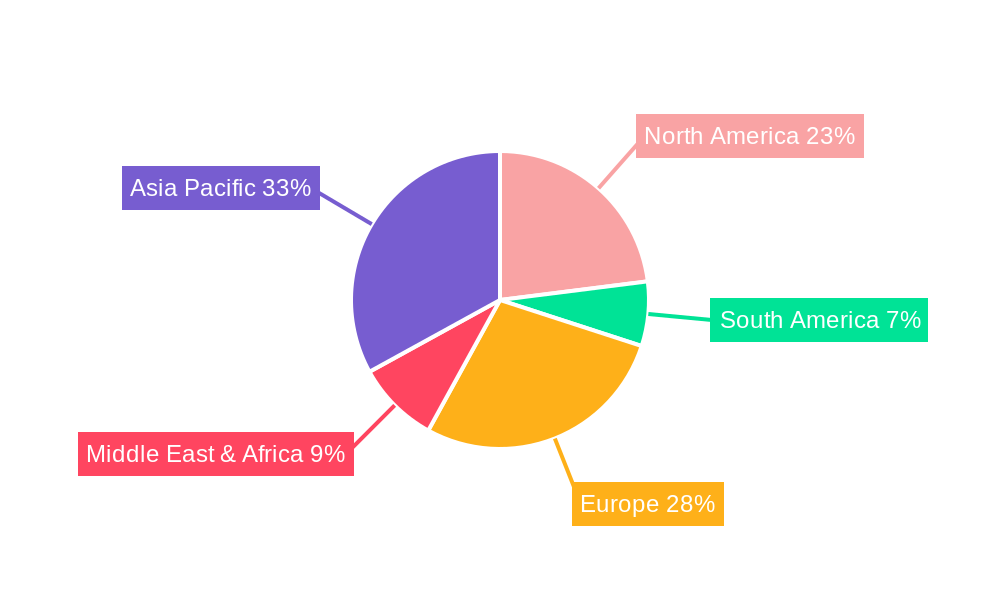
Hydrolyzed Infant Formula Regional Market Share
Geographic Coverage of Hydrolyzed Infant Formula
Hydrolyzed Infant Formula REPORT HIGHLIGHTS
| Aspects | Details |
|---|---|
| Study Period | 2020-2034 |
| Base Year | 2025 |
| Estimated Year | 2026 |
| Forecast Period | 2026-2034 |
| Historical Period | 2020-2025 |
| Growth Rate | CAGR of 5.38% from 2020-2034 |
| Segmentation |
|
Table of Contents
- 1. Introduction
- 1.1. Research Scope
- 1.2. Market Segmentation
- 1.3. Research Methodology
- 1.4. Definitions and Assumptions
- 2. Executive Summary
- 2.1. Introduction
- 3. Market Dynamics
- 3.1. Introduction
- 3.2. Market Drivers
- 3.3. Market Restrains
- 3.4. Market Trends
- 4. Market Factor Analysis
- 4.1. Porters Five Forces
- 4.2. Supply/Value Chain
- 4.3. PESTEL analysis
- 4.4. Market Entropy
- 4.5. Patent/Trademark Analysis
- 5. Global Hydrolyzed Infant Formula Analysis, Insights and Forecast, 2020-2032
- 5.1. Market Analysis, Insights and Forecast - by Application
- 5.1.1. Online
- 5.1.2. Offline
- 5.2. Market Analysis, Insights and Forecast - by Types
- 5.2.1. Completely Hydrolyzed
- 5.2.2. Partially Hydrolyzed
- 5.3. Market Analysis, Insights and Forecast - by Region
- 5.3.1. North America
- 5.3.2. South America
- 5.3.3. Europe
- 5.3.4. Middle East & Africa
- 5.3.5. Asia Pacific
- 5.1. Market Analysis, Insights and Forecast - by Application
- 6. North America Hydrolyzed Infant Formula Analysis, Insights and Forecast, 2020-2032
- 6.1. Market Analysis, Insights and Forecast - by Application
- 6.1.1. Online
- 6.1.2. Offline
- 6.2. Market Analysis, Insights and Forecast - by Types
- 6.2.1. Completely Hydrolyzed
- 6.2.2. Partially Hydrolyzed
- 6.1. Market Analysis, Insights and Forecast - by Application
- 7. South America Hydrolyzed Infant Formula Analysis, Insights and Forecast, 2020-2032
- 7.1. Market Analysis, Insights and Forecast - by Application
- 7.1.1. Online
- 7.1.2. Offline
- 7.2. Market Analysis, Insights and Forecast - by Types
- 7.2.1. Completely Hydrolyzed
- 7.2.2. Partially Hydrolyzed
- 7.1. Market Analysis, Insights and Forecast - by Application
- 8. Europe Hydrolyzed Infant Formula Analysis, Insights and Forecast, 2020-2032
- 8.1. Market Analysis, Insights and Forecast - by Application
- 8.1.1. Online
- 8.1.2. Offline
- 8.2. Market Analysis, Insights and Forecast - by Types
- 8.2.1. Completely Hydrolyzed
- 8.2.2. Partially Hydrolyzed
- 8.1. Market Analysis, Insights and Forecast - by Application
- 9. Middle East & Africa Hydrolyzed Infant Formula Analysis, Insights and Forecast, 2020-2032
- 9.1. Market Analysis, Insights and Forecast - by Application
- 9.1.1. Online
- 9.1.2. Offline
- 9.2. Market Analysis, Insights and Forecast - by Types
- 9.2.1. Completely Hydrolyzed
- 9.2.2. Partially Hydrolyzed
- 9.1. Market Analysis, Insights and Forecast - by Application
- 10. Asia Pacific Hydrolyzed Infant Formula Analysis, Insights and Forecast, 2020-2032
- 10.1. Market Analysis, Insights and Forecast - by Application
- 10.1.1. Online
- 10.1.2. Offline
- 10.2. Market Analysis, Insights and Forecast - by Types
- 10.2.1. Completely Hydrolyzed
- 10.2.2. Partially Hydrolyzed
- 10.1. Market Analysis, Insights and Forecast - by Application
- 11. Competitive Analysis
- 11.1. Global Market Share Analysis 2025
- 11.2. Company Profiles
- 11.2.1 Nestle
- 11.2.1.1. Overview
- 11.2.1.2. Products
- 11.2.1.3. SWOT Analysis
- 11.2.1.4. Recent Developments
- 11.2.1.5. Financials (Based on Availability)
- 11.2.2 Danone Nutricia
- 11.2.2.1. Overview
- 11.2.2.2. Products
- 11.2.2.3. SWOT Analysis
- 11.2.2.4. Recent Developments
- 11.2.2.5. Financials (Based on Availability)
- 11.2.3 Abbott
- 11.2.3.1. Overview
- 11.2.3.2. Products
- 11.2.3.3. SWOT Analysis
- 11.2.3.4. Recent Developments
- 11.2.3.5. Financials (Based on Availability)
- 11.2.4 Mead Johnson
- 11.2.4.1. Overview
- 11.2.4.2. Products
- 11.2.4.3. SWOT Analysis
- 11.2.4.4. Recent Developments
- 11.2.4.5. Financials (Based on Availability)
- 11.2.5 Beingmate
- 11.2.5.1. Overview
- 11.2.5.2. Products
- 11.2.5.3. SWOT Analysis
- 11.2.5.4. Recent Developments
- 11.2.5.5. Financials (Based on Availability)
- 11.2.6 Synutra International
- 11.2.6.1. Overview
- 11.2.6.2. Products
- 11.2.6.3. SWOT Analysis
- 11.2.6.4. Recent Developments
- 11.2.6.5. Financials (Based on Availability)
- 11.2.7 Maeil
- 11.2.7.1. Overview
- 11.2.7.2. Products
- 11.2.7.3. SWOT Analysis
- 11.2.7.4. Recent Developments
- 11.2.7.5. Financials (Based on Availability)
- 11.2.1 Nestle
List of Figures
- Figure 1: Global Hydrolyzed Infant Formula Revenue Breakdown (undefined, %) by Region 2025 & 2033
- Figure 2: North America Hydrolyzed Infant Formula Revenue (undefined), by Application 2025 & 2033
- Figure 3: North America Hydrolyzed Infant Formula Revenue Share (%), by Application 2025 & 2033
- Figure 4: North America Hydrolyzed Infant Formula Revenue (undefined), by Types 2025 & 2033
- Figure 5: North America Hydrolyzed Infant Formula Revenue Share (%), by Types 2025 & 2033
- Figure 6: North America Hydrolyzed Infant Formula Revenue (undefined), by Country 2025 & 2033
- Figure 7: North America Hydrolyzed Infant Formula Revenue Share (%), by Country 2025 & 2033
- Figure 8: South America Hydrolyzed Infant Formula Revenue (undefined), by Application 2025 & 2033
- Figure 9: South America Hydrolyzed Infant Formula Revenue Share (%), by Application 2025 & 2033
- Figure 10: South America Hydrolyzed Infant Formula Revenue (undefined), by Types 2025 & 2033
- Figure 11: South America Hydrolyzed Infant Formula Revenue Share (%), by Types 2025 & 2033
- Figure 12: South America Hydrolyzed Infant Formula Revenue (undefined), by Country 2025 & 2033
- Figure 13: South America Hydrolyzed Infant Formula Revenue Share (%), by Country 2025 & 2033
- Figure 14: Europe Hydrolyzed Infant Formula Revenue (undefined), by Application 2025 & 2033
- Figure 15: Europe Hydrolyzed Infant Formula Revenue Share (%), by Application 2025 & 2033
- Figure 16: Europe Hydrolyzed Infant Formula Revenue (undefined), by Types 2025 & 2033
- Figure 17: Europe Hydrolyzed Infant Formula Revenue Share (%), by Types 2025 & 2033
- Figure 18: Europe Hydrolyzed Infant Formula Revenue (undefined), by Country 2025 & 2033
- Figure 19: Europe Hydrolyzed Infant Formula Revenue Share (%), by Country 2025 & 2033
- Figure 20: Middle East & Africa Hydrolyzed Infant Formula Revenue (undefined), by Application 2025 & 2033
- Figure 21: Middle East & Africa Hydrolyzed Infant Formula Revenue Share (%), by Application 2025 & 2033
- Figure 22: Middle East & Africa Hydrolyzed Infant Formula Revenue (undefined), by Types 2025 & 2033
- Figure 23: Middle East & Africa Hydrolyzed Infant Formula Revenue Share (%), by Types 2025 & 2033
- Figure 24: Middle East & Africa Hydrolyzed Infant Formula Revenue (undefined), by Country 2025 & 2033
- Figure 25: Middle East & Africa Hydrolyzed Infant Formula Revenue Share (%), by Country 2025 & 2033
- Figure 26: Asia Pacific Hydrolyzed Infant Formula Revenue (undefined), by Application 2025 & 2033
- Figure 27: Asia Pacific Hydrolyzed Infant Formula Revenue Share (%), by Application 2025 & 2033
- Figure 28: Asia Pacific Hydrolyzed Infant Formula Revenue (undefined), by Types 2025 & 2033
- Figure 29: Asia Pacific Hydrolyzed Infant Formula Revenue Share (%), by Types 2025 & 2033
- Figure 30: Asia Pacific Hydrolyzed Infant Formula Revenue (undefined), by Country 2025 & 2033
- Figure 31: Asia Pacific Hydrolyzed Infant Formula Revenue Share (%), by Country 2025 & 2033
List of Tables
- Table 1: Global Hydrolyzed Infant Formula Revenue undefined Forecast, by Application 2020 & 2033
- Table 2: Global Hydrolyzed Infant Formula Revenue undefined Forecast, by Types 2020 & 2033
- Table 3: Global Hydrolyzed Infant Formula Revenue undefined Forecast, by Region 2020 & 2033
- Table 4: Global Hydrolyzed Infant Formula Revenue undefined Forecast, by Application 2020 & 2033
- Table 5: Global Hydrolyzed Infant Formula Revenue undefined Forecast, by Types 2020 & 2033
- Table 6: Global Hydrolyzed Infant Formula Revenue undefined Forecast, by Country 2020 & 2033
- Table 7: United States Hydrolyzed Infant Formula Revenue (undefined) Forecast, by Application 2020 & 2033
- Table 8: Canada Hydrolyzed Infant Formula Revenue (undefined) Forecast, by Application 2020 & 2033
- Table 9: Mexico Hydrolyzed Infant Formula Revenue (undefined) Forecast, by Application 2020 & 2033
- Table 10: Global Hydrolyzed Infant Formula Revenue undefined Forecast, by Application 2020 & 2033
- Table 11: Global Hydrolyzed Infant Formula Revenue undefined Forecast, by Types 2020 & 2033
- Table 12: Global Hydrolyzed Infant Formula Revenue undefined Forecast, by Country 2020 & 2033
- Table 13: Brazil Hydrolyzed Infant Formula Revenue (undefined) Forecast, by Application 2020 & 2033
- Table 14: Argentina Hydrolyzed Infant Formula Revenue (undefined) Forecast, by Application 2020 & 2033
- Table 15: Rest of South America Hydrolyzed Infant Formula Revenue (undefined) Forecast, by Application 2020 & 2033
- Table 16: Global Hydrolyzed Infant Formula Revenue undefined Forecast, by Application 2020 & 2033
- Table 17: Global Hydrolyzed Infant Formula Revenue undefined Forecast, by Types 2020 & 2033
- Table 18: Global Hydrolyzed Infant Formula Revenue undefined Forecast, by Country 2020 & 2033
- Table 19: United Kingdom Hydrolyzed Infant Formula Revenue (undefined) Forecast, by Application 2020 & 2033
- Table 20: Germany Hydrolyzed Infant Formula Revenue (undefined) Forecast, by Application 2020 & 2033
- Table 21: France Hydrolyzed Infant Formula Revenue (undefined) Forecast, by Application 2020 & 2033
- Table 22: Italy Hydrolyzed Infant Formula Revenue (undefined) Forecast, by Application 2020 & 2033
- Table 23: Spain Hydrolyzed Infant Formula Revenue (undefined) Forecast, by Application 2020 & 2033
- Table 24: Russia Hydrolyzed Infant Formula Revenue (undefined) Forecast, by Application 2020 & 2033
- Table 25: Benelux Hydrolyzed Infant Formula Revenue (undefined) Forecast, by Application 2020 & 2033
- Table 26: Nordics Hydrolyzed Infant Formula Revenue (undefined) Forecast, by Application 2020 & 2033
- Table 27: Rest of Europe Hydrolyzed Infant Formula Revenue (undefined) Forecast, by Application 2020 & 2033
- Table 28: Global Hydrolyzed Infant Formula Revenue undefined Forecast, by Application 2020 & 2033
- Table 29: Global Hydrolyzed Infant Formula Revenue undefined Forecast, by Types 2020 & 2033
- Table 30: Global Hydrolyzed Infant Formula Revenue undefined Forecast, by Country 2020 & 2033
- Table 31: Turkey Hydrolyzed Infant Formula Revenue (undefined) Forecast, by Application 2020 & 2033
- Table 32: Israel Hydrolyzed Infant Formula Revenue (undefined) Forecast, by Application 2020 & 2033
- Table 33: GCC Hydrolyzed Infant Formula Revenue (undefined) Forecast, by Application 2020 & 2033
- Table 34: North Africa Hydrolyzed Infant Formula Revenue (undefined) Forecast, by Application 2020 & 2033
- Table 35: South Africa Hydrolyzed Infant Formula Revenue (undefined) Forecast, by Application 2020 & 2033
- Table 36: Rest of Middle East & Africa Hydrolyzed Infant Formula Revenue (undefined) Forecast, by Application 2020 & 2033
- Table 37: Global Hydrolyzed Infant Formula Revenue undefined Forecast, by Application 2020 & 2033
- Table 38: Global Hydrolyzed Infant Formula Revenue undefined Forecast, by Types 2020 & 2033
- Table 39: Global Hydrolyzed Infant Formula Revenue undefined Forecast, by Country 2020 & 2033
- Table 40: China Hydrolyzed Infant Formula Revenue (undefined) Forecast, by Application 2020 & 2033
- Table 41: India Hydrolyzed Infant Formula Revenue (undefined) Forecast, by Application 2020 & 2033
- Table 42: Japan Hydrolyzed Infant Formula Revenue (undefined) Forecast, by Application 2020 & 2033
- Table 43: South Korea Hydrolyzed Infant Formula Revenue (undefined) Forecast, by Application 2020 & 2033
- Table 44: ASEAN Hydrolyzed Infant Formula Revenue (undefined) Forecast, by Application 2020 & 2033
- Table 45: Oceania Hydrolyzed Infant Formula Revenue (undefined) Forecast, by Application 2020 & 2033
- Table 46: Rest of Asia Pacific Hydrolyzed Infant Formula Revenue (undefined) Forecast, by Application 2020 & 2033
Frequently Asked Questions
1. What is the projected Compound Annual Growth Rate (CAGR) of the Hydrolyzed Infant Formula?
The projected CAGR is approximately 5.38%.
2. Which companies are prominent players in the Hydrolyzed Infant Formula?
Key companies in the market include Nestle, Danone Nutricia, Abbott, Mead Johnson, Beingmate, Synutra International, Maeil.
3. What are the main segments of the Hydrolyzed Infant Formula?
The market segments include Application, Types.
4. Can you provide details about the market size?
The market size is estimated to be USD XXX N/A as of 2022.
5. What are some drivers contributing to market growth?
N/A
6. What are the notable trends driving market growth?
N/A
7. Are there any restraints impacting market growth?
N/A
8. Can you provide examples of recent developments in the market?
N/A
9. What pricing options are available for accessing the report?
Pricing options include single-user, multi-user, and enterprise licenses priced at USD 4900.00, USD 7350.00, and USD 9800.00 respectively.
10. Is the market size provided in terms of value or volume?
The market size is provided in terms of value, measured in N/A.
11. Are there any specific market keywords associated with the report?
Yes, the market keyword associated with the report is "Hydrolyzed Infant Formula," which aids in identifying and referencing the specific market segment covered.
12. How do I determine which pricing option suits my needs best?
The pricing options vary based on user requirements and access needs. Individual users may opt for single-user licenses, while businesses requiring broader access may choose multi-user or enterprise licenses for cost-effective access to the report.
13. Are there any additional resources or data provided in the Hydrolyzed Infant Formula report?
While the report offers comprehensive insights, it's advisable to review the specific contents or supplementary materials provided to ascertain if additional resources or data are available.
14. How can I stay updated on further developments or reports in the Hydrolyzed Infant Formula?
To stay informed about further developments, trends, and reports in the Hydrolyzed Infant Formula, consider subscribing to industry newsletters, following relevant companies and organizations, or regularly checking reputable industry news sources and publications.
Methodology
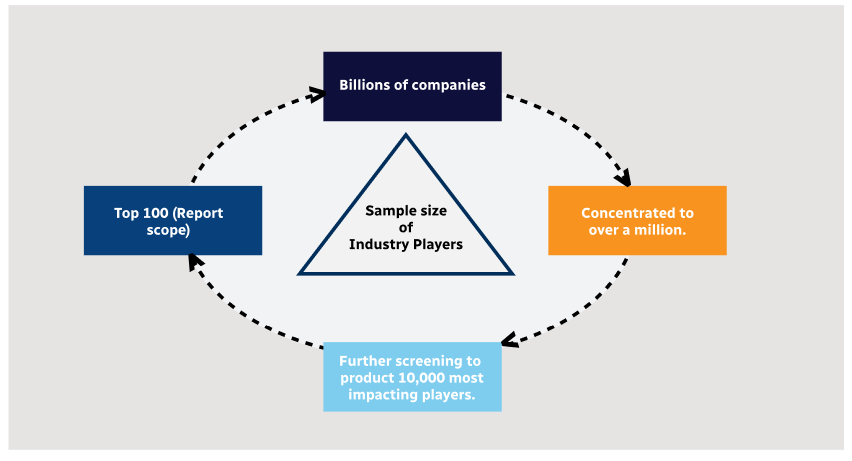
Step 1 - Identification of Relevant Samples Size from Population Database

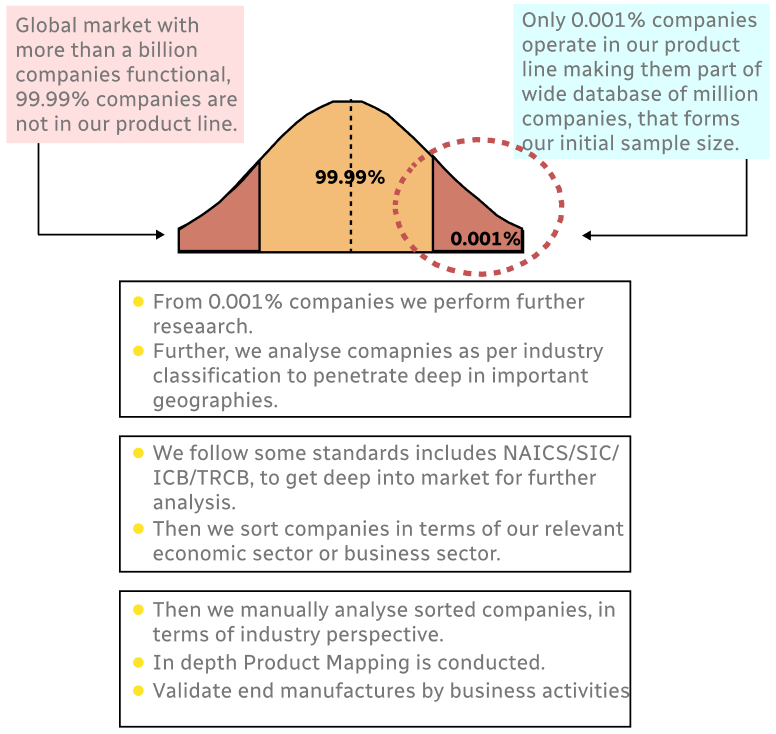
Step 2 - Approaches for Defining Global Market Size (Value, Volume* & Price*)
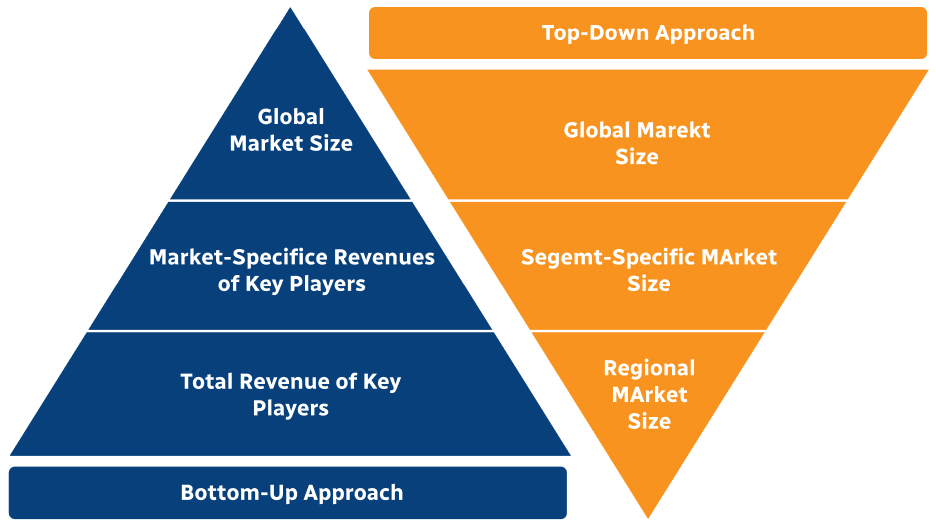
Note*: In applicable scenarios
Step 3 - Data Sources
Primary Research
- Web Analytics
- Survey Reports
- Research Institute
- Latest Research Reports
- Opinion Leaders
Secondary Research
- Annual Reports
- White Paper
- Latest Press Release
- Industry Association
- Paid Database
- Investor Presentations
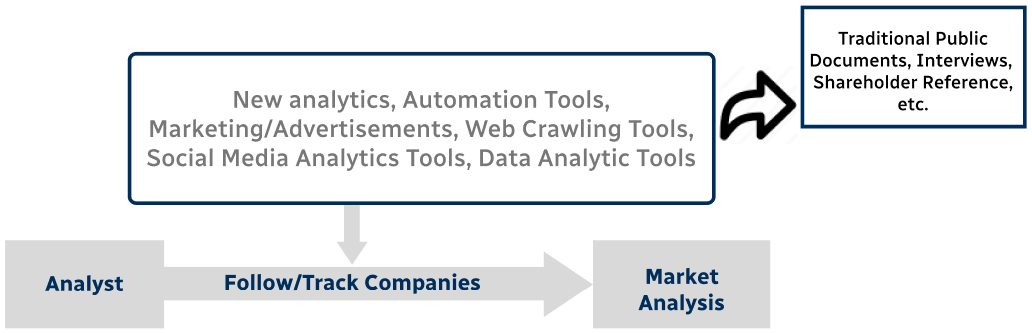
Step 4 - Data Triangulation
Involves using different sources of information in order to increase the validity of a study
These sources are likely to be stakeholders in a program - participants, other researchers, program staff, other community members, and so on.
Then we put all data in single framework & apply various statistical tools to find out the dynamic on the market.
During the analysis stage, feedback from the stakeholder groups would be compared to determine areas of agreement as well as areas of divergence