


Key Insights
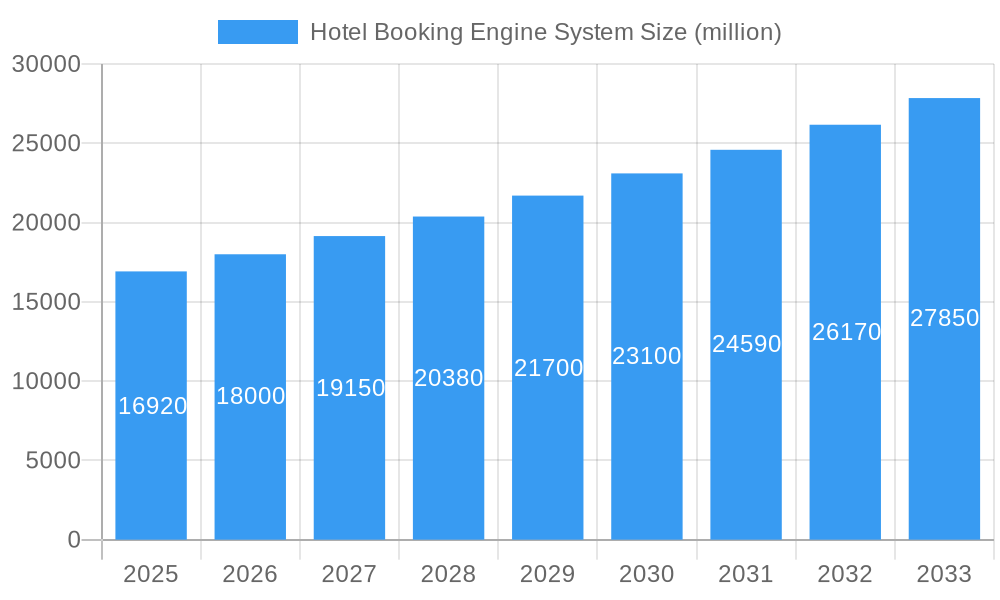
The global Hotel Booking Engine System market is projected to experience significant growth, driven by the increasing demand for streamlined and efficient online reservation processes. With a current market size of approximately USD 16920 million, the industry is anticipated to expand at a Compound Annual Growth Rate (CAGR) of 6.4% from 2025 to 2033. This robust growth is fueled by several key factors. The burgeoning hospitality sector, particularly the rise of luxury and high-end hotels alongside the continuous expansion of mid-range and business hotels, necessitates sophisticated booking solutions. Furthermore, the increasing adoption of digital technologies across all hotel types, including resorts and boutique establishments, plays a crucial role. The shift towards cloud-based and web-based booking engines, offering enhanced accessibility, scalability, and data management capabilities, is a dominant trend. This technological evolution is essential for hotels to remain competitive in an increasingly digitalized travel landscape, enabling them to optimize occupancy rates and enhance guest experiences.
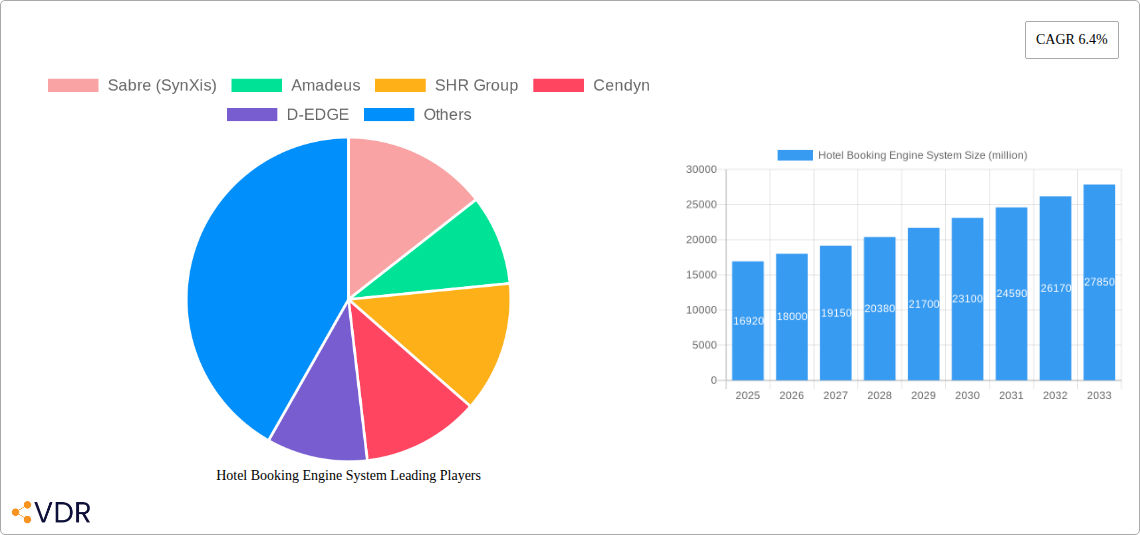
Hotel Booking Engine System Market Size (In Billion)

While the market is poised for expansion, certain restraints could influence its trajectory. Intense competition among numerous established and emerging players, including giants like Sabre, Amadeus, and Oracle, alongside innovative startups like Cloudbeds and SiteMinder, necessitates continuous product development and competitive pricing strategies. Cybersecurity concerns and data privacy regulations also present ongoing challenges, requiring significant investment in robust security measures. Despite these hurdles, the market's overall outlook remains highly positive. The expansion of the market is expected across all major regions, with North America and Europe currently leading in adoption, followed by a rapid surge in the Asia Pacific region due to its expanding tourism industry and increasing internet penetration. The Middle East & Africa and South America also represent promising growth avenues as their hospitality sectors mature and embrace technological advancements in booking management.
Hotel Booking Engine System Company Market Share
Absolutely! Here's a comprehensive and SEO-optimized report description for your Hotel Booking Engine System market analysis.
This in-depth report provides a panoramic view of the global Hotel Booking Engine System market, meticulously dissecting its current state and future trajectory. With a focus on high-traffic keywords such as "hotel booking engine," "online travel agencies," "channel manager," "property management system," "hotel technology," and "hospitality software," this analysis is tailored for industry professionals, hoteliers, technology providers, and investors seeking to understand market dynamics, growth trends, competitive landscape, and emerging opportunities. Our report covers the historical period from 2019 to 2024, the base year of 2025, and provides a robust forecast period from 2025 to 2033, offering actionable insights for strategic decision-making. We delve into the parent market of the broader hospitality technology sector and the child market of specialized booking engine solutions, providing a holistic market perspective. All quantitative values are presented in million units for clear comprehension.
Hotel Booking Engine System Market Dynamics & Structure
The Hotel Booking Engine System market is characterized by a dynamic interplay of technological innovation, evolving consumer preferences, and a complex regulatory environment. Market concentration varies across segments, with larger players like Sabre (SynXis) and Amadeus holding significant influence in enterprise solutions, while specialized providers cater to niche segments. Technological innovation is primarily driven by the demand for seamless, direct booking experiences, enhanced guest personalization, and integrated revenue management tools. Key drivers include advancements in AI for personalized recommendations, mobile-first booking interfaces, and the integration of third-party services. Regulatory frameworks, particularly concerning data privacy (e.g., GDPR, CCPA), are shaping development and deployment strategies. Competitive product substitutes include the direct booking capabilities offered by Online Travel Agencies (OTAs), though the trend towards disintermediation favors direct booking engines. End-user demographics are diverse, ranging from independent boutique hotels seeking cost-effective solutions to large luxury chains requiring sophisticated, scalable platforms. Mergers and acquisitions (M&A) activity is a significant trend, with larger hospitality technology conglomerates acquiring innovative smaller players to expand their product portfolios and market reach. For instance, we observed an estimated 35 M&A deals in the broader hospitality technology space in 2024, with a significant portion impacting the booking engine segment. Barriers to innovation include the high cost of R&D for advanced features, the need for robust data security, and the challenge of integrating with diverse legacy hotel systems.
- Market Concentration: Moderate to High in enterprise segments, fragmented in independent hotel segments.
- Technological Innovation Drivers: AI for personalization, mobile optimization, seamless integrations, revenue management features.
- Regulatory Frameworks: Data privacy (GDPR, CCPA), payment security standards.
- Competitive Product Substitutes: Online Travel Agencies (OTAs) with direct booking options.
- End-User Demographics: Independent hotels, boutique hotels, chains, luxury properties, resorts.
- M&A Trends: Consolidation by larger players, acquisition of specialized technology providers.
- Innovation Barriers: High R&D costs, data security concerns, integration complexities.
Hotel Booking Engine System Growth Trends & Insights
The global Hotel Booking Engine System market is poised for significant expansion, driven by an escalating digital transformation within the hospitality industry. The market size is projected to reach an estimated $5,200 million by 2025 and is anticipated to grow at a Compound Annual Growth Rate (CAGR) of approximately 11.5% during the forecast period of 2025–2033, reaching an impressive $12,500 million by 2033. This robust growth is fueled by an increasing adoption rate of advanced booking technologies by hotels of all sizes seeking to enhance direct bookings, reduce commission payments to OTAs, and improve the overall guest experience. The historical period (2019-2024) witnessed a surge in online booking channels, with market penetration for integrated booking engines increasing from 55% to an estimated 78% by the end of 2024. Technological disruptions, such as the rise of mobile-first booking platforms, the integration of AI-powered chatbots for customer service, and the development of sophisticated dynamic pricing modules, are further accelerating market adoption. Consumer behavior shifts are also playing a crucial role; travelers increasingly prefer the convenience and transparency of direct booking, seeking personalized offers and seamless reservation processes. The COVID-19 pandemic further underscored the importance of robust online presence and direct booking capabilities, acting as a significant accelerator for market growth. The ongoing trend of personalization, where booking engines tailor offers based on past preferences and browsing history, is enhancing customer loyalty and driving repeat business. Furthermore, the integration of booking engines with other hotel management systems, such as Property Management Systems (PMS) and Customer Relationship Management (CRM) software, is creating a more cohesive and efficient operational environment for hotels, contributing to higher adoption rates. The increasing reliance on data analytics to understand booking patterns and optimize marketing strategies is also a key growth driver, allowing hotels to make more informed decisions and improve their revenue performance.
Dominant Regions, Countries, or Segments in Hotel Booking Engine System
The global Hotel Booking Engine System market exhibits varying degrees of dominance across regions and specific market segments. North America, particularly the United States, is a leading region, driven by a mature hospitality sector with high adoption rates of advanced technology and a strong consumer preference for online booking. The U.S. accounted for an estimated 30% of the global market share in 2024, projected to grow to 32% by 2025. Key drivers in this region include robust economic policies supporting technological innovation, extensive digital infrastructure, and a large volume of both business and leisure travel. Europe follows closely, with countries like the UK, Germany, and Spain showcasing significant market penetration, boosted by widespread internet access, a diverse range of accommodation providers, and stringent data protection regulations that encourage secure and transparent booking platforms. Asia Pacific is the fastest-growing region, with countries such as China, India, and Southeast Asian nations rapidly expanding their digital capabilities and increasing their reliance on online booking solutions to cater to a burgeoning middle class and a growing inbound tourism market. Economic development, increasing disposable incomes, and government initiatives promoting digital tourism are key growth catalysts in this region.
Within the application segments, Mid-Range Hotels & Business Hotels represent a dominant force. This segment, estimated to account for approximately 35% of the market share in 2025, benefits from a large volume of bookings and a clear need for efficient, cost-effective booking engines that can handle high transaction volumes. These hotels are increasingly investing in technology to improve operational efficiency and guest satisfaction, leading to higher adoption rates. Resorts Hotels also constitute a significant and growing segment, projected to hold 25% market share by 2025. Resorts often require more sophisticated booking engines capable of managing complex packages, multiple room types, and ancillary services, making them prime adopters of advanced solutions. Luxury & High-End Hotels (estimated 20% market share in 2025) are early adopters of cutting-edge technology, demanding highly personalized and branded booking experiences, which drives innovation in this segment. Boutique Hotels (estimated 15% market share in 2025) are increasingly leveraging specialized booking engines to compete with larger players, focusing on unique user experiences and direct booking incentives.
In terms of types, Cloud-based booking engines are rapidly becoming the dominant form, projected to capture over 80% of the market share by 2025. This is due to their scalability, flexibility, lower upfront costs, and ease of integration compared to traditional web-based solutions.
- Dominant Region: North America, followed by Europe and the rapidly growing Asia Pacific.
- Key Drivers (Regional): Economic policies, digital infrastructure, consumer preference, government initiatives, tourism growth.
- Dominant Application Segment: Mid-Range Hotels & Business Hotels.
- Growing Application Segments: Resorts Hotels, Luxury & High-End Hotels, Boutique Hotels.
- Dominant Type: Cloud-based booking engines.
Hotel Booking Engine System Product Landscape
The product landscape of Hotel Booking Engine Systems is marked by continuous innovation aimed at delivering superior user experiences and driving direct bookings. Modern booking engines offer intuitive, mobile-responsive interfaces that facilitate seamless reservation processes across all devices. Key advancements include AI-powered personalization engines that suggest tailored room upgrades, packages, and local experiences based on guest profiles and preferences. Performance metrics like conversion rates, average booking value, and cart abandonment rates are continuously optimized through A/B testing and data analytics. Unique selling propositions often revolve around sophisticated rate management capabilities, integration with global distribution systems (GDS) and OTAs, robust reporting and analytics dashboards, and customizable branding options to maintain hotel identity. Technologies such as dynamic pricing, intelligent upsells, and integrated payment gateways are standard features, ensuring hotels can maximize revenue and streamline operations.
Key Drivers, Barriers & Challenges in Hotel Booking Engine System
Key Drivers:
- Increasing reliance on online channels: The ongoing shift in consumer booking behavior towards digital platforms.
- Desire for direct bookings: Hotels aiming to reduce commission costs paid to Online Travel Agencies (OTAs).
- Technological advancements: AI, mobile optimization, and seamless integrations enhancing user experience and operational efficiency.
- Personalization demands: Guests expecting tailored offers and experiences.
- Competitive pressure: Hotels needing advanced tools to stay competitive in a crowded market.
Barriers & Challenges:
- Integration complexities: Difficulty integrating new booking engines with existing legacy PMS and other hotel systems.
- Data security and privacy concerns: Ensuring compliance with regulations like GDPR and protecting sensitive guest data.
- High implementation costs: Initial investment for advanced booking engine solutions can be a barrier for smaller hotels.
- Talent gap: Lack of skilled personnel to manage and leverage complex booking engine functionalities effectively.
- Ever-evolving OTA landscape: The constant competition and evolving strategies of OTAs require continuous adaptation.
- Supply chain issues: While less direct, disruptions in IT infrastructure or service provider reliability can impact booking engine availability. Estimated impact: Up to 5% revenue loss during outages.
Emerging Opportunities in Hotel Booking Engine System
Emerging opportunities in the Hotel Booking Engine System sector are abundant, driven by technological advancements and evolving consumer expectations. The integration of conversational AI and chatbots for personalized customer service and booking assistance presents a significant avenue for enhancing user engagement. Untapped markets, particularly in developing economies with rapidly growing tourism sectors, offer substantial growth potential. Innovative applications, such as the integration of augmented reality (AR) for virtual room tours within the booking process, are poised to transform the user experience. Furthermore, the growing demand for sustainable and eco-friendly travel options presents an opportunity for booking engines to highlight hotels with strong sustainability credentials. The expansion of direct booking into niche travel segments, like wellness retreats or adventure tourism, also offers new avenues for specialized booking engine solutions.
Growth Accelerators in the Hotel Booking Engine System Industry
The Hotel Booking Engine System industry is propelled by several key growth accelerators. Technological breakthroughs in artificial intelligence and machine learning are enabling more sophisticated personalization and revenue management capabilities. Strategic partnerships between booking engine providers and other hospitality technology vendors (e.g., PMS, CRM, RMS providers) are creating integrated ecosystems that offer comprehensive solutions. Market expansion strategies, including entering new geographical regions and targeting underserved hotel segments, are crucial for sustained growth. The increasing focus on data analytics and business intelligence tools within booking engines empowers hotels to make data-driven decisions, optimizing marketing spend and improving booking conversion rates. Furthermore, the ongoing trend of digital transformation across the entire hospitality value chain necessitates robust and adaptable booking solutions, acting as a constant growth catalyst.
Key Players Shaping the Hotel Booking Engine System Market
- Sabre
- Amadeus
- SHR Group
- Cendyn
- D-EDGE
- Oracle
- Busy Rooms
- Shiji Group
- SiteMinder
- Clock Software
- Zucchetti Group
- DJUBO
- Profitroom
- Cloudbeds
- Net Affinity
- innRoad
- HotelRunner
- Hotellogix
- eRevMax
- Blastness
- Bookassist
- Omnibees
- AxisRooms
- EZee Technosys
- WebRezPro
- Bookwize
- STAAH
- Segments
Notable Milestones in Hotel Booking Engine System Sector
- 2019: Increased adoption of AI-powered personalization features in booking engines.
- 2020: Surge in direct booking strategies driven by pandemic-induced OTA commission concerns.
- 2021: Major advancements in mobile-first booking interface design and functionality.
- 2022: Enhanced integration of booking engines with CRM systems for unified guest profiles.
- 2023: Focus on sustainable travel options and their integration into booking engine recommendations.
- 2024: Introduction of advanced dynamic packaging and upsell capabilities by leading providers.
- 2025 (Estimated): Widespread adoption of cloud-based booking engines projected to exceed 80% market share.
In-Depth Hotel Booking Engine System Market Outlook
The Hotel Booking Engine System market is set for sustained and robust growth, driven by the imperative for hotels to enhance direct bookings, optimize revenue, and deliver exceptional guest experiences in an increasingly digital world. Future market potential is immense, with ongoing technological advancements in AI, machine learning, and data analytics continually reshaping the competitive landscape. Strategic opportunities lie in further segmenting the market to cater to the unique needs of boutique hotels, resorts, and luxury properties with highly tailored solutions. The increasing demand for integrated technology stacks, where booking engines seamlessly communicate with PMS, RMS, and marketing automation tools, presents a significant area for expansion. Companies that can offer intuitive, data-driven, and highly customizable booking engines that empower hotels to build stronger guest relationships and achieve greater profitability will be best positioned for success in the coming years. The continued shift from commission-based OTA bookings to direct, cost-effective channels will remain a primary growth accelerator.
Hotel Booking Engine System Segmentation
-
1. Application
- 1.1. Luxury & High-End Hotels
- 1.2. Mid-Range Hotels & Business Hotels
- 1.3. Resorts Hotels
- 1.4. Boutique Hotels
- 1.5. Others
-
2. Types
- 2.1. Web-based
- 2.2. Cloud-based
Hotel Booking Engine System Segmentation By Geography
-
1. North America
- 1.1. United States
- 1.2. Canada
- 1.3. Mexico
-
2. South America
- 2.1. Brazil
- 2.2. Argentina
- 2.3. Rest of South America
-
3. Europe
- 3.1. United Kingdom
- 3.2. Germany
- 3.3. France
- 3.4. Italy
- 3.5. Spain
- 3.6. Russia
- 3.7. Benelux
- 3.8. Nordics
- 3.9. Rest of Europe
-
4. Middle East & Africa
- 4.1. Turkey
- 4.2. Israel
- 4.3. GCC
- 4.4. North Africa
- 4.5. South Africa
- 4.6. Rest of Middle East & Africa
-
5. Asia Pacific
- 5.1. China
- 5.2. India
- 5.3. Japan
- 5.4. South Korea
- 5.5. ASEAN
- 5.6. Oceania
- 5.7. Rest of Asia Pacific
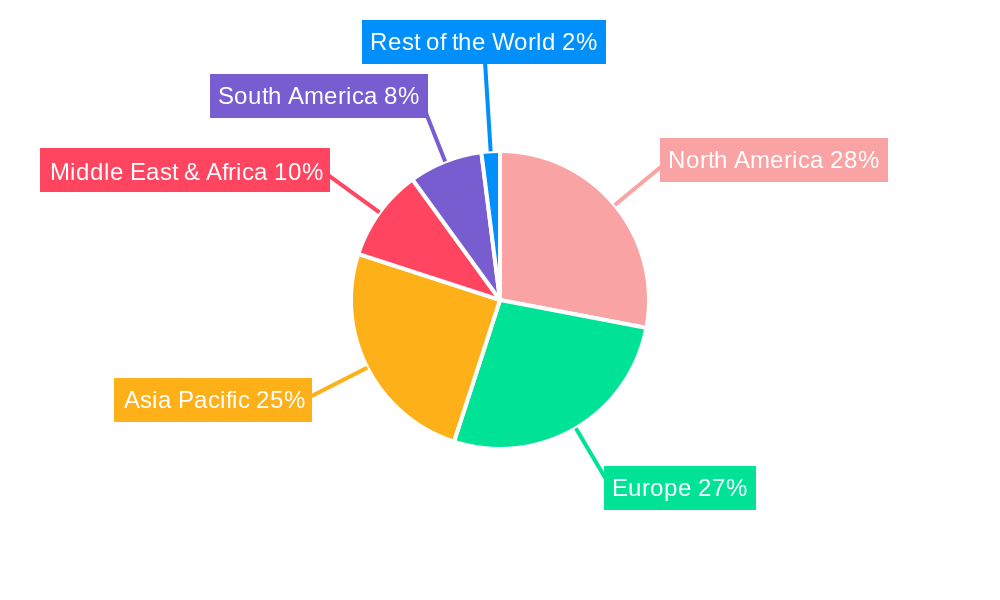
Hotel Booking Engine System Regional Market Share
Geographic Coverage of Hotel Booking Engine System
Hotel Booking Engine System REPORT HIGHLIGHTS
| Aspects | Details |
|---|---|
| Study Period | 2020-2034 |
| Base Year | 2025 |
| Estimated Year | 2026 |
| Forecast Period | 2026-2034 |
| Historical Period | 2020-2025 |
| Growth Rate | CAGR of 6.4% from 2020-2034 |
| Segmentation |
|
Table of Contents
- 1. Introduction
- 1.1. Research Scope
- 1.2. Market Segmentation
- 1.3. Research Methodology
- 1.4. Definitions and Assumptions
- 2. Executive Summary
- 2.1. Introduction
- 3. Market Dynamics
- 3.1. Introduction
- 3.2. Market Drivers
- 3.3. Market Restrains
- 3.4. Market Trends
- 4. Market Factor Analysis
- 4.1. Porters Five Forces
- 4.2. Supply/Value Chain
- 4.3. PESTEL analysis
- 4.4. Market Entropy
- 4.5. Patent/Trademark Analysis
- 5. Global Hotel Booking Engine System Analysis, Insights and Forecast, 2020-2032
- 5.1. Market Analysis, Insights and Forecast - by Application
- 5.1.1. Luxury & High-End Hotels
- 5.1.2. Mid-Range Hotels & Business Hotels
- 5.1.3. Resorts Hotels
- 5.1.4. Boutique Hotels
- 5.1.5. Others
- 5.2. Market Analysis, Insights and Forecast - by Types
- 5.2.1. Web-based
- 5.2.2. Cloud-based
- 5.3. Market Analysis, Insights and Forecast - by Region
- 5.3.1. North America
- 5.3.2. South America
- 5.3.3. Europe
- 5.3.4. Middle East & Africa
- 5.3.5. Asia Pacific
- 5.1. Market Analysis, Insights and Forecast - by Application
- 6. North America Hotel Booking Engine System Analysis, Insights and Forecast, 2020-2032
- 6.1. Market Analysis, Insights and Forecast - by Application
- 6.1.1. Luxury & High-End Hotels
- 6.1.2. Mid-Range Hotels & Business Hotels
- 6.1.3. Resorts Hotels
- 6.1.4. Boutique Hotels
- 6.1.5. Others
- 6.2. Market Analysis, Insights and Forecast - by Types
- 6.2.1. Web-based
- 6.2.2. Cloud-based
- 6.1. Market Analysis, Insights and Forecast - by Application
- 7. South America Hotel Booking Engine System Analysis, Insights and Forecast, 2020-2032
- 7.1. Market Analysis, Insights and Forecast - by Application
- 7.1.1. Luxury & High-End Hotels
- 7.1.2. Mid-Range Hotels & Business Hotels
- 7.1.3. Resorts Hotels
- 7.1.4. Boutique Hotels
- 7.1.5. Others
- 7.2. Market Analysis, Insights and Forecast - by Types
- 7.2.1. Web-based
- 7.2.2. Cloud-based
- 7.1. Market Analysis, Insights and Forecast - by Application
- 8. Europe Hotel Booking Engine System Analysis, Insights and Forecast, 2020-2032
- 8.1. Market Analysis, Insights and Forecast - by Application
- 8.1.1. Luxury & High-End Hotels
- 8.1.2. Mid-Range Hotels & Business Hotels
- 8.1.3. Resorts Hotels
- 8.1.4. Boutique Hotels
- 8.1.5. Others
- 8.2. Market Analysis, Insights and Forecast - by Types
- 8.2.1. Web-based
- 8.2.2. Cloud-based
- 8.1. Market Analysis, Insights and Forecast - by Application
- 9. Middle East & Africa Hotel Booking Engine System Analysis, Insights and Forecast, 2020-2032
- 9.1. Market Analysis, Insights and Forecast - by Application
- 9.1.1. Luxury & High-End Hotels
- 9.1.2. Mid-Range Hotels & Business Hotels
- 9.1.3. Resorts Hotels
- 9.1.4. Boutique Hotels
- 9.1.5. Others
- 9.2. Market Analysis, Insights and Forecast - by Types
- 9.2.1. Web-based
- 9.2.2. Cloud-based
- 9.1. Market Analysis, Insights and Forecast - by Application
- 10. Asia Pacific Hotel Booking Engine System Analysis, Insights and Forecast, 2020-2032
- 10.1. Market Analysis, Insights and Forecast - by Application
- 10.1.1. Luxury & High-End Hotels
- 10.1.2. Mid-Range Hotels & Business Hotels
- 10.1.3. Resorts Hotels
- 10.1.4. Boutique Hotels
- 10.1.5. Others
- 10.2. Market Analysis, Insights and Forecast - by Types
- 10.2.1. Web-based
- 10.2.2. Cloud-based
- 10.1. Market Analysis, Insights and Forecast - by Application
- 11. Competitive Analysis
- 11.1. Global Market Share Analysis 2025
- 11.2. Company Profiles
- 11.2.1 Sabre (SynXis)
- 11.2.1.1. Overview
- 11.2.1.2. Products
- 11.2.1.3. SWOT Analysis
- 11.2.1.4. Recent Developments
- 11.2.1.5. Financials (Based on Availability)
- 11.2.2 Amadeus
- 11.2.2.1. Overview
- 11.2.2.2. Products
- 11.2.2.3. SWOT Analysis
- 11.2.2.4. Recent Developments
- 11.2.2.5. Financials (Based on Availability)
- 11.2.3 SHR Group
- 11.2.3.1. Overview
- 11.2.3.2. Products
- 11.2.3.3. SWOT Analysis
- 11.2.3.4. Recent Developments
- 11.2.3.5. Financials (Based on Availability)
- 11.2.4 Cendyn
- 11.2.4.1. Overview
- 11.2.4.2. Products
- 11.2.4.3. SWOT Analysis
- 11.2.4.4. Recent Developments
- 11.2.4.5. Financials (Based on Availability)
- 11.2.5 D-EDGE
- 11.2.5.1. Overview
- 11.2.5.2. Products
- 11.2.5.3. SWOT Analysis
- 11.2.5.4. Recent Developments
- 11.2.5.5. Financials (Based on Availability)
- 11.2.6 Oracle
- 11.2.6.1. Overview
- 11.2.6.2. Products
- 11.2.6.3. SWOT Analysis
- 11.2.6.4. Recent Developments
- 11.2.6.5. Financials (Based on Availability)
- 11.2.7 Busy Rooms
- 11.2.7.1. Overview
- 11.2.7.2. Products
- 11.2.7.3. SWOT Analysis
- 11.2.7.4. Recent Developments
- 11.2.7.5. Financials (Based on Availability)
- 11.2.8 Shiji Group
- 11.2.8.1. Overview
- 11.2.8.2. Products
- 11.2.8.3. SWOT Analysis
- 11.2.8.4. Recent Developments
- 11.2.8.5. Financials (Based on Availability)
- 11.2.9 SiteMinder
- 11.2.9.1. Overview
- 11.2.9.2. Products
- 11.2.9.3. SWOT Analysis
- 11.2.9.4. Recent Developments
- 11.2.9.5. Financials (Based on Availability)
- 11.2.10 Clock Software
- 11.2.10.1. Overview
- 11.2.10.2. Products
- 11.2.10.3. SWOT Analysis
- 11.2.10.4. Recent Developments
- 11.2.10.5. Financials (Based on Availability)
- 11.2.11 Zucchetti Group
- 11.2.11.1. Overview
- 11.2.11.2. Products
- 11.2.11.3. SWOT Analysis
- 11.2.11.4. Recent Developments
- 11.2.11.5. Financials (Based on Availability)
- 11.2.12 DJUBO
- 11.2.12.1. Overview
- 11.2.12.2. Products
- 11.2.12.3. SWOT Analysis
- 11.2.12.4. Recent Developments
- 11.2.12.5. Financials (Based on Availability)
- 11.2.13 Profitroom
- 11.2.13.1. Overview
- 11.2.13.2. Products
- 11.2.13.3. SWOT Analysis
- 11.2.13.4. Recent Developments
- 11.2.13.5. Financials (Based on Availability)
- 11.2.14 Cloudbeds
- 11.2.14.1. Overview
- 11.2.14.2. Products
- 11.2.14.3. SWOT Analysis
- 11.2.14.4. Recent Developments
- 11.2.14.5. Financials (Based on Availability)
- 11.2.15 Net Affinity
- 11.2.15.1. Overview
- 11.2.15.2. Products
- 11.2.15.3. SWOT Analysis
- 11.2.15.4. Recent Developments
- 11.2.15.5. Financials (Based on Availability)
- 11.2.16 innRoad
- 11.2.16.1. Overview
- 11.2.16.2. Products
- 11.2.16.3. SWOT Analysis
- 11.2.16.4. Recent Developments
- 11.2.16.5. Financials (Based on Availability)
- 11.2.17 HotelRunner
- 11.2.17.1. Overview
- 11.2.17.2. Products
- 11.2.17.3. SWOT Analysis
- 11.2.17.4. Recent Developments
- 11.2.17.5. Financials (Based on Availability)
- 11.2.18 Hotelogix
- 11.2.18.1. Overview
- 11.2.18.2. Products
- 11.2.18.3. SWOT Analysis
- 11.2.18.4. Recent Developments
- 11.2.18.5. Financials (Based on Availability)
- 11.2.19 eRevMax
- 11.2.19.1. Overview
- 11.2.19.2. Products
- 11.2.19.3. SWOT Analysis
- 11.2.19.4. Recent Developments
- 11.2.19.5. Financials (Based on Availability)
- 11.2.20 Blastness
- 11.2.20.1. Overview
- 11.2.20.2. Products
- 11.2.20.3. SWOT Analysis
- 11.2.20.4. Recent Developments
- 11.2.20.5. Financials (Based on Availability)
- 11.2.21 Bookassist
- 11.2.21.1. Overview
- 11.2.21.2. Products
- 11.2.21.3. SWOT Analysis
- 11.2.21.4. Recent Developments
- 11.2.21.5. Financials (Based on Availability)
- 11.2.22 Omnibees
- 11.2.22.1. Overview
- 11.2.22.2. Products
- 11.2.22.3. SWOT Analysis
- 11.2.22.4. Recent Developments
- 11.2.22.5. Financials (Based on Availability)
- 11.2.23 AxisRooms
- 11.2.23.1. Overview
- 11.2.23.2. Products
- 11.2.23.3. SWOT Analysis
- 11.2.23.4. Recent Developments
- 11.2.23.5. Financials (Based on Availability)
- 11.2.24 EZee Technosys
- 11.2.24.1. Overview
- 11.2.24.2. Products
- 11.2.24.3. SWOT Analysis
- 11.2.24.4. Recent Developments
- 11.2.24.5. Financials (Based on Availability)
- 11.2.25 WebRezPro
- 11.2.25.1. Overview
- 11.2.25.2. Products
- 11.2.25.3. SWOT Analysis
- 11.2.25.4. Recent Developments
- 11.2.25.5. Financials (Based on Availability)
- 11.2.26 Bookwize
- 11.2.26.1. Overview
- 11.2.26.2. Products
- 11.2.26.3. SWOT Analysis
- 11.2.26.4. Recent Developments
- 11.2.26.5. Financials (Based on Availability)
- 11.2.27 STAAH
- 11.2.27.1. Overview
- 11.2.27.2. Products
- 11.2.27.3. SWOT Analysis
- 11.2.27.4. Recent Developments
- 11.2.27.5. Financials (Based on Availability)
- 11.2.1 Sabre (SynXis)
List of Figures
- Figure 1: Global Hotel Booking Engine System Revenue Breakdown (million, %) by Region 2025 & 2033
- Figure 2: North America Hotel Booking Engine System Revenue (million), by Application 2025 & 2033
- Figure 3: North America Hotel Booking Engine System Revenue Share (%), by Application 2025 & 2033
- Figure 4: North America Hotel Booking Engine System Revenue (million), by Types 2025 & 2033
- Figure 5: North America Hotel Booking Engine System Revenue Share (%), by Types 2025 & 2033
- Figure 6: North America Hotel Booking Engine System Revenue (million), by Country 2025 & 2033
- Figure 7: North America Hotel Booking Engine System Revenue Share (%), by Country 2025 & 2033
- Figure 8: South America Hotel Booking Engine System Revenue (million), by Application 2025 & 2033
- Figure 9: South America Hotel Booking Engine System Revenue Share (%), by Application 2025 & 2033
- Figure 10: South America Hotel Booking Engine System Revenue (million), by Types 2025 & 2033
- Figure 11: South America Hotel Booking Engine System Revenue Share (%), by Types 2025 & 2033
- Figure 12: South America Hotel Booking Engine System Revenue (million), by Country 2025 & 2033
- Figure 13: South America Hotel Booking Engine System Revenue Share (%), by Country 2025 & 2033
- Figure 14: Europe Hotel Booking Engine System Revenue (million), by Application 2025 & 2033
- Figure 15: Europe Hotel Booking Engine System Revenue Share (%), by Application 2025 & 2033
- Figure 16: Europe Hotel Booking Engine System Revenue (million), by Types 2025 & 2033
- Figure 17: Europe Hotel Booking Engine System Revenue Share (%), by Types 2025 & 2033
- Figure 18: Europe Hotel Booking Engine System Revenue (million), by Country 2025 & 2033
- Figure 19: Europe Hotel Booking Engine System Revenue Share (%), by Country 2025 & 2033
- Figure 20: Middle East & Africa Hotel Booking Engine System Revenue (million), by Application 2025 & 2033
- Figure 21: Middle East & Africa Hotel Booking Engine System Revenue Share (%), by Application 2025 & 2033
- Figure 22: Middle East & Africa Hotel Booking Engine System Revenue (million), by Types 2025 & 2033
- Figure 23: Middle East & Africa Hotel Booking Engine System Revenue Share (%), by Types 2025 & 2033
- Figure 24: Middle East & Africa Hotel Booking Engine System Revenue (million), by Country 2025 & 2033
- Figure 25: Middle East & Africa Hotel Booking Engine System Revenue Share (%), by Country 2025 & 2033
- Figure 26: Asia Pacific Hotel Booking Engine System Revenue (million), by Application 2025 & 2033
- Figure 27: Asia Pacific Hotel Booking Engine System Revenue Share (%), by Application 2025 & 2033
- Figure 28: Asia Pacific Hotel Booking Engine System Revenue (million), by Types 2025 & 2033
- Figure 29: Asia Pacific Hotel Booking Engine System Revenue Share (%), by Types 2025 & 2033
- Figure 30: Asia Pacific Hotel Booking Engine System Revenue (million), by Country 2025 & 2033
- Figure 31: Asia Pacific Hotel Booking Engine System Revenue Share (%), by Country 2025 & 2033
List of Tables
- Table 1: Global Hotel Booking Engine System Revenue million Forecast, by Application 2020 & 2033
- Table 2: Global Hotel Booking Engine System Revenue million Forecast, by Types 2020 & 2033
- Table 3: Global Hotel Booking Engine System Revenue million Forecast, by Region 2020 & 2033
- Table 4: Global Hotel Booking Engine System Revenue million Forecast, by Application 2020 & 2033
- Table 5: Global Hotel Booking Engine System Revenue million Forecast, by Types 2020 & 2033
- Table 6: Global Hotel Booking Engine System Revenue million Forecast, by Country 2020 & 2033
- Table 7: United States Hotel Booking Engine System Revenue (million) Forecast, by Application 2020 & 2033
- Table 8: Canada Hotel Booking Engine System Revenue (million) Forecast, by Application 2020 & 2033
- Table 9: Mexico Hotel Booking Engine System Revenue (million) Forecast, by Application 2020 & 2033
- Table 10: Global Hotel Booking Engine System Revenue million Forecast, by Application 2020 & 2033
- Table 11: Global Hotel Booking Engine System Revenue million Forecast, by Types 2020 & 2033
- Table 12: Global Hotel Booking Engine System Revenue million Forecast, by Country 2020 & 2033
- Table 13: Brazil Hotel Booking Engine System Revenue (million) Forecast, by Application 2020 & 2033
- Table 14: Argentina Hotel Booking Engine System Revenue (million) Forecast, by Application 2020 & 2033
- Table 15: Rest of South America Hotel Booking Engine System Revenue (million) Forecast, by Application 2020 & 2033
- Table 16: Global Hotel Booking Engine System Revenue million Forecast, by Application 2020 & 2033
- Table 17: Global Hotel Booking Engine System Revenue million Forecast, by Types 2020 & 2033
- Table 18: Global Hotel Booking Engine System Revenue million Forecast, by Country 2020 & 2033
- Table 19: United Kingdom Hotel Booking Engine System Revenue (million) Forecast, by Application 2020 & 2033
- Table 20: Germany Hotel Booking Engine System Revenue (million) Forecast, by Application 2020 & 2033
- Table 21: France Hotel Booking Engine System Revenue (million) Forecast, by Application 2020 & 2033
- Table 22: Italy Hotel Booking Engine System Revenue (million) Forecast, by Application 2020 & 2033
- Table 23: Spain Hotel Booking Engine System Revenue (million) Forecast, by Application 2020 & 2033
- Table 24: Russia Hotel Booking Engine System Revenue (million) Forecast, by Application 2020 & 2033
- Table 25: Benelux Hotel Booking Engine System Revenue (million) Forecast, by Application 2020 & 2033
- Table 26: Nordics Hotel Booking Engine System Revenue (million) Forecast, by Application 2020 & 2033
- Table 27: Rest of Europe Hotel Booking Engine System Revenue (million) Forecast, by Application 2020 & 2033
- Table 28: Global Hotel Booking Engine System Revenue million Forecast, by Application 2020 & 2033
- Table 29: Global Hotel Booking Engine System Revenue million Forecast, by Types 2020 & 2033
- Table 30: Global Hotel Booking Engine System Revenue million Forecast, by Country 2020 & 2033
- Table 31: Turkey Hotel Booking Engine System Revenue (million) Forecast, by Application 2020 & 2033
- Table 32: Israel Hotel Booking Engine System Revenue (million) Forecast, by Application 2020 & 2033
- Table 33: GCC Hotel Booking Engine System Revenue (million) Forecast, by Application 2020 & 2033
- Table 34: North Africa Hotel Booking Engine System Revenue (million) Forecast, by Application 2020 & 2033
- Table 35: South Africa Hotel Booking Engine System Revenue (million) Forecast, by Application 2020 & 2033
- Table 36: Rest of Middle East & Africa Hotel Booking Engine System Revenue (million) Forecast, by Application 2020 & 2033
- Table 37: Global Hotel Booking Engine System Revenue million Forecast, by Application 2020 & 2033
- Table 38: Global Hotel Booking Engine System Revenue million Forecast, by Types 2020 & 2033
- Table 39: Global Hotel Booking Engine System Revenue million Forecast, by Country 2020 & 2033
- Table 40: China Hotel Booking Engine System Revenue (million) Forecast, by Application 2020 & 2033
- Table 41: India Hotel Booking Engine System Revenue (million) Forecast, by Application 2020 & 2033
- Table 42: Japan Hotel Booking Engine System Revenue (million) Forecast, by Application 2020 & 2033
- Table 43: South Korea Hotel Booking Engine System Revenue (million) Forecast, by Application 2020 & 2033
- Table 44: ASEAN Hotel Booking Engine System Revenue (million) Forecast, by Application 2020 & 2033
- Table 45: Oceania Hotel Booking Engine System Revenue (million) Forecast, by Application 2020 & 2033
- Table 46: Rest of Asia Pacific Hotel Booking Engine System Revenue (million) Forecast, by Application 2020 & 2033
Frequently Asked Questions
1. What is the projected Compound Annual Growth Rate (CAGR) of the Hotel Booking Engine System?
The projected CAGR is approximately 6.4%.
2. Which companies are prominent players in the Hotel Booking Engine System?
Key companies in the market include Sabre (SynXis), Amadeus, SHR Group, Cendyn, D-EDGE, Oracle, Busy Rooms, Shiji Group, SiteMinder, Clock Software, Zucchetti Group, DJUBO, Profitroom, Cloudbeds, Net Affinity, innRoad, HotelRunner, Hotelogix, eRevMax, Blastness, Bookassist, Omnibees, AxisRooms, EZee Technosys, WebRezPro, Bookwize, STAAH.
3. What are the main segments of the Hotel Booking Engine System?
The market segments include Application, Types.
4. Can you provide details about the market size?
The market size is estimated to be USD 16920 million as of 2022.
5. What are some drivers contributing to market growth?
N/A
6. What are the notable trends driving market growth?
N/A
7. Are there any restraints impacting market growth?
N/A
8. Can you provide examples of recent developments in the market?
N/A
9. What pricing options are available for accessing the report?
Pricing options include single-user, multi-user, and enterprise licenses priced at USD 4900.00, USD 7350.00, and USD 9800.00 respectively.
10. Is the market size provided in terms of value or volume?
The market size is provided in terms of value, measured in million.
11. Are there any specific market keywords associated with the report?
Yes, the market keyword associated with the report is "Hotel Booking Engine System," which aids in identifying and referencing the specific market segment covered.
12. How do I determine which pricing option suits my needs best?
The pricing options vary based on user requirements and access needs. Individual users may opt for single-user licenses, while businesses requiring broader access may choose multi-user or enterprise licenses for cost-effective access to the report.
13. Are there any additional resources or data provided in the Hotel Booking Engine System report?
While the report offers comprehensive insights, it's advisable to review the specific contents or supplementary materials provided to ascertain if additional resources or data are available.
14. How can I stay updated on further developments or reports in the Hotel Booking Engine System?
To stay informed about further developments, trends, and reports in the Hotel Booking Engine System, consider subscribing to industry newsletters, following relevant companies and organizations, or regularly checking reputable industry news sources and publications.
Methodology
Step 1 - Identification of Relevant Samples Size from Population Database



Step 2 - Approaches for Defining Global Market Size (Value, Volume* & Price*)

Note*: In applicable scenarios
Step 3 - Data Sources
Primary Research
- Web Analytics
- Survey Reports
- Research Institute
- Latest Research Reports
- Opinion Leaders
Secondary Research
- Annual Reports
- White Paper
- Latest Press Release
- Industry Association
- Paid Database
- Investor Presentations

Step 4 - Data Triangulation
Involves using different sources of information in order to increase the validity of a study
These sources are likely to be stakeholders in a program - participants, other researchers, program staff, other community members, and so on.
Then we put all data in single framework & apply various statistical tools to find out the dynamic on the market.
During the analysis stage, feedback from the stakeholder groups would be compared to determine areas of agreement as well as areas of divergence