


Key Insights
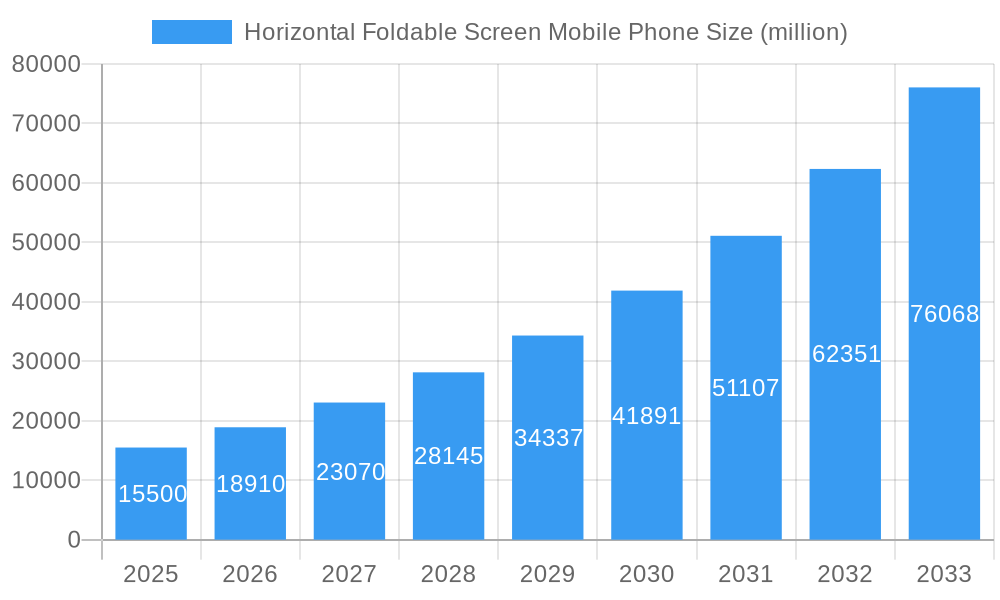
The global market for horizontal foldable screen mobile phones is poised for significant expansion, estimated to reach approximately USD 15,500 million by 2025. This burgeoning market is projected to witness a robust Compound Annual Growth Rate (CAGR) of around 22%, accelerating its trajectory through to 2033. This growth is primarily propelled by a confluence of compelling factors. The relentless pursuit of innovation by leading tech giants like Samsung, Huawei, Motorola, Xiaomi, Apple, and Google is introducing increasingly sophisticated and desirable foldable devices. Consumer demand for larger screen real estate in a portable form factor, coupled with the enhanced multitasking capabilities offered by these flexible displays, is a substantial driver. Furthermore, advancements in foldable screen technology, leading to improved durability and reduced costs, are making these devices more accessible and appealing to a wider consumer base. The market is segmented into online and offline sales channels, with online sales expected to capture a larger share due to the direct-to-consumer models and wider reach offered by e-commerce platforms.
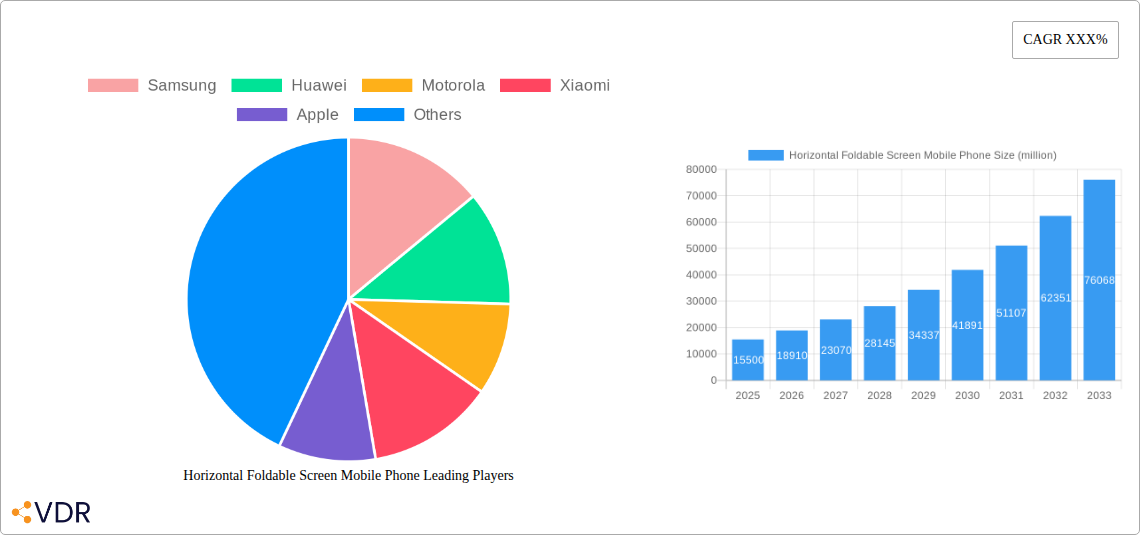
Horizontal Foldable Screen Mobile Phone Market Size (In Billion)

The horizontal foldable screen mobile phone market is characterized by distinct types, primarily differentiating between models that fold outwards laterally and those that fold inwards laterally. Both designs offer unique user experiences and address different consumer preferences regarding screen protection and form factor. Geographically, Asia Pacific, led by China and India, is anticipated to dominate the market share, driven by a large tech-savvy population, increasing disposable incomes, and the presence of major foldable phone manufacturers. North America and Europe also represent significant markets, with consumers readily adopting premium and innovative mobile technologies. While the market is brimming with opportunity, potential restraints include the high initial cost of foldable devices compared to traditional smartphones, consumer concerns regarding the long-term durability of the foldable displays, and the nascent stage of software optimization for foldable form factors. However, as technology matures and prices stabilize, these restraints are expected to diminish, paving the way for sustained and accelerated market growth.
Horizontal Foldable Screen Mobile Phone Company Market Share
Horizontal Foldable Screen Mobile Phone Market Dynamics & Structure
The horizontal foldable screen mobile phone market, a burgeoning segment within the broader smartphone industry, is characterized by dynamic innovation and evolving consumer preferences. Market concentration is currently moderate, with Samsung leading with an estimated 65% market share in the historical period (2019-2024), followed by Huawei at 15%. Emerging players like Motorola and Xiaomi are rapidly gaining traction, contributing to a more competitive landscape. Technological innovation is the primary driver, with continuous advancements in flexible display technology, hinge mechanisms, and battery life. Regulatory frameworks are largely supportive, focusing on consumer safety and interoperability standards. Competitive product substitutes include premium traditional smartphones and other foldable form factors, though horizontal foldables offer a unique blend of portability and larger screen real estate. End-user demographics are primarily early adopters and tech enthusiasts, with a growing appeal to business professionals seeking enhanced productivity. Merger and acquisition (M&A) trends are nascent but are expected to accelerate as key players consolidate their positions and seek to acquire intellectual property and market share. The estimated M&A deal volume in the forecast period (2025-2033) is projected to reach 50 million units in transaction value, indicating increasing consolidation.
- Market Concentration: Moderate, with a dominant leader and growing competition.
- Technological Innovation Drivers: Flexible display durability, hinge longevity, power efficiency, and miniaturization.
- Regulatory Frameworks: Generally supportive, with a focus on consumer safety and e-waste reduction.
- Competitive Product Substitutes: High-end traditional smartphones, other foldable phone types (e.g., clamshell).
- End-User Demographics: Tech-savvy consumers, professionals, content creators.
- M&A Trends: Nascent but anticipated to increase, driven by IP acquisition and market consolidation.
Horizontal Foldable Screen Mobile Phone Growth Trends & Insights
The horizontal foldable screen mobile phone market is poised for remarkable expansion, driven by a confluence of technological maturity, increasing affordability, and shifting consumer desires for versatile devices. The market size, estimated at approximately 15 million units in the base year 2025, is projected to witness a Compound Annual Growth Rate (CAGR) of 28.5% during the forecast period of 2025–2033. This robust growth is fueled by significant advancements in Ultra-Thin Glass (UTG) technology, enhancing display durability and reducing manufacturing costs. Furthermore, the refinement of hinge mechanisms has led to slimmer profiles and greater resilience, addressing earlier consumer concerns. Adoption rates are accelerating, moving beyond early adopters to a broader consumer base seeking the unique benefits of a larger screen that folds into a pocketable form factor.
Consumer behavior is demonstrably shifting. The demand for larger displays for immersive media consumption and productivity tasks is a key factor. Horizontal foldable phones offer a compelling solution, bridging the gap between traditional smartphones and tablets. This trend is further amplified by the increasing reliance on mobile devices for work and entertainment. As these devices become more mainstream, pricing strategies are becoming more competitive, with initial high-end pricing gradually filtering down to more accessible tiers, thereby expanding the addressable market.
Technological disruptions continue to shape the landscape. Innovations in battery technology are crucial for supporting the larger displays and increased processing power required by these devices. The integration of advanced AI capabilities for multitasking and content optimization also plays a significant role in enhancing user experience. The market penetration of horizontal foldable phones, currently standing at an estimated 3% in 2025, is expected to reach over 15% by 2033, indicating a substantial shift in consumer preference and market share capture. The development of robust app ecosystems that fully leverage the foldable form factor will be critical for sustained growth and deeper consumer engagement. The parent market, the global smartphone market, is projected to reach over 1.5 billion units by 2033, with foldable screens expected to capture a significant portion of the premium segment.
Dominant Regions, Countries, or Segments in Horizontal Foldable Screen Mobile Phone
The Asia Pacific region is emerging as the dominant force in the horizontal foldable screen mobile phone market, driven by a potent combination of robust economic growth, a large and tech-savvy population, and proactive government initiatives supporting technological innovation. Within this region, China stands out as a key growth engine, accounting for an estimated 40% of global sales volume in the base year 2025. This dominance is underpinned by the presence of major smartphone manufacturers like Huawei and Xiaomi, who are aggressively innovating and marketing foldable devices. The strong domestic demand for premium and feature-rich smartphones, coupled with a burgeoning middle class with increasing disposable income, fuels the adoption of high-end devices like horizontal foldables.
Furthermore, the "Fold Inward Laterally" type segment is experiencing particularly strong traction across the globe, and especially within Asia Pacific. This form factor, exemplified by devices that protect the main display when folded, offers enhanced durability and a more compact user experience, aligning well with consumer preferences for practicality and longevity. In 2025, the Fold Inward Laterally segment is estimated to capture 55% of the total horizontal foldable market, with projections indicating it will grow to 68% by 2033. This preference is driven by a desire for devices that can withstand daily wear and tear, a concern that has historically impacted the perception of foldable technology.
The "Online Sales" application segment is also a significant contributor to market growth, particularly in developed and developing Asian economies. E-commerce platforms in countries like China, South Korea, and India offer a wider selection, competitive pricing, and convenient purchasing options, making foldable phones more accessible to a broader audience. Online sales are projected to constitute 70% of all horizontal foldable phone sales by 2033. The parent market, the overall foldable phone market, is also seeing its strongest growth in this region, indicating a broader trend towards innovative mobile form factors. The child market, specifically the sub-$800 foldable segment, is expected to see significant expansion within Asia Pacific as manufacturers introduce more affordable foldable options, further accelerating adoption.
- Dominant Region: Asia Pacific
- Key Country: China
- Dominant Type: Fold Inward Laterally
- Dominant Application: Online Sales
- Key Drivers in Asia Pacific: Economic growth, large tech-savvy population, strong domestic manufacturers, e-commerce penetration.
- Key Drivers for Fold Inward Laterally: Enhanced durability, compact form factor, consumer preference for longevity.
- Growth Potential: Significant, driven by increasing affordability and market expansion.
Horizontal Foldable Screen Mobile Phone Product Landscape
The horizontal foldable screen mobile phone landscape is defined by rapid product innovation, focusing on enhancing user experience through larger, more immersive displays that seamlessly transition from a compact form to a tablet-like interface. Key advancements include the integration of flexible OLED displays with improved brightness, color accuracy, and refresh rates. Companies like Samsung have refined their proprietary hinge technology, offering improved durability and a more satisfying folding experience. Motorola's Razr series continues to push the boundaries of foldable design. Xiaomi is exploring unique form factors within the horizontal folding space, while Apple and Google are expected to enter this market, bringing their respective strengths in software integration and user interface design. Performance metrics are increasingly competitive with flagship traditional smartphones, boasting powerful processors, advanced camera systems, and longer battery life, often supported by dual-battery configurations.
Key Drivers, Barriers & Challenges in Horizontal Foldable Screen Mobile Phone
The horizontal foldable screen mobile phone market is propelled by several key drivers, including relentless technological innovation in flexible display and hinge mechanisms, a growing consumer demand for versatile devices offering both portability and larger screen real estate, and the desire for premium, cutting-edge technology. The increasing maturity of the foldable ecosystem, with improved software optimization for foldable displays, also acts as a significant growth accelerator.
However, the market faces considerable barriers and challenges. The high manufacturing costs associated with flexible displays and complex hinge assemblies contribute to elevated retail prices, limiting widespread adoption. Concerns regarding display durability and long-term resilience, though diminishing, remain a barrier for some consumers. Supply chain constraints for critical components, such as specialized display panels, can also impact production volumes and availability. Intense competition from established smartphone manufacturers and the rapid pace of technological obsolescence also present ongoing challenges.
Emerging Opportunities in Horizontal Foldable Screen Mobile Phone
Emerging opportunities in the horizontal foldable screen mobile phone sector lie in the development of more affordable mid-range foldable devices, catering to a wider consumer base beyond the premium segment. The untapped potential of enterprise solutions, such as foldable devices optimized for mobile workforce productivity and specialized business applications, presents a significant growth avenue. Further innovation in stylus integration and multi-window multitasking capabilities can unlock new use cases and enhance the productivity proposition. Evolving consumer preferences for personalized devices also opens doors for customizable form factors and software experiences tailored to foldable technology.
Growth Accelerators in the Horizontal Foldable Screen Mobile Phone Industry
Several catalysts are accelerating long-term growth in the horizontal foldable screen mobile phone industry. Significant investments in research and development by leading players like Samsung, Huawei, Motorola, Xiaomi, Apple, and Google are driving continuous improvements in display technology, battery life, and overall device performance. Strategic partnerships between component manufacturers and device makers are crucial for scaling production and reducing costs. Market expansion strategies, including aggressive marketing campaigns and the introduction of more accessible pricing tiers, are broadening consumer appeal. The development of a robust app ecosystem specifically designed to leverage the unique capabilities of foldable screens will also be a critical growth accelerator.
Key Players Shaping the Horizontal Foldable Screen Mobile Phone Market
- Samsung
- Huawei
- Motorola
- Xiaomi
- Apple
Notable Milestones in Horizontal Foldable Screen Mobile Phone Sector
- 2019: Samsung launches the Galaxy Fold, pioneering the foldable smartphone concept.
- 2020: Motorola revives the Razr as a foldable device, focusing on a clamshell design. Huawei introduces the Mate X, showcasing its approach to foldable innovation.
- 2021: Samsung releases the Galaxy Z Fold 2 and Z Flip 2, refining hinge durability and display technology. Xiaomi enters the foldable market with the Mi Mix Fold.
- 2022: Google announces its first foldable device, the Pixel Fold, integrating its software expertise. Samsung launches the Z Fold 4 and Z Flip 4, further improving performance and design.
- 2023: Continued refinement and iterative improvements across major manufacturers, with a growing focus on durability and software optimization. Market penetration begins to accelerate.
- 2024: Increased competition with the introduction of new models from established and emerging players, driving down average selling prices in some segments.
In-Depth Horizontal Foldable Screen Mobile Phone Market Outlook
The future of the horizontal foldable screen mobile phone market is exceptionally bright, fueled by ongoing technological advancements and an expanding consumer base. Growth accelerators, including significant R&D investments and strategic industry partnerships, are paving the way for more durable, powerful, and aesthetically pleasing devices. As manufacturing processes mature and economies of scale are realized, average selling prices are expected to decrease, making foldable technology accessible to a much larger segment of the global population. The increasing integration of foldable devices into enterprise solutions and the continuous evolution of mobile software to fully exploit the unique form factors will further solidify their position as a key category in the smartphone market, driving substantial growth in the coming years.
Horizontal Foldable Screen Mobile Phone Segmentation
-
1. Application
- 1.1. Online Sales
- 1.2. Offline Sales
-
2. Type
- 2.1. Fold Outwards Laterally
- 2.2. Fold Inward Laterally
Horizontal Foldable Screen Mobile Phone Segmentation By Geography
-
1. North America
- 1.1. United States
- 1.2. Canada
- 1.3. Mexico
-
2. South America
- 2.1. Brazil
- 2.2. Argentina
- 2.3. Rest of South America
-
3. Europe
- 3.1. United Kingdom
- 3.2. Germany
- 3.3. France
- 3.4. Italy
- 3.5. Spain
- 3.6. Russia
- 3.7. Benelux
- 3.8. Nordics
- 3.9. Rest of Europe
-
4. Middle East & Africa
- 4.1. Turkey
- 4.2. Israel
- 4.3. GCC
- 4.4. North Africa
- 4.5. South Africa
- 4.6. Rest of Middle East & Africa
-
5. Asia Pacific
- 5.1. China
- 5.2. India
- 5.3. Japan
- 5.4. South Korea
- 5.5. ASEAN
- 5.6. Oceania
- 5.7. Rest of Asia Pacific
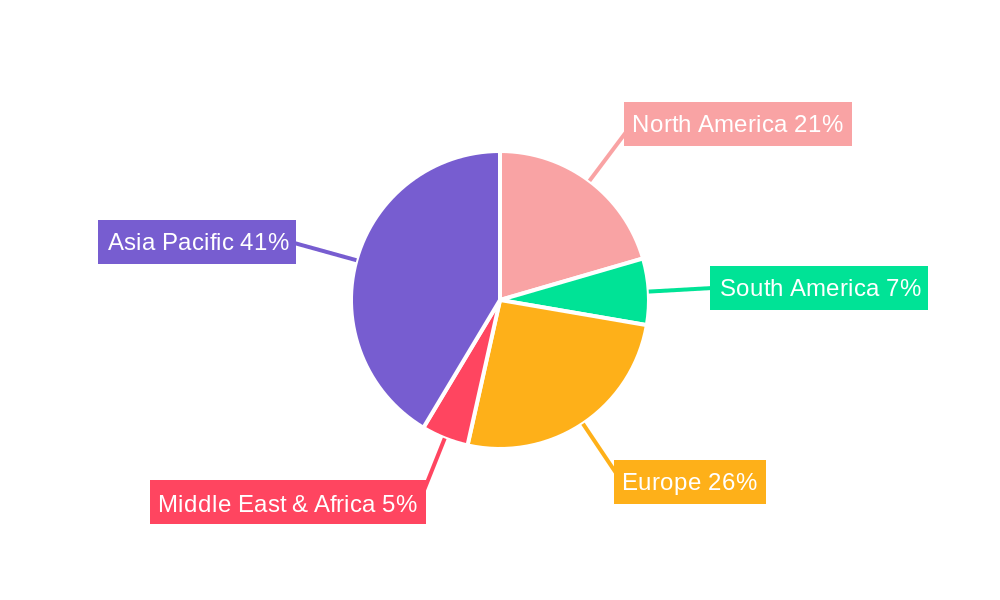
Horizontal Foldable Screen Mobile Phone Regional Market Share
Geographic Coverage of Horizontal Foldable Screen Mobile Phone
Horizontal Foldable Screen Mobile Phone REPORT HIGHLIGHTS
| Aspects | Details |
|---|---|
| Study Period | 2020-2034 |
| Base Year | 2025 |
| Estimated Year | 2026 |
| Forecast Period | 2026-2034 |
| Historical Period | 2020-2025 |
| Growth Rate | CAGR of XXX% from 2020-2034 |
| Segmentation |
|
Table of Contents
- 1. Introduction
- 1.1. Research Scope
- 1.2. Market Segmentation
- 1.3. Research Methodology
- 1.4. Definitions and Assumptions
- 2. Executive Summary
- 2.1. Introduction
- 3. Market Dynamics
- 3.1. Introduction
- 3.2. Market Drivers
- 3.3. Market Restrains
- 3.4. Market Trends
- 4. Market Factor Analysis
- 4.1. Porters Five Forces
- 4.2. Supply/Value Chain
- 4.3. PESTEL analysis
- 4.4. Market Entropy
- 4.5. Patent/Trademark Analysis
- 5. Global Horizontal Foldable Screen Mobile Phone Analysis, Insights and Forecast, 2020-2032
- 5.1. Market Analysis, Insights and Forecast - by Application
- 5.1.1. Online Sales
- 5.1.2. Offline Sales
- 5.2. Market Analysis, Insights and Forecast - by Type
- 5.2.1. Fold Outwards Laterally
- 5.2.2. Fold Inward Laterally
- 5.3. Market Analysis, Insights and Forecast - by Region
- 5.3.1. North America
- 5.3.2. South America
- 5.3.3. Europe
- 5.3.4. Middle East & Africa
- 5.3.5. Asia Pacific
- 5.1. Market Analysis, Insights and Forecast - by Application
- 6. North America Horizontal Foldable Screen Mobile Phone Analysis, Insights and Forecast, 2020-2032
- 6.1. Market Analysis, Insights and Forecast - by Application
- 6.1.1. Online Sales
- 6.1.2. Offline Sales
- 6.2. Market Analysis, Insights and Forecast - by Type
- 6.2.1. Fold Outwards Laterally
- 6.2.2. Fold Inward Laterally
- 6.1. Market Analysis, Insights and Forecast - by Application
- 7. South America Horizontal Foldable Screen Mobile Phone Analysis, Insights and Forecast, 2020-2032
- 7.1. Market Analysis, Insights and Forecast - by Application
- 7.1.1. Online Sales
- 7.1.2. Offline Sales
- 7.2. Market Analysis, Insights and Forecast - by Type
- 7.2.1. Fold Outwards Laterally
- 7.2.2. Fold Inward Laterally
- 7.1. Market Analysis, Insights and Forecast - by Application
- 8. Europe Horizontal Foldable Screen Mobile Phone Analysis, Insights and Forecast, 2020-2032
- 8.1. Market Analysis, Insights and Forecast - by Application
- 8.1.1. Online Sales
- 8.1.2. Offline Sales
- 8.2. Market Analysis, Insights and Forecast - by Type
- 8.2.1. Fold Outwards Laterally
- 8.2.2. Fold Inward Laterally
- 8.1. Market Analysis, Insights and Forecast - by Application
- 9. Middle East & Africa Horizontal Foldable Screen Mobile Phone Analysis, Insights and Forecast, 2020-2032
- 9.1. Market Analysis, Insights and Forecast - by Application
- 9.1.1. Online Sales
- 9.1.2. Offline Sales
- 9.2. Market Analysis, Insights and Forecast - by Type
- 9.2.1. Fold Outwards Laterally
- 9.2.2. Fold Inward Laterally
- 9.1. Market Analysis, Insights and Forecast - by Application
- 10. Asia Pacific Horizontal Foldable Screen Mobile Phone Analysis, Insights and Forecast, 2020-2032
- 10.1. Market Analysis, Insights and Forecast - by Application
- 10.1.1. Online Sales
- 10.1.2. Offline Sales
- 10.2. Market Analysis, Insights and Forecast - by Type
- 10.2.1. Fold Outwards Laterally
- 10.2.2. Fold Inward Laterally
- 10.1. Market Analysis, Insights and Forecast - by Application
- 11. Competitive Analysis
- 11.1. Global Market Share Analysis 2025
- 11.2. Company Profiles
- 11.2.1 Samsung
- 11.2.1.1. Overview
- 11.2.1.2. Products
- 11.2.1.3. SWOT Analysis
- 11.2.1.4. Recent Developments
- 11.2.1.5. Financials (Based on Availability)
- 11.2.2 Huawei
- 11.2.2.1. Overview
- 11.2.2.2. Products
- 11.2.2.3. SWOT Analysis
- 11.2.2.4. Recent Developments
- 11.2.2.5. Financials (Based on Availability)
- 11.2.3 Motorola
- 11.2.3.1. Overview
- 11.2.3.2. Products
- 11.2.3.3. SWOT Analysis
- 11.2.3.4. Recent Developments
- 11.2.3.5. Financials (Based on Availability)
- 11.2.4 Xiaomi
- 11.2.4.1. Overview
- 11.2.4.2. Products
- 11.2.4.3. SWOT Analysis
- 11.2.4.4. Recent Developments
- 11.2.4.5. Financials (Based on Availability)
- 11.2.5 Apple
- 11.2.5.1. Overview
- 11.2.5.2. Products
- 11.2.5.3. SWOT Analysis
- 11.2.5.4. Recent Developments
- 11.2.5.5. Financials (Based on Availability)
- 11.2.6 Google
- 11.2.6.1. Overview
- 11.2.6.2. Products
- 11.2.6.3. SWOT Analysis
- 11.2.6.4. Recent Developments
- 11.2.6.5. Financials (Based on Availability)
- 11.2.1 Samsung
List of Figures
- Figure 1: Global Horizontal Foldable Screen Mobile Phone Revenue Breakdown (million, %) by Region 2025 & 2033
- Figure 2: North America Horizontal Foldable Screen Mobile Phone Revenue (million), by Application 2025 & 2033
- Figure 3: North America Horizontal Foldable Screen Mobile Phone Revenue Share (%), by Application 2025 & 2033
- Figure 4: North America Horizontal Foldable Screen Mobile Phone Revenue (million), by Type 2025 & 2033
- Figure 5: North America Horizontal Foldable Screen Mobile Phone Revenue Share (%), by Type 2025 & 2033
- Figure 6: North America Horizontal Foldable Screen Mobile Phone Revenue (million), by Country 2025 & 2033
- Figure 7: North America Horizontal Foldable Screen Mobile Phone Revenue Share (%), by Country 2025 & 2033
- Figure 8: South America Horizontal Foldable Screen Mobile Phone Revenue (million), by Application 2025 & 2033
- Figure 9: South America Horizontal Foldable Screen Mobile Phone Revenue Share (%), by Application 2025 & 2033
- Figure 10: South America Horizontal Foldable Screen Mobile Phone Revenue (million), by Type 2025 & 2033
- Figure 11: South America Horizontal Foldable Screen Mobile Phone Revenue Share (%), by Type 2025 & 2033
- Figure 12: South America Horizontal Foldable Screen Mobile Phone Revenue (million), by Country 2025 & 2033
- Figure 13: South America Horizontal Foldable Screen Mobile Phone Revenue Share (%), by Country 2025 & 2033
- Figure 14: Europe Horizontal Foldable Screen Mobile Phone Revenue (million), by Application 2025 & 2033
- Figure 15: Europe Horizontal Foldable Screen Mobile Phone Revenue Share (%), by Application 2025 & 2033
- Figure 16: Europe Horizontal Foldable Screen Mobile Phone Revenue (million), by Type 2025 & 2033
- Figure 17: Europe Horizontal Foldable Screen Mobile Phone Revenue Share (%), by Type 2025 & 2033
- Figure 18: Europe Horizontal Foldable Screen Mobile Phone Revenue (million), by Country 2025 & 2033
- Figure 19: Europe Horizontal Foldable Screen Mobile Phone Revenue Share (%), by Country 2025 & 2033
- Figure 20: Middle East & Africa Horizontal Foldable Screen Mobile Phone Revenue (million), by Application 2025 & 2033
- Figure 21: Middle East & Africa Horizontal Foldable Screen Mobile Phone Revenue Share (%), by Application 2025 & 2033
- Figure 22: Middle East & Africa Horizontal Foldable Screen Mobile Phone Revenue (million), by Type 2025 & 2033
- Figure 23: Middle East & Africa Horizontal Foldable Screen Mobile Phone Revenue Share (%), by Type 2025 & 2033
- Figure 24: Middle East & Africa Horizontal Foldable Screen Mobile Phone Revenue (million), by Country 2025 & 2033
- Figure 25: Middle East & Africa Horizontal Foldable Screen Mobile Phone Revenue Share (%), by Country 2025 & 2033
- Figure 26: Asia Pacific Horizontal Foldable Screen Mobile Phone Revenue (million), by Application 2025 & 2033
- Figure 27: Asia Pacific Horizontal Foldable Screen Mobile Phone Revenue Share (%), by Application 2025 & 2033
- Figure 28: Asia Pacific Horizontal Foldable Screen Mobile Phone Revenue (million), by Type 2025 & 2033
- Figure 29: Asia Pacific Horizontal Foldable Screen Mobile Phone Revenue Share (%), by Type 2025 & 2033
- Figure 30: Asia Pacific Horizontal Foldable Screen Mobile Phone Revenue (million), by Country 2025 & 2033
- Figure 31: Asia Pacific Horizontal Foldable Screen Mobile Phone Revenue Share (%), by Country 2025 & 2033
List of Tables
- Table 1: Global Horizontal Foldable Screen Mobile Phone Revenue million Forecast, by Application 2020 & 2033
- Table 2: Global Horizontal Foldable Screen Mobile Phone Revenue million Forecast, by Type 2020 & 2033
- Table 3: Global Horizontal Foldable Screen Mobile Phone Revenue million Forecast, by Region 2020 & 2033
- Table 4: Global Horizontal Foldable Screen Mobile Phone Revenue million Forecast, by Application 2020 & 2033
- Table 5: Global Horizontal Foldable Screen Mobile Phone Revenue million Forecast, by Type 2020 & 2033
- Table 6: Global Horizontal Foldable Screen Mobile Phone Revenue million Forecast, by Country 2020 & 2033
- Table 7: United States Horizontal Foldable Screen Mobile Phone Revenue (million) Forecast, by Application 2020 & 2033
- Table 8: Canada Horizontal Foldable Screen Mobile Phone Revenue (million) Forecast, by Application 2020 & 2033
- Table 9: Mexico Horizontal Foldable Screen Mobile Phone Revenue (million) Forecast, by Application 2020 & 2033
- Table 10: Global Horizontal Foldable Screen Mobile Phone Revenue million Forecast, by Application 2020 & 2033
- Table 11: Global Horizontal Foldable Screen Mobile Phone Revenue million Forecast, by Type 2020 & 2033
- Table 12: Global Horizontal Foldable Screen Mobile Phone Revenue million Forecast, by Country 2020 & 2033
- Table 13: Brazil Horizontal Foldable Screen Mobile Phone Revenue (million) Forecast, by Application 2020 & 2033
- Table 14: Argentina Horizontal Foldable Screen Mobile Phone Revenue (million) Forecast, by Application 2020 & 2033
- Table 15: Rest of South America Horizontal Foldable Screen Mobile Phone Revenue (million) Forecast, by Application 2020 & 2033
- Table 16: Global Horizontal Foldable Screen Mobile Phone Revenue million Forecast, by Application 2020 & 2033
- Table 17: Global Horizontal Foldable Screen Mobile Phone Revenue million Forecast, by Type 2020 & 2033
- Table 18: Global Horizontal Foldable Screen Mobile Phone Revenue million Forecast, by Country 2020 & 2033
- Table 19: United Kingdom Horizontal Foldable Screen Mobile Phone Revenue (million) Forecast, by Application 2020 & 2033
- Table 20: Germany Horizontal Foldable Screen Mobile Phone Revenue (million) Forecast, by Application 2020 & 2033
- Table 21: France Horizontal Foldable Screen Mobile Phone Revenue (million) Forecast, by Application 2020 & 2033
- Table 22: Italy Horizontal Foldable Screen Mobile Phone Revenue (million) Forecast, by Application 2020 & 2033
- Table 23: Spain Horizontal Foldable Screen Mobile Phone Revenue (million) Forecast, by Application 2020 & 2033
- Table 24: Russia Horizontal Foldable Screen Mobile Phone Revenue (million) Forecast, by Application 2020 & 2033
- Table 25: Benelux Horizontal Foldable Screen Mobile Phone Revenue (million) Forecast, by Application 2020 & 2033
- Table 26: Nordics Horizontal Foldable Screen Mobile Phone Revenue (million) Forecast, by Application 2020 & 2033
- Table 27: Rest of Europe Horizontal Foldable Screen Mobile Phone Revenue (million) Forecast, by Application 2020 & 2033
- Table 28: Global Horizontal Foldable Screen Mobile Phone Revenue million Forecast, by Application 2020 & 2033
- Table 29: Global Horizontal Foldable Screen Mobile Phone Revenue million Forecast, by Type 2020 & 2033
- Table 30: Global Horizontal Foldable Screen Mobile Phone Revenue million Forecast, by Country 2020 & 2033
- Table 31: Turkey Horizontal Foldable Screen Mobile Phone Revenue (million) Forecast, by Application 2020 & 2033
- Table 32: Israel Horizontal Foldable Screen Mobile Phone Revenue (million) Forecast, by Application 2020 & 2033
- Table 33: GCC Horizontal Foldable Screen Mobile Phone Revenue (million) Forecast, by Application 2020 & 2033
- Table 34: North Africa Horizontal Foldable Screen Mobile Phone Revenue (million) Forecast, by Application 2020 & 2033
- Table 35: South Africa Horizontal Foldable Screen Mobile Phone Revenue (million) Forecast, by Application 2020 & 2033
- Table 36: Rest of Middle East & Africa Horizontal Foldable Screen Mobile Phone Revenue (million) Forecast, by Application 2020 & 2033
- Table 37: Global Horizontal Foldable Screen Mobile Phone Revenue million Forecast, by Application 2020 & 2033
- Table 38: Global Horizontal Foldable Screen Mobile Phone Revenue million Forecast, by Type 2020 & 2033
- Table 39: Global Horizontal Foldable Screen Mobile Phone Revenue million Forecast, by Country 2020 & 2033
- Table 40: China Horizontal Foldable Screen Mobile Phone Revenue (million) Forecast, by Application 2020 & 2033
- Table 41: India Horizontal Foldable Screen Mobile Phone Revenue (million) Forecast, by Application 2020 & 2033
- Table 42: Japan Horizontal Foldable Screen Mobile Phone Revenue (million) Forecast, by Application 2020 & 2033
- Table 43: South Korea Horizontal Foldable Screen Mobile Phone Revenue (million) Forecast, by Application 2020 & 2033
- Table 44: ASEAN Horizontal Foldable Screen Mobile Phone Revenue (million) Forecast, by Application 2020 & 2033
- Table 45: Oceania Horizontal Foldable Screen Mobile Phone Revenue (million) Forecast, by Application 2020 & 2033
- Table 46: Rest of Asia Pacific Horizontal Foldable Screen Mobile Phone Revenue (million) Forecast, by Application 2020 & 2033
Frequently Asked Questions
1. What is the projected Compound Annual Growth Rate (CAGR) of the Horizontal Foldable Screen Mobile Phone?
The projected CAGR is approximately XXX%.
2. Which companies are prominent players in the Horizontal Foldable Screen Mobile Phone?
Key companies in the market include Samsung, Huawei, Motorola, Xiaomi, Apple, Google.
3. What are the main segments of the Horizontal Foldable Screen Mobile Phone?
The market segments include Application, Type.
4. Can you provide details about the market size?
The market size is estimated to be USD XXX million as of 2022.
5. What are some drivers contributing to market growth?
N/A
6. What are the notable trends driving market growth?
N/A
7. Are there any restraints impacting market growth?
N/A
8. Can you provide examples of recent developments in the market?
N/A
9. What pricing options are available for accessing the report?
Pricing options include single-user, multi-user, and enterprise licenses priced at USD 2900.00, USD 4350.00, and USD 5800.00 respectively.
10. Is the market size provided in terms of value or volume?
The market size is provided in terms of value, measured in million.
11. Are there any specific market keywords associated with the report?
Yes, the market keyword associated with the report is "Horizontal Foldable Screen Mobile Phone," which aids in identifying and referencing the specific market segment covered.
12. How do I determine which pricing option suits my needs best?
The pricing options vary based on user requirements and access needs. Individual users may opt for single-user licenses, while businesses requiring broader access may choose multi-user or enterprise licenses for cost-effective access to the report.
13. Are there any additional resources or data provided in the Horizontal Foldable Screen Mobile Phone report?
While the report offers comprehensive insights, it's advisable to review the specific contents or supplementary materials provided to ascertain if additional resources or data are available.
14. How can I stay updated on further developments or reports in the Horizontal Foldable Screen Mobile Phone?
To stay informed about further developments, trends, and reports in the Horizontal Foldable Screen Mobile Phone, consider subscribing to industry newsletters, following relevant companies and organizations, or regularly checking reputable industry news sources and publications.
Methodology
Step 1 - Identification of Relevant Samples Size from Population Database



Step 2 - Approaches for Defining Global Market Size (Value, Volume* & Price*)

Note*: In applicable scenarios
Step 3 - Data Sources
Primary Research
- Web Analytics
- Survey Reports
- Research Institute
- Latest Research Reports
- Opinion Leaders
Secondary Research
- Annual Reports
- White Paper
- Latest Press Release
- Industry Association
- Paid Database
- Investor Presentations

Step 4 - Data Triangulation
Involves using different sources of information in order to increase the validity of a study
These sources are likely to be stakeholders in a program - participants, other researchers, program staff, other community members, and so on.
Then we put all data in single framework & apply various statistical tools to find out the dynamic on the market.
During the analysis stage, feedback from the stakeholder groups would be compared to determine areas of agreement as well as areas of divergence