
Key Insights
The global handheld nebulizer market is poised for significant expansion, projected to reach approximately $2,500 million by 2025 and grow at a Compound Annual Growth Rate (CAGR) of around 7.5% through 2033. This robust growth is primarily fueled by the increasing prevalence of respiratory conditions such as asthma, COPD, and cystic fibrosis, coupled with a growing awareness of the benefits of portable and convenient respiratory therapy. The shift towards home-based healthcare solutions and the rising demand for user-friendly, effective drug delivery systems are further propelling market momentum. Advancements in nebulizer technology, particularly the development of more efficient and quieter mesh and ultrasonic types, are enhancing patient compliance and treatment outcomes. The convenience offered by handheld devices, allowing for discreet and on-the-go treatment, is a major advantage, especially for active individuals and children.
The market is segmented across various applications, with online sales channels witnessing a surge due to increased e-commerce penetration and convenience. Offline sales, however, remain a significant contributor, driven by prescriptions from healthcare professionals and accessibility through pharmacies and medical supply stores. In terms of type, compressor nebulizers continue to hold a substantial share, but ultrasonic and mesh nebulizers are rapidly gaining traction due to their portability, quiet operation, and faster treatment times. Geographically, North America and Europe currently dominate the market owing to high healthcare expenditure, advanced healthcare infrastructure, and a large patient pool suffering from respiratory ailments. However, the Asia Pacific region is expected to exhibit the fastest growth, driven by a burgeoning population, increasing disposable incomes, improving healthcare access, and a rising incidence of air pollution-related respiratory issues. Restrains such as the cost of advanced devices and limited reimbursement policies in certain regions may temper growth, but the overall outlook remains exceptionally positive.
Handheld Type Nebulizers Market Analysis: Navigating Respiratory Care Innovation
This comprehensive report delves into the dynamic global handheld type nebulizers market, analyzing its intricate structure, growth trajectory, and future outlook. With a focus on key segments, technological advancements, and the competitive landscape, this research provides critical insights for stakeholders seeking to capitalize on the evolving respiratory care sector. The study spans from 2019 to 2033, with a base year of 2025, offering historical context and robust forecasts.
Handheld Type Nebulizers Market Dynamics & Structure
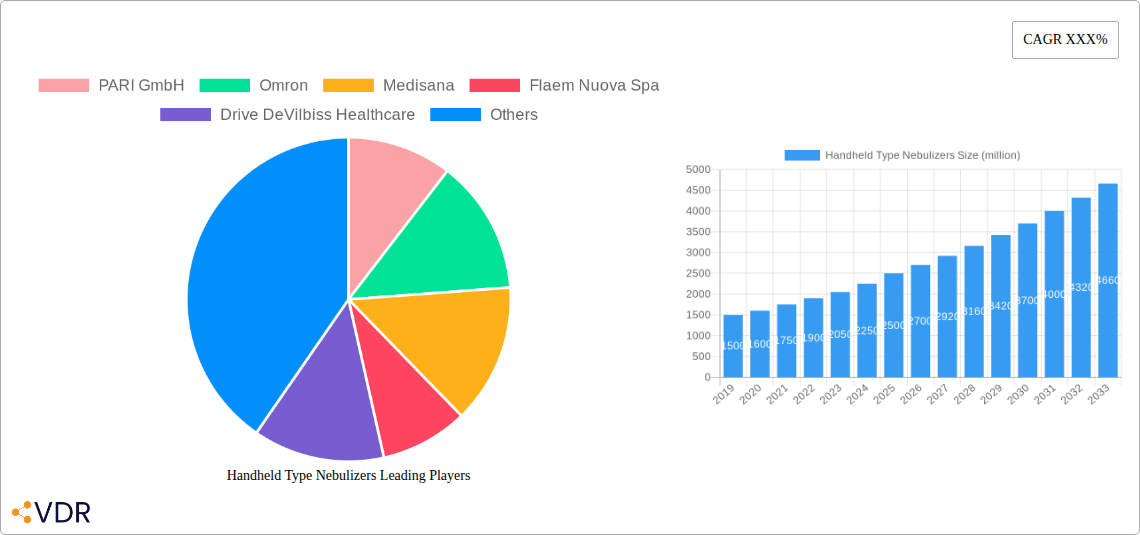
The handheld type nebulizers market exhibits a moderate concentration, driven by continuous technological innovation and stringent regulatory frameworks aimed at ensuring device efficacy and patient safety. Key players like PARI GmbH, Omron, and Philips are at the forefront of developing advanced mesh and ultrasonic nebulizer technologies, enhancing portability and patient compliance. The market is influenced by evolving end-user demographics, with a growing elderly population and an increasing prevalence of respiratory diseases like asthma, COPD, and cystic fibrosis. Competitive product substitutes, such as inhalers, are present, but handheld nebulizers offer distinct advantages for specific patient needs, particularly for those who struggle with traditional inhaler techniques. Mergers and acquisitions (M&A) play a role in market consolidation and expansion of product portfolios. For instance, the acquisition of smaller specialized nebulizer companies by larger medical device manufacturers can lead to accelerated market penetration. Barriers to innovation include the high cost of research and development, complex regulatory approval processes, and the need for extensive clinical validation to demonstrate superior therapeutic outcomes.
- Market Concentration: Moderate, with a few key players holding significant market share.
- Technological Innovation Drivers: Miniaturization, improved battery life, silent operation, and user-friendly interfaces.
- Regulatory Frameworks: FDA, CE marking, and other national health authorities dictate device standards and approval pathways.
- Competitive Product Substitutes: Metered-dose inhalers (MDIs), dry powder inhalers (DPIs).
- End-User Demographics: Increasing prevalence of chronic respiratory diseases, aging global population, pediatric patients.
- M&A Trends: Strategic acquisitions for portfolio expansion and market reach.
Handheld Type Nebulizers Growth Trends & Insights
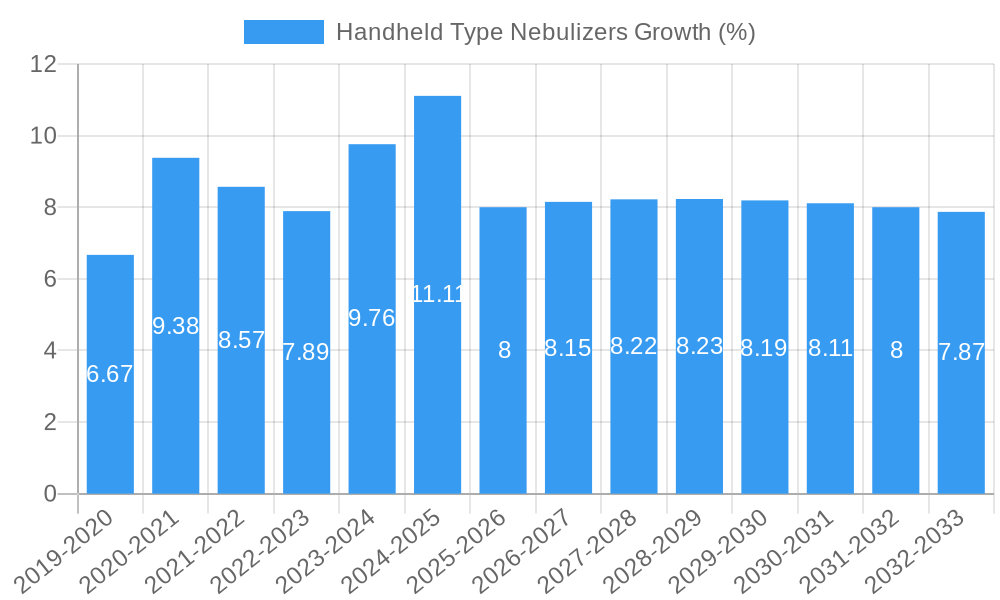
The global handheld type nebulizers market is projected for robust growth, driven by an escalating burden of respiratory ailments and a growing preference for convenient, at-home treatment solutions. The market size, which was valued at approximately $1,500 million units in the historical period, is estimated to reach $2,200 million units by the base year 2025 and is forecast to experience a Compound Annual Growth Rate (CAGR) of approximately 7.5% during the forecast period of 2025–2033. This expansion is fueled by a combination of factors including rising disposable incomes in emerging economies, enhanced healthcare infrastructure, and increased awareness among patients and healthcare professionals regarding the benefits of handheld nebulizers for effective drug delivery. Technological advancements, particularly in mesh nebulizer technology, have revolutionized the market by offering faster treatment times, greater efficiency in drug atomization, and significantly improved portability, making them a preferred choice over traditional compressor nebulizers for many users.
The adoption rates of handheld nebulizers are steadily increasing, propelled by their inherent advantages over conventional respiratory devices. Their compact size and battery-powered operation allow for discreet and convenient use in various settings, from travel to daily routines, thereby enhancing patient compliance and overall quality of life. This shift in consumer behavior is further reinforced by the increasing availability of online sales channels, which provide wider accessibility and competitive pricing. The market penetration of these devices is expected to deepen as healthcare providers increasingly recommend them as first-line treatment options for a spectrum of respiratory conditions. Furthermore, ongoing research and development efforts are focused on integrating smart features, such as connectivity with mobile applications for tracking treatment adherence and drug dosage, which will further drive market growth and user engagement. The projected market trajectory indicates a sustained period of expansion, underscoring the critical role of handheld nebulizers in modern respiratory care management.
Dominant Regions, Countries, or Segments in Handheld Type Nebulizers
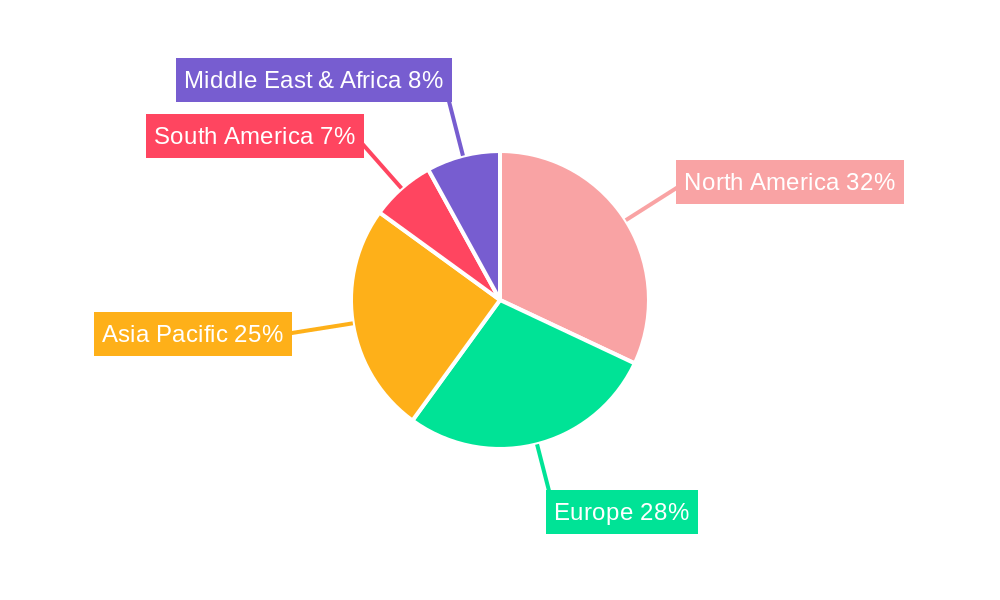
North America, particularly the United States, currently dominates the handheld type nebulizers market, driven by its advanced healthcare infrastructure, high prevalence of chronic respiratory diseases such as asthma and COPD, and strong emphasis on technological innovation. The region's substantial healthcare expenditure and the presence of leading medical device manufacturers like PARI GmbH, Omron, and Drive DeVilbiss Healthcare contribute significantly to its market leadership. The online sales segment within North America is particularly robust, reflecting consumer preferences for convenience and accessibility in purchasing medical devices. The mesh type nebulizer segment is also a significant growth driver, owing to its superior efficiency, portability, and quiet operation, making it highly favored by both healthcare professionals and patients. The total market share for mesh type nebulizers in North America is estimated to be around 45% of the overall handheld nebulizer market in 2025.
In terms of application, online sales are rapidly gaining traction globally, projected to capture an estimated 55% of the total handheld nebulizers market by 2025, outpacing offline sales. This shift is attributed to the convenience, wider product selection, and competitive pricing offered by e-commerce platforms. Geographically, Europe is a significant market, with countries like Germany, the UK, and France demonstrating high adoption rates due to their well-established healthcare systems and increasing awareness of respiratory health management. The Asia-Pacific region, led by China and India, represents the fastest-growing market, fueled by a rising middle class, increasing disposable incomes, and a growing burden of respiratory illnesses. The market share of the Asia-Pacific region is expected to grow from approximately 20% in 2024 to over 30% by 2033. Within the types of nebulizers, the mesh type nebulizer segment is anticipated to witness the highest growth rate, estimated at a CAGR of 8.2% from 2025 to 2033, owing to continuous technological advancements that enhance its therapeutic efficacy and user experience. Compressor type nebulizers, while established, are seeing a gradual decline in market share as newer technologies emerge.
Handheld Type Nebulizers Product Landscape
The handheld type nebulizers market is characterized by a diverse and rapidly evolving product landscape, focused on enhancing therapeutic efficacy and user convenience. Innovations center on miniaturization, leading to highly portable and lightweight devices that can be easily carried in a pocket or purse. Advanced mesh nebulizer technology, a key innovation, delivers medication in a fine mist with minimal drug wastage, ensuring optimal absorption. Many devices now feature whisper-quiet operation and long-lasting rechargeable batteries, reducing patient anxiety and enabling discreet use. Unique selling propositions include faster nebulization times, improved drug particle size uniformity, and simplified cleaning procedures. Technological advancements such as smart connectivity, allowing for data tracking and remote monitoring by healthcare providers, are also emerging, further differentiating products in a competitive market.
Key Drivers, Barriers & Challenges in Handheld Type Nebulizers
Key Drivers:
- Rising Prevalence of Respiratory Diseases: Increasing incidence of asthma, COPD, cystic fibrosis, and other respiratory ailments globally fuels demand for effective treatment solutions.
- Technological Advancements: Development of efficient, portable, and user-friendly mesh and ultrasonic nebulizers enhances patient compliance and therapeutic outcomes.
- Growing Awareness and Home Healthcare Trend: Increased patient education and a preference for self-management of chronic conditions at home drive adoption.
- Aging Global Population: Elderly individuals are more susceptible to respiratory issues, creating a sustained demand for nebulizer devices.
Barriers & Challenges:
- High Cost of Advanced Devices: Premium pricing of sophisticated mesh nebulizers can be a barrier for price-sensitive consumers in certain markets.
- Regulatory Hurdles: Stringent approval processes for new medical devices can delay market entry and increase R&D costs.
- Availability of Substitutes: While offering distinct advantages, nebulizers compete with other inhalation devices like MDIs and DPIs.
- Supply Chain Disruptions: Global events can impact the availability of components and finished products, affecting market supply.
- Reimbursement Policies: Inconsistent or inadequate reimbursement from healthcare systems in some regions can hinder widespread adoption.
Emerging Opportunities in Handheld Type Nebulizers
Emerging opportunities in the handheld type nebulizers market lie in the development of smart, connected devices that integrate seamlessly with digital health ecosystems. The untapped potential in emerging economies, particularly in Asia-Pacific and Latin America, presents a significant growth avenue as healthcare infrastructure and disposable incomes improve. Furthermore, there is an opportunity to develop specialized nebulizers tailored for specific drug formulations or niche respiratory conditions. Personalized medicine approaches, where nebulizer therapy is customized based on individual patient data and needs, also represent a promising future direction, enhancing treatment efficacy and patient outcomes.
Growth Accelerators in the Handheld Type Nebulizers Industry
Long-term growth in the handheld type nebulizers industry will be significantly accelerated by continued breakthroughs in nebulizer technology, leading to even more compact, efficient, and silent devices. Strategic partnerships between nebulizer manufacturers and pharmaceutical companies to develop integrated drug delivery systems will be crucial. Market expansion into underserved regions with growing respiratory disease burdens, coupled with localized marketing and distribution strategies, will unlock new consumer bases. The increasing focus on preventative healthcare and early intervention for respiratory conditions will also foster sustained demand for effective treatment modalities like handheld nebulizers.
Key Players Shaping the Handheld Type Nebulizers Market
- PARI GmbH
- Omron
- Medisana
- Flaem Nuova Spa
- Drive DeVilbiss Healthcare
- Philips
- Medel International srl
- Convexity Scientific
- Rossmax International Ltd.
- Graham-field Health Products
- CareFusion (BD)
- Allied Healthcare Products
- Yuyue Medical
- Simzo Electronic Technology
- Feellife
- Cofoe Medical technology
- Andon Health
- Haier
- Folee
- Vega Technologies
- Enjour Medical
- Tianchen
- Yobekan
Notable Milestones in Handheld Type Nebulizers Sector
- 2019: Introduction of highly portable and battery-operated mesh nebulizers with significantly improved nebulization efficiency.
- 2020: Increased demand for home-use respiratory devices due to the global pandemic, boosting sales of handheld nebulizers.
- 2021: Launch of nebulizers with enhanced connectivity features, enabling remote patient monitoring and data tracking.
- 2022: Significant investment in R&D for quieter and more energy-efficient nebulizer technologies.
- 2023: Growing emphasis on user-friendly interfaces and simplified cleaning mechanisms in new product releases.
- Early 2024: Expansion of distribution networks into emerging markets to cater to a growing patient base.
In-Depth Handheld Type Nebulizers Market Outlook
The outlook for the handheld type nebulizers market remains exceptionally positive, characterized by continuous innovation and expanding global demand. Growth accelerators such as advancements in mesh technology, increasing respiratory disease prevalence, and the shift towards home-based healthcare will sustain the market's upward trajectory. Strategic opportunities lie in addressing unmet needs in developing regions and further enhancing the smart capabilities of devices for integrated patient care. The market is poised for significant expansion, driven by a commitment to improving respiratory health outcomes through accessible and effective drug delivery solutions.
Handheld Type Nebulizers Segmentation
-
1. Application
- 1.1. Online Sales
- 1.2. Offline Sales
-
2. Type
- 2.1. Compressor Type
- 2.2. Ultrasonic Type
- 2.3. Mesh Type
- 2.4. Others
Handheld Type Nebulizers Segmentation By Geography
-
1. North America
- 1.1. United States
- 1.2. Canada
- 1.3. Mexico
-
2. South America
- 2.1. Brazil
- 2.2. Argentina
- 2.3. Rest of South America
-
3. Europe
- 3.1. United Kingdom
- 3.2. Germany
- 3.3. France
- 3.4. Italy
- 3.5. Spain
- 3.6. Russia
- 3.7. Benelux
- 3.8. Nordics
- 3.9. Rest of Europe
-
4. Middle East & Africa
- 4.1. Turkey
- 4.2. Israel
- 4.3. GCC
- 4.4. North Africa
- 4.5. South Africa
- 4.6. Rest of Middle East & Africa
-
5. Asia Pacific
- 5.1. China
- 5.2. India
- 5.3. Japan
- 5.4. South Korea
- 5.5. ASEAN
- 5.6. Oceania
- 5.7. Rest of Asia Pacific
Handheld Type Nebulizers REPORT HIGHLIGHTS
| Aspects | Details |
|---|---|
| Study Period | 2019-2033 |
| Base Year | 2024 |
| Estimated Year | 2025 |
| Forecast Period | 2025-2033 |
| Historical Period | 2019-2024 |
| Growth Rate | CAGR of XXX% from 2019-2033 |
| Segmentation |
|
Table of Contents
- 1. Introduction
- 1.1. Research Scope
- 1.2. Market Segmentation
- 1.3. Research Methodology
- 1.4. Definitions and Assumptions
- 2. Executive Summary
- 2.1. Introduction
- 3. Market Dynamics
- 3.1. Introduction
- 3.2. Market Drivers
- 3.3. Market Restrains
- 3.4. Market Trends
- 4. Market Factor Analysis
- 4.1. Porters Five Forces
- 4.2. Supply/Value Chain
- 4.3. PESTEL analysis
- 4.4. Market Entropy
- 4.5. Patent/Trademark Analysis
- 5. Global Handheld Type Nebulizers Analysis, Insights and Forecast, 2019-2031
- 5.1. Market Analysis, Insights and Forecast - by Application
- 5.1.1. Online Sales
- 5.1.2. Offline Sales
- 5.2. Market Analysis, Insights and Forecast - by Type
- 5.2.1. Compressor Type
- 5.2.2. Ultrasonic Type
- 5.2.3. Mesh Type
- 5.2.4. Others
- 5.3. Market Analysis, Insights and Forecast - by Region
- 5.3.1. North America
- 5.3.2. South America
- 5.3.3. Europe
- 5.3.4. Middle East & Africa
- 5.3.5. Asia Pacific
- 5.1. Market Analysis, Insights and Forecast - by Application
- 6. North America Handheld Type Nebulizers Analysis, Insights and Forecast, 2019-2031
- 6.1. Market Analysis, Insights and Forecast - by Application
- 6.1.1. Online Sales
- 6.1.2. Offline Sales
- 6.2. Market Analysis, Insights and Forecast - by Type
- 6.2.1. Compressor Type
- 6.2.2. Ultrasonic Type
- 6.2.3. Mesh Type
- 6.2.4. Others
- 6.1. Market Analysis, Insights and Forecast - by Application
- 7. South America Handheld Type Nebulizers Analysis, Insights and Forecast, 2019-2031
- 7.1. Market Analysis, Insights and Forecast - by Application
- 7.1.1. Online Sales
- 7.1.2. Offline Sales
- 7.2. Market Analysis, Insights and Forecast - by Type
- 7.2.1. Compressor Type
- 7.2.2. Ultrasonic Type
- 7.2.3. Mesh Type
- 7.2.4. Others
- 7.1. Market Analysis, Insights and Forecast - by Application
- 8. Europe Handheld Type Nebulizers Analysis, Insights and Forecast, 2019-2031
- 8.1. Market Analysis, Insights and Forecast - by Application
- 8.1.1. Online Sales
- 8.1.2. Offline Sales
- 8.2. Market Analysis, Insights and Forecast - by Type
- 8.2.1. Compressor Type
- 8.2.2. Ultrasonic Type
- 8.2.3. Mesh Type
- 8.2.4. Others
- 8.1. Market Analysis, Insights and Forecast - by Application
- 9. Middle East & Africa Handheld Type Nebulizers Analysis, Insights and Forecast, 2019-2031
- 9.1. Market Analysis, Insights and Forecast - by Application
- 9.1.1. Online Sales
- 9.1.2. Offline Sales
- 9.2. Market Analysis, Insights and Forecast - by Type
- 9.2.1. Compressor Type
- 9.2.2. Ultrasonic Type
- 9.2.3. Mesh Type
- 9.2.4. Others
- 9.1. Market Analysis, Insights and Forecast - by Application
- 10. Asia Pacific Handheld Type Nebulizers Analysis, Insights and Forecast, 2019-2031
- 10.1. Market Analysis, Insights and Forecast - by Application
- 10.1.1. Online Sales
- 10.1.2. Offline Sales
- 10.2. Market Analysis, Insights and Forecast - by Type
- 10.2.1. Compressor Type
- 10.2.2. Ultrasonic Type
- 10.2.3. Mesh Type
- 10.2.4. Others
- 10.1. Market Analysis, Insights and Forecast - by Application
- 11. Competitive Analysis
- 11.1. Global Market Share Analysis 2024
- 11.2. Company Profiles
- 11.2.1 PARI GmbH
- 11.2.1.1. Overview
- 11.2.1.2. Products
- 11.2.1.3. SWOT Analysis
- 11.2.1.4. Recent Developments
- 11.2.1.5. Financials (Based on Availability)
- 11.2.2 Omron
- 11.2.2.1. Overview
- 11.2.2.2. Products
- 11.2.2.3. SWOT Analysis
- 11.2.2.4. Recent Developments
- 11.2.2.5. Financials (Based on Availability)
- 11.2.3 Medisana
- 11.2.3.1. Overview
- 11.2.3.2. Products
- 11.2.3.3. SWOT Analysis
- 11.2.3.4. Recent Developments
- 11.2.3.5. Financials (Based on Availability)
- 11.2.4 Flaem Nuova Spa
- 11.2.4.1. Overview
- 11.2.4.2. Products
- 11.2.4.3. SWOT Analysis
- 11.2.4.4. Recent Developments
- 11.2.4.5. Financials (Based on Availability)
- 11.2.5 Drive DeVilbiss Healthcare
- 11.2.5.1. Overview
- 11.2.5.2. Products
- 11.2.5.3. SWOT Analysis
- 11.2.5.4. Recent Developments
- 11.2.5.5. Financials (Based on Availability)
- 11.2.6 Philips
- 11.2.6.1. Overview
- 11.2.6.2. Products
- 11.2.6.3. SWOT Analysis
- 11.2.6.4. Recent Developments
- 11.2.6.5. Financials (Based on Availability)
- 11.2.7 Medel International srl
- 11.2.7.1. Overview
- 11.2.7.2. Products
- 11.2.7.3. SWOT Analysis
- 11.2.7.4. Recent Developments
- 11.2.7.5. Financials (Based on Availability)
- 11.2.8 Convexity Scientific
- 11.2.8.1. Overview
- 11.2.8.2. Products
- 11.2.8.3. SWOT Analysis
- 11.2.8.4. Recent Developments
- 11.2.8.5. Financials (Based on Availability)
- 11.2.9 Rossmax International Ltd.
- 11.2.9.1. Overview
- 11.2.9.2. Products
- 11.2.9.3. SWOT Analysis
- 11.2.9.4. Recent Developments
- 11.2.9.5. Financials (Based on Availability)
- 11.2.10 Graham-field Health Products
- 11.2.10.1. Overview
- 11.2.10.2. Products
- 11.2.10.3. SWOT Analysis
- 11.2.10.4. Recent Developments
- 11.2.10.5. Financials (Based on Availability)
- 11.2.11 CareFusion (BD)
- 11.2.11.1. Overview
- 11.2.11.2. Products
- 11.2.11.3. SWOT Analysis
- 11.2.11.4. Recent Developments
- 11.2.11.5. Financials (Based on Availability)
- 11.2.12 Allied Healthcare Products
- 11.2.12.1. Overview
- 11.2.12.2. Products
- 11.2.12.3. SWOT Analysis
- 11.2.12.4. Recent Developments
- 11.2.12.5. Financials (Based on Availability)
- 11.2.13 Yuyue Medical
- 11.2.13.1. Overview
- 11.2.13.2. Products
- 11.2.13.3. SWOT Analysis
- 11.2.13.4. Recent Developments
- 11.2.13.5. Financials (Based on Availability)
- 11.2.14 Simzo Electronic Technology
- 11.2.14.1. Overview
- 11.2.14.2. Products
- 11.2.14.3. SWOT Analysis
- 11.2.14.4. Recent Developments
- 11.2.14.5. Financials (Based on Availability)
- 11.2.15 Feellife
- 11.2.15.1. Overview
- 11.2.15.2. Products
- 11.2.15.3. SWOT Analysis
- 11.2.15.4. Recent Developments
- 11.2.15.5. Financials (Based on Availability)
- 11.2.16 Cofoe Medical technology
- 11.2.16.1. Overview
- 11.2.16.2. Products
- 11.2.16.3. SWOT Analysis
- 11.2.16.4. Recent Developments
- 11.2.16.5. Financials (Based on Availability)
- 11.2.17 Andon Health
- 11.2.17.1. Overview
- 11.2.17.2. Products
- 11.2.17.3. SWOT Analysis
- 11.2.17.4. Recent Developments
- 11.2.17.5. Financials (Based on Availability)
- 11.2.18 Haier
- 11.2.18.1. Overview
- 11.2.18.2. Products
- 11.2.18.3. SWOT Analysis
- 11.2.18.4. Recent Developments
- 11.2.18.5. Financials (Based on Availability)
- 11.2.19 Folee
- 11.2.19.1. Overview
- 11.2.19.2. Products
- 11.2.19.3. SWOT Analysis
- 11.2.19.4. Recent Developments
- 11.2.19.5. Financials (Based on Availability)
- 11.2.20 Vega Technologies
- 11.2.20.1. Overview
- 11.2.20.2. Products
- 11.2.20.3. SWOT Analysis
- 11.2.20.4. Recent Developments
- 11.2.20.5. Financials (Based on Availability)
- 11.2.21 Enjour Medical
- 11.2.21.1. Overview
- 11.2.21.2. Products
- 11.2.21.3. SWOT Analysis
- 11.2.21.4. Recent Developments
- 11.2.21.5. Financials (Based on Availability)
- 11.2.22 Tianchen
- 11.2.22.1. Overview
- 11.2.22.2. Products
- 11.2.22.3. SWOT Analysis
- 11.2.22.4. Recent Developments
- 11.2.22.5. Financials (Based on Availability)
- 11.2.23 Yobekan
- 11.2.23.1. Overview
- 11.2.23.2. Products
- 11.2.23.3. SWOT Analysis
- 11.2.23.4. Recent Developments
- 11.2.23.5. Financials (Based on Availability)
- 11.2.1 PARI GmbH
List of Figures
- Figure 1: Global Handheld Type Nebulizers Revenue Breakdown (million, %) by Region 2024 & 2032
- Figure 2: Global Handheld Type Nebulizers Volume Breakdown (K, %) by Region 2024 & 2032
- Figure 3: North America Handheld Type Nebulizers Revenue (million), by Application 2024 & 2032
- Figure 4: North America Handheld Type Nebulizers Volume (K), by Application 2024 & 2032
- Figure 5: North America Handheld Type Nebulizers Revenue Share (%), by Application 2024 & 2032
- Figure 6: North America Handheld Type Nebulizers Volume Share (%), by Application 2024 & 2032
- Figure 7: North America Handheld Type Nebulizers Revenue (million), by Type 2024 & 2032
- Figure 8: North America Handheld Type Nebulizers Volume (K), by Type 2024 & 2032
- Figure 9: North America Handheld Type Nebulizers Revenue Share (%), by Type 2024 & 2032
- Figure 10: North America Handheld Type Nebulizers Volume Share (%), by Type 2024 & 2032
- Figure 11: North America Handheld Type Nebulizers Revenue (million), by Country 2024 & 2032
- Figure 12: North America Handheld Type Nebulizers Volume (K), by Country 2024 & 2032
- Figure 13: North America Handheld Type Nebulizers Revenue Share (%), by Country 2024 & 2032
- Figure 14: North America Handheld Type Nebulizers Volume Share (%), by Country 2024 & 2032
- Figure 15: South America Handheld Type Nebulizers Revenue (million), by Application 2024 & 2032
- Figure 16: South America Handheld Type Nebulizers Volume (K), by Application 2024 & 2032
- Figure 17: South America Handheld Type Nebulizers Revenue Share (%), by Application 2024 & 2032
- Figure 18: South America Handheld Type Nebulizers Volume Share (%), by Application 2024 & 2032
- Figure 19: South America Handheld Type Nebulizers Revenue (million), by Type 2024 & 2032
- Figure 20: South America Handheld Type Nebulizers Volume (K), by Type 2024 & 2032
- Figure 21: South America Handheld Type Nebulizers Revenue Share (%), by Type 2024 & 2032
- Figure 22: South America Handheld Type Nebulizers Volume Share (%), by Type 2024 & 2032
- Figure 23: South America Handheld Type Nebulizers Revenue (million), by Country 2024 & 2032
- Figure 24: South America Handheld Type Nebulizers Volume (K), by Country 2024 & 2032
- Figure 25: South America Handheld Type Nebulizers Revenue Share (%), by Country 2024 & 2032
- Figure 26: South America Handheld Type Nebulizers Volume Share (%), by Country 2024 & 2032
- Figure 27: Europe Handheld Type Nebulizers Revenue (million), by Application 2024 & 2032
- Figure 28: Europe Handheld Type Nebulizers Volume (K), by Application 2024 & 2032
- Figure 29: Europe Handheld Type Nebulizers Revenue Share (%), by Application 2024 & 2032
- Figure 30: Europe Handheld Type Nebulizers Volume Share (%), by Application 2024 & 2032
- Figure 31: Europe Handheld Type Nebulizers Revenue (million), by Type 2024 & 2032
- Figure 32: Europe Handheld Type Nebulizers Volume (K), by Type 2024 & 2032
- Figure 33: Europe Handheld Type Nebulizers Revenue Share (%), by Type 2024 & 2032
- Figure 34: Europe Handheld Type Nebulizers Volume Share (%), by Type 2024 & 2032
- Figure 35: Europe Handheld Type Nebulizers Revenue (million), by Country 2024 & 2032
- Figure 36: Europe Handheld Type Nebulizers Volume (K), by Country 2024 & 2032
- Figure 37: Europe Handheld Type Nebulizers Revenue Share (%), by Country 2024 & 2032
- Figure 38: Europe Handheld Type Nebulizers Volume Share (%), by Country 2024 & 2032
- Figure 39: Middle East & Africa Handheld Type Nebulizers Revenue (million), by Application 2024 & 2032
- Figure 40: Middle East & Africa Handheld Type Nebulizers Volume (K), by Application 2024 & 2032
- Figure 41: Middle East & Africa Handheld Type Nebulizers Revenue Share (%), by Application 2024 & 2032
- Figure 42: Middle East & Africa Handheld Type Nebulizers Volume Share (%), by Application 2024 & 2032
- Figure 43: Middle East & Africa Handheld Type Nebulizers Revenue (million), by Type 2024 & 2032
- Figure 44: Middle East & Africa Handheld Type Nebulizers Volume (K), by Type 2024 & 2032
- Figure 45: Middle East & Africa Handheld Type Nebulizers Revenue Share (%), by Type 2024 & 2032
- Figure 46: Middle East & Africa Handheld Type Nebulizers Volume Share (%), by Type 2024 & 2032
- Figure 47: Middle East & Africa Handheld Type Nebulizers Revenue (million), by Country 2024 & 2032
- Figure 48: Middle East & Africa Handheld Type Nebulizers Volume (K), by Country 2024 & 2032
- Figure 49: Middle East & Africa Handheld Type Nebulizers Revenue Share (%), by Country 2024 & 2032
- Figure 50: Middle East & Africa Handheld Type Nebulizers Volume Share (%), by Country 2024 & 2032
- Figure 51: Asia Pacific Handheld Type Nebulizers Revenue (million), by Application 2024 & 2032
- Figure 52: Asia Pacific Handheld Type Nebulizers Volume (K), by Application 2024 & 2032
- Figure 53: Asia Pacific Handheld Type Nebulizers Revenue Share (%), by Application 2024 & 2032
- Figure 54: Asia Pacific Handheld Type Nebulizers Volume Share (%), by Application 2024 & 2032
- Figure 55: Asia Pacific Handheld Type Nebulizers Revenue (million), by Type 2024 & 2032
- Figure 56: Asia Pacific Handheld Type Nebulizers Volume (K), by Type 2024 & 2032
- Figure 57: Asia Pacific Handheld Type Nebulizers Revenue Share (%), by Type 2024 & 2032
- Figure 58: Asia Pacific Handheld Type Nebulizers Volume Share (%), by Type 2024 & 2032
- Figure 59: Asia Pacific Handheld Type Nebulizers Revenue (million), by Country 2024 & 2032
- Figure 60: Asia Pacific Handheld Type Nebulizers Volume (K), by Country 2024 & 2032
- Figure 61: Asia Pacific Handheld Type Nebulizers Revenue Share (%), by Country 2024 & 2032
- Figure 62: Asia Pacific Handheld Type Nebulizers Volume Share (%), by Country 2024 & 2032
List of Tables
- Table 1: Global Handheld Type Nebulizers Revenue million Forecast, by Region 2019 & 2032
- Table 2: Global Handheld Type Nebulizers Volume K Forecast, by Region 2019 & 2032
- Table 3: Global Handheld Type Nebulizers Revenue million Forecast, by Application 2019 & 2032
- Table 4: Global Handheld Type Nebulizers Volume K Forecast, by Application 2019 & 2032
- Table 5: Global Handheld Type Nebulizers Revenue million Forecast, by Type 2019 & 2032
- Table 6: Global Handheld Type Nebulizers Volume K Forecast, by Type 2019 & 2032
- Table 7: Global Handheld Type Nebulizers Revenue million Forecast, by Region 2019 & 2032
- Table 8: Global Handheld Type Nebulizers Volume K Forecast, by Region 2019 & 2032
- Table 9: Global Handheld Type Nebulizers Revenue million Forecast, by Application 2019 & 2032
- Table 10: Global Handheld Type Nebulizers Volume K Forecast, by Application 2019 & 2032
- Table 11: Global Handheld Type Nebulizers Revenue million Forecast, by Type 2019 & 2032
- Table 12: Global Handheld Type Nebulizers Volume K Forecast, by Type 2019 & 2032
- Table 13: Global Handheld Type Nebulizers Revenue million Forecast, by Country 2019 & 2032
- Table 14: Global Handheld Type Nebulizers Volume K Forecast, by Country 2019 & 2032
- Table 15: United States Handheld Type Nebulizers Revenue (million) Forecast, by Application 2019 & 2032
- Table 16: United States Handheld Type Nebulizers Volume (K) Forecast, by Application 2019 & 2032
- Table 17: Canada Handheld Type Nebulizers Revenue (million) Forecast, by Application 2019 & 2032
- Table 18: Canada Handheld Type Nebulizers Volume (K) Forecast, by Application 2019 & 2032
- Table 19: Mexico Handheld Type Nebulizers Revenue (million) Forecast, by Application 2019 & 2032
- Table 20: Mexico Handheld Type Nebulizers Volume (K) Forecast, by Application 2019 & 2032
- Table 21: Global Handheld Type Nebulizers Revenue million Forecast, by Application 2019 & 2032
- Table 22: Global Handheld Type Nebulizers Volume K Forecast, by Application 2019 & 2032
- Table 23: Global Handheld Type Nebulizers Revenue million Forecast, by Type 2019 & 2032
- Table 24: Global Handheld Type Nebulizers Volume K Forecast, by Type 2019 & 2032
- Table 25: Global Handheld Type Nebulizers Revenue million Forecast, by Country 2019 & 2032
- Table 26: Global Handheld Type Nebulizers Volume K Forecast, by Country 2019 & 2032
- Table 27: Brazil Handheld Type Nebulizers Revenue (million) Forecast, by Application 2019 & 2032
- Table 28: Brazil Handheld Type Nebulizers Volume (K) Forecast, by Application 2019 & 2032
- Table 29: Argentina Handheld Type Nebulizers Revenue (million) Forecast, by Application 2019 & 2032
- Table 30: Argentina Handheld Type Nebulizers Volume (K) Forecast, by Application 2019 & 2032
- Table 31: Rest of South America Handheld Type Nebulizers Revenue (million) Forecast, by Application 2019 & 2032
- Table 32: Rest of South America Handheld Type Nebulizers Volume (K) Forecast, by Application 2019 & 2032
- Table 33: Global Handheld Type Nebulizers Revenue million Forecast, by Application 2019 & 2032
- Table 34: Global Handheld Type Nebulizers Volume K Forecast, by Application 2019 & 2032
- Table 35: Global Handheld Type Nebulizers Revenue million Forecast, by Type 2019 & 2032
- Table 36: Global Handheld Type Nebulizers Volume K Forecast, by Type 2019 & 2032
- Table 37: Global Handheld Type Nebulizers Revenue million Forecast, by Country 2019 & 2032
- Table 38: Global Handheld Type Nebulizers Volume K Forecast, by Country 2019 & 2032
- Table 39: United Kingdom Handheld Type Nebulizers Revenue (million) Forecast, by Application 2019 & 2032
- Table 40: United Kingdom Handheld Type Nebulizers Volume (K) Forecast, by Application 2019 & 2032
- Table 41: Germany Handheld Type Nebulizers Revenue (million) Forecast, by Application 2019 & 2032
- Table 42: Germany Handheld Type Nebulizers Volume (K) Forecast, by Application 2019 & 2032
- Table 43: France Handheld Type Nebulizers Revenue (million) Forecast, by Application 2019 & 2032
- Table 44: France Handheld Type Nebulizers Volume (K) Forecast, by Application 2019 & 2032
- Table 45: Italy Handheld Type Nebulizers Revenue (million) Forecast, by Application 2019 & 2032
- Table 46: Italy Handheld Type Nebulizers Volume (K) Forecast, by Application 2019 & 2032
- Table 47: Spain Handheld Type Nebulizers Revenue (million) Forecast, by Application 2019 & 2032
- Table 48: Spain Handheld Type Nebulizers Volume (K) Forecast, by Application 2019 & 2032
- Table 49: Russia Handheld Type Nebulizers Revenue (million) Forecast, by Application 2019 & 2032
- Table 50: Russia Handheld Type Nebulizers Volume (K) Forecast, by Application 2019 & 2032
- Table 51: Benelux Handheld Type Nebulizers Revenue (million) Forecast, by Application 2019 & 2032
- Table 52: Benelux Handheld Type Nebulizers Volume (K) Forecast, by Application 2019 & 2032
- Table 53: Nordics Handheld Type Nebulizers Revenue (million) Forecast, by Application 2019 & 2032
- Table 54: Nordics Handheld Type Nebulizers Volume (K) Forecast, by Application 2019 & 2032
- Table 55: Rest of Europe Handheld Type Nebulizers Revenue (million) Forecast, by Application 2019 & 2032
- Table 56: Rest of Europe Handheld Type Nebulizers Volume (K) Forecast, by Application 2019 & 2032
- Table 57: Global Handheld Type Nebulizers Revenue million Forecast, by Application 2019 & 2032
- Table 58: Global Handheld Type Nebulizers Volume K Forecast, by Application 2019 & 2032
- Table 59: Global Handheld Type Nebulizers Revenue million Forecast, by Type 2019 & 2032
- Table 60: Global Handheld Type Nebulizers Volume K Forecast, by Type 2019 & 2032
- Table 61: Global Handheld Type Nebulizers Revenue million Forecast, by Country 2019 & 2032
- Table 62: Global Handheld Type Nebulizers Volume K Forecast, by Country 2019 & 2032
- Table 63: Turkey Handheld Type Nebulizers Revenue (million) Forecast, by Application 2019 & 2032
- Table 64: Turkey Handheld Type Nebulizers Volume (K) Forecast, by Application 2019 & 2032
- Table 65: Israel Handheld Type Nebulizers Revenue (million) Forecast, by Application 2019 & 2032
- Table 66: Israel Handheld Type Nebulizers Volume (K) Forecast, by Application 2019 & 2032
- Table 67: GCC Handheld Type Nebulizers Revenue (million) Forecast, by Application 2019 & 2032
- Table 68: GCC Handheld Type Nebulizers Volume (K) Forecast, by Application 2019 & 2032
- Table 69: North Africa Handheld Type Nebulizers Revenue (million) Forecast, by Application 2019 & 2032
- Table 70: North Africa Handheld Type Nebulizers Volume (K) Forecast, by Application 2019 & 2032
- Table 71: South Africa Handheld Type Nebulizers Revenue (million) Forecast, by Application 2019 & 2032
- Table 72: South Africa Handheld Type Nebulizers Volume (K) Forecast, by Application 2019 & 2032
- Table 73: Rest of Middle East & Africa Handheld Type Nebulizers Revenue (million) Forecast, by Application 2019 & 2032
- Table 74: Rest of Middle East & Africa Handheld Type Nebulizers Volume (K) Forecast, by Application 2019 & 2032
- Table 75: Global Handheld Type Nebulizers Revenue million Forecast, by Application 2019 & 2032
- Table 76: Global Handheld Type Nebulizers Volume K Forecast, by Application 2019 & 2032
- Table 77: Global Handheld Type Nebulizers Revenue million Forecast, by Type 2019 & 2032
- Table 78: Global Handheld Type Nebulizers Volume K Forecast, by Type 2019 & 2032
- Table 79: Global Handheld Type Nebulizers Revenue million Forecast, by Country 2019 & 2032
- Table 80: Global Handheld Type Nebulizers Volume K Forecast, by Country 2019 & 2032
- Table 81: China Handheld Type Nebulizers Revenue (million) Forecast, by Application 2019 & 2032
- Table 82: China Handheld Type Nebulizers Volume (K) Forecast, by Application 2019 & 2032
- Table 83: India Handheld Type Nebulizers Revenue (million) Forecast, by Application 2019 & 2032
- Table 84: India Handheld Type Nebulizers Volume (K) Forecast, by Application 2019 & 2032
- Table 85: Japan Handheld Type Nebulizers Revenue (million) Forecast, by Application 2019 & 2032
- Table 86: Japan Handheld Type Nebulizers Volume (K) Forecast, by Application 2019 & 2032
- Table 87: South Korea Handheld Type Nebulizers Revenue (million) Forecast, by Application 2019 & 2032
- Table 88: South Korea Handheld Type Nebulizers Volume (K) Forecast, by Application 2019 & 2032
- Table 89: ASEAN Handheld Type Nebulizers Revenue (million) Forecast, by Application 2019 & 2032
- Table 90: ASEAN Handheld Type Nebulizers Volume (K) Forecast, by Application 2019 & 2032
- Table 91: Oceania Handheld Type Nebulizers Revenue (million) Forecast, by Application 2019 & 2032
- Table 92: Oceania Handheld Type Nebulizers Volume (K) Forecast, by Application 2019 & 2032
- Table 93: Rest of Asia Pacific Handheld Type Nebulizers Revenue (million) Forecast, by Application 2019 & 2032
- Table 94: Rest of Asia Pacific Handheld Type Nebulizers Volume (K) Forecast, by Application 2019 & 2032
Frequently Asked Questions
1. What is the projected Compound Annual Growth Rate (CAGR) of the Handheld Type Nebulizers?
The projected CAGR is approximately XXX%.
2. Which companies are prominent players in the Handheld Type Nebulizers?
Key companies in the market include PARI GmbH, Omron, Medisana, Flaem Nuova Spa, Drive DeVilbiss Healthcare, Philips, Medel International srl, Convexity Scientific, Rossmax International Ltd., Graham-field Health Products, CareFusion (BD), Allied Healthcare Products, Yuyue Medical, Simzo Electronic Technology, Feellife, Cofoe Medical technology, Andon Health, Haier, Folee, Vega Technologies, Enjour Medical, Tianchen, Yobekan.
3. What are the main segments of the Handheld Type Nebulizers?
The market segments include Application, Type.
4. Can you provide details about the market size?
The market size is estimated to be USD XXX million as of 2022.
5. What are some drivers contributing to market growth?
N/A
6. What are the notable trends driving market growth?
N/A
7. Are there any restraints impacting market growth?
N/A
8. Can you provide examples of recent developments in the market?
N/A
9. What pricing options are available for accessing the report?
Pricing options include single-user, multi-user, and enterprise licenses priced at USD 3950.00, USD 5925.00, and USD 7900.00 respectively.
10. Is the market size provided in terms of value or volume?
The market size is provided in terms of value, measured in million and volume, measured in K.
11. Are there any specific market keywords associated with the report?
Yes, the market keyword associated with the report is "Handheld Type Nebulizers," which aids in identifying and referencing the specific market segment covered.
12. How do I determine which pricing option suits my needs best?
The pricing options vary based on user requirements and access needs. Individual users may opt for single-user licenses, while businesses requiring broader access may choose multi-user or enterprise licenses for cost-effective access to the report.
13. Are there any additional resources or data provided in the Handheld Type Nebulizers report?
While the report offers comprehensive insights, it's advisable to review the specific contents or supplementary materials provided to ascertain if additional resources or data are available.
14. How can I stay updated on further developments or reports in the Handheld Type Nebulizers?
To stay informed about further developments, trends, and reports in the Handheld Type Nebulizers, consider subscribing to industry newsletters, following relevant companies and organizations, or regularly checking reputable industry news sources and publications.
Methodology
Step 1 - Identification of Relevant Samples Size from Population Database



Step 2 - Approaches for Defining Global Market Size (Value, Volume* & Price*)

Note*: In applicable scenarios
Step 3 - Data Sources
Primary Research
- Web Analytics
- Survey Reports
- Research Institute
- Latest Research Reports
- Opinion Leaders
Secondary Research
- Annual Reports
- White Paper
- Latest Press Release
- Industry Association
- Paid Database
- Investor Presentations

Step 4 - Data Triangulation
Involves using different sources of information in order to increase the validity of a study
These sources are likely to be stakeholders in a program - participants, other researchers, program staff, other community members, and so on.
Then we put all data in single framework & apply various statistical tools to find out the dynamic on the market.
During the analysis stage, feedback from the stakeholder groups would be compared to determine areas of agreement as well as areas of divergence


