


Key Insights
The global Go Kart market is poised for steady, albeit modest, growth, projected to reach approximately \$173 million by 2025 with a Compound Annual Growth Rate (CAGR) of 1.5% through 2033. This growth is underpinned by a combination of factors, including the enduring appeal of recreational karting as an accessible and thrilling motorsport, and its increasing adoption in entertainment venues. The market segments are primarily driven by two key applications: rental services, which cater to casual enthusiasts and event organizers, and racing, which appeals to a more dedicated and competitive demographic. Within these applications, both gas engine and electric go-karts command significant market presence. Electric go-karts are witnessing a surge in popularity due to their lower operating costs, reduced environmental impact, and quieter operation, making them ideal for indoor and urban environments. Conversely, gas engine karts continue to be favored in traditional racing circuits and outdoor venues for their raw power and performance characteristics. The demand for advanced racing technology and the continuous innovation in electric powertrain systems are key enablers for market expansion.
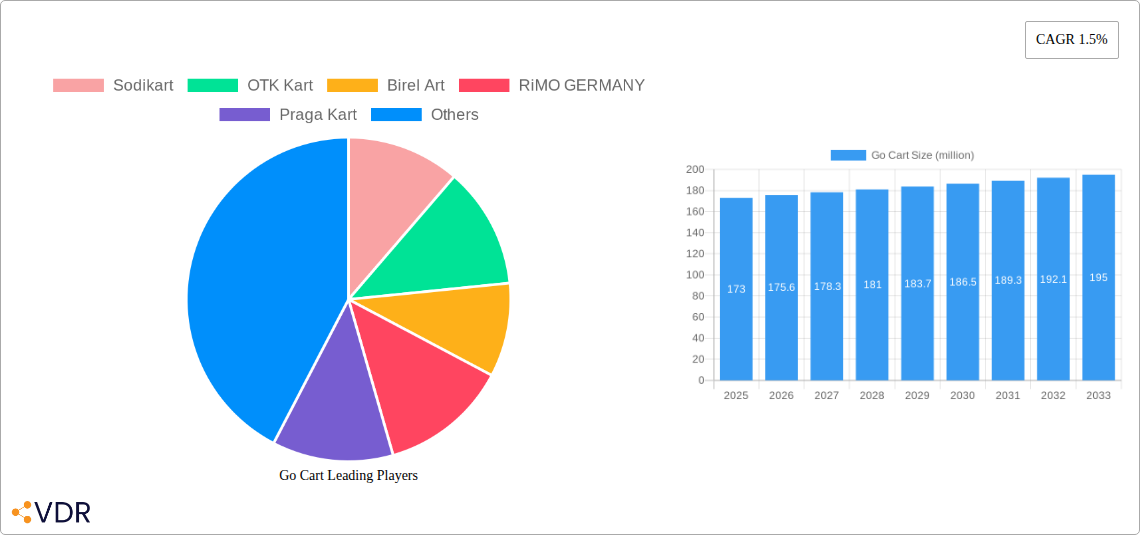
Go Cart Market Size (In Million)

The competitive landscape of the Go Kart market is characterized by the presence of both established global players and emerging regional manufacturers. Companies such as Sodikart, OTK Kart, and Birel Art are at the forefront, offering a wide range of high-performance karts for professional racing and recreational use. Meanwhile, companies like Kandi Technologies and Alpha Karting are contributing to the growing electric go-kart segment, emphasizing affordability and accessibility. The market is influenced by trends such as the increasing number of indoor entertainment centers and amusement parks incorporating go-kart tracks, the growing interest in e-sports and sim racing, which often translates to real-world karting interest, and the ongoing development of lighter, more durable, and technologically advanced kart designs. Restraints include the relatively high initial investment for professional racing setups and the fluctuating costs of raw materials impacting manufacturing expenses. Geographically, North America and Europe currently represent the largest markets due to well-established motorsport cultures and a strong presence of recreational facilities, while the Asia Pacific region is anticipated to exhibit higher growth potential due to increasing disposable incomes and a burgeoning interest in leisure activities.
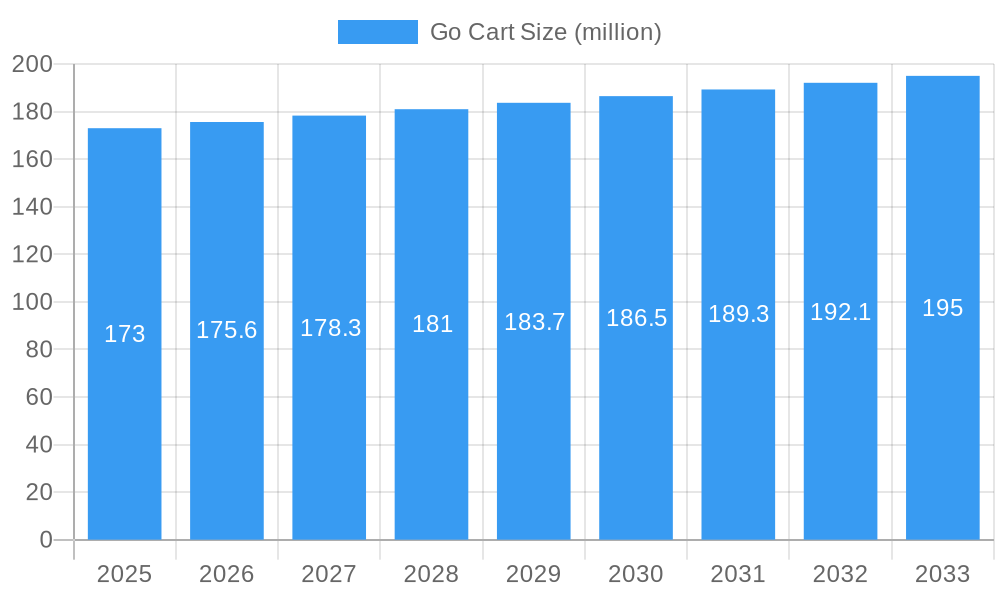
Go Cart Company Market Share
This comprehensive report delivers an in-depth analysis of the global Go Cart market, providing critical insights into its structure, growth trajectory, competitive landscape, and future outlook. Spanning the historical period of 2019-2024 and extending to a detailed forecast period of 2025-2033, with 2025 serving as both the base and estimated year, this report is an essential resource for industry professionals, investors, and stakeholders seeking to understand the evolving dynamics of the karting industry. We meticulously examine both parent and child market segments, offering unparalleled clarity on market segmentation, key players, and technological advancements. All quantitative values are presented in millions of units, ensuring actionable data for strategic decision-making.
Go Cart Market Dynamics & Structure
The global Go Cart market exhibits a moderately fragmented structure, with a blend of established global manufacturers and regional specialists. Technological innovation remains a primary driver, particularly the burgeoning demand for electric go-karts, fueled by environmental consciousness and performance enhancements. Regulatory frameworks, while varying by region, are increasingly leaning towards safety standards and emission controls, impacting both product development and operational aspects. Competitive product substitutes include other recreational vehicles and advanced simulation technologies. End-user demographics are diversifying, encompassing recreational enthusiasts, aspiring racers, and commercial rental operators. Mergers and acquisitions (M&A) activity is present but not dominant, indicating a focus on organic growth and product development. For instance, the market is witnessing a gradual increase in collaborative ventures aimed at enhancing battery technology for electric go-karts.
- Market Concentration: Moderately fragmented, with leading players holding significant but not monolithic market share.
- Technological Innovation Drivers: Advancements in electric powertrain efficiency, battery technology, chassis design, and safety features.
- Regulatory Frameworks: Growing emphasis on safety certifications (e.g., FIA Karting standards) and emission regulations for gas-powered karts.
- Competitive Product Substitutes: Recreational vehicles, amusement park attractions, and advanced racing simulators.
- End-User Demographics: Youth, adults seeking recreational activities, amateur and professional racers, and event organizers.
- M&A Trends: Sporadic strategic acquisitions to gain market share or acquire proprietary technologies; overall deal volume is moderate.
Go Cart Growth Trends & Insights
The Go Cart market is poised for robust expansion, driven by escalating disposable incomes, a growing interest in outdoor recreational activities, and the increasing popularity of professional and amateur racing circuits worldwide. The adoption rate of electric go-karts is a significant growth accelerator, projected to outpace traditional gas-powered variants due to their environmental benefits, lower operating costs, and quieter operation, aligning with global sustainability initiatives. Technological disruptions, such as the integration of telematics for performance tracking and enhanced safety systems, are further contributing to market appeal. Consumer behavior is shifting towards experiences over material possessions, making go-karting an attractive leisure pursuit. The market penetration of electric go-karts is expected to witness a significant surge, driven by government incentives and evolving consumer preferences for eco-friendly transportation and recreation. This trend is particularly evident in urban centers and regions with strong environmental regulations.
- Market Size Evolution: The global Go Cart market is projected to experience a substantial Compound Annual Growth Rate (CAGR) from 2025 to 2033.
- Adoption Rates: Increasing adoption across rental facilities, private racing enthusiasts, and junior motorsport development programs.
- Technological Disruptions: Advancements in lightweight materials, aerodynamic designs, and sophisticated electronic control units (ECUs) enhancing performance and user experience.
- Consumer Behavior Shifts: Growing demand for eco-friendly recreational options, experiential entertainment, and accessible motorsports.
- Market Penetration: Electric go-karts are expected to gain a larger market share, driven by technological maturity and cost-competitiveness.
- CAGR Projections: Estimated CAGR of xx% for the forecast period.
- Market Penetration (Electric): Projected to reach xx% by 2033.
Dominant Regions, Countries, or Segments in Go Cart
The Racing segment, within the Application category, is a dominant force in the Go Cart market, driven by the thrill of competition and the aspirational appeal of motorsports. Europe, with its established racing heritage and robust infrastructure for karting events, stands as a leading region. Countries like Italy, Belgium, and the Netherlands are at the forefront, nurturing both professional racing talent and a vibrant amateur karting scene. The growth in this segment is propelled by significant investments in racing academies, professional championships, and the continuous development of high-performance racing karts. The accessibility and relatively lower cost of entry compared to other forms of motorsport make racing go-karts a popular choice for aspiring drivers and enthusiasts alike.
The Type: Electric Carts segment is experiencing exceptional growth, rapidly emerging as a significant market driver. This surge is fueled by increasing environmental awareness, stricter emission regulations in various countries, and advancements in battery technology leading to enhanced performance and longer run times. Many nations are actively promoting the adoption of electric vehicles, extending to recreational sectors. The lower maintenance costs and quieter operation of electric go-karts also make them highly attractive for rental operations and family entertainment centers, further bolstering their market presence.
- Dominant Application Segment: Racing, attracting a dedicated enthusiast base and professional circuits.
- Leading Region: Europe, characterized by a strong motorsports culture and extensive karting facilities.
- Key Countries (Europe): Italy, Belgium, Netherlands, France.
- Drivers of Racing Segment Dominance: Professional championships, karting schools, accessibility for aspiring racers, continuous technological innovation in racing karts.
- Emerging Dominant Type Segment: Electric Carts, driven by environmental concerns and technological advancements.
- Growth Potential (Electric): High, with increasing government support and consumer preference for sustainable recreational options.
- Market Share (Racing): Estimated xx% of the total market in 2025.
- Growth Rate (Electric): Projected to grow at a CAGR of xx% from 2025-2033.
Go Cart Product Landscape
The Go Cart product landscape is characterized by continuous innovation aimed at enhancing performance, safety, and user experience. In the racing segment, advancements include ultra-lightweight chassis materials like carbon fiber, aerodynamic body kits for improved downforce, and high-revving, powerful engines. For electric go-karts, innovation focuses on optimizing battery density for extended operational time, faster charging capabilities, and regenerative braking systems. Safety features are paramount across all segments, with developments in advanced braking systems, roll cages, and ergonomic seating. The trend towards customization and personalization is also evident, with manufacturers offering a wide array of accessories and performance upgrades.
Key Drivers, Barriers & Challenges in Go Cart
Key Drivers:
- Growing Popularity of Motorsports: Increased interest in professional and amateur karting leagues.
- Demand for Recreational Activities: A rise in leisure spending on outdoor and experience-based entertainment.
- Technological Advancements: Innovations in electric powertrains and chassis design making go-karts more efficient and appealing.
- Environmental Consciousness: Growing preference for electric and eco-friendly go-karts.
- Government Initiatives: Support for green technologies and recreational infrastructure development.
Barriers & Challenges:
- High Initial Investment: The cost of racing-grade karts and track access can be a deterrent.
- Safety Concerns: Despite advancements, inherent risks associated with high-speed karting can be a barrier for some consumers.
- Regulatory Hurdles: Navigating varying safety standards and operational permits across different jurisdictions.
- Supply Chain Disruptions: Potential impact on the availability of key components, especially for electric karts.
- Competition from Alternative Entertainment: Strong competition from other recreational activities and digital entertainment options.
Emerging Opportunities in Go Cart
Emerging opportunities lie in the development of advanced simulation technology integrated with real-world karting experiences, creating immersive training and entertainment platforms. The expansion of go-karting into emerging economies with growing middle classes presents a significant untapped market. Innovative applications, such as mobile go-kart tracks for events and pop-up entertainment, and the integration of gamification elements into rental go-karting to enhance user engagement, offer substantial growth potential. Furthermore, the development of sustainable and biodegradable components for go-karts aligns with evolving consumer preferences.
Growth Accelerators in the Go Cart Industry
Growth in the Go Cart industry is being accelerated by breakthroughs in battery technology, enabling electric karts to achieve performance comparable to their gasoline counterparts with significantly longer run times. Strategic partnerships between kart manufacturers and battery developers are crucial in this regard. Market expansion strategies, including the development of indoor karting facilities in urban centers and the creation of accessible junior racing programs, are broadening the appeal of the sport. The ongoing professionalization of e-sports in racing, with virtual karting leagues, is also indirectly driving interest in real-world karting.
Key Players Shaping the Go Cart Market
Sodikart, OTK Kart, Birel Art, RiMO GERMANY, Praga Kart, Explorerkart, CRG, OTL Kart, BIZ Karts, Kandi Technologies, Alpha Karting, TAL-KO Racing, Anderson-CSK, Margay Racing, Pole Position Raceway, Gillard, Bowman, Speed2Max.
Notable Milestones in Go Cart Sector
- 2019: Launch of advanced electric powertrain systems by leading manufacturers, significantly improving performance and range.
- 2020: Increased adoption of stringent FIA safety standards across major racing events, enhancing rider protection.
- 2021: Introduction of lightweight composite materials in chassis construction, leading to enhanced agility and speed.
- 2022: Expansion of indoor electric karting facilities in urban centers, catering to year-round recreational demand.
- 2023: Development of AI-powered training modules for aspiring racers, integrated with track telemetry.
- 2024: Growing manufacturer focus on sustainable materials and manufacturing processes for go-karts.
In-Depth Go Cart Market Outlook
The future outlook for the Go Cart market is exceptionally bright, characterized by sustained growth fueled by ongoing technological innovation, particularly in electric propulsion and sustainable manufacturing. The increasing global focus on recreational and experiential activities, coupled with the accessible nature of karting as a motorsports gateway, will continue to drive demand. Strategic investments in R&D, expansion into underserved geographical markets, and the development of hybrid karting solutions that blend performance with environmental responsibility will be key to unlocking future potential. The market is well-positioned for significant expansion, offering exciting opportunities for manufacturers and stakeholders alike.
Go Cart Segmentation
-
1. Application
- 1.1. Rental
- 1.2. Racing
-
2. Type
- 2.1. Gas Engine Carts
- 2.2. Electric Carts
Go Cart Segmentation By Geography
-
1. North America
- 1.1. United States
- 1.2. Canada
- 1.3. Mexico
-
2. South America
- 2.1. Brazil
- 2.2. Argentina
- 2.3. Rest of South America
-
3. Europe
- 3.1. United Kingdom
- 3.2. Germany
- 3.3. France
- 3.4. Italy
- 3.5. Spain
- 3.6. Russia
- 3.7. Benelux
- 3.8. Nordics
- 3.9. Rest of Europe
-
4. Middle East & Africa
- 4.1. Turkey
- 4.2. Israel
- 4.3. GCC
- 4.4. North Africa
- 4.5. South Africa
- 4.6. Rest of Middle East & Africa
-
5. Asia Pacific
- 5.1. China
- 5.2. India
- 5.3. Japan
- 5.4. South Korea
- 5.5. ASEAN
- 5.6. Oceania
- 5.7. Rest of Asia Pacific
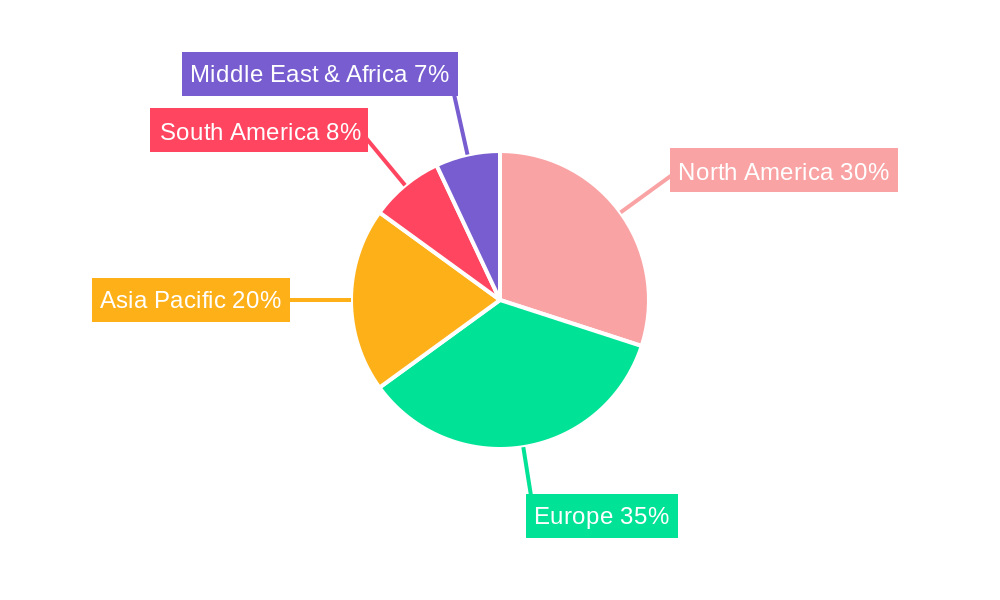
Go Cart Regional Market Share
Geographic Coverage of Go Cart
Go Cart REPORT HIGHLIGHTS
| Aspects | Details |
|---|---|
| Study Period | 2020-2034 |
| Base Year | 2025 |
| Estimated Year | 2026 |
| Forecast Period | 2026-2034 |
| Historical Period | 2020-2025 |
| Growth Rate | CAGR of 1.5% from 2020-2034 |
| Segmentation |
|
Table of Contents
- 1. Introduction
- 1.1. Research Scope
- 1.2. Market Segmentation
- 1.3. Research Methodology
- 1.4. Definitions and Assumptions
- 2. Executive Summary
- 2.1. Introduction
- 3. Market Dynamics
- 3.1. Introduction
- 3.2. Market Drivers
- 3.3. Market Restrains
- 3.4. Market Trends
- 4. Market Factor Analysis
- 4.1. Porters Five Forces
- 4.2. Supply/Value Chain
- 4.3. PESTEL analysis
- 4.4. Market Entropy
- 4.5. Patent/Trademark Analysis
- 5. Global Go Cart Analysis, Insights and Forecast, 2020-2032
- 5.1. Market Analysis, Insights and Forecast - by Application
- 5.1.1. Rental
- 5.1.2. Racing
- 5.2. Market Analysis, Insights and Forecast - by Type
- 5.2.1. Gas Engine Carts
- 5.2.2. Electric Carts
- 5.3. Market Analysis, Insights and Forecast - by Region
- 5.3.1. North America
- 5.3.2. South America
- 5.3.3. Europe
- 5.3.4. Middle East & Africa
- 5.3.5. Asia Pacific
- 5.1. Market Analysis, Insights and Forecast - by Application
- 6. North America Go Cart Analysis, Insights and Forecast, 2020-2032
- 6.1. Market Analysis, Insights and Forecast - by Application
- 6.1.1. Rental
- 6.1.2. Racing
- 6.2. Market Analysis, Insights and Forecast - by Type
- 6.2.1. Gas Engine Carts
- 6.2.2. Electric Carts
- 6.1. Market Analysis, Insights and Forecast - by Application
- 7. South America Go Cart Analysis, Insights and Forecast, 2020-2032
- 7.1. Market Analysis, Insights and Forecast - by Application
- 7.1.1. Rental
- 7.1.2. Racing
- 7.2. Market Analysis, Insights and Forecast - by Type
- 7.2.1. Gas Engine Carts
- 7.2.2. Electric Carts
- 7.1. Market Analysis, Insights and Forecast - by Application
- 8. Europe Go Cart Analysis, Insights and Forecast, 2020-2032
- 8.1. Market Analysis, Insights and Forecast - by Application
- 8.1.1. Rental
- 8.1.2. Racing
- 8.2. Market Analysis, Insights and Forecast - by Type
- 8.2.1. Gas Engine Carts
- 8.2.2. Electric Carts
- 8.1. Market Analysis, Insights and Forecast - by Application
- 9. Middle East & Africa Go Cart Analysis, Insights and Forecast, 2020-2032
- 9.1. Market Analysis, Insights and Forecast - by Application
- 9.1.1. Rental
- 9.1.2. Racing
- 9.2. Market Analysis, Insights and Forecast - by Type
- 9.2.1. Gas Engine Carts
- 9.2.2. Electric Carts
- 9.1. Market Analysis, Insights and Forecast - by Application
- 10. Asia Pacific Go Cart Analysis, Insights and Forecast, 2020-2032
- 10.1. Market Analysis, Insights and Forecast - by Application
- 10.1.1. Rental
- 10.1.2. Racing
- 10.2. Market Analysis, Insights and Forecast - by Type
- 10.2.1. Gas Engine Carts
- 10.2.2. Electric Carts
- 10.1. Market Analysis, Insights and Forecast - by Application
- 11. Competitive Analysis
- 11.1. Global Market Share Analysis 2025
- 11.2. Company Profiles
- 11.2.1 Sodikart
- 11.2.1.1. Overview
- 11.2.1.2. Products
- 11.2.1.3. SWOT Analysis
- 11.2.1.4. Recent Developments
- 11.2.1.5. Financials (Based on Availability)
- 11.2.2 OTK Kart
- 11.2.2.1. Overview
- 11.2.2.2. Products
- 11.2.2.3. SWOT Analysis
- 11.2.2.4. Recent Developments
- 11.2.2.5. Financials (Based on Availability)
- 11.2.3 Birel Art
- 11.2.3.1. Overview
- 11.2.3.2. Products
- 11.2.3.3. SWOT Analysis
- 11.2.3.4. Recent Developments
- 11.2.3.5. Financials (Based on Availability)
- 11.2.4 RiMO GERMANY
- 11.2.4.1. Overview
- 11.2.4.2. Products
- 11.2.4.3. SWOT Analysis
- 11.2.4.4. Recent Developments
- 11.2.4.5. Financials (Based on Availability)
- 11.2.5 Praga Kart
- 11.2.5.1. Overview
- 11.2.5.2. Products
- 11.2.5.3. SWOT Analysis
- 11.2.5.4. Recent Developments
- 11.2.5.5. Financials (Based on Availability)
- 11.2.6 Explorerkart
- 11.2.6.1. Overview
- 11.2.6.2. Products
- 11.2.6.3. SWOT Analysis
- 11.2.6.4. Recent Developments
- 11.2.6.5. Financials (Based on Availability)
- 11.2.7 CRG
- 11.2.7.1. Overview
- 11.2.7.2. Products
- 11.2.7.3. SWOT Analysis
- 11.2.7.4. Recent Developments
- 11.2.7.5. Financials (Based on Availability)
- 11.2.8 OTL Kart
- 11.2.8.1. Overview
- 11.2.8.2. Products
- 11.2.8.3. SWOT Analysis
- 11.2.8.4. Recent Developments
- 11.2.8.5. Financials (Based on Availability)
- 11.2.9 BIZ Karts
- 11.2.9.1. Overview
- 11.2.9.2. Products
- 11.2.9.3. SWOT Analysis
- 11.2.9.4. Recent Developments
- 11.2.9.5. Financials (Based on Availability)
- 11.2.10 Kandi Technologies
- 11.2.10.1. Overview
- 11.2.10.2. Products
- 11.2.10.3. SWOT Analysis
- 11.2.10.4. Recent Developments
- 11.2.10.5. Financials (Based on Availability)
- 11.2.11 Alpha Karting
- 11.2.11.1. Overview
- 11.2.11.2. Products
- 11.2.11.3. SWOT Analysis
- 11.2.11.4. Recent Developments
- 11.2.11.5. Financials (Based on Availability)
- 11.2.12 TAL-KO Racing
- 11.2.12.1. Overview
- 11.2.12.2. Products
- 11.2.12.3. SWOT Analysis
- 11.2.12.4. Recent Developments
- 11.2.12.5. Financials (Based on Availability)
- 11.2.13 Anderson-CSK
- 11.2.13.1. Overview
- 11.2.13.2. Products
- 11.2.13.3. SWOT Analysis
- 11.2.13.4. Recent Developments
- 11.2.13.5. Financials (Based on Availability)
- 11.2.14 Margay Racing
- 11.2.14.1. Overview
- 11.2.14.2. Products
- 11.2.14.3. SWOT Analysis
- 11.2.14.4. Recent Developments
- 11.2.14.5. Financials (Based on Availability)
- 11.2.15 Pole Position Raceway
- 11.2.15.1. Overview
- 11.2.15.2. Products
- 11.2.15.3. SWOT Analysis
- 11.2.15.4. Recent Developments
- 11.2.15.5. Financials (Based on Availability)
- 11.2.16 Gillard
- 11.2.16.1. Overview
- 11.2.16.2. Products
- 11.2.16.3. SWOT Analysis
- 11.2.16.4. Recent Developments
- 11.2.16.5. Financials (Based on Availability)
- 11.2.17 Bowman
- 11.2.17.1. Overview
- 11.2.17.2. Products
- 11.2.17.3. SWOT Analysis
- 11.2.17.4. Recent Developments
- 11.2.17.5. Financials (Based on Availability)
- 11.2.18 Speed2Max
- 11.2.18.1. Overview
- 11.2.18.2. Products
- 11.2.18.3. SWOT Analysis
- 11.2.18.4. Recent Developments
- 11.2.18.5. Financials (Based on Availability)
- 11.2.1 Sodikart
List of Figures
- Figure 1: Global Go Cart Revenue Breakdown (million, %) by Region 2025 & 2033
- Figure 2: Global Go Cart Volume Breakdown (K, %) by Region 2025 & 2033
- Figure 3: North America Go Cart Revenue (million), by Application 2025 & 2033
- Figure 4: North America Go Cart Volume (K), by Application 2025 & 2033
- Figure 5: North America Go Cart Revenue Share (%), by Application 2025 & 2033
- Figure 6: North America Go Cart Volume Share (%), by Application 2025 & 2033
- Figure 7: North America Go Cart Revenue (million), by Type 2025 & 2033
- Figure 8: North America Go Cart Volume (K), by Type 2025 & 2033
- Figure 9: North America Go Cart Revenue Share (%), by Type 2025 & 2033
- Figure 10: North America Go Cart Volume Share (%), by Type 2025 & 2033
- Figure 11: North America Go Cart Revenue (million), by Country 2025 & 2033
- Figure 12: North America Go Cart Volume (K), by Country 2025 & 2033
- Figure 13: North America Go Cart Revenue Share (%), by Country 2025 & 2033
- Figure 14: North America Go Cart Volume Share (%), by Country 2025 & 2033
- Figure 15: South America Go Cart Revenue (million), by Application 2025 & 2033
- Figure 16: South America Go Cart Volume (K), by Application 2025 & 2033
- Figure 17: South America Go Cart Revenue Share (%), by Application 2025 & 2033
- Figure 18: South America Go Cart Volume Share (%), by Application 2025 & 2033
- Figure 19: South America Go Cart Revenue (million), by Type 2025 & 2033
- Figure 20: South America Go Cart Volume (K), by Type 2025 & 2033
- Figure 21: South America Go Cart Revenue Share (%), by Type 2025 & 2033
- Figure 22: South America Go Cart Volume Share (%), by Type 2025 & 2033
- Figure 23: South America Go Cart Revenue (million), by Country 2025 & 2033
- Figure 24: South America Go Cart Volume (K), by Country 2025 & 2033
- Figure 25: South America Go Cart Revenue Share (%), by Country 2025 & 2033
- Figure 26: South America Go Cart Volume Share (%), by Country 2025 & 2033
- Figure 27: Europe Go Cart Revenue (million), by Application 2025 & 2033
- Figure 28: Europe Go Cart Volume (K), by Application 2025 & 2033
- Figure 29: Europe Go Cart Revenue Share (%), by Application 2025 & 2033
- Figure 30: Europe Go Cart Volume Share (%), by Application 2025 & 2033
- Figure 31: Europe Go Cart Revenue (million), by Type 2025 & 2033
- Figure 32: Europe Go Cart Volume (K), by Type 2025 & 2033
- Figure 33: Europe Go Cart Revenue Share (%), by Type 2025 & 2033
- Figure 34: Europe Go Cart Volume Share (%), by Type 2025 & 2033
- Figure 35: Europe Go Cart Revenue (million), by Country 2025 & 2033
- Figure 36: Europe Go Cart Volume (K), by Country 2025 & 2033
- Figure 37: Europe Go Cart Revenue Share (%), by Country 2025 & 2033
- Figure 38: Europe Go Cart Volume Share (%), by Country 2025 & 2033
- Figure 39: Middle East & Africa Go Cart Revenue (million), by Application 2025 & 2033
- Figure 40: Middle East & Africa Go Cart Volume (K), by Application 2025 & 2033
- Figure 41: Middle East & Africa Go Cart Revenue Share (%), by Application 2025 & 2033
- Figure 42: Middle East & Africa Go Cart Volume Share (%), by Application 2025 & 2033
- Figure 43: Middle East & Africa Go Cart Revenue (million), by Type 2025 & 2033
- Figure 44: Middle East & Africa Go Cart Volume (K), by Type 2025 & 2033
- Figure 45: Middle East & Africa Go Cart Revenue Share (%), by Type 2025 & 2033
- Figure 46: Middle East & Africa Go Cart Volume Share (%), by Type 2025 & 2033
- Figure 47: Middle East & Africa Go Cart Revenue (million), by Country 2025 & 2033
- Figure 48: Middle East & Africa Go Cart Volume (K), by Country 2025 & 2033
- Figure 49: Middle East & Africa Go Cart Revenue Share (%), by Country 2025 & 2033
- Figure 50: Middle East & Africa Go Cart Volume Share (%), by Country 2025 & 2033
- Figure 51: Asia Pacific Go Cart Revenue (million), by Application 2025 & 2033
- Figure 52: Asia Pacific Go Cart Volume (K), by Application 2025 & 2033
- Figure 53: Asia Pacific Go Cart Revenue Share (%), by Application 2025 & 2033
- Figure 54: Asia Pacific Go Cart Volume Share (%), by Application 2025 & 2033
- Figure 55: Asia Pacific Go Cart Revenue (million), by Type 2025 & 2033
- Figure 56: Asia Pacific Go Cart Volume (K), by Type 2025 & 2033
- Figure 57: Asia Pacific Go Cart Revenue Share (%), by Type 2025 & 2033
- Figure 58: Asia Pacific Go Cart Volume Share (%), by Type 2025 & 2033
- Figure 59: Asia Pacific Go Cart Revenue (million), by Country 2025 & 2033
- Figure 60: Asia Pacific Go Cart Volume (K), by Country 2025 & 2033
- Figure 61: Asia Pacific Go Cart Revenue Share (%), by Country 2025 & 2033
- Figure 62: Asia Pacific Go Cart Volume Share (%), by Country 2025 & 2033
List of Tables
- Table 1: Global Go Cart Revenue million Forecast, by Application 2020 & 2033
- Table 2: Global Go Cart Volume K Forecast, by Application 2020 & 2033
- Table 3: Global Go Cart Revenue million Forecast, by Type 2020 & 2033
- Table 4: Global Go Cart Volume K Forecast, by Type 2020 & 2033
- Table 5: Global Go Cart Revenue million Forecast, by Region 2020 & 2033
- Table 6: Global Go Cart Volume K Forecast, by Region 2020 & 2033
- Table 7: Global Go Cart Revenue million Forecast, by Application 2020 & 2033
- Table 8: Global Go Cart Volume K Forecast, by Application 2020 & 2033
- Table 9: Global Go Cart Revenue million Forecast, by Type 2020 & 2033
- Table 10: Global Go Cart Volume K Forecast, by Type 2020 & 2033
- Table 11: Global Go Cart Revenue million Forecast, by Country 2020 & 2033
- Table 12: Global Go Cart Volume K Forecast, by Country 2020 & 2033
- Table 13: United States Go Cart Revenue (million) Forecast, by Application 2020 & 2033
- Table 14: United States Go Cart Volume (K) Forecast, by Application 2020 & 2033
- Table 15: Canada Go Cart Revenue (million) Forecast, by Application 2020 & 2033
- Table 16: Canada Go Cart Volume (K) Forecast, by Application 2020 & 2033
- Table 17: Mexico Go Cart Revenue (million) Forecast, by Application 2020 & 2033
- Table 18: Mexico Go Cart Volume (K) Forecast, by Application 2020 & 2033
- Table 19: Global Go Cart Revenue million Forecast, by Application 2020 & 2033
- Table 20: Global Go Cart Volume K Forecast, by Application 2020 & 2033
- Table 21: Global Go Cart Revenue million Forecast, by Type 2020 & 2033
- Table 22: Global Go Cart Volume K Forecast, by Type 2020 & 2033
- Table 23: Global Go Cart Revenue million Forecast, by Country 2020 & 2033
- Table 24: Global Go Cart Volume K Forecast, by Country 2020 & 2033
- Table 25: Brazil Go Cart Revenue (million) Forecast, by Application 2020 & 2033
- Table 26: Brazil Go Cart Volume (K) Forecast, by Application 2020 & 2033
- Table 27: Argentina Go Cart Revenue (million) Forecast, by Application 2020 & 2033
- Table 28: Argentina Go Cart Volume (K) Forecast, by Application 2020 & 2033
- Table 29: Rest of South America Go Cart Revenue (million) Forecast, by Application 2020 & 2033
- Table 30: Rest of South America Go Cart Volume (K) Forecast, by Application 2020 & 2033
- Table 31: Global Go Cart Revenue million Forecast, by Application 2020 & 2033
- Table 32: Global Go Cart Volume K Forecast, by Application 2020 & 2033
- Table 33: Global Go Cart Revenue million Forecast, by Type 2020 & 2033
- Table 34: Global Go Cart Volume K Forecast, by Type 2020 & 2033
- Table 35: Global Go Cart Revenue million Forecast, by Country 2020 & 2033
- Table 36: Global Go Cart Volume K Forecast, by Country 2020 & 2033
- Table 37: United Kingdom Go Cart Revenue (million) Forecast, by Application 2020 & 2033
- Table 38: United Kingdom Go Cart Volume (K) Forecast, by Application 2020 & 2033
- Table 39: Germany Go Cart Revenue (million) Forecast, by Application 2020 & 2033
- Table 40: Germany Go Cart Volume (K) Forecast, by Application 2020 & 2033
- Table 41: France Go Cart Revenue (million) Forecast, by Application 2020 & 2033
- Table 42: France Go Cart Volume (K) Forecast, by Application 2020 & 2033
- Table 43: Italy Go Cart Revenue (million) Forecast, by Application 2020 & 2033
- Table 44: Italy Go Cart Volume (K) Forecast, by Application 2020 & 2033
- Table 45: Spain Go Cart Revenue (million) Forecast, by Application 2020 & 2033
- Table 46: Spain Go Cart Volume (K) Forecast, by Application 2020 & 2033
- Table 47: Russia Go Cart Revenue (million) Forecast, by Application 2020 & 2033
- Table 48: Russia Go Cart Volume (K) Forecast, by Application 2020 & 2033
- Table 49: Benelux Go Cart Revenue (million) Forecast, by Application 2020 & 2033
- Table 50: Benelux Go Cart Volume (K) Forecast, by Application 2020 & 2033
- Table 51: Nordics Go Cart Revenue (million) Forecast, by Application 2020 & 2033
- Table 52: Nordics Go Cart Volume (K) Forecast, by Application 2020 & 2033
- Table 53: Rest of Europe Go Cart Revenue (million) Forecast, by Application 2020 & 2033
- Table 54: Rest of Europe Go Cart Volume (K) Forecast, by Application 2020 & 2033
- Table 55: Global Go Cart Revenue million Forecast, by Application 2020 & 2033
- Table 56: Global Go Cart Volume K Forecast, by Application 2020 & 2033
- Table 57: Global Go Cart Revenue million Forecast, by Type 2020 & 2033
- Table 58: Global Go Cart Volume K Forecast, by Type 2020 & 2033
- Table 59: Global Go Cart Revenue million Forecast, by Country 2020 & 2033
- Table 60: Global Go Cart Volume K Forecast, by Country 2020 & 2033
- Table 61: Turkey Go Cart Revenue (million) Forecast, by Application 2020 & 2033
- Table 62: Turkey Go Cart Volume (K) Forecast, by Application 2020 & 2033
- Table 63: Israel Go Cart Revenue (million) Forecast, by Application 2020 & 2033
- Table 64: Israel Go Cart Volume (K) Forecast, by Application 2020 & 2033
- Table 65: GCC Go Cart Revenue (million) Forecast, by Application 2020 & 2033
- Table 66: GCC Go Cart Volume (K) Forecast, by Application 2020 & 2033
- Table 67: North Africa Go Cart Revenue (million) Forecast, by Application 2020 & 2033
- Table 68: North Africa Go Cart Volume (K) Forecast, by Application 2020 & 2033
- Table 69: South Africa Go Cart Revenue (million) Forecast, by Application 2020 & 2033
- Table 70: South Africa Go Cart Volume (K) Forecast, by Application 2020 & 2033
- Table 71: Rest of Middle East & Africa Go Cart Revenue (million) Forecast, by Application 2020 & 2033
- Table 72: Rest of Middle East & Africa Go Cart Volume (K) Forecast, by Application 2020 & 2033
- Table 73: Global Go Cart Revenue million Forecast, by Application 2020 & 2033
- Table 74: Global Go Cart Volume K Forecast, by Application 2020 & 2033
- Table 75: Global Go Cart Revenue million Forecast, by Type 2020 & 2033
- Table 76: Global Go Cart Volume K Forecast, by Type 2020 & 2033
- Table 77: Global Go Cart Revenue million Forecast, by Country 2020 & 2033
- Table 78: Global Go Cart Volume K Forecast, by Country 2020 & 2033
- Table 79: China Go Cart Revenue (million) Forecast, by Application 2020 & 2033
- Table 80: China Go Cart Volume (K) Forecast, by Application 2020 & 2033
- Table 81: India Go Cart Revenue (million) Forecast, by Application 2020 & 2033
- Table 82: India Go Cart Volume (K) Forecast, by Application 2020 & 2033
- Table 83: Japan Go Cart Revenue (million) Forecast, by Application 2020 & 2033
- Table 84: Japan Go Cart Volume (K) Forecast, by Application 2020 & 2033
- Table 85: South Korea Go Cart Revenue (million) Forecast, by Application 2020 & 2033
- Table 86: South Korea Go Cart Volume (K) Forecast, by Application 2020 & 2033
- Table 87: ASEAN Go Cart Revenue (million) Forecast, by Application 2020 & 2033
- Table 88: ASEAN Go Cart Volume (K) Forecast, by Application 2020 & 2033
- Table 89: Oceania Go Cart Revenue (million) Forecast, by Application 2020 & 2033
- Table 90: Oceania Go Cart Volume (K) Forecast, by Application 2020 & 2033
- Table 91: Rest of Asia Pacific Go Cart Revenue (million) Forecast, by Application 2020 & 2033
- Table 92: Rest of Asia Pacific Go Cart Volume (K) Forecast, by Application 2020 & 2033
Frequently Asked Questions
1. What is the projected Compound Annual Growth Rate (CAGR) of the Go Cart?
The projected CAGR is approximately 1.5%.
2. Which companies are prominent players in the Go Cart?
Key companies in the market include Sodikart, OTK Kart, Birel Art, RiMO GERMANY, Praga Kart, Explorerkart, CRG, OTL Kart, BIZ Karts, Kandi Technologies, Alpha Karting, TAL-KO Racing, Anderson-CSK, Margay Racing, Pole Position Raceway, Gillard, Bowman, Speed2Max.
3. What are the main segments of the Go Cart?
The market segments include Application, Type.
4. Can you provide details about the market size?
The market size is estimated to be USD 173 million as of 2022.
5. What are some drivers contributing to market growth?
N/A
6. What are the notable trends driving market growth?
N/A
7. Are there any restraints impacting market growth?
N/A
8. Can you provide examples of recent developments in the market?
N/A
9. What pricing options are available for accessing the report?
Pricing options include single-user, multi-user, and enterprise licenses priced at USD 3950.00, USD 5925.00, and USD 7900.00 respectively.
10. Is the market size provided in terms of value or volume?
The market size is provided in terms of value, measured in million and volume, measured in K.
11. Are there any specific market keywords associated with the report?
Yes, the market keyword associated with the report is "Go Cart," which aids in identifying and referencing the specific market segment covered.
12. How do I determine which pricing option suits my needs best?
The pricing options vary based on user requirements and access needs. Individual users may opt for single-user licenses, while businesses requiring broader access may choose multi-user or enterprise licenses for cost-effective access to the report.
13. Are there any additional resources or data provided in the Go Cart report?
While the report offers comprehensive insights, it's advisable to review the specific contents or supplementary materials provided to ascertain if additional resources or data are available.
14. How can I stay updated on further developments or reports in the Go Cart?
To stay informed about further developments, trends, and reports in the Go Cart, consider subscribing to industry newsletters, following relevant companies and organizations, or regularly checking reputable industry news sources and publications.
Methodology
Step 1 - Identification of Relevant Samples Size from Population Database



Step 2 - Approaches for Defining Global Market Size (Value, Volume* & Price*)

Note*: In applicable scenarios
Step 3 - Data Sources
Primary Research
- Web Analytics
- Survey Reports
- Research Institute
- Latest Research Reports
- Opinion Leaders
Secondary Research
- Annual Reports
- White Paper
- Latest Press Release
- Industry Association
- Paid Database
- Investor Presentations

Step 4 - Data Triangulation
Involves using different sources of information in order to increase the validity of a study
These sources are likely to be stakeholders in a program - participants, other researchers, program staff, other community members, and so on.
Then we put all data in single framework & apply various statistical tools to find out the dynamic on the market.
During the analysis stage, feedback from the stakeholder groups would be compared to determine areas of agreement as well as areas of divergence