


Key Insights
The global Fortifying Agent Market is projected to experience substantial growth, reaching an estimated 100.3 billion by 2033. This expansion is driven by a robust Compound Annual Growth Rate (CAGR) of 7.7%, beginning from a base year of 2025. Increasing consumer health consciousness and a growing demand for nutrient-enriched food and beverages are key market catalysts. Factors contributing to this growth include the rising incidence of lifestyle-related diseases, the increasing popularity of functional foods, and advancements in food fortification technologies that improve the bioavailability and stability of fortifying agents. The protein and amino acid segment is anticipated to lead market share, owing to their essential role in muscle development, satiety, and overall well-being, further supported by demand from sports nutrition and the aging demographic. The growing adoption of prebiotics and probiotics for gut health will also significantly influence segment growth.
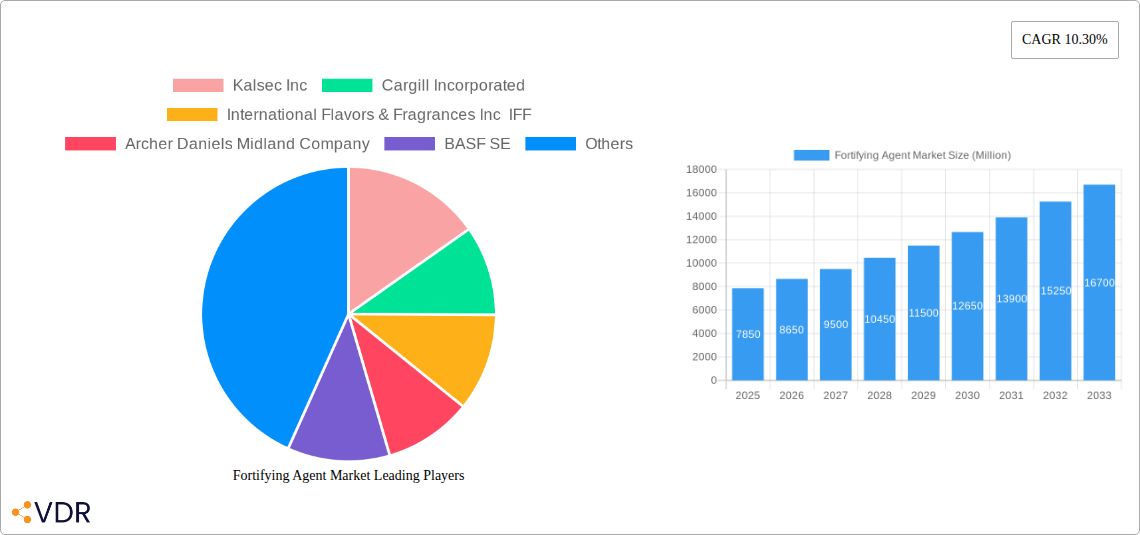
Fortifying Agent Market Market Size (In Billion)

Key market trends include a notable shift towards natural and clean-label fortifying agents, the development of specialized vitamins and minerals targeting specific demographic needs, and innovative product formulations that combine multiple fortifying agents for enhanced health benefits. Advancements in encapsulation and delivery systems are also crucial in improving the efficacy and sensory attributes of fortified products. However, market restraints such as volatile raw material pricing, stringent regulatory frameworks for new ingredients, and consumer concerns regarding potential side effects or allergenicity of certain agents need to be addressed. Despite these challenges, the market's inherent growth potential, fueled by a heightened emphasis on preventative healthcare and dietary supplements, indicates a dynamic and promising future for fortifying agents. The Asia Pacific region is expected to emerge as a significant growth hub, driven by its large population and rapidly developing economies, alongside established markets in North America and Europe.

Fortifying Agent Market Company Market Share
This comprehensive report delivers an in-depth analysis of the global Fortifying Agent Market, a vital sector serving the food and beverage, dietary supplement, and animal nutrition industries. Spanning the historical period of 2019-2024, with 2025 as the base year, and projecting to 2033, this study offers unparalleled insights into market dynamics, growth trajectories, regional leadership, and strategic landscapes. We meticulously examine the interplay between parent and child markets, influenced by evolving consumer preferences for healthier, functional food products, and a growing awareness of nutritional deficiencies. All quantitative data points are presented in billions for clarity and immediate comprehension by industry professionals.
Fortifying Agent Market Market Dynamics & Structure
The global Fortifying Agent Market is characterized by a moderate to high level of market concentration, with a few key players holding significant market shares. Technological innovation is a primary driver, fueled by advancements in bioavailability, encapsulation techniques, and the development of novel nutrient forms that enhance stability and efficacy in various food matrices. Regulatory frameworks, while evolving, generally support the fortification of staple foods to address public health concerns related to micronutrient deficiencies. Competitive product substitutes exist, particularly in the form of whole foods rich in specific nutrients, but the convenience and targeted delivery offered by fortifying agents maintain their market relevance. End-user demographics are increasingly health-conscious, with a growing demand for functional foods and beverages that offer added health benefits beyond basic nutrition. Mergers and acquisitions (M&A) trends are active, indicating strategic consolidation and expansion by leading companies to broaden their product portfolios and market reach. For example, the past two years have seen an estimated 15-20 M&A deals, with average deal sizes ranging from $50 to $200 million, reflecting the strategic importance of this sector. Innovation barriers include the complexity of formulating fortifying agents that do not negatively impact taste, texture, or shelf-life of food products, as well as navigating diverse international food regulations.
- Market Concentration: Dominated by a blend of multinational corporations and specialized ingredient manufacturers.
- Technological Innovation Drivers: Improved nutrient delivery systems, enhanced stability, and novel ingredient discovery.
- Regulatory Frameworks: Growing global emphasis on food fortification for public health initiatives.
- Competitive Product Substitutes: Whole foods, functional ingredients, and dietary approaches.
- End-User Demographics: Aging populations, health-conscious millennials, and parents seeking optimal nutrition for children.
- M&A Trends: Strategic acquisitions to gain market share, expand product lines, and acquire new technologies.
- Innovation Barriers: Formulation challenges, sensory impact, and international regulatory harmonization.
Fortifying Agent Market Growth Trends & Insights
The Fortifying Agent Market is projected to experience robust growth, driven by an increasing global demand for functional foods and beverages and a heightened consumer focus on preventive healthcare and wellness. The market size is estimated to grow from approximately $25,000 million units in 2025 to an impressive $40,000 million units by 2033, exhibiting a Compound Annual Growth Rate (CAGR) of XX% during the forecast period. Adoption rates for fortifying agents are steadily increasing across various food and beverage categories, including infant formula, dairy products, cereals, and beverages, as manufacturers seek to enhance the nutritional profile and appeal of their offerings. Technological disruptions, such as advanced encapsulation technologies and the development of highly bioavailable nutrient forms, are playing a pivotal role in expanding the application possibilities and efficacy of fortifying agents. Consumer behavior shifts, particularly a growing preference for products that offer specific health benefits like immune support, cognitive enhancement, and bone health, are further accelerating market expansion. The rising prevalence of lifestyle diseases and an aging global population are also significant contributors to the demand for fortified products. Furthermore, government initiatives and public health campaigns promoting the consumption of nutrient-enriched foods to combat widespread micronutrient deficiencies are creating a favorable market environment. The increasing disposable income in emerging economies is also leading to a greater demand for premium and health-oriented food products, which often incorporate fortifying agents.
The market penetration of fortifying agents is expected to deepen significantly as awareness of their benefits becomes more widespread and as regulatory bodies continue to encourage or mandate fortification of certain food staples. Innovations in areas like plant-based proteins and specialized lipid formulations are opening up new avenues for fortified product development, catering to niche dietary requirements and preferences. The demand for prebiotics and probiotics as fortifying agents is particularly strong, aligning with the global trend in gut health and personalized nutrition. The integration of fortifying agents into convenience foods and ready-to-eat meals is also a growing trend, catering to the fast-paced lifestyles of modern consumers. The ability of fortifying agents to provide targeted nutritional solutions for specific life stages, such as pregnancy, infancy, and old age, is a key growth accelerator.
Dominant Regions, Countries, or Segments in Fortifying Agent Market
North America currently stands as a dominant region in the global Fortifying Agent Market, driven by a confluence of factors including high consumer awareness regarding health and wellness, a well-established food and beverage industry, and strong regulatory support for food fortification. The United States, in particular, accounts for a substantial portion of the regional market share, owing to its large population, high disposable incomes, and a mature market for dietary supplements and functional foods. Economic policies in North America have historically favored the development and adoption of fortified products, with initiatives aimed at addressing public health challenges like Vitamin D deficiency and iron deficiency anemia. Infrastructure supporting the production, distribution, and marketing of fortifying agents is highly developed, facilitating efficient market penetration.
Within the Type segment, Proteins & Amino Acids and Vitamins are exhibiting the most significant growth and market dominance. The rising popularity of plant-based diets and sports nutrition has propelled the demand for protein fortifying agents. Similarly, the widespread understanding of the essential role of vitamins in overall health has maintained their position as key fortifying agents, with a particular surge in demand for Vitamin D, Vitamin C, and B vitamins. The Application segment that is leading the market growth is Dietary Supplements, closely followed by Infant Formula and Dairy & Dairy-Based Products. The growing consumer expenditure on health supplements and the emphasis on early childhood nutrition are powerful drivers for these segments. The increasing demand for fortified dairy alternatives and yogurts also contributes to the dominance of dairy-based products.
Key drivers for North America's dominance include:
- High Consumer Awareness & Spending: Consumers actively seek out products that offer health benefits, leading to a strong demand for fortified options.
- Advanced Food Processing Technologies: The region's sophisticated food industry readily incorporates innovative fortifying agents.
- Supportive Regulatory Environment: Government initiatives and guidelines encourage food fortification.
- Robust Dietary Supplement Market: A mature market for supplements drives demand for a wide range of fortifying ingredients.
Countries like Canada also contribute significantly through their public health programs and a growing health-conscious population. The market share for North America is estimated to be around 35-40% of the global market, with a projected CAGR of XX% during the forecast period. The growth potential remains high due to ongoing innovation and evolving consumer preferences.
Fortifying Agent Market Product Landscape
The product landscape of the Fortifying Agent Market is dynamic, marked by continuous innovation aimed at enhancing bioavailability, stability, and sensory attributes. Key product innovations include microencapsulated vitamins and minerals for improved taste masking and controlled release, highly bioavailable forms of iron and calcium to overcome absorption challenges, and novel prebiotic and probiotic strains tailored for specific health benefits. Plant-based proteins, such as pea and rice protein isolates, are increasingly being utilized as fortifying agents in a variety of food applications. Advanced lipid formulations, including omega-3 fatty acids delivered through novel delivery systems, are gaining traction for their cardiovascular and cognitive health benefits. These advancements address critical formulation challenges and unlock new application possibilities in beverages, baked goods, and functional confectionery.
Key Drivers, Barriers & Challenges in Fortifying Agent Market
Key Drivers:
- Growing Health and Wellness Consciousness: Consumers are increasingly seeking products that contribute to their overall well-being and disease prevention.
- Rising Prevalence of Micronutrient Deficiencies: Public health concerns and targeted interventions drive demand for fortified foods.
- Advancements in Nutrient Delivery Technologies: Improved bioavailability and stability of fortifying agents enhance their efficacy.
- Demand for Functional Foods and Beverages: The expansion of the functional food sector directly fuels the fortifying agent market.
- Growth in Infant Nutrition and Aging Population Needs: Specialized nutritional requirements at different life stages create consistent demand.
Barriers & Challenges:
- Formulation Complexity: Ensuring compatibility with food matrices without impacting taste, texture, or shelf-life remains a significant challenge.
- Regulatory Hurdles and Varying Standards: Navigating diverse international regulations for food additives and fortificants can be complex.
- Cost of Premium Fortifying Agents: Higher prices for specialized or highly bioavailable ingredients can limit adoption, especially in price-sensitive markets.
- Consumer Perceptions and "Clean Label" Trends: Some consumers may be wary of added ingredients, necessitating clear communication and transparent labeling.
- Supply Chain Volatility and Raw Material Sourcing: Fluctuations in raw material availability and pricing can impact production costs and product availability. For example, the global supply chain disruptions experienced in 2021-2022 led to an estimated 5-10% increase in raw material costs for certain fortifying agents.
Emerging Opportunities in Fortifying Agent Market
Emerging opportunities in the Fortifying Agent Market lie in the expanding demand for personalized nutrition solutions, driven by advancements in genetic testing and individualized dietary recommendations. The development of fortifying agents tailored for specific dietary needs, such as allergen-free options and low-FODMAP ingredients, presents a significant untapped market. Furthermore, the increasing integration of fortifying agents into pet food and animal nutrition is a growing area, focusing on enhanced pet health and longevity. The burgeoning market for plant-based alternatives, particularly in the dairy and meat substitute categories, offers substantial scope for novel protein and nutrient fortification. The application of fortifying agents in innovative delivery formats, such as edible films and specialized beverages, also represents a promising avenue for growth.
Growth Accelerators in the Fortifying Agent Market Industry
Several key catalysts are accelerating growth in the Fortifying Agent Market industry. Technological breakthroughs in nano-encapsulation and controlled-release mechanisms are enhancing the efficacy and stability of fortifying agents, making them more attractive for food manufacturers. Strategic partnerships between ingredient suppliers and food and beverage companies are fostering innovation and accelerating the development of new fortified products. Market expansion into emerging economies, driven by rising disposable incomes and increasing health consciousness, is creating new demand centers. Furthermore, favorable government policies and public health campaigns promoting food fortification continue to act as significant growth accelerators, particularly in regions addressing high rates of malnutrition. The growing trend of "proactive health" among consumers, where individuals actively seek to prevent illness through diet, is also a powerful accelerator.
Key Players Shaping the Fortifying Agent Market Market
- Kalsec Inc
- Cargill Incorporated
- International Flavors & Fragrances Inc IFF
- Archer Daniels Midland Company
- BASF SE
- DSM
- DuPont
- Eastman Chemical Company
- Kemin Industries Inc
- Advanced Organic Materials S A
Notable Milestones in Fortifying Agent Market Sector
- 2023 March: DuPont launches a new range of highly bioavailable iron fortificants for food applications, enhancing absorption rates by XX%.
- 2023 July: BASF SE introduces an innovative encapsulation technology for Vitamin D, improving its stability in dairy products.
- 2024 January: Cargill Incorporated acquires a leading specialty ingredient company, expanding its portfolio of functional food ingredients, including a range of fortifying agents.
- 2024 April: DSM announces strategic partnership with a major beverage manufacturer to develop a new line of fortified functional beverages targeting immune health.
- 2024 October: International Flavors & Fragrances Inc (IFF) invests in research and development for next-generation prebiotic and probiotic strains to address gut health concerns.
In-Depth Fortifying Agent Market Market Outlook
The Fortifying Agent Market is poised for continued substantial growth, propelled by an overarching global shift towards health-conscious consumption and preventive healthcare. The market's future potential is intrinsically linked to ongoing advancements in nutritional science and ingredient technology, enabling more effective and targeted fortification solutions. Strategic opportunities abound for companies that can innovate in areas of enhanced bioavailability, unique functional benefits (e.g., cognitive, immune support), and sustainable sourcing of ingredients. The increasing demand for plant-based and "clean label" fortified products will continue to shape product development. Furthermore, the expansion of market reach into underserved populations and the development of fortified solutions for diverse demographic needs represent significant avenues for strategic growth and market leadership in the coming years.
Fortifying Agent Market Segmentation
-
1. Type
- 1.1. Proteins & amino acids
- 1.2. Vitamins
- 1.3. Lipids
- 1.4. Prebiotics & probiotics
- 1.5. Carbohydrates
- 1.6. Minerals
- 1.7. Others
-
2. Application
- 2.1. Infant formula
- 2.2. Dairy & Dairy-Based Products
- 2.3. Cereals & cereal-based products
- 2.4. Fats & oils
- 2.5. Beverages
- 2.6. Dietary supplements
- 2.7. Others
Fortifying Agent Market Segmentation By Geography
-
1. North America
- 1.1. United States
- 1.2. Canada
- 1.3. Mexico
- 1.4. Rest of North America
-
2. Europe
- 2.1. United Kingdom
- 2.2. Germany
- 2.3. France
- 2.4. Russia
- 2.5. Italy
- 2.6. Spain
- 2.7. Rest of Europe
-
3. Asia Pacific
- 3.1. India
- 3.2. China
- 3.3. Japan
- 3.4. Australia
- 3.5. Rest of Asia Pacific
-
4. South America
- 4.1. Brazil
- 4.2. Argentina
- 4.3. Rest of South America
-
5. Middle East and Africa
- 5.1. South Africa
- 5.2. Saudi Arabia
- 5.3. Rest of Middle East and Africa
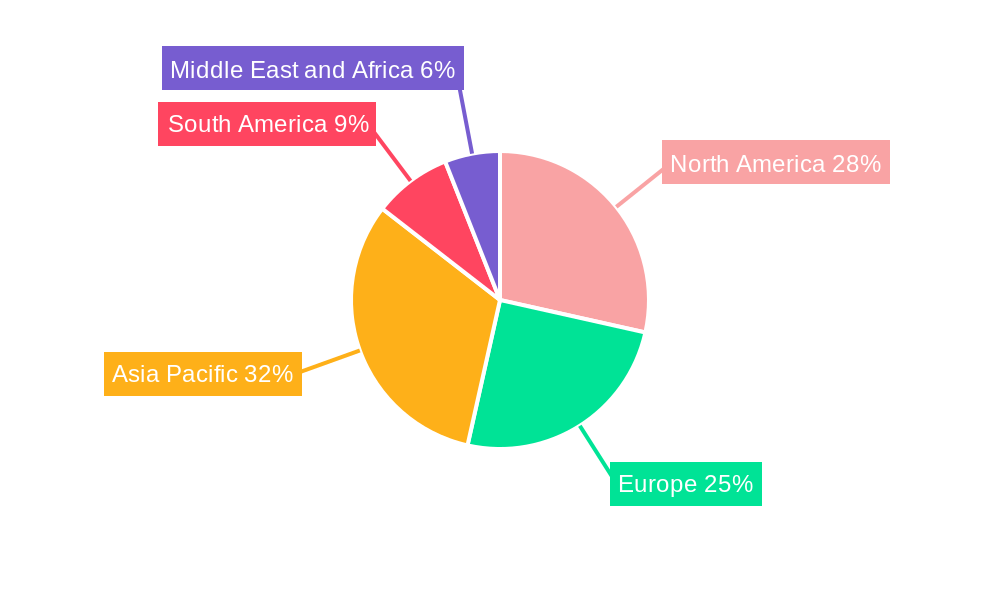
Fortifying Agent Market Regional Market Share
Geographic Coverage of Fortifying Agent Market
Fortifying Agent Market REPORT HIGHLIGHTS
| Aspects | Details |
|---|---|
| Study Period | 2020-2034 |
| Base Year | 2025 |
| Estimated Year | 2026 |
| Forecast Period | 2026-2034 |
| Historical Period | 2020-2025 |
| Growth Rate | CAGR of 7.7% from 2020-2034 |
| Segmentation |
|
Table of Contents
- 1. Introduction
- 1.1. Research Scope
- 1.2. Market Segmentation
- 1.3. Research Methodology
- 1.4. Definitions and Assumptions
- 2. Executive Summary
- 2.1. Introduction
- 3. Market Dynamics
- 3.1. Introduction
- 3.2. Market Drivers
- 3.2.1. Increasing Demand for Low-Fat and Low-Calorie Food; Increasing Product Innovation
- 3.3. Market Restrains
- 3.3.1. ; Threat of New Entrants; Bargaining Power of Buyers/Consumers; Bargaining Power of Suppliers; Threat of Substitute Products; Degree Of Competition
- 3.4. Market Trends
- 3.4.1. Rising Consumption of Vitamin-infused Foods & Beverages
- 4. Market Factor Analysis
- 4.1. Porters Five Forces
- 4.2. Supply/Value Chain
- 4.3. PESTEL analysis
- 4.4. Market Entropy
- 4.5. Patent/Trademark Analysis
- 5. Global Fortifying Agent Market Analysis, Insights and Forecast, 2020-2032
- 5.1. Market Analysis, Insights and Forecast - by Type
- 5.1.1. Proteins & amino acids
- 5.1.2. Vitamins
- 5.1.3. Lipids
- 5.1.4. Prebiotics & probiotics
- 5.1.5. Carbohydrates
- 5.1.6. Minerals
- 5.1.7. Others
- 5.2. Market Analysis, Insights and Forecast - by Application
- 5.2.1. Infant formula
- 5.2.2. Dairy & Dairy-Based Products
- 5.2.3. Cereals & cereal-based products
- 5.2.4. Fats & oils
- 5.2.5. Beverages
- 5.2.6. Dietary supplements
- 5.2.7. Others
- 5.3. Market Analysis, Insights and Forecast - by Region
- 5.3.1. North America
- 5.3.2. Europe
- 5.3.3. Asia Pacific
- 5.3.4. South America
- 5.3.5. Middle East and Africa
- 5.1. Market Analysis, Insights and Forecast - by Type
- 6. North America Fortifying Agent Market Analysis, Insights and Forecast, 2020-2032
- 6.1. Market Analysis, Insights and Forecast - by Type
- 6.1.1. Proteins & amino acids
- 6.1.2. Vitamins
- 6.1.3. Lipids
- 6.1.4. Prebiotics & probiotics
- 6.1.5. Carbohydrates
- 6.1.6. Minerals
- 6.1.7. Others
- 6.2. Market Analysis, Insights and Forecast - by Application
- 6.2.1. Infant formula
- 6.2.2. Dairy & Dairy-Based Products
- 6.2.3. Cereals & cereal-based products
- 6.2.4. Fats & oils
- 6.2.5. Beverages
- 6.2.6. Dietary supplements
- 6.2.7. Others
- 6.1. Market Analysis, Insights and Forecast - by Type
- 7. Europe Fortifying Agent Market Analysis, Insights and Forecast, 2020-2032
- 7.1. Market Analysis, Insights and Forecast - by Type
- 7.1.1. Proteins & amino acids
- 7.1.2. Vitamins
- 7.1.3. Lipids
- 7.1.4. Prebiotics & probiotics
- 7.1.5. Carbohydrates
- 7.1.6. Minerals
- 7.1.7. Others
- 7.2. Market Analysis, Insights and Forecast - by Application
- 7.2.1. Infant formula
- 7.2.2. Dairy & Dairy-Based Products
- 7.2.3. Cereals & cereal-based products
- 7.2.4. Fats & oils
- 7.2.5. Beverages
- 7.2.6. Dietary supplements
- 7.2.7. Others
- 7.1. Market Analysis, Insights and Forecast - by Type
- 8. Asia Pacific Fortifying Agent Market Analysis, Insights and Forecast, 2020-2032
- 8.1. Market Analysis, Insights and Forecast - by Type
- 8.1.1. Proteins & amino acids
- 8.1.2. Vitamins
- 8.1.3. Lipids
- 8.1.4. Prebiotics & probiotics
- 8.1.5. Carbohydrates
- 8.1.6. Minerals
- 8.1.7. Others
- 8.2. Market Analysis, Insights and Forecast - by Application
- 8.2.1. Infant formula
- 8.2.2. Dairy & Dairy-Based Products
- 8.2.3. Cereals & cereal-based products
- 8.2.4. Fats & oils
- 8.2.5. Beverages
- 8.2.6. Dietary supplements
- 8.2.7. Others
- 8.1. Market Analysis, Insights and Forecast - by Type
- 9. South America Fortifying Agent Market Analysis, Insights and Forecast, 2020-2032
- 9.1. Market Analysis, Insights and Forecast - by Type
- 9.1.1. Proteins & amino acids
- 9.1.2. Vitamins
- 9.1.3. Lipids
- 9.1.4. Prebiotics & probiotics
- 9.1.5. Carbohydrates
- 9.1.6. Minerals
- 9.1.7. Others
- 9.2. Market Analysis, Insights and Forecast - by Application
- 9.2.1. Infant formula
- 9.2.2. Dairy & Dairy-Based Products
- 9.2.3. Cereals & cereal-based products
- 9.2.4. Fats & oils
- 9.2.5. Beverages
- 9.2.6. Dietary supplements
- 9.2.7. Others
- 9.1. Market Analysis, Insights and Forecast - by Type
- 10. Middle East and Africa Fortifying Agent Market Analysis, Insights and Forecast, 2020-2032
- 10.1. Market Analysis, Insights and Forecast - by Type
- 10.1.1. Proteins & amino acids
- 10.1.2. Vitamins
- 10.1.3. Lipids
- 10.1.4. Prebiotics & probiotics
- 10.1.5. Carbohydrates
- 10.1.6. Minerals
- 10.1.7. Others
- 10.2. Market Analysis, Insights and Forecast - by Application
- 10.2.1. Infant formula
- 10.2.2. Dairy & Dairy-Based Products
- 10.2.3. Cereals & cereal-based products
- 10.2.4. Fats & oils
- 10.2.5. Beverages
- 10.2.6. Dietary supplements
- 10.2.7. Others
- 10.1. Market Analysis, Insights and Forecast - by Type
- 11. Competitive Analysis
- 11.1. Global Market Share Analysis 2025
- 11.2. Company Profiles
- 11.2.1 Kalsec Inc
- 11.2.1.1. Overview
- 11.2.1.2. Products
- 11.2.1.3. SWOT Analysis
- 11.2.1.4. Recent Developments
- 11.2.1.5. Financials (Based on Availability)
- 11.2.2 Cargill Incorporated
- 11.2.2.1. Overview
- 11.2.2.2. Products
- 11.2.2.3. SWOT Analysis
- 11.2.2.4. Recent Developments
- 11.2.2.5. Financials (Based on Availability)
- 11.2.3 International Flavors & Fragrances Inc IFF
- 11.2.3.1. Overview
- 11.2.3.2. Products
- 11.2.3.3. SWOT Analysis
- 11.2.3.4. Recent Developments
- 11.2.3.5. Financials (Based on Availability)
- 11.2.4 Archer Daniels Midland Company
- 11.2.4.1. Overview
- 11.2.4.2. Products
- 11.2.4.3. SWOT Analysis
- 11.2.4.4. Recent Developments
- 11.2.4.5. Financials (Based on Availability)
- 11.2.5 BASF SE
- 11.2.5.1. Overview
- 11.2.5.2. Products
- 11.2.5.3. SWOT Analysis
- 11.2.5.4. Recent Developments
- 11.2.5.5. Financials (Based on Availability)
- 11.2.6 DSM
- 11.2.6.1. Overview
- 11.2.6.2. Products
- 11.2.6.3. SWOT Analysis
- 11.2.6.4. Recent Developments
- 11.2.6.5. Financials (Based on Availability)
- 11.2.7 DuPont
- 11.2.7.1. Overview
- 11.2.7.2. Products
- 11.2.7.3. SWOT Analysis
- 11.2.7.4. Recent Developments
- 11.2.7.5. Financials (Based on Availability)
- 11.2.8 Eastman Chemical Company
- 11.2.8.1. Overview
- 11.2.8.2. Products
- 11.2.8.3. SWOT Analysis
- 11.2.8.4. Recent Developments
- 11.2.8.5. Financials (Based on Availability)
- 11.2.9 Kemin Industries Inc
- 11.2.9.1. Overview
- 11.2.9.2. Products
- 11.2.9.3. SWOT Analysis
- 11.2.9.4. Recent Developments
- 11.2.9.5. Financials (Based on Availability)
- 11.2.10 Advanced Organic Materials S A *List Not Exhaustive
- 11.2.10.1. Overview
- 11.2.10.2. Products
- 11.2.10.3. SWOT Analysis
- 11.2.10.4. Recent Developments
- 11.2.10.5. Financials (Based on Availability)
- 11.2.1 Kalsec Inc
List of Figures
- Figure 1: Global Fortifying Agent Market Revenue Breakdown (billion, %) by Region 2025 & 2033
- Figure 2: North America Fortifying Agent Market Revenue (billion), by Type 2025 & 2033
- Figure 3: North America Fortifying Agent Market Revenue Share (%), by Type 2025 & 2033
- Figure 4: North America Fortifying Agent Market Revenue (billion), by Application 2025 & 2033
- Figure 5: North America Fortifying Agent Market Revenue Share (%), by Application 2025 & 2033
- Figure 6: North America Fortifying Agent Market Revenue (billion), by Country 2025 & 2033
- Figure 7: North America Fortifying Agent Market Revenue Share (%), by Country 2025 & 2033
- Figure 8: Europe Fortifying Agent Market Revenue (billion), by Type 2025 & 2033
- Figure 9: Europe Fortifying Agent Market Revenue Share (%), by Type 2025 & 2033
- Figure 10: Europe Fortifying Agent Market Revenue (billion), by Application 2025 & 2033
- Figure 11: Europe Fortifying Agent Market Revenue Share (%), by Application 2025 & 2033
- Figure 12: Europe Fortifying Agent Market Revenue (billion), by Country 2025 & 2033
- Figure 13: Europe Fortifying Agent Market Revenue Share (%), by Country 2025 & 2033
- Figure 14: Asia Pacific Fortifying Agent Market Revenue (billion), by Type 2025 & 2033
- Figure 15: Asia Pacific Fortifying Agent Market Revenue Share (%), by Type 2025 & 2033
- Figure 16: Asia Pacific Fortifying Agent Market Revenue (billion), by Application 2025 & 2033
- Figure 17: Asia Pacific Fortifying Agent Market Revenue Share (%), by Application 2025 & 2033
- Figure 18: Asia Pacific Fortifying Agent Market Revenue (billion), by Country 2025 & 2033
- Figure 19: Asia Pacific Fortifying Agent Market Revenue Share (%), by Country 2025 & 2033
- Figure 20: South America Fortifying Agent Market Revenue (billion), by Type 2025 & 2033
- Figure 21: South America Fortifying Agent Market Revenue Share (%), by Type 2025 & 2033
- Figure 22: South America Fortifying Agent Market Revenue (billion), by Application 2025 & 2033
- Figure 23: South America Fortifying Agent Market Revenue Share (%), by Application 2025 & 2033
- Figure 24: South America Fortifying Agent Market Revenue (billion), by Country 2025 & 2033
- Figure 25: South America Fortifying Agent Market Revenue Share (%), by Country 2025 & 2033
- Figure 26: Middle East and Africa Fortifying Agent Market Revenue (billion), by Type 2025 & 2033
- Figure 27: Middle East and Africa Fortifying Agent Market Revenue Share (%), by Type 2025 & 2033
- Figure 28: Middle East and Africa Fortifying Agent Market Revenue (billion), by Application 2025 & 2033
- Figure 29: Middle East and Africa Fortifying Agent Market Revenue Share (%), by Application 2025 & 2033
- Figure 30: Middle East and Africa Fortifying Agent Market Revenue (billion), by Country 2025 & 2033
- Figure 31: Middle East and Africa Fortifying Agent Market Revenue Share (%), by Country 2025 & 2033
List of Tables
- Table 1: Global Fortifying Agent Market Revenue billion Forecast, by Type 2020 & 2033
- Table 2: Global Fortifying Agent Market Revenue billion Forecast, by Application 2020 & 2033
- Table 3: Global Fortifying Agent Market Revenue billion Forecast, by Region 2020 & 2033
- Table 4: Global Fortifying Agent Market Revenue billion Forecast, by Type 2020 & 2033
- Table 5: Global Fortifying Agent Market Revenue billion Forecast, by Application 2020 & 2033
- Table 6: Global Fortifying Agent Market Revenue billion Forecast, by Country 2020 & 2033
- Table 7: United States Fortifying Agent Market Revenue (billion) Forecast, by Application 2020 & 2033
- Table 8: Canada Fortifying Agent Market Revenue (billion) Forecast, by Application 2020 & 2033
- Table 9: Mexico Fortifying Agent Market Revenue (billion) Forecast, by Application 2020 & 2033
- Table 10: Rest of North America Fortifying Agent Market Revenue (billion) Forecast, by Application 2020 & 2033
- Table 11: Global Fortifying Agent Market Revenue billion Forecast, by Type 2020 & 2033
- Table 12: Global Fortifying Agent Market Revenue billion Forecast, by Application 2020 & 2033
- Table 13: Global Fortifying Agent Market Revenue billion Forecast, by Country 2020 & 2033
- Table 14: United Kingdom Fortifying Agent Market Revenue (billion) Forecast, by Application 2020 & 2033
- Table 15: Germany Fortifying Agent Market Revenue (billion) Forecast, by Application 2020 & 2033
- Table 16: France Fortifying Agent Market Revenue (billion) Forecast, by Application 2020 & 2033
- Table 17: Russia Fortifying Agent Market Revenue (billion) Forecast, by Application 2020 & 2033
- Table 18: Italy Fortifying Agent Market Revenue (billion) Forecast, by Application 2020 & 2033
- Table 19: Spain Fortifying Agent Market Revenue (billion) Forecast, by Application 2020 & 2033
- Table 20: Rest of Europe Fortifying Agent Market Revenue (billion) Forecast, by Application 2020 & 2033
- Table 21: Global Fortifying Agent Market Revenue billion Forecast, by Type 2020 & 2033
- Table 22: Global Fortifying Agent Market Revenue billion Forecast, by Application 2020 & 2033
- Table 23: Global Fortifying Agent Market Revenue billion Forecast, by Country 2020 & 2033
- Table 24: India Fortifying Agent Market Revenue (billion) Forecast, by Application 2020 & 2033
- Table 25: China Fortifying Agent Market Revenue (billion) Forecast, by Application 2020 & 2033
- Table 26: Japan Fortifying Agent Market Revenue (billion) Forecast, by Application 2020 & 2033
- Table 27: Australia Fortifying Agent Market Revenue (billion) Forecast, by Application 2020 & 2033
- Table 28: Rest of Asia Pacific Fortifying Agent Market Revenue (billion) Forecast, by Application 2020 & 2033
- Table 29: Global Fortifying Agent Market Revenue billion Forecast, by Type 2020 & 2033
- Table 30: Global Fortifying Agent Market Revenue billion Forecast, by Application 2020 & 2033
- Table 31: Global Fortifying Agent Market Revenue billion Forecast, by Country 2020 & 2033
- Table 32: Brazil Fortifying Agent Market Revenue (billion) Forecast, by Application 2020 & 2033
- Table 33: Argentina Fortifying Agent Market Revenue (billion) Forecast, by Application 2020 & 2033
- Table 34: Rest of South America Fortifying Agent Market Revenue (billion) Forecast, by Application 2020 & 2033
- Table 35: Global Fortifying Agent Market Revenue billion Forecast, by Type 2020 & 2033
- Table 36: Global Fortifying Agent Market Revenue billion Forecast, by Application 2020 & 2033
- Table 37: Global Fortifying Agent Market Revenue billion Forecast, by Country 2020 & 2033
- Table 38: South Africa Fortifying Agent Market Revenue (billion) Forecast, by Application 2020 & 2033
- Table 39: Saudi Arabia Fortifying Agent Market Revenue (billion) Forecast, by Application 2020 & 2033
- Table 40: Rest of Middle East and Africa Fortifying Agent Market Revenue (billion) Forecast, by Application 2020 & 2033
Frequently Asked Questions
1. What is the projected Compound Annual Growth Rate (CAGR) of the Fortifying Agent Market?
The projected CAGR is approximately 7.7%.
2. Which companies are prominent players in the Fortifying Agent Market?
Key companies in the market include Kalsec Inc, Cargill Incorporated, International Flavors & Fragrances Inc IFF, Archer Daniels Midland Company, BASF SE, DSM, DuPont, Eastman Chemical Company, Kemin Industries Inc, Advanced Organic Materials S A *List Not Exhaustive.
3. What are the main segments of the Fortifying Agent Market?
The market segments include Type, Application.
4. Can you provide details about the market size?
The market size is estimated to be USD 100.3 billion as of 2022.
5. What are some drivers contributing to market growth?
Increasing Demand for Low-Fat and Low-Calorie Food; Increasing Product Innovation.
6. What are the notable trends driving market growth?
Rising Consumption of Vitamin-infused Foods & Beverages.
7. Are there any restraints impacting market growth?
; Threat of New Entrants; Bargaining Power of Buyers/Consumers; Bargaining Power of Suppliers; Threat of Substitute Products; Degree Of Competition.
8. Can you provide examples of recent developments in the market?
N/A
9. What pricing options are available for accessing the report?
Pricing options include single-user, multi-user, and enterprise licenses priced at USD 4750, USD 5250, and USD 8750 respectively.
10. Is the market size provided in terms of value or volume?
The market size is provided in terms of value, measured in billion.
11. Are there any specific market keywords associated with the report?
Yes, the market keyword associated with the report is "Fortifying Agent Market," which aids in identifying and referencing the specific market segment covered.
12. How do I determine which pricing option suits my needs best?
The pricing options vary based on user requirements and access needs. Individual users may opt for single-user licenses, while businesses requiring broader access may choose multi-user or enterprise licenses for cost-effective access to the report.
13. Are there any additional resources or data provided in the Fortifying Agent Market report?
While the report offers comprehensive insights, it's advisable to review the specific contents or supplementary materials provided to ascertain if additional resources or data are available.
14. How can I stay updated on further developments or reports in the Fortifying Agent Market?
To stay informed about further developments, trends, and reports in the Fortifying Agent Market, consider subscribing to industry newsletters, following relevant companies and organizations, or regularly checking reputable industry news sources and publications.
Methodology
Step 1 - Identification of Relevant Samples Size from Population Database



Step 2 - Approaches for Defining Global Market Size (Value, Volume* & Price*)

Note*: In applicable scenarios
Step 3 - Data Sources
Primary Research
- Web Analytics
- Survey Reports
- Research Institute
- Latest Research Reports
- Opinion Leaders
Secondary Research
- Annual Reports
- White Paper
- Latest Press Release
- Industry Association
- Paid Database
- Investor Presentations

Step 4 - Data Triangulation
Involves using different sources of information in order to increase the validity of a study
These sources are likely to be stakeholders in a program - participants, other researchers, program staff, other community members, and so on.
Then we put all data in single framework & apply various statistical tools to find out the dynamic on the market.
During the analysis stage, feedback from the stakeholder groups would be compared to determine areas of agreement as well as areas of divergence