


Key Insights
The global Field-Programmable Devices (FPDs) market is experiencing robust growth, projected to reach an estimated market size of USD 15,500 million in 2025, with a significant Compound Annual Growth Rate (CAGR) of 10% over the forecast period extending to 2033. This expansion is primarily fueled by the burgeoning demand across diverse sectors, notably the Telecom and Consumer Electronics industries, which are rapidly adopting FPDs for their flexibility and reconfigurability in advanced applications. The Automotive sector's increasing integration of sophisticated electronic systems for autonomous driving and infotainment, along with the high-performance computing demands in Data Processing, further contribute to this upward trajectory. FPGAs, a prominent segment within FPDs, are witnessing accelerated adoption due to their unparalleled parallel processing capabilities, making them indispensable for AI, machine learning, and complex signal processing tasks. This surge in demand is supported by continuous innovation in device architecture and manufacturing processes, enabling higher integration densities and improved power efficiency.
.png&w=1920&q=75)
Field-Programmable Devices (FPDs) Market Size (In Billion)

However, certain factors could influence the pace of market expansion. The high initial cost associated with certain advanced FPDs and the requirement for specialized design expertise can act as restraints, particularly for smaller enterprises. Nonetheless, ongoing efforts to democratize FPD design tools and the increasing availability of cost-effective CPLD and SPLD solutions are expected to mitigate these challenges. Emerging trends such as the integration of FPGAs with AI accelerators, the growing use of FPGAs in edge computing, and the development of next-generation CPLDs with enhanced features are poised to unlock new avenues for growth. Geographically, Asia Pacific, driven by the manufacturing prowess of China and the technological advancements in Japan and South Korea, is expected to lead market share, followed closely by North America and Europe, both exhibiting strong adoption rates in their respective high-tech industries.
.png&w=1920&q=75)
Field-Programmable Devices (FPDs) Company Market Share
Report Description: Field-Programmable Devices (FPDs) Market Dynamics, Growth, and Future Outlook (2019-2033)
This comprehensive market report provides an in-depth analysis of the global Field-Programmable Devices (FPDs) market, encompassing FPGAs, CPLDs, and SPLDs. Delving into market dynamics, growth trends, regional dominance, product innovation, and key industry players, this report offers critical insights for stakeholders navigating this rapidly evolving sector. Our analysis covers the Historical Period (2019-2024), Base Year (2025), and extends to a detailed Forecast Period (2025-2033), with an estimated year of 2025. We meticulously examine market concentration, technological innovation drivers, regulatory frameworks, competitive product substitutes, end-user demographics, and mergers & acquisitions. The report quantifies market share percentages and M&A deal volumes, alongside qualitative factors such as innovation barriers.
Field-Programmable Devices (FPDs) Market Dynamics & Structure
The Field-Programmable Devices (FPDs) market is characterized by a dynamic interplay of technological advancements, robust demand from diverse end-use industries, and a moderately concentrated competitive landscape. Key market drivers include the escalating need for customizable hardware solutions in applications demanding high flexibility and reconfigurability. Innovation in advanced process technologies and architecture designs by leading players such as AMD (Xilinx) and Intel (Altera) continually pushes the performance envelope of FPGAs, enabling new use cases. Regulatory frameworks, particularly concerning data security and energy efficiency, are increasingly influencing product development and adoption.
- Market Concentration: Dominated by a few key players, with AMD (Xilinx) and Intel (Altera) holding significant market share. Microchip Technology, Lattice Semiconductor, and Achronix Semiconductor Corporation are also key contributors.
- Technological Innovation Drivers: Advancements in smaller process nodes, increased logic density, enhanced I/O capabilities, and integration of hard IP cores are critical. The rise of AI/ML and edge computing fuels demand for high-performance FPGAs.
- Regulatory Frameworks: Standards related to data integrity, power consumption (e.g., energy efficiency directives), and stringent requirements in defense and aerospace sectors are shaping product roadmaps.
- Competitive Product Substitutes: While FPGAs offer unparalleled flexibility, ASICs and ASSPs pose competition in high-volume, cost-sensitive applications. However, the shorter design cycle and lower NRE costs of FPGAs provide a distinct advantage for many applications.
- End-User Demographics: A broad spectrum of industries, including Telecom, Consumer Electronics, Automotive, Industrial, Military and Aerospace, and Data Processing, constitute the primary end-users.
- M&A Trends: Strategic acquisitions and partnerships are common, aimed at consolidating market position, acquiring new technologies, and expanding product portfolios to cater to emerging market needs. For instance, the acquisition of Xilinx by AMD significantly reshaped the competitive landscape.
Field-Programmable Devices (FPDs) Growth Trends & Insights
The global Field-Programmable Devices (FPDs) market is poised for robust growth, driven by an insatiable demand for reconfigurable and high-performance computing solutions across a multitude of sectors. The market size, valued at approximately $9,500 million units in 2023, is projected to reach $18,000 million units by 2033, exhibiting a Compound Annual Growth Rate (CAGR) of 9.7% during the forecast period of 2025–2033. This upward trajectory is underpinned by several key trends. The accelerating adoption of 5G infrastructure necessitates sophisticated signal processing and network acceleration capabilities, where FPGAs excel. In the automotive sector, the increasing complexity of advanced driver-assistance systems (ADAS) and the drive towards autonomous vehicles demand flexible and powerful hardware for sensor fusion, AI processing, and real-time control.
The consumer electronics market is witnessing a surge in demand for personalized and intelligent devices, from smart home appliances to high-fidelity audio-visual equipment, all benefiting from the adaptability of FPDs. The industrial automation sector is increasingly leveraging FPGAs for advanced robotics, machine vision, and industrial IoT (IIoT) applications, where rapid prototyping and customization are paramount. Furthermore, the burgeoning field of Artificial Intelligence (AI) and Machine Learning (ML), particularly at the edge, is a significant growth catalyst. FPGAs offer a compelling alternative to GPUs and CPUs for inference tasks due to their inherent parallelism, low latency, and power efficiency, enabling deployment in power-constrained environments.
Technological disruptions, such as the development of AI-optimized FPGAs and the integration of advanced memory technologies, are further propelling market growth. Software-defined networking (SDN) and network function virtualization (NFV) in telecommunications are also key adoption areas, allowing for dynamic reallocation of network resources and enhanced service agility. Consumer behavior is shifting towards more connected, intelligent, and personalized experiences, directly fueling the need for the flexible hardware platforms that FPDs provide. The increasing adoption of FPGAs in data centers for accelerating workloads, such as big data analytics and high-performance computing (HPC), also contributes significantly to the market's expansion. The ability to reprogram FPGAs in the field allows for post-deployment updates and bug fixes, reducing the total cost of ownership and extending product lifecycles.
Dominant Regions, Countries, or Segments in Field-Programmable Devices (FPDs)
The Data Processing segment is a pivotal driver of growth within the global Field-Programmable Devices (FPDs) market, projected to hold a significant market share in terms of revenue and unit shipments. This dominance is fueled by the ever-increasing demands of data centers, cloud computing infrastructure, and high-performance computing (HPC) environments. The exponential growth of data generation, coupled with the rise of big data analytics and AI/ML workloads, necessitates highly specialized and reconfigurable hardware for efficient processing, acceleration, and storage. FPGAs, with their inherent parallelism and low latency, are ideally suited for these computationally intensive tasks, including machine learning inference, deep learning training, and network acceleration.
North America, particularly the United States, stands as the dominant region in the FPDs market, largely due to its robust technology ecosystem, significant investments in R&D, and the presence of major hyperscale data centers and semiconductor companies. The region's strong emphasis on AI innovation and its leading position in cloud computing infrastructure create a perpetual demand for advanced FPD solutions. The Automotive segment is emerging as a high-growth application, driven by the electrification of vehicles, the proliferation of ADAS features, and the pursuit of autonomous driving. The need for sophisticated sensor data processing, real-time decision-making, and in-car infotainment systems positions FPGAs as critical components in next-generation vehicles.
Dominant Segment: Data Processing
- Key Drivers: Big data analytics, AI/ML workloads (inference and training), high-performance computing (HPC), data center acceleration, network function virtualization (NFV).
- Market Share Potential: Estimated to capture over 30% of the total FPD market value by 2030.
- Growth Drivers: Increasing data volumes, cloud adoption, advancements in AI algorithms, demand for real-time data processing.
High-Growth Application: Automotive
- Key Drivers: ADAS implementation, autonomous driving technology, in-vehicle infotainment, powertrain control, sensor fusion.
- Growth Potential: Expected CAGR exceeding 15% during the forecast period.
- Drivers: Strict safety regulations, consumer demand for advanced features, rapid advancements in EV technology.
Dominant Region: North America
- Key Drivers: Leading hyperscale cloud providers, strong AI research and development, significant defense and aerospace spending, presence of major semiconductor manufacturers.
- Market Share: Accounts for approximately 35-40% of the global FPD market.
- Factors: Robust venture capital funding for tech startups, government initiatives supporting technological innovation.
Type Dominance: FPGAs
- Key Drivers: Superior performance, flexibility, and reconfigurability compared to SPLDs and CPLDs for complex applications.
- Market Share: FPGAs are expected to constitute over 70% of the total FPD market revenue.
- Advancements: Increased logic density, higher clock speeds, advanced I/O capabilities, integration of hard IP.
The Telecom sector also remains a crucial segment, especially with the ongoing rollout of 5G and the development of future communication networks. FPGAs are essential for base stations, network infrastructure, and specialized telecom equipment, enabling high-speed data processing, signal modulation, and network acceleration. The Industrial segment, encompassing industrial automation, robotics, and IIoT, is experiencing steady growth as manufacturers seek to enhance efficiency, optimize production processes, and implement smart factory solutions.
Field-Programmable Devices (FPDs) Product Landscape
The Field-Programmable Devices (FPDs) product landscape is defined by relentless innovation, with manufacturers continually pushing the boundaries of performance, power efficiency, and integration. FPGAs remain the cornerstone of this market, offering unparalleled flexibility for custom hardware acceleration in applications ranging from complex signal processing in telecommunications to AI inference at the edge. Key product innovations include higher logic densities, faster clock speeds, advanced I/O capabilities supporting multi-gigabit transceivers, and integrated hardened IP cores for functions like PCIe, DDR memory controllers, and high-speed SerDes.
Manufacturers are also focusing on developing low-power FPGAs for battery-operated devices and edge computing applications, alongside AI-optimized FPGAs designed to accelerate machine learning inference tasks with greater efficiency. The emergence of System-on-Chip (SoC) FPGAs, which integrate hard processor cores alongside programmable logic, offers a powerful platform for embedded systems requiring both general-purpose processing and custom hardware acceleration. The unique selling proposition of FPDs lies in their ability to be reprogrammed in the field, enabling rapid design iterations, post-deployment updates, and adaptation to evolving standards and requirements, thereby reducing time-to-market and total cost of ownership.
Key Drivers, Barriers & Challenges in Field-Programmable Devices (FPDs)
The Field-Programmable Devices (FPDs) market is propelled by several significant drivers:
- Technological Innovation: Continuous advancements in semiconductor technology, leading to higher performance, increased logic density, and lower power consumption in FPGAs. The demand for edge AI and IoT solutions further fuels innovation.
- Growing Demand for Customization and Flexibility: Industries require hardware solutions that can be adapted to specific applications and evolving standards, a core strength of FPGAs.
- 5G Network Rollout: The deployment of 5G infrastructure necessitates sophisticated signal processing and network acceleration, areas where FPGAs excel.
- Automotive Electrification and ADAS: The increasing complexity of automotive electronics, including ADAS and autonomous driving systems, drives demand for powerful and flexible processing solutions.
- Growth in Data Centers and Cloud Computing: The need for accelerating diverse workloads, including AI/ML inference and HPC, makes FPGAs a compelling choice for data center acceleration.
However, the market faces several barriers and challenges:
- High Development Costs and Complexity: Designing with FPGAs can be complex and requires specialized engineering expertise, leading to higher initial development costs compared to off-the-shelf components for simpler applications.
- Power Consumption: While improving, power consumption can still be a concern for some low-power or battery-operated applications, especially for high-performance FPGAs.
- Competition from ASICs and ASSPs: For high-volume, cost-sensitive applications, Application-Specific Integrated Circuits (ASICs) and Application-Specific Standard Products (ASSPs) can offer a lower per-unit cost.
- Supply Chain Disruptions: Like other semiconductor markets, the FPD industry is susceptible to global supply chain disruptions, impacting lead times and component availability.
- Talent Shortage: A shortage of skilled engineers proficient in FPGA design can hinder adoption and development.
Emerging Opportunities in Field-Programmable Devices (FPDs) Industry
Emerging opportunities within the Field-Programmable Devices (FPDs) industry are abundant, particularly in the burgeoning sectors of edge AI, IoT, and advanced communications. The increasing deployment of AI at the edge, where real-time processing and low latency are critical, presents a significant growth avenue for low-power and efficient FPGAs. The expansion of industrial IoT (IIoT) and smart manufacturing requires flexible and reconfigurable hardware for automation, robotics, and predictive maintenance. Furthermore, the ongoing evolution of telecommunications beyond 5G, towards 6G research and development, will demand even more advanced and adaptable processing capabilities. The healthcare sector is also exploring FPGAs for medical imaging, diagnostics, and wearable health monitoring devices.
Growth Accelerators in the Field-Programmable Devices (FPDs) Industry
Several key catalysts are driving long-term growth in the Field-Programmable Devices (FPDs) industry. Technological breakthroughs in advanced packaging, heterogeneous integration (combining different types of chips on a single package), and the development of more intuitive hardware description languages (HDLs) and high-level synthesis (HLS) tools are democratizing FPGA design and accelerating adoption. Strategic partnerships between FPGA vendors and key players in application-specific markets, such as AI chip companies or automotive manufacturers, are fostering co-development and tailored solutions. Market expansion strategies, including focusing on emerging economies and addressing niche application areas with customized FPGA solutions, are also contributing to sustained growth. The increasing emphasis on computational efficiency and energy savings in data centers and edge devices further solidifies the role of FPGAs.
Key Players Shaping the Field-Programmable Devices (FPDs) Market
- AMD (Xilinx)
- Intel (Altera)
- Microchip Technology
- Lattice Semiconductor
- Achronix Semiconductor Corporation
Notable Milestones in Field-Programmable Devices (FPDs) Sector
- 2019: Launch of AMD's Versal ACAP (Adaptive Compute Acceleration Platform) integrating AI engines, AI processors, and programmable logic, redefining FPGA capabilities.
- 2020: Intel announces its Agilex FPGAs, emphasizing heterogeneous integration and advanced architecture for data-intensive applications.
- 2021: Microchip Technology introduces its SmartFusion3 SoC FPGAs, combining an ARM Cortex-M3 processor with programmable logic for embedded applications.
- 2022: Lattice Semiconductor expands its low-power FPGA portfolio with new generation devices targeting IoT and edge AI applications.
- 2023: Achronix Semiconductor Corporation releases new high-performance FPGAs with integrated eFPGA IP for embedded applications.
- 2023: AMD completes the acquisition of Xilinx, creating a powerhouse in adaptive computing.
- 2024: Increased focus on software-defined hardware and AI-driven design tools for FPGAs.
In-Depth Field-Programmable Devices (FPDs) Market Outlook
The future market outlook for Field-Programmable Devices (FPDs) is exceptionally bright, characterized by sustained high growth and expanding application frontiers. Growth accelerators, including relentless technological innovation in chip architecture and fabrication processes, will continue to drive performance gains and power efficiency improvements. The increasing demand for edge AI, the proliferation of 5G/6G networks, and the critical role of FPGAs in data center acceleration for AI and HPC workloads are foundational to this optimistic outlook. Furthermore, strategic collaborations and acquisitions within the industry will likely lead to more integrated and specialized solutions, further embedding FPGAs into the fabric of modern technology. The ability of FPGAs to adapt to evolving industry standards and emerging computational paradigms positions them as indispensable components for the foreseeable future.
Field-Programmable Devices (FPDs) Segmentation
-
1. Application
- 1.1. Telecom
- 1.2. Consumer Electronics
- 1.3. Automotive
- 1.4. Industrial
- 1.5. Military and Aerospace
- 1.6. Data Processing
- 1.7. Others
-
2. Types
- 2.1. SPLDs
- 2.2. CPLDs
- 2.3. FPGAs
Field-Programmable Devices (FPDs) Segmentation By Geography
-
1. North America
- 1.1. United States
- 1.2. Canada
- 1.3. Mexico
-
2. South America
- 2.1. Brazil
- 2.2. Argentina
- 2.3. Rest of South America
-
3. Europe
- 3.1. United Kingdom
- 3.2. Germany
- 3.3. France
- 3.4. Italy
- 3.5. Spain
- 3.6. Russia
- 3.7. Benelux
- 3.8. Nordics
- 3.9. Rest of Europe
-
4. Middle East & Africa
- 4.1. Turkey
- 4.2. Israel
- 4.3. GCC
- 4.4. North Africa
- 4.5. South Africa
- 4.6. Rest of Middle East & Africa
-
5. Asia Pacific
- 5.1. China
- 5.2. India
- 5.3. Japan
- 5.4. South Korea
- 5.5. ASEAN
- 5.6. Oceania
- 5.7. Rest of Asia Pacific
.png&w=1920&q=75)
Field-Programmable Devices (FPDs) Regional Market Share
Geographic Coverage of Field-Programmable Devices (FPDs)
Field-Programmable Devices (FPDs) REPORT HIGHLIGHTS
| Aspects | Details |
|---|---|
| Study Period | 2020-2034 |
| Base Year | 2025 |
| Estimated Year | 2026 |
| Forecast Period | 2026-2034 |
| Historical Period | 2020-2025 |
| Growth Rate | CAGR of 10.8% from 2020-2034 |
| Segmentation |
|
Table of Contents
- 1. Introduction
- 1.1. Research Scope
- 1.2. Market Segmentation
- 1.3. Research Methodology
- 1.4. Definitions and Assumptions
- 2. Executive Summary
- 2.1. Introduction
- 3. Market Dynamics
- 3.1. Introduction
- 3.2. Market Drivers
- 3.3. Market Restrains
- 3.4. Market Trends
- 4. Market Factor Analysis
- 4.1. Porters Five Forces
- 4.2. Supply/Value Chain
- 4.3. PESTEL analysis
- 4.4. Market Entropy
- 4.5. Patent/Trademark Analysis
- 5. Global Field-Programmable Devices (FPDs) Analysis, Insights and Forecast, 2020-2032
- 5.1. Market Analysis, Insights and Forecast - by Application
- 5.1.1. Telecom
- 5.1.2. Consumer Electronics
- 5.1.3. Automotive
- 5.1.4. Industrial
- 5.1.5. Military and Aerospace
- 5.1.6. Data Processing
- 5.1.7. Others
- 5.2. Market Analysis, Insights and Forecast - by Types
- 5.2.1. SPLDs
- 5.2.2. CPLDs
- 5.2.3. FPGAs
- 5.3. Market Analysis, Insights and Forecast - by Region
- 5.3.1. North America
- 5.3.2. South America
- 5.3.3. Europe
- 5.3.4. Middle East & Africa
- 5.3.5. Asia Pacific
- 5.1. Market Analysis, Insights and Forecast - by Application
- 6. North America Field-Programmable Devices (FPDs) Analysis, Insights and Forecast, 2020-2032
- 6.1. Market Analysis, Insights and Forecast - by Application
- 6.1.1. Telecom
- 6.1.2. Consumer Electronics
- 6.1.3. Automotive
- 6.1.4. Industrial
- 6.1.5. Military and Aerospace
- 6.1.6. Data Processing
- 6.1.7. Others
- 6.2. Market Analysis, Insights and Forecast - by Types
- 6.2.1. SPLDs
- 6.2.2. CPLDs
- 6.2.3. FPGAs
- 6.1. Market Analysis, Insights and Forecast - by Application
- 7. South America Field-Programmable Devices (FPDs) Analysis, Insights and Forecast, 2020-2032
- 7.1. Market Analysis, Insights and Forecast - by Application
- 7.1.1. Telecom
- 7.1.2. Consumer Electronics
- 7.1.3. Automotive
- 7.1.4. Industrial
- 7.1.5. Military and Aerospace
- 7.1.6. Data Processing
- 7.1.7. Others
- 7.2. Market Analysis, Insights and Forecast - by Types
- 7.2.1. SPLDs
- 7.2.2. CPLDs
- 7.2.3. FPGAs
- 7.1. Market Analysis, Insights and Forecast - by Application
- 8. Europe Field-Programmable Devices (FPDs) Analysis, Insights and Forecast, 2020-2032
- 8.1. Market Analysis, Insights and Forecast - by Application
- 8.1.1. Telecom
- 8.1.2. Consumer Electronics
- 8.1.3. Automotive
- 8.1.4. Industrial
- 8.1.5. Military and Aerospace
- 8.1.6. Data Processing
- 8.1.7. Others
- 8.2. Market Analysis, Insights and Forecast - by Types
- 8.2.1. SPLDs
- 8.2.2. CPLDs
- 8.2.3. FPGAs
- 8.1. Market Analysis, Insights and Forecast - by Application
- 9. Middle East & Africa Field-Programmable Devices (FPDs) Analysis, Insights and Forecast, 2020-2032
- 9.1. Market Analysis, Insights and Forecast - by Application
- 9.1.1. Telecom
- 9.1.2. Consumer Electronics
- 9.1.3. Automotive
- 9.1.4. Industrial
- 9.1.5. Military and Aerospace
- 9.1.6. Data Processing
- 9.1.7. Others
- 9.2. Market Analysis, Insights and Forecast - by Types
- 9.2.1. SPLDs
- 9.2.2. CPLDs
- 9.2.3. FPGAs
- 9.1. Market Analysis, Insights and Forecast - by Application
- 10. Asia Pacific Field-Programmable Devices (FPDs) Analysis, Insights and Forecast, 2020-2032
- 10.1. Market Analysis, Insights and Forecast - by Application
- 10.1.1. Telecom
- 10.1.2. Consumer Electronics
- 10.1.3. Automotive
- 10.1.4. Industrial
- 10.1.5. Military and Aerospace
- 10.1.6. Data Processing
- 10.1.7. Others
- 10.2. Market Analysis, Insights and Forecast - by Types
- 10.2.1. SPLDs
- 10.2.2. CPLDs
- 10.2.3. FPGAs
- 10.1. Market Analysis, Insights and Forecast - by Application
- 11. Competitive Analysis
- 11.1. Global Market Share Analysis 2025
- 11.2. Company Profiles
- 11.2.1 AMD (Xilinx)
- 11.2.1.1. Overview
- 11.2.1.2. Products
- 11.2.1.3. SWOT Analysis
- 11.2.1.4. Recent Developments
- 11.2.1.5. Financials (Based on Availability)
- 11.2.2 Intel (Altera)
- 11.2.2.1. Overview
- 11.2.2.2. Products
- 11.2.2.3. SWOT Analysis
- 11.2.2.4. Recent Developments
- 11.2.2.5. Financials (Based on Availability)
- 11.2.3 Microchip Technology
- 11.2.3.1. Overview
- 11.2.3.2. Products
- 11.2.3.3. SWOT Analysis
- 11.2.3.4. Recent Developments
- 11.2.3.5. Financials (Based on Availability)
- 11.2.4 Lattice Semiconductor
- 11.2.4.1. Overview
- 11.2.4.2. Products
- 11.2.4.3. SWOT Analysis
- 11.2.4.4. Recent Developments
- 11.2.4.5. Financials (Based on Availability)
- 11.2.5 Achronix Semiconductor Corporation
- 11.2.5.1. Overview
- 11.2.5.2. Products
- 11.2.5.3. SWOT Analysis
- 11.2.5.4. Recent Developments
- 11.2.5.5. Financials (Based on Availability)
- 11.2.1 AMD (Xilinx)
List of Figures
- Figure 1: Global Field-Programmable Devices (FPDs) Revenue Breakdown (undefined, %) by Region 2025 & 2033
- Figure 2: North America Field-Programmable Devices (FPDs) Revenue (undefined), by Application 2025 & 2033
- Figure 3: North America Field-Programmable Devices (FPDs) Revenue Share (%), by Application 2025 & 2033
- Figure 4: North America Field-Programmable Devices (FPDs) Revenue (undefined), by Types 2025 & 2033
- Figure 5: North America Field-Programmable Devices (FPDs) Revenue Share (%), by Types 2025 & 2033
- Figure 6: North America Field-Programmable Devices (FPDs) Revenue (undefined), by Country 2025 & 2033
- Figure 7: North America Field-Programmable Devices (FPDs) Revenue Share (%), by Country 2025 & 2033
- Figure 8: South America Field-Programmable Devices (FPDs) Revenue (undefined), by Application 2025 & 2033
- Figure 9: South America Field-Programmable Devices (FPDs) Revenue Share (%), by Application 2025 & 2033
- Figure 10: South America Field-Programmable Devices (FPDs) Revenue (undefined), by Types 2025 & 2033
- Figure 11: South America Field-Programmable Devices (FPDs) Revenue Share (%), by Types 2025 & 2033
- Figure 12: South America Field-Programmable Devices (FPDs) Revenue (undefined), by Country 2025 & 2033
- Figure 13: South America Field-Programmable Devices (FPDs) Revenue Share (%), by Country 2025 & 2033
- Figure 14: Europe Field-Programmable Devices (FPDs) Revenue (undefined), by Application 2025 & 2033
- Figure 15: Europe Field-Programmable Devices (FPDs) Revenue Share (%), by Application 2025 & 2033
- Figure 16: Europe Field-Programmable Devices (FPDs) Revenue (undefined), by Types 2025 & 2033
- Figure 17: Europe Field-Programmable Devices (FPDs) Revenue Share (%), by Types 2025 & 2033
- Figure 18: Europe Field-Programmable Devices (FPDs) Revenue (undefined), by Country 2025 & 2033
- Figure 19: Europe Field-Programmable Devices (FPDs) Revenue Share (%), by Country 2025 & 2033
- Figure 20: Middle East & Africa Field-Programmable Devices (FPDs) Revenue (undefined), by Application 2025 & 2033
- Figure 21: Middle East & Africa Field-Programmable Devices (FPDs) Revenue Share (%), by Application 2025 & 2033
- Figure 22: Middle East & Africa Field-Programmable Devices (FPDs) Revenue (undefined), by Types 2025 & 2033
- Figure 23: Middle East & Africa Field-Programmable Devices (FPDs) Revenue Share (%), by Types 2025 & 2033
- Figure 24: Middle East & Africa Field-Programmable Devices (FPDs) Revenue (undefined), by Country 2025 & 2033
- Figure 25: Middle East & Africa Field-Programmable Devices (FPDs) Revenue Share (%), by Country 2025 & 2033
- Figure 26: Asia Pacific Field-Programmable Devices (FPDs) Revenue (undefined), by Application 2025 & 2033
- Figure 27: Asia Pacific Field-Programmable Devices (FPDs) Revenue Share (%), by Application 2025 & 2033
- Figure 28: Asia Pacific Field-Programmable Devices (FPDs) Revenue (undefined), by Types 2025 & 2033
- Figure 29: Asia Pacific Field-Programmable Devices (FPDs) Revenue Share (%), by Types 2025 & 2033
- Figure 30: Asia Pacific Field-Programmable Devices (FPDs) Revenue (undefined), by Country 2025 & 2033
- Figure 31: Asia Pacific Field-Programmable Devices (FPDs) Revenue Share (%), by Country 2025 & 2033
List of Tables
- Table 1: Global Field-Programmable Devices (FPDs) Revenue undefined Forecast, by Application 2020 & 2033
- Table 2: Global Field-Programmable Devices (FPDs) Revenue undefined Forecast, by Types 2020 & 2033
- Table 3: Global Field-Programmable Devices (FPDs) Revenue undefined Forecast, by Region 2020 & 2033
- Table 4: Global Field-Programmable Devices (FPDs) Revenue undefined Forecast, by Application 2020 & 2033
- Table 5: Global Field-Programmable Devices (FPDs) Revenue undefined Forecast, by Types 2020 & 2033
- Table 6: Global Field-Programmable Devices (FPDs) Revenue undefined Forecast, by Country 2020 & 2033
- Table 7: United States Field-Programmable Devices (FPDs) Revenue (undefined) Forecast, by Application 2020 & 2033
- Table 8: Canada Field-Programmable Devices (FPDs) Revenue (undefined) Forecast, by Application 2020 & 2033
- Table 9: Mexico Field-Programmable Devices (FPDs) Revenue (undefined) Forecast, by Application 2020 & 2033
- Table 10: Global Field-Programmable Devices (FPDs) Revenue undefined Forecast, by Application 2020 & 2033
- Table 11: Global Field-Programmable Devices (FPDs) Revenue undefined Forecast, by Types 2020 & 2033
- Table 12: Global Field-Programmable Devices (FPDs) Revenue undefined Forecast, by Country 2020 & 2033
- Table 13: Brazil Field-Programmable Devices (FPDs) Revenue (undefined) Forecast, by Application 2020 & 2033
- Table 14: Argentina Field-Programmable Devices (FPDs) Revenue (undefined) Forecast, by Application 2020 & 2033
- Table 15: Rest of South America Field-Programmable Devices (FPDs) Revenue (undefined) Forecast, by Application 2020 & 2033
- Table 16: Global Field-Programmable Devices (FPDs) Revenue undefined Forecast, by Application 2020 & 2033
- Table 17: Global Field-Programmable Devices (FPDs) Revenue undefined Forecast, by Types 2020 & 2033
- Table 18: Global Field-Programmable Devices (FPDs) Revenue undefined Forecast, by Country 2020 & 2033
- Table 19: United Kingdom Field-Programmable Devices (FPDs) Revenue (undefined) Forecast, by Application 2020 & 2033
- Table 20: Germany Field-Programmable Devices (FPDs) Revenue (undefined) Forecast, by Application 2020 & 2033
- Table 21: France Field-Programmable Devices (FPDs) Revenue (undefined) Forecast, by Application 2020 & 2033
- Table 22: Italy Field-Programmable Devices (FPDs) Revenue (undefined) Forecast, by Application 2020 & 2033
- Table 23: Spain Field-Programmable Devices (FPDs) Revenue (undefined) Forecast, by Application 2020 & 2033
- Table 24: Russia Field-Programmable Devices (FPDs) Revenue (undefined) Forecast, by Application 2020 & 2033
- Table 25: Benelux Field-Programmable Devices (FPDs) Revenue (undefined) Forecast, by Application 2020 & 2033
- Table 26: Nordics Field-Programmable Devices (FPDs) Revenue (undefined) Forecast, by Application 2020 & 2033
- Table 27: Rest of Europe Field-Programmable Devices (FPDs) Revenue (undefined) Forecast, by Application 2020 & 2033
- Table 28: Global Field-Programmable Devices (FPDs) Revenue undefined Forecast, by Application 2020 & 2033
- Table 29: Global Field-Programmable Devices (FPDs) Revenue undefined Forecast, by Types 2020 & 2033
- Table 30: Global Field-Programmable Devices (FPDs) Revenue undefined Forecast, by Country 2020 & 2033
- Table 31: Turkey Field-Programmable Devices (FPDs) Revenue (undefined) Forecast, by Application 2020 & 2033
- Table 32: Israel Field-Programmable Devices (FPDs) Revenue (undefined) Forecast, by Application 2020 & 2033
- Table 33: GCC Field-Programmable Devices (FPDs) Revenue (undefined) Forecast, by Application 2020 & 2033
- Table 34: North Africa Field-Programmable Devices (FPDs) Revenue (undefined) Forecast, by Application 2020 & 2033
- Table 35: South Africa Field-Programmable Devices (FPDs) Revenue (undefined) Forecast, by Application 2020 & 2033
- Table 36: Rest of Middle East & Africa Field-Programmable Devices (FPDs) Revenue (undefined) Forecast, by Application 2020 & 2033
- Table 37: Global Field-Programmable Devices (FPDs) Revenue undefined Forecast, by Application 2020 & 2033
- Table 38: Global Field-Programmable Devices (FPDs) Revenue undefined Forecast, by Types 2020 & 2033
- Table 39: Global Field-Programmable Devices (FPDs) Revenue undefined Forecast, by Country 2020 & 2033
- Table 40: China Field-Programmable Devices (FPDs) Revenue (undefined) Forecast, by Application 2020 & 2033
- Table 41: India Field-Programmable Devices (FPDs) Revenue (undefined) Forecast, by Application 2020 & 2033
- Table 42: Japan Field-Programmable Devices (FPDs) Revenue (undefined) Forecast, by Application 2020 & 2033
- Table 43: South Korea Field-Programmable Devices (FPDs) Revenue (undefined) Forecast, by Application 2020 & 2033
- Table 44: ASEAN Field-Programmable Devices (FPDs) Revenue (undefined) Forecast, by Application 2020 & 2033
- Table 45: Oceania Field-Programmable Devices (FPDs) Revenue (undefined) Forecast, by Application 2020 & 2033
- Table 46: Rest of Asia Pacific Field-Programmable Devices (FPDs) Revenue (undefined) Forecast, by Application 2020 & 2033
Frequently Asked Questions
1. What is the projected Compound Annual Growth Rate (CAGR) of the Field-Programmable Devices (FPDs)?
The projected CAGR is approximately 10.8%.
2. Which companies are prominent players in the Field-Programmable Devices (FPDs)?
Key companies in the market include AMD (Xilinx), Intel (Altera), Microchip Technology, Lattice Semiconductor, Achronix Semiconductor Corporation.
3. What are the main segments of the Field-Programmable Devices (FPDs)?
The market segments include Application, Types.
4. Can you provide details about the market size?
The market size is estimated to be USD XXX N/A as of 2022.
5. What are some drivers contributing to market growth?
N/A
6. What are the notable trends driving market growth?
N/A
7. Are there any restraints impacting market growth?
N/A
8. Can you provide examples of recent developments in the market?
N/A
9. What pricing options are available for accessing the report?
Pricing options include single-user, multi-user, and enterprise licenses priced at USD 2900.00, USD 4350.00, and USD 5800.00 respectively.
10. Is the market size provided in terms of value or volume?
The market size is provided in terms of value, measured in N/A.
11. Are there any specific market keywords associated with the report?
Yes, the market keyword associated with the report is "Field-Programmable Devices (FPDs)," which aids in identifying and referencing the specific market segment covered.
12. How do I determine which pricing option suits my needs best?
The pricing options vary based on user requirements and access needs. Individual users may opt for single-user licenses, while businesses requiring broader access may choose multi-user or enterprise licenses for cost-effective access to the report.
13. Are there any additional resources or data provided in the Field-Programmable Devices (FPDs) report?
While the report offers comprehensive insights, it's advisable to review the specific contents or supplementary materials provided to ascertain if additional resources or data are available.
14. How can I stay updated on further developments or reports in the Field-Programmable Devices (FPDs)?
To stay informed about further developments, trends, and reports in the Field-Programmable Devices (FPDs), consider subscribing to industry newsletters, following relevant companies and organizations, or regularly checking reputable industry news sources and publications.
Methodology
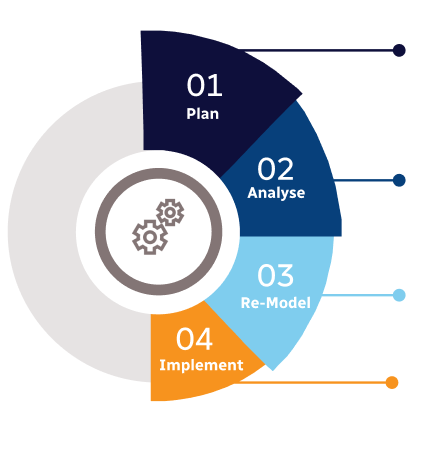
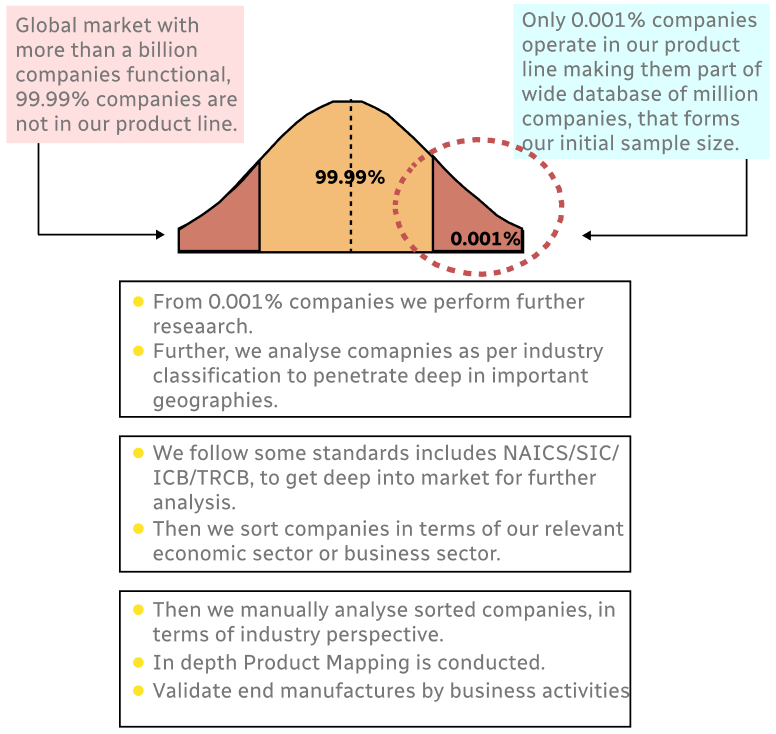
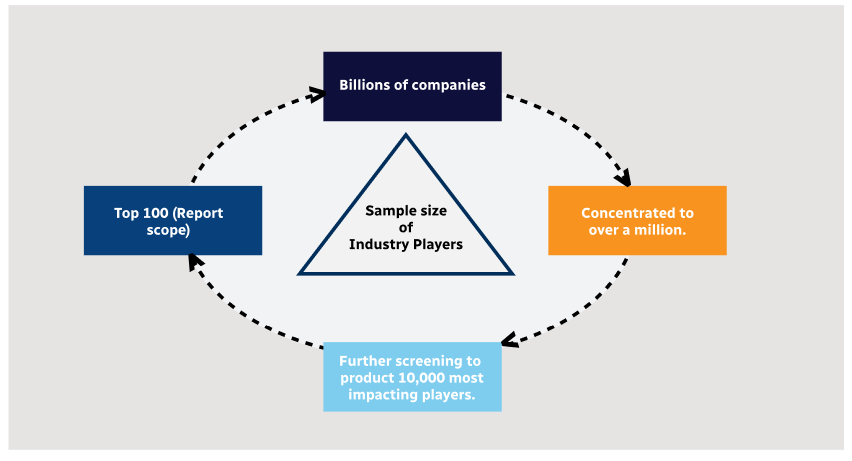
Step 1 - Identification of Relevant Samples Size from Population Database
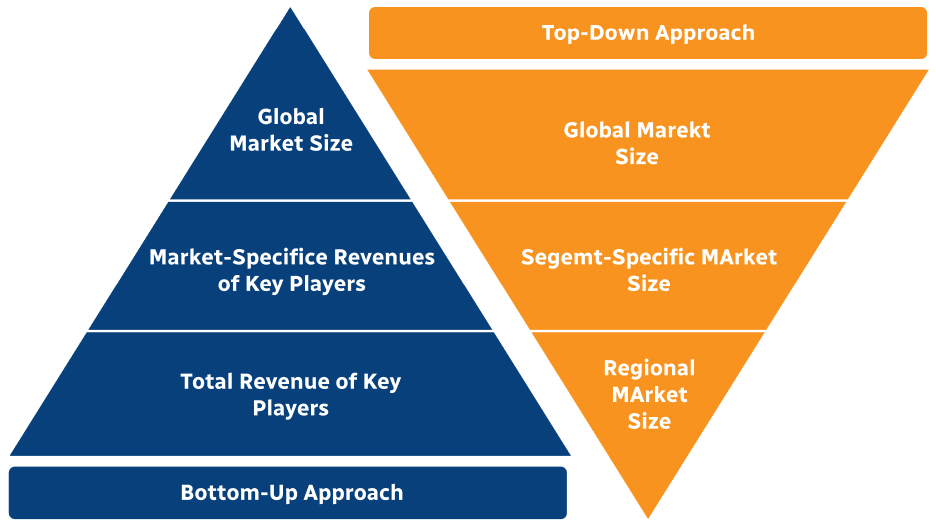
Step 2 - Approaches for Defining Global Market Size (Value, Volume* & Price*)
Note*: In applicable scenarios
Step 3 - Data Sources
Primary Research
- Web Analytics
- Survey Reports
- Research Institute
- Latest Research Reports
- Opinion Leaders
Secondary Research
- Annual Reports
- White Paper
- Latest Press Release
- Industry Association
- Paid Database
- Investor Presentations
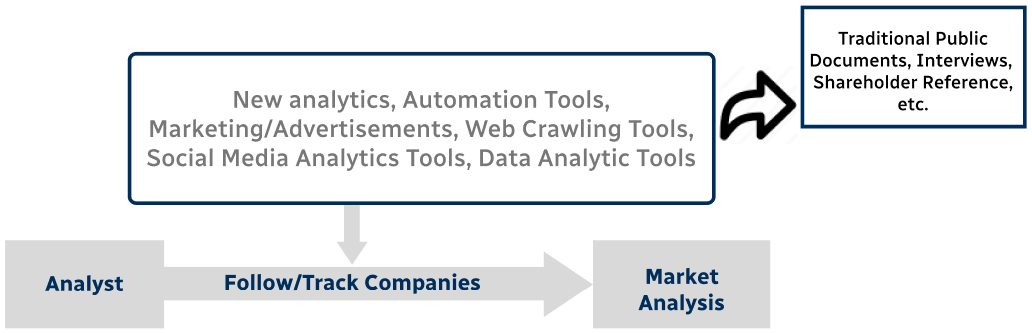
Step 4 - Data Triangulation
Involves using different sources of information in order to increase the validity of a study
These sources are likely to be stakeholders in a program - participants, other researchers, program staff, other community members, and so on.
Then we put all data in single framework & apply various statistical tools to find out the dynamic on the market.
During the analysis stage, feedback from the stakeholder groups would be compared to determine areas of agreement as well as areas of divergence