


Key Insights
The global Electronic Engine Control Units (ECUs) market is projected for substantial growth, anticipated to reach $13.23 billion by 2025, with a strong Compound Annual Growth Rate (CAGR) of 9.38%. This expansion is propelled by escalating demand for improved fuel efficiency, stringent emission standards, and the widespread adoption of Advanced Driver-Assistance Systems (ADAS). As vehicles become increasingly complex, ECUs are vital for managing powertrain, safety, and communication systems. The Passenger Cars segment is expected to lead due to high production volumes and continuous technological integration. The Commercial Vehicles segment also shows robust growth, driven by the need for optimized performance and reduced operational costs. The shift towards electric and autonomous vehicles will further amplify the importance of ECUs, fostering innovation and new market avenues.
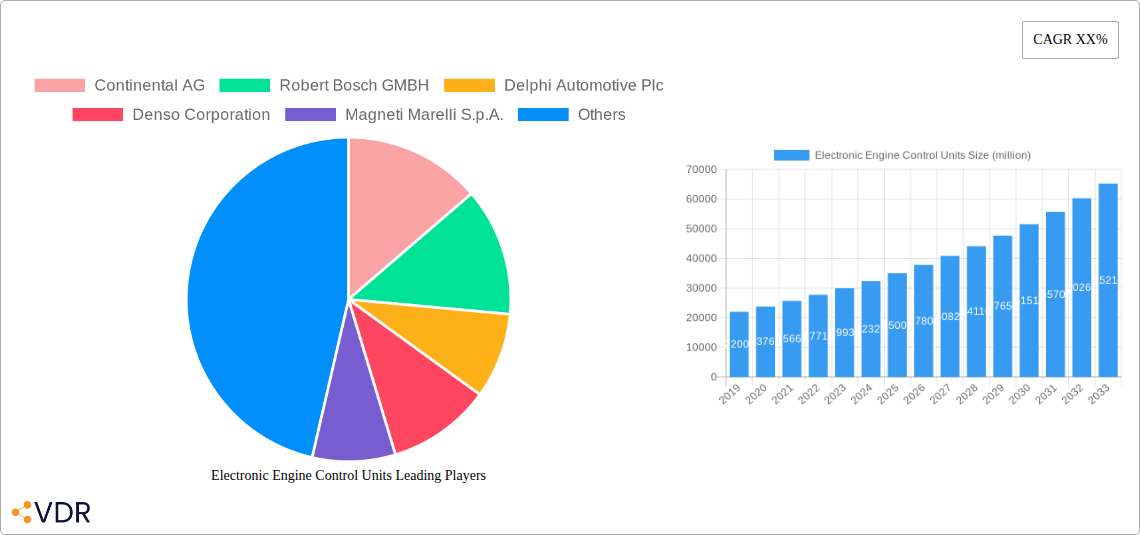
Electronic Engine Control Units Market Size (In Billion)

Key market segments include Powertrain Control Modules and Safety and Security Control Modules, which are expected to capture significant shares due to their essential roles. Growing emphasis on vehicle safety and integrated electronic systems for crash prevention and occupant protection fuels the demand for safety-focused ECUs. Challenges may arise from the high research and development costs for advanced ECUs and the complexity of integration across diverse vehicle platforms. Geographically, the Asia Pacific region, particularly China and India, is poised for the fastest growth, supported by substantial automotive production and rising consumer demand for advanced vehicles. North America and Europe, with mature automotive industries and rigorous regulations, will remain crucial markets. Leading companies like Robert Bosch GMBH, Continental AG, and Denso Corporation are making significant R&D investments to maintain their competitive edge in this dynamic sector. The base year for this analysis is 2025.
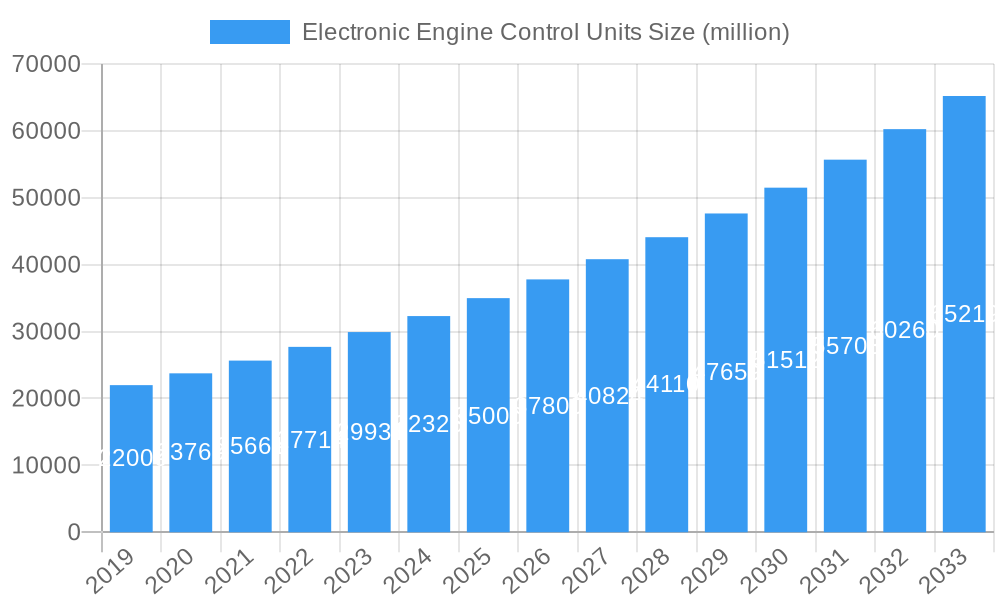
Electronic Engine Control Units Company Market Share
Electronic Engine Control Units (ECUs) Market: Comprehensive Analysis and Future Outlook (2019-2033)
This in-depth market research report offers a definitive analysis of the global Electronic Engine Control Units (ECUs) market, covering historical trends, current dynamics, and future projections. With a focus on automotive applications, this report provides critical insights for industry stakeholders, including manufacturers, suppliers, investors, and automotive OEMs. The study meticulously examines market segmentation, regional landscapes, technological advancements, and competitive strategies, presenting a holistic view of this vital automotive component market.
Electronic Engine Control Units Market Dynamics & Structure
The Electronic Engine Control Units (ECUs) market exhibits a moderate to high concentration, with leading global players like Robert Bosch GMBH, Continental AG, Delphi Automotive Plc, and Denso Corporation holding significant market shares. Technological innovation is a primary driver, fueled by the increasing demand for fuel efficiency, stringent emission regulations, and the integration of advanced driver-assistance systems (ADAS). The regulatory framework, particularly emissions standards like Euro 7 and EPA regulations, compels automakers to adopt more sophisticated and precise ECUs. Competitive product substitutes are limited within core engine control but are emerging in the form of integrated domain controllers and central computing architectures, particularly within the child market of advanced automotive electronics. End-user demographics are shifting towards younger consumers who prioritize connectivity and advanced features, driving the demand for sophisticated Communication and Navigation Control Modules and Body Control Modules. Mergers and acquisitions (M&A) activity, while present, is often focused on strategic technology acquisitions and partnerships rather than outright market consolidation, as evidenced by a moderate deal volume in the parent market of automotive electronics.
- Market Concentration: Dominated by a few key global suppliers with established expertise in automotive electronics.
- Innovation Drivers: Fuel efficiency, emissions compliance, ADAS integration, vehicle electrification, and connectivity demands.
- Regulatory Framework: Evolving emissions standards and safety mandates are key influencers.
- Competitive Landscape: Competition from integrated computing solutions and increasing software-defined vehicle architectures.
- End-User Demographics: Growing demand for smart features and personalized driving experiences.
- M&A Trends: Strategic acquisitions of specialized technology firms and joint ventures for R&D.
Electronic Engine Control Units Growth Trends & Insights
The global Electronic Engine Control Units (ECUs) market is poised for robust growth, projected to expand significantly from an estimated $35,500 million in 2025 to $48,200 million by 2033, exhibiting a compound annual growth rate (CAGR) of approximately 3.8% during the forecast period. This upward trajectory is underpinned by several key trends and evolving consumer behaviors. The increasing sophistication of modern vehicles, characterized by advanced engine technologies and emission control systems, directly translates into a higher demand for complex and high-performance ECUs. The transition towards electrification, while seemingly shifting focus away from traditional internal combustion engine (ICE) controls, is simultaneously driving the development of new types of ECUs for hybrid powertrains and battery management systems, contributing to the overall market expansion within the parent market.
Furthermore, the proliferation of connected car technologies and the growing adoption of autonomous driving features necessitate a greater number of interconnected and intelligent ECUs. These units are responsible for managing everything from infotainment systems and vehicle diagnostics to critical safety functions. The child market of safety and security modules, for instance, is experiencing a surge in demand due to stricter safety regulations and consumer expectations for advanced accident prevention and mitigation systems. Consumer behavior is increasingly influenced by the desire for personalized driving experiences, enhanced safety, and seamless integration of digital life into their vehicles, all of which are enabled by advanced ECU functionalities. This shift is pushing manufacturers to develop ECUs that are not only more powerful but also more adaptable and capable of over-the-air (OTA) updates, allowing for continuous improvement and feature enhancement throughout the vehicle's lifecycle. The penetration of advanced ECU features is expected to rise across both Passenger Cars and Commercial Vehicles segments, with higher adoption rates initially seen in premium passenger vehicles and gradually trickling down to mass-market segments and commercial fleets. This sustained demand, coupled with continuous innovation, paints a promising picture for the ECU market's sustained expansion.
Dominant Regions, Countries, or Segments in Electronic Engine Control Units
The Passenger Cars segment, within the Application category, is the dominant force driving growth in the global Electronic Engine Control Units (ECUs) market. This segment is expected to continue its leadership throughout the forecast period, significantly contributing to the overall market value. The dominance of passenger cars is a multifactorial phenomenon, deeply intertwined with global economic policies, evolving consumer preferences, and the automotive industry's relentless pursuit of technological advancement.
In terms of regions, Asia Pacific stands out as the largest and fastest-growing market for ECUs. This region's supremacy is attributed to its status as a global automotive manufacturing hub, with countries like China, Japan, and South Korea leading in both production and consumption of vehicles. Favorable government policies promoting automotive manufacturing, coupled with a burgeoning middle class and increasing disposable incomes, fuel a high demand for new vehicles equipped with advanced ECU functionalities. The rapid adoption of electric vehicles (EVs) and hybrid electric vehicles (HEVs) in countries like China also significantly contributes to ECU market growth, as these vehicles require sophisticated control systems for battery management, motor control, and power distribution.
Within the Types of ECUs, the Powertrain Control Module (PCM) remains a cornerstone of the market due to its critical role in engine performance, fuel efficiency, and emissions control. However, the Safety and Security Control Module is experiencing exceptionally high growth rates. This surge is driven by increasingly stringent global safety regulations, such as mandatory advanced emergency braking systems and lane-keeping assist features, and a growing consumer awareness and demand for enhanced vehicle safety. The increasing complexity of modern vehicle architectures, integrating various electronic systems, also boosts the demand for sophisticated Body Control Modules (BCMs) responsible for managing a wide array of vehicle functions, from lighting and climate control to power windows and door locks. The Communication and Navigation Control Module also plays a pivotal role, fueled by the consumer's desire for connected car experiences, advanced infotainment systems, and seamless integration with personal devices.
- Dominant Application Segment: Passenger Cars, driven by high production volumes and feature-rich vehicle offerings.
- Leading Regional Market: Asia Pacific, owing to its robust automotive manufacturing base and increasing consumer demand.
- Key Type Segments: Powertrain Control Module (PCM) for core engine management, and rapidly growing Safety and Security Control Modules and Body Control Modules.
- Growth Drivers in Asia Pacific: Strong economic growth, supportive government policies, and high EV adoption rates.
- Influence of Safety Regulations: Mandatory safety features significantly propel the demand for Safety and Security Control Modules.
Electronic Engine Control Units Product Landscape
The ECU product landscape is characterized by increasing integration, miniaturization, and enhanced processing power. Manufacturers are developing highly specialized ECUs that manage intricate powertrain functions, optimize fuel injection and ignition timing for maximum efficiency and minimal emissions, and integrate sophisticated diagnostic capabilities. Innovations focus on leveraging advanced microcontrollers and real-time operating systems (RTOS) to enable faster response times and more complex algorithms. The trend towards domain controllers and centralized computing architectures is also shaping the product landscape, leading to the consolidation of multiple ECU functions into fewer, more powerful units. This evolution facilitates improved vehicle performance, enhanced safety features, and greater flexibility for software updates and feature additions, setting new benchmarks for automotive electronics.
Key Drivers, Barriers & Challenges in Electronic Engine Control Units
Key Drivers:
- Stringent Emissions Regulations: Global mandates for reduced CO2 and NOx emissions necessitate precise engine control, driving ECU advancements.
- Demand for Fuel Efficiency: Consumers and fleet operators seek vehicles with improved fuel economy, pushing for more optimized engine management.
- Advancements in Automotive Technology: The integration of ADAS, connectivity, and infotainment systems requires sophisticated ECU capabilities.
- Growth in Electric and Hybrid Vehicles: The transition to electrified powertrains introduces new types of ECUs for battery management and motor control.
- Increasing Vehicle Electrification: The rising global adoption of EVs and HEVs is creating new opportunities for specialized ECUs.
Barriers & Challenges:
- Supply Chain Disruptions: Global semiconductor shortages and logistical challenges continue to pose significant risks to production volumes.
- Increasing Development Costs: The complexity of advanced ECUs leads to higher research, development, and validation expenses.
- Cybersecurity Threats: The interconnected nature of modern vehicles makes ECUs vulnerable to cyberattacks, requiring robust security measures.
- Software Complexity and Validation: Managing and validating increasingly complex ECU software is a significant challenge for automakers and suppliers.
- Competition from Alternative Architectures: The emergence of centralized computing and domain controllers could disrupt traditional ECU market structures.
- Regulatory Hurdles: Navigating diverse and evolving safety and emissions standards across different global markets adds complexity.
Emerging Opportunities in Electronic Engine Control Units
Emerging opportunities in the Electronic Engine Control Units (ECUs) market lie in the burgeoning demand for software-defined vehicles, where ECUs act as central hubs for over-the-air (OTA) updates and feature customization. The rapid growth of the electric vehicle (EV) sector presents a significant opportunity, with specialized ECUs for battery management systems (BMS), thermal management, and power electronics becoming critical. The increasing adoption of Vehicle-to-Everything (V2X) communication technologies opens avenues for ECUs that facilitate seamless data exchange for enhanced safety and traffic management. Furthermore, the aftermarket sector for performance tuning and advanced feature retrofitting is a less saturated but growing area for specialized ECU solutions.
Growth Accelerators in the Electronic Engine Control Units Industry
Several catalysts are accelerating the long-term growth of the Electronic Engine Control Units (ECUs) industry. Technological breakthroughs in artificial intelligence (AI) and machine learning (ML) are enabling more predictive and adaptive engine control, optimizing performance and efficiency beyond traditional programming. Strategic partnerships between semiconductor manufacturers, software developers, and automotive OEMs are crucial for co-creating advanced ECU solutions tailored to future vehicle architectures. Market expansion strategies, particularly focusing on emerging economies with rapidly growing automotive sectors, present significant growth potential. The continuous drive for vehicle autonomy and advanced driver-assistance systems (ADAS) inherently requires more powerful and interconnected ECUs, acting as a fundamental growth driver.
Key Players Shaping the Electronic Engine Control Units Market
- Continental AG
- Robert Bosch GMBH
- Delphi Automotive Plc
- Denso Corporation
- Magneti Marelli S.p.A.
- Mitsubishi Electric Corporation
- Hitachi Automotive
- Joyson Safety Systems
- ZF Friedrichshafen AG
- Autoliv
Notable Milestones in Electronic Engine Control Units Sector
- 2019: Increased focus on software-defined vehicles and the development of centralized ECUs.
- 2020: Significant impact of global semiconductor shortages on ECU production and supply chains.
- 2021: Growing emphasis on cybersecurity measures for ECUs due to rising connectivity.
- 2022: Accelerated development of ECUs for electric vehicle powertrains and battery management.
- 2023: Advancement of AI and ML integration within ECUs for optimized performance and predictive maintenance.
- 2024: Increased adoption of domain controllers and integrated electronic architectures.
In-Depth Electronic Engine Control Units Market Outlook
The future of the Electronic Engine Control Units (ECUs) market is exceptionally promising, driven by the inexorable march of automotive innovation. The increasing integration of advanced computing power, the ongoing electrification of powertrains, and the pervasive trend towards connected and autonomous vehicles will continue to fuel demand for sophisticated ECUs. Opportunities abound in developing highly integrated domain controllers that consolidate multiple functionalities, as well as specialized ECUs for electric vehicle components and advanced driver-assistance systems. Strategic collaborations and a sharp focus on software development, cybersecurity, and over-the-air update capabilities will be paramount for market players to thrive and capture future market share.
Electronic Engine Control Units Segmentation
-
1. Application
- 1.1. Passenger Cars
- 1.2. Commercial Vehicles
-
2. Types
- 2.1. Powertrain Control Module
- 2.2. Safy and Security Control Module
- 2.3. Communication and Navigation Control Module
- 2.4. Body Control Module
- 2.5. Others
Electronic Engine Control Units Segmentation By Geography
-
1. North America
- 1.1. United States
- 1.2. Canada
- 1.3. Mexico
-
2. South America
- 2.1. Brazil
- 2.2. Argentina
- 2.3. Rest of South America
-
3. Europe
- 3.1. United Kingdom
- 3.2. Germany
- 3.3. France
- 3.4. Italy
- 3.5. Spain
- 3.6. Russia
- 3.7. Benelux
- 3.8. Nordics
- 3.9. Rest of Europe
-
4. Middle East & Africa
- 4.1. Turkey
- 4.2. Israel
- 4.3. GCC
- 4.4. North Africa
- 4.5. South Africa
- 4.6. Rest of Middle East & Africa
-
5. Asia Pacific
- 5.1. China
- 5.2. India
- 5.3. Japan
- 5.4. South Korea
- 5.5. ASEAN
- 5.6. Oceania
- 5.7. Rest of Asia Pacific
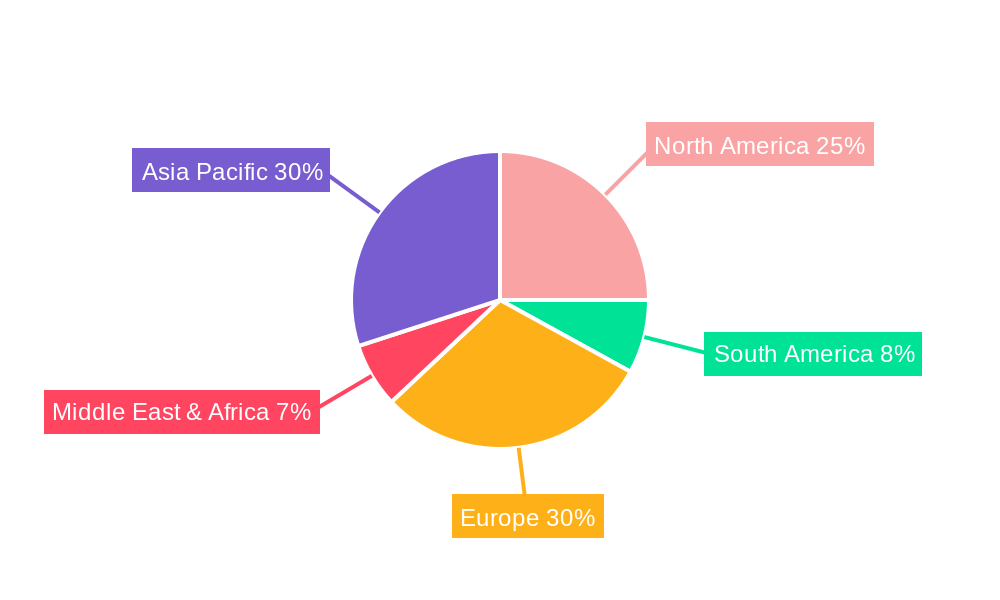
Electronic Engine Control Units Regional Market Share
Geographic Coverage of Electronic Engine Control Units
Electronic Engine Control Units REPORT HIGHLIGHTS
| Aspects | Details |
|---|---|
| Study Period | 2020-2034 |
| Base Year | 2025 |
| Estimated Year | 2026 |
| Forecast Period | 2026-2034 |
| Historical Period | 2020-2025 |
| Growth Rate | CAGR of 9.38% from 2020-2034 |
| Segmentation |
|
Table of Contents
- 1. Introduction
- 1.1. Research Scope
- 1.2. Market Segmentation
- 1.3. Research Methodology
- 1.4. Definitions and Assumptions
- 2. Executive Summary
- 2.1. Introduction
- 3. Market Dynamics
- 3.1. Introduction
- 3.2. Market Drivers
- 3.3. Market Restrains
- 3.4. Market Trends
- 4. Market Factor Analysis
- 4.1. Porters Five Forces
- 4.2. Supply/Value Chain
- 4.3. PESTEL analysis
- 4.4. Market Entropy
- 4.5. Patent/Trademark Analysis
- 5. Global Electronic Engine Control Units Analysis, Insights and Forecast, 2020-2032
- 5.1. Market Analysis, Insights and Forecast - by Application
- 5.1.1. Passenger Cars
- 5.1.2. Commercial Vehicles
- 5.2. Market Analysis, Insights and Forecast - by Types
- 5.2.1. Powertrain Control Module
- 5.2.2. Safy and Security Control Module
- 5.2.3. Communication and Navigation Control Module
- 5.2.4. Body Control Module
- 5.2.5. Others
- 5.3. Market Analysis, Insights and Forecast - by Region
- 5.3.1. North America
- 5.3.2. South America
- 5.3.3. Europe
- 5.3.4. Middle East & Africa
- 5.3.5. Asia Pacific
- 5.1. Market Analysis, Insights and Forecast - by Application
- 6. North America Electronic Engine Control Units Analysis, Insights and Forecast, 2020-2032
- 6.1. Market Analysis, Insights and Forecast - by Application
- 6.1.1. Passenger Cars
- 6.1.2. Commercial Vehicles
- 6.2. Market Analysis, Insights and Forecast - by Types
- 6.2.1. Powertrain Control Module
- 6.2.2. Safy and Security Control Module
- 6.2.3. Communication and Navigation Control Module
- 6.2.4. Body Control Module
- 6.2.5. Others
- 6.1. Market Analysis, Insights and Forecast - by Application
- 7. South America Electronic Engine Control Units Analysis, Insights and Forecast, 2020-2032
- 7.1. Market Analysis, Insights and Forecast - by Application
- 7.1.1. Passenger Cars
- 7.1.2. Commercial Vehicles
- 7.2. Market Analysis, Insights and Forecast - by Types
- 7.2.1. Powertrain Control Module
- 7.2.2. Safy and Security Control Module
- 7.2.3. Communication and Navigation Control Module
- 7.2.4. Body Control Module
- 7.2.5. Others
- 7.1. Market Analysis, Insights and Forecast - by Application
- 8. Europe Electronic Engine Control Units Analysis, Insights and Forecast, 2020-2032
- 8.1. Market Analysis, Insights and Forecast - by Application
- 8.1.1. Passenger Cars
- 8.1.2. Commercial Vehicles
- 8.2. Market Analysis, Insights and Forecast - by Types
- 8.2.1. Powertrain Control Module
- 8.2.2. Safy and Security Control Module
- 8.2.3. Communication and Navigation Control Module
- 8.2.4. Body Control Module
- 8.2.5. Others
- 8.1. Market Analysis, Insights and Forecast - by Application
- 9. Middle East & Africa Electronic Engine Control Units Analysis, Insights and Forecast, 2020-2032
- 9.1. Market Analysis, Insights and Forecast - by Application
- 9.1.1. Passenger Cars
- 9.1.2. Commercial Vehicles
- 9.2. Market Analysis, Insights and Forecast - by Types
- 9.2.1. Powertrain Control Module
- 9.2.2. Safy and Security Control Module
- 9.2.3. Communication and Navigation Control Module
- 9.2.4. Body Control Module
- 9.2.5. Others
- 9.1. Market Analysis, Insights and Forecast - by Application
- 10. Asia Pacific Electronic Engine Control Units Analysis, Insights and Forecast, 2020-2032
- 10.1. Market Analysis, Insights and Forecast - by Application
- 10.1.1. Passenger Cars
- 10.1.2. Commercial Vehicles
- 10.2. Market Analysis, Insights and Forecast - by Types
- 10.2.1. Powertrain Control Module
- 10.2.2. Safy and Security Control Module
- 10.2.3. Communication and Navigation Control Module
- 10.2.4. Body Control Module
- 10.2.5. Others
- 10.1. Market Analysis, Insights and Forecast - by Application
- 11. Competitive Analysis
- 11.1. Global Market Share Analysis 2025
- 11.2. Company Profiles
- 11.2.1 Continental AG
- 11.2.1.1. Overview
- 11.2.1.2. Products
- 11.2.1.3. SWOT Analysis
- 11.2.1.4. Recent Developments
- 11.2.1.5. Financials (Based on Availability)
- 11.2.2 Robert Bosch GMBH
- 11.2.2.1. Overview
- 11.2.2.2. Products
- 11.2.2.3. SWOT Analysis
- 11.2.2.4. Recent Developments
- 11.2.2.5. Financials (Based on Availability)
- 11.2.3 Delphi Automotive Plc
- 11.2.3.1. Overview
- 11.2.3.2. Products
- 11.2.3.3. SWOT Analysis
- 11.2.3.4. Recent Developments
- 11.2.3.5. Financials (Based on Availability)
- 11.2.4 Denso Corporation
- 11.2.4.1. Overview
- 11.2.4.2. Products
- 11.2.4.3. SWOT Analysis
- 11.2.4.4. Recent Developments
- 11.2.4.5. Financials (Based on Availability)
- 11.2.5 Magneti Marelli S.p.A.
- 11.2.5.1. Overview
- 11.2.5.2. Products
- 11.2.5.3. SWOT Analysis
- 11.2.5.4. Recent Developments
- 11.2.5.5. Financials (Based on Availability)
- 11.2.6 Mitsubishi Electric Corporation
- 11.2.6.1. Overview
- 11.2.6.2. Products
- 11.2.6.3. SWOT Analysis
- 11.2.6.4. Recent Developments
- 11.2.6.5. Financials (Based on Availability)
- 11.2.7 Hitachi Automotive
- 11.2.7.1. Overview
- 11.2.7.2. Products
- 11.2.7.3. SWOT Analysis
- 11.2.7.4. Recent Developments
- 11.2.7.5. Financials (Based on Availability)
- 11.2.8 Joyson Safety Systems
- 11.2.8.1. Overview
- 11.2.8.2. Products
- 11.2.8.3. SWOT Analysis
- 11.2.8.4. Recent Developments
- 11.2.8.5. Financials (Based on Availability)
- 11.2.9 ZF Friedrichshafen AG
- 11.2.9.1. Overview
- 11.2.9.2. Products
- 11.2.9.3. SWOT Analysis
- 11.2.9.4. Recent Developments
- 11.2.9.5. Financials (Based on Availability)
- 11.2.10 Autoliv
- 11.2.10.1. Overview
- 11.2.10.2. Products
- 11.2.10.3. SWOT Analysis
- 11.2.10.4. Recent Developments
- 11.2.10.5. Financials (Based on Availability)
- 11.2.1 Continental AG
List of Figures
- Figure 1: Global Electronic Engine Control Units Revenue Breakdown (billion, %) by Region 2025 & 2033
- Figure 2: North America Electronic Engine Control Units Revenue (billion), by Application 2025 & 2033
- Figure 3: North America Electronic Engine Control Units Revenue Share (%), by Application 2025 & 2033
- Figure 4: North America Electronic Engine Control Units Revenue (billion), by Types 2025 & 2033
- Figure 5: North America Electronic Engine Control Units Revenue Share (%), by Types 2025 & 2033
- Figure 6: North America Electronic Engine Control Units Revenue (billion), by Country 2025 & 2033
- Figure 7: North America Electronic Engine Control Units Revenue Share (%), by Country 2025 & 2033
- Figure 8: South America Electronic Engine Control Units Revenue (billion), by Application 2025 & 2033
- Figure 9: South America Electronic Engine Control Units Revenue Share (%), by Application 2025 & 2033
- Figure 10: South America Electronic Engine Control Units Revenue (billion), by Types 2025 & 2033
- Figure 11: South America Electronic Engine Control Units Revenue Share (%), by Types 2025 & 2033
- Figure 12: South America Electronic Engine Control Units Revenue (billion), by Country 2025 & 2033
- Figure 13: South America Electronic Engine Control Units Revenue Share (%), by Country 2025 & 2033
- Figure 14: Europe Electronic Engine Control Units Revenue (billion), by Application 2025 & 2033
- Figure 15: Europe Electronic Engine Control Units Revenue Share (%), by Application 2025 & 2033
- Figure 16: Europe Electronic Engine Control Units Revenue (billion), by Types 2025 & 2033
- Figure 17: Europe Electronic Engine Control Units Revenue Share (%), by Types 2025 & 2033
- Figure 18: Europe Electronic Engine Control Units Revenue (billion), by Country 2025 & 2033
- Figure 19: Europe Electronic Engine Control Units Revenue Share (%), by Country 2025 & 2033
- Figure 20: Middle East & Africa Electronic Engine Control Units Revenue (billion), by Application 2025 & 2033
- Figure 21: Middle East & Africa Electronic Engine Control Units Revenue Share (%), by Application 2025 & 2033
- Figure 22: Middle East & Africa Electronic Engine Control Units Revenue (billion), by Types 2025 & 2033
- Figure 23: Middle East & Africa Electronic Engine Control Units Revenue Share (%), by Types 2025 & 2033
- Figure 24: Middle East & Africa Electronic Engine Control Units Revenue (billion), by Country 2025 & 2033
- Figure 25: Middle East & Africa Electronic Engine Control Units Revenue Share (%), by Country 2025 & 2033
- Figure 26: Asia Pacific Electronic Engine Control Units Revenue (billion), by Application 2025 & 2033
- Figure 27: Asia Pacific Electronic Engine Control Units Revenue Share (%), by Application 2025 & 2033
- Figure 28: Asia Pacific Electronic Engine Control Units Revenue (billion), by Types 2025 & 2033
- Figure 29: Asia Pacific Electronic Engine Control Units Revenue Share (%), by Types 2025 & 2033
- Figure 30: Asia Pacific Electronic Engine Control Units Revenue (billion), by Country 2025 & 2033
- Figure 31: Asia Pacific Electronic Engine Control Units Revenue Share (%), by Country 2025 & 2033
List of Tables
- Table 1: Global Electronic Engine Control Units Revenue billion Forecast, by Application 2020 & 2033
- Table 2: Global Electronic Engine Control Units Revenue billion Forecast, by Types 2020 & 2033
- Table 3: Global Electronic Engine Control Units Revenue billion Forecast, by Region 2020 & 2033
- Table 4: Global Electronic Engine Control Units Revenue billion Forecast, by Application 2020 & 2033
- Table 5: Global Electronic Engine Control Units Revenue billion Forecast, by Types 2020 & 2033
- Table 6: Global Electronic Engine Control Units Revenue billion Forecast, by Country 2020 & 2033
- Table 7: United States Electronic Engine Control Units Revenue (billion) Forecast, by Application 2020 & 2033
- Table 8: Canada Electronic Engine Control Units Revenue (billion) Forecast, by Application 2020 & 2033
- Table 9: Mexico Electronic Engine Control Units Revenue (billion) Forecast, by Application 2020 & 2033
- Table 10: Global Electronic Engine Control Units Revenue billion Forecast, by Application 2020 & 2033
- Table 11: Global Electronic Engine Control Units Revenue billion Forecast, by Types 2020 & 2033
- Table 12: Global Electronic Engine Control Units Revenue billion Forecast, by Country 2020 & 2033
- Table 13: Brazil Electronic Engine Control Units Revenue (billion) Forecast, by Application 2020 & 2033
- Table 14: Argentina Electronic Engine Control Units Revenue (billion) Forecast, by Application 2020 & 2033
- Table 15: Rest of South America Electronic Engine Control Units Revenue (billion) Forecast, by Application 2020 & 2033
- Table 16: Global Electronic Engine Control Units Revenue billion Forecast, by Application 2020 & 2033
- Table 17: Global Electronic Engine Control Units Revenue billion Forecast, by Types 2020 & 2033
- Table 18: Global Electronic Engine Control Units Revenue billion Forecast, by Country 2020 & 2033
- Table 19: United Kingdom Electronic Engine Control Units Revenue (billion) Forecast, by Application 2020 & 2033
- Table 20: Germany Electronic Engine Control Units Revenue (billion) Forecast, by Application 2020 & 2033
- Table 21: France Electronic Engine Control Units Revenue (billion) Forecast, by Application 2020 & 2033
- Table 22: Italy Electronic Engine Control Units Revenue (billion) Forecast, by Application 2020 & 2033
- Table 23: Spain Electronic Engine Control Units Revenue (billion) Forecast, by Application 2020 & 2033
- Table 24: Russia Electronic Engine Control Units Revenue (billion) Forecast, by Application 2020 & 2033
- Table 25: Benelux Electronic Engine Control Units Revenue (billion) Forecast, by Application 2020 & 2033
- Table 26: Nordics Electronic Engine Control Units Revenue (billion) Forecast, by Application 2020 & 2033
- Table 27: Rest of Europe Electronic Engine Control Units Revenue (billion) Forecast, by Application 2020 & 2033
- Table 28: Global Electronic Engine Control Units Revenue billion Forecast, by Application 2020 & 2033
- Table 29: Global Electronic Engine Control Units Revenue billion Forecast, by Types 2020 & 2033
- Table 30: Global Electronic Engine Control Units Revenue billion Forecast, by Country 2020 & 2033
- Table 31: Turkey Electronic Engine Control Units Revenue (billion) Forecast, by Application 2020 & 2033
- Table 32: Israel Electronic Engine Control Units Revenue (billion) Forecast, by Application 2020 & 2033
- Table 33: GCC Electronic Engine Control Units Revenue (billion) Forecast, by Application 2020 & 2033
- Table 34: North Africa Electronic Engine Control Units Revenue (billion) Forecast, by Application 2020 & 2033
- Table 35: South Africa Electronic Engine Control Units Revenue (billion) Forecast, by Application 2020 & 2033
- Table 36: Rest of Middle East & Africa Electronic Engine Control Units Revenue (billion) Forecast, by Application 2020 & 2033
- Table 37: Global Electronic Engine Control Units Revenue billion Forecast, by Application 2020 & 2033
- Table 38: Global Electronic Engine Control Units Revenue billion Forecast, by Types 2020 & 2033
- Table 39: Global Electronic Engine Control Units Revenue billion Forecast, by Country 2020 & 2033
- Table 40: China Electronic Engine Control Units Revenue (billion) Forecast, by Application 2020 & 2033
- Table 41: India Electronic Engine Control Units Revenue (billion) Forecast, by Application 2020 & 2033
- Table 42: Japan Electronic Engine Control Units Revenue (billion) Forecast, by Application 2020 & 2033
- Table 43: South Korea Electronic Engine Control Units Revenue (billion) Forecast, by Application 2020 & 2033
- Table 44: ASEAN Electronic Engine Control Units Revenue (billion) Forecast, by Application 2020 & 2033
- Table 45: Oceania Electronic Engine Control Units Revenue (billion) Forecast, by Application 2020 & 2033
- Table 46: Rest of Asia Pacific Electronic Engine Control Units Revenue (billion) Forecast, by Application 2020 & 2033
Frequently Asked Questions
1. What is the projected Compound Annual Growth Rate (CAGR) of the Electronic Engine Control Units?
The projected CAGR is approximately 9.38%.
2. Which companies are prominent players in the Electronic Engine Control Units?
Key companies in the market include Continental AG, Robert Bosch GMBH, Delphi Automotive Plc, Denso Corporation, Magneti Marelli S.p.A., Mitsubishi Electric Corporation, Hitachi Automotive, Joyson Safety Systems, ZF Friedrichshafen AG, Autoliv.
3. What are the main segments of the Electronic Engine Control Units?
The market segments include Application, Types.
4. Can you provide details about the market size?
The market size is estimated to be USD 13.23 billion as of 2022.
5. What are some drivers contributing to market growth?
N/A
6. What are the notable trends driving market growth?
N/A
7. Are there any restraints impacting market growth?
N/A
8. Can you provide examples of recent developments in the market?
N/A
9. What pricing options are available for accessing the report?
Pricing options include single-user, multi-user, and enterprise licenses priced at USD 4900.00, USD 7350.00, and USD 9800.00 respectively.
10. Is the market size provided in terms of value or volume?
The market size is provided in terms of value, measured in billion.
11. Are there any specific market keywords associated with the report?
Yes, the market keyword associated with the report is "Electronic Engine Control Units," which aids in identifying and referencing the specific market segment covered.
12. How do I determine which pricing option suits my needs best?
The pricing options vary based on user requirements and access needs. Individual users may opt for single-user licenses, while businesses requiring broader access may choose multi-user or enterprise licenses for cost-effective access to the report.
13. Are there any additional resources or data provided in the Electronic Engine Control Units report?
While the report offers comprehensive insights, it's advisable to review the specific contents or supplementary materials provided to ascertain if additional resources or data are available.
14. How can I stay updated on further developments or reports in the Electronic Engine Control Units?
To stay informed about further developments, trends, and reports in the Electronic Engine Control Units, consider subscribing to industry newsletters, following relevant companies and organizations, or regularly checking reputable industry news sources and publications.
Methodology
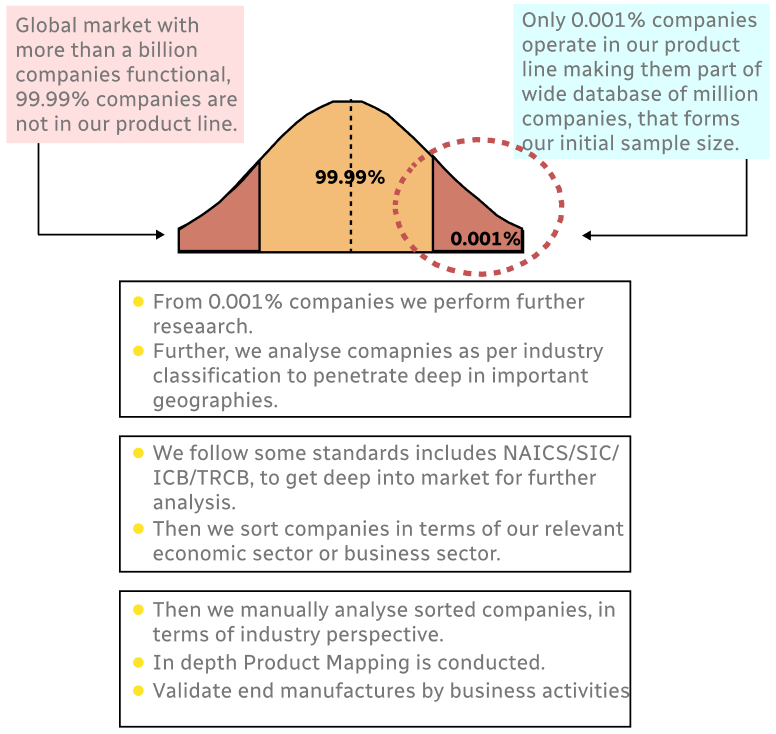
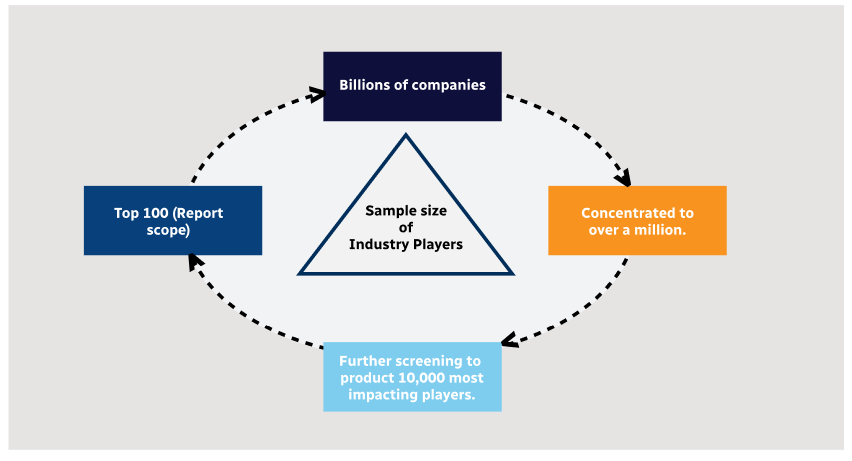
Step 1 - Identification of Relevant Samples Size from Population Database
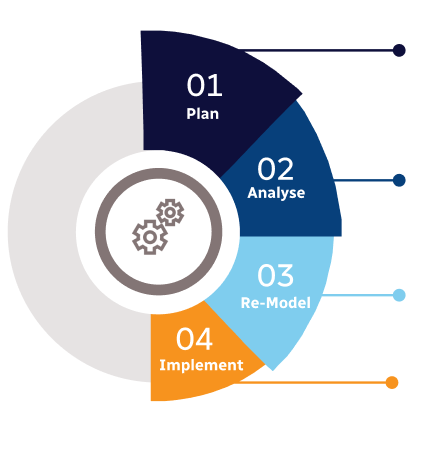
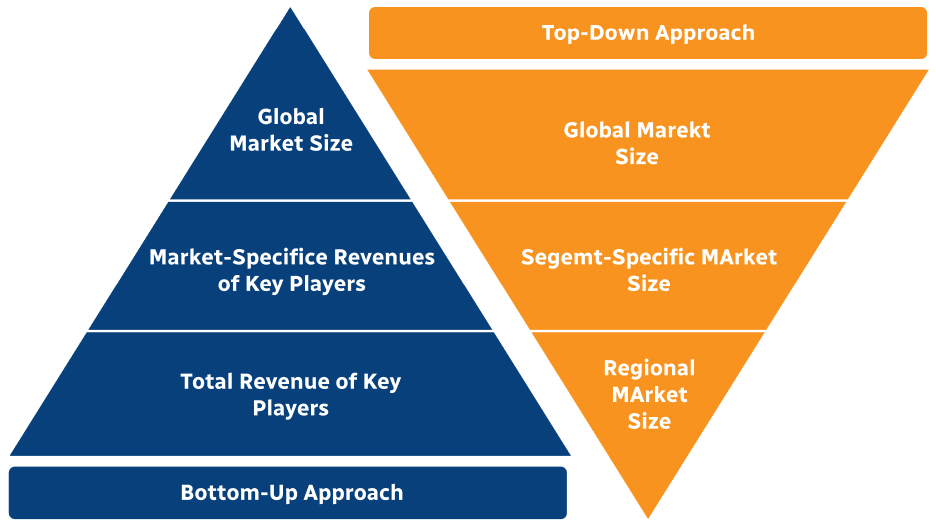
Step 2 - Approaches for Defining Global Market Size (Value, Volume* & Price*)
Note*: In applicable scenarios
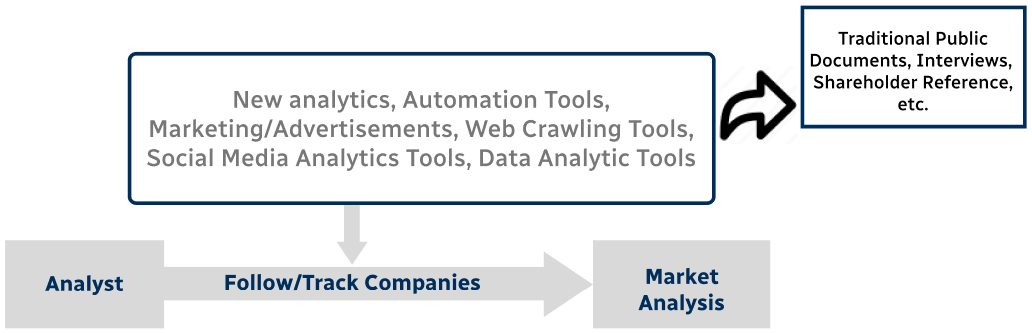
Step 3 - Data Sources
Primary Research
- Web Analytics
- Survey Reports
- Research Institute
- Latest Research Reports
- Opinion Leaders
Secondary Research
- Annual Reports
- White Paper
- Latest Press Release
- Industry Association
- Paid Database
- Investor Presentations
Step 4 - Data Triangulation
Involves using different sources of information in order to increase the validity of a study
These sources are likely to be stakeholders in a program - participants, other researchers, program staff, other community members, and so on.
Then we put all data in single framework & apply various statistical tools to find out the dynamic on the market.
During the analysis stage, feedback from the stakeholder groups would be compared to determine areas of agreement as well as areas of divergence