


Key Insights
The global electric propulsion (EP) system market is poised for significant expansion, with a projected market size of USD 689 million in 2025 and a robust Compound Annual Growth Rate (CAGR) of 24%. This rapid growth is underpinned by several key drivers, most notably the burgeoning demand for small satellite constellations and the increasing adoption of EP systems for various space missions. The miniaturization trend in satellite technology, particularly the rise of nano-satellites and microsatellites, necessitates highly efficient and precise propulsion solutions, a niche where EP systems excel. Their inherent advantages, including higher specific impulse and reduced propellant consumption compared to traditional chemical thrusters, make them ideal for long-duration missions, orbit raising, station-keeping, and even interplanetary exploration. Furthermore, the growing commercialization of space, encompassing areas like satellite internet, Earth observation, and space debris removal, is fueling investment and innovation in EP technologies, further accelerating market penetration.
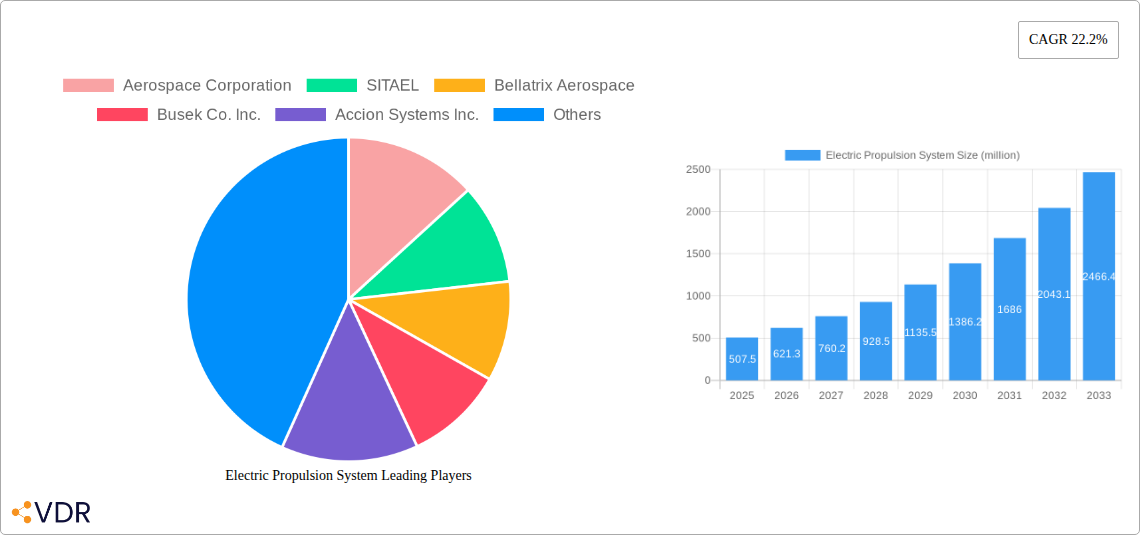
Electric Propulsion System Market Size (In Million)

This dynamic market landscape is characterized by continuous technological advancements and evolving market trends. The proliferation of Hall Effect Thrusters (HETs) and Gridded Ion Engines (GIEs) continues, driven by their proven reliability and performance. Emerging technologies such as High Efficiency Multistage Plasma Thrusters (HEMPTs) and Pulsed Plasma Thrusters (PPTs) are also gaining traction, offering enhanced capabilities and catering to specific mission requirements. The competitive environment is marked by the presence of established aerospace corporations and agile startups like Aerospace Corporation, SITAEL, Bellatrix Aerospace, Busek Co. Inc., and Accion Systems Inc., all vying for market share through innovation and strategic partnerships. While the market presents immense opportunities, potential restraints such as the high initial development costs and the need for specialized infrastructure for testing and integration need to be carefully managed to ensure sustained and inclusive growth.

Electric Propulsion System Company Market Share
Electric Propulsion System Market Report: Navigating the Future of Spaceflight
This comprehensive report delves into the rapidly evolving Electric Propulsion System market, offering unparalleled insights into market dynamics, growth trajectories, and the competitive landscape. Analyzing the period from 2019 to 2033, with a base year of 2025, this report provides crucial data and expert analysis for industry stakeholders seeking to capitalize on the burgeoning opportunities in satellite propulsion, space exploration, and next-generation aerospace technologies.
Electric Propulsion System Market Dynamics & Structure
The Electric Propulsion System market is characterized by a moderately concentrated structure, driven by continuous technological innovation and increasing demand from the expanding satellite industry. Key drivers include the inherent advantages of electric propulsion systems such as higher specific impulse and lower propellant mass compared to traditional chemical propulsion, essential for the growing constellations of small satellites. Regulatory frameworks are gradually evolving to accommodate the surge in satellite launches, influencing launch licensing and space traffic management. Competitive product substitutes, while primarily focused on chemical propulsion for certain mission profiles, are increasingly being challenged by the performance enhancements and cost-effectiveness of advanced electric thrusters. End-user demographics are shifting towards commercial satellite operators, national space agencies, and a growing number of private space exploration companies. Merger and acquisition (M&A) trends are observed as larger aerospace corporations seek to integrate advanced propulsion capabilities into their portfolios, with an estimated 5-7 significant M&A deals anticipated during the forecast period. Innovation barriers include the high research and development costs associated with developing novel propulsion technologies and the stringent qualification processes for space-rated components.
- Market Concentration: Moderately concentrated with a few key players dominating specific technology segments.
- Technological Innovation Drivers: Miniaturization, increased thrust-to-power ratios, propellant efficiency, and extended operational lifespans.
- Regulatory Frameworks: Evolving to support increased space activity, with a focus on sustainability and collision avoidance.
- Competitive Product Substitutes: Primarily chemical propulsion, but electric propulsion is gaining traction for in-orbit maneuvering and long-duration missions.
- End-User Demographics: Commercial satellite operators, government space agencies, defense contractors, and academic research institutions.
- M&A Trends: Strategic acquisitions to gain technological expertise and market share in the small satellite propulsion segment.
Electric Propulsion System Growth Trends & Insights
The Electric Propulsion System market is poised for robust growth, projected to witness a Compound Annual Growth Rate (CAGR) of approximately 14.5% from 2025 to 2033. This expansion is fueled by the insatiable demand for efficient and cost-effective propulsion solutions for the burgeoning small satellite ecosystem. The market size is estimated to reach over $5,500 million by 2033, a significant increase from an estimated $2,500 million in 2025. Adoption rates are accelerating, particularly among commercial satellite constellations requiring precise station-keeping and orbital maneuvering capabilities over extended mission durations. Technological disruptions, such as the development of advanced Hall Effect Thrusters (HETs) and Gridded Ion Engines (GIEs) with improved power processing units and novel propellant utilization techniques, are key enablers of this growth. Consumer behavior shifts are evident as satellite operators increasingly prioritize mission flexibility, reduced launch costs, and extended satellite lifespans, all of which are direct benefits offered by electric propulsion. The penetration of electric propulsion systems in the overall satellite propulsion market is expected to rise significantly, moving from an estimated 35% in 2025 to over 50% by 2033, underscoring its growing dominance.
Dominant Regions, Countries, or Segments in Electric Propulsion System
North America, particularly the United States, is currently the dominant region in the Electric Propulsion System market, driven by a strong presence of leading aerospace companies, significant government investment in space exploration and defense, and a thriving commercial space sector. The United States' commitment to ambitious space programs, including lunar missions and Mars exploration, along with the rapid growth of commercial satellite constellations for telecommunications and Earth observation, fuels the demand for advanced electric propulsion solutions. The country's robust research and development ecosystem, supported by academic institutions and government funding, fosters continuous innovation in thruster technologies.
- Application Dominance: Nano Satellite and Microsatellite: The nano satellite and microsatellite segments are the primary growth engines for electric propulsion systems. Their small size, mass constraints, and the need for precise orbital control over extended periods make electric propulsion an ideal solution.
- Market Share Contribution: Estimated to contribute over 60% to the total market revenue by 2033.
- Key Drivers: Cost-effectiveness for constellation deployment, miniaturization of propulsion components, and enabling complex mission maneuvers for smaller platforms.
- Type Dominance: Hall Effect Thruster (HET): Hall Effect Thrusters are currently the most prevalent electric propulsion technology due to their balance of thrust, efficiency, and relatively mature technology.
- Market Share within Types: Expected to hold approximately 40% of the electric propulsion system market by 2033.
- Growth Potential: Continued advancements in power processing, extended cathode life, and higher power HETs will sustain their market leadership.
- Country-Specific Drivers (USA):
- Government Investment: NASA's deep space missions and DARPA initiatives consistently push the boundaries of electric propulsion.
- Commercial Space Boom: Companies like SpaceX, Planet Labs, and others are deploying large constellations requiring efficient propulsion.
- Innovation Hubs: Universities and research centers across the country are at the forefront of propulsion technology development.
- Growth Potential in Other Regions: Europe and Asia-Pacific are rapidly emerging markets, with significant investments from national space agencies and a growing number of private satellite companies, indicating substantial future growth opportunities.
Electric Propulsion System Product Landscape
The Electric Propulsion System product landscape is characterized by continuous innovation focused on enhancing thrust, specific impulse, and operational lifespan. Companies are developing highly miniaturized and efficient Hall Effect Thrusters (HETs) suitable for CubeSats and small satellites, alongside advanced Gridded Ion Engines (GIEs) offering very high specific impulse for deep space missions. High Efficiency Multistage Plasma Thrusters (HEMPTs) are emerging as a promising technology for higher thrust applications. Pulsed Plasma Thrusters (PPTs) continue to be refined for their simplicity and reliability in specific niche applications. Product differentiation often lies in the development of novel propellant utilization, advanced power processing units, and extended component lifetimes, enabling longer and more complex missions.
Key Drivers, Barriers & Challenges in Electric Propulsion System
Key Drivers:
- Increasing demand for small satellites: The proliferation of satellite constellations for Earth observation, telecommunications, and IoT applications necessitates efficient and long-lasting propulsion systems.
- Cost-effectiveness and propellant efficiency: Electric propulsion offers significantly higher specific impulse compared to chemical propulsion, leading to reduced propellant mass and launch costs.
- Enabling complex mission profiles: The precise thrust control of electric propulsion allows for intricate orbital maneuvers, station-keeping, and de-orbiting capabilities.
- Advancements in power processing and miniaturization: Continuous technological improvements are making electric propulsion systems smaller, lighter, and more efficient.
Key Barriers & Challenges:
- Low thrust limitations: Electric propulsion systems generally produce lower thrust compared to chemical rockets, making them unsuitable for rapid orbit changes or primary launch maneuvers.
- High power requirements: Achieving higher thrust levels necessitates significant electrical power, which can be a constraint for power-limited spacecraft.
- Longer mission durations for full performance realization: The benefits of electric propulsion are maximized over longer mission durations, which may not suit all mission requirements.
- Supply chain dependencies and material sourcing: The specialized materials and components required for advanced thrusters can present supply chain vulnerabilities.
- Stringent qualification and testing requirements: Space-grade components require extensive and costly qualification processes.
Emerging Opportunities in Electric Propulsion System
Emerging opportunities in the Electric Propulsion System sector lie in the development of next-generation propulsion technologies capable of higher thrust densities and greater power efficiency, catering to the growing demand for more capable small satellites and even larger commercial spacecraft. The expansion of in-orbit servicing, assembly, and manufacturing (ISAM) operations presents a significant opportunity for highly maneuverable and precise electric propulsion systems. Furthermore, the increasing interest in lunar missions and deep space exploration by both government agencies and private entities will drive demand for advanced electric propulsion systems with extended operational lifetimes and enhanced radiation tolerance. The utilization of alternative propellants, such as iodine, offers potential cost reductions and performance improvements, creating new market avenues.
Growth Accelerators in the Electric Propulsion System Industry
The Electric Propulsion System industry is experiencing significant growth acceleration driven by several key factors. The rapid expansion of the commercial satellite market, particularly for large constellations, is a primary catalyst, demanding reliable and efficient propulsion for station-keeping and maneuverability. Strategic partnerships between established aerospace companies and innovative propulsion startups are fostering rapid technology development and market penetration. Furthermore, the increasing global emphasis on space sustainability and debris mitigation is pushing the development of electric propulsion systems for controlled de-orbiting of satellites at the end of their mission life. Government investment in next-generation space exploration, including human missions to the Moon and Mars, also serves as a significant growth accelerator, spurring the development of high-performance electric propulsion for deep-space transit.
Key Players Shaping the Electric Propulsion System Market
- Aerospace Corporation
- SITAEL
- Bellatrix Aerospace
- Busek Co. Inc.
- Accion Systems Inc.
Notable Milestones in Electric Propulsion System Sector
- 2021: Accion Systems Inc. successfully demonstrated its Tiled Hall Thruster technology, offering increased thrust density for small satellites.
- 2022: Bellatrix Aerospace completed a successful hot-fire test of its advanced Hall Effect Thruster, showcasing improved performance characteristics.
- 2023: SITAEL launched a new family of electric propulsion systems designed for the burgeoning European small satellite market.
- 2023: Busek Co. Inc. received a significant contract for its Gridded Ion Engines to support a major scientific mission.
- 2024: Aerospace Corporation continued its research into next-generation propulsion concepts, including advanced electric thruster designs.
In-Depth Electric Propulsion System Market Outlook
The outlook for the Electric Propulsion System market remains exceptionally strong, driven by sustained demand from the rapidly growing small satellite constellations and ambitious government-led space exploration initiatives. Growth accelerators such as technological breakthroughs in higher thrust and efficiency, coupled with strategic partnerships and government funding, will continue to propel the market forward. The increasing focus on space sustainability and the enabling capabilities of electric propulsion for de-orbiting also present a substantial, long-term market opportunity. Continued investment in research and development, alongside the expansion of manufacturing capabilities, will be crucial for market players to capitalize on the projected growth and solidify their positions in this dynamic sector. The market is expected to witness further consolidation as leading companies seek to integrate cutting-edge propulsion technologies.
Electric Propulsion System Segmentation
-
1. Application
- 1.1. Nano Satellite
- 1.2. Microsatellite
-
2. Types
- 2.1. Gridded Ion Engine (GIE)
- 2.2. Hall Effect Thruster (HET)
- 2.3. High Efficiency Multistage Plasma Thruster (HEMPT)
- 2.4. Pulsed Plasma Thruster (PPT)
- 2.5. Other
Electric Propulsion System Segmentation By Geography
-
1. North America
- 1.1. United States
- 1.2. Canada
- 1.3. Mexico
-
2. South America
- 2.1. Brazil
- 2.2. Argentina
- 2.3. Rest of South America
-
3. Europe
- 3.1. United Kingdom
- 3.2. Germany
- 3.3. France
- 3.4. Italy
- 3.5. Spain
- 3.6. Russia
- 3.7. Benelux
- 3.8. Nordics
- 3.9. Rest of Europe
-
4. Middle East & Africa
- 4.1. Turkey
- 4.2. Israel
- 4.3. GCC
- 4.4. North Africa
- 4.5. South Africa
- 4.6. Rest of Middle East & Africa
-
5. Asia Pacific
- 5.1. China
- 5.2. India
- 5.3. Japan
- 5.4. South Korea
- 5.5. ASEAN
- 5.6. Oceania
- 5.7. Rest of Asia Pacific
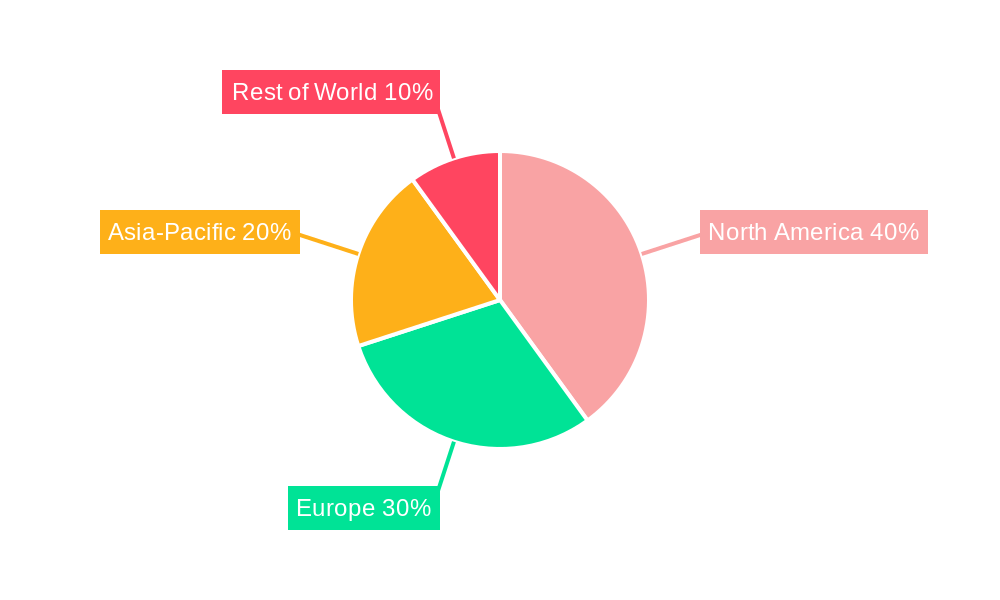
Electric Propulsion System Regional Market Share
Geographic Coverage of Electric Propulsion System
Electric Propulsion System REPORT HIGHLIGHTS
| Aspects | Details |
|---|---|
| Study Period | 2020-2034 |
| Base Year | 2025 |
| Estimated Year | 2026 |
| Forecast Period | 2026-2034 |
| Historical Period | 2020-2025 |
| Growth Rate | CAGR of 24% from 2020-2034 |
| Segmentation |
|
Table of Contents
- 1. Introduction
- 1.1. Research Scope
- 1.2. Market Segmentation
- 1.3. Research Methodology
- 1.4. Definitions and Assumptions
- 2. Executive Summary
- 2.1. Introduction
- 3. Market Dynamics
- 3.1. Introduction
- 3.2. Market Drivers
- 3.3. Market Restrains
- 3.4. Market Trends
- 4. Market Factor Analysis
- 4.1. Porters Five Forces
- 4.2. Supply/Value Chain
- 4.3. PESTEL analysis
- 4.4. Market Entropy
- 4.5. Patent/Trademark Analysis
- 5. Global Electric Propulsion System Analysis, Insights and Forecast, 2020-2032
- 5.1. Market Analysis, Insights and Forecast - by Application
- 5.1.1. Nano Satellite
- 5.1.2. Microsatellite
- 5.2. Market Analysis, Insights and Forecast - by Types
- 5.2.1. Gridded Ion Engine (GIE)
- 5.2.2. Hall Effect Thruster (HET)
- 5.2.3. High Efficiency Multistage Plasma Thruster (HEMPT)
- 5.2.4. Pulsed Plasma Thruster (PPT)
- 5.2.5. Other
- 5.3. Market Analysis, Insights and Forecast - by Region
- 5.3.1. North America
- 5.3.2. South America
- 5.3.3. Europe
- 5.3.4. Middle East & Africa
- 5.3.5. Asia Pacific
- 5.1. Market Analysis, Insights and Forecast - by Application
- 6. North America Electric Propulsion System Analysis, Insights and Forecast, 2020-2032
- 6.1. Market Analysis, Insights and Forecast - by Application
- 6.1.1. Nano Satellite
- 6.1.2. Microsatellite
- 6.2. Market Analysis, Insights and Forecast - by Types
- 6.2.1. Gridded Ion Engine (GIE)
- 6.2.2. Hall Effect Thruster (HET)
- 6.2.3. High Efficiency Multistage Plasma Thruster (HEMPT)
- 6.2.4. Pulsed Plasma Thruster (PPT)
- 6.2.5. Other
- 6.1. Market Analysis, Insights and Forecast - by Application
- 7. South America Electric Propulsion System Analysis, Insights and Forecast, 2020-2032
- 7.1. Market Analysis, Insights and Forecast - by Application
- 7.1.1. Nano Satellite
- 7.1.2. Microsatellite
- 7.2. Market Analysis, Insights and Forecast - by Types
- 7.2.1. Gridded Ion Engine (GIE)
- 7.2.2. Hall Effect Thruster (HET)
- 7.2.3. High Efficiency Multistage Plasma Thruster (HEMPT)
- 7.2.4. Pulsed Plasma Thruster (PPT)
- 7.2.5. Other
- 7.1. Market Analysis, Insights and Forecast - by Application
- 8. Europe Electric Propulsion System Analysis, Insights and Forecast, 2020-2032
- 8.1. Market Analysis, Insights and Forecast - by Application
- 8.1.1. Nano Satellite
- 8.1.2. Microsatellite
- 8.2. Market Analysis, Insights and Forecast - by Types
- 8.2.1. Gridded Ion Engine (GIE)
- 8.2.2. Hall Effect Thruster (HET)
- 8.2.3. High Efficiency Multistage Plasma Thruster (HEMPT)
- 8.2.4. Pulsed Plasma Thruster (PPT)
- 8.2.5. Other
- 8.1. Market Analysis, Insights and Forecast - by Application
- 9. Middle East & Africa Electric Propulsion System Analysis, Insights and Forecast, 2020-2032
- 9.1. Market Analysis, Insights and Forecast - by Application
- 9.1.1. Nano Satellite
- 9.1.2. Microsatellite
- 9.2. Market Analysis, Insights and Forecast - by Types
- 9.2.1. Gridded Ion Engine (GIE)
- 9.2.2. Hall Effect Thruster (HET)
- 9.2.3. High Efficiency Multistage Plasma Thruster (HEMPT)
- 9.2.4. Pulsed Plasma Thruster (PPT)
- 9.2.5. Other
- 9.1. Market Analysis, Insights and Forecast - by Application
- 10. Asia Pacific Electric Propulsion System Analysis, Insights and Forecast, 2020-2032
- 10.1. Market Analysis, Insights and Forecast - by Application
- 10.1.1. Nano Satellite
- 10.1.2. Microsatellite
- 10.2. Market Analysis, Insights and Forecast - by Types
- 10.2.1. Gridded Ion Engine (GIE)
- 10.2.2. Hall Effect Thruster (HET)
- 10.2.3. High Efficiency Multistage Plasma Thruster (HEMPT)
- 10.2.4. Pulsed Plasma Thruster (PPT)
- 10.2.5. Other
- 10.1. Market Analysis, Insights and Forecast - by Application
- 11. Competitive Analysis
- 11.1. Global Market Share Analysis 2025
- 11.2. Company Profiles
- 11.2.1 Aerospace Corporation
- 11.2.1.1. Overview
- 11.2.1.2. Products
- 11.2.1.3. SWOT Analysis
- 11.2.1.4. Recent Developments
- 11.2.1.5. Financials (Based on Availability)
- 11.2.2 SITAEL
- 11.2.2.1. Overview
- 11.2.2.2. Products
- 11.2.2.3. SWOT Analysis
- 11.2.2.4. Recent Developments
- 11.2.2.5. Financials (Based on Availability)
- 11.2.3 Bellatrix Aerospace
- 11.2.3.1. Overview
- 11.2.3.2. Products
- 11.2.3.3. SWOT Analysis
- 11.2.3.4. Recent Developments
- 11.2.3.5. Financials (Based on Availability)
- 11.2.4 Busek Co. Inc.
- 11.2.4.1. Overview
- 11.2.4.2. Products
- 11.2.4.3. SWOT Analysis
- 11.2.4.4. Recent Developments
- 11.2.4.5. Financials (Based on Availability)
- 11.2.5 Accion Systems Inc.
- 11.2.5.1. Overview
- 11.2.5.2. Products
- 11.2.5.3. SWOT Analysis
- 11.2.5.4. Recent Developments
- 11.2.5.5. Financials (Based on Availability)
- 11.2.1 Aerospace Corporation
List of Figures
- Figure 1: Global Electric Propulsion System Revenue Breakdown (undefined, %) by Region 2025 & 2033
- Figure 2: North America Electric Propulsion System Revenue (undefined), by Application 2025 & 2033
- Figure 3: North America Electric Propulsion System Revenue Share (%), by Application 2025 & 2033
- Figure 4: North America Electric Propulsion System Revenue (undefined), by Types 2025 & 2033
- Figure 5: North America Electric Propulsion System Revenue Share (%), by Types 2025 & 2033
- Figure 6: North America Electric Propulsion System Revenue (undefined), by Country 2025 & 2033
- Figure 7: North America Electric Propulsion System Revenue Share (%), by Country 2025 & 2033
- Figure 8: South America Electric Propulsion System Revenue (undefined), by Application 2025 & 2033
- Figure 9: South America Electric Propulsion System Revenue Share (%), by Application 2025 & 2033
- Figure 10: South America Electric Propulsion System Revenue (undefined), by Types 2025 & 2033
- Figure 11: South America Electric Propulsion System Revenue Share (%), by Types 2025 & 2033
- Figure 12: South America Electric Propulsion System Revenue (undefined), by Country 2025 & 2033
- Figure 13: South America Electric Propulsion System Revenue Share (%), by Country 2025 & 2033
- Figure 14: Europe Electric Propulsion System Revenue (undefined), by Application 2025 & 2033
- Figure 15: Europe Electric Propulsion System Revenue Share (%), by Application 2025 & 2033
- Figure 16: Europe Electric Propulsion System Revenue (undefined), by Types 2025 & 2033
- Figure 17: Europe Electric Propulsion System Revenue Share (%), by Types 2025 & 2033
- Figure 18: Europe Electric Propulsion System Revenue (undefined), by Country 2025 & 2033
- Figure 19: Europe Electric Propulsion System Revenue Share (%), by Country 2025 & 2033
- Figure 20: Middle East & Africa Electric Propulsion System Revenue (undefined), by Application 2025 & 2033
- Figure 21: Middle East & Africa Electric Propulsion System Revenue Share (%), by Application 2025 & 2033
- Figure 22: Middle East & Africa Electric Propulsion System Revenue (undefined), by Types 2025 & 2033
- Figure 23: Middle East & Africa Electric Propulsion System Revenue Share (%), by Types 2025 & 2033
- Figure 24: Middle East & Africa Electric Propulsion System Revenue (undefined), by Country 2025 & 2033
- Figure 25: Middle East & Africa Electric Propulsion System Revenue Share (%), by Country 2025 & 2033
- Figure 26: Asia Pacific Electric Propulsion System Revenue (undefined), by Application 2025 & 2033
- Figure 27: Asia Pacific Electric Propulsion System Revenue Share (%), by Application 2025 & 2033
- Figure 28: Asia Pacific Electric Propulsion System Revenue (undefined), by Types 2025 & 2033
- Figure 29: Asia Pacific Electric Propulsion System Revenue Share (%), by Types 2025 & 2033
- Figure 30: Asia Pacific Electric Propulsion System Revenue (undefined), by Country 2025 & 2033
- Figure 31: Asia Pacific Electric Propulsion System Revenue Share (%), by Country 2025 & 2033
List of Tables
- Table 1: Global Electric Propulsion System Revenue undefined Forecast, by Application 2020 & 2033
- Table 2: Global Electric Propulsion System Revenue undefined Forecast, by Types 2020 & 2033
- Table 3: Global Electric Propulsion System Revenue undefined Forecast, by Region 2020 & 2033
- Table 4: Global Electric Propulsion System Revenue undefined Forecast, by Application 2020 & 2033
- Table 5: Global Electric Propulsion System Revenue undefined Forecast, by Types 2020 & 2033
- Table 6: Global Electric Propulsion System Revenue undefined Forecast, by Country 2020 & 2033
- Table 7: United States Electric Propulsion System Revenue (undefined) Forecast, by Application 2020 & 2033
- Table 8: Canada Electric Propulsion System Revenue (undefined) Forecast, by Application 2020 & 2033
- Table 9: Mexico Electric Propulsion System Revenue (undefined) Forecast, by Application 2020 & 2033
- Table 10: Global Electric Propulsion System Revenue undefined Forecast, by Application 2020 & 2033
- Table 11: Global Electric Propulsion System Revenue undefined Forecast, by Types 2020 & 2033
- Table 12: Global Electric Propulsion System Revenue undefined Forecast, by Country 2020 & 2033
- Table 13: Brazil Electric Propulsion System Revenue (undefined) Forecast, by Application 2020 & 2033
- Table 14: Argentina Electric Propulsion System Revenue (undefined) Forecast, by Application 2020 & 2033
- Table 15: Rest of South America Electric Propulsion System Revenue (undefined) Forecast, by Application 2020 & 2033
- Table 16: Global Electric Propulsion System Revenue undefined Forecast, by Application 2020 & 2033
- Table 17: Global Electric Propulsion System Revenue undefined Forecast, by Types 2020 & 2033
- Table 18: Global Electric Propulsion System Revenue undefined Forecast, by Country 2020 & 2033
- Table 19: United Kingdom Electric Propulsion System Revenue (undefined) Forecast, by Application 2020 & 2033
- Table 20: Germany Electric Propulsion System Revenue (undefined) Forecast, by Application 2020 & 2033
- Table 21: France Electric Propulsion System Revenue (undefined) Forecast, by Application 2020 & 2033
- Table 22: Italy Electric Propulsion System Revenue (undefined) Forecast, by Application 2020 & 2033
- Table 23: Spain Electric Propulsion System Revenue (undefined) Forecast, by Application 2020 & 2033
- Table 24: Russia Electric Propulsion System Revenue (undefined) Forecast, by Application 2020 & 2033
- Table 25: Benelux Electric Propulsion System Revenue (undefined) Forecast, by Application 2020 & 2033
- Table 26: Nordics Electric Propulsion System Revenue (undefined) Forecast, by Application 2020 & 2033
- Table 27: Rest of Europe Electric Propulsion System Revenue (undefined) Forecast, by Application 2020 & 2033
- Table 28: Global Electric Propulsion System Revenue undefined Forecast, by Application 2020 & 2033
- Table 29: Global Electric Propulsion System Revenue undefined Forecast, by Types 2020 & 2033
- Table 30: Global Electric Propulsion System Revenue undefined Forecast, by Country 2020 & 2033
- Table 31: Turkey Electric Propulsion System Revenue (undefined) Forecast, by Application 2020 & 2033
- Table 32: Israel Electric Propulsion System Revenue (undefined) Forecast, by Application 2020 & 2033
- Table 33: GCC Electric Propulsion System Revenue (undefined) Forecast, by Application 2020 & 2033
- Table 34: North Africa Electric Propulsion System Revenue (undefined) Forecast, by Application 2020 & 2033
- Table 35: South Africa Electric Propulsion System Revenue (undefined) Forecast, by Application 2020 & 2033
- Table 36: Rest of Middle East & Africa Electric Propulsion System Revenue (undefined) Forecast, by Application 2020 & 2033
- Table 37: Global Electric Propulsion System Revenue undefined Forecast, by Application 2020 & 2033
- Table 38: Global Electric Propulsion System Revenue undefined Forecast, by Types 2020 & 2033
- Table 39: Global Electric Propulsion System Revenue undefined Forecast, by Country 2020 & 2033
- Table 40: China Electric Propulsion System Revenue (undefined) Forecast, by Application 2020 & 2033
- Table 41: India Electric Propulsion System Revenue (undefined) Forecast, by Application 2020 & 2033
- Table 42: Japan Electric Propulsion System Revenue (undefined) Forecast, by Application 2020 & 2033
- Table 43: South Korea Electric Propulsion System Revenue (undefined) Forecast, by Application 2020 & 2033
- Table 44: ASEAN Electric Propulsion System Revenue (undefined) Forecast, by Application 2020 & 2033
- Table 45: Oceania Electric Propulsion System Revenue (undefined) Forecast, by Application 2020 & 2033
- Table 46: Rest of Asia Pacific Electric Propulsion System Revenue (undefined) Forecast, by Application 2020 & 2033
Frequently Asked Questions
1. What is the projected Compound Annual Growth Rate (CAGR) of the Electric Propulsion System?
The projected CAGR is approximately 24%.
2. Which companies are prominent players in the Electric Propulsion System?
Key companies in the market include Aerospace Corporation, SITAEL, Bellatrix Aerospace, Busek Co. Inc., Accion Systems Inc..
3. What are the main segments of the Electric Propulsion System?
The market segments include Application, Types.
4. Can you provide details about the market size?
The market size is estimated to be USD XXX N/A as of 2022.
5. What are some drivers contributing to market growth?
N/A
6. What are the notable trends driving market growth?
N/A
7. Are there any restraints impacting market growth?
N/A
8. Can you provide examples of recent developments in the market?
N/A
9. What pricing options are available for accessing the report?
Pricing options include single-user, multi-user, and enterprise licenses priced at USD 3350.00, USD 5025.00, and USD 6700.00 respectively.
10. Is the market size provided in terms of value or volume?
The market size is provided in terms of value, measured in N/A.
11. Are there any specific market keywords associated with the report?
Yes, the market keyword associated with the report is "Electric Propulsion System," which aids in identifying and referencing the specific market segment covered.
12. How do I determine which pricing option suits my needs best?
The pricing options vary based on user requirements and access needs. Individual users may opt for single-user licenses, while businesses requiring broader access may choose multi-user or enterprise licenses for cost-effective access to the report.
13. Are there any additional resources or data provided in the Electric Propulsion System report?
While the report offers comprehensive insights, it's advisable to review the specific contents or supplementary materials provided to ascertain if additional resources or data are available.
14. How can I stay updated on further developments or reports in the Electric Propulsion System?
To stay informed about further developments, trends, and reports in the Electric Propulsion System, consider subscribing to industry newsletters, following relevant companies and organizations, or regularly checking reputable industry news sources and publications.
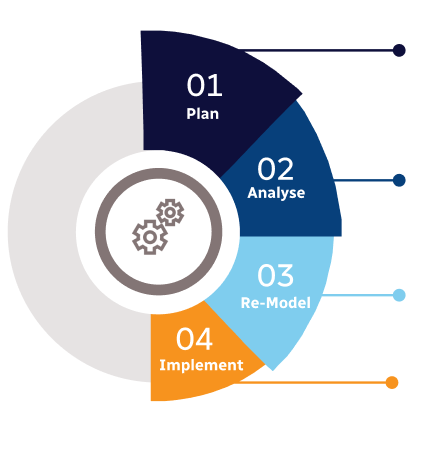
Methodology
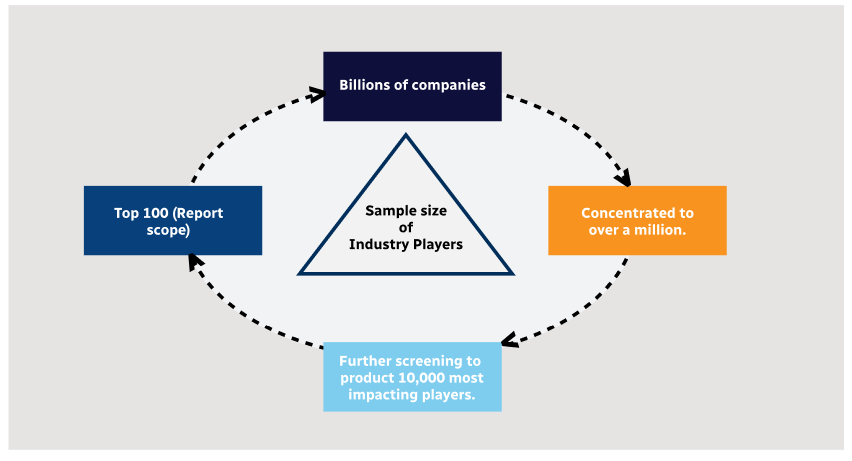
Step 1 - Identification of Relevant Samples Size from Population Database
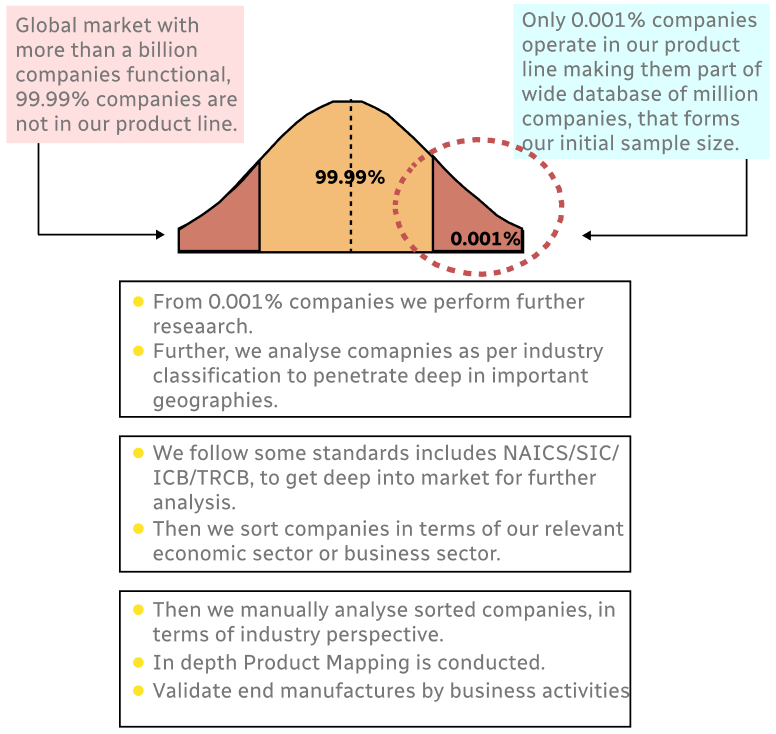
Step 2 - Approaches for Defining Global Market Size (Value, Volume* & Price*)
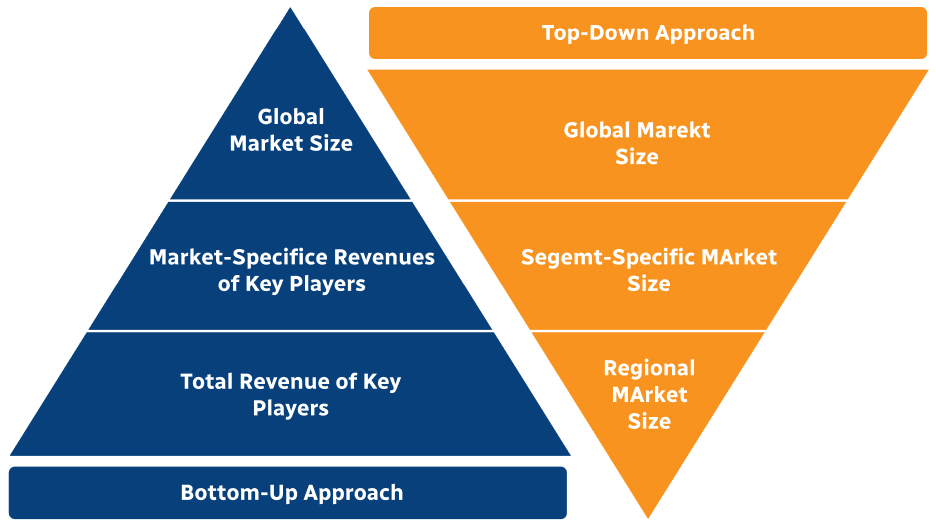
Note*: In applicable scenarios
Step 3 - Data Sources
Primary Research
- Web Analytics
- Survey Reports
- Research Institute
- Latest Research Reports
- Opinion Leaders
Secondary Research
- Annual Reports
- White Paper
- Latest Press Release
- Industry Association
- Paid Database
- Investor Presentations
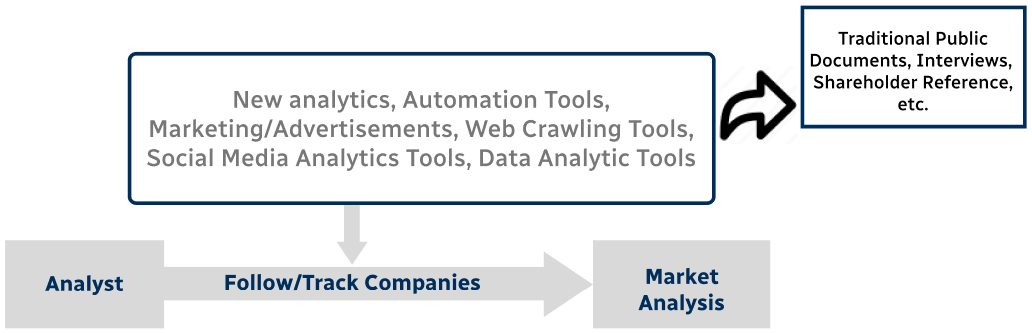
Step 4 - Data Triangulation
Involves using different sources of information in order to increase the validity of a study
These sources are likely to be stakeholders in a program - participants, other researchers, program staff, other community members, and so on.
Then we put all data in single framework & apply various statistical tools to find out the dynamic on the market.
During the analysis stage, feedback from the stakeholder groups would be compared to determine areas of agreement as well as areas of divergence