


Key Insights
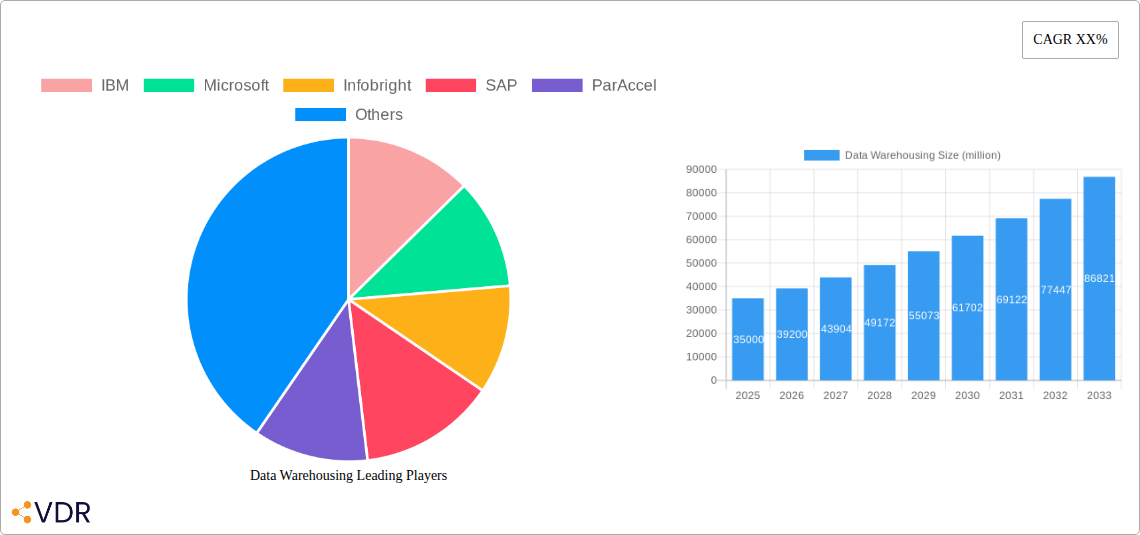
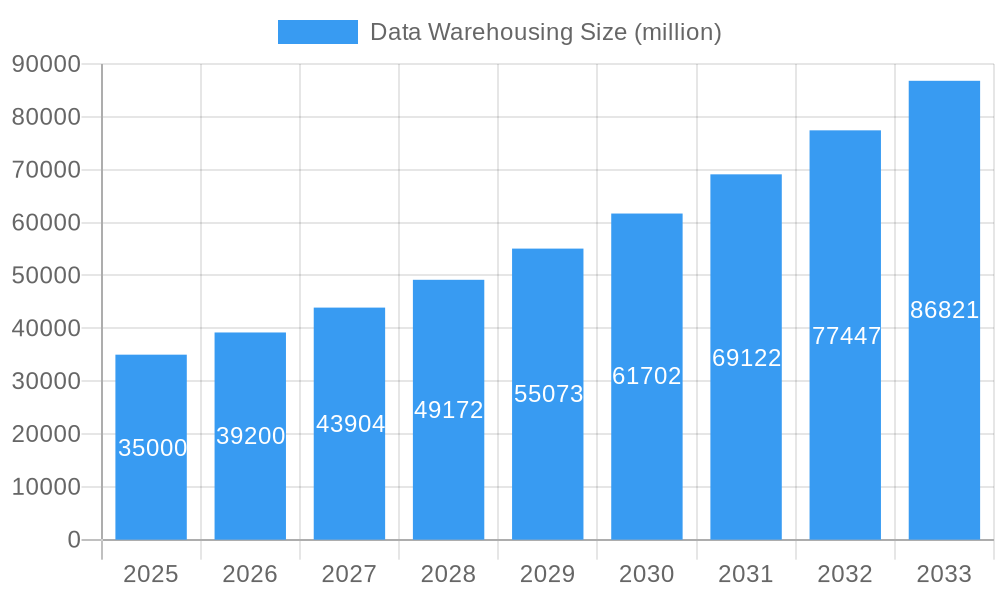
The global Data Warehousing market is poised for significant expansion, projected to reach approximately $35,000 million by 2025, with a robust Compound Annual Growth Rate (CAGR) of around 12% throughout the forecast period of 2025-2033. This remarkable growth is primarily driven by the escalating need for businesses across all sectors to leverage their vast datasets for informed decision-making and strategic planning. The increasing adoption of cloud-based data warehousing solutions, coupled with advancements in big data analytics and artificial intelligence, is further accelerating market penetration. Industries such as Banking & Financial, Healthcare, and Government are leading the charge in data warehousing adoption, recognizing its critical role in enhancing operational efficiency, improving customer experiences, and mitigating risks. The shift towards data-driven cultures is a universal trend, making sophisticated data warehousing capabilities an indispensable asset for competitive advantage.
Data Warehousing Market Size (In Billion)

The market is segmented into various applications, with Banking & Financial services expected to constitute the largest share due to the high volume of transactional data and stringent regulatory compliance requirements. The Manufacturing and Distribution Industry is also witnessing substantial growth as companies seek to optimize supply chains, manage inventory effectively, and improve production processes. On the technology front, both DW (Data Warehouse) and DBMS (Database Management System) solutions are experiencing demand, with a growing emphasis on integrated platforms that offer both storage and analytical capabilities. Key players like IBM, Microsoft, SAP, and Oracle are actively investing in research and development to offer scalable, secure, and cost-effective data warehousing solutions, including cloud-native offerings and advanced analytics tools. Despite the immense growth potential, challenges such as data security concerns, the need for skilled data professionals, and the complexity of integrating legacy systems may present some restraints. However, the overarching benefits of enhanced business intelligence and competitive agility are expected to outweigh these challenges, propelling the data warehousing market forward.
Data Warehousing Company Market Share
Comprehensive Data Warehousing Market Report: Trends, Growth, and Future Outlook (2019-2033)
This in-depth report provides a detailed analysis of the global Data Warehousing market, encompassing its current dynamics, future growth trajectory, and the key players shaping its evolution. With a study period spanning from 2019 to 2033, and a base year of 2025, this report offers critical insights for industry professionals, strategists, and investors. We delve into market segmentation, technological advancements, regional dominance, and emerging opportunities, providing a holistic view of this vital sector.
Data Warehousing Market Dynamics & Structure
The global Data Warehousing market is characterized by a moderately concentrated structure, with major players like Oracle, SAP, and Microsoft dominating innovation and market share. Technological innovation remains a primary driver, fueled by the increasing demand for advanced analytics, AI, and machine learning capabilities that leverage vast datasets. Regulatory frameworks, particularly concerning data privacy and security (e.g., GDPR, CCPA), are increasingly influencing market strategies and product development, fostering a need for compliant and secure data warehousing solutions.
- Technological Innovation Drivers: Cloud-native data warehouses, real-time analytics, and integration with big data platforms are key innovation areas. The rise of data lakes and lakehouses also presents a competitive, albeit often complementary, alternative.
- Regulatory Frameworks: Evolving data governance mandates are pushing for enhanced security features, audit trails, and transparent data lineage within data warehousing solutions.
- Competitive Product Substitutes: While traditional data warehouses remain dominant, NoSQL databases and specialized analytical databases offer alternative solutions for specific use cases, increasing competitive pressure.
- End-User Demographics: An expanding base of data-savvy professionals across industries is demanding more accessible and user-friendly data warehousing tools, shifting focus towards self-service BI and analytics.
- M&A Trends: Strategic acquisitions are prevalent, with larger players acquiring innovative startups to enhance their cloud offerings and expand their market reach. For instance, recent M&A activities in the Big Data analytics space (valued at approximately $25,000 million in 2024) highlight this trend.
Data Warehousing Growth Trends & Insights
The global Data Warehousing market is poised for substantial growth, driven by the ever-increasing volume, velocity, and variety of data generated by businesses worldwide. This report projects the market to expand significantly from an estimated market size of $35,000 million in 2025 to exceed $70,000 million by 2033, reflecting a robust Compound Annual Growth Rate (CAGR) of approximately 9.5% during the forecast period (2025-2033). The adoption of cloud-based data warehousing solutions continues to accelerate, offering scalability, flexibility, and cost-efficiency that on-premises solutions struggle to match. Organizations across all sectors are recognizing data as a critical strategic asset, leading to increased investment in robust data warehousing infrastructure to support informed decision-making, predictive analytics, and personalized customer experiences.
Technological disruptions, such as the integration of artificial intelligence (AI) and machine learning (ML) within data warehousing platforms, are further enhancing capabilities. These advancements enable automated data management, intelligent data discovery, and advanced predictive modeling, pushing the boundaries of what businesses can achieve with their data. Consumer behavior shifts, particularly the demand for hyper-personalized services and real-time insights, are compelling businesses to invest in data warehousing solutions that can process and analyze data at unprecedented speeds. The historical period (2019-2024) saw a foundational shift towards cloud adoption, with market penetration for cloud data warehousing solutions rising from 40% to an estimated 65% by 2024. This upward trend is expected to continue, with cloud solutions projected to capture over 85% of the market by 2033. The growing emphasis on data-driven cultures within organizations, coupled with the increasing complexity of data sources from IoT devices, social media, and transactional systems, will continue to fuel the demand for sophisticated and scalable data warehousing solutions. The market penetration for advanced analytics capabilities within data warehouses is also projected to witness a significant surge, growing from an estimated 55% in 2025 to over 80% by 2033, indicating a strong move towards leveraging data for strategic advantage.
Dominant Regions, Countries, or Segments in Data Warehousing
The Banking & Financial segment emerges as a dominant force in the global Data Warehousing market, driven by the critical need for robust data management to handle complex financial transactions, regulatory compliance, risk assessment, and personalized customer services. This sector's inherent reliance on vast amounts of sensitive data makes sophisticated data warehousing solutions indispensable for fraud detection, customer analytics, and operational efficiency. The estimated market share of the Banking & Financial segment in the Data Warehousing market for 2025 is projected to be around 22%, translating to a substantial market value of approximately $7,700 million. Key drivers within this segment include stringent regulatory requirements from bodies like the SEC and Basel III, which mandate extensive data logging and reporting. Furthermore, the increasing adoption of digital banking services and FinTech innovations necessitates real-time data processing and sophisticated analytical capabilities to gain competitive advantages and enhance customer experiences.
In terms of regional dominance, North America is expected to lead the Data Warehousing market, driven by its highly developed technological infrastructure, significant investment in R&D, and a strong presence of leading technology companies. The United States, in particular, with its thriving tech ecosystem and a high concentration of financial institutions, healthcare providers, and manufacturing giants, acts as a major demand hub. Economic policies promoting innovation and data-driven decision-making, coupled with substantial government initiatives in areas like defense and education, further bolster the market in this region. The market share attributed to North America in 2025 is estimated to be around 35%, with a projected market value of $12,250 million.
- Key Drivers in Banking & Financial Segment:
- Regulatory Compliance: Stringent regulations like KYC, AML, and SOX demand comprehensive data tracking and analysis, driving the adoption of advanced data warehousing.
- Risk Management: Sophisticated data models are crucial for credit risk, market risk, and operational risk assessment.
- Customer Analytics: Personalized marketing, churn prediction, and customer lifetime value analysis are powered by data warehousing.
- Fraud Detection: Real-time analysis of transactional data is vital for identifying and preventing fraudulent activities.
- Key Drivers in North America:
- Technological Advancements: High adoption rates of cloud computing, AI, and big data analytics.
- Concentration of Industries: Strong presence of key end-user industries such as finance, healthcare, and manufacturing.
- Government Initiatives: Investments in cybersecurity, smart cities, and digital transformation programs.
- Venture Capital Funding: Robust ecosystem for startups and innovation in the data analytics space.
Data Warehousing Product Landscape
The Data Warehousing product landscape is characterized by continuous innovation focused on enhancing performance, scalability, and ease of use. Cloud-native solutions, such as Snowflake and Amazon Redshift, are gaining significant traction, offering elastic scalability and pay-as-you-go models that democratize access to powerful data warehousing capabilities. Traditional vendors like Oracle and SAP are increasingly offering hybrid and multi-cloud solutions, integrating their established on-premises strengths with cloud flexibility. Key innovations include the integration of AI-powered features for data quality, automated query optimization, and predictive insights, as well as advancements in columnar storage and in-memory processing for faster query execution. The emphasis is on enabling real-time analytics, supporting complex data types, and providing seamless integration with other business intelligence and data science tools.
Key Drivers, Barriers & Challenges in Data Warehousing
The Data Warehousing market is propelled by several key drivers. The exponential growth of data generated by businesses and individuals is a primary force, necessitating robust solutions for storage and analysis. The increasing adoption of cloud computing offers scalability, flexibility, and cost-effectiveness, accelerating migration to cloud-based data warehouses. Furthermore, the growing demand for advanced analytics, AI, and machine learning capabilities to derive actionable insights from data fuels investment in sophisticated warehousing infrastructure. The need for improved regulatory compliance and data governance across various industries also plays a significant role.
However, the market faces several barriers and challenges. The complexity of data integration from disparate sources can be a significant hurdle, requiring specialized skills and resources. High implementation costs and the need for skilled data professionals can also pose challenges, particularly for small and medium-sized enterprises. Data security and privacy concerns remain paramount, with organizations needing to ensure robust protection against breaches and comply with evolving regulations. Competitive pressures from emerging data management solutions, such as data lakes and NoSQL databases, also present a challenge to traditional data warehousing models. Supply chain issues are less directly applicable but the dependency on cloud infrastructure providers can indirectly impact service availability and cost. The estimated cost of data breaches for organizations in 2024 reached an average of $4.73 million, highlighting the importance of strong data security.
Emerging Opportunities in Data Warehousing
Emerging opportunities in the Data Warehousing sector are abundant, particularly in the integration of AI and ML for intelligent automation and advanced analytics. The growth of the Internet of Things (IoT) presents a massive opportunity for data warehousing solutions capable of handling high-velocity, diverse sensor data for real-time monitoring and predictive maintenance across manufacturing and smart city applications. The expansion of the data warehousing market into emerging economies, with their rapidly growing digital footprints and increasing adoption of data-driven strategies, offers significant untapped potential. Furthermore, the demand for specialized data warehouses tailored for specific industries, such as genomics in healthcare or customer 360 views in retail, presents niche growth avenues. The increasing need for data democratization, enabling a broader range of users to access and analyze data, is also driving innovation in self-service BI and user-friendly data warehousing interfaces.
Growth Accelerators in the Data Warehousing Industry
The Data Warehousing industry's long-term growth is significantly accelerated by groundbreaking technological breakthroughs, particularly in areas like cloud-native architectures, serverless computing, and in-memory database technologies, which enhance performance and reduce operational overhead. Strategic partnerships between data warehousing vendors and cloud service providers (e.g., AWS, Azure, GCP) are crucial, enabling seamless integration and expanded service offerings. Market expansion strategies, including targeting underserved industries and geographical regions, are further fueling growth. The continuous development of AI and ML capabilities embedded within data warehousing platforms, automating data preparation, anomaly detection, and predictive modeling, acts as a potent growth catalyst. The increasing emphasis on data governance and compliance solutions within these platforms also instills confidence and drives adoption among risk-averse enterprises.
Key Players Shaping the Data Warehousing Market
- IBM
- Microsoft
- Infobright
- SAP
- ParAccel
- Actian
- EMC
- Calpont
- HP
- Teradata
- Oracle
Notable Milestones in Data Warehousing Sector
- 2019: Launch of Snowflake's cloud data platform offering, revolutionizing elastic scalability and cloud-native architecture.
- 2020: Microsoft's Azure Synapse Analytics GA, unifying data warehousing and big data analytics.
- 2021: Oracle announces major enhancements to its Autonomous Data Warehouse with AI-driven automation features.
- 2022: Google Cloud unveils BigQuery Omni, enabling data analysis across multiple clouds.
- 2023: Continued advancements in real-time data ingestion and processing capabilities across major cloud data warehouses.
- 2024: Increased focus on data governance and security features, driven by evolving regulatory landscapes.
- 2025 (Estimated): Further integration of generative AI for enhanced data exploration and insight generation.
In-Depth Data Warehousing Market Outlook
The future outlook for the Data Warehousing market is exceptionally strong, driven by the indispensable role of data in modern business operations. The continued migration to cloud-based solutions will remain a primary growth accelerator, offering unmatched scalability and cost-effectiveness. The deep integration of AI and machine learning will transform data warehouses into intelligent platforms, capable of automated insights and proactive decision-making. Expansion into emerging markets and a growing demand for industry-specific solutions will broaden the market's reach. Strategic partnerships and a focus on enhancing data security and governance will further solidify market confidence and drive sustained growth. The market is positioned for significant evolution, with data warehousing becoming even more integral to organizational success.
Data Warehousing Segmentation
-
1. Application
- 1.1. Banking & Financial
- 1.2. Government and Education
- 1.3. Healthcare
- 1.4. Hospitality Industry
- 1.5. Manufacturing and Distribution Industry
- 1.6. Telephone Industry
-
2. Types
- 2.1. DW
- 2.2. DBMS
Data Warehousing Segmentation By Geography
-
1. North America
- 1.1. United States
- 1.2. Canada
- 1.3. Mexico
-
2. South America
- 2.1. Brazil
- 2.2. Argentina
- 2.3. Rest of South America
-
3. Europe
- 3.1. United Kingdom
- 3.2. Germany
- 3.3. France
- 3.4. Italy
- 3.5. Spain
- 3.6. Russia
- 3.7. Benelux
- 3.8. Nordics
- 3.9. Rest of Europe
-
4. Middle East & Africa
- 4.1. Turkey
- 4.2. Israel
- 4.3. GCC
- 4.4. North Africa
- 4.5. South Africa
- 4.6. Rest of Middle East & Africa
-
5. Asia Pacific
- 5.1. China
- 5.2. India
- 5.3. Japan
- 5.4. South Korea
- 5.5. ASEAN
- 5.6. Oceania
- 5.7. Rest of Asia Pacific
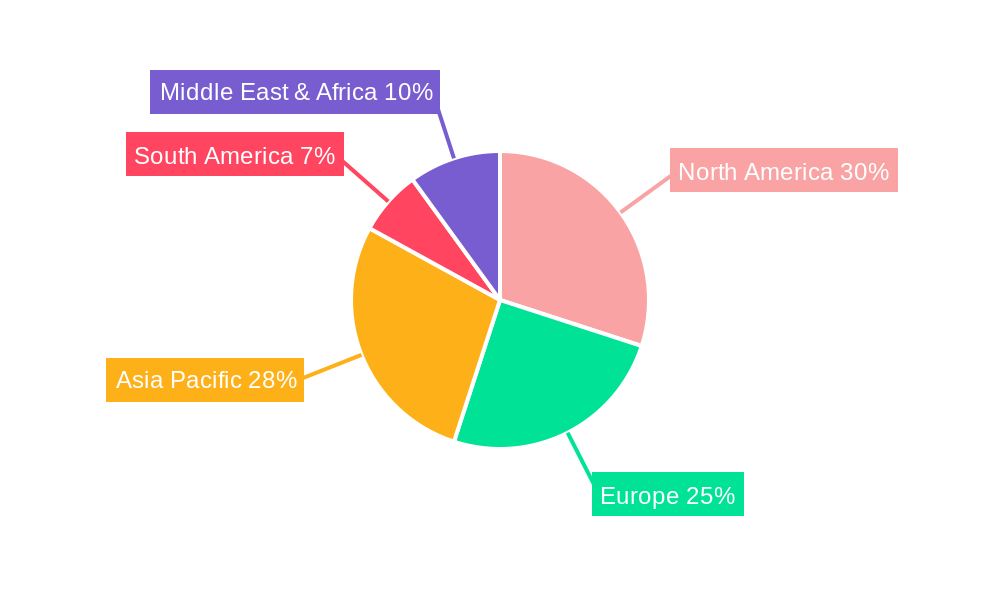
Data Warehousing Regional Market Share
Geographic Coverage of Data Warehousing
Data Warehousing REPORT HIGHLIGHTS
| Aspects | Details |
|---|---|
| Study Period | 2020-2034 |
| Base Year | 2025 |
| Estimated Year | 2026 |
| Forecast Period | 2026-2034 |
| Historical Period | 2020-2025 |
| Growth Rate | CAGR of XX% from 2020-2034 |
| Segmentation |
|
Table of Contents
- 1. Introduction
- 1.1. Research Scope
- 1.2. Market Segmentation
- 1.3. Research Methodology
- 1.4. Definitions and Assumptions
- 2. Executive Summary
- 2.1. Introduction
- 3. Market Dynamics
- 3.1. Introduction
- 3.2. Market Drivers
- 3.3. Market Restrains
- 3.4. Market Trends
- 4. Market Factor Analysis
- 4.1. Porters Five Forces
- 4.2. Supply/Value Chain
- 4.3. PESTEL analysis
- 4.4. Market Entropy
- 4.5. Patent/Trademark Analysis
- 5. Global Data Warehousing Analysis, Insights and Forecast, 2020-2032
- 5.1. Market Analysis, Insights and Forecast - by Application
- 5.1.1. Banking & Financial
- 5.1.2. Government and Education
- 5.1.3. Healthcare
- 5.1.4. Hospitality Industry
- 5.1.5. Manufacturing and Distribution Industry
- 5.1.6. Telephone Industry
- 5.2. Market Analysis, Insights and Forecast - by Types
- 5.2.1. DW
- 5.2.2. DBMS
- 5.3. Market Analysis, Insights and Forecast - by Region
- 5.3.1. North America
- 5.3.2. South America
- 5.3.3. Europe
- 5.3.4. Middle East & Africa
- 5.3.5. Asia Pacific
- 5.1. Market Analysis, Insights and Forecast - by Application
- 6. North America Data Warehousing Analysis, Insights and Forecast, 2020-2032
- 6.1. Market Analysis, Insights and Forecast - by Application
- 6.1.1. Banking & Financial
- 6.1.2. Government and Education
- 6.1.3. Healthcare
- 6.1.4. Hospitality Industry
- 6.1.5. Manufacturing and Distribution Industry
- 6.1.6. Telephone Industry
- 6.2. Market Analysis, Insights and Forecast - by Types
- 6.2.1. DW
- 6.2.2. DBMS
- 6.1. Market Analysis, Insights and Forecast - by Application
- 7. South America Data Warehousing Analysis, Insights and Forecast, 2020-2032
- 7.1. Market Analysis, Insights and Forecast - by Application
- 7.1.1. Banking & Financial
- 7.1.2. Government and Education
- 7.1.3. Healthcare
- 7.1.4. Hospitality Industry
- 7.1.5. Manufacturing and Distribution Industry
- 7.1.6. Telephone Industry
- 7.2. Market Analysis, Insights and Forecast - by Types
- 7.2.1. DW
- 7.2.2. DBMS
- 7.1. Market Analysis, Insights and Forecast - by Application
- 8. Europe Data Warehousing Analysis, Insights and Forecast, 2020-2032
- 8.1. Market Analysis, Insights and Forecast - by Application
- 8.1.1. Banking & Financial
- 8.1.2. Government and Education
- 8.1.3. Healthcare
- 8.1.4. Hospitality Industry
- 8.1.5. Manufacturing and Distribution Industry
- 8.1.6. Telephone Industry
- 8.2. Market Analysis, Insights and Forecast - by Types
- 8.2.1. DW
- 8.2.2. DBMS
- 8.1. Market Analysis, Insights and Forecast - by Application
- 9. Middle East & Africa Data Warehousing Analysis, Insights and Forecast, 2020-2032
- 9.1. Market Analysis, Insights and Forecast - by Application
- 9.1.1. Banking & Financial
- 9.1.2. Government and Education
- 9.1.3. Healthcare
- 9.1.4. Hospitality Industry
- 9.1.5. Manufacturing and Distribution Industry
- 9.1.6. Telephone Industry
- 9.2. Market Analysis, Insights and Forecast - by Types
- 9.2.1. DW
- 9.2.2. DBMS
- 9.1. Market Analysis, Insights and Forecast - by Application
- 10. Asia Pacific Data Warehousing Analysis, Insights and Forecast, 2020-2032
- 10.1. Market Analysis, Insights and Forecast - by Application
- 10.1.1. Banking & Financial
- 10.1.2. Government and Education
- 10.1.3. Healthcare
- 10.1.4. Hospitality Industry
- 10.1.5. Manufacturing and Distribution Industry
- 10.1.6. Telephone Industry
- 10.2. Market Analysis, Insights and Forecast - by Types
- 10.2.1. DW
- 10.2.2. DBMS
- 10.1. Market Analysis, Insights and Forecast - by Application
- 11. Competitive Analysis
- 11.1. Global Market Share Analysis 2025
- 11.2. Company Profiles
- 11.2.1 IBM
- 11.2.1.1. Overview
- 11.2.1.2. Products
- 11.2.1.3. SWOT Analysis
- 11.2.1.4. Recent Developments
- 11.2.1.5. Financials (Based on Availability)
- 11.2.2 Microsoft
- 11.2.2.1. Overview
- 11.2.2.2. Products
- 11.2.2.3. SWOT Analysis
- 11.2.2.4. Recent Developments
- 11.2.2.5. Financials (Based on Availability)
- 11.2.3 Infobright
- 11.2.3.1. Overview
- 11.2.3.2. Products
- 11.2.3.3. SWOT Analysis
- 11.2.3.4. Recent Developments
- 11.2.3.5. Financials (Based on Availability)
- 11.2.4 SAP
- 11.2.4.1. Overview
- 11.2.4.2. Products
- 11.2.4.3. SWOT Analysis
- 11.2.4.4. Recent Developments
- 11.2.4.5. Financials (Based on Availability)
- 11.2.5 ParAccel
- 11.2.5.1. Overview
- 11.2.5.2. Products
- 11.2.5.3. SWOT Analysis
- 11.2.5.4. Recent Developments
- 11.2.5.5. Financials (Based on Availability)
- 11.2.6 Actian
- 11.2.6.1. Overview
- 11.2.6.2. Products
- 11.2.6.3. SWOT Analysis
- 11.2.6.4. Recent Developments
- 11.2.6.5. Financials (Based on Availability)
- 11.2.7 EMC
- 11.2.7.1. Overview
- 11.2.7.2. Products
- 11.2.7.3. SWOT Analysis
- 11.2.7.4. Recent Developments
- 11.2.7.5. Financials (Based on Availability)
- 11.2.8 Calpont
- 11.2.8.1. Overview
- 11.2.8.2. Products
- 11.2.8.3. SWOT Analysis
- 11.2.8.4. Recent Developments
- 11.2.8.5. Financials (Based on Availability)
- 11.2.9 HP
- 11.2.9.1. Overview
- 11.2.9.2. Products
- 11.2.9.3. SWOT Analysis
- 11.2.9.4. Recent Developments
- 11.2.9.5. Financials (Based on Availability)
- 11.2.10 Teradata
- 11.2.10.1. Overview
- 11.2.10.2. Products
- 11.2.10.3. SWOT Analysis
- 11.2.10.4. Recent Developments
- 11.2.10.5. Financials (Based on Availability)
- 11.2.11 Oracle
- 11.2.11.1. Overview
- 11.2.11.2. Products
- 11.2.11.3. SWOT Analysis
- 11.2.11.4. Recent Developments
- 11.2.11.5. Financials (Based on Availability)
- 11.2.1 IBM
List of Figures
- Figure 1: Global Data Warehousing Revenue Breakdown (million, %) by Region 2025 & 2033
- Figure 2: North America Data Warehousing Revenue (million), by Application 2025 & 2033
- Figure 3: North America Data Warehousing Revenue Share (%), by Application 2025 & 2033
- Figure 4: North America Data Warehousing Revenue (million), by Types 2025 & 2033
- Figure 5: North America Data Warehousing Revenue Share (%), by Types 2025 & 2033
- Figure 6: North America Data Warehousing Revenue (million), by Country 2025 & 2033
- Figure 7: North America Data Warehousing Revenue Share (%), by Country 2025 & 2033
- Figure 8: South America Data Warehousing Revenue (million), by Application 2025 & 2033
- Figure 9: South America Data Warehousing Revenue Share (%), by Application 2025 & 2033
- Figure 10: South America Data Warehousing Revenue (million), by Types 2025 & 2033
- Figure 11: South America Data Warehousing Revenue Share (%), by Types 2025 & 2033
- Figure 12: South America Data Warehousing Revenue (million), by Country 2025 & 2033
- Figure 13: South America Data Warehousing Revenue Share (%), by Country 2025 & 2033
- Figure 14: Europe Data Warehousing Revenue (million), by Application 2025 & 2033
- Figure 15: Europe Data Warehousing Revenue Share (%), by Application 2025 & 2033
- Figure 16: Europe Data Warehousing Revenue (million), by Types 2025 & 2033
- Figure 17: Europe Data Warehousing Revenue Share (%), by Types 2025 & 2033
- Figure 18: Europe Data Warehousing Revenue (million), by Country 2025 & 2033
- Figure 19: Europe Data Warehousing Revenue Share (%), by Country 2025 & 2033
- Figure 20: Middle East & Africa Data Warehousing Revenue (million), by Application 2025 & 2033
- Figure 21: Middle East & Africa Data Warehousing Revenue Share (%), by Application 2025 & 2033
- Figure 22: Middle East & Africa Data Warehousing Revenue (million), by Types 2025 & 2033
- Figure 23: Middle East & Africa Data Warehousing Revenue Share (%), by Types 2025 & 2033
- Figure 24: Middle East & Africa Data Warehousing Revenue (million), by Country 2025 & 2033
- Figure 25: Middle East & Africa Data Warehousing Revenue Share (%), by Country 2025 & 2033
- Figure 26: Asia Pacific Data Warehousing Revenue (million), by Application 2025 & 2033
- Figure 27: Asia Pacific Data Warehousing Revenue Share (%), by Application 2025 & 2033
- Figure 28: Asia Pacific Data Warehousing Revenue (million), by Types 2025 & 2033
- Figure 29: Asia Pacific Data Warehousing Revenue Share (%), by Types 2025 & 2033
- Figure 30: Asia Pacific Data Warehousing Revenue (million), by Country 2025 & 2033
- Figure 31: Asia Pacific Data Warehousing Revenue Share (%), by Country 2025 & 2033
List of Tables
- Table 1: Global Data Warehousing Revenue million Forecast, by Application 2020 & 2033
- Table 2: Global Data Warehousing Revenue million Forecast, by Types 2020 & 2033
- Table 3: Global Data Warehousing Revenue million Forecast, by Region 2020 & 2033
- Table 4: Global Data Warehousing Revenue million Forecast, by Application 2020 & 2033
- Table 5: Global Data Warehousing Revenue million Forecast, by Types 2020 & 2033
- Table 6: Global Data Warehousing Revenue million Forecast, by Country 2020 & 2033
- Table 7: United States Data Warehousing Revenue (million) Forecast, by Application 2020 & 2033
- Table 8: Canada Data Warehousing Revenue (million) Forecast, by Application 2020 & 2033
- Table 9: Mexico Data Warehousing Revenue (million) Forecast, by Application 2020 & 2033
- Table 10: Global Data Warehousing Revenue million Forecast, by Application 2020 & 2033
- Table 11: Global Data Warehousing Revenue million Forecast, by Types 2020 & 2033
- Table 12: Global Data Warehousing Revenue million Forecast, by Country 2020 & 2033
- Table 13: Brazil Data Warehousing Revenue (million) Forecast, by Application 2020 & 2033
- Table 14: Argentina Data Warehousing Revenue (million) Forecast, by Application 2020 & 2033
- Table 15: Rest of South America Data Warehousing Revenue (million) Forecast, by Application 2020 & 2033
- Table 16: Global Data Warehousing Revenue million Forecast, by Application 2020 & 2033
- Table 17: Global Data Warehousing Revenue million Forecast, by Types 2020 & 2033
- Table 18: Global Data Warehousing Revenue million Forecast, by Country 2020 & 2033
- Table 19: United Kingdom Data Warehousing Revenue (million) Forecast, by Application 2020 & 2033
- Table 20: Germany Data Warehousing Revenue (million) Forecast, by Application 2020 & 2033
- Table 21: France Data Warehousing Revenue (million) Forecast, by Application 2020 & 2033
- Table 22: Italy Data Warehousing Revenue (million) Forecast, by Application 2020 & 2033
- Table 23: Spain Data Warehousing Revenue (million) Forecast, by Application 2020 & 2033
- Table 24: Russia Data Warehousing Revenue (million) Forecast, by Application 2020 & 2033
- Table 25: Benelux Data Warehousing Revenue (million) Forecast, by Application 2020 & 2033
- Table 26: Nordics Data Warehousing Revenue (million) Forecast, by Application 2020 & 2033
- Table 27: Rest of Europe Data Warehousing Revenue (million) Forecast, by Application 2020 & 2033
- Table 28: Global Data Warehousing Revenue million Forecast, by Application 2020 & 2033
- Table 29: Global Data Warehousing Revenue million Forecast, by Types 2020 & 2033
- Table 30: Global Data Warehousing Revenue million Forecast, by Country 2020 & 2033
- Table 31: Turkey Data Warehousing Revenue (million) Forecast, by Application 2020 & 2033
- Table 32: Israel Data Warehousing Revenue (million) Forecast, by Application 2020 & 2033
- Table 33: GCC Data Warehousing Revenue (million) Forecast, by Application 2020 & 2033
- Table 34: North Africa Data Warehousing Revenue (million) Forecast, by Application 2020 & 2033
- Table 35: South Africa Data Warehousing Revenue (million) Forecast, by Application 2020 & 2033
- Table 36: Rest of Middle East & Africa Data Warehousing Revenue (million) Forecast, by Application 2020 & 2033
- Table 37: Global Data Warehousing Revenue million Forecast, by Application 2020 & 2033
- Table 38: Global Data Warehousing Revenue million Forecast, by Types 2020 & 2033
- Table 39: Global Data Warehousing Revenue million Forecast, by Country 2020 & 2033
- Table 40: China Data Warehousing Revenue (million) Forecast, by Application 2020 & 2033
- Table 41: India Data Warehousing Revenue (million) Forecast, by Application 2020 & 2033
- Table 42: Japan Data Warehousing Revenue (million) Forecast, by Application 2020 & 2033
- Table 43: South Korea Data Warehousing Revenue (million) Forecast, by Application 2020 & 2033
- Table 44: ASEAN Data Warehousing Revenue (million) Forecast, by Application 2020 & 2033
- Table 45: Oceania Data Warehousing Revenue (million) Forecast, by Application 2020 & 2033
- Table 46: Rest of Asia Pacific Data Warehousing Revenue (million) Forecast, by Application 2020 & 2033
Frequently Asked Questions
1. What is the projected Compound Annual Growth Rate (CAGR) of the Data Warehousing?
The projected CAGR is approximately XX%.
2. Which companies are prominent players in the Data Warehousing?
Key companies in the market include IBM, Microsoft, Infobright, SAP, ParAccel, Actian, EMC, Calpont, HP, Teradata, Oracle.
3. What are the main segments of the Data Warehousing?
The market segments include Application, Types.
4. Can you provide details about the market size?
The market size is estimated to be USD XXX million as of 2022.
5. What are some drivers contributing to market growth?
N/A
6. What are the notable trends driving market growth?
N/A
7. Are there any restraints impacting market growth?
N/A
8. Can you provide examples of recent developments in the market?
N/A
9. What pricing options are available for accessing the report?
Pricing options include single-user, multi-user, and enterprise licenses priced at USD 3350.00, USD 5025.00, and USD 6700.00 respectively.
10. Is the market size provided in terms of value or volume?
The market size is provided in terms of value, measured in million.
11. Are there any specific market keywords associated with the report?
Yes, the market keyword associated with the report is "Data Warehousing," which aids in identifying and referencing the specific market segment covered.
12. How do I determine which pricing option suits my needs best?
The pricing options vary based on user requirements and access needs. Individual users may opt for single-user licenses, while businesses requiring broader access may choose multi-user or enterprise licenses for cost-effective access to the report.
13. Are there any additional resources or data provided in the Data Warehousing report?
While the report offers comprehensive insights, it's advisable to review the specific contents or supplementary materials provided to ascertain if additional resources or data are available.
14. How can I stay updated on further developments or reports in the Data Warehousing?
To stay informed about further developments, trends, and reports in the Data Warehousing, consider subscribing to industry newsletters, following relevant companies and organizations, or regularly checking reputable industry news sources and publications.
Methodology
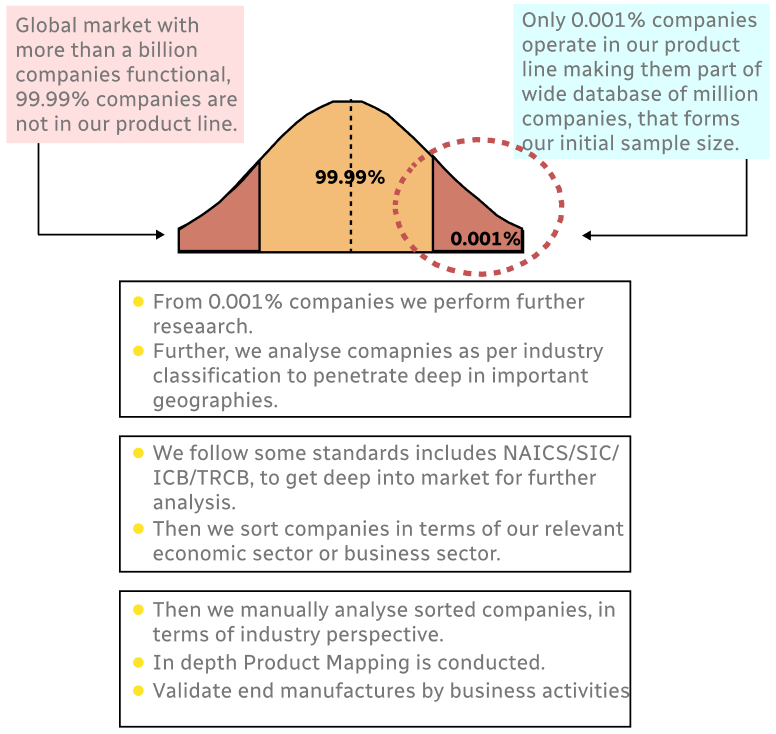
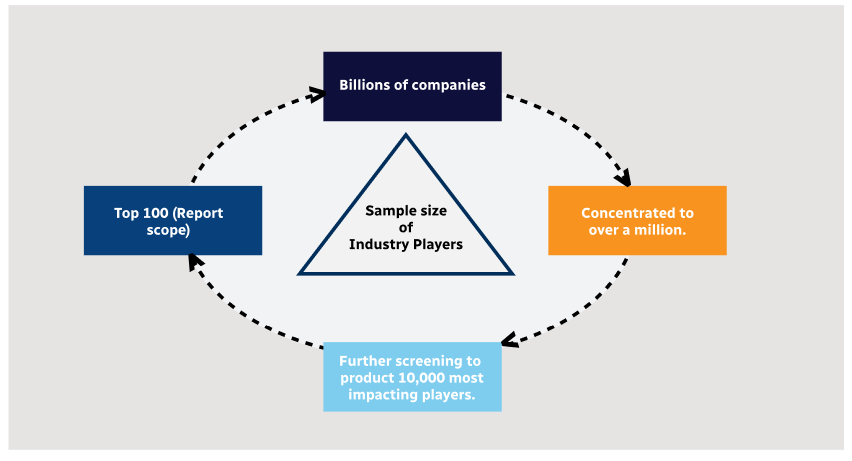
Step 1 - Identification of Relevant Samples Size from Population Database
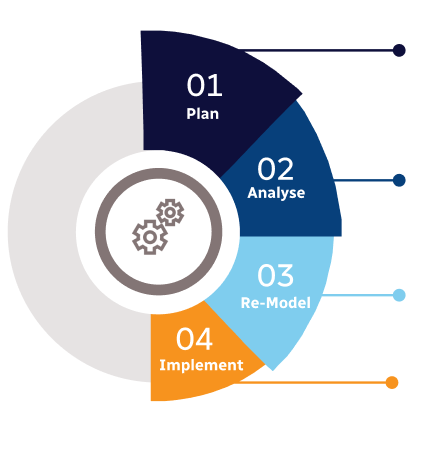
Step 2 - Approaches for Defining Global Market Size (Value, Volume* & Price*)
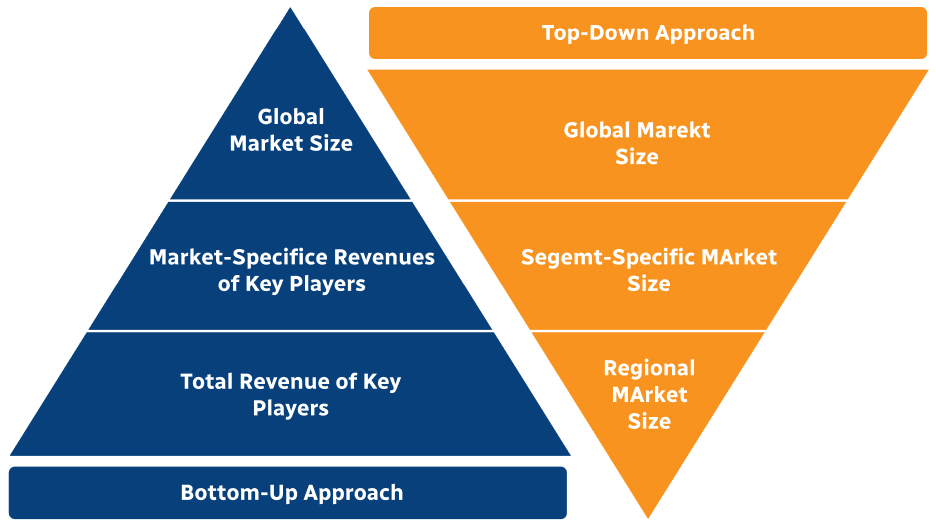
Note*: In applicable scenarios
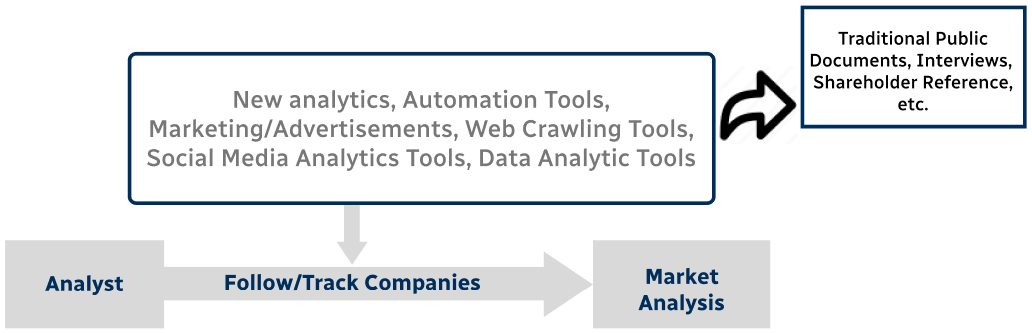
Step 3 - Data Sources
Primary Research
- Web Analytics
- Survey Reports
- Research Institute
- Latest Research Reports
- Opinion Leaders
Secondary Research
- Annual Reports
- White Paper
- Latest Press Release
- Industry Association
- Paid Database
- Investor Presentations
Step 4 - Data Triangulation
Involves using different sources of information in order to increase the validity of a study
These sources are likely to be stakeholders in a program - participants, other researchers, program staff, other community members, and so on.
Then we put all data in single framework & apply various statistical tools to find out the dynamic on the market.
During the analysis stage, feedback from the stakeholder groups would be compared to determine areas of agreement as well as areas of divergence