


Key Insights
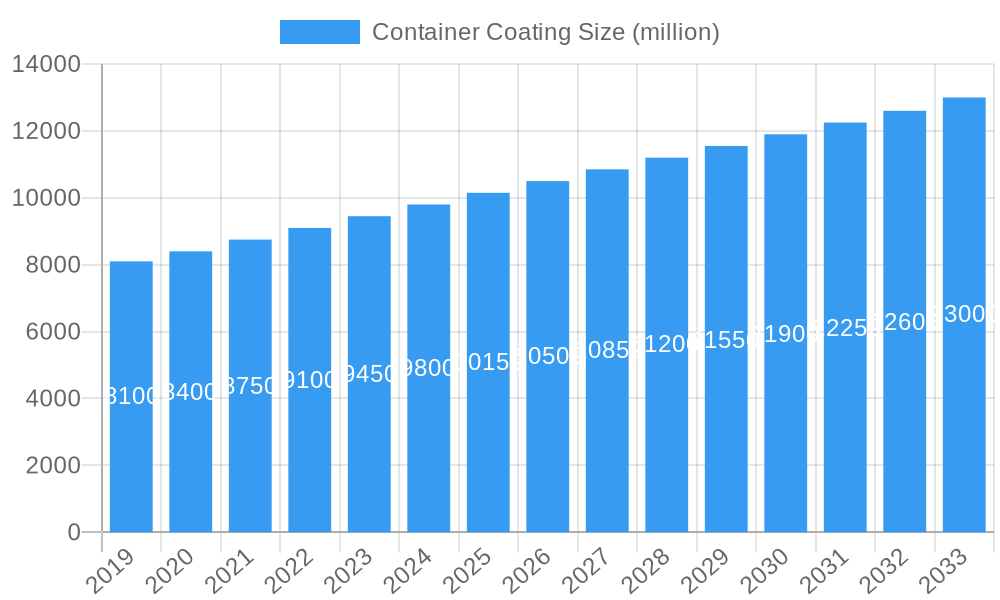
The global container coating market is poised for robust expansion, projected to reach a significant market size of approximately $12,000 million by 2033, exhibiting a Compound Annual Growth Rate (CAGR) of around 5.8% from 2025. This impressive growth trajectory is primarily fueled by the ever-increasing volume of global trade and the subsequent demand for shipping containers. As e-commerce continues its upward surge and supply chains become more interconnected, the need for durable, protective coatings for these vital logistical assets escalates. These coatings are essential for safeguarding containers against harsh environmental conditions, corrosion, and the physical wear and tear of constant transit, thereby extending their lifespan and ensuring the integrity of transported goods. The market's expansion is also supported by advancements in coating technologies, offering enhanced performance characteristics such as improved UV resistance, faster drying times, and greater environmental sustainability.
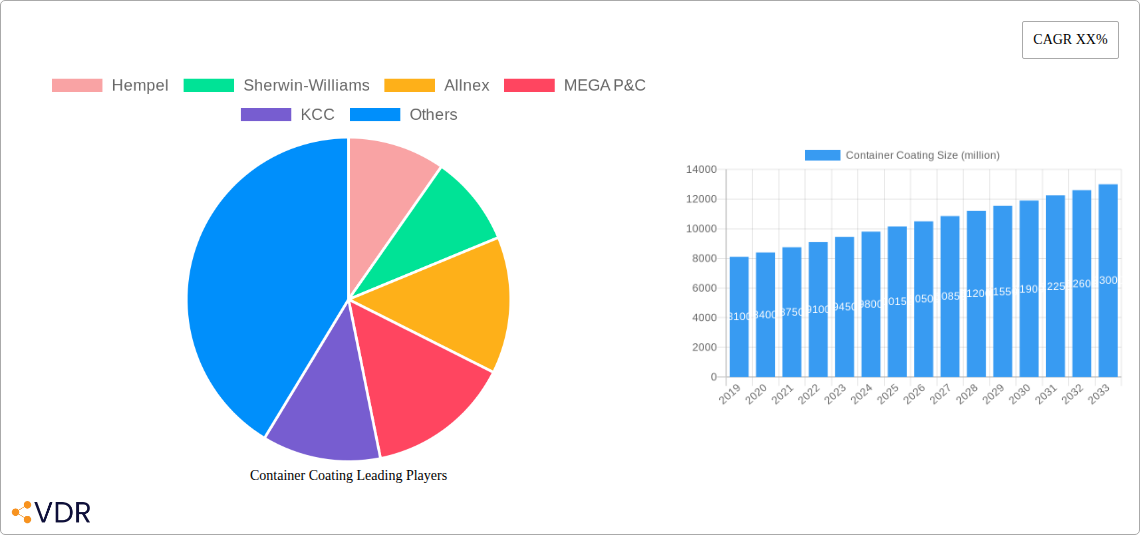
Container Coating Market Size (In Billion)

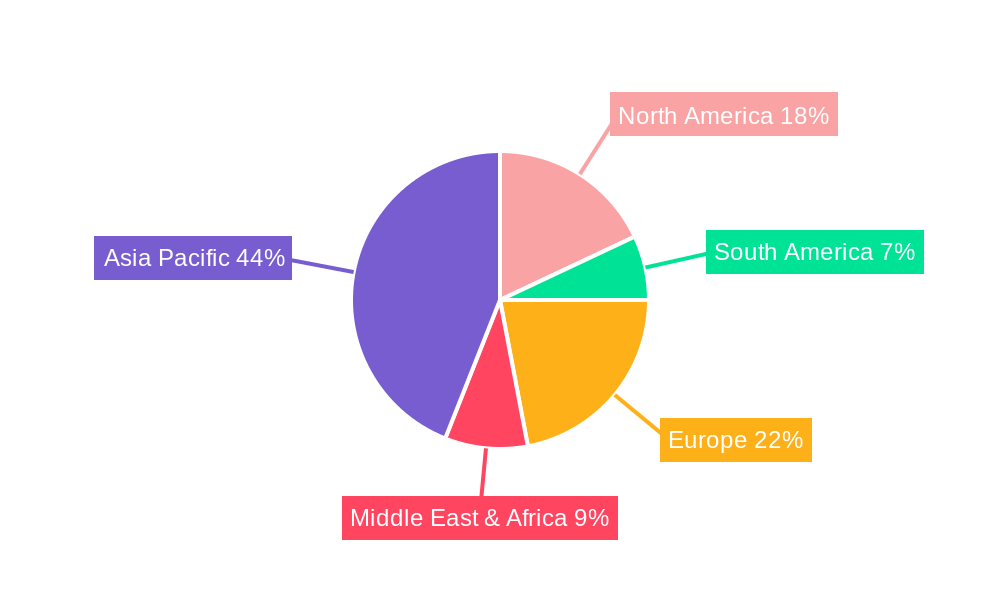
Key market drivers include the growing emphasis on extending container service life to reduce operational costs and the continuous innovation in coating formulations. The market is segmented into various applications, with Dry Containers and Reefer Containers representing the largest segments due to their widespread use in international shipping. Water-based coatings are gaining traction due to increasing environmental regulations and a preference for eco-friendly solutions, though oil-based alternatives continue to hold a significant market share. Prominent players like Hempel, Sherwin-Williams, and Allnex are actively investing in research and development to introduce high-performance and sustainable coating solutions, further stimulating market growth. Geographically, the Asia Pacific region, particularly China and India, is expected to lead market expansion due to its dominant position in container manufacturing and its rapidly growing trade volumes.
Container Coating Company Market Share
Comprehensive Container Coating Market Report: Dynamics, Trends, and Outlook (2019-2033)
This in-depth report provides a definitive analysis of the global container coating market, offering critical insights for stakeholders across the shipping, logistics, and chemical industries. Delving into market dynamics, growth trajectories, regional dominance, product innovations, and future opportunities, this report leverages high-traffic keywords to ensure maximum SEO visibility and engagement. We meticulously analyze the parent market of paints and coatings and its child market, container coatings, offering a holistic view of market evolution. All values are presented in million units for clarity and precision.
Container Coating Market Dynamics & Structure
The global container coating market exhibits a moderately concentrated structure, with a few key players like Hempel, Sherwin-Williams, and Allnex holding significant market share. Technological innovation is primarily driven by the demand for enhanced durability, corrosion resistance, and environmental compliance. Regulatory frameworks, particularly concerning volatile organic compounds (VOCs) and hazardous materials, are increasingly shaping product development and market entry. Competitive product substitutes include alternative protective treatments, though coatings remain the dominant solution due to their cost-effectiveness and performance. End-user demographics are largely defined by global trade volumes, shipping line operational efficiency needs, and the increasing prevalence of specialized container types like reefer containers. Mergers and acquisitions (M&A) activity, though not rampant, has been observed as companies seek to expand their product portfolios and geographical reach.
- Market Concentration: Dominated by key global players, with a significant presence of regional manufacturers.
- Technological Innovation Drivers: Enhanced anti-corrosion properties, UV resistance, biofouling prevention, and low-VOC formulations.
- Regulatory Frameworks: Increasing stringency of environmental regulations (e.g., REACH, IMO) influencing coating composition.
- Competitive Product Substitutes: Advanced surface treatments, specialized linings for specific cargo types.
- End-User Demographics: Global shipping lines, logistics companies, container manufacturers, cargo owners.
- M&A Trends: Strategic acquisitions aimed at market consolidation and technology integration.
- Estimated M&A Deal Volume (2019-2024): $150 - $200 million.
Container Coating Growth Trends & Insights
The global container coating market has witnessed consistent expansion, fueled by escalating international trade and the continuous demand for robust protection of shipping containers against harsh marine environments. The study period, from 2019 to 2024, saw a steady growth trajectory, with the base year of 2025 projecting a market size of approximately $2,500 million. This growth is attributed to the increasing shipbuilding activities and the subsequent need for new container coatings, as well as the regular maintenance and refurbishment of existing fleets. The adoption rate of advanced coating technologies, such as high-performance epoxy and polyurethane coatings, has been on an upward trend, driven by their superior durability and extended service life.
Technological disruptions, while not revolutionary, have focused on improving application efficiency and environmental sustainability. The shift towards water-based and low-VOC coatings is a significant consumer behavior shift, reflecting a growing consciousness about environmental impact and worker safety. This trend is further supported by stricter environmental regulations worldwide. The forecast period of 2025–2033 anticipates a Compound Annual Growth Rate (CAGR) of approximately 4.5%, pushing the market size to an estimated $3,500 million by 2033. Key insights reveal that the demand for coatings that offer enhanced resistance to extreme temperatures and corrosive substances is paramount, particularly for reefer containers transporting perishable goods. The integration of smart coating technologies, offering monitoring capabilities, is an emerging area of consumer interest, albeit in its nascent stages. The parent market of paints and coatings is experiencing similar trends, with the specialized child market of container coatings benefiting from these broader advancements and market drivers. The estimated market size for 2025 is pegged at $2,500 million, with predictions for 2033 reaching $3,500 million.
Dominant Regions, Countries, or Segments in Container Coating
The Dry Container segment stands as the dominant force within the global container coating market. This is primarily due to the sheer volume of dry cargo containers that constitute the backbone of global trade. Their widespread use in transporting a diverse range of goods, from manufactured products to raw materials, ensures a perpetual demand for protective coatings. Asia Pacific, particularly China, emerges as the leading region and country driving market growth. This dominance is underpinned by its status as the world's manufacturing hub, a significant player in shipbuilding, and a major exporter and importer of goods, necessitating a vast and continuously growing container fleet.
Economic policies in these regions have historically favored industrial expansion and trade facilitation, directly impacting container manufacturing and, consequently, the demand for container coatings. Infrastructure development, including port expansions and logistical networks, further bolsters the need for a robust and well-maintained container fleet, driving coating demand.
- Dominant Application Segment: Dry Container (estimated market share of 70% in 2025).
- Key Drivers: Highest volume of global trade, diverse cargo types, continuous fleet expansion.
- Dominant Region: Asia Pacific.
- Key Drivers: World's largest manufacturing base, significant shipbuilding capacity, extensive trade routes, government support for manufacturing and logistics.
- Dominant Country: China.
- Key Drivers: Leading container manufacturer, major global trading nation, extensive port infrastructure.
- Dominant Coating Type: Oil-based coatings continue to hold a significant share due to their proven durability and cost-effectiveness, although water-based alternatives are gaining traction for environmental reasons (estimated market share of 55% for Oil Based in 2025).
- Key Drivers for Oil-Based: Cost-effectiveness, established performance, broad availability.
- Growth Potential for Water-Based: Environmental regulations, sustainability initiatives, technological advancements in formulation.
Container Coating Product Landscape
The container coating product landscape is characterized by continuous innovation aimed at enhancing longevity, environmental sustainability, and application efficiency. High-performance epoxy primers, providing exceptional adhesion and corrosion resistance, are standard. Topcoats, often based on polyurethane or acrylic resins, offer superior UV protection, abrasion resistance, and aesthetic appeal. Emerging product innovations include low-VOC and water-based formulations that meet stringent environmental regulations without compromising performance. Advanced coatings are also being developed to resist extreme temperatures, chemical spills, and the corrosive effects of saltwater. Unique selling propositions often revolve around extended warranty periods and specialized formulations for specific cargo types. Technological advancements are also focused on faster drying times and easier application, reducing downtime for container maintenance.
Key Drivers, Barriers & Challenges in Container Coating
Key Drivers:
- Increasing Global Trade: A steady rise in international commerce necessitates a larger and more frequently maintained container fleet.
- Durability and Longevity Demands: Shipping lines require coatings that can withstand harsh marine environments for extended periods, reducing maintenance costs.
- Environmental Regulations: Growing pressure to adopt eco-friendly coatings (low-VOC, water-based) is driving innovation and market adoption.
- Technological Advancements: Development of more resilient, easier-to-apply, and longer-lasting coating formulations.
Key Barriers & Challenges:
- Raw Material Price Volatility: Fluctuations in the cost of key raw materials (e.g., resins, pigments) can impact profitability and pricing strategies.
- Intense Price Competition: The market is competitive, with price-sensitive customers often prioritizing cost over premium features.
- Supply Chain Disruptions: Geopolitical events and logistical challenges can impact the availability and timely delivery of raw materials and finished products.
- Application Costs and Expertise: Specialized application equipment and skilled labor can be a barrier for some end-users, particularly smaller operators.
- Resistance to New Technologies: Inertia in adopting newer, potentially more expensive, but environmentally superior coatings can be a challenge.
- Estimated Impact of Supply Chain Disruptions: Loss of $50 - $70 million in potential revenue annually due to delays and increased costs.
Emerging Opportunities in Container Coating
Emerging opportunities in the container coating market lie in the development and adoption of smart coatings that integrate self-healing properties or embedded sensors for cargo monitoring. The increasing demand for specialized coatings for temperature-sensitive goods (e.g., pharmaceuticals, fresh produce) in reefer containers presents a significant growth avenue. Furthermore, the expansion of intermodal transportation and the growing need for coatings with enhanced chemical resistance for diverse cargo types will drive innovation. The push for sustainable and bio-based coatings, aligning with global ESG (Environmental, Social, and Governance) initiatives, represents a substantial untapped market potential. The development of rapid-drying, high-build coatings that reduce application time and labor costs also offers considerable promise.
Growth Accelerators in the Container Coating Industry
The long-term growth of the container coating industry is being accelerated by several key factors. Technological breakthroughs in nanotechnology are enabling the development of coatings with superior scratch resistance and anti-fouling properties, extending container lifespan and reducing maintenance frequency. Strategic partnerships between coating manufacturers and container leasing companies are facilitating the wider adoption of advanced coating solutions. Market expansion strategies, particularly into developing economies with growing trade volumes, are opening new revenue streams. The increasing focus on lifecycle cost reduction by shipping lines, which view coatings as a critical investment in asset protection rather than just an expense, is a powerful growth catalyst.
Key Players Shaping the Container Coating Market
- Hempel
- Sherwin-Williams
- Allnex
- MEGA P&C
- KCC
- Dowill Paint
- Kansai Paint
Notable Milestones in Container Coating Sector
- 2021: Launch of advanced low-VOC epoxy primers by Hempel, meeting stringent environmental standards.
- 2020: Sherwin-Williams expands its marine coatings portfolio with a focus on container solutions.
- 2022: Allnex introduces new high-solids polyurethane topcoats for enhanced UV resistance and durability.
- 2023: KCC develops innovative anti-corrosion coatings with extended service life for extreme conditions.
- 2024 (Estimated): Increased M&A activity as larger players seek to acquire specialized coating technologies.
- 2019: Growing emphasis on sustainable coating solutions in the parent paints and coatings market, influencing container coating development.
In-Depth Container Coating Market Outlook
The future outlook for the container coating market is exceptionally bright, driven by a confluence of global economic growth and a steadfast commitment to asset preservation and sustainability. Growth accelerators such as nanotechnology-infused coatings promising unparalleled durability and self-cleaning properties will redefine industry standards. Strategic collaborations between chemical giants and logistics providers will streamline the implementation of these advanced solutions across vast container fleets. The burgeoning demand from emerging economies, coupled with the continuous evolution of trade routes, presents substantial avenues for market penetration. Companies that can effectively navigate regulatory landscapes while championing eco-friendly and cost-effective coating technologies are poised for significant success. The market is trending towards lifecycle solutions, where coatings are integral to maximizing container utility and minimizing environmental impact, ensuring robust long-term growth potential.
Container Coating Segmentation
-
1. Application
- 1.1. Dry Container
- 1.2. Reefer Container
- 1.3. Other
-
2. Types
- 2.1. Water Based
- 2.2. Oil Based
- 2.3. Other
Container Coating Segmentation By Geography
-
1. North America
- 1.1. United States
- 1.2. Canada
- 1.3. Mexico
-
2. South America
- 2.1. Brazil
- 2.2. Argentina
- 2.3. Rest of South America
-
3. Europe
- 3.1. United Kingdom
- 3.2. Germany
- 3.3. France
- 3.4. Italy
- 3.5. Spain
- 3.6. Russia
- 3.7. Benelux
- 3.8. Nordics
- 3.9. Rest of Europe
-
4. Middle East & Africa
- 4.1. Turkey
- 4.2. Israel
- 4.3. GCC
- 4.4. North Africa
- 4.5. South Africa
- 4.6. Rest of Middle East & Africa
-
5. Asia Pacific
- 5.1. China
- 5.2. India
- 5.3. Japan
- 5.4. South Korea
- 5.5. ASEAN
- 5.6. Oceania
- 5.7. Rest of Asia Pacific
Container Coating Regional Market Share
Geographic Coverage of Container Coating
Container Coating REPORT HIGHLIGHTS
| Aspects | Details |
|---|---|
| Study Period | 2020-2034 |
| Base Year | 2025 |
| Estimated Year | 2026 |
| Forecast Period | 2026-2034 |
| Historical Period | 2020-2025 |
| Growth Rate | CAGR of 5.3% from 2020-2034 |
| Segmentation |
|
Table of Contents
- 1. Introduction
- 1.1. Research Scope
- 1.2. Market Segmentation
- 1.3. Research Methodology
- 1.4. Definitions and Assumptions
- 2. Executive Summary
- 2.1. Introduction
- 3. Market Dynamics
- 3.1. Introduction
- 3.2. Market Drivers
- 3.3. Market Restrains
- 3.4. Market Trends
- 4. Market Factor Analysis
- 4.1. Porters Five Forces
- 4.2. Supply/Value Chain
- 4.3. PESTEL analysis
- 4.4. Market Entropy
- 4.5. Patent/Trademark Analysis
- 5. Global Container Coating Analysis, Insights and Forecast, 2020-2032
- 5.1. Market Analysis, Insights and Forecast - by Application
- 5.1.1. Dry Container
- 5.1.2. Reefer Container
- 5.1.3. Other
- 5.2. Market Analysis, Insights and Forecast - by Types
- 5.2.1. Water Based
- 5.2.2. Oil Based
- 5.2.3. Other
- 5.3. Market Analysis, Insights and Forecast - by Region
- 5.3.1. North America
- 5.3.2. South America
- 5.3.3. Europe
- 5.3.4. Middle East & Africa
- 5.3.5. Asia Pacific
- 5.1. Market Analysis, Insights and Forecast - by Application
- 6. North America Container Coating Analysis, Insights and Forecast, 2020-2032
- 6.1. Market Analysis, Insights and Forecast - by Application
- 6.1.1. Dry Container
- 6.1.2. Reefer Container
- 6.1.3. Other
- 6.2. Market Analysis, Insights and Forecast - by Types
- 6.2.1. Water Based
- 6.2.2. Oil Based
- 6.2.3. Other
- 6.1. Market Analysis, Insights and Forecast - by Application
- 7. South America Container Coating Analysis, Insights and Forecast, 2020-2032
- 7.1. Market Analysis, Insights and Forecast - by Application
- 7.1.1. Dry Container
- 7.1.2. Reefer Container
- 7.1.3. Other
- 7.2. Market Analysis, Insights and Forecast - by Types
- 7.2.1. Water Based
- 7.2.2. Oil Based
- 7.2.3. Other
- 7.1. Market Analysis, Insights and Forecast - by Application
- 8. Europe Container Coating Analysis, Insights and Forecast, 2020-2032
- 8.1. Market Analysis, Insights and Forecast - by Application
- 8.1.1. Dry Container
- 8.1.2. Reefer Container
- 8.1.3. Other
- 8.2. Market Analysis, Insights and Forecast - by Types
- 8.2.1. Water Based
- 8.2.2. Oil Based
- 8.2.3. Other
- 8.1. Market Analysis, Insights and Forecast - by Application
- 9. Middle East & Africa Container Coating Analysis, Insights and Forecast, 2020-2032
- 9.1. Market Analysis, Insights and Forecast - by Application
- 9.1.1. Dry Container
- 9.1.2. Reefer Container
- 9.1.3. Other
- 9.2. Market Analysis, Insights and Forecast - by Types
- 9.2.1. Water Based
- 9.2.2. Oil Based
- 9.2.3. Other
- 9.1. Market Analysis, Insights and Forecast - by Application
- 10. Asia Pacific Container Coating Analysis, Insights and Forecast, 2020-2032
- 10.1. Market Analysis, Insights and Forecast - by Application
- 10.1.1. Dry Container
- 10.1.2. Reefer Container
- 10.1.3. Other
- 10.2. Market Analysis, Insights and Forecast - by Types
- 10.2.1. Water Based
- 10.2.2. Oil Based
- 10.2.3. Other
- 10.1. Market Analysis, Insights and Forecast - by Application
- 11. Competitive Analysis
- 11.1. Global Market Share Analysis 2025
- 11.2. Company Profiles
- 11.2.1 Hempel
- 11.2.1.1. Overview
- 11.2.1.2. Products
- 11.2.1.3. SWOT Analysis
- 11.2.1.4. Recent Developments
- 11.2.1.5. Financials (Based on Availability)
- 11.2.2 Sherwin-Williams
- 11.2.2.1. Overview
- 11.2.2.2. Products
- 11.2.2.3. SWOT Analysis
- 11.2.2.4. Recent Developments
- 11.2.2.5. Financials (Based on Availability)
- 11.2.3 Allnex
- 11.2.3.1. Overview
- 11.2.3.2. Products
- 11.2.3.3. SWOT Analysis
- 11.2.3.4. Recent Developments
- 11.2.3.5. Financials (Based on Availability)
- 11.2.4 MEGA P&C
- 11.2.4.1. Overview
- 11.2.4.2. Products
- 11.2.4.3. SWOT Analysis
- 11.2.4.4. Recent Developments
- 11.2.4.5. Financials (Based on Availability)
- 11.2.5 KCC
- 11.2.5.1. Overview
- 11.2.5.2. Products
- 11.2.5.3. SWOT Analysis
- 11.2.5.4. Recent Developments
- 11.2.5.5. Financials (Based on Availability)
- 11.2.6 Dowill Paint
- 11.2.6.1. Overview
- 11.2.6.2. Products
- 11.2.6.3. SWOT Analysis
- 11.2.6.4. Recent Developments
- 11.2.6.5. Financials (Based on Availability)
- 11.2.7 Kansai Paint
- 11.2.7.1. Overview
- 11.2.7.2. Products
- 11.2.7.3. SWOT Analysis
- 11.2.7.4. Recent Developments
- 11.2.7.5. Financials (Based on Availability)
- 11.2.1 Hempel
List of Figures
- Figure 1: Global Container Coating Revenue Breakdown (undefined, %) by Region 2025 & 2033
- Figure 2: North America Container Coating Revenue (undefined), by Application 2025 & 2033
- Figure 3: North America Container Coating Revenue Share (%), by Application 2025 & 2033
- Figure 4: North America Container Coating Revenue (undefined), by Types 2025 & 2033
- Figure 5: North America Container Coating Revenue Share (%), by Types 2025 & 2033
- Figure 6: North America Container Coating Revenue (undefined), by Country 2025 & 2033
- Figure 7: North America Container Coating Revenue Share (%), by Country 2025 & 2033
- Figure 8: South America Container Coating Revenue (undefined), by Application 2025 & 2033
- Figure 9: South America Container Coating Revenue Share (%), by Application 2025 & 2033
- Figure 10: South America Container Coating Revenue (undefined), by Types 2025 & 2033
- Figure 11: South America Container Coating Revenue Share (%), by Types 2025 & 2033
- Figure 12: South America Container Coating Revenue (undefined), by Country 2025 & 2033
- Figure 13: South America Container Coating Revenue Share (%), by Country 2025 & 2033
- Figure 14: Europe Container Coating Revenue (undefined), by Application 2025 & 2033
- Figure 15: Europe Container Coating Revenue Share (%), by Application 2025 & 2033
- Figure 16: Europe Container Coating Revenue (undefined), by Types 2025 & 2033
- Figure 17: Europe Container Coating Revenue Share (%), by Types 2025 & 2033
- Figure 18: Europe Container Coating Revenue (undefined), by Country 2025 & 2033
- Figure 19: Europe Container Coating Revenue Share (%), by Country 2025 & 2033
- Figure 20: Middle East & Africa Container Coating Revenue (undefined), by Application 2025 & 2033
- Figure 21: Middle East & Africa Container Coating Revenue Share (%), by Application 2025 & 2033
- Figure 22: Middle East & Africa Container Coating Revenue (undefined), by Types 2025 & 2033
- Figure 23: Middle East & Africa Container Coating Revenue Share (%), by Types 2025 & 2033
- Figure 24: Middle East & Africa Container Coating Revenue (undefined), by Country 2025 & 2033
- Figure 25: Middle East & Africa Container Coating Revenue Share (%), by Country 2025 & 2033
- Figure 26: Asia Pacific Container Coating Revenue (undefined), by Application 2025 & 2033
- Figure 27: Asia Pacific Container Coating Revenue Share (%), by Application 2025 & 2033
- Figure 28: Asia Pacific Container Coating Revenue (undefined), by Types 2025 & 2033
- Figure 29: Asia Pacific Container Coating Revenue Share (%), by Types 2025 & 2033
- Figure 30: Asia Pacific Container Coating Revenue (undefined), by Country 2025 & 2033
- Figure 31: Asia Pacific Container Coating Revenue Share (%), by Country 2025 & 2033
List of Tables
- Table 1: Global Container Coating Revenue undefined Forecast, by Application 2020 & 2033
- Table 2: Global Container Coating Revenue undefined Forecast, by Types 2020 & 2033
- Table 3: Global Container Coating Revenue undefined Forecast, by Region 2020 & 2033
- Table 4: Global Container Coating Revenue undefined Forecast, by Application 2020 & 2033
- Table 5: Global Container Coating Revenue undefined Forecast, by Types 2020 & 2033
- Table 6: Global Container Coating Revenue undefined Forecast, by Country 2020 & 2033
- Table 7: United States Container Coating Revenue (undefined) Forecast, by Application 2020 & 2033
- Table 8: Canada Container Coating Revenue (undefined) Forecast, by Application 2020 & 2033
- Table 9: Mexico Container Coating Revenue (undefined) Forecast, by Application 2020 & 2033
- Table 10: Global Container Coating Revenue undefined Forecast, by Application 2020 & 2033
- Table 11: Global Container Coating Revenue undefined Forecast, by Types 2020 & 2033
- Table 12: Global Container Coating Revenue undefined Forecast, by Country 2020 & 2033
- Table 13: Brazil Container Coating Revenue (undefined) Forecast, by Application 2020 & 2033
- Table 14: Argentina Container Coating Revenue (undefined) Forecast, by Application 2020 & 2033
- Table 15: Rest of South America Container Coating Revenue (undefined) Forecast, by Application 2020 & 2033
- Table 16: Global Container Coating Revenue undefined Forecast, by Application 2020 & 2033
- Table 17: Global Container Coating Revenue undefined Forecast, by Types 2020 & 2033
- Table 18: Global Container Coating Revenue undefined Forecast, by Country 2020 & 2033
- Table 19: United Kingdom Container Coating Revenue (undefined) Forecast, by Application 2020 & 2033
- Table 20: Germany Container Coating Revenue (undefined) Forecast, by Application 2020 & 2033
- Table 21: France Container Coating Revenue (undefined) Forecast, by Application 2020 & 2033
- Table 22: Italy Container Coating Revenue (undefined) Forecast, by Application 2020 & 2033
- Table 23: Spain Container Coating Revenue (undefined) Forecast, by Application 2020 & 2033
- Table 24: Russia Container Coating Revenue (undefined) Forecast, by Application 2020 & 2033
- Table 25: Benelux Container Coating Revenue (undefined) Forecast, by Application 2020 & 2033
- Table 26: Nordics Container Coating Revenue (undefined) Forecast, by Application 2020 & 2033
- Table 27: Rest of Europe Container Coating Revenue (undefined) Forecast, by Application 2020 & 2033
- Table 28: Global Container Coating Revenue undefined Forecast, by Application 2020 & 2033
- Table 29: Global Container Coating Revenue undefined Forecast, by Types 2020 & 2033
- Table 30: Global Container Coating Revenue undefined Forecast, by Country 2020 & 2033
- Table 31: Turkey Container Coating Revenue (undefined) Forecast, by Application 2020 & 2033
- Table 32: Israel Container Coating Revenue (undefined) Forecast, by Application 2020 & 2033
- Table 33: GCC Container Coating Revenue (undefined) Forecast, by Application 2020 & 2033
- Table 34: North Africa Container Coating Revenue (undefined) Forecast, by Application 2020 & 2033
- Table 35: South Africa Container Coating Revenue (undefined) Forecast, by Application 2020 & 2033
- Table 36: Rest of Middle East & Africa Container Coating Revenue (undefined) Forecast, by Application 2020 & 2033
- Table 37: Global Container Coating Revenue undefined Forecast, by Application 2020 & 2033
- Table 38: Global Container Coating Revenue undefined Forecast, by Types 2020 & 2033
- Table 39: Global Container Coating Revenue undefined Forecast, by Country 2020 & 2033
- Table 40: China Container Coating Revenue (undefined) Forecast, by Application 2020 & 2033
- Table 41: India Container Coating Revenue (undefined) Forecast, by Application 2020 & 2033
- Table 42: Japan Container Coating Revenue (undefined) Forecast, by Application 2020 & 2033
- Table 43: South Korea Container Coating Revenue (undefined) Forecast, by Application 2020 & 2033
- Table 44: ASEAN Container Coating Revenue (undefined) Forecast, by Application 2020 & 2033
- Table 45: Oceania Container Coating Revenue (undefined) Forecast, by Application 2020 & 2033
- Table 46: Rest of Asia Pacific Container Coating Revenue (undefined) Forecast, by Application 2020 & 2033
Frequently Asked Questions
1. What is the projected Compound Annual Growth Rate (CAGR) of the Container Coating?
The projected CAGR is approximately 5.3%.
2. Which companies are prominent players in the Container Coating?
Key companies in the market include Hempel, Sherwin-Williams, Allnex, MEGA P&C, KCC, Dowill Paint, Kansai Paint.
3. What are the main segments of the Container Coating?
The market segments include Application, Types.
4. Can you provide details about the market size?
The market size is estimated to be USD XXX N/A as of 2022.
5. What are some drivers contributing to market growth?
N/A
6. What are the notable trends driving market growth?
N/A
7. Are there any restraints impacting market growth?
N/A
8. Can you provide examples of recent developments in the market?
N/A
9. What pricing options are available for accessing the report?
Pricing options include single-user, multi-user, and enterprise licenses priced at USD 2900.00, USD 4350.00, and USD 5800.00 respectively.
10. Is the market size provided in terms of value or volume?
The market size is provided in terms of value, measured in N/A.
11. Are there any specific market keywords associated with the report?
Yes, the market keyword associated with the report is "Container Coating," which aids in identifying and referencing the specific market segment covered.
12. How do I determine which pricing option suits my needs best?
The pricing options vary based on user requirements and access needs. Individual users may opt for single-user licenses, while businesses requiring broader access may choose multi-user or enterprise licenses for cost-effective access to the report.
13. Are there any additional resources or data provided in the Container Coating report?
While the report offers comprehensive insights, it's advisable to review the specific contents or supplementary materials provided to ascertain if additional resources or data are available.
14. How can I stay updated on further developments or reports in the Container Coating?
To stay informed about further developments, trends, and reports in the Container Coating, consider subscribing to industry newsletters, following relevant companies and organizations, or regularly checking reputable industry news sources and publications.
Methodology
Step 1 - Identification of Relevant Samples Size from Population Database



Step 2 - Approaches for Defining Global Market Size (Value, Volume* & Price*)

Note*: In applicable scenarios
Step 3 - Data Sources
Primary Research
- Web Analytics
- Survey Reports
- Research Institute
- Latest Research Reports
- Opinion Leaders
Secondary Research
- Annual Reports
- White Paper
- Latest Press Release
- Industry Association
- Paid Database
- Investor Presentations

Step 4 - Data Triangulation
Involves using different sources of information in order to increase the validity of a study
These sources are likely to be stakeholders in a program - participants, other researchers, program staff, other community members, and so on.
Then we put all data in single framework & apply various statistical tools to find out the dynamic on the market.
During the analysis stage, feedback from the stakeholder groups would be compared to determine areas of agreement as well as areas of divergence