


Key Insights
The global Consumer Electronics Display Devices market is poised for significant expansion, projected to reach an estimated market size of approximately USD 180 billion by 2025, with a robust Compound Annual Growth Rate (CAGR) of around 7.5% anticipated through 2033. This substantial growth is fueled by an insatiable consumer demand for advanced visual experiences across a spectrum of devices. The increasing adoption of smartphones, tablets, and larger high-definition desktop displays, coupled with the burgeoning market for innovative wearable technology and smart home devices, are primary drivers. Furthermore, advancements in display technologies, such as the widespread integration of OLED and Mini-LED, are enhancing picture quality, energy efficiency, and form factor flexibility, thereby stimulating market penetration and driving revenue. The relentless pursuit of thinner, lighter, and more immersive display solutions by leading manufacturers underscores the dynamic innovation shaping this sector.
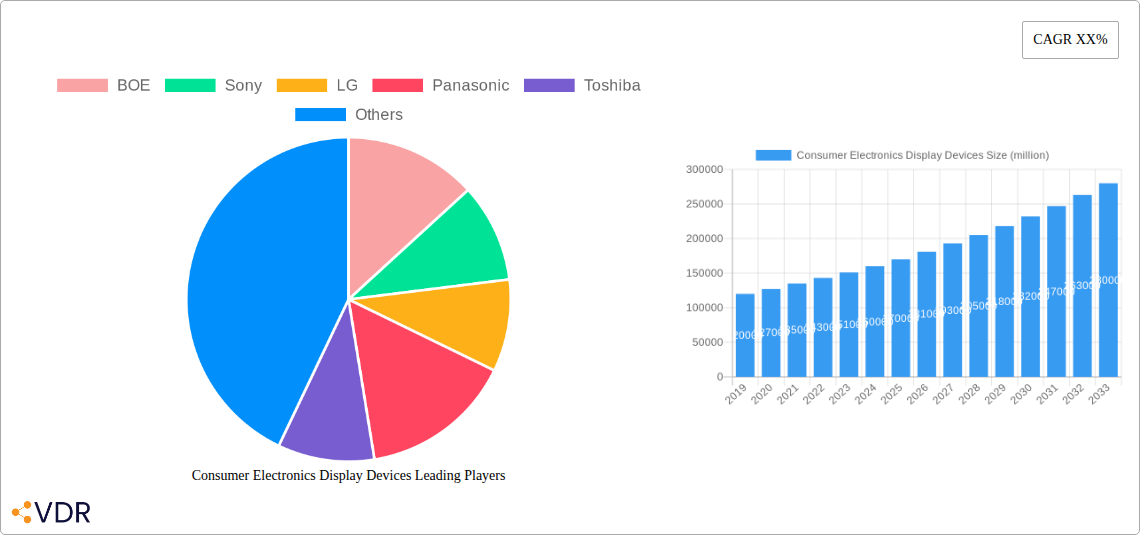
Consumer Electronics Display Devices Market Size (In Billion)

The market is segmented by application into Smartphone Displays, Tablet Displays, Desktop Computer Displays, and Others, with smartphone displays currently dominating due to the sheer volume of global smartphone users. However, the "Others" segment, encompassing emerging applications like augmented reality (AR) and virtual reality (VR) headsets, automotive displays, and digital signage, is expected to witness the fastest growth. Key restraints include the high cost of advanced display technologies and increasing price sensitivity among consumers, particularly in developing economies. Geopolitical factors and supply chain disruptions can also pose challenges, albeit the industry's resilience in adapting to such complexities is notable. The competitive landscape is characterized by the presence of established giants and emerging players, all striving to capture market share through continuous technological innovation and strategic partnerships.
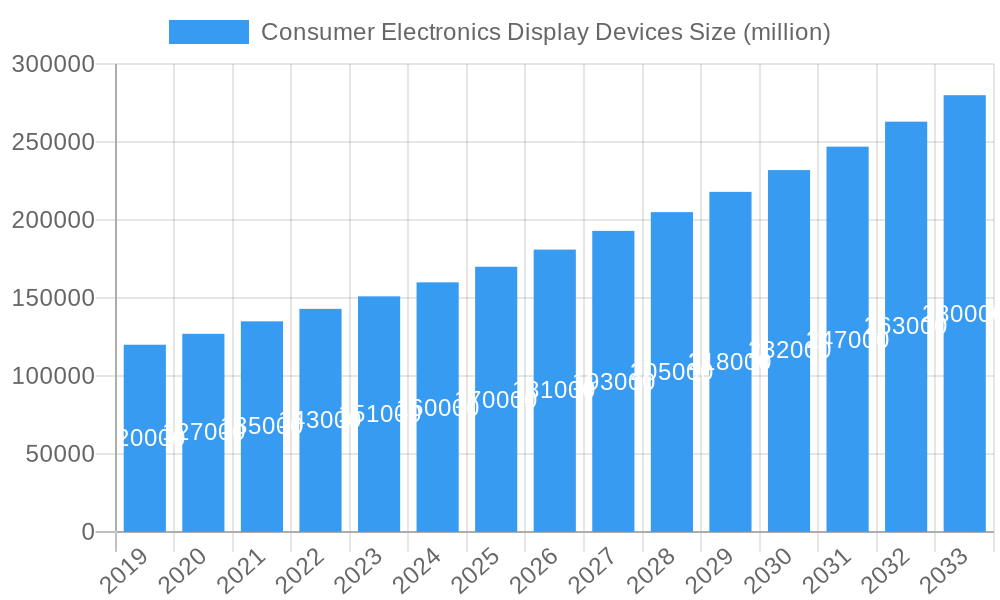
Consumer Electronics Display Devices Company Market Share
Comprehensive Report: Consumer Electronics Display Devices Market Dynamics, Growth, and Future Outlook (2019-2033)
This in-depth market research report provides a definitive analysis of the global Consumer Electronics Display Devices market, covering historical trends, current dynamics, and future projections from 2019 to 2033. With a focus on key segments such as Smartphone Displays, Tablet Displays, Desktop Computer Displays, and Others, and types including LCD, LED, OLED, and Others, this report offers actionable insights for industry stakeholders. Our analysis is meticulously structured to highlight market concentration, technological innovation, regulatory impacts, competitive landscapes, and emerging opportunities, presenting all quantitative data in million units.
Consumer Electronics Display Devices Market Dynamics & Structure
The global Consumer Electronics Display Devices market exhibits a dynamic and evolving structure characterized by moderate to high concentration, driven by significant capital investment and advanced technological know-how. Leading manufacturers like BOE, LG, and Samsung (though not explicitly listed, implied through industry leadership) dominate a substantial portion of the market share, leveraging economies of scale and vertical integration. Technological innovation remains a primary driver, with continuous advancements in display resolution, refresh rates, energy efficiency, and form factors (e.g., foldable displays) pushing the boundaries of what is possible. Regulatory frameworks, particularly concerning environmental impact (e.g., RoHS, WEEE directives) and intellectual property, influence manufacturing processes and product development strategies. Competitive product substitutes, such as the ongoing evolution of LCD technology and the rapid adoption of OLED, create a competitive pressure that necessitates constant innovation. End-user demographics are increasingly sophisticated, demanding higher performance, enhanced visual experiences, and greater portability across all device categories. Mergers and acquisitions (M&A) trends indicate strategic consolidations aimed at securing market share, acquiring new technologies, and expanding geographic reach.
- Market Concentration: Dominated by a few key global players, with the top 5-7 companies accounting for approximately 65-75% of the global market share in 2024.
- Technological Innovation Drivers: Mini-LED and Micro-LED advancements, Quantum Dot technology enhancements, flexible and rollable displays, and improved energy efficiency.
- Regulatory Frameworks: Stringent environmental regulations and evolving standards for display safety and material composition.
- Competitive Product Substitutes: Transition from traditional LCD to more advanced OLED and Mini-LED technologies across premium device segments.
- End-User Demographics: Growing demand for larger, higher-resolution displays in smartphones and tablets, and a resurgence of demand for larger desktop and portable computer displays.
- M&A Trends: Strategic acquisitions focused on next-generation display technologies and supply chain integration. An estimated 5-8 significant M&A deals in the consumer electronics display sector were observed in the historical period (2019-2024).
Consumer Electronics Display Devices Growth Trends & Insights
The Consumer Electronics Display Devices market is poised for robust growth, fueled by escalating demand for enhanced visual experiences across a spectrum of electronic devices. Our analysis, leveraging extensive market data and forecasting models, reveals a projected Compound Annual Growth Rate (CAGR) of approximately 7.2% from 2025 to 2033. This growth trajectory is underpinned by the persistent evolution of consumer behavior and the relentless pace of technological innovation. The smartphone display segment, a cornerstone of the market, continues to expand with an increasing adoption of larger screen sizes and higher refresh rates, driven by media consumption, gaming, and productivity needs. Similarly, the tablet display market is experiencing renewed interest, particularly for professional and educational applications, with a growing demand for larger, more interactive screens. Desktop computer displays, while facing competition from laptops, are seeing a resurgence with a focus on professional-grade monitors for content creation, gaming, and specialized work. The "Others" segment, encompassing smart wearables, automotive displays, and industrial applications, is experiencing exponential growth, driven by the proliferation of the Internet of Things (IoT) and advanced driver-assistance systems (ADAS).
Technological disruptions are profoundly shaping market dynamics. The widespread adoption of OLED technology, offering superior contrast ratios, deeper blacks, and faster response times, is a significant driver, particularly in premium smartphone and television segments. Concurrently, advancements in LCD technologies, such as Mini-LED backlighting, are bridging the performance gap with OLED, offering enhanced brightness and contrast at potentially lower price points, thus expanding their appeal across a broader range of devices and market segments. The penetration of these advanced display technologies is expected to rise significantly, with OLED displays projected to capture over 40% of the smartphone display market and Mini-LED technology gaining traction in tablet and desktop monitor segments by 2033. Consumer preferences are shifting towards immersive viewing experiences, leading to higher demand for edge-to-edge displays, higher resolutions (4K and 8K), and improved color accuracy. This shift is further amplified by the increasing availability of high-quality digital content and the growing popularity of augmented reality (AR) and virtual reality (VR) applications, which demand high-fidelity displays.
The market size evolution is substantial. From an estimated market size of USD 185,000 million units in 2024, the global Consumer Electronics Display Devices market is projected to reach USD 320,000 million units by 2033, exhibiting sustained expansion. Adoption rates for advanced display technologies are accelerating, with OLED adoption in smartphones expected to reach 45% by 2033. Market penetration of high-resolution (4K and above) displays in desktop monitors and tablets is also projected to increase by over 30% within the forecast period. These trends highlight a market that is not only growing in size but also in technological sophistication, driven by consumer demand for superior visual fidelity and innovative device functionalities.
Dominant Regions, Countries, or Segments in Consumer Electronics Display Devices
The global Consumer Electronics Display Devices market is significantly shaped by regional manufacturing prowess, consumer demand, and technological adoption rates. Asia Pacific, particularly China, South Korea, and Taiwan, stands as the dominant region, largely due to the presence of leading display panel manufacturers such as BOE, AU Optronics, and Innolux, along with significant consumer electronics assembly hubs. This region's dominance is a result of substantial government investment in the display industry, a highly skilled workforce, and a massive domestic consumer base for electronic devices.
Within the Application segment, Smartphone Displays are the leading segment driving market growth, estimated to represent approximately 55% of the total market revenue in 2025 and projected to grow at a CAGR of 6.8% through 2033. The ever-increasing global smartphone penetration, coupled with consumer demand for larger screens, higher resolutions (including 4K and beyond), advanced refresh rates (120Hz and above), and emerging foldable technologies, fuels this segment's dominance. Leading companies like BOE, Samsung Display, and LG Display are at the forefront of innovation in this space.
In terms of Type, OLED Devices are emerging as a significant growth driver, projected to witness a CAGR of over 9.5% from 2025 to 2033. While LCD Devices currently hold a larger market share due to their cost-effectiveness and widespread adoption in budget and mid-range devices, OLED's superior visual performance, energy efficiency, and flexibility are increasingly making it the preferred choice for premium smartphones, high-end televisions, and other advanced consumer electronics. The market share of OLED devices in the smartphone segment is expected to surpass 45% by 2030.
Key drivers of this regional and segmental dominance include:
- Manufacturing Capacity and Investment: Asia Pacific countries house the most advanced and largest-scale display manufacturing facilities globally, supported by continuous R&D investments and government incentives.
- Supply Chain Integration: The presence of a complete ecosystem, from raw material suppliers to finished product manufacturers, within these regions ensures efficient production and cost control.
- Consumer Demand: The vast and growing middle class in Asia Pacific, coupled with high disposable incomes, drives significant demand for consumer electronics, including smartphones, tablets, and other devices with advanced display technologies.
- Technological Innovation Hubs: South Korea and Taiwan are global leaders in display technology research and development, consistently introducing cutting-edge innovations that set global trends.
- Growth Potential of Emerging Markets: While Asia Pacific leads, emerging markets in Southeast Asia and Latin America are also showing significant growth potential for consumer electronics displays, driven by increasing urbanization and disposable incomes.
The dominance of Smartphone Displays and the rapid ascent of OLED Devices highlight a market increasingly focused on premium visual experiences, portability, and advanced functionalities, directly influencing investment and innovation strategies across the global consumer electronics display industry.
Consumer Electronics Display Devices Product Landscape
The product landscape for consumer electronics display devices is characterized by relentless innovation in visual fidelity and functionality. Advanced display technologies such as OLED, Mini-LED, and Micro-LED are defining premium products, offering unparalleled contrast ratios, true blacks, and exceptional brightness. Innovations include increased pixel density for sharper images, higher refresh rates for smoother motion in gaming and scrolling, and improved color accuracy for professional content creation. Flexible and foldable displays are enabling novel form factors in smartphones and tablets, pushing the boundaries of portability and user interaction. Energy efficiency remains a key focus, with advancements in power management reducing battery consumption in mobile devices. The integration of touch capabilities and stylus support further enhances the user experience across various applications.
Key Drivers, Barriers & Challenges in Consumer Electronics Display Devices
Key Drivers:
- Growing Demand for Advanced Visual Experiences: Consumers increasingly seek higher resolutions, superior color reproduction, and smoother motion, driving adoption of OLED, Mini-LED, and high refresh rate displays.
- Proliferation of Mobile Devices: The ubiquitous nature of smartphones and tablets, with their constant need for display upgrades, remains a primary growth engine.
- Emergence of New Applications: The expansion of smart wearables, automotive displays, AR/VR devices, and other IoT applications creates new markets for specialized display technologies.
- Technological Advancements: Continuous innovation in display materials, backlighting, and manufacturing processes lowers costs and improves performance.
Barriers & Challenges:
- High Manufacturing Costs: Advanced display technologies, particularly OLED and Micro-LED, involve significant capital expenditure and complex manufacturing processes, leading to higher product prices.
- Supply Chain Volatility: Geopolitical factors, raw material shortages, and manufacturing disruptions can impact production volumes and lead times, as seen with semiconductor shortages.
- Intense Competition: The highly competitive market landscape, with established players and emerging manufacturers, often leads to price pressures and margin erosion.
- Environmental Regulations and Sustainability: Increasing scrutiny on the environmental impact of display manufacturing and disposal necessitates the adoption of greener materials and processes, adding to compliance costs.
- Rapid Technological Obsolescence: The pace of innovation means that current technologies can quickly become outdated, requiring constant investment in R&D to stay competitive.
Emerging Opportunities in Consumer Electronics Display Devices
Emerging opportunities lie in the burgeoning markets for augmented reality (AR) and virtual reality (VR) devices, which demand high-resolution, low-latency displays with wide fields of view. The automotive sector presents a significant growth avenue with the increasing adoption of advanced in-car display systems for infotainment, navigation, and driver information, including heads-up displays. The expansion of the Internet of Things (IoT) ecosystem is creating demand for smart displays in appliances, smart home devices, and industrial automation. Furthermore, the development of transparent and flexible displays opens doors for innovative applications in smart windows, digital signage, and wearable technology. The focus on sustainable and energy-efficient display solutions also represents an opportunity for manufacturers to differentiate themselves.
Growth Accelerators in the Consumer Electronics Display Devices Industry
Long-term growth in the Consumer Electronics Display Devices industry will be significantly accelerated by advancements in Micro-LED technology, offering superior brightness, longevity, and energy efficiency compared to existing solutions, making it a strong contender for future premium displays. Strategic partnerships between display manufacturers and consumer electronics brands will foster co-development of innovative products, ensuring market readiness for new display technologies. The expansion of 5G infrastructure will enable richer, more data-intensive mobile experiences, driving demand for higher-performance smartphone displays capable of handling advanced gaming and streaming. Furthermore, the increasing adoption of smart home technologies and the growing automotive market's reliance on sophisticated display interfaces will provide sustained demand across diverse segments.
Key Players Shaping the Consumer Electronics Display Devices Market
- BOE Technology Group Co., Ltd.
- Sony Group Corporation
- LG Display Co., Ltd.
- Panasonic Holdings Corporation
- Toshiba Corporation
- TCL Technology Group Corporation
- Sharp Corporation
- AU Optronics Corporation
- Innolux Corporation
- Continental AG
- DENSO CORPORATION
- New Vision Display
- ActiveLight
- Zenith Electronics
Notable Milestones in Consumer Electronics Display Devices Sector
- 2019: Widespread adoption of 5G technology begins, increasing demand for high-refresh-rate displays in smartphones.
- 2020: Significant advancements in foldable display technology lead to the launch of more sophisticated foldable smartphones, creating a new product category.
- 2021: Mini-LED technology gains significant traction in premium TV and monitor segments, offering enhanced brightness and contrast.
- 2022: Initial commercialization of Micro-LED displays for large-format television applications, showcasing its potential for future high-end markets.
- 2023: Increased focus on sustainable display manufacturing processes and the use of recycled materials.
- 2024: Growing integration of AI features within display controllers for enhanced image processing and user personalization.
- 2025 (Estimated): Expected proliferation of advanced display technologies in automotive dashboards and smart wearable devices.
In-Depth Consumer Electronics Display Devices Market Outlook
The future market outlook for Consumer Electronics Display Devices is exceptionally bright, driven by an insatiable consumer appetite for richer visual experiences and the relentless pace of technological innovation. Growth accelerators include the continued maturation and cost reduction of OLED and Mini-LED technologies, making them accessible to a wider consumer base across smartphones, tablets, and laptops. The burgeoning automotive display market, driven by autonomous driving features and enhanced in-car entertainment systems, presents a substantial and sustained growth opportunity. Furthermore, the integration of advanced display solutions into emerging sectors like smart wearables, AR/VR headsets, and the broader IoT ecosystem will unlock entirely new revenue streams. Strategic partnerships, significant R&D investments in next-generation materials, and the potential for breakthroughs in flexible and transparent display applications will further propel market expansion, positioning the industry for robust and sustained growth through the forecast period.
Consumer Electronics Display Devices Segmentation
-
1. Application
- 1.1. Smartphone Displays
- 1.2. Tablet Display
- 1.3. Desktop Computer Display
- 1.4. Others
-
2. Types
- 2.1. LCD Devices
- 2.2. LED Devices
- 2.3. OLED Devices
- 2.4. Others
Consumer Electronics Display Devices Segmentation By Geography
-
1. North America
- 1.1. United States
- 1.2. Canada
- 1.3. Mexico
-
2. South America
- 2.1. Brazil
- 2.2. Argentina
- 2.3. Rest of South America
-
3. Europe
- 3.1. United Kingdom
- 3.2. Germany
- 3.3. France
- 3.4. Italy
- 3.5. Spain
- 3.6. Russia
- 3.7. Benelux
- 3.8. Nordics
- 3.9. Rest of Europe
-
4. Middle East & Africa
- 4.1. Turkey
- 4.2. Israel
- 4.3. GCC
- 4.4. North Africa
- 4.5. South Africa
- 4.6. Rest of Middle East & Africa
-
5. Asia Pacific
- 5.1. China
- 5.2. India
- 5.3. Japan
- 5.4. South Korea
- 5.5. ASEAN
- 5.6. Oceania
- 5.7. Rest of Asia Pacific
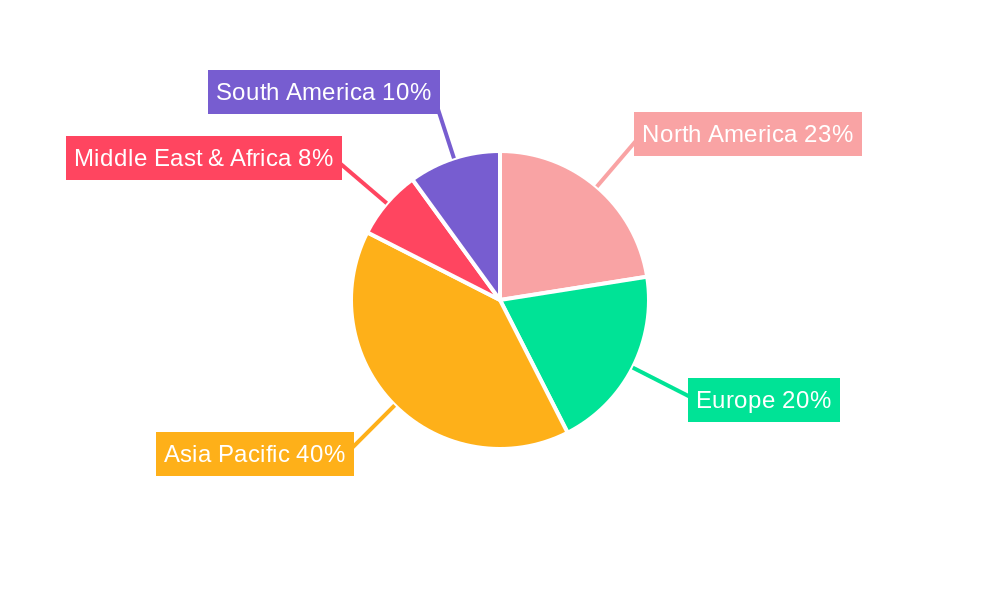
Consumer Electronics Display Devices Regional Market Share
Geographic Coverage of Consumer Electronics Display Devices
Consumer Electronics Display Devices REPORT HIGHLIGHTS
| Aspects | Details |
|---|---|
| Study Period | 2020-2034 |
| Base Year | 2025 |
| Estimated Year | 2026 |
| Forecast Period | 2026-2034 |
| Historical Period | 2020-2025 |
| Growth Rate | CAGR of 3.4% from 2020-2034 |
| Segmentation |
|
Table of Contents
- 1. Introduction
- 1.1. Research Scope
- 1.2. Market Segmentation
- 1.3. Research Methodology
- 1.4. Definitions and Assumptions
- 2. Executive Summary
- 2.1. Introduction
- 3. Market Dynamics
- 3.1. Introduction
- 3.2. Market Drivers
- 3.3. Market Restrains
- 3.4. Market Trends
- 4. Market Factor Analysis
- 4.1. Porters Five Forces
- 4.2. Supply/Value Chain
- 4.3. PESTEL analysis
- 4.4. Market Entropy
- 4.5. Patent/Trademark Analysis
- 5. Global Consumer Electronics Display Devices Analysis, Insights and Forecast, 2020-2032
- 5.1. Market Analysis, Insights and Forecast - by Application
- 5.1.1. Smartphone Displays
- 5.1.2. Tablet Display
- 5.1.3. Desktop Computer Display
- 5.1.4. Others
- 5.2. Market Analysis, Insights and Forecast - by Types
- 5.2.1. LCD Devices
- 5.2.2. LED Devices
- 5.2.3. OLED Devices
- 5.2.4. Others
- 5.3. Market Analysis, Insights and Forecast - by Region
- 5.3.1. North America
- 5.3.2. South America
- 5.3.3. Europe
- 5.3.4. Middle East & Africa
- 5.3.5. Asia Pacific
- 5.1. Market Analysis, Insights and Forecast - by Application
- 6. North America Consumer Electronics Display Devices Analysis, Insights and Forecast, 2020-2032
- 6.1. Market Analysis, Insights and Forecast - by Application
- 6.1.1. Smartphone Displays
- 6.1.2. Tablet Display
- 6.1.3. Desktop Computer Display
- 6.1.4. Others
- 6.2. Market Analysis, Insights and Forecast - by Types
- 6.2.1. LCD Devices
- 6.2.2. LED Devices
- 6.2.3. OLED Devices
- 6.2.4. Others
- 6.1. Market Analysis, Insights and Forecast - by Application
- 7. South America Consumer Electronics Display Devices Analysis, Insights and Forecast, 2020-2032
- 7.1. Market Analysis, Insights and Forecast - by Application
- 7.1.1. Smartphone Displays
- 7.1.2. Tablet Display
- 7.1.3. Desktop Computer Display
- 7.1.4. Others
- 7.2. Market Analysis, Insights and Forecast - by Types
- 7.2.1. LCD Devices
- 7.2.2. LED Devices
- 7.2.3. OLED Devices
- 7.2.4. Others
- 7.1. Market Analysis, Insights and Forecast - by Application
- 8. Europe Consumer Electronics Display Devices Analysis, Insights and Forecast, 2020-2032
- 8.1. Market Analysis, Insights and Forecast - by Application
- 8.1.1. Smartphone Displays
- 8.1.2. Tablet Display
- 8.1.3. Desktop Computer Display
- 8.1.4. Others
- 8.2. Market Analysis, Insights and Forecast - by Types
- 8.2.1. LCD Devices
- 8.2.2. LED Devices
- 8.2.3. OLED Devices
- 8.2.4. Others
- 8.1. Market Analysis, Insights and Forecast - by Application
- 9. Middle East & Africa Consumer Electronics Display Devices Analysis, Insights and Forecast, 2020-2032
- 9.1. Market Analysis, Insights and Forecast - by Application
- 9.1.1. Smartphone Displays
- 9.1.2. Tablet Display
- 9.1.3. Desktop Computer Display
- 9.1.4. Others
- 9.2. Market Analysis, Insights and Forecast - by Types
- 9.2.1. LCD Devices
- 9.2.2. LED Devices
- 9.2.3. OLED Devices
- 9.2.4. Others
- 9.1. Market Analysis, Insights and Forecast - by Application
- 10. Asia Pacific Consumer Electronics Display Devices Analysis, Insights and Forecast, 2020-2032
- 10.1. Market Analysis, Insights and Forecast - by Application
- 10.1.1. Smartphone Displays
- 10.1.2. Tablet Display
- 10.1.3. Desktop Computer Display
- 10.1.4. Others
- 10.2. Market Analysis, Insights and Forecast - by Types
- 10.2.1. LCD Devices
- 10.2.2. LED Devices
- 10.2.3. OLED Devices
- 10.2.4. Others
- 10.1. Market Analysis, Insights and Forecast - by Application
- 11. Competitive Analysis
- 11.1. Global Market Share Analysis 2025
- 11.2. Company Profiles
- 11.2.1 BOE
- 11.2.1.1. Overview
- 11.2.1.2. Products
- 11.2.1.3. SWOT Analysis
- 11.2.1.4. Recent Developments
- 11.2.1.5. Financials (Based on Availability)
- 11.2.2 Sony
- 11.2.2.1. Overview
- 11.2.2.2. Products
- 11.2.2.3. SWOT Analysis
- 11.2.2.4. Recent Developments
- 11.2.2.5. Financials (Based on Availability)
- 11.2.3 LG
- 11.2.3.1. Overview
- 11.2.3.2. Products
- 11.2.3.3. SWOT Analysis
- 11.2.3.4. Recent Developments
- 11.2.3.5. Financials (Based on Availability)
- 11.2.4 Panasonic
- 11.2.4.1. Overview
- 11.2.4.2. Products
- 11.2.4.3. SWOT Analysis
- 11.2.4.4. Recent Developments
- 11.2.4.5. Financials (Based on Availability)
- 11.2.5 Toshiba
- 11.2.5.1. Overview
- 11.2.5.2. Products
- 11.2.5.3. SWOT Analysis
- 11.2.5.4. Recent Developments
- 11.2.5.5. Financials (Based on Availability)
- 11.2.6 TCL
- 11.2.6.1. Overview
- 11.2.6.2. Products
- 11.2.6.3. SWOT Analysis
- 11.2.6.4. Recent Developments
- 11.2.6.5. Financials (Based on Availability)
- 11.2.7 Sharp
- 11.2.7.1. Overview
- 11.2.7.2. Products
- 11.2.7.3. SWOT Analysis
- 11.2.7.4. Recent Developments
- 11.2.7.5. Financials (Based on Availability)
- 11.2.8 AU Optronics
- 11.2.8.1. Overview
- 11.2.8.2. Products
- 11.2.8.3. SWOT Analysis
- 11.2.8.4. Recent Developments
- 11.2.8.5. Financials (Based on Availability)
- 11.2.9 Innolux
- 11.2.9.1. Overview
- 11.2.9.2. Products
- 11.2.9.3. SWOT Analysis
- 11.2.9.4. Recent Developments
- 11.2.9.5. Financials (Based on Availability)
- 11.2.10 Continental
- 11.2.10.1. Overview
- 11.2.10.2. Products
- 11.2.10.3. SWOT Analysis
- 11.2.10.4. Recent Developments
- 11.2.10.5. Financials (Based on Availability)
- 11.2.11 DENSO
- 11.2.11.1. Overview
- 11.2.11.2. Products
- 11.2.11.3. SWOT Analysis
- 11.2.11.4. Recent Developments
- 11.2.11.5. Financials (Based on Availability)
- 11.2.12 New Vision Display
- 11.2.12.1. Overview
- 11.2.12.2. Products
- 11.2.12.3. SWOT Analysis
- 11.2.12.4. Recent Developments
- 11.2.12.5. Financials (Based on Availability)
- 11.2.13 ActiveLight
- 11.2.13.1. Overview
- 11.2.13.2. Products
- 11.2.13.3. SWOT Analysis
- 11.2.13.4. Recent Developments
- 11.2.13.5. Financials (Based on Availability)
- 11.2.14 Zenith Electronics
- 11.2.14.1. Overview
- 11.2.14.2. Products
- 11.2.14.3. SWOT Analysis
- 11.2.14.4. Recent Developments
- 11.2.14.5. Financials (Based on Availability)
- 11.2.1 BOE
List of Figures
- Figure 1: Global Consumer Electronics Display Devices Revenue Breakdown (undefined, %) by Region 2025 & 2033
- Figure 2: North America Consumer Electronics Display Devices Revenue (undefined), by Application 2025 & 2033
- Figure 3: North America Consumer Electronics Display Devices Revenue Share (%), by Application 2025 & 2033
- Figure 4: North America Consumer Electronics Display Devices Revenue (undefined), by Types 2025 & 2033
- Figure 5: North America Consumer Electronics Display Devices Revenue Share (%), by Types 2025 & 2033
- Figure 6: North America Consumer Electronics Display Devices Revenue (undefined), by Country 2025 & 2033
- Figure 7: North America Consumer Electronics Display Devices Revenue Share (%), by Country 2025 & 2033
- Figure 8: South America Consumer Electronics Display Devices Revenue (undefined), by Application 2025 & 2033
- Figure 9: South America Consumer Electronics Display Devices Revenue Share (%), by Application 2025 & 2033
- Figure 10: South America Consumer Electronics Display Devices Revenue (undefined), by Types 2025 & 2033
- Figure 11: South America Consumer Electronics Display Devices Revenue Share (%), by Types 2025 & 2033
- Figure 12: South America Consumer Electronics Display Devices Revenue (undefined), by Country 2025 & 2033
- Figure 13: South America Consumer Electronics Display Devices Revenue Share (%), by Country 2025 & 2033
- Figure 14: Europe Consumer Electronics Display Devices Revenue (undefined), by Application 2025 & 2033
- Figure 15: Europe Consumer Electronics Display Devices Revenue Share (%), by Application 2025 & 2033
- Figure 16: Europe Consumer Electronics Display Devices Revenue (undefined), by Types 2025 & 2033
- Figure 17: Europe Consumer Electronics Display Devices Revenue Share (%), by Types 2025 & 2033
- Figure 18: Europe Consumer Electronics Display Devices Revenue (undefined), by Country 2025 & 2033
- Figure 19: Europe Consumer Electronics Display Devices Revenue Share (%), by Country 2025 & 2033
- Figure 20: Middle East & Africa Consumer Electronics Display Devices Revenue (undefined), by Application 2025 & 2033
- Figure 21: Middle East & Africa Consumer Electronics Display Devices Revenue Share (%), by Application 2025 & 2033
- Figure 22: Middle East & Africa Consumer Electronics Display Devices Revenue (undefined), by Types 2025 & 2033
- Figure 23: Middle East & Africa Consumer Electronics Display Devices Revenue Share (%), by Types 2025 & 2033
- Figure 24: Middle East & Africa Consumer Electronics Display Devices Revenue (undefined), by Country 2025 & 2033
- Figure 25: Middle East & Africa Consumer Electronics Display Devices Revenue Share (%), by Country 2025 & 2033
- Figure 26: Asia Pacific Consumer Electronics Display Devices Revenue (undefined), by Application 2025 & 2033
- Figure 27: Asia Pacific Consumer Electronics Display Devices Revenue Share (%), by Application 2025 & 2033
- Figure 28: Asia Pacific Consumer Electronics Display Devices Revenue (undefined), by Types 2025 & 2033
- Figure 29: Asia Pacific Consumer Electronics Display Devices Revenue Share (%), by Types 2025 & 2033
- Figure 30: Asia Pacific Consumer Electronics Display Devices Revenue (undefined), by Country 2025 & 2033
- Figure 31: Asia Pacific Consumer Electronics Display Devices Revenue Share (%), by Country 2025 & 2033
List of Tables
- Table 1: Global Consumer Electronics Display Devices Revenue undefined Forecast, by Application 2020 & 2033
- Table 2: Global Consumer Electronics Display Devices Revenue undefined Forecast, by Types 2020 & 2033
- Table 3: Global Consumer Electronics Display Devices Revenue undefined Forecast, by Region 2020 & 2033
- Table 4: Global Consumer Electronics Display Devices Revenue undefined Forecast, by Application 2020 & 2033
- Table 5: Global Consumer Electronics Display Devices Revenue undefined Forecast, by Types 2020 & 2033
- Table 6: Global Consumer Electronics Display Devices Revenue undefined Forecast, by Country 2020 & 2033
- Table 7: United States Consumer Electronics Display Devices Revenue (undefined) Forecast, by Application 2020 & 2033
- Table 8: Canada Consumer Electronics Display Devices Revenue (undefined) Forecast, by Application 2020 & 2033
- Table 9: Mexico Consumer Electronics Display Devices Revenue (undefined) Forecast, by Application 2020 & 2033
- Table 10: Global Consumer Electronics Display Devices Revenue undefined Forecast, by Application 2020 & 2033
- Table 11: Global Consumer Electronics Display Devices Revenue undefined Forecast, by Types 2020 & 2033
- Table 12: Global Consumer Electronics Display Devices Revenue undefined Forecast, by Country 2020 & 2033
- Table 13: Brazil Consumer Electronics Display Devices Revenue (undefined) Forecast, by Application 2020 & 2033
- Table 14: Argentina Consumer Electronics Display Devices Revenue (undefined) Forecast, by Application 2020 & 2033
- Table 15: Rest of South America Consumer Electronics Display Devices Revenue (undefined) Forecast, by Application 2020 & 2033
- Table 16: Global Consumer Electronics Display Devices Revenue undefined Forecast, by Application 2020 & 2033
- Table 17: Global Consumer Electronics Display Devices Revenue undefined Forecast, by Types 2020 & 2033
- Table 18: Global Consumer Electronics Display Devices Revenue undefined Forecast, by Country 2020 & 2033
- Table 19: United Kingdom Consumer Electronics Display Devices Revenue (undefined) Forecast, by Application 2020 & 2033
- Table 20: Germany Consumer Electronics Display Devices Revenue (undefined) Forecast, by Application 2020 & 2033
- Table 21: France Consumer Electronics Display Devices Revenue (undefined) Forecast, by Application 2020 & 2033
- Table 22: Italy Consumer Electronics Display Devices Revenue (undefined) Forecast, by Application 2020 & 2033
- Table 23: Spain Consumer Electronics Display Devices Revenue (undefined) Forecast, by Application 2020 & 2033
- Table 24: Russia Consumer Electronics Display Devices Revenue (undefined) Forecast, by Application 2020 & 2033
- Table 25: Benelux Consumer Electronics Display Devices Revenue (undefined) Forecast, by Application 2020 & 2033
- Table 26: Nordics Consumer Electronics Display Devices Revenue (undefined) Forecast, by Application 2020 & 2033
- Table 27: Rest of Europe Consumer Electronics Display Devices Revenue (undefined) Forecast, by Application 2020 & 2033
- Table 28: Global Consumer Electronics Display Devices Revenue undefined Forecast, by Application 2020 & 2033
- Table 29: Global Consumer Electronics Display Devices Revenue undefined Forecast, by Types 2020 & 2033
- Table 30: Global Consumer Electronics Display Devices Revenue undefined Forecast, by Country 2020 & 2033
- Table 31: Turkey Consumer Electronics Display Devices Revenue (undefined) Forecast, by Application 2020 & 2033
- Table 32: Israel Consumer Electronics Display Devices Revenue (undefined) Forecast, by Application 2020 & 2033
- Table 33: GCC Consumer Electronics Display Devices Revenue (undefined) Forecast, by Application 2020 & 2033
- Table 34: North Africa Consumer Electronics Display Devices Revenue (undefined) Forecast, by Application 2020 & 2033
- Table 35: South Africa Consumer Electronics Display Devices Revenue (undefined) Forecast, by Application 2020 & 2033
- Table 36: Rest of Middle East & Africa Consumer Electronics Display Devices Revenue (undefined) Forecast, by Application 2020 & 2033
- Table 37: Global Consumer Electronics Display Devices Revenue undefined Forecast, by Application 2020 & 2033
- Table 38: Global Consumer Electronics Display Devices Revenue undefined Forecast, by Types 2020 & 2033
- Table 39: Global Consumer Electronics Display Devices Revenue undefined Forecast, by Country 2020 & 2033
- Table 40: China Consumer Electronics Display Devices Revenue (undefined) Forecast, by Application 2020 & 2033
- Table 41: India Consumer Electronics Display Devices Revenue (undefined) Forecast, by Application 2020 & 2033
- Table 42: Japan Consumer Electronics Display Devices Revenue (undefined) Forecast, by Application 2020 & 2033
- Table 43: South Korea Consumer Electronics Display Devices Revenue (undefined) Forecast, by Application 2020 & 2033
- Table 44: ASEAN Consumer Electronics Display Devices Revenue (undefined) Forecast, by Application 2020 & 2033
- Table 45: Oceania Consumer Electronics Display Devices Revenue (undefined) Forecast, by Application 2020 & 2033
- Table 46: Rest of Asia Pacific Consumer Electronics Display Devices Revenue (undefined) Forecast, by Application 2020 & 2033
Frequently Asked Questions
1. What is the projected Compound Annual Growth Rate (CAGR) of the Consumer Electronics Display Devices?
The projected CAGR is approximately 3.4%.
2. Which companies are prominent players in the Consumer Electronics Display Devices?
Key companies in the market include BOE, Sony, LG, Panasonic, Toshiba, TCL, Sharp, AU Optronics, Innolux, Continental, DENSO, New Vision Display, ActiveLight, Zenith Electronics.
3. What are the main segments of the Consumer Electronics Display Devices?
The market segments include Application, Types.
4. Can you provide details about the market size?
The market size is estimated to be USD XXX N/A as of 2022.
5. What are some drivers contributing to market growth?
N/A
6. What are the notable trends driving market growth?
N/A
7. Are there any restraints impacting market growth?
N/A
8. Can you provide examples of recent developments in the market?
N/A
9. What pricing options are available for accessing the report?
Pricing options include single-user, multi-user, and enterprise licenses priced at USD 4900.00, USD 7350.00, and USD 9800.00 respectively.
10. Is the market size provided in terms of value or volume?
The market size is provided in terms of value, measured in N/A.
11. Are there any specific market keywords associated with the report?
Yes, the market keyword associated with the report is "Consumer Electronics Display Devices," which aids in identifying and referencing the specific market segment covered.
12. How do I determine which pricing option suits my needs best?
The pricing options vary based on user requirements and access needs. Individual users may opt for single-user licenses, while businesses requiring broader access may choose multi-user or enterprise licenses for cost-effective access to the report.
13. Are there any additional resources or data provided in the Consumer Electronics Display Devices report?
While the report offers comprehensive insights, it's advisable to review the specific contents or supplementary materials provided to ascertain if additional resources or data are available.
14. How can I stay updated on further developments or reports in the Consumer Electronics Display Devices?
To stay informed about further developments, trends, and reports in the Consumer Electronics Display Devices, consider subscribing to industry newsletters, following relevant companies and organizations, or regularly checking reputable industry news sources and publications.
Methodology
Step 1 - Identification of Relevant Samples Size from Population Database



Step 2 - Approaches for Defining Global Market Size (Value, Volume* & Price*)

Note*: In applicable scenarios
Step 3 - Data Sources
Primary Research
- Web Analytics
- Survey Reports
- Research Institute
- Latest Research Reports
- Opinion Leaders
Secondary Research
- Annual Reports
- White Paper
- Latest Press Release
- Industry Association
- Paid Database
- Investor Presentations

Step 4 - Data Triangulation
Involves using different sources of information in order to increase the validity of a study
These sources are likely to be stakeholders in a program - participants, other researchers, program staff, other community members, and so on.
Then we put all data in single framework & apply various statistical tools to find out the dynamic on the market.
During the analysis stage, feedback from the stakeholder groups would be compared to determine areas of agreement as well as areas of divergence