


Key Insights
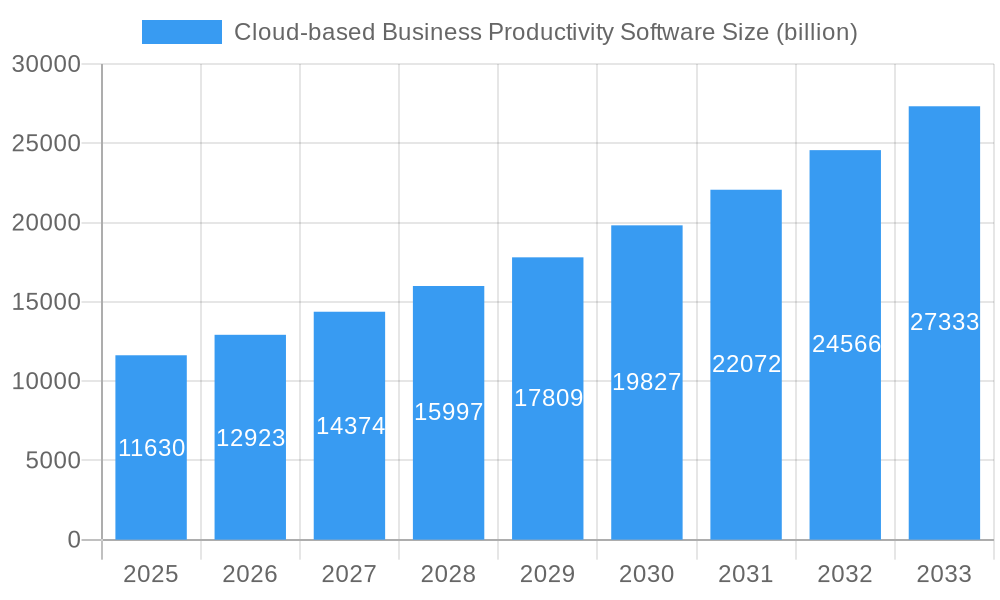
The Cloud-based Business Productivity Software market is poised for significant expansion, projected to reach a substantial $11.63 billion by 2025. This robust growth is underpinned by a compelling Compound Annual Growth Rate (CAGR) of 11.16% anticipated over the forecast period. The market's expansion is primarily fueled by the increasing adoption of digital transformation initiatives across businesses of all sizes, coupled with the inherent benefits of cloud solutions such as scalability, accessibility, and cost-efficiency. Small and Medium-sized Enterprises (SMEs) are increasingly leveraging these tools to enhance operational efficiency and competitiveness, while large enterprises are integrating them for seamless collaboration and workflow management. The demand for features that foster effective teamwork, streamlined scheduling, and integrated services is escalating, driving innovation and market penetration.
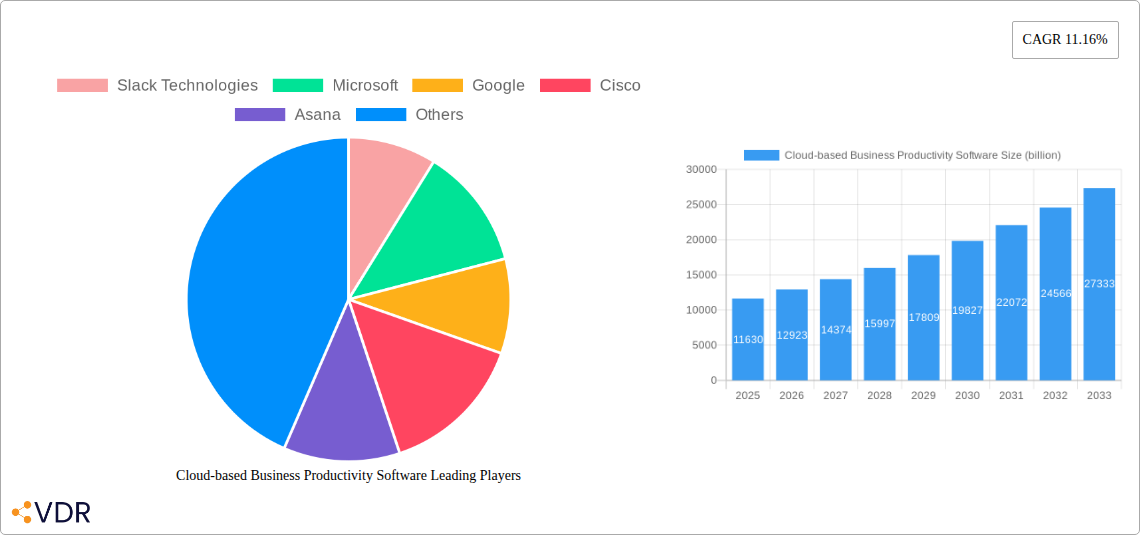
Cloud-based Business Productivity Software Market Size (In Billion)

The market is characterized by dynamic trends, with a strong emphasis on collaborative platforms that facilitate remote and hybrid work models. Advanced features like AI-powered task management, real-time communication, and comprehensive project tracking are becoming standard. While the market is experiencing strong tailwinds, potential restraints include data security concerns and the need for robust internet infrastructure in certain regions. However, these challenges are being addressed through advancements in cloud security protocols and increased investment in digital infrastructure. Key players like Microsoft, Google, and Slack Technologies are continuously innovating to capture market share by offering comprehensive suites of productivity tools. The Asia Pacific region is emerging as a particularly high-growth area, driven by rapid digitalization and a burgeoning startup ecosystem.
Cloud-based Business Productivity Software Company Market Share
Here's a comprehensive, SEO-optimized report description for Cloud-based Business Productivity Software, designed for maximum visibility and engagement.
Report Title: Cloud-based Business Productivity Software Market: Dynamics, Trends, and Future Outlook (2019-2033)
Report Description:
Gain unparalleled insights into the dynamic Cloud-based Business Productivity Software market, a critical segment valued at billions. This in-depth report, covering the historical period of 2019-2024, base year 2025, and a robust forecast period of 2025-2033, analyzes market size, growth drivers, and emerging opportunities. We delve into the competitive landscape featuring industry giants like Microsoft, Google, Slack Technologies, and Cisco, alongside agile players such as Asana, Freshworks, Slab, and Atlassian. Understand how these solutions cater to both Small and Medium-sized Enterprises (SMEs) and Large Enterprises, driving advancements in Teamwork, Schedule management, and Integrated Services. This report is essential for stakeholders seeking to navigate the evolving future of business collaboration and efficiency.
Cloud-based Business Productivity Software Market Dynamics & Structure
The cloud-based business productivity software market is characterized by a dynamic and evolving structure, marked by increasing innovation and strategic consolidation. Market concentration is moderately fragmented, with dominant players like Microsoft and Google holding significant shares, while specialized vendors such as Slack Technologies, Asana, and Atlassian carve out strong niches. Technological innovation is a primary driver, fueled by advancements in AI, machine learning for workflow automation, and enhanced collaboration features. Regulatory frameworks, particularly around data privacy and security (e.g., GDPR, CCPA), influence product development and market entry. Competitive product substitutes are readily available, ranging from standalone project management tools to comprehensive enterprise resource planning (ERP) systems with integrated productivity modules. End-user demographics are diverse, with a growing demand from both SMEs seeking cost-effective solutions and large enterprises requiring scalable, feature-rich platforms. Mergers and acquisitions (M&A) trends are active, as larger companies acquire innovative startups to expand their product portfolios and market reach. For example, the historical period saw xx M&A deals in the collaboration software space.
- Market Concentration: Moderately fragmented with key players like Microsoft, Google, and specialized vendors.
- Technological Innovation Drivers: AI/ML for automation, enhanced collaboration, seamless integration.
- Regulatory Frameworks: Data privacy (GDPR, CCPA) and security compliance are paramount.
- Competitive Product Substitutes: Standalone tools, ERP systems with integrated modules.
- End-User Demographics: SMEs seeking affordability, Large Enterprises demanding scalability.
- M&A Trends: Active consolidation to acquire innovative technologies and customer bases.
Cloud-based Business Productivity Software Growth Trends & Insights
The global cloud-based business productivity software market is projected for substantial growth, driven by the persistent need for enhanced operational efficiency and remote work enablement. The market size is expected to witness a Compound Annual Growth Rate (CAGR) of xx% during the forecast period. This expansion is fueled by increasing adoption rates across all business segments, particularly SMEs, which are leveraging these solutions to compete more effectively with larger organizations. Technological disruptions, such as the pervasive integration of Artificial Intelligence (AI) for smart task management, predictive analytics for resource allocation, and advanced communication features, are fundamentally reshaping how businesses operate. Consumer behavior shifts are also playing a significant role, with a growing preference for subscription-based models, intuitive user interfaces, and cross-platform accessibility. The market penetration for cloud-based productivity tools has steadily increased, reaching xx% by the base year of 2025. This surge is attributed to the undeniable benefits of scalability, cost-effectiveness, and the ability to foster seamless collaboration irrespective of geographical location. The historical data from 2019-2024 indicates a consistent upward trajectory, with significant investments in research and development by leading companies like Microsoft, Google, and Slack Technologies. The ongoing digital transformation initiatives across various industries further solidify the demand for these sophisticated software solutions. Future growth will be significantly influenced by the continued evolution of collaborative technologies and the increasing reliance on data-driven decision-making.
Dominant Regions, Countries, or Segments in Cloud-based Business Productivity Software
The North America region is a dominant force in the cloud-based business productivity software market, driven by a combination of robust economic policies, advanced technological infrastructure, and a high concentration of large enterprises and innovative SMEs. The United States, in particular, leads this dominance with a significant market share, estimated at xx% of the global market by the forecast period. This leadership is bolstered by early adoption of cloud technologies, a highly skilled workforce, and a culture that embraces digital transformation. Key drivers include substantial government and private sector investments in R&D, a thriving startup ecosystem, and a strong demand for solutions that enhance remote work capabilities and cross-functional collaboration. The Application segment of Large Enterprises contributes significantly to this regional dominance, as these organizations have the resources and the strategic imperative to invest in comprehensive productivity suites from providers like Microsoft, Cisco, and Google. However, the SME segment is also a crucial growth engine, with a burgeoning demand for agile and cost-effective solutions from companies such as Freshworks and Slab.
In terms of Types, Teamwork and Integrated Services segments are pivotal. Teamwork applications, exemplified by Slack Technologies and Asana, are essential for fostering collaboration and communication in distributed workforces, a trend amplified post-pandemic. Integrated Services, encompassing a broader suite of functionalities that include project management, CRM, and communication tools, are increasingly sought after by businesses looking for consolidated platforms to streamline operations. The market share for these segments within North America is substantial, reflecting the region's advanced business environment. Economic policies that encourage cloud adoption and digital innovation, alongside well-developed internet infrastructure, provide a fertile ground for the growth of cloud-based business productivity software. Furthermore, a proactive approach to cybersecurity and data governance by both businesses and regulatory bodies builds trust and encourages wider adoption of these cloud-native solutions. The region’s continuous pursuit of efficiency and competitive advantage ensures its continued leadership in this market.
Cloud-based Business Productivity Software Product Landscape
The cloud-based business productivity software landscape is defined by continuous innovation and a focus on user-centric design. Product development is centered on enhancing collaboration, automating workflows, and providing seamless integration across diverse business functions. Leading companies are prioritizing AI-powered features, such as intelligent task prioritization, automated meeting summaries, and predictive analytics for resource management. The integration of communication tools with project management and document sharing capabilities remains a key unique selling proposition. For instance, platforms are increasingly offering real-time co-authoring, advanced version control, and contextual communication within projects. Performance metrics are evaluated based on uptime, data security, scalability, and the ability to support a diverse range of devices and operating systems. Technological advancements are geared towards simplifying complex processes, improving user experience, and delivering measurable ROI for businesses of all sizes.
Key Drivers, Barriers & Challenges in Cloud-based Business Productivity Software
Key Drivers:
- Digital Transformation Imperative: Businesses worldwide are accelerating digital transformation initiatives, necessitating robust cloud-based productivity tools.
- Remote & Hybrid Work Models: The sustained adoption of remote and hybrid work environments drives demand for seamless collaboration and communication solutions.
- AI & Automation Advancements: Integration of AI and machine learning enables intelligent automation of routine tasks, boosting efficiency.
- Cost-Effectiveness & Scalability: Cloud solutions offer flexible subscription models and scalability, attractive to SMEs and growing enterprises.
- Enhanced Collaboration Features: Continuous innovation in real-time collaboration, communication, and document sharing fosters adoption.
Key Barriers & Challenges:
- Data Security & Privacy Concerns: Perceived risks related to data breaches and compliance with evolving regulations remain a significant barrier for some organizations.
- Integration Complexities: Integrating new cloud software with existing legacy systems can be challenging and costly, estimated to add xx% to implementation time.
- Vendor Lock-in Concerns: Fear of being tied to a single vendor's ecosystem can deter some businesses from full cloud adoption.
- Employee Training & Adoption: Ensuring widespread employee adoption and proficiency with new tools requires effective training programs, impacting implementation speed.
- Competitive Saturation: The market is highly competitive, making it challenging for new entrants to gain traction and for existing players to differentiate.
Emerging Opportunities in Cloud-based Business Productivity Software
Emerging opportunities in the cloud-based business productivity software market lie in the deeper integration of AI for hyper-personalization and proactive support. There's a growing demand for industry-specific solutions that cater to the unique workflows of sectors like healthcare, finance, and education. The expansion of no-code/low-code functionalities within productivity suites empowers citizen developers to create custom solutions, further democratizing tool adoption. Furthermore, the increasing focus on employee well-being and work-life balance presents an opportunity for tools that promote efficient time management and reduce digital fatigue. Untapped markets in developing economies also offer significant growth potential as digital infrastructure improves.
Growth Accelerators in the Cloud-based Business Productivity Software Industry
Several catalysts are accelerating long-term growth in the cloud-based business productivity software industry. Technological breakthroughs, particularly in natural language processing (NLP) for more intuitive user interfaces and advanced analytics for predictive insights, are continuously enhancing product value. Strategic partnerships between software providers and hardware manufacturers, as well as complementary service providers, are expanding market reach and creating integrated ecosystems. Market expansion strategies, including aggressive penetration into emerging economies and targeting niche industry verticals with tailored solutions, are significant growth drivers. The ongoing shift towards subscription-based revenue models ensures predictable income streams and encourages continuous product development and customer retention.
Key Players Shaping the Cloud-based Business Productivity Software Market
- Slack Technologies
- Microsoft
- Cisco
- Asana
- Freshworks
- Slab
- Atlassian
Notable Milestones in Cloud-based Business Productivity Software Sector
- 2019: Slack Technologies IPO, signaling increased investor confidence in the collaboration software market.
- 2020: Microsoft Teams experiences exponential growth due to the surge in remote work.
- 2021: Google Workspace introduces enhanced collaboration features and AI-powered tools.
- 2022: Asana expands its integration capabilities with a focus on enterprise-level project management.
- 2023: Cisco strengthens its collaboration portfolio with strategic acquisitions in video conferencing and AI.
- 2024: Freshworks continues its expansion in CRM and customer support integrated productivity solutions.
- 2025 (Projected): Slab further enhances its knowledge management features for distributed teams.
- 2025-2033 (Forecast): Anticipated significant advancements in AI-driven workflow automation and specialized industry solutions.
In-Depth Cloud-based Business Productivity Software Market Outlook
The future outlook for the cloud-based business productivity software market is exceptionally strong, driven by a convergence of technological advancements and evolving business needs. Growth accelerators will continue to be fueled by intelligent automation powered by AI, leading to more proactive and personalized user experiences. The expansion of integrated service offerings, creating unified platforms for all business operations, will be a key trend. Strategic partnerships and the development of industry-specific solutions will unlock new market segments. As businesses increasingly prioritize agility, efficiency, and seamless collaboration, the demand for sophisticated, cloud-native productivity tools is set to grow exponentially, offering significant opportunities for innovation and market leadership.
Cloud-based Business Productivity Software Segmentation
-
1. Application
- 1.1. SMEs
- 1.2. Large Enterprises
-
2. Types
- 2.1. Teamwork
- 2.2. Schedule
- 2.3. Integrated Services
- 2.4. Other
Cloud-based Business Productivity Software Segmentation By Geography
-
1. North America
- 1.1. United States
- 1.2. Canada
- 1.3. Mexico
-
2. South America
- 2.1. Brazil
- 2.2. Argentina
- 2.3. Rest of South America
-
3. Europe
- 3.1. United Kingdom
- 3.2. Germany
- 3.3. France
- 3.4. Italy
- 3.5. Spain
- 3.6. Russia
- 3.7. Benelux
- 3.8. Nordics
- 3.9. Rest of Europe
-
4. Middle East & Africa
- 4.1. Turkey
- 4.2. Israel
- 4.3. GCC
- 4.4. North Africa
- 4.5. South Africa
- 4.6. Rest of Middle East & Africa
-
5. Asia Pacific
- 5.1. China
- 5.2. India
- 5.3. Japan
- 5.4. South Korea
- 5.5. ASEAN
- 5.6. Oceania
- 5.7. Rest of Asia Pacific
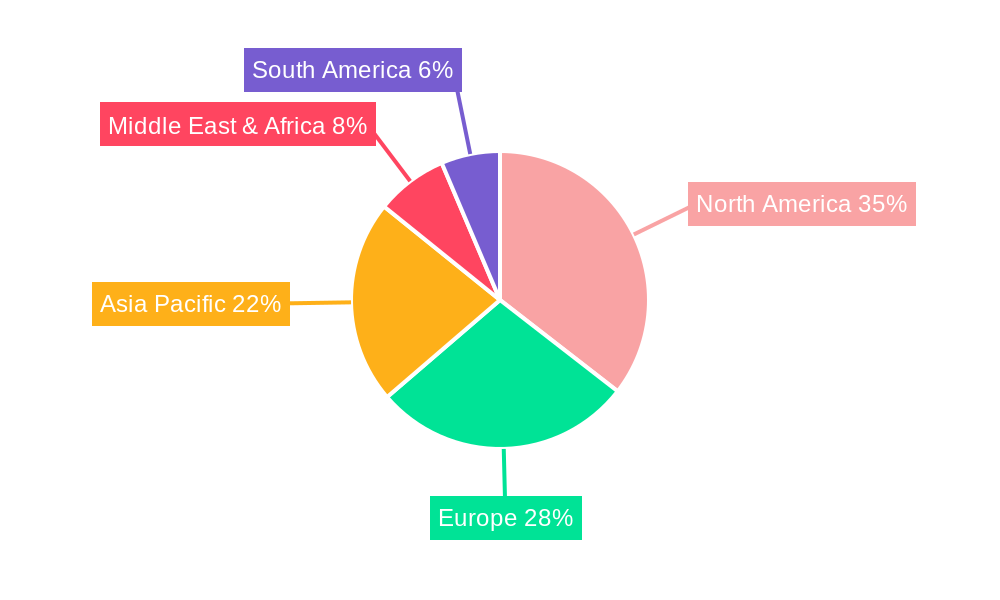
Cloud-based Business Productivity Software Regional Market Share
Geographic Coverage of Cloud-based Business Productivity Software
Cloud-based Business Productivity Software REPORT HIGHLIGHTS
| Aspects | Details |
|---|---|
| Study Period | 2020-2034 |
| Base Year | 2025 |
| Estimated Year | 2026 |
| Forecast Period | 2026-2034 |
| Historical Period | 2020-2025 |
| Growth Rate | CAGR of 11.16% from 2020-2034 |
| Segmentation |
|
Table of Contents
- 1. Introduction
- 1.1. Research Scope
- 1.2. Market Segmentation
- 1.3. Research Methodology
- 1.4. Definitions and Assumptions
- 2. Executive Summary
- 2.1. Introduction
- 3. Market Dynamics
- 3.1. Introduction
- 3.2. Market Drivers
- 3.3. Market Restrains
- 3.4. Market Trends
- 4. Market Factor Analysis
- 4.1. Porters Five Forces
- 4.2. Supply/Value Chain
- 4.3. PESTEL analysis
- 4.4. Market Entropy
- 4.5. Patent/Trademark Analysis
- 5. Global Cloud-based Business Productivity Software Analysis, Insights and Forecast, 2020-2032
- 5.1. Market Analysis, Insights and Forecast - by Application
- 5.1.1. SMEs
- 5.1.2. Large Enterprises
- 5.2. Market Analysis, Insights and Forecast - by Types
- 5.2.1. Teamwork
- 5.2.2. Schedule
- 5.2.3. Integrated Services
- 5.2.4. Other
- 5.3. Market Analysis, Insights and Forecast - by Region
- 5.3.1. North America
- 5.3.2. South America
- 5.3.3. Europe
- 5.3.4. Middle East & Africa
- 5.3.5. Asia Pacific
- 5.1. Market Analysis, Insights and Forecast - by Application
- 6. North America Cloud-based Business Productivity Software Analysis, Insights and Forecast, 2020-2032
- 6.1. Market Analysis, Insights and Forecast - by Application
- 6.1.1. SMEs
- 6.1.2. Large Enterprises
- 6.2. Market Analysis, Insights and Forecast - by Types
- 6.2.1. Teamwork
- 6.2.2. Schedule
- 6.2.3. Integrated Services
- 6.2.4. Other
- 6.1. Market Analysis, Insights and Forecast - by Application
- 7. South America Cloud-based Business Productivity Software Analysis, Insights and Forecast, 2020-2032
- 7.1. Market Analysis, Insights and Forecast - by Application
- 7.1.1. SMEs
- 7.1.2. Large Enterprises
- 7.2. Market Analysis, Insights and Forecast - by Types
- 7.2.1. Teamwork
- 7.2.2. Schedule
- 7.2.3. Integrated Services
- 7.2.4. Other
- 7.1. Market Analysis, Insights and Forecast - by Application
- 8. Europe Cloud-based Business Productivity Software Analysis, Insights and Forecast, 2020-2032
- 8.1. Market Analysis, Insights and Forecast - by Application
- 8.1.1. SMEs
- 8.1.2. Large Enterprises
- 8.2. Market Analysis, Insights and Forecast - by Types
- 8.2.1. Teamwork
- 8.2.2. Schedule
- 8.2.3. Integrated Services
- 8.2.4. Other
- 8.1. Market Analysis, Insights and Forecast - by Application
- 9. Middle East & Africa Cloud-based Business Productivity Software Analysis, Insights and Forecast, 2020-2032
- 9.1. Market Analysis, Insights and Forecast - by Application
- 9.1.1. SMEs
- 9.1.2. Large Enterprises
- 9.2. Market Analysis, Insights and Forecast - by Types
- 9.2.1. Teamwork
- 9.2.2. Schedule
- 9.2.3. Integrated Services
- 9.2.4. Other
- 9.1. Market Analysis, Insights and Forecast - by Application
- 10. Asia Pacific Cloud-based Business Productivity Software Analysis, Insights and Forecast, 2020-2032
- 10.1. Market Analysis, Insights and Forecast - by Application
- 10.1.1. SMEs
- 10.1.2. Large Enterprises
- 10.2. Market Analysis, Insights and Forecast - by Types
- 10.2.1. Teamwork
- 10.2.2. Schedule
- 10.2.3. Integrated Services
- 10.2.4. Other
- 10.1. Market Analysis, Insights and Forecast - by Application
- 11. Competitive Analysis
- 11.1. Global Market Share Analysis 2025
- 11.2. Company Profiles
- 11.2.1 Slack Technologies
- 11.2.1.1. Overview
- 11.2.1.2. Products
- 11.2.1.3. SWOT Analysis
- 11.2.1.4. Recent Developments
- 11.2.1.5. Financials (Based on Availability)
- 11.2.2 Microsoft
- 11.2.2.1. Overview
- 11.2.2.2. Products
- 11.2.2.3. SWOT Analysis
- 11.2.2.4. Recent Developments
- 11.2.2.5. Financials (Based on Availability)
- 11.2.3 Google
- 11.2.3.1. Overview
- 11.2.3.2. Products
- 11.2.3.3. SWOT Analysis
- 11.2.3.4. Recent Developments
- 11.2.3.5. Financials (Based on Availability)
- 11.2.4 Cisco
- 11.2.4.1. Overview
- 11.2.4.2. Products
- 11.2.4.3. SWOT Analysis
- 11.2.4.4. Recent Developments
- 11.2.4.5. Financials (Based on Availability)
- 11.2.5 Asana
- 11.2.5.1. Overview
- 11.2.5.2. Products
- 11.2.5.3. SWOT Analysis
- 11.2.5.4. Recent Developments
- 11.2.5.5. Financials (Based on Availability)
- 11.2.6 Freshworks
- 11.2.6.1. Overview
- 11.2.6.2. Products
- 11.2.6.3. SWOT Analysis
- 11.2.6.4. Recent Developments
- 11.2.6.5. Financials (Based on Availability)
- 11.2.7 Slab
- 11.2.7.1. Overview
- 11.2.7.2. Products
- 11.2.7.3. SWOT Analysis
- 11.2.7.4. Recent Developments
- 11.2.7.5. Financials (Based on Availability)
- 11.2.8 Atlassian
- 11.2.8.1. Overview
- 11.2.8.2. Products
- 11.2.8.3. SWOT Analysis
- 11.2.8.4. Recent Developments
- 11.2.8.5. Financials (Based on Availability)
- 11.2.1 Slack Technologies
List of Figures
- Figure 1: Global Cloud-based Business Productivity Software Revenue Breakdown (billion, %) by Region 2025 & 2033
- Figure 2: North America Cloud-based Business Productivity Software Revenue (billion), by Application 2025 & 2033
- Figure 3: North America Cloud-based Business Productivity Software Revenue Share (%), by Application 2025 & 2033
- Figure 4: North America Cloud-based Business Productivity Software Revenue (billion), by Types 2025 & 2033
- Figure 5: North America Cloud-based Business Productivity Software Revenue Share (%), by Types 2025 & 2033
- Figure 6: North America Cloud-based Business Productivity Software Revenue (billion), by Country 2025 & 2033
- Figure 7: North America Cloud-based Business Productivity Software Revenue Share (%), by Country 2025 & 2033
- Figure 8: South America Cloud-based Business Productivity Software Revenue (billion), by Application 2025 & 2033
- Figure 9: South America Cloud-based Business Productivity Software Revenue Share (%), by Application 2025 & 2033
- Figure 10: South America Cloud-based Business Productivity Software Revenue (billion), by Types 2025 & 2033
- Figure 11: South America Cloud-based Business Productivity Software Revenue Share (%), by Types 2025 & 2033
- Figure 12: South America Cloud-based Business Productivity Software Revenue (billion), by Country 2025 & 2033
- Figure 13: South America Cloud-based Business Productivity Software Revenue Share (%), by Country 2025 & 2033
- Figure 14: Europe Cloud-based Business Productivity Software Revenue (billion), by Application 2025 & 2033
- Figure 15: Europe Cloud-based Business Productivity Software Revenue Share (%), by Application 2025 & 2033
- Figure 16: Europe Cloud-based Business Productivity Software Revenue (billion), by Types 2025 & 2033
- Figure 17: Europe Cloud-based Business Productivity Software Revenue Share (%), by Types 2025 & 2033
- Figure 18: Europe Cloud-based Business Productivity Software Revenue (billion), by Country 2025 & 2033
- Figure 19: Europe Cloud-based Business Productivity Software Revenue Share (%), by Country 2025 & 2033
- Figure 20: Middle East & Africa Cloud-based Business Productivity Software Revenue (billion), by Application 2025 & 2033
- Figure 21: Middle East & Africa Cloud-based Business Productivity Software Revenue Share (%), by Application 2025 & 2033
- Figure 22: Middle East & Africa Cloud-based Business Productivity Software Revenue (billion), by Types 2025 & 2033
- Figure 23: Middle East & Africa Cloud-based Business Productivity Software Revenue Share (%), by Types 2025 & 2033
- Figure 24: Middle East & Africa Cloud-based Business Productivity Software Revenue (billion), by Country 2025 & 2033
- Figure 25: Middle East & Africa Cloud-based Business Productivity Software Revenue Share (%), by Country 2025 & 2033
- Figure 26: Asia Pacific Cloud-based Business Productivity Software Revenue (billion), by Application 2025 & 2033
- Figure 27: Asia Pacific Cloud-based Business Productivity Software Revenue Share (%), by Application 2025 & 2033
- Figure 28: Asia Pacific Cloud-based Business Productivity Software Revenue (billion), by Types 2025 & 2033
- Figure 29: Asia Pacific Cloud-based Business Productivity Software Revenue Share (%), by Types 2025 & 2033
- Figure 30: Asia Pacific Cloud-based Business Productivity Software Revenue (billion), by Country 2025 & 2033
- Figure 31: Asia Pacific Cloud-based Business Productivity Software Revenue Share (%), by Country 2025 & 2033
List of Tables
- Table 1: Global Cloud-based Business Productivity Software Revenue billion Forecast, by Application 2020 & 2033
- Table 2: Global Cloud-based Business Productivity Software Revenue billion Forecast, by Types 2020 & 2033
- Table 3: Global Cloud-based Business Productivity Software Revenue billion Forecast, by Region 2020 & 2033
- Table 4: Global Cloud-based Business Productivity Software Revenue billion Forecast, by Application 2020 & 2033
- Table 5: Global Cloud-based Business Productivity Software Revenue billion Forecast, by Types 2020 & 2033
- Table 6: Global Cloud-based Business Productivity Software Revenue billion Forecast, by Country 2020 & 2033
- Table 7: United States Cloud-based Business Productivity Software Revenue (billion) Forecast, by Application 2020 & 2033
- Table 8: Canada Cloud-based Business Productivity Software Revenue (billion) Forecast, by Application 2020 & 2033
- Table 9: Mexico Cloud-based Business Productivity Software Revenue (billion) Forecast, by Application 2020 & 2033
- Table 10: Global Cloud-based Business Productivity Software Revenue billion Forecast, by Application 2020 & 2033
- Table 11: Global Cloud-based Business Productivity Software Revenue billion Forecast, by Types 2020 & 2033
- Table 12: Global Cloud-based Business Productivity Software Revenue billion Forecast, by Country 2020 & 2033
- Table 13: Brazil Cloud-based Business Productivity Software Revenue (billion) Forecast, by Application 2020 & 2033
- Table 14: Argentina Cloud-based Business Productivity Software Revenue (billion) Forecast, by Application 2020 & 2033
- Table 15: Rest of South America Cloud-based Business Productivity Software Revenue (billion) Forecast, by Application 2020 & 2033
- Table 16: Global Cloud-based Business Productivity Software Revenue billion Forecast, by Application 2020 & 2033
- Table 17: Global Cloud-based Business Productivity Software Revenue billion Forecast, by Types 2020 & 2033
- Table 18: Global Cloud-based Business Productivity Software Revenue billion Forecast, by Country 2020 & 2033
- Table 19: United Kingdom Cloud-based Business Productivity Software Revenue (billion) Forecast, by Application 2020 & 2033
- Table 20: Germany Cloud-based Business Productivity Software Revenue (billion) Forecast, by Application 2020 & 2033
- Table 21: France Cloud-based Business Productivity Software Revenue (billion) Forecast, by Application 2020 & 2033
- Table 22: Italy Cloud-based Business Productivity Software Revenue (billion) Forecast, by Application 2020 & 2033
- Table 23: Spain Cloud-based Business Productivity Software Revenue (billion) Forecast, by Application 2020 & 2033
- Table 24: Russia Cloud-based Business Productivity Software Revenue (billion) Forecast, by Application 2020 & 2033
- Table 25: Benelux Cloud-based Business Productivity Software Revenue (billion) Forecast, by Application 2020 & 2033
- Table 26: Nordics Cloud-based Business Productivity Software Revenue (billion) Forecast, by Application 2020 & 2033
- Table 27: Rest of Europe Cloud-based Business Productivity Software Revenue (billion) Forecast, by Application 2020 & 2033
- Table 28: Global Cloud-based Business Productivity Software Revenue billion Forecast, by Application 2020 & 2033
- Table 29: Global Cloud-based Business Productivity Software Revenue billion Forecast, by Types 2020 & 2033
- Table 30: Global Cloud-based Business Productivity Software Revenue billion Forecast, by Country 2020 & 2033
- Table 31: Turkey Cloud-based Business Productivity Software Revenue (billion) Forecast, by Application 2020 & 2033
- Table 32: Israel Cloud-based Business Productivity Software Revenue (billion) Forecast, by Application 2020 & 2033
- Table 33: GCC Cloud-based Business Productivity Software Revenue (billion) Forecast, by Application 2020 & 2033
- Table 34: North Africa Cloud-based Business Productivity Software Revenue (billion) Forecast, by Application 2020 & 2033
- Table 35: South Africa Cloud-based Business Productivity Software Revenue (billion) Forecast, by Application 2020 & 2033
- Table 36: Rest of Middle East & Africa Cloud-based Business Productivity Software Revenue (billion) Forecast, by Application 2020 & 2033
- Table 37: Global Cloud-based Business Productivity Software Revenue billion Forecast, by Application 2020 & 2033
- Table 38: Global Cloud-based Business Productivity Software Revenue billion Forecast, by Types 2020 & 2033
- Table 39: Global Cloud-based Business Productivity Software Revenue billion Forecast, by Country 2020 & 2033
- Table 40: China Cloud-based Business Productivity Software Revenue (billion) Forecast, by Application 2020 & 2033
- Table 41: India Cloud-based Business Productivity Software Revenue (billion) Forecast, by Application 2020 & 2033
- Table 42: Japan Cloud-based Business Productivity Software Revenue (billion) Forecast, by Application 2020 & 2033
- Table 43: South Korea Cloud-based Business Productivity Software Revenue (billion) Forecast, by Application 2020 & 2033
- Table 44: ASEAN Cloud-based Business Productivity Software Revenue (billion) Forecast, by Application 2020 & 2033
- Table 45: Oceania Cloud-based Business Productivity Software Revenue (billion) Forecast, by Application 2020 & 2033
- Table 46: Rest of Asia Pacific Cloud-based Business Productivity Software Revenue (billion) Forecast, by Application 2020 & 2033
Frequently Asked Questions
1. What is the projected Compound Annual Growth Rate (CAGR) of the Cloud-based Business Productivity Software?
The projected CAGR is approximately 11.16%.
2. Which companies are prominent players in the Cloud-based Business Productivity Software?
Key companies in the market include Slack Technologies, Microsoft, Google, Cisco, Asana, Freshworks, Slab, Atlassian.
3. What are the main segments of the Cloud-based Business Productivity Software?
The market segments include Application, Types.
4. Can you provide details about the market size?
The market size is estimated to be USD 11.63 billion as of 2022.
5. What are some drivers contributing to market growth?
N/A
6. What are the notable trends driving market growth?
N/A
7. Are there any restraints impacting market growth?
N/A
8. Can you provide examples of recent developments in the market?
N/A
9. What pricing options are available for accessing the report?
Pricing options include single-user, multi-user, and enterprise licenses priced at USD 4900.00, USD 7350.00, and USD 9800.00 respectively.
10. Is the market size provided in terms of value or volume?
The market size is provided in terms of value, measured in billion.
11. Are there any specific market keywords associated with the report?
Yes, the market keyword associated with the report is "Cloud-based Business Productivity Software," which aids in identifying and referencing the specific market segment covered.
12. How do I determine which pricing option suits my needs best?
The pricing options vary based on user requirements and access needs. Individual users may opt for single-user licenses, while businesses requiring broader access may choose multi-user or enterprise licenses for cost-effective access to the report.
13. Are there any additional resources or data provided in the Cloud-based Business Productivity Software report?
While the report offers comprehensive insights, it's advisable to review the specific contents or supplementary materials provided to ascertain if additional resources or data are available.
14. How can I stay updated on further developments or reports in the Cloud-based Business Productivity Software?
To stay informed about further developments, trends, and reports in the Cloud-based Business Productivity Software, consider subscribing to industry newsletters, following relevant companies and organizations, or regularly checking reputable industry news sources and publications.
Methodology
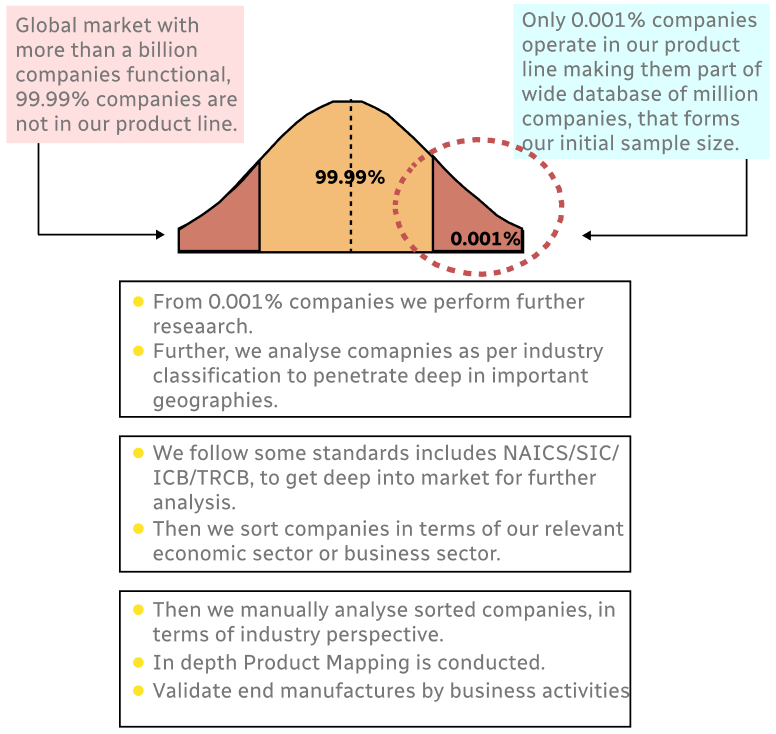
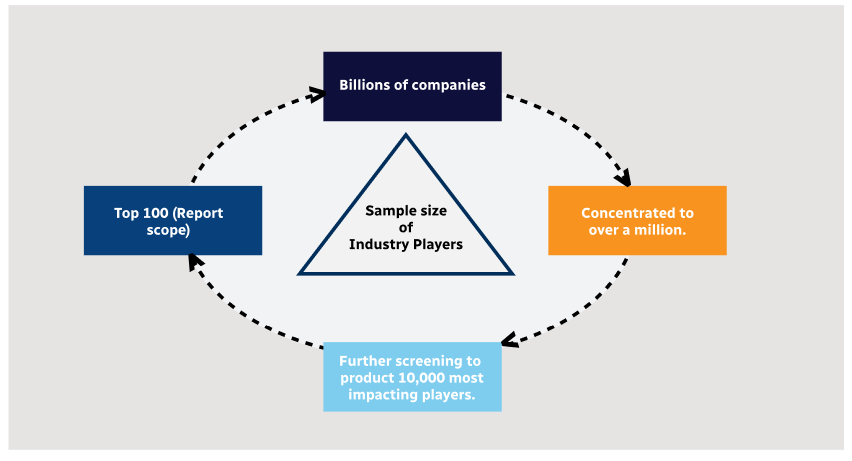
Step 1 - Identification of Relevant Samples Size from Population Database
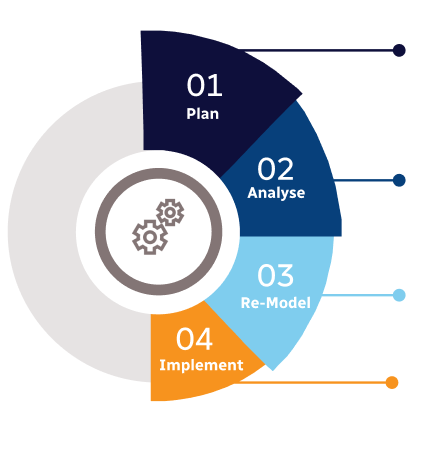
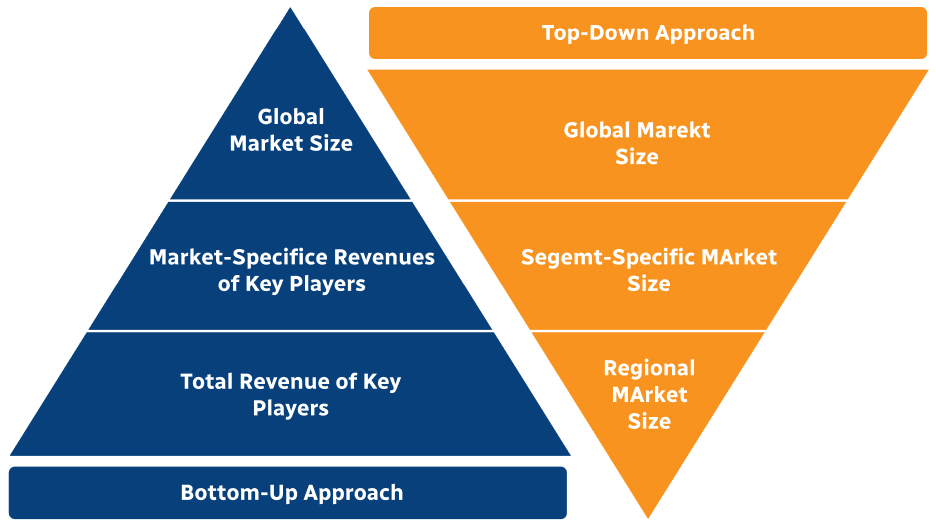
Step 2 - Approaches for Defining Global Market Size (Value, Volume* & Price*)
Note*: In applicable scenarios
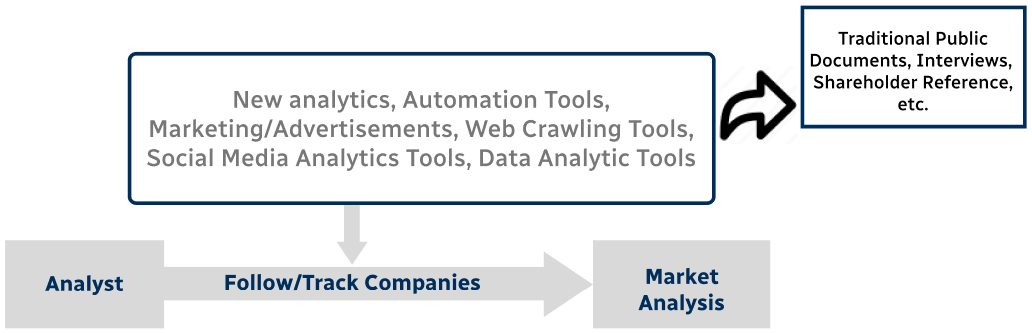
Step 3 - Data Sources
Primary Research
- Web Analytics
- Survey Reports
- Research Institute
- Latest Research Reports
- Opinion Leaders
Secondary Research
- Annual Reports
- White Paper
- Latest Press Release
- Industry Association
- Paid Database
- Investor Presentations
Step 4 - Data Triangulation
Involves using different sources of information in order to increase the validity of a study
These sources are likely to be stakeholders in a program - participants, other researchers, program staff, other community members, and so on.
Then we put all data in single framework & apply various statistical tools to find out the dynamic on the market.
During the analysis stage, feedback from the stakeholder groups would be compared to determine areas of agreement as well as areas of divergence