


Key Insights
The global market for Carbon Nanotube (CNT) Sensors is poised for significant expansion, projected to reach an estimated \$26 million in 2025 and demonstrating a robust Compound Annual Growth Rate (CAGR) of 8.4% throughout the forecast period of 2025-2033. This substantial growth is propelled by an increasing demand across various high-tech applications, most notably in the biomedical sector for advanced diagnostics and monitoring, and in robotics for enhanced sensing capabilities and sophisticated control systems. The inherent advantages of CNTs, such as their exceptional electrical conductivity, mechanical strength, and large surface area, make them ideal materials for developing highly sensitive and efficient sensor devices. Emerging trends indicate a shift towards miniaturization, improved power efficiency, and the integration of CNT sensors into wearable technology and the Internet of Things (IoT) ecosystem, further fueling market adoption.
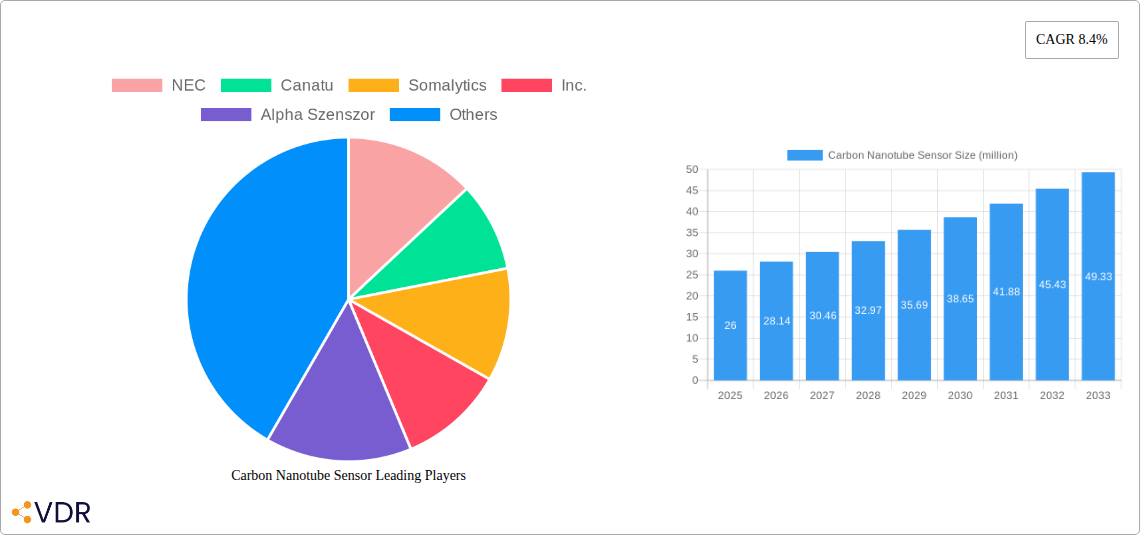
Carbon Nanotube Sensor Market Size (In Million)

Despite the promising outlook, the market's full potential faces certain restraints, including the high cost associated with large-scale CNT production and integration challenges within existing manufacturing processes. However, ongoing research and development are actively addressing these limitations, with a focus on cost-effective synthesis methods and simplified sensor fabrication techniques. The market is segmented by application, with Biomedical and Robot sectors leading the charge, and by sensor type, where Electrochemical Sensors and Optical Sensors are expected to dominate due to their superior performance characteristics. Geographically, the Asia Pacific region, driven by strong manufacturing capabilities and increasing technological investments in countries like China and India, is anticipated to emerge as a significant growth engine, closely followed by North America and Europe, which are characterized by high adoption rates of advanced sensor technologies.
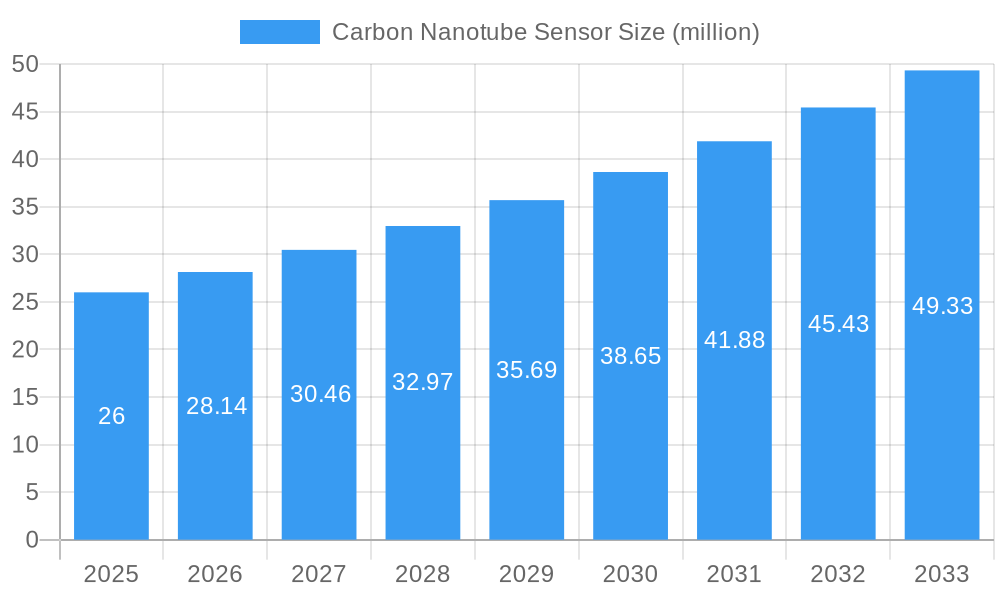
Carbon Nanotube Sensor Company Market Share
This in-depth report provides an exhaustive analysis of the global Carbon Nanotube Sensor market, exploring its intricate dynamics, growth trajectories, and future potential. Spanning the study period from 2019 to 2033, with a base year of 2025, this report leverages sophisticated market intelligence to deliver actionable insights for industry stakeholders. We dissect the market into parent and child segments, offering a granular understanding of growth drivers and opportunities across various applications, types, and key geographical regions.
Carbon Nanotube Sensor Market Dynamics & Structure
The Carbon Nanotube (CNT) sensor market is characterized by a dynamic interplay of technological innovation, evolving regulatory landscapes, and intense competitive pressures. Market concentration is currently moderate, with key players actively investing in research and development to enhance sensor performance, sensitivity, and cost-effectiveness. Technological innovation drivers are primarily fueled by the unique electrical, thermal, and mechanical properties of carbon nanotubes, enabling advancements in miniaturization, multiplexing, and real-time monitoring capabilities. Regulatory frameworks, particularly in the biomedical and environmental monitoring sectors, are becoming more stringent, demanding high accuracy, reliability, and biocompatibility, thus acting as both an innovation driver and a barrier to entry for new technologies. Competitive product substitutes, such as traditional silicon-based sensors, graphene sensors, and other nanomaterial-based sensors, pose a continuous challenge, pushing CNT sensor developers to highlight their superior performance metrics and unique application advantages. End-user demographics are increasingly sophisticated, demanding tailored solutions for specific applications in healthcare, industrial automation, and environmental protection. Mergers and acquisitions (M&A) trends are expected to accelerate as larger companies seek to integrate advanced CNT sensing technologies into their existing product portfolios or expand into niche high-growth application areas. The volume of M&A deals is predicted to reach xx million units by 2025, indicating consolidation and strategic collaborations. Barriers to innovation include the high cost of high-quality CNT production, challenges in achieving consistent mass production, and the need for robust integration into existing sensing systems.
- Market Concentration: Moderate, with increasing strategic partnerships and M&A activities.
- Technological Innovation Drivers: Enhanced sensitivity, miniaturization, real-time monitoring, unique CNT properties.
- Regulatory Frameworks: Increasingly stringent in biomedical and environmental applications, driving higher performance standards.
- Competitive Product Substitutes: Traditional silicon sensors, graphene sensors, other nanomaterial sensors.
- End-User Demographics: Sophisticated, demanding tailored solutions for specific industry needs.
- M&A Trends: Expected to increase, focusing on technology integration and niche market expansion.
- Innovation Barriers: High CNT production costs, mass production consistency, system integration challenges.
Carbon Nanotube Sensor Growth Trends & Insights
The global Carbon Nanotube Sensor market is poised for substantial growth, driven by increasing adoption across diverse industries and significant technological advancements. The market size is projected to expand from approximately $XXX million in the historical period (2019-2024) to an estimated $XXX million by 2025, with a compound annual growth rate (CAGR) of xx% expected during the forecast period (2025-2033). This robust growth is attributable to the inherent advantages of CNTs, including their exceptional electrical conductivity, high surface area, and remarkable mechanical strength, which translate into highly sensitive, selective, and durable sensors. Adoption rates are accelerating in the biomedical sector, where CNT sensors are revolutionizing diagnostics, drug delivery monitoring, and wearable health trackers due to their biocompatibility and ability to detect biomarkers at ultra-low concentrations. In the robotics industry, CNT sensors are enhancing tactile sensing, environmental awareness, and human-robot interaction, enabling more sophisticated and responsive robotic systems.
Technological disruptions are continuously shaping the market. Innovations in CNT synthesis and functionalization are leading to sensors with improved selectivity, reduced power consumption, and enhanced signal-to-noise ratios. The development of flexible and stretchable CNT-based sensors is opening up new frontiers in wearable electronics and implantable devices. Consumer behavior shifts are also playing a crucial role, with a growing demand for personalized healthcare solutions and smart home devices that rely on advanced sensing technologies for real-time data acquisition and analysis. The market penetration of CNT sensors, though still nascent in some segments, is steadily increasing as their cost-effectiveness improves and their reliability is proven in real-world applications. For instance, the increasing demand for non-invasive diagnostic tools in the biomedical segment is a significant driver, with CNT sensors offering a promising alternative to traditional methods. Furthermore, the drive towards Industry 4.0, with its emphasis on intelligent automation and data-driven decision-making, is propelling the demand for advanced sensors in industrial settings for process monitoring, quality control, and predictive maintenance. The ability of CNT sensors to operate in harsh environments and detect a wide range of analytes further solidifies their position in industrial applications.
Dominant Regions, Countries, or Segments in Carbon Nanotube Sensor
The Biomedical application segment is emerging as a dominant force driving the growth of the global Carbon Nanotube Sensor market. This dominance is propelled by the immense potential of CNT sensors in revolutionizing healthcare diagnostics, personalized medicine, and wearable health monitoring. The increasing global healthcare expenditure, coupled with the growing prevalence of chronic diseases, necessitates advanced diagnostic tools that offer higher sensitivity, selectivity, and faster results. CNT-based electrochemical sensors, for example, are demonstrating exceptional capabilities in detecting biomarkers such as glucose, cancer markers, and pathogens at picomolar to femtomolar concentrations, far surpassing the detection limits of conventional sensors. This leads to earlier disease detection and more effective treatment strategies.
The United States is projected to be a leading country within the North American region and globally, owing to its robust research and development infrastructure, significant investments in nanotechnology, and a well-established healthcare industry. Government funding for advanced materials research, coupled with private sector innovation, fosters the development and commercialization of CNT sensor technologies. The presence of leading research institutions and technology companies actively involved in nanotechnology further solidifies its position. The regulatory bodies in the US are also actively supporting the development of novel medical devices, creating a conducive environment for CNT sensor adoption in the biomedical field.
Within the Electrochemical Sensor type, the market sees significant traction due to its versatility and cost-effectiveness in detecting a wide array of analytes. These sensors are crucial for applications ranging from glucose monitoring for diabetics to environmental pollutant detection and industrial process control. The ease of miniaturization and integration of electrochemical CNT sensors into portable and wearable devices further amplifies their appeal.
- Dominant Application Segment: Biomedical, due to its potential for early disease detection, personalized medicine, and advanced diagnostics.
- Key Drivers in Biomedical: Increasing healthcare expenditure, rising chronic disease prevalence, demand for non-invasive diagnostics, and early detection.
- Leading Country: United States, supported by strong R&D, significant investment, and a robust healthcare ecosystem.
- Dominant Sensor Type: Electrochemical Sensors, owing to their versatility, cost-effectiveness, and suitability for miniaturization.
- Growth Potential in Robotics: Increasing integration of CNT sensors for enhanced tactile feedback, environmental perception, and human-robot interaction.
- Impact of Other Segments: The "Others" application segment, encompassing environmental monitoring and industrial automation, also contributes significantly due to growing environmental concerns and the push for Industry 4.0.
Carbon Nanotube Sensor Product Landscape
The Carbon Nanotube (CNT) sensor product landscape is characterized by rapid innovation, focusing on enhanced performance metrics and novel applications. CNT sensors are being developed as highly sensitive and selective devices for detecting a wide range of chemical and biological species, as well as physical parameters like temperature and pressure. Notable product innovations include the development of flexible and wearable CNT-based sensors for continuous health monitoring, offering superior comfort and unobtrusiveness. These products leverage the exceptional electrical conductivity and mechanical properties of CNTs to create durable and responsive sensing elements. Unique selling propositions revolve around their ultra-high sensitivity, rapid response times, low power consumption, and potential for multiplexed detection, allowing for the simultaneous measurement of multiple analytes. Technological advancements in CNT functionalization are enabling tailored surface chemistries, enhancing specificity for target molecules in complex matrices, thereby expanding their utility in diverse fields such as environmental monitoring, food safety, and industrial process control.
Key Drivers, Barriers & Challenges in Carbon Nanotube Sensor
Key Drivers:
- Exceptional Material Properties: The inherent electrical conductivity, high surface area, and mechanical strength of carbon nanotubes enable the development of highly sensitive, selective, and durable sensors.
- Advancements in Nanotechnology: Continuous progress in CNT synthesis, functionalization, and fabrication techniques are leading to improved sensor performance and reduced costs.
- Growing Demand in Key Applications: Increasing adoption in the biomedical sector for diagnostics and monitoring, robotics for enhanced sensing, and environmental monitoring for pollution detection fuels market growth.
- Miniaturization and Wearable Technology Trends: The ability to create small, flexible, and low-power CNT sensors aligns perfectly with the demand for portable and wearable electronic devices.
Barriers & Challenges:
- Production Cost and Scalability: High-quality CNT production remains expensive and challenging to scale for widespread commercial adoption, impacting overall sensor cost.
- Consistency and Standardization: Achieving batch-to-batch consistency in CNT properties and sensor fabrication remains a significant hurdle, affecting reliability and standardization.
- Integration Complexity: Integrating CNT sensors into existing electronic systems and devices can be complex and require specialized expertise.
- Regulatory Hurdles: Especially in biomedical applications, stringent regulatory approval processes can delay market entry and increase development costs.
- Competition from Alternative Technologies: Established sensor technologies and emerging nanomaterials like graphene present continuous competition, demanding clear performance advantages from CNT sensors.
- Supply Chain Issues: Ensuring a stable and reliable supply of high-purity CNTs can be a challenge for manufacturers.
Emerging Opportunities in Carbon Nanotube Sensor
Emerging opportunities in the Carbon Nanotube Sensor market are vast, particularly in the realm of point-of-care diagnostics and personalized health solutions. The development of highly sensitive and portable CNT-based biosensors for rapid detection of infectious diseases, biomarkers for early cancer detection, and continuous glucose monitoring presents a significant untapped market. In the environmental sector, opportunities lie in creating cost-effective and highly sensitive sensors for real-time monitoring of air and water quality, enabling proactive pollution control and public health initiatives. The expanding field of the Internet of Things (IoT) also offers a fertile ground, where CNT sensors can be integrated into smart devices for environmental sensing, industrial automation, and smart agriculture. The continuous advancements in CNT functionalization are opening doors for highly selective sensors capable of differentiating between complex molecular mixtures, paving the way for sophisticated analytical tools in various industrial and research settings.
Growth Accelerators in the Carbon Nanotube Sensor Industry
The Carbon Nanotube Sensor industry's long-term growth is being accelerated by several key catalysts. Foremost among these are technological breakthroughs in achieving ultra-high sensitivity and selectivity, enabling sensors to detect analytes at unprecedented low concentrations. This is further bolstered by advancements in CNT functionalization techniques that allow for precise tailoring of sensor surfaces for specific applications. Strategic partnerships between CNT manufacturers, sensor developers, and end-user industries are crucial for accelerating product development and market penetration. For instance, collaborations between nanotechnology firms and established medical device companies are crucial for bringing advanced CNT biosensors to market. Market expansion strategies, including targeting emerging economies with growing healthcare and industrial needs, are also playing a significant role. Furthermore, the development of cost-effective, large-scale manufacturing processes for high-quality CNTs is a critical accelerator, making CNT sensors more competitive with existing technologies.
Key Players Shaping the Carbon Nanotube Sensor Market
- NEC
- Canatu
- Somalytics, Inc.
- Alpha Szenszor
Notable Milestones in Carbon Nanotube Sensor Sector
- 2019: Significant advancements in CNT functionalization techniques enabling enhanced selectivity for biomarker detection.
- 2020: Launch of early-stage wearable CNT sensors for continuous health monitoring by several research institutions.
- 2021: Development of novel CNT-based gas sensors with improved sensitivity and response times for environmental monitoring.
- 2022: Increased venture capital funding rounds for startups specializing in CNT sensor technology for biomedical applications.
- 2023: Demonstration of ultra-low power consumption CNT sensors suitable for IoT devices.
- 2024: First successful field trials of CNT-based sensors for industrial process monitoring in harsh environments.
In-Depth Carbon Nanotube Sensor Market Outlook
The future market outlook for Carbon Nanotube (CNT) sensors is exceptionally promising, driven by relentless technological innovation and expanding application frontiers. Growth accelerators such as breakthroughs in sensitivity and selectivity, coupled with strategic partnerships and cost-reduction in manufacturing, are poised to propel market expansion. The increasing integration of CNT sensors into the rapidly growing fields of IoT, personalized medicine, and advanced robotics will create substantial demand. Emerging opportunities in point-of-care diagnostics and environmental monitoring further underscore the market's upward trajectory. The continued evolution of CNT functionalization techniques will unlock novel sensing capabilities, solidifying CNT sensors as a critical technology for addressing future global challenges in health, sustainability, and automation.
Carbon Nanotube Sensor Segmentation
-
1. Application
- 1.1. Biomedical
- 1.2. Robot
- 1.3. Others
-
2. Types
- 2.1. Electrochemical Sensor
- 2.2. Optical Sensor
- 2.3. Others
Carbon Nanotube Sensor Segmentation By Geography
-
1. North America
- 1.1. United States
- 1.2. Canada
- 1.3. Mexico
-
2. South America
- 2.1. Brazil
- 2.2. Argentina
- 2.3. Rest of South America
-
3. Europe
- 3.1. United Kingdom
- 3.2. Germany
- 3.3. France
- 3.4. Italy
- 3.5. Spain
- 3.6. Russia
- 3.7. Benelux
- 3.8. Nordics
- 3.9. Rest of Europe
-
4. Middle East & Africa
- 4.1. Turkey
- 4.2. Israel
- 4.3. GCC
- 4.4. North Africa
- 4.5. South Africa
- 4.6. Rest of Middle East & Africa
-
5. Asia Pacific
- 5.1. China
- 5.2. India
- 5.3. Japan
- 5.4. South Korea
- 5.5. ASEAN
- 5.6. Oceania
- 5.7. Rest of Asia Pacific
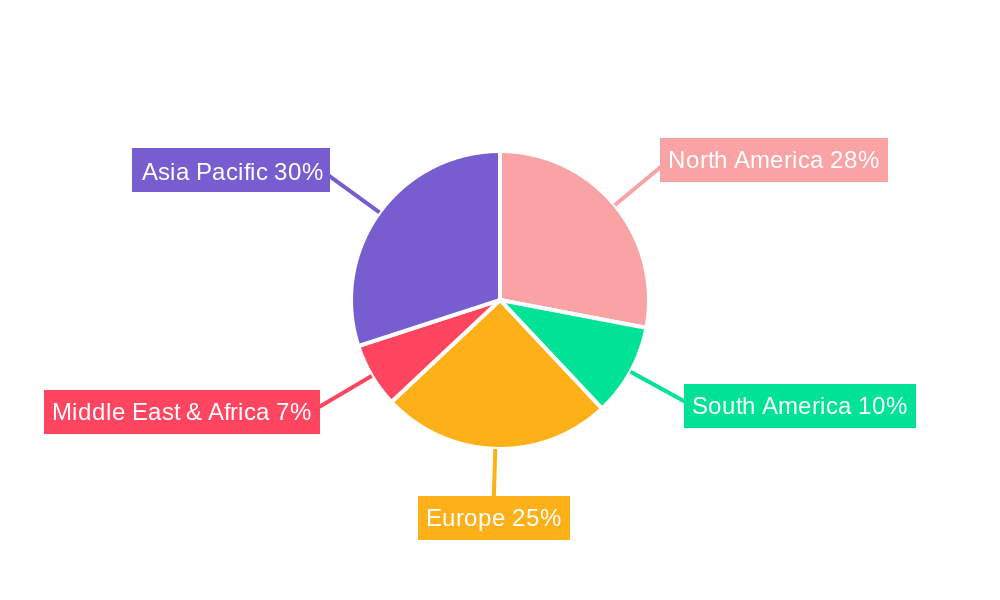
Carbon Nanotube Sensor Regional Market Share
Geographic Coverage of Carbon Nanotube Sensor
Carbon Nanotube Sensor REPORT HIGHLIGHTS
| Aspects | Details |
|---|---|
| Study Period | 2020-2034 |
| Base Year | 2025 |
| Estimated Year | 2026 |
| Forecast Period | 2026-2034 |
| Historical Period | 2020-2025 |
| Growth Rate | CAGR of 8.4% from 2020-2034 |
| Segmentation |
|
Table of Contents
- 1. Introduction
- 1.1. Research Scope
- 1.2. Market Segmentation
- 1.3. Research Methodology
- 1.4. Definitions and Assumptions
- 2. Executive Summary
- 2.1. Introduction
- 3. Market Dynamics
- 3.1. Introduction
- 3.2. Market Drivers
- 3.3. Market Restrains
- 3.4. Market Trends
- 4. Market Factor Analysis
- 4.1. Porters Five Forces
- 4.2. Supply/Value Chain
- 4.3. PESTEL analysis
- 4.4. Market Entropy
- 4.5. Patent/Trademark Analysis
- 5. Global Carbon Nanotube Sensor Analysis, Insights and Forecast, 2020-2032
- 5.1. Market Analysis, Insights and Forecast - by Application
- 5.1.1. Biomedical
- 5.1.2. Robot
- 5.1.3. Others
- 5.2. Market Analysis, Insights and Forecast - by Types
- 5.2.1. Electrochemical Sensor
- 5.2.2. Optical Sensor
- 5.2.3. Others
- 5.3. Market Analysis, Insights and Forecast - by Region
- 5.3.1. North America
- 5.3.2. South America
- 5.3.3. Europe
- 5.3.4. Middle East & Africa
- 5.3.5. Asia Pacific
- 5.1. Market Analysis, Insights and Forecast - by Application
- 6. North America Carbon Nanotube Sensor Analysis, Insights and Forecast, 2020-2032
- 6.1. Market Analysis, Insights and Forecast - by Application
- 6.1.1. Biomedical
- 6.1.2. Robot
- 6.1.3. Others
- 6.2. Market Analysis, Insights and Forecast - by Types
- 6.2.1. Electrochemical Sensor
- 6.2.2. Optical Sensor
- 6.2.3. Others
- 6.1. Market Analysis, Insights and Forecast - by Application
- 7. South America Carbon Nanotube Sensor Analysis, Insights and Forecast, 2020-2032
- 7.1. Market Analysis, Insights and Forecast - by Application
- 7.1.1. Biomedical
- 7.1.2. Robot
- 7.1.3. Others
- 7.2. Market Analysis, Insights and Forecast - by Types
- 7.2.1. Electrochemical Sensor
- 7.2.2. Optical Sensor
- 7.2.3. Others
- 7.1. Market Analysis, Insights and Forecast - by Application
- 8. Europe Carbon Nanotube Sensor Analysis, Insights and Forecast, 2020-2032
- 8.1. Market Analysis, Insights and Forecast - by Application
- 8.1.1. Biomedical
- 8.1.2. Robot
- 8.1.3. Others
- 8.2. Market Analysis, Insights and Forecast - by Types
- 8.2.1. Electrochemical Sensor
- 8.2.2. Optical Sensor
- 8.2.3. Others
- 8.1. Market Analysis, Insights and Forecast - by Application
- 9. Middle East & Africa Carbon Nanotube Sensor Analysis, Insights and Forecast, 2020-2032
- 9.1. Market Analysis, Insights and Forecast - by Application
- 9.1.1. Biomedical
- 9.1.2. Robot
- 9.1.3. Others
- 9.2. Market Analysis, Insights and Forecast - by Types
- 9.2.1. Electrochemical Sensor
- 9.2.2. Optical Sensor
- 9.2.3. Others
- 9.1. Market Analysis, Insights and Forecast - by Application
- 10. Asia Pacific Carbon Nanotube Sensor Analysis, Insights and Forecast, 2020-2032
- 10.1. Market Analysis, Insights and Forecast - by Application
- 10.1.1. Biomedical
- 10.1.2. Robot
- 10.1.3. Others
- 10.2. Market Analysis, Insights and Forecast - by Types
- 10.2.1. Electrochemical Sensor
- 10.2.2. Optical Sensor
- 10.2.3. Others
- 10.1. Market Analysis, Insights and Forecast - by Application
- 11. Competitive Analysis
- 11.1. Global Market Share Analysis 2025
- 11.2. Company Profiles
- 11.2.1 NEC
- 11.2.1.1. Overview
- 11.2.1.2. Products
- 11.2.1.3. SWOT Analysis
- 11.2.1.4. Recent Developments
- 11.2.1.5. Financials (Based on Availability)
- 11.2.2 Canatu
- 11.2.2.1. Overview
- 11.2.2.2. Products
- 11.2.2.3. SWOT Analysis
- 11.2.2.4. Recent Developments
- 11.2.2.5. Financials (Based on Availability)
- 11.2.3 Somalytics
- 11.2.3.1. Overview
- 11.2.3.2. Products
- 11.2.3.3. SWOT Analysis
- 11.2.3.4. Recent Developments
- 11.2.3.5. Financials (Based on Availability)
- 11.2.4 Inc.
- 11.2.4.1. Overview
- 11.2.4.2. Products
- 11.2.4.3. SWOT Analysis
- 11.2.4.4. Recent Developments
- 11.2.4.5. Financials (Based on Availability)
- 11.2.5 Alpha Szenszor
- 11.2.5.1. Overview
- 11.2.5.2. Products
- 11.2.5.3. SWOT Analysis
- 11.2.5.4. Recent Developments
- 11.2.5.5. Financials (Based on Availability)
- 11.2.1 NEC
List of Figures
- Figure 1: Global Carbon Nanotube Sensor Revenue Breakdown (million, %) by Region 2025 & 2033
- Figure 2: Global Carbon Nanotube Sensor Volume Breakdown (K, %) by Region 2025 & 2033
- Figure 3: North America Carbon Nanotube Sensor Revenue (million), by Application 2025 & 2033
- Figure 4: North America Carbon Nanotube Sensor Volume (K), by Application 2025 & 2033
- Figure 5: North America Carbon Nanotube Sensor Revenue Share (%), by Application 2025 & 2033
- Figure 6: North America Carbon Nanotube Sensor Volume Share (%), by Application 2025 & 2033
- Figure 7: North America Carbon Nanotube Sensor Revenue (million), by Types 2025 & 2033
- Figure 8: North America Carbon Nanotube Sensor Volume (K), by Types 2025 & 2033
- Figure 9: North America Carbon Nanotube Sensor Revenue Share (%), by Types 2025 & 2033
- Figure 10: North America Carbon Nanotube Sensor Volume Share (%), by Types 2025 & 2033
- Figure 11: North America Carbon Nanotube Sensor Revenue (million), by Country 2025 & 2033
- Figure 12: North America Carbon Nanotube Sensor Volume (K), by Country 2025 & 2033
- Figure 13: North America Carbon Nanotube Sensor Revenue Share (%), by Country 2025 & 2033
- Figure 14: North America Carbon Nanotube Sensor Volume Share (%), by Country 2025 & 2033
- Figure 15: South America Carbon Nanotube Sensor Revenue (million), by Application 2025 & 2033
- Figure 16: South America Carbon Nanotube Sensor Volume (K), by Application 2025 & 2033
- Figure 17: South America Carbon Nanotube Sensor Revenue Share (%), by Application 2025 & 2033
- Figure 18: South America Carbon Nanotube Sensor Volume Share (%), by Application 2025 & 2033
- Figure 19: South America Carbon Nanotube Sensor Revenue (million), by Types 2025 & 2033
- Figure 20: South America Carbon Nanotube Sensor Volume (K), by Types 2025 & 2033
- Figure 21: South America Carbon Nanotube Sensor Revenue Share (%), by Types 2025 & 2033
- Figure 22: South America Carbon Nanotube Sensor Volume Share (%), by Types 2025 & 2033
- Figure 23: South America Carbon Nanotube Sensor Revenue (million), by Country 2025 & 2033
- Figure 24: South America Carbon Nanotube Sensor Volume (K), by Country 2025 & 2033
- Figure 25: South America Carbon Nanotube Sensor Revenue Share (%), by Country 2025 & 2033
- Figure 26: South America Carbon Nanotube Sensor Volume Share (%), by Country 2025 & 2033
- Figure 27: Europe Carbon Nanotube Sensor Revenue (million), by Application 2025 & 2033
- Figure 28: Europe Carbon Nanotube Sensor Volume (K), by Application 2025 & 2033
- Figure 29: Europe Carbon Nanotube Sensor Revenue Share (%), by Application 2025 & 2033
- Figure 30: Europe Carbon Nanotube Sensor Volume Share (%), by Application 2025 & 2033
- Figure 31: Europe Carbon Nanotube Sensor Revenue (million), by Types 2025 & 2033
- Figure 32: Europe Carbon Nanotube Sensor Volume (K), by Types 2025 & 2033
- Figure 33: Europe Carbon Nanotube Sensor Revenue Share (%), by Types 2025 & 2033
- Figure 34: Europe Carbon Nanotube Sensor Volume Share (%), by Types 2025 & 2033
- Figure 35: Europe Carbon Nanotube Sensor Revenue (million), by Country 2025 & 2033
- Figure 36: Europe Carbon Nanotube Sensor Volume (K), by Country 2025 & 2033
- Figure 37: Europe Carbon Nanotube Sensor Revenue Share (%), by Country 2025 & 2033
- Figure 38: Europe Carbon Nanotube Sensor Volume Share (%), by Country 2025 & 2033
- Figure 39: Middle East & Africa Carbon Nanotube Sensor Revenue (million), by Application 2025 & 2033
- Figure 40: Middle East & Africa Carbon Nanotube Sensor Volume (K), by Application 2025 & 2033
- Figure 41: Middle East & Africa Carbon Nanotube Sensor Revenue Share (%), by Application 2025 & 2033
- Figure 42: Middle East & Africa Carbon Nanotube Sensor Volume Share (%), by Application 2025 & 2033
- Figure 43: Middle East & Africa Carbon Nanotube Sensor Revenue (million), by Types 2025 & 2033
- Figure 44: Middle East & Africa Carbon Nanotube Sensor Volume (K), by Types 2025 & 2033
- Figure 45: Middle East & Africa Carbon Nanotube Sensor Revenue Share (%), by Types 2025 & 2033
- Figure 46: Middle East & Africa Carbon Nanotube Sensor Volume Share (%), by Types 2025 & 2033
- Figure 47: Middle East & Africa Carbon Nanotube Sensor Revenue (million), by Country 2025 & 2033
- Figure 48: Middle East & Africa Carbon Nanotube Sensor Volume (K), by Country 2025 & 2033
- Figure 49: Middle East & Africa Carbon Nanotube Sensor Revenue Share (%), by Country 2025 & 2033
- Figure 50: Middle East & Africa Carbon Nanotube Sensor Volume Share (%), by Country 2025 & 2033
- Figure 51: Asia Pacific Carbon Nanotube Sensor Revenue (million), by Application 2025 & 2033
- Figure 52: Asia Pacific Carbon Nanotube Sensor Volume (K), by Application 2025 & 2033
- Figure 53: Asia Pacific Carbon Nanotube Sensor Revenue Share (%), by Application 2025 & 2033
- Figure 54: Asia Pacific Carbon Nanotube Sensor Volume Share (%), by Application 2025 & 2033
- Figure 55: Asia Pacific Carbon Nanotube Sensor Revenue (million), by Types 2025 & 2033
- Figure 56: Asia Pacific Carbon Nanotube Sensor Volume (K), by Types 2025 & 2033
- Figure 57: Asia Pacific Carbon Nanotube Sensor Revenue Share (%), by Types 2025 & 2033
- Figure 58: Asia Pacific Carbon Nanotube Sensor Volume Share (%), by Types 2025 & 2033
- Figure 59: Asia Pacific Carbon Nanotube Sensor Revenue (million), by Country 2025 & 2033
- Figure 60: Asia Pacific Carbon Nanotube Sensor Volume (K), by Country 2025 & 2033
- Figure 61: Asia Pacific Carbon Nanotube Sensor Revenue Share (%), by Country 2025 & 2033
- Figure 62: Asia Pacific Carbon Nanotube Sensor Volume Share (%), by Country 2025 & 2033
List of Tables
- Table 1: Global Carbon Nanotube Sensor Revenue million Forecast, by Application 2020 & 2033
- Table 2: Global Carbon Nanotube Sensor Volume K Forecast, by Application 2020 & 2033
- Table 3: Global Carbon Nanotube Sensor Revenue million Forecast, by Types 2020 & 2033
- Table 4: Global Carbon Nanotube Sensor Volume K Forecast, by Types 2020 & 2033
- Table 5: Global Carbon Nanotube Sensor Revenue million Forecast, by Region 2020 & 2033
- Table 6: Global Carbon Nanotube Sensor Volume K Forecast, by Region 2020 & 2033
- Table 7: Global Carbon Nanotube Sensor Revenue million Forecast, by Application 2020 & 2033
- Table 8: Global Carbon Nanotube Sensor Volume K Forecast, by Application 2020 & 2033
- Table 9: Global Carbon Nanotube Sensor Revenue million Forecast, by Types 2020 & 2033
- Table 10: Global Carbon Nanotube Sensor Volume K Forecast, by Types 2020 & 2033
- Table 11: Global Carbon Nanotube Sensor Revenue million Forecast, by Country 2020 & 2033
- Table 12: Global Carbon Nanotube Sensor Volume K Forecast, by Country 2020 & 2033
- Table 13: United States Carbon Nanotube Sensor Revenue (million) Forecast, by Application 2020 & 2033
- Table 14: United States Carbon Nanotube Sensor Volume (K) Forecast, by Application 2020 & 2033
- Table 15: Canada Carbon Nanotube Sensor Revenue (million) Forecast, by Application 2020 & 2033
- Table 16: Canada Carbon Nanotube Sensor Volume (K) Forecast, by Application 2020 & 2033
- Table 17: Mexico Carbon Nanotube Sensor Revenue (million) Forecast, by Application 2020 & 2033
- Table 18: Mexico Carbon Nanotube Sensor Volume (K) Forecast, by Application 2020 & 2033
- Table 19: Global Carbon Nanotube Sensor Revenue million Forecast, by Application 2020 & 2033
- Table 20: Global Carbon Nanotube Sensor Volume K Forecast, by Application 2020 & 2033
- Table 21: Global Carbon Nanotube Sensor Revenue million Forecast, by Types 2020 & 2033
- Table 22: Global Carbon Nanotube Sensor Volume K Forecast, by Types 2020 & 2033
- Table 23: Global Carbon Nanotube Sensor Revenue million Forecast, by Country 2020 & 2033
- Table 24: Global Carbon Nanotube Sensor Volume K Forecast, by Country 2020 & 2033
- Table 25: Brazil Carbon Nanotube Sensor Revenue (million) Forecast, by Application 2020 & 2033
- Table 26: Brazil Carbon Nanotube Sensor Volume (K) Forecast, by Application 2020 & 2033
- Table 27: Argentina Carbon Nanotube Sensor Revenue (million) Forecast, by Application 2020 & 2033
- Table 28: Argentina Carbon Nanotube Sensor Volume (K) Forecast, by Application 2020 & 2033
- Table 29: Rest of South America Carbon Nanotube Sensor Revenue (million) Forecast, by Application 2020 & 2033
- Table 30: Rest of South America Carbon Nanotube Sensor Volume (K) Forecast, by Application 2020 & 2033
- Table 31: Global Carbon Nanotube Sensor Revenue million Forecast, by Application 2020 & 2033
- Table 32: Global Carbon Nanotube Sensor Volume K Forecast, by Application 2020 & 2033
- Table 33: Global Carbon Nanotube Sensor Revenue million Forecast, by Types 2020 & 2033
- Table 34: Global Carbon Nanotube Sensor Volume K Forecast, by Types 2020 & 2033
- Table 35: Global Carbon Nanotube Sensor Revenue million Forecast, by Country 2020 & 2033
- Table 36: Global Carbon Nanotube Sensor Volume K Forecast, by Country 2020 & 2033
- Table 37: United Kingdom Carbon Nanotube Sensor Revenue (million) Forecast, by Application 2020 & 2033
- Table 38: United Kingdom Carbon Nanotube Sensor Volume (K) Forecast, by Application 2020 & 2033
- Table 39: Germany Carbon Nanotube Sensor Revenue (million) Forecast, by Application 2020 & 2033
- Table 40: Germany Carbon Nanotube Sensor Volume (K) Forecast, by Application 2020 & 2033
- Table 41: France Carbon Nanotube Sensor Revenue (million) Forecast, by Application 2020 & 2033
- Table 42: France Carbon Nanotube Sensor Volume (K) Forecast, by Application 2020 & 2033
- Table 43: Italy Carbon Nanotube Sensor Revenue (million) Forecast, by Application 2020 & 2033
- Table 44: Italy Carbon Nanotube Sensor Volume (K) Forecast, by Application 2020 & 2033
- Table 45: Spain Carbon Nanotube Sensor Revenue (million) Forecast, by Application 2020 & 2033
- Table 46: Spain Carbon Nanotube Sensor Volume (K) Forecast, by Application 2020 & 2033
- Table 47: Russia Carbon Nanotube Sensor Revenue (million) Forecast, by Application 2020 & 2033
- Table 48: Russia Carbon Nanotube Sensor Volume (K) Forecast, by Application 2020 & 2033
- Table 49: Benelux Carbon Nanotube Sensor Revenue (million) Forecast, by Application 2020 & 2033
- Table 50: Benelux Carbon Nanotube Sensor Volume (K) Forecast, by Application 2020 & 2033
- Table 51: Nordics Carbon Nanotube Sensor Revenue (million) Forecast, by Application 2020 & 2033
- Table 52: Nordics Carbon Nanotube Sensor Volume (K) Forecast, by Application 2020 & 2033
- Table 53: Rest of Europe Carbon Nanotube Sensor Revenue (million) Forecast, by Application 2020 & 2033
- Table 54: Rest of Europe Carbon Nanotube Sensor Volume (K) Forecast, by Application 2020 & 2033
- Table 55: Global Carbon Nanotube Sensor Revenue million Forecast, by Application 2020 & 2033
- Table 56: Global Carbon Nanotube Sensor Volume K Forecast, by Application 2020 & 2033
- Table 57: Global Carbon Nanotube Sensor Revenue million Forecast, by Types 2020 & 2033
- Table 58: Global Carbon Nanotube Sensor Volume K Forecast, by Types 2020 & 2033
- Table 59: Global Carbon Nanotube Sensor Revenue million Forecast, by Country 2020 & 2033
- Table 60: Global Carbon Nanotube Sensor Volume K Forecast, by Country 2020 & 2033
- Table 61: Turkey Carbon Nanotube Sensor Revenue (million) Forecast, by Application 2020 & 2033
- Table 62: Turkey Carbon Nanotube Sensor Volume (K) Forecast, by Application 2020 & 2033
- Table 63: Israel Carbon Nanotube Sensor Revenue (million) Forecast, by Application 2020 & 2033
- Table 64: Israel Carbon Nanotube Sensor Volume (K) Forecast, by Application 2020 & 2033
- Table 65: GCC Carbon Nanotube Sensor Revenue (million) Forecast, by Application 2020 & 2033
- Table 66: GCC Carbon Nanotube Sensor Volume (K) Forecast, by Application 2020 & 2033
- Table 67: North Africa Carbon Nanotube Sensor Revenue (million) Forecast, by Application 2020 & 2033
- Table 68: North Africa Carbon Nanotube Sensor Volume (K) Forecast, by Application 2020 & 2033
- Table 69: South Africa Carbon Nanotube Sensor Revenue (million) Forecast, by Application 2020 & 2033
- Table 70: South Africa Carbon Nanotube Sensor Volume (K) Forecast, by Application 2020 & 2033
- Table 71: Rest of Middle East & Africa Carbon Nanotube Sensor Revenue (million) Forecast, by Application 2020 & 2033
- Table 72: Rest of Middle East & Africa Carbon Nanotube Sensor Volume (K) Forecast, by Application 2020 & 2033
- Table 73: Global Carbon Nanotube Sensor Revenue million Forecast, by Application 2020 & 2033
- Table 74: Global Carbon Nanotube Sensor Volume K Forecast, by Application 2020 & 2033
- Table 75: Global Carbon Nanotube Sensor Revenue million Forecast, by Types 2020 & 2033
- Table 76: Global Carbon Nanotube Sensor Volume K Forecast, by Types 2020 & 2033
- Table 77: Global Carbon Nanotube Sensor Revenue million Forecast, by Country 2020 & 2033
- Table 78: Global Carbon Nanotube Sensor Volume K Forecast, by Country 2020 & 2033
- Table 79: China Carbon Nanotube Sensor Revenue (million) Forecast, by Application 2020 & 2033
- Table 80: China Carbon Nanotube Sensor Volume (K) Forecast, by Application 2020 & 2033
- Table 81: India Carbon Nanotube Sensor Revenue (million) Forecast, by Application 2020 & 2033
- Table 82: India Carbon Nanotube Sensor Volume (K) Forecast, by Application 2020 & 2033
- Table 83: Japan Carbon Nanotube Sensor Revenue (million) Forecast, by Application 2020 & 2033
- Table 84: Japan Carbon Nanotube Sensor Volume (K) Forecast, by Application 2020 & 2033
- Table 85: South Korea Carbon Nanotube Sensor Revenue (million) Forecast, by Application 2020 & 2033
- Table 86: South Korea Carbon Nanotube Sensor Volume (K) Forecast, by Application 2020 & 2033
- Table 87: ASEAN Carbon Nanotube Sensor Revenue (million) Forecast, by Application 2020 & 2033
- Table 88: ASEAN Carbon Nanotube Sensor Volume (K) Forecast, by Application 2020 & 2033
- Table 89: Oceania Carbon Nanotube Sensor Revenue (million) Forecast, by Application 2020 & 2033
- Table 90: Oceania Carbon Nanotube Sensor Volume (K) Forecast, by Application 2020 & 2033
- Table 91: Rest of Asia Pacific Carbon Nanotube Sensor Revenue (million) Forecast, by Application 2020 & 2033
- Table 92: Rest of Asia Pacific Carbon Nanotube Sensor Volume (K) Forecast, by Application 2020 & 2033
Frequently Asked Questions
1. What is the projected Compound Annual Growth Rate (CAGR) of the Carbon Nanotube Sensor?
The projected CAGR is approximately 8.4%.
2. Which companies are prominent players in the Carbon Nanotube Sensor?
Key companies in the market include NEC, Canatu, Somalytics, Inc., Alpha Szenszor.
3. What are the main segments of the Carbon Nanotube Sensor?
The market segments include Application, Types.
4. Can you provide details about the market size?
The market size is estimated to be USD 26 million as of 2022.
5. What are some drivers contributing to market growth?
N/A
6. What are the notable trends driving market growth?
N/A
7. Are there any restraints impacting market growth?
N/A
8. Can you provide examples of recent developments in the market?
N/A
9. What pricing options are available for accessing the report?
Pricing options include single-user, multi-user, and enterprise licenses priced at USD 3950.00, USD 5925.00, and USD 7900.00 respectively.
10. Is the market size provided in terms of value or volume?
The market size is provided in terms of value, measured in million and volume, measured in K.
11. Are there any specific market keywords associated with the report?
Yes, the market keyword associated with the report is "Carbon Nanotube Sensor," which aids in identifying and referencing the specific market segment covered.
12. How do I determine which pricing option suits my needs best?
The pricing options vary based on user requirements and access needs. Individual users may opt for single-user licenses, while businesses requiring broader access may choose multi-user or enterprise licenses for cost-effective access to the report.
13. Are there any additional resources or data provided in the Carbon Nanotube Sensor report?
While the report offers comprehensive insights, it's advisable to review the specific contents or supplementary materials provided to ascertain if additional resources or data are available.
14. How can I stay updated on further developments or reports in the Carbon Nanotube Sensor?
To stay informed about further developments, trends, and reports in the Carbon Nanotube Sensor, consider subscribing to industry newsletters, following relevant companies and organizations, or regularly checking reputable industry news sources and publications.
Methodology
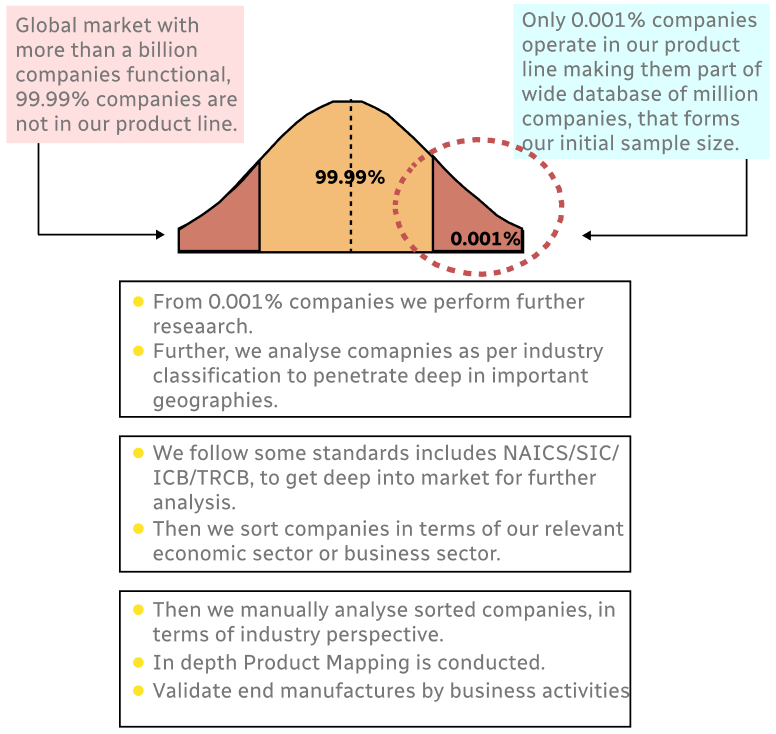
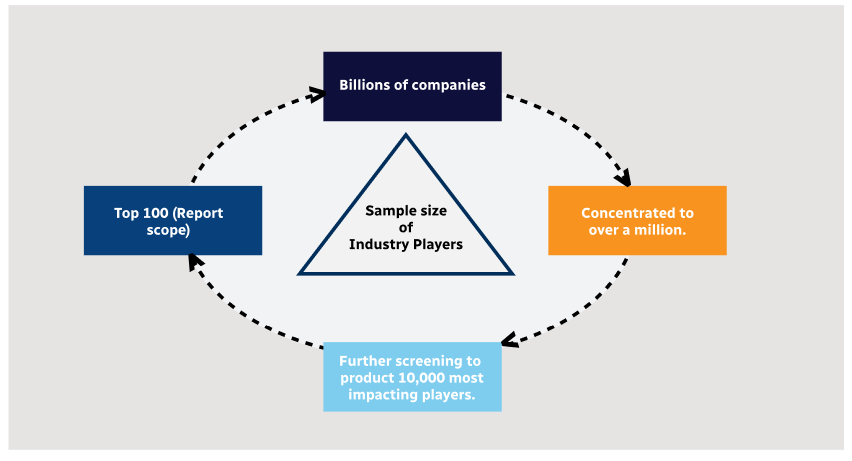
Step 1 - Identification of Relevant Samples Size from Population Database
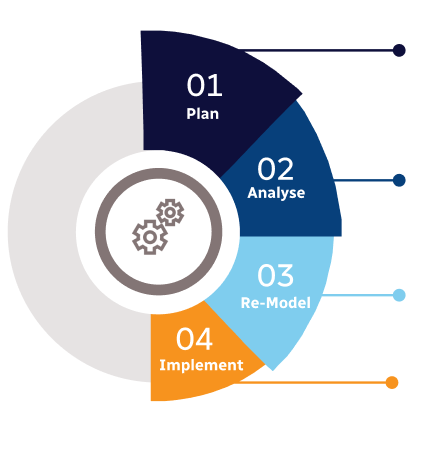
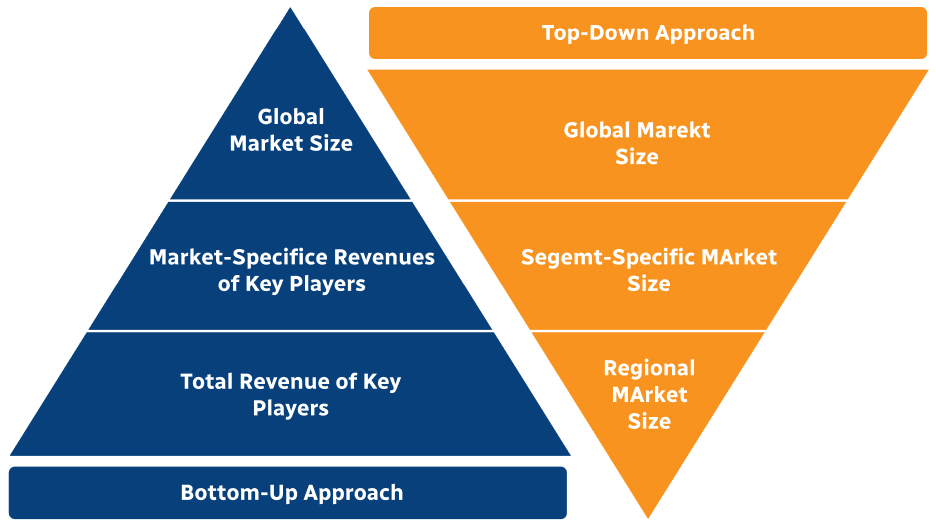
Step 2 - Approaches for Defining Global Market Size (Value, Volume* & Price*)
Note*: In applicable scenarios
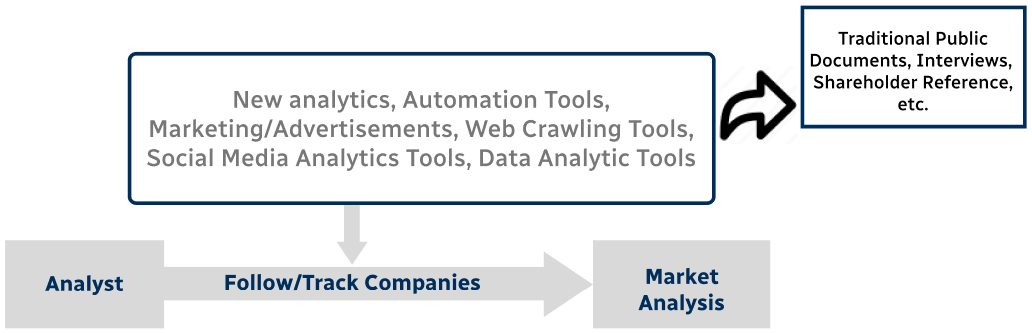
Step 3 - Data Sources
Primary Research
- Web Analytics
- Survey Reports
- Research Institute
- Latest Research Reports
- Opinion Leaders
Secondary Research
- Annual Reports
- White Paper
- Latest Press Release
- Industry Association
- Paid Database
- Investor Presentations
Step 4 - Data Triangulation
Involves using different sources of information in order to increase the validity of a study
These sources are likely to be stakeholders in a program - participants, other researchers, program staff, other community members, and so on.
Then we put all data in single framework & apply various statistical tools to find out the dynamic on the market.
During the analysis stage, feedback from the stakeholder groups would be compared to determine areas of agreement as well as areas of divergence