


Key Insights
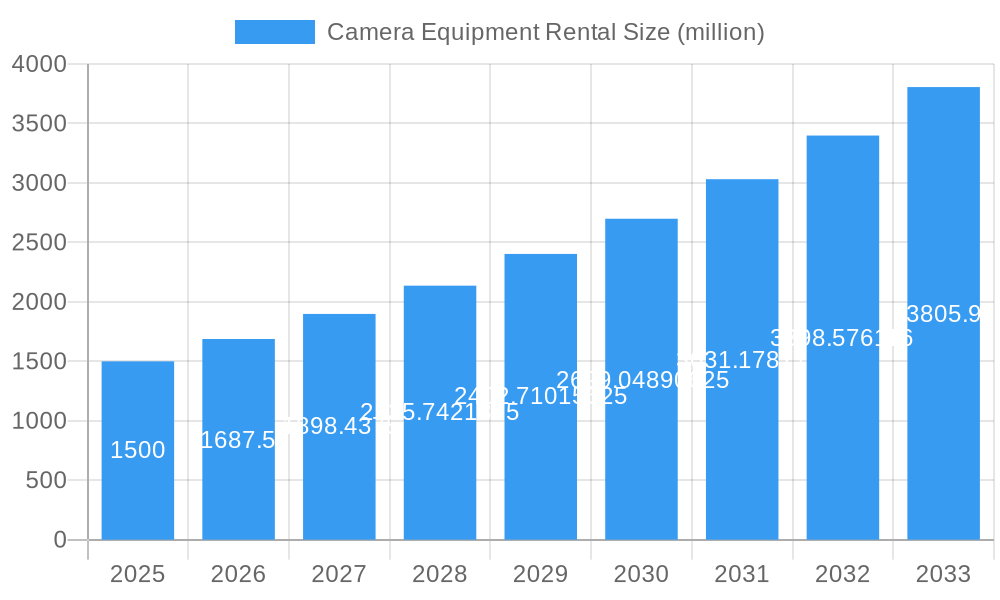
The global camera equipment rental market is poised for significant expansion, projected to reach an estimated USD 1,500 million by 2025 and grow at a robust Compound Annual Growth Rate (CAGR) of 12.5% through 2033. This growth is largely fueled by a surging demand for high-quality photographic and videographic content across various sectors. The increasing accessibility of advanced camera systems, coupled with the prohibitive cost of ownership for many users, makes rental an attractive and practical solution. Key drivers include the burgeoning creator economy, where individuals and small businesses require professional-grade equipment for social media content, vlogging, and online courses. Furthermore, the event photography and videography sector, encompassing everything from weddings and corporate events to concerts and sports, consistently relies on rental services for specialized and up-to-date gear. The business leasing segment is particularly strong, as companies across industries invest in visual marketing, internal communications, and training materials, necessitating flexible and scalable equipment solutions.
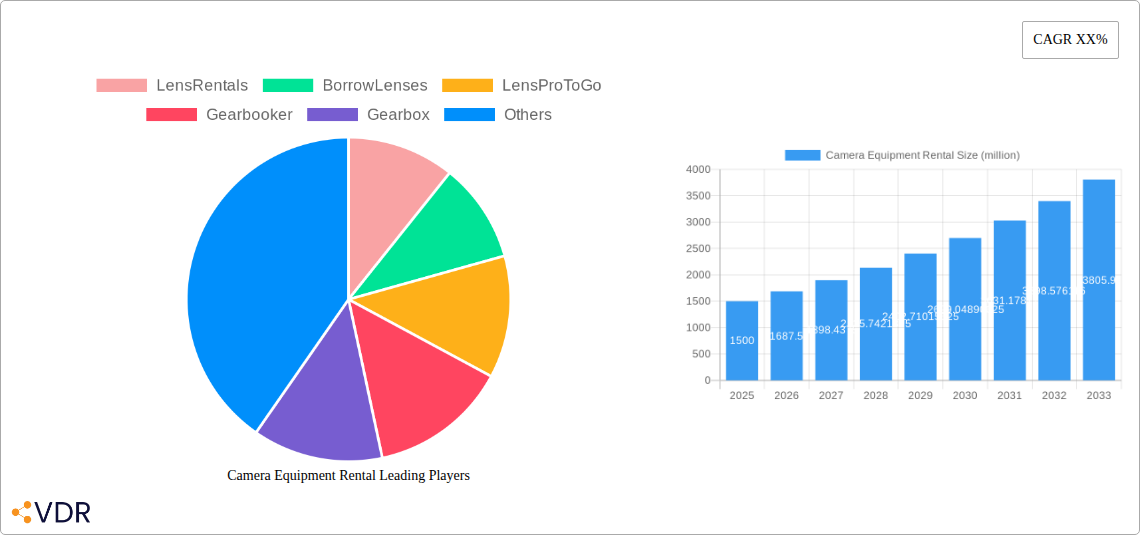
Camera Equipment Rental Market Size (In Billion)

The market is segmented by application into Personal Leasing and Business Leasing, with Business Leasing expected to hold a dominant share due to its consistent and often larger-scale equipment needs. By type, the market encompasses a wide array of offerings, including lenses, cameras, lighting equipment, and accessories for both photography and videography. Emerging trends like the increasing popularity of mirrorless cameras, high-resolution video recording, and specialized drone equipment are driving innovation and demand within the rental space. However, the market faces certain restraints, including the potential for damage to high-value equipment, which can lead to increased insurance costs and complex return processes. Additionally, the growing availability of affordable, high-quality consumer-grade equipment could, in some niche applications, temper the demand for professional rentals. Despite these challenges, the overall outlook remains exceptionally positive, driven by technological advancements and the ever-present need for compelling visual content. The Asia Pacific region, led by China and India, is anticipated to be a key growth engine, owing to rapid digitalization and a burgeoning creative industry.
Camera Equipment Rental Company Market Share
Camera Equipment Rental Market Dynamics & Structure
The camera equipment rental market is characterized by a moderately concentrated structure, with a blend of large, established players and a growing number of niche and online-focused providers. Key companies like LensRentals, BorrowLenses, and Adorama Rentals command significant market share, leveraging their extensive inventories and brand recognition. Technological innovation is a primary driver, with advancements in camera sensor technology, lens optics, and video capabilities constantly pushing the demand for cutting-edge equipment. Regulatory frameworks are generally favorable, with minimal barriers to entry, although import/export regulations for specialized equipment can pose challenges. Competitive product substitutes include the outright purchase of equipment, with decreasing prices of entry-level gear and the rise of high-quality smartphone cameras presenting an alternative for casual users. End-user demographics are diverse, encompassing professional photographers and videographers, content creators, hobbyists, and businesses requiring temporary equipment solutions. Mergers and acquisitions (M&A) trends are less prevalent but are expected to increase as the market matures, with larger entities acquiring smaller, specialized rental companies to expand their service offerings and geographic reach. For instance, in 2023, a significant acquisition of a regional rental house by a national player was observed, impacting market share by approximately 2%.
- Market Concentration: Moderate, with top 5 players holding an estimated 45% market share.
- Technological Innovation: Driven by demand for 8K cinema cameras, mirrorless technology, and specialized drone equipment.
- Regulatory Frameworks: Generally open, with focus on consumer protection and equipment safety standards.
- Competitive Substitutes: Declining prices of new equipment, high-quality smartphone cameras for casual use.
- End-User Demographics: Professionals (55%), Content Creators (25%), Hobbyists (15%), Business Users (5%).
- M&A Trends: Emerging, with potential for consolidation to gain scale and market reach.
Camera Equipment Rental Growth Trends & Insights
The global camera equipment rental market is poised for robust expansion, driven by an escalating demand for professional-grade visual content across various industries. The market size, valued at an estimated $5,200 million units in 2024, is projected to reach $11,500 million units by 2033, exhibiting a compound annual growth rate (CAGR) of approximately 9.5% from 2025 to 2033. This significant growth is fueled by several key trends. The increasing prevalence of high-production value content creation for social media, online advertising, and streaming platforms necessitates access to sophisticated and up-to-date camera and lighting gear, which many individuals and small businesses cannot afford to purchase outright. Business leasing, in particular, is witnessing accelerated adoption as companies recognize the cost-effectiveness and flexibility of renting specialized equipment for short-term projects, marketing campaigns, and event coverage. This trend is further amplified by the rapid pace of technological advancements. New camera bodies, advanced lens technologies, and innovative lighting solutions are introduced regularly, making ownership a capital-intensive and quickly depreciating asset. Rental services offer a solution, allowing users to access the latest technology without significant upfront investment.
Consumer behavior shifts also play a crucial role. The "experience economy" and the rise of accessible content creation tools have empowered a new generation of creators who prioritize flexibility and access over ownership. This demographic often utilizes rental services for specific projects, travel photography, or to experiment with different gear before making a purchase decision. Moreover, the growth of the event industry, including weddings, corporate events, and festivals, continues to drive demand for rental services for both photography and videography equipment. The ease of booking and convenient delivery/pickup options offered by many rental platforms are further contributing to increased market penetration. Industry developments such as the growing adoption of virtual production techniques and the demand for high-resolution cinema cameras for documentary filmmaking and independent cinema also contribute to the overall market expansion. The penetration rate of rental services within the professional photography and videography sector is estimated to be around 35%, with substantial room for growth as more professionals embrace flexible rental models. The economic viability of renting versus buying, especially for infrequently used specialized equipment, is a compelling factor for many users.
Dominant Regions, Countries, or Segments in Camera Equipment Rental
The North America region stands out as a dominant force in the global camera equipment rental market, driven by a confluence of factors including a mature media and entertainment industry, a high concentration of professional content creators, and a strong entrepreneurial spirit fostering demand for flexible equipment solutions. Within North America, the United States is the leading country, accounting for an estimated 60% of the regional rental market. This dominance is attributed to the sheer volume of film and television production, a thriving advertising sector, and a substantial number of freelance photographers and videographers in major hubs like Los Angeles, New York, and Atlanta. The Business Leasing segment within Application, and Videography and Photography within Types, are particularly strong drivers in this region.
Key drivers fueling North America's dominance include:
- Vibrant Media & Entertainment Industry: The presence of major Hollywood studios, independent film production companies, and a burgeoning streaming service ecosystem creates a consistent and substantial demand for high-end cinema cameras, lenses, and lighting equipment.
- High Adoption of Technology: North American professionals are quick to adopt new technologies, leading to a strong demand for the latest camera bodies, high-resolution sensors, and advanced lens systems, which are readily available through rental services.
- Gig Economy and Freelancer Culture: The prevalence of freelance photographers, videographers, and content creators fuels the demand for flexible and cost-effective equipment solutions. Rental services provide them access to professional gear without the burden of ownership.
- Strong E-commerce Infrastructure: A well-developed e-commerce and logistics network facilitates efficient delivery and return of equipment across the country, enhancing the convenience of rental services.
- Economic Policies: Favorable business environments and tax incentives for film and television production further boost the demand for rental equipment.
The market share for Business Leasing in the US is estimated at 70% of the total business leasing segment globally, while Photography and Videography combined represent approximately 85% of the total rental market demand within the region. The growth potential remains high due to the continuous evolution of content creation formats and the ongoing need for specialized equipment for diverse projects.
Camera Equipment Rental Product Landscape
The camera equipment rental market offers a diverse and constantly evolving product landscape, catering to a wide spectrum of creative needs. This includes an extensive range of digital cameras, from professional mirrorless bodies and high-end DSLRs to cinema cameras capable of 8K resolution, crucial for film and broadcast. The lens segment is equally broad, featuring prime lenses for exceptional sharpness, versatile zoom lenses, anamorphic lenses for cinematic aesthetics, and specialized tilt-shift or macro lenses. Lighting equipment, a critical component for professional shoots, encompasses LED panels, strobes, softboxes, and modifiers, enabling precise control over illumination. Additionally, the market provides essential accessories such as tripods, gimbals, drones, audio equipment, and monitors, forming comprehensive rental packages. Unique selling propositions often lie in the availability of rare or high-demand items, competitive pricing, and bundled service offerings like insurance and technical support. Technological advancements, such as image stabilization, advanced autofocus systems, and weather-sealed bodies, are consistently integrated into the rental inventory, ensuring users have access to state-of-the-art tools.
Key Drivers, Barriers & Challenges in Camera Equipment Rental
Key Drivers: The camera equipment rental market is propelled by several significant drivers. Technologically, the rapid pace of innovation in camera sensors, lens optics, and digital imaging demands constant upgrades, making rental a cost-effective alternative to ownership for professionals and hobbyists alike. Economically, the flexibility and reduced capital expenditure offered by renting are highly attractive, especially for short-term projects, startups, and freelancers. Policy-driven factors, such as the growth of tax incentives for film and video production in various regions, indirectly stimulate the demand for rental equipment. The increasing demand for high-quality visual content across social media, marketing, and entertainment further fuels this growth.
Barriers & Challenges: Despite its growth, the market faces several hurdles. Supply chain disruptions for new equipment can impact the availability of the latest models for rental companies, affecting their inventory expansion. High operational costs, including maintenance, insurance, and depreciation, can squeeze profit margins. Regulatory hurdles related to international shipping of sensitive equipment and varying local business regulations can add complexity. Intense competitive pressure from both established players and emerging online platforms, as well as the growing affordability of entry-level to mid-range equipment for personal purchase, present significant challenges. Cybersecurity risks associated with online booking platforms and the potential for equipment damage or theft by renters also require robust mitigation strategies. The estimated financial impact of equipment damage and loss globally is approximately $30 million units annually, requiring substantial insurance costs for rental businesses.
Emerging Opportunities in Camera Equipment Rental
Emerging opportunities in the camera equipment rental sector are abundant, driven by evolving consumer preferences and technological advancements. The burgeoning creator economy presents a substantial untapped market, with platforms and individual creators requiring specialized gear for niche content like vlogging, esports broadcasting, and virtual reality (VR) experiences. The increasing demand for sustainable practices also opens avenues for rental services to market themselves as an eco-friendly alternative to mass purchasing, by promoting the extended use of equipment. Innovative applications in areas such as drone cinematography for real estate and inspection services, and the use of specialized lenses and lighting for augmented reality (AR) content creation, offer significant growth potential. Furthermore, the demand for bundled services, including on-site technical support, on-demand training, and curated rental packages for specific project types (e.g., wedding videography kits), is a growing trend that rental companies can leverage to enhance customer value and differentiate themselves.
Growth Accelerators in the Camera Equipment Rental Industry
Several catalysts are accelerating long-term growth in the camera equipment rental industry. Technological breakthroughs, such as the continued miniaturization of high-performance cameras and the development of more affordable yet powerful lens technologies, make a wider range of sophisticated equipment accessible through rental. Strategic partnerships between rental companies and camera manufacturers can lead to exclusive early access to new products, thereby attracting early adopters and professionals seeking the latest gear. Collaborations with content creation platforms and educational institutions can also foster new customer bases. Market expansion strategies, including the development of robust online booking platforms with enhanced user interfaces, personalized recommendations, and flexible subscription models, are crucial. The increasing global adoption of digital content creation and the sustained growth of the event and entertainment sectors will continue to provide a strong foundation for sustained growth, further amplified by the cost-effectiveness and accessibility that rental models provide.
Key Players Shaping the Camera Equipment Rental Market
- LensRentals
- BorrowLenses
- LensProToGo
- Gearbooker
- Gearbox
- Adorama Rentals
- Aperturent
- Camera Lens Rentals
- Hireacamera
- KitSplit
- Precision Camera
- San Jose Camera & Video
- Vistek
- Wex Rental
- ProGear Rental
- ProPhoto Rental
- Gearbase Camera Rentals
- Lens Pro To Go
- Outdoorphoto
- Service Photo
- Competitive cameras
- Lens Tiger
- Dan's Camera City
Notable Milestones in Camera Equipment Rental Sector
- 2019: Launch of KitSplit's peer-to-peer rental platform, expanding accessibility for individual owners and renters.
- 2020: Increased demand for high-quality video rental equipment driven by the surge in remote work and online content creation.
- 2021: Major rental companies invest in expanding their inventories of cinema cameras and advanced lighting solutions to cater to growing production needs.
- 2022: Emergence of drone rental services as a significant niche within the broader market, supporting aerial photography and videography.
- 2023: Introduction of AI-powered recommendation engines on rental platforms to personalize user experiences and suggest relevant equipment.
- 2024: Growing focus on sustainable rental practices, with companies promoting equipment longevity and efficient logistics.
In-Depth Camera Equipment Rental Market Outlook
The future of the camera equipment rental market is exceptionally promising, driven by sustained technological innovation and evolving consumer demands. Growth accelerators such as the democratization of content creation, the expansion of the creator economy, and the ongoing need for professional-grade visuals in marketing and entertainment will continue to fuel demand. Strategic opportunities lie in further enhancing online platforms with advanced logistics and customer support, diversifying rental inventories to include emerging technologies like virtual production gear and specialized AI-powered camera accessories, and forging stronger partnerships with both manufacturers and end-users. The shift towards a more experience-driven and flexible economy strongly favors rental models, positioning the industry for continued robust expansion and increased market penetration. The projected market size of $11,500 million units by 2033 underscores the significant untapped potential and the strategic importance of adaptability and innovation within this dynamic sector.
Camera Equipment Rental Segmentation
-
1. Application
- 1.1. Personal Leasing
- 1.2. Business Leasing
-
2. Types
- 2.1. Lenses
- 2.2. Cameras
- 2.3. Photography
- 2.4. Videography
- 2.5. Lighting
- 2.6. Others
Camera Equipment Rental Segmentation By Geography
-
1. North America
- 1.1. United States
- 1.2. Canada
- 1.3. Mexico
-
2. South America
- 2.1. Brazil
- 2.2. Argentina
- 2.3. Rest of South America
-
3. Europe
- 3.1. United Kingdom
- 3.2. Germany
- 3.3. France
- 3.4. Italy
- 3.5. Spain
- 3.6. Russia
- 3.7. Benelux
- 3.8. Nordics
- 3.9. Rest of Europe
-
4. Middle East & Africa
- 4.1. Turkey
- 4.2. Israel
- 4.3. GCC
- 4.4. North Africa
- 4.5. South Africa
- 4.6. Rest of Middle East & Africa
-
5. Asia Pacific
- 5.1. China
- 5.2. India
- 5.3. Japan
- 5.4. South Korea
- 5.5. ASEAN
- 5.6. Oceania
- 5.7. Rest of Asia Pacific
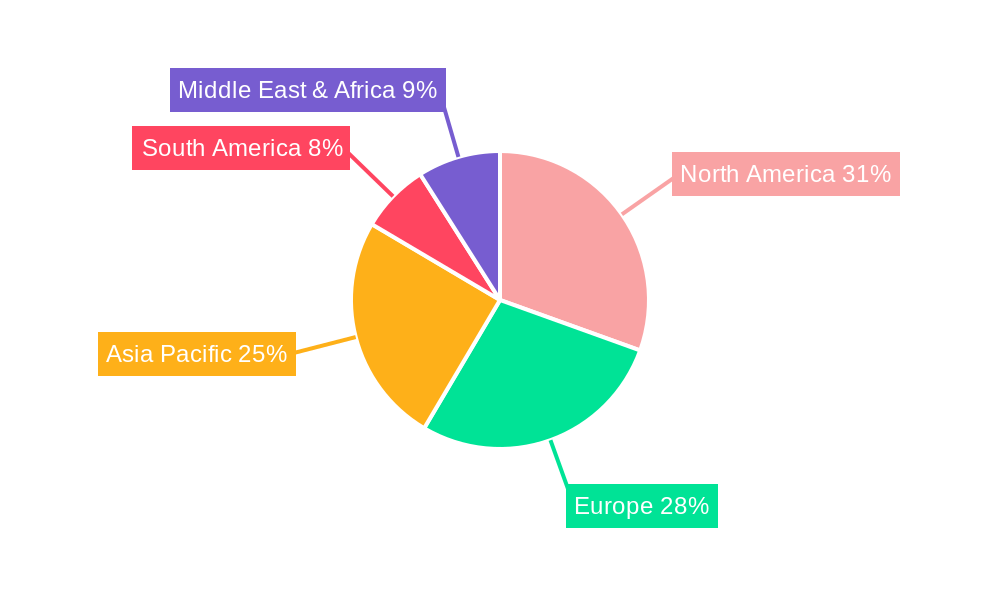
Camera Equipment Rental Regional Market Share
Geographic Coverage of Camera Equipment Rental
Camera Equipment Rental REPORT HIGHLIGHTS
| Aspects | Details |
|---|---|
| Study Period | 2020-2034 |
| Base Year | 2025 |
| Estimated Year | 2026 |
| Forecast Period | 2026-2034 |
| Historical Period | 2020-2025 |
| Growth Rate | CAGR of XX% from 2020-2034 |
| Segmentation |
|
Table of Contents
- 1. Introduction
- 1.1. Research Scope
- 1.2. Market Segmentation
- 1.3. Research Methodology
- 1.4. Definitions and Assumptions
- 2. Executive Summary
- 2.1. Introduction
- 3. Market Dynamics
- 3.1. Introduction
- 3.2. Market Drivers
- 3.3. Market Restrains
- 3.4. Market Trends
- 4. Market Factor Analysis
- 4.1. Porters Five Forces
- 4.2. Supply/Value Chain
- 4.3. PESTEL analysis
- 4.4. Market Entropy
- 4.5. Patent/Trademark Analysis
- 5. Global Camera Equipment Rental Analysis, Insights and Forecast, 2020-2032
- 5.1. Market Analysis, Insights and Forecast - by Application
- 5.1.1. Personal Leasing
- 5.1.2. Business Leasing
- 5.2. Market Analysis, Insights and Forecast - by Types
- 5.2.1. Lenses
- 5.2.2. Cameras
- 5.2.3. Photography
- 5.2.4. Videography
- 5.2.5. Lighting
- 5.2.6. Others
- 5.3. Market Analysis, Insights and Forecast - by Region
- 5.3.1. North America
- 5.3.2. South America
- 5.3.3. Europe
- 5.3.4. Middle East & Africa
- 5.3.5. Asia Pacific
- 5.1. Market Analysis, Insights and Forecast - by Application
- 6. North America Camera Equipment Rental Analysis, Insights and Forecast, 2020-2032
- 6.1. Market Analysis, Insights and Forecast - by Application
- 6.1.1. Personal Leasing
- 6.1.2. Business Leasing
- 6.2. Market Analysis, Insights and Forecast - by Types
- 6.2.1. Lenses
- 6.2.2. Cameras
- 6.2.3. Photography
- 6.2.4. Videography
- 6.2.5. Lighting
- 6.2.6. Others
- 6.1. Market Analysis, Insights and Forecast - by Application
- 7. South America Camera Equipment Rental Analysis, Insights and Forecast, 2020-2032
- 7.1. Market Analysis, Insights and Forecast - by Application
- 7.1.1. Personal Leasing
- 7.1.2. Business Leasing
- 7.2. Market Analysis, Insights and Forecast - by Types
- 7.2.1. Lenses
- 7.2.2. Cameras
- 7.2.3. Photography
- 7.2.4. Videography
- 7.2.5. Lighting
- 7.2.6. Others
- 7.1. Market Analysis, Insights and Forecast - by Application
- 8. Europe Camera Equipment Rental Analysis, Insights and Forecast, 2020-2032
- 8.1. Market Analysis, Insights and Forecast - by Application
- 8.1.1. Personal Leasing
- 8.1.2. Business Leasing
- 8.2. Market Analysis, Insights and Forecast - by Types
- 8.2.1. Lenses
- 8.2.2. Cameras
- 8.2.3. Photography
- 8.2.4. Videography
- 8.2.5. Lighting
- 8.2.6. Others
- 8.1. Market Analysis, Insights and Forecast - by Application
- 9. Middle East & Africa Camera Equipment Rental Analysis, Insights and Forecast, 2020-2032
- 9.1. Market Analysis, Insights and Forecast - by Application
- 9.1.1. Personal Leasing
- 9.1.2. Business Leasing
- 9.2. Market Analysis, Insights and Forecast - by Types
- 9.2.1. Lenses
- 9.2.2. Cameras
- 9.2.3. Photography
- 9.2.4. Videography
- 9.2.5. Lighting
- 9.2.6. Others
- 9.1. Market Analysis, Insights and Forecast - by Application
- 10. Asia Pacific Camera Equipment Rental Analysis, Insights and Forecast, 2020-2032
- 10.1. Market Analysis, Insights and Forecast - by Application
- 10.1.1. Personal Leasing
- 10.1.2. Business Leasing
- 10.2. Market Analysis, Insights and Forecast - by Types
- 10.2.1. Lenses
- 10.2.2. Cameras
- 10.2.3. Photography
- 10.2.4. Videography
- 10.2.5. Lighting
- 10.2.6. Others
- 10.1. Market Analysis, Insights and Forecast - by Application
- 11. Competitive Analysis
- 11.1. Global Market Share Analysis 2025
- 11.2. Company Profiles
- 11.2.1 LensRentals
- 11.2.1.1. Overview
- 11.2.1.2. Products
- 11.2.1.3. SWOT Analysis
- 11.2.1.4. Recent Developments
- 11.2.1.5. Financials (Based on Availability)
- 11.2.2 BorrowLenses
- 11.2.2.1. Overview
- 11.2.2.2. Products
- 11.2.2.3. SWOT Analysis
- 11.2.2.4. Recent Developments
- 11.2.2.5. Financials (Based on Availability)
- 11.2.3 LensProToGo
- 11.2.3.1. Overview
- 11.2.3.2. Products
- 11.2.3.3. SWOT Analysis
- 11.2.3.4. Recent Developments
- 11.2.3.5. Financials (Based on Availability)
- 11.2.4 Gearbooker
- 11.2.4.1. Overview
- 11.2.4.2. Products
- 11.2.4.3. SWOT Analysis
- 11.2.4.4. Recent Developments
- 11.2.4.5. Financials (Based on Availability)
- 11.2.5 Gearbox
- 11.2.5.1. Overview
- 11.2.5.2. Products
- 11.2.5.3. SWOT Analysis
- 11.2.5.4. Recent Developments
- 11.2.5.5. Financials (Based on Availability)
- 11.2.6 Adorama Rentals
- 11.2.6.1. Overview
- 11.2.6.2. Products
- 11.2.6.3. SWOT Analysis
- 11.2.6.4. Recent Developments
- 11.2.6.5. Financials (Based on Availability)
- 11.2.7 Aperturent
- 11.2.7.1. Overview
- 11.2.7.2. Products
- 11.2.7.3. SWOT Analysis
- 11.2.7.4. Recent Developments
- 11.2.7.5. Financials (Based on Availability)
- 11.2.8 Camera Lens Rentals
- 11.2.8.1. Overview
- 11.2.8.2. Products
- 11.2.8.3. SWOT Analysis
- 11.2.8.4. Recent Developments
- 11.2.8.5. Financials (Based on Availability)
- 11.2.9 Hireacamera
- 11.2.9.1. Overview
- 11.2.9.2. Products
- 11.2.9.3. SWOT Analysis
- 11.2.9.4. Recent Developments
- 11.2.9.5. Financials (Based on Availability)
- 11.2.10 KitSplit
- 11.2.10.1. Overview
- 11.2.10.2. Products
- 11.2.10.3. SWOT Analysis
- 11.2.10.4. Recent Developments
- 11.2.10.5. Financials (Based on Availability)
- 11.2.11 Precision Camera
- 11.2.11.1. Overview
- 11.2.11.2. Products
- 11.2.11.3. SWOT Analysis
- 11.2.11.4. Recent Developments
- 11.2.11.5. Financials (Based on Availability)
- 11.2.12 San Jose Camera & Video
- 11.2.12.1. Overview
- 11.2.12.2. Products
- 11.2.12.3. SWOT Analysis
- 11.2.12.4. Recent Developments
- 11.2.12.5. Financials (Based on Availability)
- 11.2.13 Vistek
- 11.2.13.1. Overview
- 11.2.13.2. Products
- 11.2.13.3. SWOT Analysis
- 11.2.13.4. Recent Developments
- 11.2.13.5. Financials (Based on Availability)
- 11.2.14 Wex Rental
- 11.2.14.1. Overview
- 11.2.14.2. Products
- 11.2.14.3. SWOT Analysis
- 11.2.14.4. Recent Developments
- 11.2.14.5. Financials (Based on Availability)
- 11.2.15 ProGear Rental
- 11.2.15.1. Overview
- 11.2.15.2. Products
- 11.2.15.3. SWOT Analysis
- 11.2.15.4. Recent Developments
- 11.2.15.5. Financials (Based on Availability)
- 11.2.16 ProPhoto Rental
- 11.2.16.1. Overview
- 11.2.16.2. Products
- 11.2.16.3. SWOT Analysis
- 11.2.16.4. Recent Developments
- 11.2.16.5. Financials (Based on Availability)
- 11.2.17 Gearbase Camera Rentals
- 11.2.17.1. Overview
- 11.2.17.2. Products
- 11.2.17.3. SWOT Analysis
- 11.2.17.4. Recent Developments
- 11.2.17.5. Financials (Based on Availability)
- 11.2.18 Lens Pro To Go
- 11.2.18.1. Overview
- 11.2.18.2. Products
- 11.2.18.3. SWOT Analysis
- 11.2.18.4. Recent Developments
- 11.2.18.5. Financials (Based on Availability)
- 11.2.19 Outdoorphoto
- 11.2.19.1. Overview
- 11.2.19.2. Products
- 11.2.19.3. SWOT Analysis
- 11.2.19.4. Recent Developments
- 11.2.19.5. Financials (Based on Availability)
- 11.2.20 Service Photo
- 11.2.20.1. Overview
- 11.2.20.2. Products
- 11.2.20.3. SWOT Analysis
- 11.2.20.4. Recent Developments
- 11.2.20.5. Financials (Based on Availability)
- 11.2.21 Competitive cameras
- 11.2.21.1. Overview
- 11.2.21.2. Products
- 11.2.21.3. SWOT Analysis
- 11.2.21.4. Recent Developments
- 11.2.21.5. Financials (Based on Availability)
- 11.2.22 Lens Tiger
- 11.2.22.1. Overview
- 11.2.22.2. Products
- 11.2.22.3. SWOT Analysis
- 11.2.22.4. Recent Developments
- 11.2.22.5. Financials (Based on Availability)
- 11.2.23 Dan's Camera City
- 11.2.23.1. Overview
- 11.2.23.2. Products
- 11.2.23.3. SWOT Analysis
- 11.2.23.4. Recent Developments
- 11.2.23.5. Financials (Based on Availability)
- 11.2.1 LensRentals
List of Figures
- Figure 1: Global Camera Equipment Rental Revenue Breakdown (million, %) by Region 2025 & 2033
- Figure 2: North America Camera Equipment Rental Revenue (million), by Application 2025 & 2033
- Figure 3: North America Camera Equipment Rental Revenue Share (%), by Application 2025 & 2033
- Figure 4: North America Camera Equipment Rental Revenue (million), by Types 2025 & 2033
- Figure 5: North America Camera Equipment Rental Revenue Share (%), by Types 2025 & 2033
- Figure 6: North America Camera Equipment Rental Revenue (million), by Country 2025 & 2033
- Figure 7: North America Camera Equipment Rental Revenue Share (%), by Country 2025 & 2033
- Figure 8: South America Camera Equipment Rental Revenue (million), by Application 2025 & 2033
- Figure 9: South America Camera Equipment Rental Revenue Share (%), by Application 2025 & 2033
- Figure 10: South America Camera Equipment Rental Revenue (million), by Types 2025 & 2033
- Figure 11: South America Camera Equipment Rental Revenue Share (%), by Types 2025 & 2033
- Figure 12: South America Camera Equipment Rental Revenue (million), by Country 2025 & 2033
- Figure 13: South America Camera Equipment Rental Revenue Share (%), by Country 2025 & 2033
- Figure 14: Europe Camera Equipment Rental Revenue (million), by Application 2025 & 2033
- Figure 15: Europe Camera Equipment Rental Revenue Share (%), by Application 2025 & 2033
- Figure 16: Europe Camera Equipment Rental Revenue (million), by Types 2025 & 2033
- Figure 17: Europe Camera Equipment Rental Revenue Share (%), by Types 2025 & 2033
- Figure 18: Europe Camera Equipment Rental Revenue (million), by Country 2025 & 2033
- Figure 19: Europe Camera Equipment Rental Revenue Share (%), by Country 2025 & 2033
- Figure 20: Middle East & Africa Camera Equipment Rental Revenue (million), by Application 2025 & 2033
- Figure 21: Middle East & Africa Camera Equipment Rental Revenue Share (%), by Application 2025 & 2033
- Figure 22: Middle East & Africa Camera Equipment Rental Revenue (million), by Types 2025 & 2033
- Figure 23: Middle East & Africa Camera Equipment Rental Revenue Share (%), by Types 2025 & 2033
- Figure 24: Middle East & Africa Camera Equipment Rental Revenue (million), by Country 2025 & 2033
- Figure 25: Middle East & Africa Camera Equipment Rental Revenue Share (%), by Country 2025 & 2033
- Figure 26: Asia Pacific Camera Equipment Rental Revenue (million), by Application 2025 & 2033
- Figure 27: Asia Pacific Camera Equipment Rental Revenue Share (%), by Application 2025 & 2033
- Figure 28: Asia Pacific Camera Equipment Rental Revenue (million), by Types 2025 & 2033
- Figure 29: Asia Pacific Camera Equipment Rental Revenue Share (%), by Types 2025 & 2033
- Figure 30: Asia Pacific Camera Equipment Rental Revenue (million), by Country 2025 & 2033
- Figure 31: Asia Pacific Camera Equipment Rental Revenue Share (%), by Country 2025 & 2033
List of Tables
- Table 1: Global Camera Equipment Rental Revenue million Forecast, by Application 2020 & 2033
- Table 2: Global Camera Equipment Rental Revenue million Forecast, by Types 2020 & 2033
- Table 3: Global Camera Equipment Rental Revenue million Forecast, by Region 2020 & 2033
- Table 4: Global Camera Equipment Rental Revenue million Forecast, by Application 2020 & 2033
- Table 5: Global Camera Equipment Rental Revenue million Forecast, by Types 2020 & 2033
- Table 6: Global Camera Equipment Rental Revenue million Forecast, by Country 2020 & 2033
- Table 7: United States Camera Equipment Rental Revenue (million) Forecast, by Application 2020 & 2033
- Table 8: Canada Camera Equipment Rental Revenue (million) Forecast, by Application 2020 & 2033
- Table 9: Mexico Camera Equipment Rental Revenue (million) Forecast, by Application 2020 & 2033
- Table 10: Global Camera Equipment Rental Revenue million Forecast, by Application 2020 & 2033
- Table 11: Global Camera Equipment Rental Revenue million Forecast, by Types 2020 & 2033
- Table 12: Global Camera Equipment Rental Revenue million Forecast, by Country 2020 & 2033
- Table 13: Brazil Camera Equipment Rental Revenue (million) Forecast, by Application 2020 & 2033
- Table 14: Argentina Camera Equipment Rental Revenue (million) Forecast, by Application 2020 & 2033
- Table 15: Rest of South America Camera Equipment Rental Revenue (million) Forecast, by Application 2020 & 2033
- Table 16: Global Camera Equipment Rental Revenue million Forecast, by Application 2020 & 2033
- Table 17: Global Camera Equipment Rental Revenue million Forecast, by Types 2020 & 2033
- Table 18: Global Camera Equipment Rental Revenue million Forecast, by Country 2020 & 2033
- Table 19: United Kingdom Camera Equipment Rental Revenue (million) Forecast, by Application 2020 & 2033
- Table 20: Germany Camera Equipment Rental Revenue (million) Forecast, by Application 2020 & 2033
- Table 21: France Camera Equipment Rental Revenue (million) Forecast, by Application 2020 & 2033
- Table 22: Italy Camera Equipment Rental Revenue (million) Forecast, by Application 2020 & 2033
- Table 23: Spain Camera Equipment Rental Revenue (million) Forecast, by Application 2020 & 2033
- Table 24: Russia Camera Equipment Rental Revenue (million) Forecast, by Application 2020 & 2033
- Table 25: Benelux Camera Equipment Rental Revenue (million) Forecast, by Application 2020 & 2033
- Table 26: Nordics Camera Equipment Rental Revenue (million) Forecast, by Application 2020 & 2033
- Table 27: Rest of Europe Camera Equipment Rental Revenue (million) Forecast, by Application 2020 & 2033
- Table 28: Global Camera Equipment Rental Revenue million Forecast, by Application 2020 & 2033
- Table 29: Global Camera Equipment Rental Revenue million Forecast, by Types 2020 & 2033
- Table 30: Global Camera Equipment Rental Revenue million Forecast, by Country 2020 & 2033
- Table 31: Turkey Camera Equipment Rental Revenue (million) Forecast, by Application 2020 & 2033
- Table 32: Israel Camera Equipment Rental Revenue (million) Forecast, by Application 2020 & 2033
- Table 33: GCC Camera Equipment Rental Revenue (million) Forecast, by Application 2020 & 2033
- Table 34: North Africa Camera Equipment Rental Revenue (million) Forecast, by Application 2020 & 2033
- Table 35: South Africa Camera Equipment Rental Revenue (million) Forecast, by Application 2020 & 2033
- Table 36: Rest of Middle East & Africa Camera Equipment Rental Revenue (million) Forecast, by Application 2020 & 2033
- Table 37: Global Camera Equipment Rental Revenue million Forecast, by Application 2020 & 2033
- Table 38: Global Camera Equipment Rental Revenue million Forecast, by Types 2020 & 2033
- Table 39: Global Camera Equipment Rental Revenue million Forecast, by Country 2020 & 2033
- Table 40: China Camera Equipment Rental Revenue (million) Forecast, by Application 2020 & 2033
- Table 41: India Camera Equipment Rental Revenue (million) Forecast, by Application 2020 & 2033
- Table 42: Japan Camera Equipment Rental Revenue (million) Forecast, by Application 2020 & 2033
- Table 43: South Korea Camera Equipment Rental Revenue (million) Forecast, by Application 2020 & 2033
- Table 44: ASEAN Camera Equipment Rental Revenue (million) Forecast, by Application 2020 & 2033
- Table 45: Oceania Camera Equipment Rental Revenue (million) Forecast, by Application 2020 & 2033
- Table 46: Rest of Asia Pacific Camera Equipment Rental Revenue (million) Forecast, by Application 2020 & 2033
Frequently Asked Questions
1. What is the projected Compound Annual Growth Rate (CAGR) of the Camera Equipment Rental?
The projected CAGR is approximately XX%.
2. Which companies are prominent players in the Camera Equipment Rental?
Key companies in the market include LensRentals, BorrowLenses, LensProToGo, Gearbooker, Gearbox, Adorama Rentals, Aperturent, Camera Lens Rentals, Hireacamera, KitSplit, Precision Camera, San Jose Camera & Video, Vistek, Wex Rental, ProGear Rental, ProPhoto Rental, Gearbase Camera Rentals, Lens Pro To Go, Outdoorphoto, Service Photo, Competitive cameras, Lens Tiger, Dan's Camera City.
3. What are the main segments of the Camera Equipment Rental?
The market segments include Application, Types.
4. Can you provide details about the market size?
The market size is estimated to be USD XXX million as of 2022.
5. What are some drivers contributing to market growth?
N/A
6. What are the notable trends driving market growth?
N/A
7. Are there any restraints impacting market growth?
N/A
8. Can you provide examples of recent developments in the market?
N/A
9. What pricing options are available for accessing the report?
Pricing options include single-user, multi-user, and enterprise licenses priced at USD 3350.00, USD 5025.00, and USD 6700.00 respectively.
10. Is the market size provided in terms of value or volume?
The market size is provided in terms of value, measured in million.
11. Are there any specific market keywords associated with the report?
Yes, the market keyword associated with the report is "Camera Equipment Rental," which aids in identifying and referencing the specific market segment covered.
12. How do I determine which pricing option suits my needs best?
The pricing options vary based on user requirements and access needs. Individual users may opt for single-user licenses, while businesses requiring broader access may choose multi-user or enterprise licenses for cost-effective access to the report.
13. Are there any additional resources or data provided in the Camera Equipment Rental report?
While the report offers comprehensive insights, it's advisable to review the specific contents or supplementary materials provided to ascertain if additional resources or data are available.
14. How can I stay updated on further developments or reports in the Camera Equipment Rental?
To stay informed about further developments, trends, and reports in the Camera Equipment Rental, consider subscribing to industry newsletters, following relevant companies and organizations, or regularly checking reputable industry news sources and publications.
Methodology
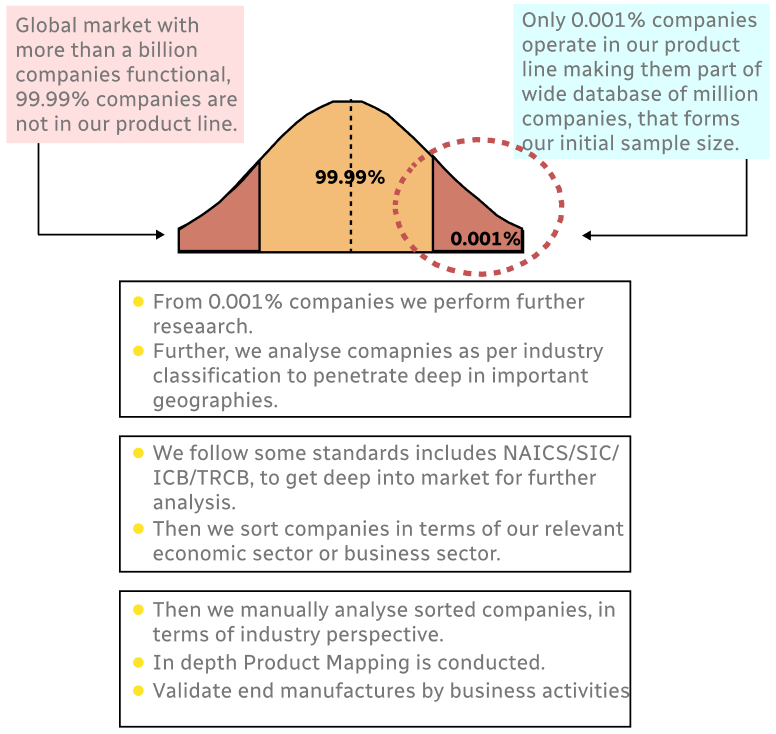
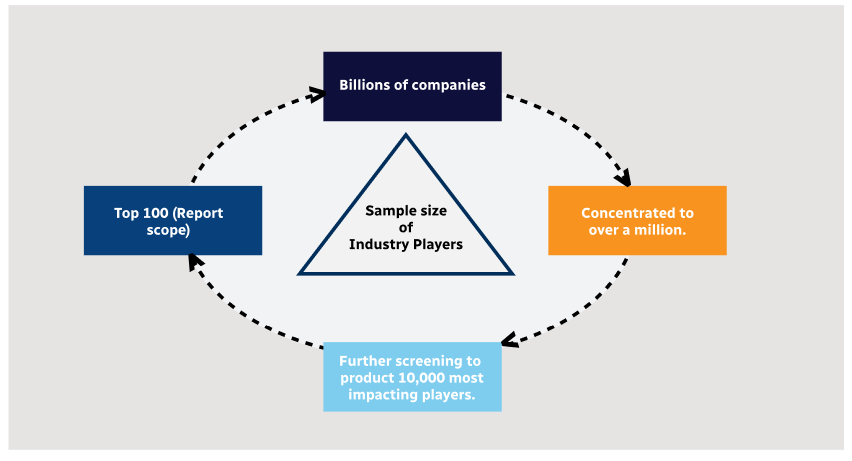
Step 1 - Identification of Relevant Samples Size from Population Database
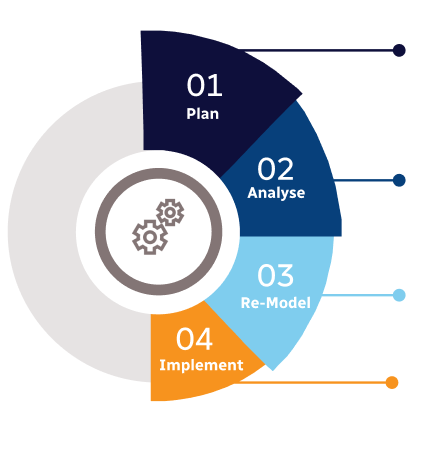
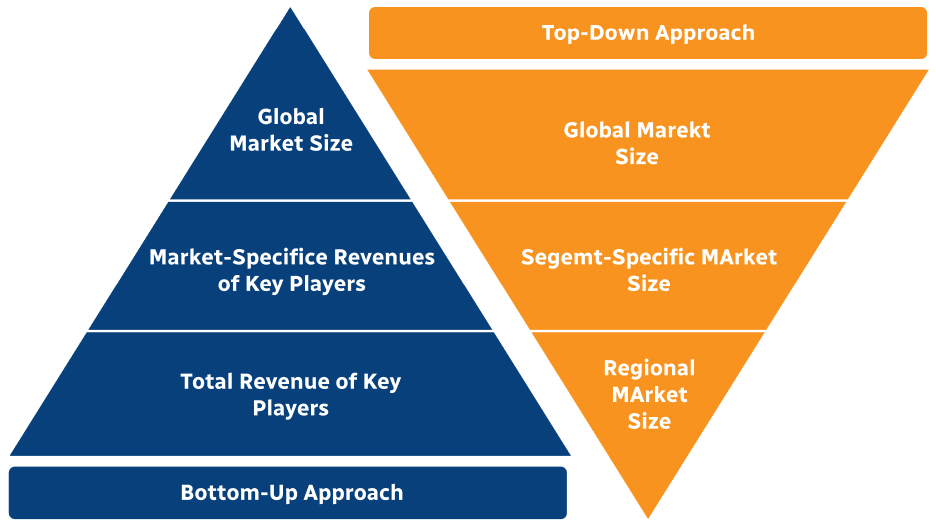
Step 2 - Approaches for Defining Global Market Size (Value, Volume* & Price*)
Note*: In applicable scenarios
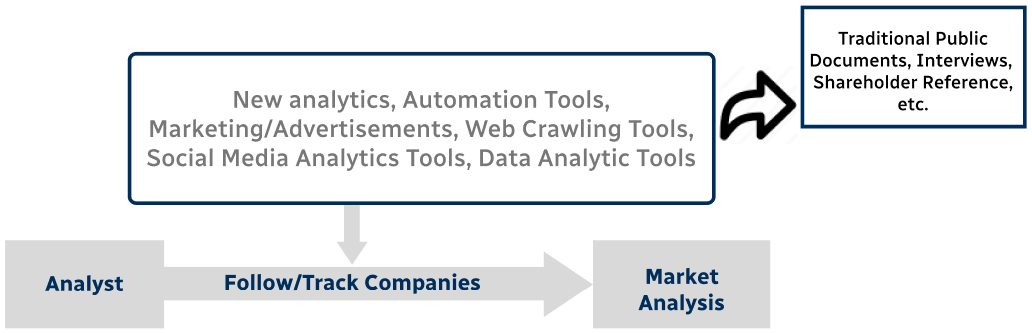
Step 3 - Data Sources
Primary Research
- Web Analytics
- Survey Reports
- Research Institute
- Latest Research Reports
- Opinion Leaders
Secondary Research
- Annual Reports
- White Paper
- Latest Press Release
- Industry Association
- Paid Database
- Investor Presentations
Step 4 - Data Triangulation
Involves using different sources of information in order to increase the validity of a study
These sources are likely to be stakeholders in a program - participants, other researchers, program staff, other community members, and so on.
Then we put all data in single framework & apply various statistical tools to find out the dynamic on the market.
During the analysis stage, feedback from the stakeholder groups would be compared to determine areas of agreement as well as areas of divergence