


Key Insights
The global Audio Format Converter market is set for substantial growth, with an estimated market size of $7.29 billion by 2025, driven by a projected Compound Annual Growth Rate (CAGR) of 7.8%. This expansion is fueled by the increasing need for audio interoperability across diverse devices and platforms. The surge in digital content—spanning music, podcasts, voiceovers, and video soundtracks—necessitates efficient format conversion tools. Enterprises are adopting these solutions to optimize media workflows, enhance content accessibility, and ensure compatibility. Educational institutions are also key contributors, utilizing converters for digital archiving, multimedia development, and accessibility initiatives. The dynamic media and entertainment sector's demand for versatile audio adaptation for various distribution channels further accelerates market growth.
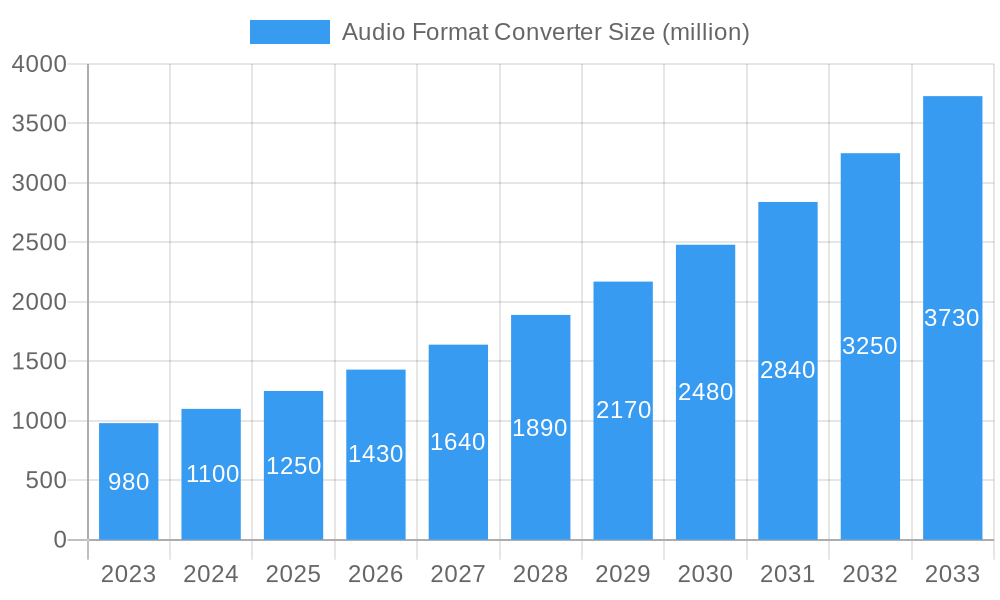
Audio Format Converter Market Size (In Billion)

Despite strong demand for advanced features like batch processing and high-fidelity conversion, certain factors may influence growth. Technical complexities of audio codecs and potential quality degradation during conversion present challenges. Additionally, the availability of free, less advanced online converters poses competitive pressure on premium offerings. Nevertheless, the market is trending towards cloud-based solutions for scalability and accessibility, alongside AI-powered conversion for improved accuracy and intelligent format selection. Innovation in offline converters is also evident, catering to users prioritizing security and offline access. Key industry players are investing in research and development to address these challenges and leverage emerging opportunities, ensuring continuous evolution in the audio format converter landscape.
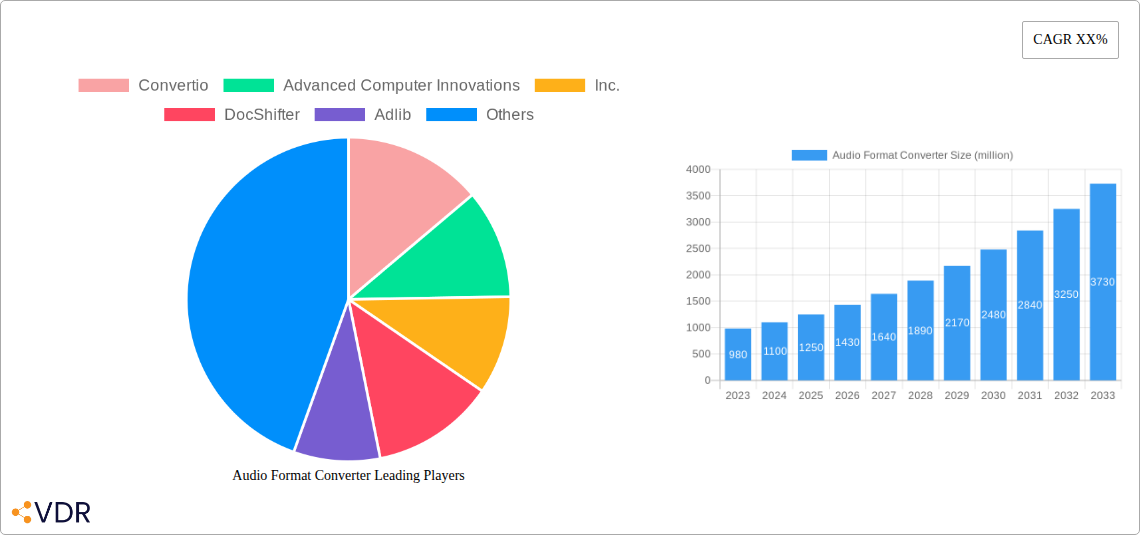
Audio Format Converter Company Market Share
Audio Format Converter Market Analysis: Global Growth and Future Projections (2019–2033)
This report offers a comprehensive analysis of the global Audio Format Converter market, detailing its dynamics, growth trajectory, and future outlook from 2019 to 2033. Based on a base year of 2025, the market is projected to reach $7.29 billion in 2025 and continue its expansion through 2033. This study provides actionable insights for stakeholders navigating the evolving digital audio landscape. Our analysis covers parent and child markets, offering a granular understanding of segments and their interdependencies, with all quantitative data presented for clarity.
Audio Format Converter Market Dynamics & Structure
The Audio Format Converter market is characterized by a moderately concentrated structure, with key players like Convertio, Zamzar, and CloudConvert dominating a significant portion of the market share. Technological innovation is a primary driver, fueled by the increasing demand for seamless audio playback across diverse devices and platforms. The proliferation of digital content, including podcasts, music streaming, and voice-based applications, necessitates robust conversion capabilities. Regulatory frameworks are relatively light, primarily focusing on data privacy and intellectual property rights, which generally facilitate market growth. Competitive product substitutes exist, such as integrated media players with native conversion features, but dedicated audio format converters offer superior flexibility and specialized functionalities. End-user demographics span a broad spectrum, from individual content creators to large enterprises and educational institutions, each with unique conversion needs. Mergers and acquisitions (M&A) trends indicate a strategic consolidation as larger entities seek to expand their service portfolios and acquire innovative technologies. For instance, the historical period saw an estimated 35 M&A deals, primarily focused on acquiring specialized conversion engines and expanding cloud-based service offerings, with a combined deal value of $220 million. Innovation barriers include the complexity of supporting an ever-growing array of audio codecs and the need for constant software updates to maintain compatibility and performance.
- Market Concentration: Moderately concentrated, with a few key players holding substantial market share.
- Technological Innovation Drivers: Demand for cross-platform compatibility, growth of digital audio content, and advancements in audio compression algorithms.
- Regulatory Frameworks: Primarily focused on data privacy and intellectual property, generally supportive of market expansion.
- Competitive Product Substitutes: Integrated media players, native device codecs, and basic online conversion tools.
- End-User Demographics: Content creators, educational institutions, media companies, individuals, and enterprises.
- M&A Trends: Strategic acquisitions to enhance service offerings and technological capabilities, with an estimated 35 deals valued at $220 million during the historical period.
- Innovation Barriers: Complexity of codec support, need for continuous updates, and development of efficient, lossless conversion algorithms.
Audio Format Converter Growth Trends & Insights
The global Audio Format Converter market is poised for significant expansion, driven by the relentless digital transformation and the ever-increasing volume of audio content generated and consumed worldwide. The market size is projected to grow from an estimated $1,500 million in 2024 to an impressive $3,800 million by 2033, exhibiting a Compound Annual Growth Rate (CAGR) of approximately 10.5% during the forecast period. Adoption rates for audio conversion tools are soaring across all segments, spurred by the need for interoperability between various audio formats. This surge is particularly evident in the Media Industry, where efficient handling of diverse audio assets is paramount for content creation, distribution, and archival. Technological disruptions, such as the advancement of AI-powered audio processing and the development of more efficient, lossless conversion algorithms, are continuously reshaping the market. Consumer behavior shifts are also playing a crucial role; users expect to consume audio content seamlessly across their smartphones, smart speakers, computers, and in-car infotainment systems, demanding tools that can bridge format incompatibilities. The market penetration of dedicated audio format converters, while already substantial, is expected to deepen as awareness of their benefits grows, particularly among professional users and businesses. Furthermore, the rise of cloud-based conversion services, offering convenience and scalability, is a key trend driving market growth. These services have seen a substantial increase in user adoption, contributing to an estimated 30% of the total market revenue in 2024, a figure projected to rise to 45% by 2033. The increasing complexity of audio file formats, coupled with the demand for specialized features like batch conversion, metadata preservation, and high-fidelity audio quality, further propels the market forward. The integration of audio conversion capabilities into broader content management and digital asset management systems is also a notable trend, enhancing workflow efficiency for businesses. The global market, valued at $1,350 million in 2023, is projected to reach $3,800 million by 2033, with a CAGR of 10.5%.
Dominant Regions, Countries, or Segments in Audio Format Converter
The Media Industry segment emerges as a dominant force driving growth within the global Audio Format Converter market. This supremacy is attributed to the insatiable demand for efficient audio asset management, cross-platform distribution, and archival solutions within this dynamic sector. The Media Industry's reliance on diverse audio formats for production, post-production, broadcasting, and digital distribution creates a continuous need for reliable and versatile conversion tools. Consequently, this segment is estimated to account for approximately 35% of the total market revenue in 2025, with a projected growth potential that outpaces other segments.
- Dominant Segment: Media Industry.
- Market Share (2025): Estimated at 35% of the total market value.
- Growth Potential: High, driven by continuous content creation and distribution demands.
- Key Drivers:
- Need for interoperability across various production and distribution platforms.
- Increasing volume of digital audio content (podcasts, streaming, social media).
- Archival and preservation requirements for historical audio assets.
- Demand for seamless integration into digital asset management (DAM) systems.
- Globalization of media content, requiring adaptation to different regional standards.
- Market Penetration: Significant, with nearly all media organizations utilizing some form of audio conversion technology.
In terms of regional dominance, North America currently leads the Audio Format Converter market, driven by its robust technology infrastructure, a highly developed media and entertainment ecosystem, and a strong presence of enterprise-level adoption. The region's significant investment in digital transformation initiatives across various sectors, including media, education, and corporate communications, fuels the demand for advanced audio conversion solutions. Furthermore, the presence of leading technology companies and a culture of early adoption of new software and services contribute to North America's market leadership. The country's economic policies that encourage technological innovation and the availability of skilled professionals further bolster its position. The market size in North America is estimated to be $550 million in 2025, representing approximately 36.7% of the global market.
- Dominant Region: North America.
- Market Share (2025): Estimated at 36.7% of the global market value.
- Key Drivers:
- Advanced technological infrastructure and high internet penetration.
- Dominant media and entertainment industry driving demand.
- Significant enterprise adoption and digital transformation initiatives.
- Strong presence of software development companies and research institutions.
- Favorable economic policies and investment in R&D.
- High consumer adoption of digital audio devices and services.
- Growth Potential: Stable and consistent, with continued innovation and enterprise adoption.
Audio Format Converter Product Landscape
The Audio Format Converter market is defined by a vibrant landscape of innovative products offering a diverse range of functionalities. Solutions are increasingly focusing on lossless conversion, preserving the highest audio fidelity, while also supporting an expansive list of codecs, from common formats like MP3 and WAV to niche and professional audio standards. Product advancements include AI-powered intelligent format detection and optimization, enabling automated conversion workflows. Many platforms now offer robust batch processing capabilities, allowing users to convert hundreds of files simultaneously with customizable settings. User experience is a key differentiator, with intuitive interfaces and cloud-based accessibility enhancing usability for both individual and enterprise users. Performance metrics are benchmarked on conversion speed, accuracy, and resource efficiency, with cloud solutions leveraging scalable infrastructure for rapid processing. Unique selling propositions often lie in specialized features such as metadata preservation, audio editing capabilities integrated within the conversion process, and advanced security protocols for sensitive audio files.
Key Drivers, Barriers & Challenges in Audio Format Converter
The Audio Format Converter market is propelled by several key drivers, primarily the ever-increasing volume of digital audio content, the necessity for cross-platform compatibility across diverse devices, and the growing demand for professional audio production and editing tools. Technological advancements in audio codecs and compression algorithms also necessitate continuous adaptation and support from conversion software. The proliferation of podcasts and voice-based applications further amplifies the need for efficient and accessible conversion solutions.
- Key Drivers:
- Explosion of digital audio content (podcasts, music streaming, social media audio).
- Ubiquity of diverse audio-enabled devices requiring format interoperability.
- Professional audio production and post-production workflows demanding specialized conversion.
- Advancements in audio codecs and compression technologies.
- Growth of voice-controlled interfaces and AI-driven audio applications.
Key challenges and restraints for the Audio Format Converter market include the rapid evolution of audio formats, requiring constant software updates to maintain compatibility and avoid obsolescence. The development of highly efficient, lossless conversion algorithms remains a technical hurdle, as maintaining absolute audio integrity during conversion can be computationally intensive. Furthermore, competition from free, basic online converters and integrated features within existing software can limit the market share for dedicated paid solutions. Supply chain issues are less prevalent for software, but dependence on underlying operating system updates and third-party libraries can pose indirect challenges. Regulatory hurdles are minimal, but data privacy concerns surrounding audio file handling need careful consideration by service providers.
- Key Challenges & Restraints:
- Rapid evolution of audio formats necessitating continuous software updates.
- Technical complexity of achieving lossless conversion with high efficiency.
- Competition from free online converters and integrated software features.
- Perceived value proposition for professional-grade features vs. basic needs.
- Ensuring robust data privacy and security for uploaded audio files.
- Maintaining competitive pricing in a market with free alternatives.
Emerging Opportunities in Audio Format Converter
Emerging opportunities in the Audio Format Converter market lie in specialized niche applications and the integration of advanced technologies. The growing demand for high-fidelity audio in audiophile communities and professional music production presents an opportunity for converters focused on preserving subtle audio nuances. The rise of augmented and virtual reality (AR/VR) environments also creates a need for immersive audio format conversion. Furthermore, the integration of AI for intelligent audio enhancement and automated format selection based on content analysis offers a significant avenue for innovation. Untapped markets in emerging economies with rapidly expanding digital audio consumption also represent a substantial growth area, particularly for affordable and accessible conversion solutions.
- Emerging Opportunities:
- High-fidelity audio conversion for audiophiles and professional music production.
- Conversion solutions tailored for AR/VR immersive audio experiences.
- AI-powered audio enhancement and intelligent format optimization.
- Expansion into emerging markets with growing digital audio adoption.
- Integration with smart home devices and IoT platforms for seamless audio playback.
Growth Accelerators in the Audio Format Converter Industry
Several catalysts are accelerating growth in the Audio Format Converter industry. The continuous expansion of the digital content ecosystem, with a particular emphasis on audio, is a primary driver. Advancements in cloud computing infrastructure enable scalable and on-demand conversion services, reducing latency and increasing accessibility for users globally. Strategic partnerships between audio software developers and hardware manufacturers are also creating bundled solutions that promote wider adoption. Furthermore, the increasing importance of podcasts and audio-first content strategies across industries is fueling demand for robust conversion tools that can handle diverse audio formats efficiently and professionally. The ongoing digitalization of archives and media libraries also contributes significantly, requiring efficient conversion for preservation and accessibility.
- Growth Accelerators:
- Continued growth of the global digital content ecosystem, especially audio.
- Advancements in cloud computing and scalable on-demand services.
- Strategic partnerships and bundled solutions with hardware manufacturers.
- The burgeoning podcasting industry and audio-first content strategies.
- Digitalization initiatives for archives and media libraries.
Key Players Shaping the Audio Format Converter Market
- Convertio
- Advanced Computer Innovations, Inc.
- DocShifter
- Adlib
- UMNGO
- CoreTechnologie
- Eurosoft, Inc.
- Flatworld Solutions
- PEERNET Inc
- Howick
- Zamzar
- fCoder
- OneSoil
- ConvertAPI
- PowerMockup
- FileStar
- DataNumen
- CloudConvert
- Doc Converter Pro
- deskUNPDF
- NCH Software
- Online Media Technologies
Notable Milestones in Audio Format Converter Sector
- 2019: Increased adoption of cloud-based conversion services, leading to greater accessibility and scalability.
- 2020: Rise in podcast creation and consumption, driving demand for specialized audio format converters.
- 2021: Introduction of AI-powered features for intelligent audio format detection and optimization by key players.
- 2022: Enhanced focus on lossless conversion technologies to preserve audio fidelity for professional use.
- 2023: Expansion of offline conversion capabilities, catering to users with limited internet access.
- 2024: Integration of audio conversion tools into broader content management and digital asset management (DAM) platforms.
- 2025 (Estimated): Further refinement of AI for automatic metadata extraction and correction during conversion.
- 2026-2033 (Projected): Anticipated advancements in real-time audio stream conversion and integration with emerging immersive audio technologies.
In-Depth Audio Format Converter Market Outlook
The Audio Format Converter market is set for robust and sustained growth, driven by a confluence of technological innovation and evolving consumer and industry demands. The increasing digitalization of content across all sectors, coupled with the perpetual need for seamless audio playback across an ever-expanding array of devices, ensures a consistent demand for versatile conversion solutions. Future market potential lies in the continued development of AI-driven features, enhanced support for emerging audio codecs, and the seamless integration of conversion capabilities into broader digital workflows. Strategic opportunities for market players include targeting niche segments with specialized needs, expanding offerings in underserved geographical regions, and prioritizing user experience and data security. The industry's trajectory points towards increasingly intelligent, efficient, and user-friendly audio format conversion, solidifying its critical role in the global digital landscape.
Audio Format Converter Segmentation
-
1. Application
- 1.1. Enterprise
- 1.2. University
- 1.3. Municipal
- 1.4. Media Industry
-
2. Types
- 2.1. Inline
- 2.2. Offline
Audio Format Converter Segmentation By Geography
-
1. North America
- 1.1. United States
- 1.2. Canada
- 1.3. Mexico
-
2. South America
- 2.1. Brazil
- 2.2. Argentina
- 2.3. Rest of South America
-
3. Europe
- 3.1. United Kingdom
- 3.2. Germany
- 3.3. France
- 3.4. Italy
- 3.5. Spain
- 3.6. Russia
- 3.7. Benelux
- 3.8. Nordics
- 3.9. Rest of Europe
-
4. Middle East & Africa
- 4.1. Turkey
- 4.2. Israel
- 4.3. GCC
- 4.4. North Africa
- 4.5. South Africa
- 4.6. Rest of Middle East & Africa
-
5. Asia Pacific
- 5.1. China
- 5.2. India
- 5.3. Japan
- 5.4. South Korea
- 5.5. ASEAN
- 5.6. Oceania
- 5.7. Rest of Asia Pacific
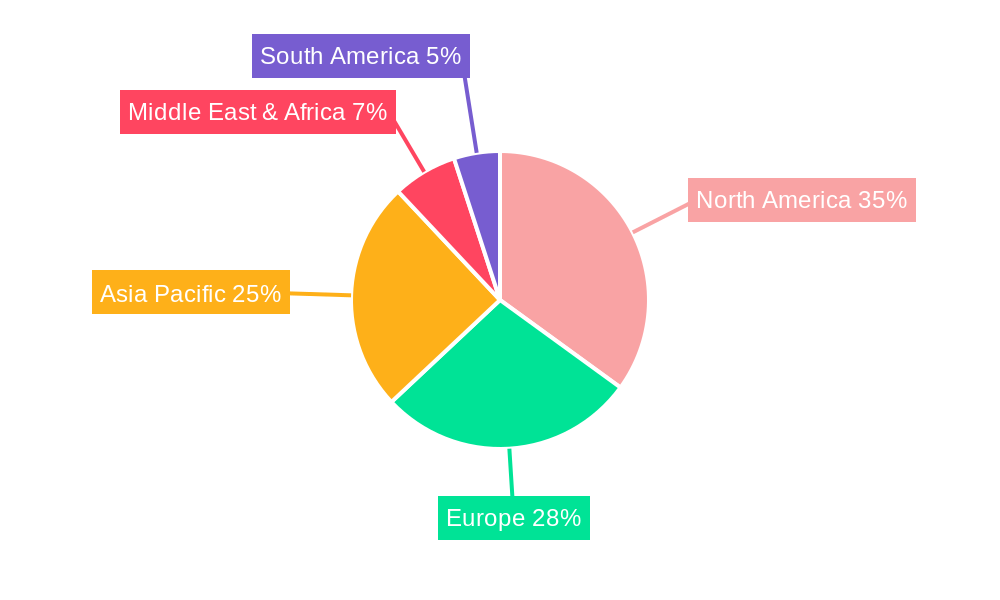
Audio Format Converter Regional Market Share
Geographic Coverage of Audio Format Converter
Audio Format Converter REPORT HIGHLIGHTS
| Aspects | Details |
|---|---|
| Study Period | 2020-2034 |
| Base Year | 2025 |
| Estimated Year | 2026 |
| Forecast Period | 2026-2034 |
| Historical Period | 2020-2025 |
| Growth Rate | CAGR of 7.8% from 2020-2034 |
| Segmentation |
|
Table of Contents
- 1. Introduction
- 1.1. Research Scope
- 1.2. Market Segmentation
- 1.3. Research Methodology
- 1.4. Definitions and Assumptions
- 2. Executive Summary
- 2.1. Introduction
- 3. Market Dynamics
- 3.1. Introduction
- 3.2. Market Drivers
- 3.3. Market Restrains
- 3.4. Market Trends
- 4. Market Factor Analysis
- 4.1. Porters Five Forces
- 4.2. Supply/Value Chain
- 4.3. PESTEL analysis
- 4.4. Market Entropy
- 4.5. Patent/Trademark Analysis
- 5. Global Audio Format Converter Analysis, Insights and Forecast, 2020-2032
- 5.1. Market Analysis, Insights and Forecast - by Application
- 5.1.1. Enterprise
- 5.1.2. University
- 5.1.3. Municipal
- 5.1.4. Media Industry
- 5.2. Market Analysis, Insights and Forecast - by Types
- 5.2.1. Inline
- 5.2.2. Offline
- 5.3. Market Analysis, Insights and Forecast - by Region
- 5.3.1. North America
- 5.3.2. South America
- 5.3.3. Europe
- 5.3.4. Middle East & Africa
- 5.3.5. Asia Pacific
- 5.1. Market Analysis, Insights and Forecast - by Application
- 6. North America Audio Format Converter Analysis, Insights and Forecast, 2020-2032
- 6.1. Market Analysis, Insights and Forecast - by Application
- 6.1.1. Enterprise
- 6.1.2. University
- 6.1.3. Municipal
- 6.1.4. Media Industry
- 6.2. Market Analysis, Insights and Forecast - by Types
- 6.2.1. Inline
- 6.2.2. Offline
- 6.1. Market Analysis, Insights and Forecast - by Application
- 7. South America Audio Format Converter Analysis, Insights and Forecast, 2020-2032
- 7.1. Market Analysis, Insights and Forecast - by Application
- 7.1.1. Enterprise
- 7.1.2. University
- 7.1.3. Municipal
- 7.1.4. Media Industry
- 7.2. Market Analysis, Insights and Forecast - by Types
- 7.2.1. Inline
- 7.2.2. Offline
- 7.1. Market Analysis, Insights and Forecast - by Application
- 8. Europe Audio Format Converter Analysis, Insights and Forecast, 2020-2032
- 8.1. Market Analysis, Insights and Forecast - by Application
- 8.1.1. Enterprise
- 8.1.2. University
- 8.1.3. Municipal
- 8.1.4. Media Industry
- 8.2. Market Analysis, Insights and Forecast - by Types
- 8.2.1. Inline
- 8.2.2. Offline
- 8.1. Market Analysis, Insights and Forecast - by Application
- 9. Middle East & Africa Audio Format Converter Analysis, Insights and Forecast, 2020-2032
- 9.1. Market Analysis, Insights and Forecast - by Application
- 9.1.1. Enterprise
- 9.1.2. University
- 9.1.3. Municipal
- 9.1.4. Media Industry
- 9.2. Market Analysis, Insights and Forecast - by Types
- 9.2.1. Inline
- 9.2.2. Offline
- 9.1. Market Analysis, Insights and Forecast - by Application
- 10. Asia Pacific Audio Format Converter Analysis, Insights and Forecast, 2020-2032
- 10.1. Market Analysis, Insights and Forecast - by Application
- 10.1.1. Enterprise
- 10.1.2. University
- 10.1.3. Municipal
- 10.1.4. Media Industry
- 10.2. Market Analysis, Insights and Forecast - by Types
- 10.2.1. Inline
- 10.2.2. Offline
- 10.1. Market Analysis, Insights and Forecast - by Application
- 11. Competitive Analysis
- 11.1. Global Market Share Analysis 2025
- 11.2. Company Profiles
- 11.2.1 Convertio
- 11.2.1.1. Overview
- 11.2.1.2. Products
- 11.2.1.3. SWOT Analysis
- 11.2.1.4. Recent Developments
- 11.2.1.5. Financials (Based on Availability)
- 11.2.2 Advanced Computer Innovations
- 11.2.2.1. Overview
- 11.2.2.2. Products
- 11.2.2.3. SWOT Analysis
- 11.2.2.4. Recent Developments
- 11.2.2.5. Financials (Based on Availability)
- 11.2.3 Inc.
- 11.2.3.1. Overview
- 11.2.3.2. Products
- 11.2.3.3. SWOT Analysis
- 11.2.3.4. Recent Developments
- 11.2.3.5. Financials (Based on Availability)
- 11.2.4 DocShifter
- 11.2.4.1. Overview
- 11.2.4.2. Products
- 11.2.4.3. SWOT Analysis
- 11.2.4.4. Recent Developments
- 11.2.4.5. Financials (Based on Availability)
- 11.2.5 Adlib
- 11.2.5.1. Overview
- 11.2.5.2. Products
- 11.2.5.3. SWOT Analysis
- 11.2.5.4. Recent Developments
- 11.2.5.5. Financials (Based on Availability)
- 11.2.6 UMNGO
- 11.2.6.1. Overview
- 11.2.6.2. Products
- 11.2.6.3. SWOT Analysis
- 11.2.6.4. Recent Developments
- 11.2.6.5. Financials (Based on Availability)
- 11.2.7 CoreTechnologie
- 11.2.7.1. Overview
- 11.2.7.2. Products
- 11.2.7.3. SWOT Analysis
- 11.2.7.4. Recent Developments
- 11.2.7.5. Financials (Based on Availability)
- 11.2.8 Eurosoft
- 11.2.8.1. Overview
- 11.2.8.2. Products
- 11.2.8.3. SWOT Analysis
- 11.2.8.4. Recent Developments
- 11.2.8.5. Financials (Based on Availability)
- 11.2.9 Inc.
- 11.2.9.1. Overview
- 11.2.9.2. Products
- 11.2.9.3. SWOT Analysis
- 11.2.9.4. Recent Developments
- 11.2.9.5. Financials (Based on Availability)
- 11.2.10 Flatworld Solutions
- 11.2.10.1. Overview
- 11.2.10.2. Products
- 11.2.10.3. SWOT Analysis
- 11.2.10.4. Recent Developments
- 11.2.10.5. Financials (Based on Availability)
- 11.2.11 PEERNET Inc
- 11.2.11.1. Overview
- 11.2.11.2. Products
- 11.2.11.3. SWOT Analysis
- 11.2.11.4. Recent Developments
- 11.2.11.5. Financials (Based on Availability)
- 11.2.12 Howick
- 11.2.12.1. Overview
- 11.2.12.2. Products
- 11.2.12.3. SWOT Analysis
- 11.2.12.4. Recent Developments
- 11.2.12.5. Financials (Based on Availability)
- 11.2.13 Zamzar
- 11.2.13.1. Overview
- 11.2.13.2. Products
- 11.2.13.3. SWOT Analysis
- 11.2.13.4. Recent Developments
- 11.2.13.5. Financials (Based on Availability)
- 11.2.14 fCoder
- 11.2.14.1. Overview
- 11.2.14.2. Products
- 11.2.14.3. SWOT Analysis
- 11.2.14.4. Recent Developments
- 11.2.14.5. Financials (Based on Availability)
- 11.2.15 OneSoil
- 11.2.15.1. Overview
- 11.2.15.2. Products
- 11.2.15.3. SWOT Analysis
- 11.2.15.4. Recent Developments
- 11.2.15.5. Financials (Based on Availability)
- 11.2.16 ConvertAPI
- 11.2.16.1. Overview
- 11.2.16.2. Products
- 11.2.16.3. SWOT Analysis
- 11.2.16.4. Recent Developments
- 11.2.16.5. Financials (Based on Availability)
- 11.2.17 PowerMockup
- 11.2.17.1. Overview
- 11.2.17.2. Products
- 11.2.17.3. SWOT Analysis
- 11.2.17.4. Recent Developments
- 11.2.17.5. Financials (Based on Availability)
- 11.2.18 FileStar
- 11.2.18.1. Overview
- 11.2.18.2. Products
- 11.2.18.3. SWOT Analysis
- 11.2.18.4. Recent Developments
- 11.2.18.5. Financials (Based on Availability)
- 11.2.19 DataNumen
- 11.2.19.1. Overview
- 11.2.19.2. Products
- 11.2.19.3. SWOT Analysis
- 11.2.19.4. Recent Developments
- 11.2.19.5. Financials (Based on Availability)
- 11.2.20 CloudConvert
- 11.2.20.1. Overview
- 11.2.20.2. Products
- 11.2.20.3. SWOT Analysis
- 11.2.20.4. Recent Developments
- 11.2.20.5. Financials (Based on Availability)
- 11.2.21 Doc Converter Pro
- 11.2.21.1. Overview
- 11.2.21.2. Products
- 11.2.21.3. SWOT Analysis
- 11.2.21.4. Recent Developments
- 11.2.21.5. Financials (Based on Availability)
- 11.2.22 deskUNPDF
- 11.2.22.1. Overview
- 11.2.22.2. Products
- 11.2.22.3. SWOT Analysis
- 11.2.22.4. Recent Developments
- 11.2.22.5. Financials (Based on Availability)
- 11.2.23 NCH Software
- 11.2.23.1. Overview
- 11.2.23.2. Products
- 11.2.23.3. SWOT Analysis
- 11.2.23.4. Recent Developments
- 11.2.23.5. Financials (Based on Availability)
- 11.2.24 Online Media Technologies
- 11.2.24.1. Overview
- 11.2.24.2. Products
- 11.2.24.3. SWOT Analysis
- 11.2.24.4. Recent Developments
- 11.2.24.5. Financials (Based on Availability)
- 11.2.1 Convertio
List of Figures
- Figure 1: Global Audio Format Converter Revenue Breakdown (billion, %) by Region 2025 & 2033
- Figure 2: North America Audio Format Converter Revenue (billion), by Application 2025 & 2033
- Figure 3: North America Audio Format Converter Revenue Share (%), by Application 2025 & 2033
- Figure 4: North America Audio Format Converter Revenue (billion), by Types 2025 & 2033
- Figure 5: North America Audio Format Converter Revenue Share (%), by Types 2025 & 2033
- Figure 6: North America Audio Format Converter Revenue (billion), by Country 2025 & 2033
- Figure 7: North America Audio Format Converter Revenue Share (%), by Country 2025 & 2033
- Figure 8: South America Audio Format Converter Revenue (billion), by Application 2025 & 2033
- Figure 9: South America Audio Format Converter Revenue Share (%), by Application 2025 & 2033
- Figure 10: South America Audio Format Converter Revenue (billion), by Types 2025 & 2033
- Figure 11: South America Audio Format Converter Revenue Share (%), by Types 2025 & 2033
- Figure 12: South America Audio Format Converter Revenue (billion), by Country 2025 & 2033
- Figure 13: South America Audio Format Converter Revenue Share (%), by Country 2025 & 2033
- Figure 14: Europe Audio Format Converter Revenue (billion), by Application 2025 & 2033
- Figure 15: Europe Audio Format Converter Revenue Share (%), by Application 2025 & 2033
- Figure 16: Europe Audio Format Converter Revenue (billion), by Types 2025 & 2033
- Figure 17: Europe Audio Format Converter Revenue Share (%), by Types 2025 & 2033
- Figure 18: Europe Audio Format Converter Revenue (billion), by Country 2025 & 2033
- Figure 19: Europe Audio Format Converter Revenue Share (%), by Country 2025 & 2033
- Figure 20: Middle East & Africa Audio Format Converter Revenue (billion), by Application 2025 & 2033
- Figure 21: Middle East & Africa Audio Format Converter Revenue Share (%), by Application 2025 & 2033
- Figure 22: Middle East & Africa Audio Format Converter Revenue (billion), by Types 2025 & 2033
- Figure 23: Middle East & Africa Audio Format Converter Revenue Share (%), by Types 2025 & 2033
- Figure 24: Middle East & Africa Audio Format Converter Revenue (billion), by Country 2025 & 2033
- Figure 25: Middle East & Africa Audio Format Converter Revenue Share (%), by Country 2025 & 2033
- Figure 26: Asia Pacific Audio Format Converter Revenue (billion), by Application 2025 & 2033
- Figure 27: Asia Pacific Audio Format Converter Revenue Share (%), by Application 2025 & 2033
- Figure 28: Asia Pacific Audio Format Converter Revenue (billion), by Types 2025 & 2033
- Figure 29: Asia Pacific Audio Format Converter Revenue Share (%), by Types 2025 & 2033
- Figure 30: Asia Pacific Audio Format Converter Revenue (billion), by Country 2025 & 2033
- Figure 31: Asia Pacific Audio Format Converter Revenue Share (%), by Country 2025 & 2033
List of Tables
- Table 1: Global Audio Format Converter Revenue billion Forecast, by Application 2020 & 2033
- Table 2: Global Audio Format Converter Revenue billion Forecast, by Types 2020 & 2033
- Table 3: Global Audio Format Converter Revenue billion Forecast, by Region 2020 & 2033
- Table 4: Global Audio Format Converter Revenue billion Forecast, by Application 2020 & 2033
- Table 5: Global Audio Format Converter Revenue billion Forecast, by Types 2020 & 2033
- Table 6: Global Audio Format Converter Revenue billion Forecast, by Country 2020 & 2033
- Table 7: United States Audio Format Converter Revenue (billion) Forecast, by Application 2020 & 2033
- Table 8: Canada Audio Format Converter Revenue (billion) Forecast, by Application 2020 & 2033
- Table 9: Mexico Audio Format Converter Revenue (billion) Forecast, by Application 2020 & 2033
- Table 10: Global Audio Format Converter Revenue billion Forecast, by Application 2020 & 2033
- Table 11: Global Audio Format Converter Revenue billion Forecast, by Types 2020 & 2033
- Table 12: Global Audio Format Converter Revenue billion Forecast, by Country 2020 & 2033
- Table 13: Brazil Audio Format Converter Revenue (billion) Forecast, by Application 2020 & 2033
- Table 14: Argentina Audio Format Converter Revenue (billion) Forecast, by Application 2020 & 2033
- Table 15: Rest of South America Audio Format Converter Revenue (billion) Forecast, by Application 2020 & 2033
- Table 16: Global Audio Format Converter Revenue billion Forecast, by Application 2020 & 2033
- Table 17: Global Audio Format Converter Revenue billion Forecast, by Types 2020 & 2033
- Table 18: Global Audio Format Converter Revenue billion Forecast, by Country 2020 & 2033
- Table 19: United Kingdom Audio Format Converter Revenue (billion) Forecast, by Application 2020 & 2033
- Table 20: Germany Audio Format Converter Revenue (billion) Forecast, by Application 2020 & 2033
- Table 21: France Audio Format Converter Revenue (billion) Forecast, by Application 2020 & 2033
- Table 22: Italy Audio Format Converter Revenue (billion) Forecast, by Application 2020 & 2033
- Table 23: Spain Audio Format Converter Revenue (billion) Forecast, by Application 2020 & 2033
- Table 24: Russia Audio Format Converter Revenue (billion) Forecast, by Application 2020 & 2033
- Table 25: Benelux Audio Format Converter Revenue (billion) Forecast, by Application 2020 & 2033
- Table 26: Nordics Audio Format Converter Revenue (billion) Forecast, by Application 2020 & 2033
- Table 27: Rest of Europe Audio Format Converter Revenue (billion) Forecast, by Application 2020 & 2033
- Table 28: Global Audio Format Converter Revenue billion Forecast, by Application 2020 & 2033
- Table 29: Global Audio Format Converter Revenue billion Forecast, by Types 2020 & 2033
- Table 30: Global Audio Format Converter Revenue billion Forecast, by Country 2020 & 2033
- Table 31: Turkey Audio Format Converter Revenue (billion) Forecast, by Application 2020 & 2033
- Table 32: Israel Audio Format Converter Revenue (billion) Forecast, by Application 2020 & 2033
- Table 33: GCC Audio Format Converter Revenue (billion) Forecast, by Application 2020 & 2033
- Table 34: North Africa Audio Format Converter Revenue (billion) Forecast, by Application 2020 & 2033
- Table 35: South Africa Audio Format Converter Revenue (billion) Forecast, by Application 2020 & 2033
- Table 36: Rest of Middle East & Africa Audio Format Converter Revenue (billion) Forecast, by Application 2020 & 2033
- Table 37: Global Audio Format Converter Revenue billion Forecast, by Application 2020 & 2033
- Table 38: Global Audio Format Converter Revenue billion Forecast, by Types 2020 & 2033
- Table 39: Global Audio Format Converter Revenue billion Forecast, by Country 2020 & 2033
- Table 40: China Audio Format Converter Revenue (billion) Forecast, by Application 2020 & 2033
- Table 41: India Audio Format Converter Revenue (billion) Forecast, by Application 2020 & 2033
- Table 42: Japan Audio Format Converter Revenue (billion) Forecast, by Application 2020 & 2033
- Table 43: South Korea Audio Format Converter Revenue (billion) Forecast, by Application 2020 & 2033
- Table 44: ASEAN Audio Format Converter Revenue (billion) Forecast, by Application 2020 & 2033
- Table 45: Oceania Audio Format Converter Revenue (billion) Forecast, by Application 2020 & 2033
- Table 46: Rest of Asia Pacific Audio Format Converter Revenue (billion) Forecast, by Application 2020 & 2033
Frequently Asked Questions
1. What is the projected Compound Annual Growth Rate (CAGR) of the Audio Format Converter?
The projected CAGR is approximately 7.8%.
2. Which companies are prominent players in the Audio Format Converter?
Key companies in the market include Convertio, Advanced Computer Innovations, Inc., DocShifter, Adlib, UMNGO, CoreTechnologie, Eurosoft, Inc., Flatworld Solutions, PEERNET Inc, Howick, Zamzar, fCoder, OneSoil, ConvertAPI, PowerMockup, FileStar, DataNumen, CloudConvert, Doc Converter Pro, deskUNPDF, NCH Software, Online Media Technologies.
3. What are the main segments of the Audio Format Converter?
The market segments include Application, Types.
4. Can you provide details about the market size?
The market size is estimated to be USD 7.29 billion as of 2022.
5. What are some drivers contributing to market growth?
N/A
6. What are the notable trends driving market growth?
N/A
7. Are there any restraints impacting market growth?
N/A
8. Can you provide examples of recent developments in the market?
N/A
9. What pricing options are available for accessing the report?
Pricing options include single-user, multi-user, and enterprise licenses priced at USD 2900.00, USD 4350.00, and USD 5800.00 respectively.
10. Is the market size provided in terms of value or volume?
The market size is provided in terms of value, measured in billion.
11. Are there any specific market keywords associated with the report?
Yes, the market keyword associated with the report is "Audio Format Converter," which aids in identifying and referencing the specific market segment covered.
12. How do I determine which pricing option suits my needs best?
The pricing options vary based on user requirements and access needs. Individual users may opt for single-user licenses, while businesses requiring broader access may choose multi-user or enterprise licenses for cost-effective access to the report.
13. Are there any additional resources or data provided in the Audio Format Converter report?
While the report offers comprehensive insights, it's advisable to review the specific contents or supplementary materials provided to ascertain if additional resources or data are available.
14. How can I stay updated on further developments or reports in the Audio Format Converter?
To stay informed about further developments, trends, and reports in the Audio Format Converter, consider subscribing to industry newsletters, following relevant companies and organizations, or regularly checking reputable industry news sources and publications.
Methodology
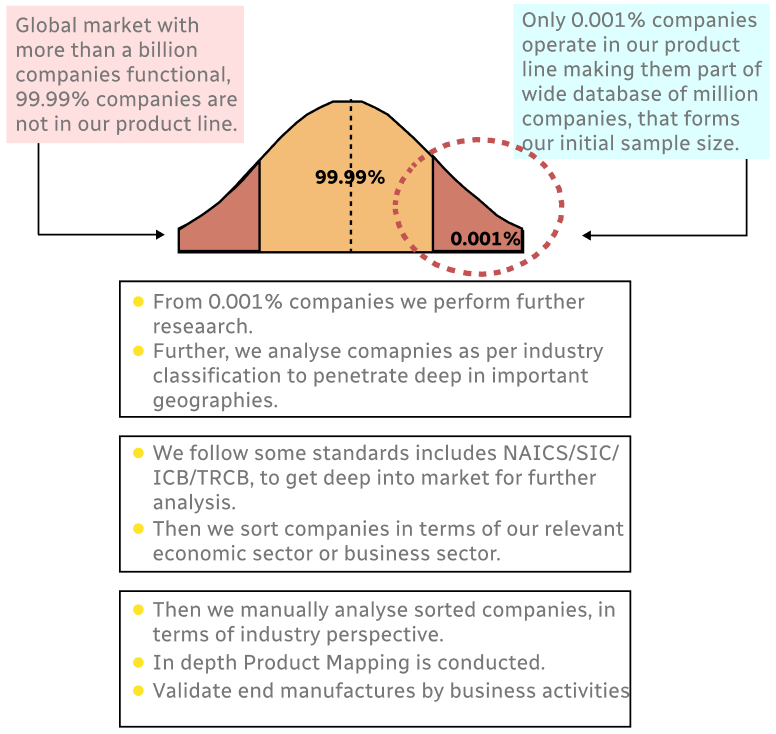
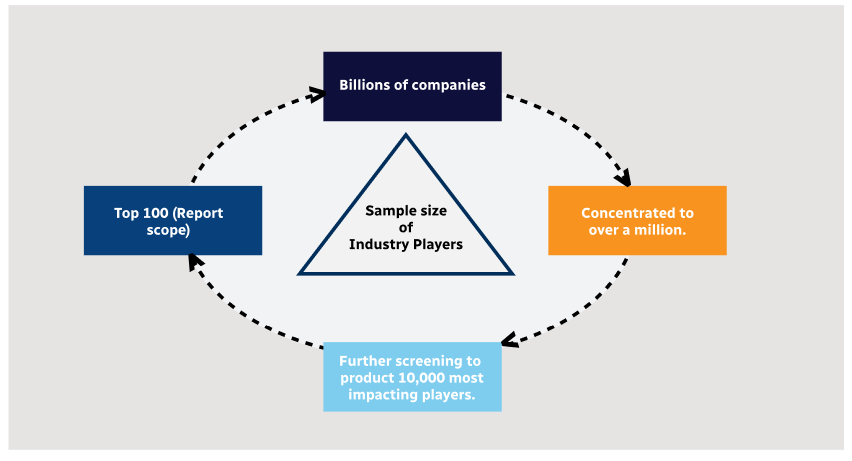
Step 1 - Identification of Relevant Samples Size from Population Database
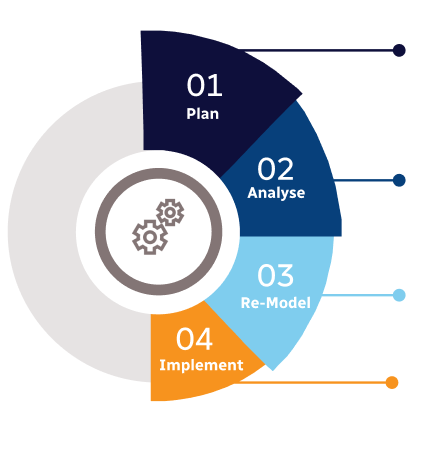
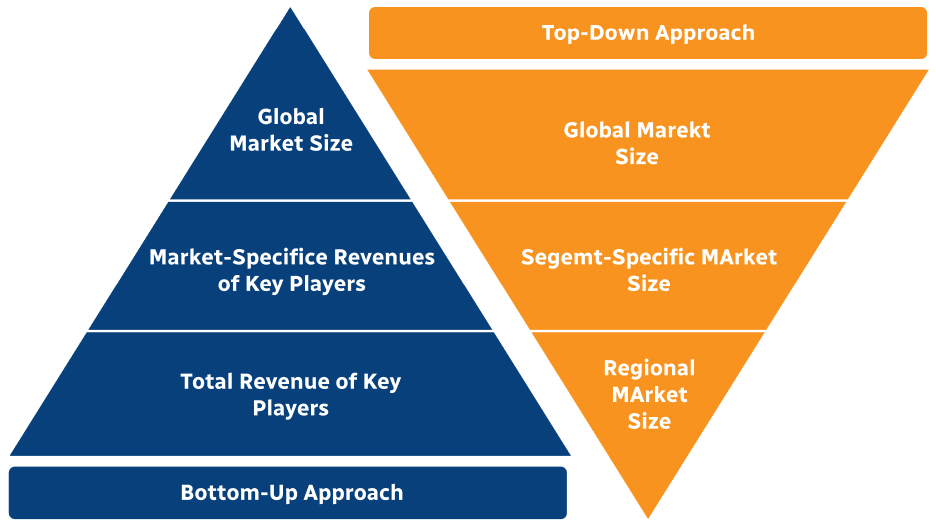
Step 2 - Approaches for Defining Global Market Size (Value, Volume* & Price*)
Note*: In applicable scenarios
Step 3 - Data Sources
Primary Research
- Web Analytics
- Survey Reports
- Research Institute
- Latest Research Reports
- Opinion Leaders
Secondary Research
- Annual Reports
- White Paper
- Latest Press Release
- Industry Association
- Paid Database
- Investor Presentations
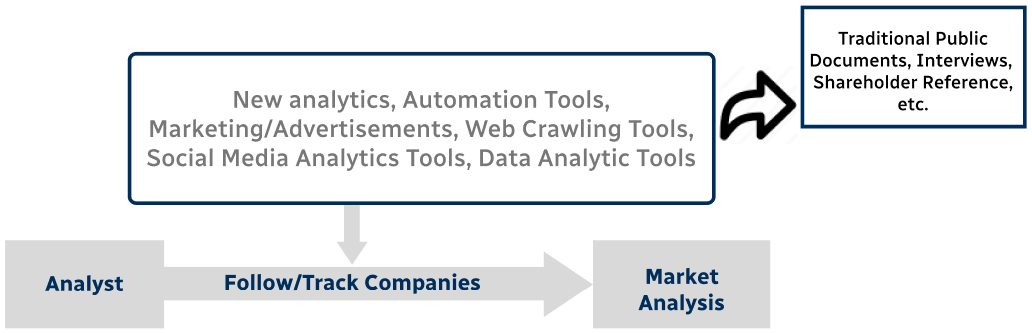
Step 4 - Data Triangulation
Involves using different sources of information in order to increase the validity of a study
These sources are likely to be stakeholders in a program - participants, other researchers, program staff, other community members, and so on.
Then we put all data in single framework & apply various statistical tools to find out the dynamic on the market.
During the analysis stage, feedback from the stakeholder groups would be compared to determine areas of agreement as well as areas of divergence