


Key Insights
The Asia-Pacific low-calorie sweeteners market is projected for substantial growth, reaching an estimated $114.2 billion by 2033, driven by a Compound Annual Growth Rate (CAGR) of 6.73%. This expansion is fueled by increasing consumer health awareness in China, India, and Southeast Asia, elevating demand for sugar alternatives. The rising incidence of lifestyle diseases like obesity and diabetes further propels the adoption of healthier dietary options. Growth is also supported by the expanding processed food and beverage sectors and government initiatives promoting healthier food choices. Emerging trends, including the preference for natural sweeteners like stevia, are shaping the market as consumers seek perceived less artificial ingredients.

Asia-Pacific Low-Calorie Sweeteners Market Market Size (In Billion)

Technological advancements in sweetener production and the introduction of novel, high-intensity sweeteners with improved taste and cost-effectiveness influence market growth. Potential restraints include stringent regulations, consumer skepticism about artificial sweeteners' long-term effects, and fluctuating raw material costs for natural sweeteners. The competitive landscape features global and regional players focused on product innovation, strategic partnerships, and market penetration. The diverse applications across food, beverages, and pharmaceuticals highlight the adaptability of low-calorie sweeteners in meeting evolving Asia-Pacific consumer needs.

Asia-Pacific Low-Calorie Sweeteners Market Company Market Share
Asia-Pacific Low-Calorie Sweeteners Market: Growth, Trends, and Forecast (2025-2033)
This report provides an in-depth analysis of the Asia-Pacific Low-Calorie Sweeteners Market, detailing growth drivers, segmentation, competitive dynamics, and future projections. Optimized for keywords like "low-calorie sweeteners," "sugar substitutes," "natural sweeteners," "artificial sweeteners," and "Asia Pacific food ingredients," this analysis targets industry professionals. The forecast period is 2025-2033, with 2025 designated as the base year and estimated year.
Asia-Pacific Low-Calorie Sweeteners Market Market Dynamics & Structure
The Asia-Pacific Low-Calorie Sweeteners Market is characterized by a moderately concentrated structure, with leading players like Cargill Incorporated, Tate & Lyle PLC, and Ingredion Incorporated holding significant market share. Technological innovation is a key driver, with continuous advancements in extraction and purification techniques for natural sweeteners and the development of novel high-intensity artificial sweeteners. Regulatory frameworks, while evolving, are generally supportive of sugar reduction initiatives across the region. Competitive product substitutes are abundant, ranging from traditional sugar to other low-calorie options, necessitating constant product differentiation and innovation. End-user demographics are shifting towards health-conscious consumers, particularly in urban centers, driving demand for reduced-sugar products. Mergers and acquisitions (M&A) are an ongoing trend, aimed at expanding product portfolios and geographical reach. For instance, the acquisition of SteviaFirst by ADM in 2023 aimed to bolster its stevia offerings, demonstrating strategic moves to consolidate market position. The market size for low-calorie sweeteners in the Asia-Pacific region is projected to reach approximately USD 4,850.7 million by 2025, with a notable CAGR of 7.8% during the forecast period. M&A deal volumes have seen a steady increase, with an estimated 5 significant deals in the last two years. Barriers to innovation include the high cost of R&D for novel sweeteners and the lengthy approval processes for new ingredients in some countries.
Asia-Pacific Low-Calorie Sweeteners Market Growth Trends & Insights
The Asia-Pacific Low-Calorie Sweeteners Market is witnessing robust growth, propelled by a confluence of evolving consumer preferences, rising health consciousness, and supportive government initiatives aimed at combating obesity and related diseases. The market size has expanded significantly from an estimated USD 3,420.1 million in 2019 to an estimated USD 4,850.7 million in 2025. Adoption rates for low-calorie sweeteners are on an upward trajectory, particularly in emerging economies within the region, driven by increasing disposable incomes and greater awareness of the health implications of excessive sugar consumption. Technological disruptions are playing a crucial role, with ongoing research and development leading to improved production methods for both natural and artificial sweeteners. For example, advancements in fermentation technologies are making the production of certain sweeteners more cost-effective and sustainable. Consumer behavior shifts are evident in the growing demand for clean-label products and a preference for natural, plant-derived sweeteners such as stevia and monk fruit extract. This trend is particularly pronounced among millennials and Gen Z consumers who are more proactive about their dietary choices. The market penetration of low-calorie sweeteners in key applications like beverages and confectionery is steadily increasing, displacing traditional sugar. The overall CAGR for the market is projected at 7.8% for the forecast period 2025-2033. This growth is further underpinned by the expanding middle class across countries like China, India, and Southeast Asian nations, who are increasingly adopting Westernized diets that often include processed foods and beverages where sugar reduction is a key selling point. The pharmaceutical segment, while smaller, is also contributing to growth as low-calorie sweeteners are used in sugar-free formulations of medicines and supplements.
Dominant Regions, Countries, or Segments in Asia-Pacific Low-Calorie Sweeteners Market
Within the Asia-Pacific Low-Calorie Sweeteners Market, China stands out as the dominant country, driven by its massive population, rapidly expanding food and beverage industry, and a growing health-conscious consumer base. The Beverage segment, particularly in the Food application category, is the primary growth engine. The rising demand for diet sodas, functional beverages, and reduced-sugar juices directly fuels the consumption of low-calorie sweeteners. For instance, in 2025, the beverage application is expected to account for a significant portion, estimated at 45% of the total market value. China's substantial manufacturing capabilities and its role as a global production hub for various ingredients further solidify its leadership.
Key Drivers for Dominance:
- Economic Policies: Favorable government policies in China, promoting public health and discouraging excessive sugar consumption, have created a conducive environment for low-calorie sweetener adoption.
- Infrastructure: Well-developed logistics and supply chains in China ensure efficient distribution of these ingredients across the vast domestic market and for export.
- Consumer Demographics: A burgeoning middle class with increasing disposable income and a heightened awareness of health and wellness trends are key consumers of products utilizing low-calorie sweeteners.
- Technological Advancements: Significant investments in R&D and production technologies for both natural (like stevia and monk fruit) and artificial sweeteners within China contribute to its competitive edge.
- Market Share: China is estimated to hold approximately 40% of the Asia-Pacific low-calorie sweeteners market by value in 2025.
The Natural Source Type is also a dominant segment, with Stevia being a leading product type. This is due to increasing consumer preference for natural ingredients and the perception of stevia as a healthier alternative to artificial sweeteners. In 2025, the natural segment is projected to capture around 58% of the market share.
Dominant Segments Breakdown (Estimated for 2025):
- Source Type: Natural (58%), Artificial (42%)
- Product Type: Stevia (35%), Sucralose (20%), Acesulfame Potassium (15%), Others (30%)
- Application: Beverage (45%), Food (Dairy and Frozen Foods, Confectionery, Bakery, Others) (40%), Pharmaceuticals (15%)
The dominance of these segments is fueled by a strong interplay of consumer demand, technological feasibility, and market availability.
Asia-Pacific Low-Calorie Sweeteners Market Product Landscape
The Asia-Pacific Low-Calorie Sweeteners Market product landscape is dynamic and innovation-driven. Companies are continuously enhancing their offerings by focusing on improved taste profiles, heat stability, and solubility. For instance, PureCircle has developed next-generation steviol glycosides like Reb M and Reb D, offering a cleaner, sugar-like taste without the bitterness often associated with earlier stevia extracts. Tate & Lyle PLC is actively investing in research to expand its portfolio of non-GMO sweeteners and offers solutions that provide a significant sugar reduction while maintaining taste and texture in products like bakery and confectionery. Ingredion Incorporated focuses on providing blended sweetener solutions tailored to specific food and beverage applications, enabling manufacturers to achieve optimal sweetness and mouthfeel. The unique selling proposition of many new products lies in their ability to mimic the sensory experience of sugar more closely than ever before, addressing a key consumer concern regarding the taste of reduced-sugar products.
Key Drivers, Barriers & Challenges in Asia-Pacific Low-Calorie Sweeteners Market
Key Drivers:
- Rising Health Consciousness: Growing consumer awareness of obesity, diabetes, and other health issues linked to excessive sugar intake is a primary driver.
- Government Initiatives: Public health campaigns and regulations promoting sugar reduction in food and beverages across various Asia-Pacific countries are accelerating demand.
- Product Innovation: Continuous development of novel, better-tasting, and more versatile sweeteners, particularly natural options like stevia and monk fruit, are expanding market appeal.
- Economic Growth: Increasing disposable incomes and the expansion of the middle class in emerging economies are fueling demand for healthier food and beverage options.
Key Barriers & Challenges:
- Consumer Perception of Artificial Sweeteners: Lingering concerns and negative perceptions regarding the safety and naturalness of artificial sweeteners can hinder adoption in certain consumer segments.
- Cost of Production: The production costs for some high-intensity natural sweeteners can be higher than traditional sugar, impacting affordability and market penetration.
- Regulatory Hurdles: Navigating diverse and sometimes complex regulatory landscapes for food ingredients across different Asia-Pacific countries can pose challenges for market entry and expansion. For example, stringent approval processes for novel sweeteners can delay product launches.
- Supply Chain Volatility: Geopolitical factors, climate change, and agricultural yields can impact the availability and price stability of raw materials for natural sweeteners, creating supply chain vulnerabilities.
Emerging Opportunities in Asia-Pacific Low-Calorie Sweeteners Market
Emerging opportunities in the Asia-Pacific Low-Calorie Sweeteners Market lie in the burgeoning demand for plant-based and clean-label sweeteners. The growing popularity of functional beverages, coupled with an increasing consumer interest in gut health, presents an opportunity for sweeteners that can be integrated into these innovative products. Furthermore, the pharmaceutical and nutraceutical sectors offer untapped potential, as manufacturers seek sugar-free alternatives for medications, supplements, and health foods. The expansion into less developed but rapidly urbanizing economies within Southeast Asia and the Pacific islands also represents a significant growth avenue.
Growth Accelerators in the Asia-Pacific Low-Calorie Sweeteners Market Industry
Long-term growth in the Asia-Pacific Low-Calorie Sweeteners Market is being accelerated by significant technological breakthroughs in biotechnology and fermentation processes, which are leading to more cost-effective and sustainable production of both natural and artificial sweeteners. Strategic partnerships between ingredient manufacturers and major food and beverage companies are crucial for co-developing and marketing new reduced-sugar products, thereby expanding consumer access and acceptance. Furthermore, targeted market expansion strategies, focusing on tailoring product offerings and marketing efforts to the specific cultural preferences and dietary habits of different countries within the region, are driving widespread adoption.
Key Players Shaping the Asia-Pacific Low-Calorie Sweeteners Market Market
- Sunwin Stevia International Inc
- Cargill Incorporated
- The Archer Daniels Midland Company
- Tate & Lyle PLC
- PureCircle
- Ingredion Incorporated
- Biolotus Technology Lasa Inc
- Roquette Freres
Notable Milestones in Asia-Pacific Low-Calorie Sweeteners Market Sector
- 2023: Archer Daniels Midland (ADM) acquired SteviaFirst, significantly enhancing its stevia ingredient portfolio and global reach.
- 2022: Tate & Lyle PLC launched a new range of stevia-based sweeteners with improved taste profiles, targeting the beverage and dairy segments.
- 2021: PureCircle expanded its production capacity for high-purity steviol glycosides in Southeast Asia to meet growing regional demand.
- 2020: Ingredion Incorporated introduced a new blended sweetener solution for confectionery applications, offering enhanced sugar reduction benefits.
- 2019: The World Health Organization (WHO) released updated guidelines recommending the use of non-sugar sweeteners to reduce the intake of free sugars in adults and children.
In-Depth Asia-Pacific Low-Calorie Sweeteners Market Market Outlook
The future market outlook for the Asia-Pacific Low-Calorie Sweeteners Market remains exceptionally positive, fueled by sustained consumer demand for healthier options and ongoing product innovation. Growth accelerators, including advancements in extraction technologies for natural sweeteners and the development of more palatable artificial alternatives, will continue to expand market applications. Strategic partnerships between key players and food manufacturers, coupled with effective market expansion into emerging economies, are poised to solidify the region's position as a global leader in low-calorie sweetener consumption. The increasing focus on sustainable sourcing and production methods will also shape future market dynamics, favoring companies that can demonstrate environmental responsibility.
Asia-Pacific Low-Calorie Sweeteners Market Segmentation
-
1. Source Type
- 1.1. Natural
- 1.2. Artificial
-
2. Product Type
- 2.1. Sucralose
- 2.2. Saccharin
- 2.3. Aspartame
- 2.4. Neotame
- 2.5. Advantame
- 2.6. Acesulfame Potassium
- 2.7. Stevia
- 2.8. Others
-
3. Application
-
3.1. Food
- 3.1.1. Dairy and Frozen Foods
- 3.1.2. Confectionery
- 3.1.3. Bakery
- 3.1.4. Others
- 3.2. Beverage
- 3.3. Pharmaceuticals
-
3.1. Food
Asia-Pacific Low-Calorie Sweeteners Market Segmentation By Geography
-
1. Asia Pacific
- 1.1. China
- 1.2. Japan
- 1.3. South Korea
- 1.4. India
- 1.5. Australia
- 1.6. New Zealand
- 1.7. Indonesia
- 1.8. Malaysia
- 1.9. Singapore
- 1.10. Thailand
- 1.11. Vietnam
- 1.12. Philippines
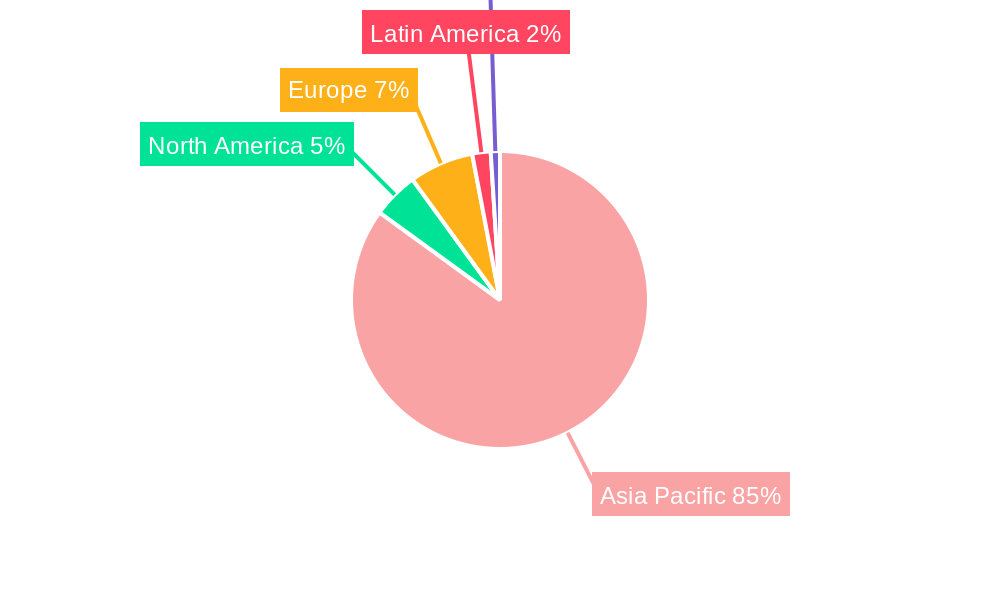
Asia-Pacific Low-Calorie Sweeteners Market Regional Market Share
Geographic Coverage of Asia-Pacific Low-Calorie Sweeteners Market
Asia-Pacific Low-Calorie Sweeteners Market REPORT HIGHLIGHTS
| Aspects | Details |
|---|---|
| Study Period | 2020-2034 |
| Base Year | 2025 |
| Estimated Year | 2026 |
| Forecast Period | 2026-2034 |
| Historical Period | 2020-2025 |
| Growth Rate | CAGR of 6.73% from 2020-2034 |
| Segmentation |
|
Table of Contents
- 1. Introduction
- 1.1. Research Scope
- 1.2. Market Segmentation
- 1.3. Research Methodology
- 1.4. Definitions and Assumptions
- 2. Executive Summary
- 2.1. Introduction
- 3. Market Dynamics
- 3.1. Introduction
- 3.2. Market Drivers
- 3.2.1. Rising Application in Dietary Supplements
- 3.3. Market Restrains
- 3.3.1. Increasing prevalence of hydroglycemia
- 3.4. Market Trends
- 3.4.1. Growing Application of Stevia by the Beverage Manufacturers
- 4. Market Factor Analysis
- 4.1. Porters Five Forces
- 4.2. Supply/Value Chain
- 4.3. PESTEL analysis
- 4.4. Market Entropy
- 4.5. Patent/Trademark Analysis
- 5. Asia-Pacific Low-Calorie Sweeteners Market Analysis, Insights and Forecast, 2020-2032
- 5.1. Market Analysis, Insights and Forecast - by Source Type
- 5.1.1. Natural
- 5.1.2. Artificial
- 5.2. Market Analysis, Insights and Forecast - by Product Type
- 5.2.1. Sucralose
- 5.2.2. Saccharin
- 5.2.3. Aspartame
- 5.2.4. Neotame
- 5.2.5. Advantame
- 5.2.6. Acesulfame Potassium
- 5.2.7. Stevia
- 5.2.8. Others
- 5.3. Market Analysis, Insights and Forecast - by Application
- 5.3.1. Food
- 5.3.1.1. Dairy and Frozen Foods
- 5.3.1.2. Confectionery
- 5.3.1.3. Bakery
- 5.3.1.4. Others
- 5.3.2. Beverage
- 5.3.3. Pharmaceuticals
- 5.3.1. Food
- 5.4. Market Analysis, Insights and Forecast - by Region
- 5.4.1. Asia Pacific
- 5.1. Market Analysis, Insights and Forecast - by Source Type
- 6. Competitive Analysis
- 6.1. Market Share Analysis 2025
- 6.2. Company Profiles
- 6.2.1 Sunwin Stevia International Inc
- 6.2.1.1. Overview
- 6.2.1.2. Products
- 6.2.1.3. SWOT Analysis
- 6.2.1.4. Recent Developments
- 6.2.1.5. Financials (Based on Availability)
- 6.2.2 Cargill Incorporated
- 6.2.2.1. Overview
- 6.2.2.2. Products
- 6.2.2.3. SWOT Analysis
- 6.2.2.4. Recent Developments
- 6.2.2.5. Financials (Based on Availability)
- 6.2.3 The Archer Daniels Midland Company
- 6.2.3.1. Overview
- 6.2.3.2. Products
- 6.2.3.3. SWOT Analysis
- 6.2.3.4. Recent Developments
- 6.2.3.5. Financials (Based on Availability)
- 6.2.4 Tate & Lyle PLC
- 6.2.4.1. Overview
- 6.2.4.2. Products
- 6.2.4.3. SWOT Analysis
- 6.2.4.4. Recent Developments
- 6.2.4.5. Financials (Based on Availability)
- 6.2.5 PureCircle
- 6.2.5.1. Overview
- 6.2.5.2. Products
- 6.2.5.3. SWOT Analysis
- 6.2.5.4. Recent Developments
- 6.2.5.5. Financials (Based on Availability)
- 6.2.6 Ingredion Incorporated
- 6.2.6.1. Overview
- 6.2.6.2. Products
- 6.2.6.3. SWOT Analysis
- 6.2.6.4. Recent Developments
- 6.2.6.5. Financials (Based on Availability)
- 6.2.7 Biolotus Technology Lasa Inc
- 6.2.7.1. Overview
- 6.2.7.2. Products
- 6.2.7.3. SWOT Analysis
- 6.2.7.4. Recent Developments
- 6.2.7.5. Financials (Based on Availability)
- 6.2.8 Roquette Freres
- 6.2.8.1. Overview
- 6.2.8.2. Products
- 6.2.8.3. SWOT Analysis
- 6.2.8.4. Recent Developments
- 6.2.8.5. Financials (Based on Availability)
- 6.2.1 Sunwin Stevia International Inc
List of Figures
- Figure 1: Asia-Pacific Low-Calorie Sweeteners Market Revenue Breakdown (billion, %) by Product 2025 & 2033
- Figure 2: Asia-Pacific Low-Calorie Sweeteners Market Share (%) by Company 2025
List of Tables
- Table 1: Asia-Pacific Low-Calorie Sweeteners Market Revenue billion Forecast, by Source Type 2020 & 2033
- Table 2: Asia-Pacific Low-Calorie Sweeteners Market Volume K Tons Forecast, by Source Type 2020 & 2033
- Table 3: Asia-Pacific Low-Calorie Sweeteners Market Revenue billion Forecast, by Product Type 2020 & 2033
- Table 4: Asia-Pacific Low-Calorie Sweeteners Market Volume K Tons Forecast, by Product Type 2020 & 2033
- Table 5: Asia-Pacific Low-Calorie Sweeteners Market Revenue billion Forecast, by Application 2020 & 2033
- Table 6: Asia-Pacific Low-Calorie Sweeteners Market Volume K Tons Forecast, by Application 2020 & 2033
- Table 7: Asia-Pacific Low-Calorie Sweeteners Market Revenue billion Forecast, by Region 2020 & 2033
- Table 8: Asia-Pacific Low-Calorie Sweeteners Market Volume K Tons Forecast, by Region 2020 & 2033
- Table 9: Asia-Pacific Low-Calorie Sweeteners Market Revenue billion Forecast, by Source Type 2020 & 2033
- Table 10: Asia-Pacific Low-Calorie Sweeteners Market Volume K Tons Forecast, by Source Type 2020 & 2033
- Table 11: Asia-Pacific Low-Calorie Sweeteners Market Revenue billion Forecast, by Product Type 2020 & 2033
- Table 12: Asia-Pacific Low-Calorie Sweeteners Market Volume K Tons Forecast, by Product Type 2020 & 2033
- Table 13: Asia-Pacific Low-Calorie Sweeteners Market Revenue billion Forecast, by Application 2020 & 2033
- Table 14: Asia-Pacific Low-Calorie Sweeteners Market Volume K Tons Forecast, by Application 2020 & 2033
- Table 15: Asia-Pacific Low-Calorie Sweeteners Market Revenue billion Forecast, by Country 2020 & 2033
- Table 16: Asia-Pacific Low-Calorie Sweeteners Market Volume K Tons Forecast, by Country 2020 & 2033
- Table 17: China Asia-Pacific Low-Calorie Sweeteners Market Revenue (billion) Forecast, by Application 2020 & 2033
- Table 18: China Asia-Pacific Low-Calorie Sweeteners Market Volume (K Tons) Forecast, by Application 2020 & 2033
- Table 19: Japan Asia-Pacific Low-Calorie Sweeteners Market Revenue (billion) Forecast, by Application 2020 & 2033
- Table 20: Japan Asia-Pacific Low-Calorie Sweeteners Market Volume (K Tons) Forecast, by Application 2020 & 2033
- Table 21: South Korea Asia-Pacific Low-Calorie Sweeteners Market Revenue (billion) Forecast, by Application 2020 & 2033
- Table 22: South Korea Asia-Pacific Low-Calorie Sweeteners Market Volume (K Tons) Forecast, by Application 2020 & 2033
- Table 23: India Asia-Pacific Low-Calorie Sweeteners Market Revenue (billion) Forecast, by Application 2020 & 2033
- Table 24: India Asia-Pacific Low-Calorie Sweeteners Market Volume (K Tons) Forecast, by Application 2020 & 2033
- Table 25: Australia Asia-Pacific Low-Calorie Sweeteners Market Revenue (billion) Forecast, by Application 2020 & 2033
- Table 26: Australia Asia-Pacific Low-Calorie Sweeteners Market Volume (K Tons) Forecast, by Application 2020 & 2033
- Table 27: New Zealand Asia-Pacific Low-Calorie Sweeteners Market Revenue (billion) Forecast, by Application 2020 & 2033
- Table 28: New Zealand Asia-Pacific Low-Calorie Sweeteners Market Volume (K Tons) Forecast, by Application 2020 & 2033
- Table 29: Indonesia Asia-Pacific Low-Calorie Sweeteners Market Revenue (billion) Forecast, by Application 2020 & 2033
- Table 30: Indonesia Asia-Pacific Low-Calorie Sweeteners Market Volume (K Tons) Forecast, by Application 2020 & 2033
- Table 31: Malaysia Asia-Pacific Low-Calorie Sweeteners Market Revenue (billion) Forecast, by Application 2020 & 2033
- Table 32: Malaysia Asia-Pacific Low-Calorie Sweeteners Market Volume (K Tons) Forecast, by Application 2020 & 2033
- Table 33: Singapore Asia-Pacific Low-Calorie Sweeteners Market Revenue (billion) Forecast, by Application 2020 & 2033
- Table 34: Singapore Asia-Pacific Low-Calorie Sweeteners Market Volume (K Tons) Forecast, by Application 2020 & 2033
- Table 35: Thailand Asia-Pacific Low-Calorie Sweeteners Market Revenue (billion) Forecast, by Application 2020 & 2033
- Table 36: Thailand Asia-Pacific Low-Calorie Sweeteners Market Volume (K Tons) Forecast, by Application 2020 & 2033
- Table 37: Vietnam Asia-Pacific Low-Calorie Sweeteners Market Revenue (billion) Forecast, by Application 2020 & 2033
- Table 38: Vietnam Asia-Pacific Low-Calorie Sweeteners Market Volume (K Tons) Forecast, by Application 2020 & 2033
- Table 39: Philippines Asia-Pacific Low-Calorie Sweeteners Market Revenue (billion) Forecast, by Application 2020 & 2033
- Table 40: Philippines Asia-Pacific Low-Calorie Sweeteners Market Volume (K Tons) Forecast, by Application 2020 & 2033
Frequently Asked Questions
1. What is the projected Compound Annual Growth Rate (CAGR) of the Asia-Pacific Low-Calorie Sweeteners Market?
The projected CAGR is approximately 6.73%.
2. Which companies are prominent players in the Asia-Pacific Low-Calorie Sweeteners Market?
Key companies in the market include Sunwin Stevia International Inc , Cargill Incorporated, The Archer Daniels Midland Company, Tate & Lyle PLC, PureCircle, Ingredion Incorporated, Biolotus Technology Lasa Inc, Roquette Freres.
3. What are the main segments of the Asia-Pacific Low-Calorie Sweeteners Market?
The market segments include Source Type, Product Type, Application.
4. Can you provide details about the market size?
The market size is estimated to be USD 114.2 billion as of 2022.
5. What are some drivers contributing to market growth?
Rising Application in Dietary Supplements.
6. What are the notable trends driving market growth?
Growing Application of Stevia by the Beverage Manufacturers.
7. Are there any restraints impacting market growth?
Increasing prevalence of hydroglycemia.
8. Can you provide examples of recent developments in the market?
N/A
9. What pricing options are available for accessing the report?
Pricing options include single-user, multi-user, and enterprise licenses priced at USD 4750, USD 5250, and USD 8750 respectively.
10. Is the market size provided in terms of value or volume?
The market size is provided in terms of value, measured in billion and volume, measured in K Tons.
11. Are there any specific market keywords associated with the report?
Yes, the market keyword associated with the report is "Asia-Pacific Low-Calorie Sweeteners Market," which aids in identifying and referencing the specific market segment covered.
12. How do I determine which pricing option suits my needs best?
The pricing options vary based on user requirements and access needs. Individual users may opt for single-user licenses, while businesses requiring broader access may choose multi-user or enterprise licenses for cost-effective access to the report.
13. Are there any additional resources or data provided in the Asia-Pacific Low-Calorie Sweeteners Market report?
While the report offers comprehensive insights, it's advisable to review the specific contents or supplementary materials provided to ascertain if additional resources or data are available.
14. How can I stay updated on further developments or reports in the Asia-Pacific Low-Calorie Sweeteners Market?
To stay informed about further developments, trends, and reports in the Asia-Pacific Low-Calorie Sweeteners Market, consider subscribing to industry newsletters, following relevant companies and organizations, or regularly checking reputable industry news sources and publications.
Methodology
Step 1 - Identification of Relevant Samples Size from Population Database



Step 2 - Approaches for Defining Global Market Size (Value, Volume* & Price*)

Note*: In applicable scenarios
Step 3 - Data Sources
Primary Research
- Web Analytics
- Survey Reports
- Research Institute
- Latest Research Reports
- Opinion Leaders
Secondary Research
- Annual Reports
- White Paper
- Latest Press Release
- Industry Association
- Paid Database
- Investor Presentations

Step 4 - Data Triangulation
Involves using different sources of information in order to increase the validity of a study
These sources are likely to be stakeholders in a program - participants, other researchers, program staff, other community members, and so on.
Then we put all data in single framework & apply various statistical tools to find out the dynamic on the market.
During the analysis stage, feedback from the stakeholder groups would be compared to determine areas of agreement as well as areas of divergence