


Key Insights
The Accounts Receivable (AR) Automation market is poised for significant expansion, projected to reach a substantial valuation with a robust Compound Annual Growth Rate (CAGR) of 11.84% over the forecast period of 2025-2033. This impressive growth is fueled by a confluence of transformative drivers, including the escalating need for enhanced financial operational efficiency, the imperative to reduce manual errors and associated costs, and the increasing adoption of digital transformation initiatives across businesses of all sizes. Organizations are actively seeking solutions that streamline invoice processing, automate collections, and improve cash flow management, thereby directly impacting their bottom line. Furthermore, the growing complexity of global trade and the demand for real-time financial visibility are propelling the adoption of sophisticated AR automation platforms.
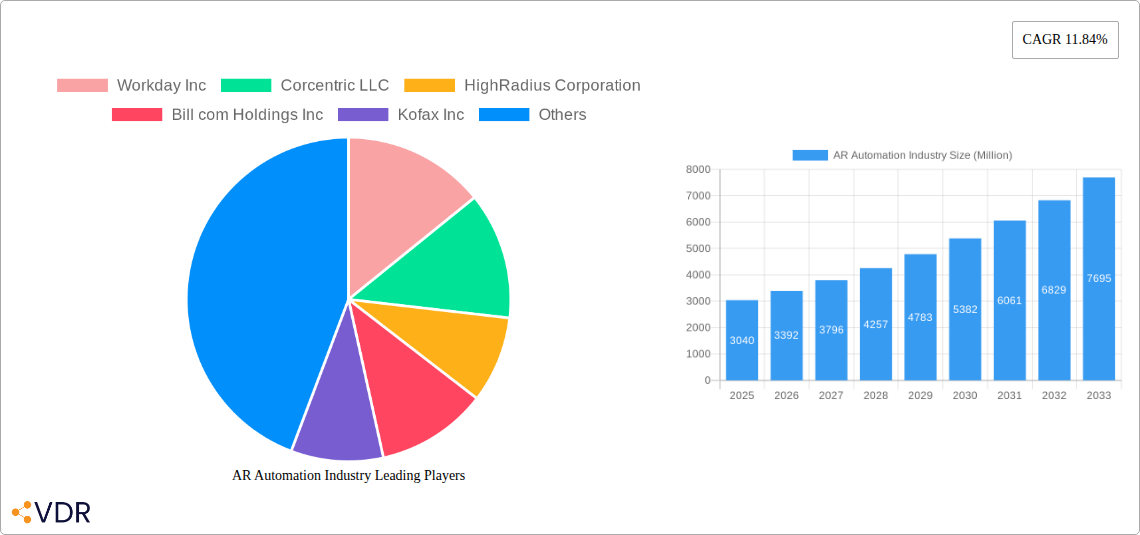
AR Automation Industry Market Size (In Billion)

The market's dynamism is further characterized by key trends such as the rise of AI and machine learning in predictive analytics for credit risk assessment and proactive customer engagement. Cloud-based deployment models are dominating, offering scalability, flexibility, and cost-effectiveness, particularly attractive to Small and Medium Enterprises (SMEs) as well as large enterprises. The segmentation reveals a strong demand for integrated solutions and comprehensive services that encompass implementation, training, and ongoing support. While North America and Europe are expected to lead in market share due to early adoption and established technological infrastructure, the Asia-Pacific region is anticipated to exhibit the fastest growth, driven by rapid digitalization and an expanding business landscape. Emerging economies are increasingly recognizing the strategic advantage of optimizing their AR processes to foster financial stability and unlock growth opportunities.

AR Automation Industry Company Market Share
The AR Automation Industry report offers an in-depth analysis of the global market for Accounts Receivable (AR) automation solutions. This comprehensive study covers market dynamics, growth trends, regional dominance, product landscape, key players, and future outlook from 2019 to 2033, with a base year of 2025. It provides actionable insights for stakeholders seeking to leverage the transformative power of AR automation in optimizing financial operations, enhancing cash flow, and driving business agility. Explore parent and child market segments to gain a holistic understanding of market opportunities.
AR Automation Industry Market Dynamics & Structure
The AR automation market is characterized by a dynamic interplay of technological innovation, increasing demand for operational efficiency, and evolving regulatory landscapes. Market concentration is moderate, with a few key players holding significant market share, but the presence of numerous niche providers fosters competition and drives innovation. Technological drivers are primarily centered around advancements in artificial intelligence (AI), machine learning (ML), and robotic process automation (RPA), enabling more sophisticated automation of complex AR processes such as invoice processing, cash application, and collections.
- Technological Innovation Drivers: AI-powered data extraction, intelligent workflow automation, predictive analytics for cash flow forecasting, and enhanced customer self-service portals are key technological advancements.
- Regulatory Frameworks: Compliance with data privacy regulations (e.g., GDPR, CCPA) and financial reporting standards influences the development and adoption of AR automation solutions.
- Competitive Product Substitutes: While direct substitutes are limited, manual AR processes and ERP systems with limited automation capabilities represent indirect competition.
- End-User Demographics: Growing adoption across Small and Medium Enterprises (SMEs) and Large Enterprises, particularly in the BFSI, Manufacturing, and IT & Telecom sectors.
- M&A Trends: Strategic acquisitions and partnerships are prevalent as larger players seek to acquire innovative technologies and expand their market reach. For instance, the acquisition of YayPay by Quadient signifies consolidation and a move towards integrated financial management solutions.
AR Automation Industry Growth Trends & Insights
The global AR automation market is experiencing robust growth, driven by the imperative for businesses to streamline their financial operations and improve working capital management. The market size is projected to expand significantly, fueled by increasing adoption rates across diverse industries and organizational sizes. This surge is underpinned by a growing recognition of the tangible benefits, including reduced DSO (Days Sales Outstanding), improved accuracy, and enhanced customer experience. Technological disruptions, particularly in AI and cloud computing, are further accelerating this growth by making sophisticated AR automation solutions more accessible and powerful. Consumer behavior shifts, with a growing preference for digital invoicing and payment methods, are also contributing to the demand for automated AR processes.
The historical period (2019-2024) witnessed a steady rise in AR automation adoption, particularly among forward-thinking companies seeking competitive advantages. The base year of 2025 serves as a critical inflection point, with the market poised for accelerated expansion throughout the forecast period of 2025-2033. The CAGR (Compound Annual Growth Rate) is expected to remain high, reflecting the ongoing digital transformation initiatives and the clear ROI offered by AR automation solutions. As businesses continue to grapple with economic uncertainties and the need for greater financial resilience, the investment in solutions that ensure timely payments and predictable cash flow will undoubtedly increase. The penetration of these solutions, currently at xx%, is anticipated to reach xx% by 2033, indicating a substantial untapped market potential. The ease of integration with existing ERP systems and the scalability of cloud-based solutions are also key factors driving market penetration. Furthermore, the increasing complexity of global trade and diverse payment methods necessitates sophisticated automation to manage receivables efficiently.
Dominant Regions, Countries, or Segments in AR Automation Industry
The AR Automation industry is experiencing significant growth across various regions and segments, with North America currently leading the market in terms of revenue and adoption. This dominance is attributed to a mature business environment, a high concentration of large enterprises, and a strong emphasis on technological innovation and operational efficiency. The BFSI sector, a cornerstone of the North American economy, has been an early and enthusiastic adopter of AR automation solutions, recognizing their critical role in managing vast transaction volumes and ensuring financial compliance.
Dominant Region: North America, accounting for approximately xx% of the global AR automation market share in 2025.
- Key Drivers: Presence of major AR automation vendors, strong regulatory support for digital transformation, high adoption of cloud-based solutions, and significant investment in financial technology (FinTech).
- Market Share & Growth Potential: North America is expected to maintain its leadership position, with a projected CAGR of xx% during the forecast period. The continuous demand for enhanced cash flow management and fraud prevention measures will fuel further growth.
Dominant Segment - Component: Solutions are expected to capture a larger market share than Services, driven by the increasing demand for sophisticated, end-to-end AR automation platforms.
- Key Drivers: Growing need for automated invoice generation and delivery, intelligent cash application, automated dunning processes, and integrated credit management functionalities.
- Market Share & Growth Potential: The Solutions segment is projected to grow at a CAGR of xx%, driven by innovation in AI and ML for predictive cash flow and risk assessment.
Dominant Segment - Deployment Mode: Cloud deployment models are outpacing on-premise solutions due to their scalability, flexibility, cost-effectiveness, and ease of integration.
- Key Drivers: Lower upfront investment, faster deployment times, automatic updates, and enhanced accessibility for remote workforces.
- Market Share & Growth Potential: Cloud-based AR automation solutions are anticipated to experience a CAGR of xx%, becoming the preferred choice for businesses of all sizes.
Dominant Segment - Size of Organization: Large Enterprises currently represent the largest segment by revenue, but Small and Medium Enterprises (SMEs) are showing the fastest growth.
- Key Drivers (Large Enterprises): Complex business processes, high transaction volumes, stringent compliance requirements, and greater financial resources for technology investment.
- Key Drivers (SMEs): Increasing need for cost-efficiency, competitive pressure, and the availability of scalable and affordable cloud-based solutions. The growth in the SME segment is driven by platforms like Bill.com Holdings Inc., catering to their specific needs.
AR Automation Industry Product Landscape
The AR automation product landscape is characterized by a rich array of solutions designed to address specific pain points in the accounts receivable lifecycle. Innovations focus on intelligent data capture, automated invoice matching, proactive collections, and seamless integration with existing financial systems. Key product features include AI-powered OCR for invoice data extraction, automated cash application algorithms that learn from historical data, customizable dunning workflows, and customer self-service portals for payment and invoice inquiries. Unique selling propositions often revolve around the level of automation, the accuracy of data processing, the ease of integration, and the depth of analytics provided. For example, platforms like HighRadius Corporation's RadiusOne offer advanced AI capabilities for cash application and order management. Kofax Inc. provides comprehensive solutions for document capture and workflow automation, crucial for digitizing the entire AR process.
Key Drivers, Barriers & Challenges in AR Automation Industry
Key Drivers:
- Enhanced Cash Flow Management: Businesses are increasingly prioritizing efficient cash flow to navigate economic fluctuations and fund growth.
- Increased Operational Efficiency: Automating repetitive AR tasks frees up human resources for more strategic activities.
- Reduced DSO: Faster invoice processing and proactive collections directly impact accounts receivable days outstanding.
- Improved Accuracy and Reduced Errors: Automation minimizes human error in data entry and processing.
- Scalability and Flexibility: Cloud-based solutions can adapt to fluctuating business needs.
Key Barriers & Challenges:
- Initial Implementation Costs: While cloud solutions reduce upfront costs, significant investment in integration and change management can be a barrier.
- Resistance to Change: Overcoming organizational inertia and employee reluctance to adopt new technologies can be challenging.
- Data Security and Privacy Concerns: Ensuring the security of sensitive financial data is paramount and requires robust compliance measures.
- Integration Complexity: Integrating AR automation software with diverse existing ERP and CRM systems can be technically demanding.
- Limited Awareness in SMEs: Smaller businesses may not fully grasp the benefits or have the necessary resources to invest in AR automation.
Emerging Opportunities in AR Automation Industry
Emerging opportunities in the AR automation industry lie in the continued advancement and application of AI and ML, particularly in predictive analytics for credit risk assessment and cash flow forecasting. The expansion of AR automation into new geographical markets, especially in developing economies undergoing digital transformation, presents significant untapped potential. Furthermore, the development of integrated solutions that combine AR automation with broader financial planning and analysis (FP&A) tools, as seen with platforms like Workday Inc., will create new value propositions. The growing demand for customer-centric AR processes, enabling seamless payment experiences and self-service options, also offers a fertile ground for innovation. The rise of embedded finance and the increasing use of APIs will further facilitate the integration of AR automation into broader business ecosystems.
Growth Accelerators in the AR Automation Industry Industry
Several catalysts are accelerating the growth of the AR automation industry. Technological breakthroughs in AI, ML, and blockchain are enabling more sophisticated and secure automation of AR processes. Strategic partnerships, such as the one between Esker and Fujitsu Asia, are expanding market reach and enhancing service offerings. Market expansion strategies, including the development of tailored solutions for specific industry verticals and the penetration into underserved regions, are driving broader adoption. The increasing focus on digital transformation across all business sectors is creating a sustained demand for efficiency-enhancing technologies like AR automation. Furthermore, the growing emphasis on data-driven decision-making encourages businesses to invest in solutions that provide granular insights into their financial operations.
Key Players Shaping the AR Automation Industry Market
- Workday Inc.
- Corcentric LLC
- HighRadius Corporation
- Bill com Holdings Inc.
- Kofax Inc.
- Qvalia AB
- Quadient (YayPay Inc.)
- Esker Inc.
- Oracle Corporation
- Comarch SA
- MHC Automation
- SK Global Software
- SAP SE
Notable Milestones in AR Automation Industry Sector
- September 2022: Regate, a Paris-based Software-as-a-Service (SaaS) platform for finance automation, secured a USD 20 million Series A funding round led by Valar Ventures. This funding will be used to expand its business further by developing software for small and medium enterprises. Regate's platform automates repetitive operations, compiles financial data onto a single platform, and enhances team communication, offering features including virtual and physical bank cards, payments, reconciliation, accounts payable and receivable, and budget and purchase requests, thereby saving time for accounting firms and finance departments.
- March 2022: Esker announced a partnership with Fujitsu Asia. Fujitsu Asia will provide consultation, implementation, and support for Esker's Procure-to-Pay and Order-to-Cash suites to its customers in Singapore. This alliance aligns with Esker's growth strategy and enables Fujitsu Asia to develop its service offering further.
In-Depth AR Automation Industry Market Outlook
The AR automation industry is poised for significant expansion, driven by a confluence of technological advancements and evolving business needs. The increasing demand for improved cash flow, operational efficiency, and enhanced customer experience will continue to fuel adoption across all organizational sizes and industries. Cloud-native solutions, powered by AI and ML, will become the standard, offering unparalleled scalability and intelligence. Strategic partnerships and mergers will consolidate the market, while also fostering innovation. Emerging markets present substantial growth opportunities as more businesses embrace digital transformation. The future outlook is one of sustained high growth, with AR automation becoming an indispensable component of modern financial operations, transforming how businesses manage their receivables and drive financial resilience.
AR Automation Industry Segmentation
-
1. Component
- 1.1. Solutions
- 1.2. Services
-
2. Deployment Mode
- 2.1. On-premise
- 2.2. Cloud
-
3. Size of the Organization
- 3.1. Small and Medium Enterprises
- 3.2. Large Enterprises
-
4. End-user Industry
- 4.1. BFSI
- 4.2. IT and Telecom
- 4.3. Manufacturing
- 4.4. Healthcare
- 4.5. Transportation and Logistics
- 4.6. Other End-user Industries
AR Automation Industry Segmentation By Geography
- 1. North America
- 2. Europe
- 3. Asia
- 4. Australia and New Zealand
- 5. Latin America
- 6. Middle East and Africa
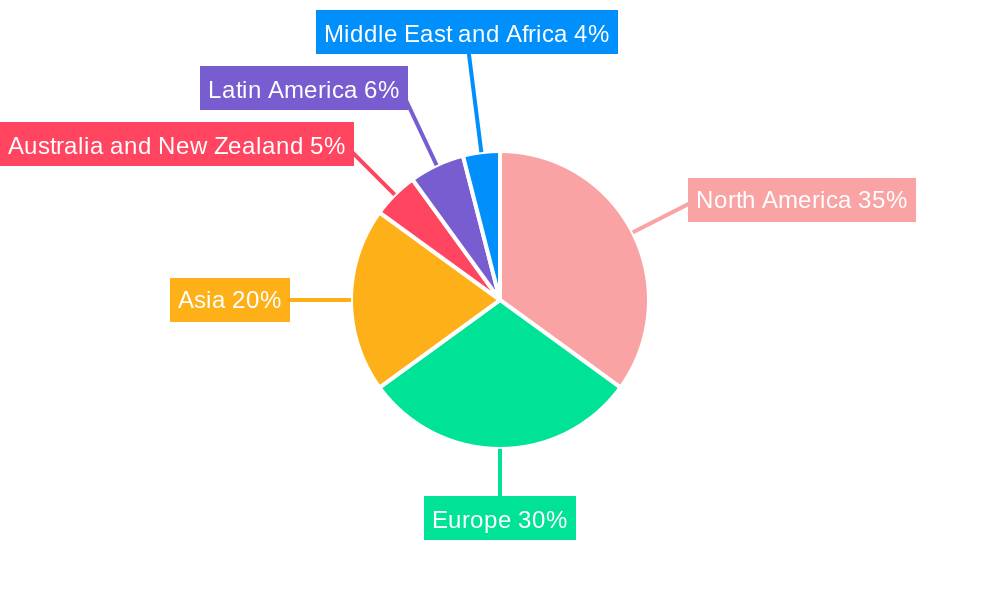
AR Automation Industry Regional Market Share
Geographic Coverage of AR Automation Industry
AR Automation Industry REPORT HIGHLIGHTS
| Aspects | Details |
|---|---|
| Study Period | 2020-2034 |
| Base Year | 2025 |
| Estimated Year | 2026 |
| Forecast Period | 2026-2034 |
| Historical Period | 2020-2025 |
| Growth Rate | CAGR of 11.84% from 2020-2034 |
| Segmentation |
|
Table of Contents
- 1. Introduction
- 1.1. Research Scope
- 1.2. Market Segmentation
- 1.3. Research Methodology
- 1.4. Definitions and Assumptions
- 2. Executive Summary
- 2.1. Introduction
- 3. Market Dynamics
- 3.1. Introduction
- 3.2. Market Drivers
- 3.2.1. Improve Business Efficiency by Improving Cash Flow and Reducing Costs and Accounting Cycle Time; Increasing Adoption of Technologies like Cloud Computing and AI
- 3.3. Market Restrains
- 3.3.1. Complex Procedure of Invoicing and Payment Management; Privacy and Security Concerns
- 3.4. Market Trends
- 3.4.1. Increasing Adoption of Technologies Such as Cloud Computing and AI
- 4. Market Factor Analysis
- 4.1. Porters Five Forces
- 4.2. Supply/Value Chain
- 4.3. PESTEL analysis
- 4.4. Market Entropy
- 4.5. Patent/Trademark Analysis
- 5. Global AR Automation Industry Analysis, Insights and Forecast, 2020-2032
- 5.1. Market Analysis, Insights and Forecast - by Component
- 5.1.1. Solutions
- 5.1.2. Services
- 5.2. Market Analysis, Insights and Forecast - by Deployment Mode
- 5.2.1. On-premise
- 5.2.2. Cloud
- 5.3. Market Analysis, Insights and Forecast - by Size of the Organization
- 5.3.1. Small and Medium Enterprises
- 5.3.2. Large Enterprises
- 5.4. Market Analysis, Insights and Forecast - by End-user Industry
- 5.4.1. BFSI
- 5.4.2. IT and Telecom
- 5.4.3. Manufacturing
- 5.4.4. Healthcare
- 5.4.5. Transportation and Logistics
- 5.4.6. Other End-user Industries
- 5.5. Market Analysis, Insights and Forecast - by Region
- 5.5.1. North America
- 5.5.2. Europe
- 5.5.3. Asia
- 5.5.4. Australia and New Zealand
- 5.5.5. Latin America
- 5.5.6. Middle East and Africa
- 5.1. Market Analysis, Insights and Forecast - by Component
- 6. North America AR Automation Industry Analysis, Insights and Forecast, 2020-2032
- 6.1. Market Analysis, Insights and Forecast - by Component
- 6.1.1. Solutions
- 6.1.2. Services
- 6.2. Market Analysis, Insights and Forecast - by Deployment Mode
- 6.2.1. On-premise
- 6.2.2. Cloud
- 6.3. Market Analysis, Insights and Forecast - by Size of the Organization
- 6.3.1. Small and Medium Enterprises
- 6.3.2. Large Enterprises
- 6.4. Market Analysis, Insights and Forecast - by End-user Industry
- 6.4.1. BFSI
- 6.4.2. IT and Telecom
- 6.4.3. Manufacturing
- 6.4.4. Healthcare
- 6.4.5. Transportation and Logistics
- 6.4.6. Other End-user Industries
- 6.1. Market Analysis, Insights and Forecast - by Component
- 7. Europe AR Automation Industry Analysis, Insights and Forecast, 2020-2032
- 7.1. Market Analysis, Insights and Forecast - by Component
- 7.1.1. Solutions
- 7.1.2. Services
- 7.2. Market Analysis, Insights and Forecast - by Deployment Mode
- 7.2.1. On-premise
- 7.2.2. Cloud
- 7.3. Market Analysis, Insights and Forecast - by Size of the Organization
- 7.3.1. Small and Medium Enterprises
- 7.3.2. Large Enterprises
- 7.4. Market Analysis, Insights and Forecast - by End-user Industry
- 7.4.1. BFSI
- 7.4.2. IT and Telecom
- 7.4.3. Manufacturing
- 7.4.4. Healthcare
- 7.4.5. Transportation and Logistics
- 7.4.6. Other End-user Industries
- 7.1. Market Analysis, Insights and Forecast - by Component
- 8. Asia AR Automation Industry Analysis, Insights and Forecast, 2020-2032
- 8.1. Market Analysis, Insights and Forecast - by Component
- 8.1.1. Solutions
- 8.1.2. Services
- 8.2. Market Analysis, Insights and Forecast - by Deployment Mode
- 8.2.1. On-premise
- 8.2.2. Cloud
- 8.3. Market Analysis, Insights and Forecast - by Size of the Organization
- 8.3.1. Small and Medium Enterprises
- 8.3.2. Large Enterprises
- 8.4. Market Analysis, Insights and Forecast - by End-user Industry
- 8.4.1. BFSI
- 8.4.2. IT and Telecom
- 8.4.3. Manufacturing
- 8.4.4. Healthcare
- 8.4.5. Transportation and Logistics
- 8.4.6. Other End-user Industries
- 8.1. Market Analysis, Insights and Forecast - by Component
- 9. Australia and New Zealand AR Automation Industry Analysis, Insights and Forecast, 2020-2032
- 9.1. Market Analysis, Insights and Forecast - by Component
- 9.1.1. Solutions
- 9.1.2. Services
- 9.2. Market Analysis, Insights and Forecast - by Deployment Mode
- 9.2.1. On-premise
- 9.2.2. Cloud
- 9.3. Market Analysis, Insights and Forecast - by Size of the Organization
- 9.3.1. Small and Medium Enterprises
- 9.3.2. Large Enterprises
- 9.4. Market Analysis, Insights and Forecast - by End-user Industry
- 9.4.1. BFSI
- 9.4.2. IT and Telecom
- 9.4.3. Manufacturing
- 9.4.4. Healthcare
- 9.4.5. Transportation and Logistics
- 9.4.6. Other End-user Industries
- 9.1. Market Analysis, Insights and Forecast - by Component
- 10. Latin America AR Automation Industry Analysis, Insights and Forecast, 2020-2032
- 10.1. Market Analysis, Insights and Forecast - by Component
- 10.1.1. Solutions
- 10.1.2. Services
- 10.2. Market Analysis, Insights and Forecast - by Deployment Mode
- 10.2.1. On-premise
- 10.2.2. Cloud
- 10.3. Market Analysis, Insights and Forecast - by Size of the Organization
- 10.3.1. Small and Medium Enterprises
- 10.3.2. Large Enterprises
- 10.4. Market Analysis, Insights and Forecast - by End-user Industry
- 10.4.1. BFSI
- 10.4.2. IT and Telecom
- 10.4.3. Manufacturing
- 10.4.4. Healthcare
- 10.4.5. Transportation and Logistics
- 10.4.6. Other End-user Industries
- 10.1. Market Analysis, Insights and Forecast - by Component
- 11. Middle East and Africa AR Automation Industry Analysis, Insights and Forecast, 2020-2032
- 11.1. Market Analysis, Insights and Forecast - by Component
- 11.1.1. Solutions
- 11.1.2. Services
- 11.2. Market Analysis, Insights and Forecast - by Deployment Mode
- 11.2.1. On-premise
- 11.2.2. Cloud
- 11.3. Market Analysis, Insights and Forecast - by Size of the Organization
- 11.3.1. Small and Medium Enterprises
- 11.3.2. Large Enterprises
- 11.4. Market Analysis, Insights and Forecast - by End-user Industry
- 11.4.1. BFSI
- 11.4.2. IT and Telecom
- 11.4.3. Manufacturing
- 11.4.4. Healthcare
- 11.4.5. Transportation and Logistics
- 11.4.6. Other End-user Industries
- 11.1. Market Analysis, Insights and Forecast - by Component
- 12. Competitive Analysis
- 12.1. Global Market Share Analysis 2025
- 12.2. Company Profiles
- 12.2.1 Workday Inc
- 12.2.1.1. Overview
- 12.2.1.2. Products
- 12.2.1.3. SWOT Analysis
- 12.2.1.4. Recent Developments
- 12.2.1.5. Financials (Based on Availability)
- 12.2.2 Corcentric LLC
- 12.2.2.1. Overview
- 12.2.2.2. Products
- 12.2.2.3. SWOT Analysis
- 12.2.2.4. Recent Developments
- 12.2.2.5. Financials (Based on Availability)
- 12.2.3 HighRadius Corporation
- 12.2.3.1. Overview
- 12.2.3.2. Products
- 12.2.3.3. SWOT Analysis
- 12.2.3.4. Recent Developments
- 12.2.3.5. Financials (Based on Availability)
- 12.2.4 Bill com Holdings Inc
- 12.2.4.1. Overview
- 12.2.4.2. Products
- 12.2.4.3. SWOT Analysis
- 12.2.4.4. Recent Developments
- 12.2.4.5. Financials (Based on Availability)
- 12.2.5 Kofax Inc
- 12.2.5.1. Overview
- 12.2.5.2. Products
- 12.2.5.3. SWOT Analysis
- 12.2.5.4. Recent Developments
- 12.2.5.5. Financials (Based on Availability)
- 12.2.6 Qvalia AB
- 12.2.6.1. Overview
- 12.2.6.2. Products
- 12.2.6.3. SWOT Analysis
- 12.2.6.4. Recent Developments
- 12.2.6.5. Financials (Based on Availability)
- 12.2.7 Quadient (YayPay Inc )
- 12.2.7.1. Overview
- 12.2.7.2. Products
- 12.2.7.3. SWOT Analysis
- 12.2.7.4. Recent Developments
- 12.2.7.5. Financials (Based on Availability)
- 12.2.8 Esker Inc *List Not Exhaustive
- 12.2.8.1. Overview
- 12.2.8.2. Products
- 12.2.8.3. SWOT Analysis
- 12.2.8.4. Recent Developments
- 12.2.8.5. Financials (Based on Availability)
- 12.2.9 Oracle Corporation
- 12.2.9.1. Overview
- 12.2.9.2. Products
- 12.2.9.3. SWOT Analysis
- 12.2.9.4. Recent Developments
- 12.2.9.5. Financials (Based on Availability)
- 12.2.10 Comarch SA
- 12.2.10.1. Overview
- 12.2.10.2. Products
- 12.2.10.3. SWOT Analysis
- 12.2.10.4. Recent Developments
- 12.2.10.5. Financials (Based on Availability)
- 12.2.11 MHC Automation
- 12.2.11.1. Overview
- 12.2.11.2. Products
- 12.2.11.3. SWOT Analysis
- 12.2.11.4. Recent Developments
- 12.2.11.5. Financials (Based on Availability)
- 12.2.12 SK Global Software
- 12.2.12.1. Overview
- 12.2.12.2. Products
- 12.2.12.3. SWOT Analysis
- 12.2.12.4. Recent Developments
- 12.2.12.5. Financials (Based on Availability)
- 12.2.13 SAP SE
- 12.2.13.1. Overview
- 12.2.13.2. Products
- 12.2.13.3. SWOT Analysis
- 12.2.13.4. Recent Developments
- 12.2.13.5. Financials (Based on Availability)
- 12.2.1 Workday Inc
List of Figures
- Figure 1: Global AR Automation Industry Revenue Breakdown (Million, %) by Region 2025 & 2033
- Figure 2: North America AR Automation Industry Revenue (Million), by Component 2025 & 2033
- Figure 3: North America AR Automation Industry Revenue Share (%), by Component 2025 & 2033
- Figure 4: North America AR Automation Industry Revenue (Million), by Deployment Mode 2025 & 2033
- Figure 5: North America AR Automation Industry Revenue Share (%), by Deployment Mode 2025 & 2033
- Figure 6: North America AR Automation Industry Revenue (Million), by Size of the Organization 2025 & 2033
- Figure 7: North America AR Automation Industry Revenue Share (%), by Size of the Organization 2025 & 2033
- Figure 8: North America AR Automation Industry Revenue (Million), by End-user Industry 2025 & 2033
- Figure 9: North America AR Automation Industry Revenue Share (%), by End-user Industry 2025 & 2033
- Figure 10: North America AR Automation Industry Revenue (Million), by Country 2025 & 2033
- Figure 11: North America AR Automation Industry Revenue Share (%), by Country 2025 & 2033
- Figure 12: Europe AR Automation Industry Revenue (Million), by Component 2025 & 2033
- Figure 13: Europe AR Automation Industry Revenue Share (%), by Component 2025 & 2033
- Figure 14: Europe AR Automation Industry Revenue (Million), by Deployment Mode 2025 & 2033
- Figure 15: Europe AR Automation Industry Revenue Share (%), by Deployment Mode 2025 & 2033
- Figure 16: Europe AR Automation Industry Revenue (Million), by Size of the Organization 2025 & 2033
- Figure 17: Europe AR Automation Industry Revenue Share (%), by Size of the Organization 2025 & 2033
- Figure 18: Europe AR Automation Industry Revenue (Million), by End-user Industry 2025 & 2033
- Figure 19: Europe AR Automation Industry Revenue Share (%), by End-user Industry 2025 & 2033
- Figure 20: Europe AR Automation Industry Revenue (Million), by Country 2025 & 2033
- Figure 21: Europe AR Automation Industry Revenue Share (%), by Country 2025 & 2033
- Figure 22: Asia AR Automation Industry Revenue (Million), by Component 2025 & 2033
- Figure 23: Asia AR Automation Industry Revenue Share (%), by Component 2025 & 2033
- Figure 24: Asia AR Automation Industry Revenue (Million), by Deployment Mode 2025 & 2033
- Figure 25: Asia AR Automation Industry Revenue Share (%), by Deployment Mode 2025 & 2033
- Figure 26: Asia AR Automation Industry Revenue (Million), by Size of the Organization 2025 & 2033
- Figure 27: Asia AR Automation Industry Revenue Share (%), by Size of the Organization 2025 & 2033
- Figure 28: Asia AR Automation Industry Revenue (Million), by End-user Industry 2025 & 2033
- Figure 29: Asia AR Automation Industry Revenue Share (%), by End-user Industry 2025 & 2033
- Figure 30: Asia AR Automation Industry Revenue (Million), by Country 2025 & 2033
- Figure 31: Asia AR Automation Industry Revenue Share (%), by Country 2025 & 2033
- Figure 32: Australia and New Zealand AR Automation Industry Revenue (Million), by Component 2025 & 2033
- Figure 33: Australia and New Zealand AR Automation Industry Revenue Share (%), by Component 2025 & 2033
- Figure 34: Australia and New Zealand AR Automation Industry Revenue (Million), by Deployment Mode 2025 & 2033
- Figure 35: Australia and New Zealand AR Automation Industry Revenue Share (%), by Deployment Mode 2025 & 2033
- Figure 36: Australia and New Zealand AR Automation Industry Revenue (Million), by Size of the Organization 2025 & 2033
- Figure 37: Australia and New Zealand AR Automation Industry Revenue Share (%), by Size of the Organization 2025 & 2033
- Figure 38: Australia and New Zealand AR Automation Industry Revenue (Million), by End-user Industry 2025 & 2033
- Figure 39: Australia and New Zealand AR Automation Industry Revenue Share (%), by End-user Industry 2025 & 2033
- Figure 40: Australia and New Zealand AR Automation Industry Revenue (Million), by Country 2025 & 2033
- Figure 41: Australia and New Zealand AR Automation Industry Revenue Share (%), by Country 2025 & 2033
- Figure 42: Latin America AR Automation Industry Revenue (Million), by Component 2025 & 2033
- Figure 43: Latin America AR Automation Industry Revenue Share (%), by Component 2025 & 2033
- Figure 44: Latin America AR Automation Industry Revenue (Million), by Deployment Mode 2025 & 2033
- Figure 45: Latin America AR Automation Industry Revenue Share (%), by Deployment Mode 2025 & 2033
- Figure 46: Latin America AR Automation Industry Revenue (Million), by Size of the Organization 2025 & 2033
- Figure 47: Latin America AR Automation Industry Revenue Share (%), by Size of the Organization 2025 & 2033
- Figure 48: Latin America AR Automation Industry Revenue (Million), by End-user Industry 2025 & 2033
- Figure 49: Latin America AR Automation Industry Revenue Share (%), by End-user Industry 2025 & 2033
- Figure 50: Latin America AR Automation Industry Revenue (Million), by Country 2025 & 2033
- Figure 51: Latin America AR Automation Industry Revenue Share (%), by Country 2025 & 2033
- Figure 52: Middle East and Africa AR Automation Industry Revenue (Million), by Component 2025 & 2033
- Figure 53: Middle East and Africa AR Automation Industry Revenue Share (%), by Component 2025 & 2033
- Figure 54: Middle East and Africa AR Automation Industry Revenue (Million), by Deployment Mode 2025 & 2033
- Figure 55: Middle East and Africa AR Automation Industry Revenue Share (%), by Deployment Mode 2025 & 2033
- Figure 56: Middle East and Africa AR Automation Industry Revenue (Million), by Size of the Organization 2025 & 2033
- Figure 57: Middle East and Africa AR Automation Industry Revenue Share (%), by Size of the Organization 2025 & 2033
- Figure 58: Middle East and Africa AR Automation Industry Revenue (Million), by End-user Industry 2025 & 2033
- Figure 59: Middle East and Africa AR Automation Industry Revenue Share (%), by End-user Industry 2025 & 2033
- Figure 60: Middle East and Africa AR Automation Industry Revenue (Million), by Country 2025 & 2033
- Figure 61: Middle East and Africa AR Automation Industry Revenue Share (%), by Country 2025 & 2033
List of Tables
- Table 1: Global AR Automation Industry Revenue Million Forecast, by Component 2020 & 2033
- Table 2: Global AR Automation Industry Revenue Million Forecast, by Deployment Mode 2020 & 2033
- Table 3: Global AR Automation Industry Revenue Million Forecast, by Size of the Organization 2020 & 2033
- Table 4: Global AR Automation Industry Revenue Million Forecast, by End-user Industry 2020 & 2033
- Table 5: Global AR Automation Industry Revenue Million Forecast, by Region 2020 & 2033
- Table 6: Global AR Automation Industry Revenue Million Forecast, by Component 2020 & 2033
- Table 7: Global AR Automation Industry Revenue Million Forecast, by Deployment Mode 2020 & 2033
- Table 8: Global AR Automation Industry Revenue Million Forecast, by Size of the Organization 2020 & 2033
- Table 9: Global AR Automation Industry Revenue Million Forecast, by End-user Industry 2020 & 2033
- Table 10: Global AR Automation Industry Revenue Million Forecast, by Country 2020 & 2033
- Table 11: Global AR Automation Industry Revenue Million Forecast, by Component 2020 & 2033
- Table 12: Global AR Automation Industry Revenue Million Forecast, by Deployment Mode 2020 & 2033
- Table 13: Global AR Automation Industry Revenue Million Forecast, by Size of the Organization 2020 & 2033
- Table 14: Global AR Automation Industry Revenue Million Forecast, by End-user Industry 2020 & 2033
- Table 15: Global AR Automation Industry Revenue Million Forecast, by Country 2020 & 2033
- Table 16: Global AR Automation Industry Revenue Million Forecast, by Component 2020 & 2033
- Table 17: Global AR Automation Industry Revenue Million Forecast, by Deployment Mode 2020 & 2033
- Table 18: Global AR Automation Industry Revenue Million Forecast, by Size of the Organization 2020 & 2033
- Table 19: Global AR Automation Industry Revenue Million Forecast, by End-user Industry 2020 & 2033
- Table 20: Global AR Automation Industry Revenue Million Forecast, by Country 2020 & 2033
- Table 21: Global AR Automation Industry Revenue Million Forecast, by Component 2020 & 2033
- Table 22: Global AR Automation Industry Revenue Million Forecast, by Deployment Mode 2020 & 2033
- Table 23: Global AR Automation Industry Revenue Million Forecast, by Size of the Organization 2020 & 2033
- Table 24: Global AR Automation Industry Revenue Million Forecast, by End-user Industry 2020 & 2033
- Table 25: Global AR Automation Industry Revenue Million Forecast, by Country 2020 & 2033
- Table 26: Global AR Automation Industry Revenue Million Forecast, by Component 2020 & 2033
- Table 27: Global AR Automation Industry Revenue Million Forecast, by Deployment Mode 2020 & 2033
- Table 28: Global AR Automation Industry Revenue Million Forecast, by Size of the Organization 2020 & 2033
- Table 29: Global AR Automation Industry Revenue Million Forecast, by End-user Industry 2020 & 2033
- Table 30: Global AR Automation Industry Revenue Million Forecast, by Country 2020 & 2033
- Table 31: Global AR Automation Industry Revenue Million Forecast, by Component 2020 & 2033
- Table 32: Global AR Automation Industry Revenue Million Forecast, by Deployment Mode 2020 & 2033
- Table 33: Global AR Automation Industry Revenue Million Forecast, by Size of the Organization 2020 & 2033
- Table 34: Global AR Automation Industry Revenue Million Forecast, by End-user Industry 2020 & 2033
- Table 35: Global AR Automation Industry Revenue Million Forecast, by Country 2020 & 2033
Frequently Asked Questions
1. What is the projected Compound Annual Growth Rate (CAGR) of the AR Automation Industry?
The projected CAGR is approximately 11.84%.
2. Which companies are prominent players in the AR Automation Industry?
Key companies in the market include Workday Inc, Corcentric LLC, HighRadius Corporation, Bill com Holdings Inc, Kofax Inc, Qvalia AB, Quadient (YayPay Inc ), Esker Inc *List Not Exhaustive, Oracle Corporation, Comarch SA, MHC Automation, SK Global Software, SAP SE.
3. What are the main segments of the AR Automation Industry?
The market segments include Component, Deployment Mode, Size of the Organization, End-user Industry.
4. Can you provide details about the market size?
The market size is estimated to be USD 3.04 Million as of 2022.
5. What are some drivers contributing to market growth?
Improve Business Efficiency by Improving Cash Flow and Reducing Costs and Accounting Cycle Time; Increasing Adoption of Technologies like Cloud Computing and AI.
6. What are the notable trends driving market growth?
Increasing Adoption of Technologies Such as Cloud Computing and AI.
7. Are there any restraints impacting market growth?
Complex Procedure of Invoicing and Payment Management; Privacy and Security Concerns.
8. Can you provide examples of recent developments in the market?
September 2022 - Regate, a Paris-based Software-as-a-Service (SaaS) platform for finance automation, secured a USD 20 million Series A funding round led by Valar Ventures. By automating repetitive operations, compiling financial data onto a single platform, and enhancing team communication, Regate assists accounting firms and finance departments in saving time. The platform used by Regate offers features including virtual and physical bank cards, payments, reconciliation, accounts payable and receivable, and budget and purchase requests. The company would use this money to expand its business further by developing software for small and medium enterprises.
9. What pricing options are available for accessing the report?
Pricing options include single-user, multi-user, and enterprise licenses priced at USD 4750, USD 5250, and USD 8750 respectively.
10. Is the market size provided in terms of value or volume?
The market size is provided in terms of value, measured in Million.
11. Are there any specific market keywords associated with the report?
Yes, the market keyword associated with the report is "AR Automation Industry," which aids in identifying and referencing the specific market segment covered.
12. How do I determine which pricing option suits my needs best?
The pricing options vary based on user requirements and access needs. Individual users may opt for single-user licenses, while businesses requiring broader access may choose multi-user or enterprise licenses for cost-effective access to the report.
13. Are there any additional resources or data provided in the AR Automation Industry report?
While the report offers comprehensive insights, it's advisable to review the specific contents or supplementary materials provided to ascertain if additional resources or data are available.
14. How can I stay updated on further developments or reports in the AR Automation Industry?
To stay informed about further developments, trends, and reports in the AR Automation Industry, consider subscribing to industry newsletters, following relevant companies and organizations, or regularly checking reputable industry news sources and publications.
Methodology
Step 1 - Identification of Relevant Samples Size from Population Database



Step 2 - Approaches for Defining Global Market Size (Value, Volume* & Price*)

Note*: In applicable scenarios
Step 3 - Data Sources
Primary Research
- Web Analytics
- Survey Reports
- Research Institute
- Latest Research Reports
- Opinion Leaders
Secondary Research
- Annual Reports
- White Paper
- Latest Press Release
- Industry Association
- Paid Database
- Investor Presentations

Step 4 - Data Triangulation
Involves using different sources of information in order to increase the validity of a study
These sources are likely to be stakeholders in a program - participants, other researchers, program staff, other community members, and so on.
Then we put all data in single framework & apply various statistical tools to find out the dynamic on the market.
During the analysis stage, feedback from the stakeholder groups would be compared to determine areas of agreement as well as areas of divergence