


Key Insights
The global Animal Genetics market is projected to achieve a market size of USD 7.8 billion by 2025, expanding at a Compound Annual Growth Rate (CAGR) of 7.09% through 2033. This substantial growth is propelled by the increasing global demand for superior animal protein, driven by population expansion and heightened awareness of animal welfare and production efficiency. Innovations in genomic technologies, such as marker-assisted selection and gene editing, are transforming livestock breeding to enhance disease resistance, accelerate growth, and improve feed conversion in poultry, swine, and cattle. The adoption of advanced animal genetics testing services further supports market expansion by providing essential data for effective herd management and genetic improvement initiatives.
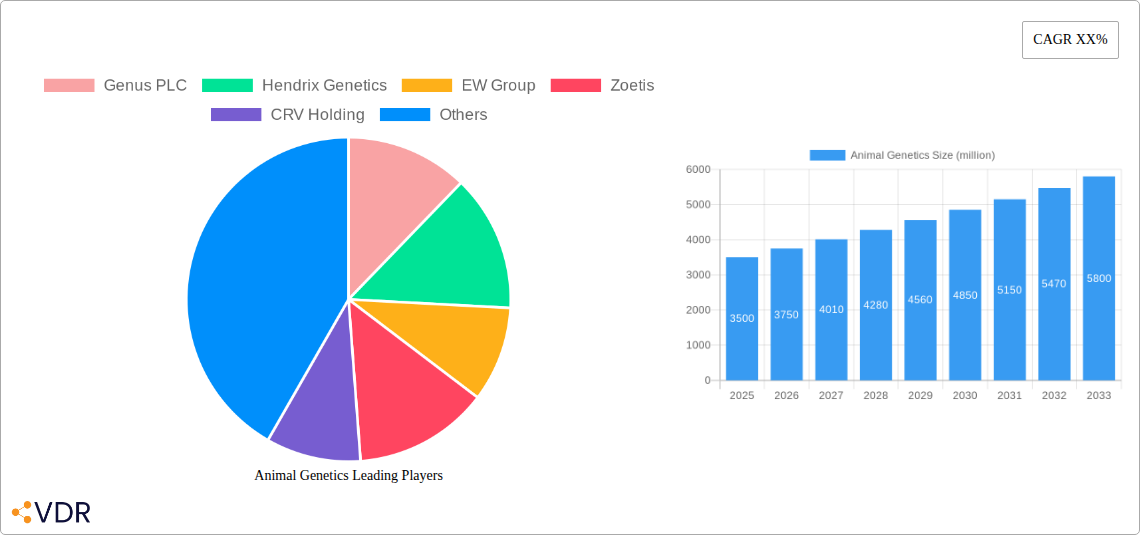
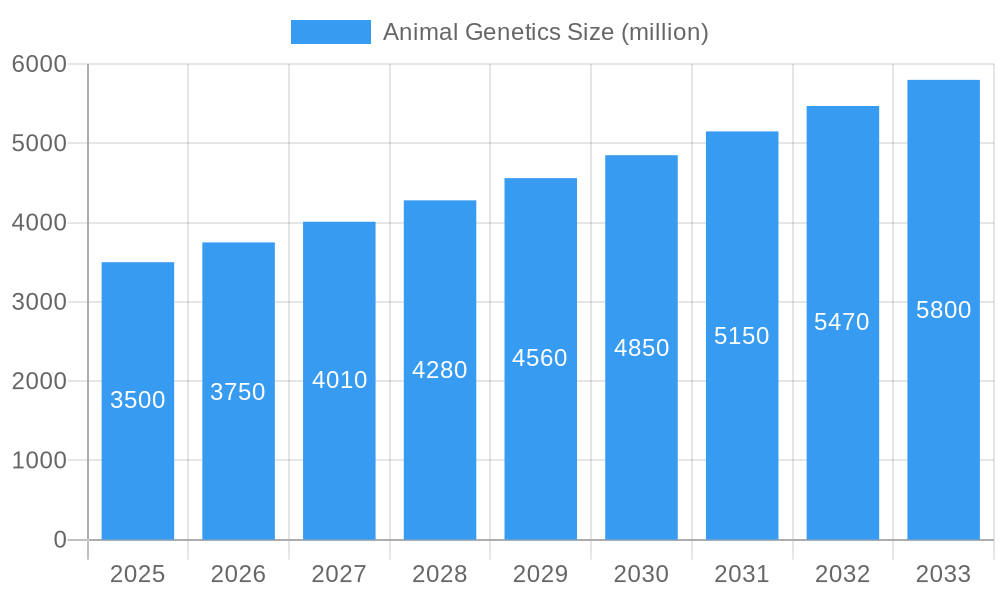
Animal Genetics Market Size (In Billion)

Key growth drivers include the necessity for sustainable and efficient food production amidst environmental constraints. Advancements in animal genetics products, including sophisticated semen and embryo technologies, are pivotal. Conversely, market restraints encompass stringent regulations for genetically modified organisms and the significant upfront investment in advanced genetic technologies. Nevertheless, emerging economies, particularly in the Asia Pacific, offer considerable growth potential due to their burgeoning livestock sectors and increased investment in modern animal husbandry. Leading market participants, including Genus PLC, Hendrix Genetics, and Zoetis, are actively pursuing R&D to launch innovative solutions and broaden their global presence.
Animal Genetics Company Market Share
This detailed report offers a comprehensive analysis of the global animal genetics market, providing critical insights into its trends, growth patterns, and future projections. The study examines the market via parent and child segments, offering invaluable intelligence for stakeholders aiming to identify and leverage opportunities in the dynamic animal breeding and genetic testing industry. The analysis covers the historical period from 2019 to 2024, with the base year set at 2025 and a forecast extending to 2033. All market figures are denominated in billions.
Animal Genetics Market Dynamics & Structure
The animal genetics market is characterized by a moderate to high concentration, with key players investing heavily in research and development to drive technological innovation. The adoption of advanced genomic technologies, such as marker-assisted selection (MAS) and genomic selection (GS), is a primary innovation driver, enhancing breeding efficiency and disease resistance in livestock and poultry. Regulatory frameworks, particularly concerning genetically modified organisms (GMOs) and the ethical implications of genetic advancements, play a significant role in shaping market access and product development. Competitive product substitutes, while nascent, primarily revolve around traditional breeding methods and advancements in animal nutrition and health management, though their impact on the core genetic market remains limited. End-user demographics are increasingly influenced by the growing global demand for animal protein, coupled with a rising awareness of animal welfare and sustainable farming practices. Mergers and acquisitions (M&A) are a prominent feature, with companies consolidating to expand their technological portfolios, geographic reach, and market share.
- Market Concentration: Dominated by a few key players with significant R&D capabilities and intellectual property.
- Technological Innovation Drivers: Genomic selection, gene editing (CRISPR), bioinformatics, and AI-driven data analytics are transforming breeding programs.
- Regulatory Frameworks: Stringent regulations for animal welfare, traceability, and the use of advanced genetic technologies influence market entry and product approvals.
- Competitive Product Substitutes: While traditional breeding and improved management practices offer alternatives, they often lack the precision and efficiency of genetic solutions.
- End-User Demographics: Driven by growing global population, increasing disposable incomes in emerging economies, and a demand for healthier, more sustainable animal protein sources.
- M&A Trends: Strategic acquisitions are focused on gaining access to novel technologies, expanding product pipelines, and consolidating market positions. For instance, the historical period (2019-2024) saw an estimated XX M&A deals with an aggregate value of over $XXX million.
Animal Genetics Growth Trends & Insights
The global animal genetics market is poised for robust growth, propelled by an escalating demand for efficient, sustainable, and high-quality animal protein production. Throughout the historical period (2019-2024), the market witnessed a steady Compound Annual Growth Rate (CAGR) of approximately XX%, driven by increasing adoption of advanced breeding technologies and services. The base year of 2025 is estimated to value the market at $XXX million, with projections indicating a significant expansion to $XXX million by 2033, representing a CAGR of XX% during the forecast period (2025-2033). Technological disruptions, including the widespread integration of artificial intelligence (AI) and machine learning (ML) in analyzing vast genomic datasets, are revolutionizing breeding efficiency and predictive analytics. Consumer behavior shifts towards understanding the origins and welfare standards of animal products are also compelling producers to invest in superior genetics that offer improved health, reduced environmental impact, and enhanced product quality. The market penetration of genomic testing services is on an upward trajectory, particularly in developed nations, as producers recognize the long-term economic benefits of precision breeding.
- Market Size Evolution: From an estimated $XXX million in 2019 to an estimated $XXX million in 2025, with a projected reach of $XXX million by 2033.
- Adoption Rates: Increasing adoption of genomic selection technologies across poultry, swine, and bovine segments, with XX% of leading breeding programs utilizing these tools.
- Technological Disruptions: AI/ML integration in genomic analysis, advancements in gene editing for disease resistance, and development of faster, more accurate genetic testing platforms.
- Consumer Behavior Shifts: Growing demand for transparent supply chains, ethically produced animal products, and genetic traits associated with improved animal welfare and reduced antibiotic use.
- Market Penetration: Genomic testing services penetration estimated at XX% in North America and Europe for high-value breeding stock, with substantial growth anticipated in Asia-Pacific.
- CAGR: Estimated at XX% for the historical period (2019-2024) and projected at XX% for the forecast period (2025-2033).
Dominant Regions, Countries, or Segments in Animal Genetics
The global animal genetics market is experiencing significant growth, with the Poultry segment, under the Application category, emerging as a dominant driver. This dominance is attributed to several key factors, including the inherently faster generation intervals and higher reproductive rates of poultry compared to other livestock, allowing for quicker implementation and realization of genetic gains. The Animal Genetics Products segment, specifically high-density SNP chips and breeding programs, also commands a substantial market share within the Types category, underpinning the advancements in poultry genetics. Economically, the poultry industry benefits from strong global demand for protein, its relatively lower cost of production, and its significant role in food security, particularly in developing nations.
The United States stands out as a leading country, fueled by its advanced agricultural infrastructure, substantial investment in R&D, and presence of major animal genetics companies. Its sophisticated regulatory environment also fosters innovation while ensuring responsible genetic practices. Furthermore, the North America region, encompassing the US and Canada, exhibits robust growth due to the early adoption of cutting-edge genetic technologies and strong governmental support for agricultural innovation.
Key drivers in this dominance include:
Poultry Application:
- High Volume Production: The sheer scale of global poultry consumption necessitates continuous genetic improvement for efficiency and yield.
- Rapid Genetic Gain: Shorter generation intervals in poultry enable faster implementation of selection programs.
- Disease Resistance: Focus on breeding for enhanced immunity to prevalent avian diseases like Avian Influenza and Newcastle Disease, minimizing economic losses.
- Feed Conversion Efficiency: Genetic selection for improved feed conversion ratio (FCR) directly impacts profitability and sustainability.
- Market Share: The poultry segment is estimated to hold approximately XX% of the overall animal genetics market share.
Animal Genetics Products Type:
- Genomic Selection Products: Development and deployment of high-density SNP chips and genomic evaluation software tailored for poultry.
- Breeding Programs: Sophisticated breeding programs by leading companies are creating specialized genetic lines for meat and egg production.
- Innovation in Traits: Focus on genetic traits such as growth rate, meat yield, egg production, and shell quality.
- Market Share: Animal Genetics Products are estimated to account for XX% of the market revenue.
Dominant Country (United States):
- R&D Investment: Significant private and public investment in animal genomics research.
- Technological Adoption: High uptake of genomic technologies by commercial producers.
- Industry Consolidation: Presence of major global animal genetics players with substantial operations.
- Supportive Policies: Government initiatives and agricultural research grants that encourage genetic advancements.
Dominant Region (North America):
- Advanced Infrastructure: Well-established agricultural and scientific infrastructure facilitating genetic research and commercialization.
- Industry Collaboration: Strong partnerships between research institutions, breeding companies, and producers.
- Market Accessibility: High disposable incomes and a strong demand for high-quality animal protein.
The growth potential in these dominant segments is immense, driven by ongoing technological advancements and the persistent need for more sustainable and efficient food production systems.
Animal Genetics Product Landscape
The animal genetics product landscape is dynamic, driven by continuous innovation in breeding technologies and diagnostic tools. Key offerings include advanced genomic selection products, such as high-density SNP chips and imputation software, which enable precise trait selection in livestock and poultry. These products are crucial for enhancing disease resistance, improving feed efficiency, and optimizing meat and milk production. Furthermore, the development of gene-editing technologies like CRISPR is revolutionizing the potential for targeted trait modification, offering unique selling propositions for disease eradication and enhanced product quality. Animal genetics testing services, ranging from parentage verification to disease screening and genetic disorder identification, are also integral, providing critical data for informed breeding decisions. The performance metrics of these products and services are measured by their accuracy, speed of delivery, and the tangible economic benefits they deliver to producers, such as increased yield and reduced veterinary costs.
Key Drivers, Barriers & Challenges in Animal Genetics
Key Drivers:
- Growing Global Protein Demand: The increasing world population and rising disposable incomes necessitate more efficient animal protein production.
- Technological Advancements: Breakthroughs in genomics, bioinformatics, and AI are enabling more precise and cost-effective genetic selection and testing.
- Sustainability Initiatives: Pressure to reduce the environmental footprint of livestock farming drives demand for genetically superior animals with better feed conversion and lower emissions.
- Disease Management: The need for robust genetic resistance to prevalent animal diseases is a significant growth catalyst.
Key Barriers & Challenges:
- High R&D Costs: Significant investment is required for gene sequencing, data analysis, and validation of genetic traits.
- Regulatory Hurdles: Stringent regulations regarding genetic modification and data privacy can slow down product development and market entry.
- Long Breeding Cycles: For some species, particularly cattle, the long generation intervals can impede the rapid implementation of genetic improvements.
- Ethical Concerns: Public perception and ethical debates surrounding genetic technologies can create resistance and impact adoption rates.
- Supply Chain Disruptions: Global events can disrupt the availability of essential reagents and technologies, impacting testing services and product development. For example, supply chain disruptions in 2022 led to an estimated XX% increase in reagent costs for genetic testing.
Emerging Opportunities in Animal Genetics
Emerging opportunities in the animal genetics sector are centered around precision breeding for enhanced animal welfare, the development of genetic solutions for climate change adaptation in livestock, and the expansion of genetic testing services into niche markets. The increasing consumer demand for ethically raised animals presents an opportunity for genetics that improve robustness and reduce reliance on medical interventions. Furthermore, the untapped potential in developing countries, particularly in improving indigenous livestock breeds through genomic insights, offers significant growth prospects. The integration of blockchain technology for transparent and verifiable genetic data management is another burgeoning area.
Growth Accelerators in the Animal Genetics Industry
Long-term growth in the animal genetics industry is being significantly accelerated by technological breakthroughs in gene editing, such as CRISPR-Cas9, enabling targeted improvements in disease resistance and productivity. Strategic partnerships between leading genetic companies, research institutions, and agricultural technology providers are fostering innovation and expanding market reach. Furthermore, market expansion strategies, including the development of tailored genetic solutions for emerging economies and the increasing focus on specialized genetic traits for niche markets (e.g., heritage breeds, high-value dairy), are acting as powerful growth catalysts.
Key Players Shaping the Animal Genetics Market
- Genus PLC
- Hendrix Genetics
- EW Group
- Zoetis
- CRV Holding
- Grimaud
- Topigs Norsvin
- Alta Genetics
- Neogen Corporation
- Envigo
Notable Milestones in Animal Genetics Sector
- 2019: Genus PLC's acquisition of Pelleted Feeds Ltd., strengthening its animal nutrition and genetics integration.
- 2020: Neogen Corporation launches its advanced Neogen GeneSeek® Genomic Testing platform for cattle, enhancing accuracy and speed.
- 2021: Hendrix Genetics expands its operations in South America with strategic investments in local breeding programs.
- 2022: Zoetis partners with academic institutions to advance research in gene editing for disease resistance in poultry.
- 2023: Topigs Norsvin introduces new genetic lines in its Porcine programs, focusing on improved sow productivity and piglet survival rates.
- 2024: CRV Holding announces a significant investment in AI-driven data analytics to optimize dairy cattle breeding programs.
In-Depth Animal Genetics Market Outlook
The future of the animal genetics market is exceptionally promising, driven by a confluence of innovation and essential global needs. Growth accelerators like advanced gene editing technologies and AI-powered data analytics will continue to refine breeding programs, delivering animals with superior health, productivity, and environmental sustainability. Strategic partnerships and market expansion, particularly into underserved regions and niche applications, will further broaden the industry's impact. The outlook is one of continued robust growth, with animal genetics playing an indispensable role in meeting the world's increasing demand for protein in a responsible and efficient manner.
Animal Genetics Segmentation
-
1. Application
- 1.1. Poultry
- 1.2. Porcine
- 1.3. Bovine
- 1.4. Others
-
2. Types
- 2.1. Animal Genetics Products
- 2.2. Animal Genetics Testing Services
Animal Genetics Segmentation By Geography
-
1. North America
- 1.1. United States
- 1.2. Canada
- 1.3. Mexico
-
2. South America
- 2.1. Brazil
- 2.2. Argentina
- 2.3. Rest of South America
-
3. Europe
- 3.1. United Kingdom
- 3.2. Germany
- 3.3. France
- 3.4. Italy
- 3.5. Spain
- 3.6. Russia
- 3.7. Benelux
- 3.8. Nordics
- 3.9. Rest of Europe
-
4. Middle East & Africa
- 4.1. Turkey
- 4.2. Israel
- 4.3. GCC
- 4.4. North Africa
- 4.5. South Africa
- 4.6. Rest of Middle East & Africa
-
5. Asia Pacific
- 5.1. China
- 5.2. India
- 5.3. Japan
- 5.4. South Korea
- 5.5. ASEAN
- 5.6. Oceania
- 5.7. Rest of Asia Pacific
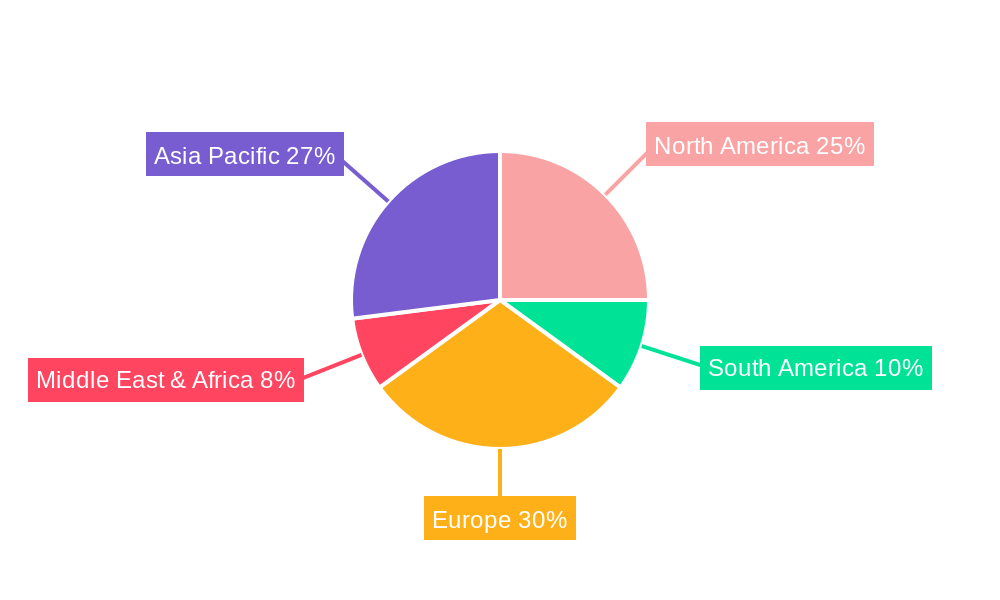
Animal Genetics Regional Market Share
Geographic Coverage of Animal Genetics
Animal Genetics REPORT HIGHLIGHTS
| Aspects | Details |
|---|---|
| Study Period | 2020-2034 |
| Base Year | 2025 |
| Estimated Year | 2026 |
| Forecast Period | 2026-2034 |
| Historical Period | 2020-2025 |
| Growth Rate | CAGR of 7.09% from 2020-2034 |
| Segmentation |
|
Table of Contents
- 1. Introduction
- 1.1. Research Scope
- 1.2. Market Segmentation
- 1.3. Research Methodology
- 1.4. Definitions and Assumptions
- 2. Executive Summary
- 2.1. Introduction
- 3. Market Dynamics
- 3.1. Introduction
- 3.2. Market Drivers
- 3.3. Market Restrains
- 3.4. Market Trends
- 4. Market Factor Analysis
- 4.1. Porters Five Forces
- 4.2. Supply/Value Chain
- 4.3. PESTEL analysis
- 4.4. Market Entropy
- 4.5. Patent/Trademark Analysis
- 5. Global Animal Genetics Analysis, Insights and Forecast, 2020-2032
- 5.1. Market Analysis, Insights and Forecast - by Application
- 5.1.1. Poultry
- 5.1.2. Porcine
- 5.1.3. Bovine
- 5.1.4. Others
- 5.2. Market Analysis, Insights and Forecast - by Types
- 5.2.1. Animal Genetics Products
- 5.2.2. Animal Genetics Testing Services
- 5.3. Market Analysis, Insights and Forecast - by Region
- 5.3.1. North America
- 5.3.2. South America
- 5.3.3. Europe
- 5.3.4. Middle East & Africa
- 5.3.5. Asia Pacific
- 5.1. Market Analysis, Insights and Forecast - by Application
- 6. North America Animal Genetics Analysis, Insights and Forecast, 2020-2032
- 6.1. Market Analysis, Insights and Forecast - by Application
- 6.1.1. Poultry
- 6.1.2. Porcine
- 6.1.3. Bovine
- 6.1.4. Others
- 6.2. Market Analysis, Insights and Forecast - by Types
- 6.2.1. Animal Genetics Products
- 6.2.2. Animal Genetics Testing Services
- 6.1. Market Analysis, Insights and Forecast - by Application
- 7. South America Animal Genetics Analysis, Insights and Forecast, 2020-2032
- 7.1. Market Analysis, Insights and Forecast - by Application
- 7.1.1. Poultry
- 7.1.2. Porcine
- 7.1.3. Bovine
- 7.1.4. Others
- 7.2. Market Analysis, Insights and Forecast - by Types
- 7.2.1. Animal Genetics Products
- 7.2.2. Animal Genetics Testing Services
- 7.1. Market Analysis, Insights and Forecast - by Application
- 8. Europe Animal Genetics Analysis, Insights and Forecast, 2020-2032
- 8.1. Market Analysis, Insights and Forecast - by Application
- 8.1.1. Poultry
- 8.1.2. Porcine
- 8.1.3. Bovine
- 8.1.4. Others
- 8.2. Market Analysis, Insights and Forecast - by Types
- 8.2.1. Animal Genetics Products
- 8.2.2. Animal Genetics Testing Services
- 8.1. Market Analysis, Insights and Forecast - by Application
- 9. Middle East & Africa Animal Genetics Analysis, Insights and Forecast, 2020-2032
- 9.1. Market Analysis, Insights and Forecast - by Application
- 9.1.1. Poultry
- 9.1.2. Porcine
- 9.1.3. Bovine
- 9.1.4. Others
- 9.2. Market Analysis, Insights and Forecast - by Types
- 9.2.1. Animal Genetics Products
- 9.2.2. Animal Genetics Testing Services
- 9.1. Market Analysis, Insights and Forecast - by Application
- 10. Asia Pacific Animal Genetics Analysis, Insights and Forecast, 2020-2032
- 10.1. Market Analysis, Insights and Forecast - by Application
- 10.1.1. Poultry
- 10.1.2. Porcine
- 10.1.3. Bovine
- 10.1.4. Others
- 10.2. Market Analysis, Insights and Forecast - by Types
- 10.2.1. Animal Genetics Products
- 10.2.2. Animal Genetics Testing Services
- 10.1. Market Analysis, Insights and Forecast - by Application
- 11. Competitive Analysis
- 11.1. Global Market Share Analysis 2025
- 11.2. Company Profiles
- 11.2.1 Genus PLC
- 11.2.1.1. Overview
- 11.2.1.2. Products
- 11.2.1.3. SWOT Analysis
- 11.2.1.4. Recent Developments
- 11.2.1.5. Financials (Based on Availability)
- 11.2.2 Hendrix Genetics
- 11.2.2.1. Overview
- 11.2.2.2. Products
- 11.2.2.3. SWOT Analysis
- 11.2.2.4. Recent Developments
- 11.2.2.5. Financials (Based on Availability)
- 11.2.3 EW Group
- 11.2.3.1. Overview
- 11.2.3.2. Products
- 11.2.3.3. SWOT Analysis
- 11.2.3.4. Recent Developments
- 11.2.3.5. Financials (Based on Availability)
- 11.2.4 Zoetis
- 11.2.4.1. Overview
- 11.2.4.2. Products
- 11.2.4.3. SWOT Analysis
- 11.2.4.4. Recent Developments
- 11.2.4.5. Financials (Based on Availability)
- 11.2.5 CRV Holding
- 11.2.5.1. Overview
- 11.2.5.2. Products
- 11.2.5.3. SWOT Analysis
- 11.2.5.4. Recent Developments
- 11.2.5.5. Financials (Based on Availability)
- 11.2.6 Grimaud
- 11.2.6.1. Overview
- 11.2.6.2. Products
- 11.2.6.3. SWOT Analysis
- 11.2.6.4. Recent Developments
- 11.2.6.5. Financials (Based on Availability)
- 11.2.7 Topigs Norsvin
- 11.2.7.1. Overview
- 11.2.7.2. Products
- 11.2.7.3. SWOT Analysis
- 11.2.7.4. Recent Developments
- 11.2.7.5. Financials (Based on Availability)
- 11.2.8 Alta Genetics
- 11.2.8.1. Overview
- 11.2.8.2. Products
- 11.2.8.3. SWOT Analysis
- 11.2.8.4. Recent Developments
- 11.2.8.5. Financials (Based on Availability)
- 11.2.9 Neogen Corporation
- 11.2.9.1. Overview
- 11.2.9.2. Products
- 11.2.9.3. SWOT Analysis
- 11.2.9.4. Recent Developments
- 11.2.9.5. Financials (Based on Availability)
- 11.2.10 Envigo
- 11.2.10.1. Overview
- 11.2.10.2. Products
- 11.2.10.3. SWOT Analysis
- 11.2.10.4. Recent Developments
- 11.2.10.5. Financials (Based on Availability)
- 11.2.1 Genus PLC
List of Figures
- Figure 1: Global Animal Genetics Revenue Breakdown (billion, %) by Region 2025 & 2033
- Figure 2: North America Animal Genetics Revenue (billion), by Application 2025 & 2033
- Figure 3: North America Animal Genetics Revenue Share (%), by Application 2025 & 2033
- Figure 4: North America Animal Genetics Revenue (billion), by Types 2025 & 2033
- Figure 5: North America Animal Genetics Revenue Share (%), by Types 2025 & 2033
- Figure 6: North America Animal Genetics Revenue (billion), by Country 2025 & 2033
- Figure 7: North America Animal Genetics Revenue Share (%), by Country 2025 & 2033
- Figure 8: South America Animal Genetics Revenue (billion), by Application 2025 & 2033
- Figure 9: South America Animal Genetics Revenue Share (%), by Application 2025 & 2033
- Figure 10: South America Animal Genetics Revenue (billion), by Types 2025 & 2033
- Figure 11: South America Animal Genetics Revenue Share (%), by Types 2025 & 2033
- Figure 12: South America Animal Genetics Revenue (billion), by Country 2025 & 2033
- Figure 13: South America Animal Genetics Revenue Share (%), by Country 2025 & 2033
- Figure 14: Europe Animal Genetics Revenue (billion), by Application 2025 & 2033
- Figure 15: Europe Animal Genetics Revenue Share (%), by Application 2025 & 2033
- Figure 16: Europe Animal Genetics Revenue (billion), by Types 2025 & 2033
- Figure 17: Europe Animal Genetics Revenue Share (%), by Types 2025 & 2033
- Figure 18: Europe Animal Genetics Revenue (billion), by Country 2025 & 2033
- Figure 19: Europe Animal Genetics Revenue Share (%), by Country 2025 & 2033
- Figure 20: Middle East & Africa Animal Genetics Revenue (billion), by Application 2025 & 2033
- Figure 21: Middle East & Africa Animal Genetics Revenue Share (%), by Application 2025 & 2033
- Figure 22: Middle East & Africa Animal Genetics Revenue (billion), by Types 2025 & 2033
- Figure 23: Middle East & Africa Animal Genetics Revenue Share (%), by Types 2025 & 2033
- Figure 24: Middle East & Africa Animal Genetics Revenue (billion), by Country 2025 & 2033
- Figure 25: Middle East & Africa Animal Genetics Revenue Share (%), by Country 2025 & 2033
- Figure 26: Asia Pacific Animal Genetics Revenue (billion), by Application 2025 & 2033
- Figure 27: Asia Pacific Animal Genetics Revenue Share (%), by Application 2025 & 2033
- Figure 28: Asia Pacific Animal Genetics Revenue (billion), by Types 2025 & 2033
- Figure 29: Asia Pacific Animal Genetics Revenue Share (%), by Types 2025 & 2033
- Figure 30: Asia Pacific Animal Genetics Revenue (billion), by Country 2025 & 2033
- Figure 31: Asia Pacific Animal Genetics Revenue Share (%), by Country 2025 & 2033
List of Tables
- Table 1: Global Animal Genetics Revenue billion Forecast, by Application 2020 & 2033
- Table 2: Global Animal Genetics Revenue billion Forecast, by Types 2020 & 2033
- Table 3: Global Animal Genetics Revenue billion Forecast, by Region 2020 & 2033
- Table 4: Global Animal Genetics Revenue billion Forecast, by Application 2020 & 2033
- Table 5: Global Animal Genetics Revenue billion Forecast, by Types 2020 & 2033
- Table 6: Global Animal Genetics Revenue billion Forecast, by Country 2020 & 2033
- Table 7: United States Animal Genetics Revenue (billion) Forecast, by Application 2020 & 2033
- Table 8: Canada Animal Genetics Revenue (billion) Forecast, by Application 2020 & 2033
- Table 9: Mexico Animal Genetics Revenue (billion) Forecast, by Application 2020 & 2033
- Table 10: Global Animal Genetics Revenue billion Forecast, by Application 2020 & 2033
- Table 11: Global Animal Genetics Revenue billion Forecast, by Types 2020 & 2033
- Table 12: Global Animal Genetics Revenue billion Forecast, by Country 2020 & 2033
- Table 13: Brazil Animal Genetics Revenue (billion) Forecast, by Application 2020 & 2033
- Table 14: Argentina Animal Genetics Revenue (billion) Forecast, by Application 2020 & 2033
- Table 15: Rest of South America Animal Genetics Revenue (billion) Forecast, by Application 2020 & 2033
- Table 16: Global Animal Genetics Revenue billion Forecast, by Application 2020 & 2033
- Table 17: Global Animal Genetics Revenue billion Forecast, by Types 2020 & 2033
- Table 18: Global Animal Genetics Revenue billion Forecast, by Country 2020 & 2033
- Table 19: United Kingdom Animal Genetics Revenue (billion) Forecast, by Application 2020 & 2033
- Table 20: Germany Animal Genetics Revenue (billion) Forecast, by Application 2020 & 2033
- Table 21: France Animal Genetics Revenue (billion) Forecast, by Application 2020 & 2033
- Table 22: Italy Animal Genetics Revenue (billion) Forecast, by Application 2020 & 2033
- Table 23: Spain Animal Genetics Revenue (billion) Forecast, by Application 2020 & 2033
- Table 24: Russia Animal Genetics Revenue (billion) Forecast, by Application 2020 & 2033
- Table 25: Benelux Animal Genetics Revenue (billion) Forecast, by Application 2020 & 2033
- Table 26: Nordics Animal Genetics Revenue (billion) Forecast, by Application 2020 & 2033
- Table 27: Rest of Europe Animal Genetics Revenue (billion) Forecast, by Application 2020 & 2033
- Table 28: Global Animal Genetics Revenue billion Forecast, by Application 2020 & 2033
- Table 29: Global Animal Genetics Revenue billion Forecast, by Types 2020 & 2033
- Table 30: Global Animal Genetics Revenue billion Forecast, by Country 2020 & 2033
- Table 31: Turkey Animal Genetics Revenue (billion) Forecast, by Application 2020 & 2033
- Table 32: Israel Animal Genetics Revenue (billion) Forecast, by Application 2020 & 2033
- Table 33: GCC Animal Genetics Revenue (billion) Forecast, by Application 2020 & 2033
- Table 34: North Africa Animal Genetics Revenue (billion) Forecast, by Application 2020 & 2033
- Table 35: South Africa Animal Genetics Revenue (billion) Forecast, by Application 2020 & 2033
- Table 36: Rest of Middle East & Africa Animal Genetics Revenue (billion) Forecast, by Application 2020 & 2033
- Table 37: Global Animal Genetics Revenue billion Forecast, by Application 2020 & 2033
- Table 38: Global Animal Genetics Revenue billion Forecast, by Types 2020 & 2033
- Table 39: Global Animal Genetics Revenue billion Forecast, by Country 2020 & 2033
- Table 40: China Animal Genetics Revenue (billion) Forecast, by Application 2020 & 2033
- Table 41: India Animal Genetics Revenue (billion) Forecast, by Application 2020 & 2033
- Table 42: Japan Animal Genetics Revenue (billion) Forecast, by Application 2020 & 2033
- Table 43: South Korea Animal Genetics Revenue (billion) Forecast, by Application 2020 & 2033
- Table 44: ASEAN Animal Genetics Revenue (billion) Forecast, by Application 2020 & 2033
- Table 45: Oceania Animal Genetics Revenue (billion) Forecast, by Application 2020 & 2033
- Table 46: Rest of Asia Pacific Animal Genetics Revenue (billion) Forecast, by Application 2020 & 2033
Frequently Asked Questions
1. What is the projected Compound Annual Growth Rate (CAGR) of the Animal Genetics?
The projected CAGR is approximately 7.09%.
2. Which companies are prominent players in the Animal Genetics?
Key companies in the market include Genus PLC, Hendrix Genetics, EW Group, Zoetis, CRV Holding, Grimaud, Topigs Norsvin, Alta Genetics, Neogen Corporation, Envigo.
3. What are the main segments of the Animal Genetics?
The market segments include Application, Types.
4. Can you provide details about the market size?
The market size is estimated to be USD 7.8 billion as of 2022.
5. What are some drivers contributing to market growth?
N/A
6. What are the notable trends driving market growth?
N/A
7. Are there any restraints impacting market growth?
N/A
8. Can you provide examples of recent developments in the market?
N/A
9. What pricing options are available for accessing the report?
Pricing options include single-user, multi-user, and enterprise licenses priced at USD 3350.00, USD 5025.00, and USD 6700.00 respectively.
10. Is the market size provided in terms of value or volume?
The market size is provided in terms of value, measured in billion.
11. Are there any specific market keywords associated with the report?
Yes, the market keyword associated with the report is "Animal Genetics," which aids in identifying and referencing the specific market segment covered.
12. How do I determine which pricing option suits my needs best?
The pricing options vary based on user requirements and access needs. Individual users may opt for single-user licenses, while businesses requiring broader access may choose multi-user or enterprise licenses for cost-effective access to the report.
13. Are there any additional resources or data provided in the Animal Genetics report?
While the report offers comprehensive insights, it's advisable to review the specific contents or supplementary materials provided to ascertain if additional resources or data are available.
14. How can I stay updated on further developments or reports in the Animal Genetics?
To stay informed about further developments, trends, and reports in the Animal Genetics, consider subscribing to industry newsletters, following relevant companies and organizations, or regularly checking reputable industry news sources and publications.
Methodology
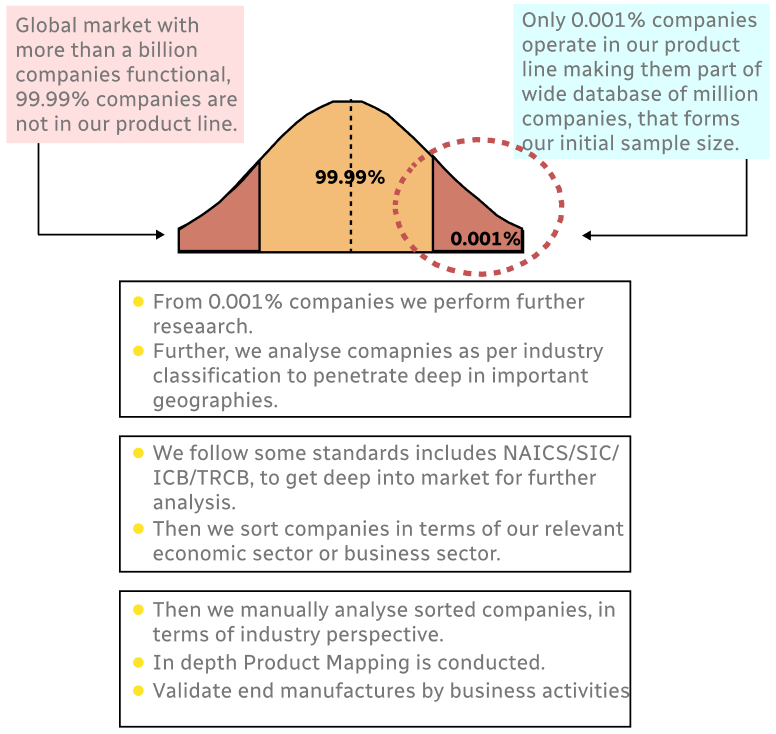
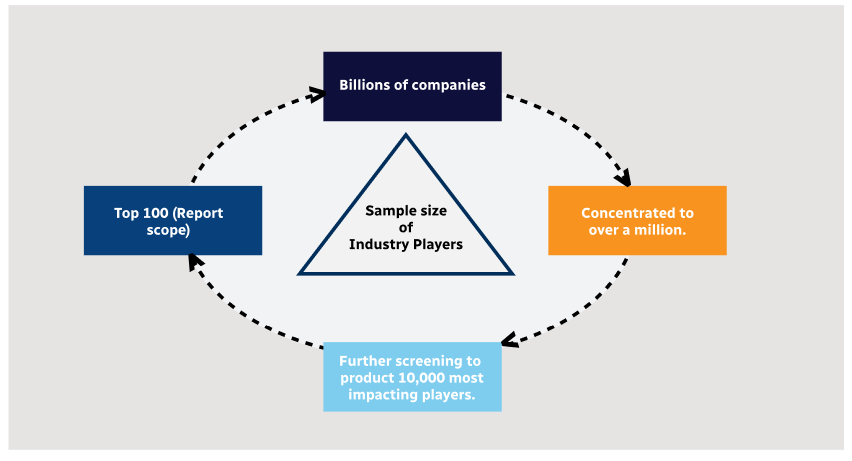
Step 1 - Identification of Relevant Samples Size from Population Database
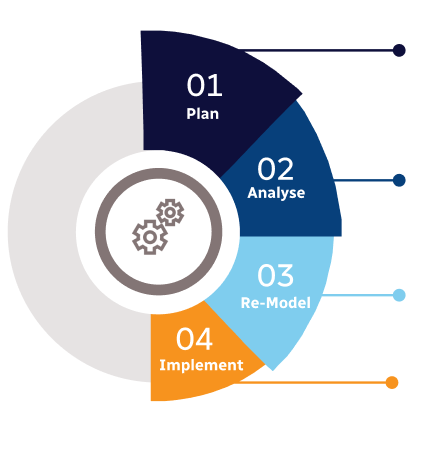
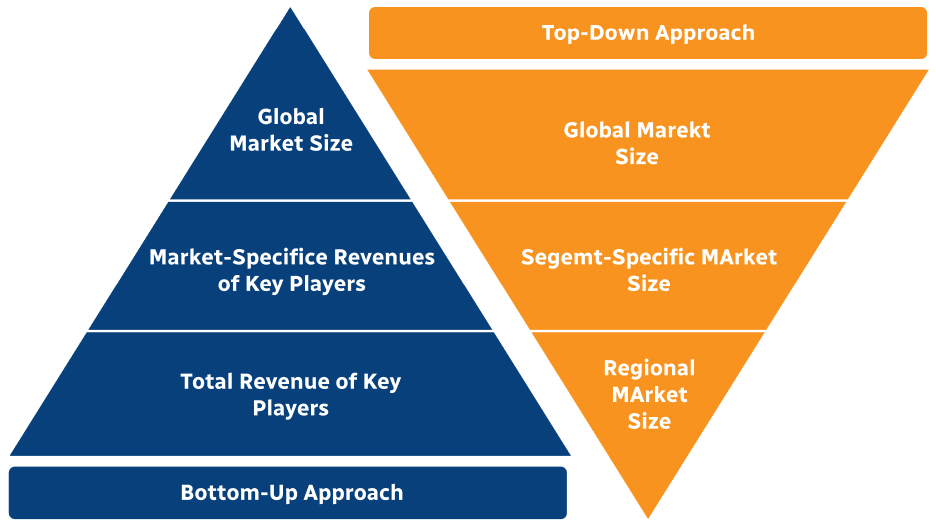
Step 2 - Approaches for Defining Global Market Size (Value, Volume* & Price*)
Note*: In applicable scenarios
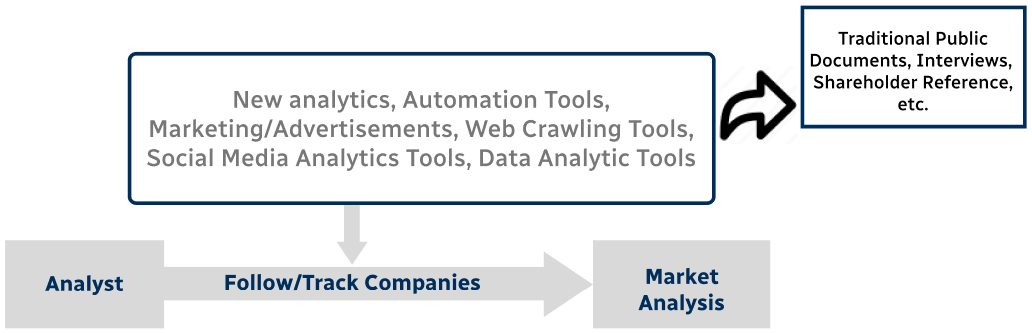
Step 3 - Data Sources
Primary Research
- Web Analytics
- Survey Reports
- Research Institute
- Latest Research Reports
- Opinion Leaders
Secondary Research
- Annual Reports
- White Paper
- Latest Press Release
- Industry Association
- Paid Database
- Investor Presentations
Step 4 - Data Triangulation
Involves using different sources of information in order to increase the validity of a study
These sources are likely to be stakeholders in a program - participants, other researchers, program staff, other community members, and so on.
Then we put all data in single framework & apply various statistical tools to find out the dynamic on the market.
During the analysis stage, feedback from the stakeholder groups would be compared to determine areas of agreement as well as areas of divergence