


Key Insights
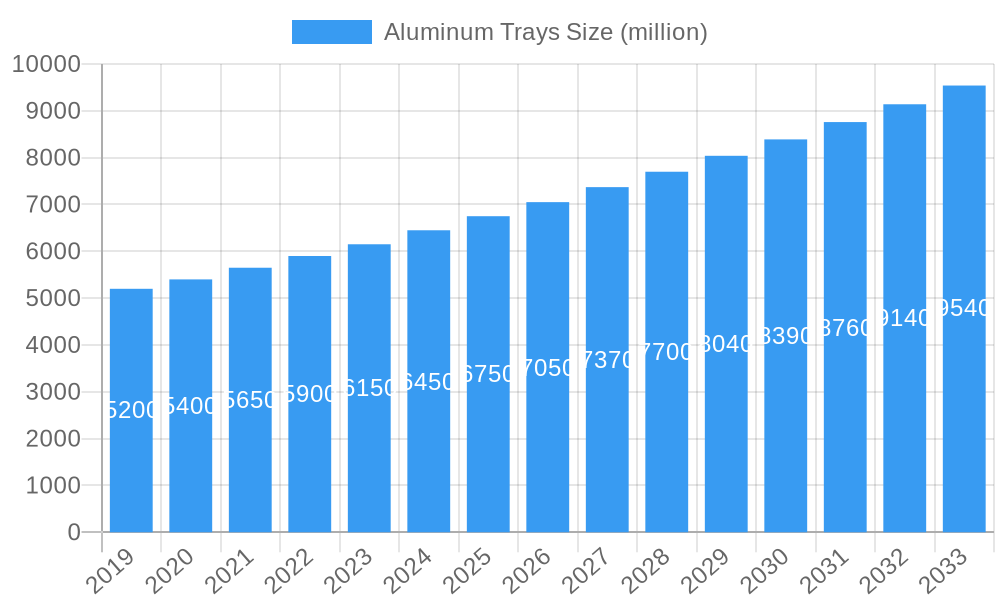
The global aluminum trays market is projected to experience robust growth, reaching an estimated value of over $7,000 million by 2025, with a Compound Annual Growth Rate (CAGR) of approximately 4.5% anticipated through 2033. This expansion is significantly fueled by the inherent advantages of aluminum, including its light weight, excellent thermal conductivity, recyclability, and durability, making it a preferred material across diverse applications. The medical sector, driven by the increasing demand for sterile and safe packaging for pharmaceuticals, medical devices, and ready-to-eat meals for patients, represents a substantial driver. Simultaneously, the food and beverage industry continues to be a primary consumer, leveraging aluminum trays for their versatility in baking, freezing, and ready-to-cook meals, meeting the growing consumer preference for convenience and portion control. The automotive sector also contributes to market growth, utilizing aluminum trays in various manufacturing processes.
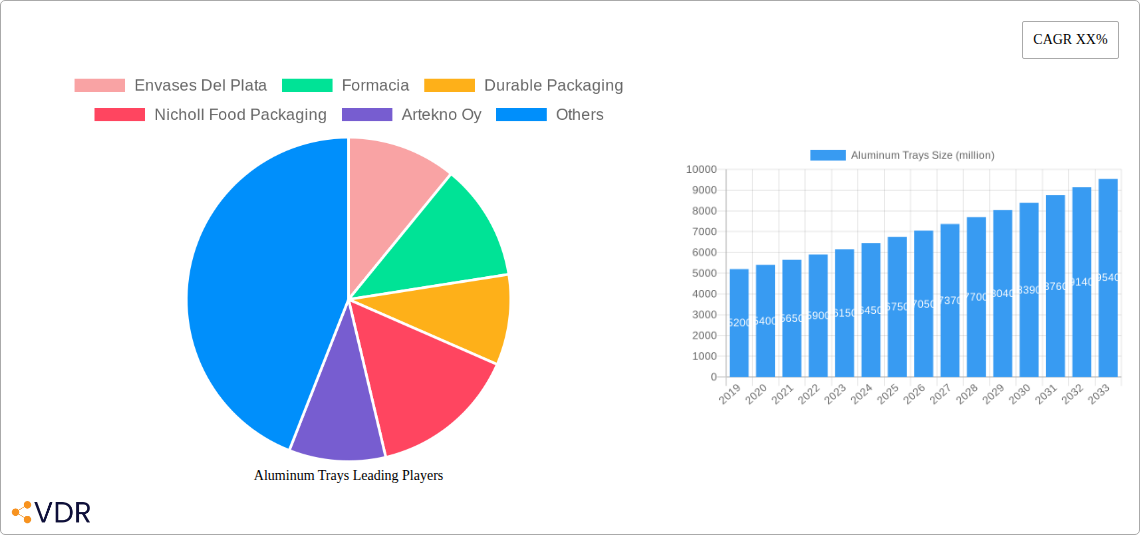
Aluminum Trays Market Size (In Billion)

The market dynamics are further shaped by evolving consumer lifestyles and a heightened emphasis on sustainable packaging solutions. Aluminum's high recyclability rate positions it favorably against other packaging materials, aligning with global environmental initiatives and regulatory pressures. Key trends include the rising adoption of disposable aluminum trays for single-use applications, enhancing convenience and hygiene, and the increasing demand for specialized, sterilized aluminum trays to meet stringent healthcare standards. However, the market faces certain restraints, such as the fluctuating prices of raw aluminum, which can impact manufacturing costs and, consequently, end-product pricing. Competition from alternative packaging materials, particularly plastics and paper-based alternatives, also poses a challenge, necessitating continuous innovation in product design and functionality to maintain market share. Despite these challenges, the overarching demand for reliable, safe, and sustainable packaging solutions ensures a positive growth trajectory for the aluminum trays market.
Aluminum Trays Company Market Share
Aluminum Trays Market Research Report: Dynamics, Trends, and Future Outlook (2019–2033)
This comprehensive report offers an in-depth analysis of the global Aluminum Trays market, providing critical insights for stakeholders across the value chain. Covering the historical period from 2019 to 2024, the base and estimated year of 2025, and a robust forecast period up to 2033, this research delves into market dynamics, growth trends, regional dominance, product landscape, and key players. With a focus on high-traffic SEO keywords and a structured presentation, this report is designed to maximize visibility and deliver actionable intelligence for industry professionals.
Aluminum Trays Market Dynamics & Structure
The global Aluminum Trays market exhibits a moderately concentrated structure, with key players investing heavily in technological innovation and operational efficiency. Major drivers include the increasing demand for durable and versatile packaging solutions across various sectors, particularly in food and beverages and healthcare. Regulatory frameworks, especially concerning food safety and environmental sustainability, significantly influence product development and market entry strategies. Competitive product substitutes, such as plastic and paperboard trays, present a constant challenge, pushing aluminum tray manufacturers to emphasize their superior performance characteristics like heat resistance, barrier properties, and recyclability. End-user demographics, particularly the growing middle class in emerging economies and the increasing preference for convenience and ready-to-eat meals, are pivotal growth factors. Mergers and acquisitions (M&A) trends, while not exceptionally high in volume, are strategically focused on consolidating market share, expanding geographical reach, and acquiring innovative technologies. For instance, anticipated M&A deal volumes in the forecast period are projected to be around 5-8 significant transactions annually, impacting market concentration. Barriers to innovation often stem from the capital-intensive nature of advanced manufacturing processes and the need to comply with evolving material standards.
Aluminum Trays Growth Trends & Insights
The global Aluminum Trays market is poised for robust growth, projected to expand from an estimated $7,500 million in 2025 to $11,000 million by 2033, exhibiting a Compound Annual Growth Rate (CAGR) of approximately 4.5%. This significant market size evolution is driven by escalating adoption rates across key end-user industries, propelled by the inherent advantages of aluminum as a packaging material. Technological disruptions, such as advancements in thinner gauge aluminum foil production and enhanced barrier coatings, are improving cost-effectiveness and expanding application possibilities. Consumer behavior shifts are playing a crucial role; the increasing demand for convenience foods, home-delivered meals, and single-serving portions directly translates to a higher requirement for reliable and food-safe aluminum trays. Furthermore, growing consumer awareness regarding the recyclability of aluminum, a key differentiator from many plastic alternatives, is influencing purchasing decisions, particularly in environmentally conscious markets. Market penetration for specialized applications, such as medical sterilization trays and high-barrier food packaging, is witnessing accelerated growth. The food and beverages segment, accounting for an estimated 65% of the total market share in 2025, is expected to continue its dominance, supported by trends in ready meals, baked goods, and processed foods. The automotive sector, though a smaller segment, is observing growth in applications for specialized components and protective packaging during transit. The medical segment, driven by sterile packaging requirements for instruments and pharmaceuticals, represents a high-value niche with significant growth potential, estimated at a CAGR of 5.2% during the forecast period.
Dominant Regions, Countries, or Segments in Aluminum Trays
The Food and Beverages segment stands out as the dominant force driving growth in the global Aluminum Trays market, accounting for an estimated 65% of the market share in 2025, projected to reach $4,875 million. This dominance is fueled by the increasing global demand for convenience foods, ready-to-eat meals, baked goods, and processed food products, all of which benefit from the superior thermal conductivity, barrier properties, and durability of aluminum trays. Developed regions, particularly North America and Europe, currently lead in consumption due to established food processing industries, high disposable incomes, and a strong consumer preference for convenient packaging solutions.
Key drivers for this dominance include:
- Economic Policies: Supportive government policies in these regions, aimed at fostering the food processing and packaging industries through subsidies and favorable trade agreements, contribute to market expansion.
- Infrastructure: Well-developed logistics and cold chain infrastructure ensure the efficient distribution of packaged food products, further boosting the demand for reliable packaging like aluminum trays.
- Consumer Preferences: A growing health-conscious population also seeks packaging that ensures food safety and preserves freshness, attributes strongly associated with aluminum trays.
Within the Food and Beverages segment, applications like ready meals, frozen foods, and baked goods are particularly significant. The rise of e-commerce for groceries and food delivery services further amplifies the need for robust packaging that can withstand transit.
The Disposable Aluminum Trays type is another significant contributor to market growth within this segment, projected to hold a 55% market share in 2025. These trays are favored for their hygiene, ease of use, and cost-effectiveness in single-use applications, aligning perfectly with the convenience-driven food sector.
Looking ahead, emerging economies in Asia-Pacific are expected to witness the highest growth rates due to rapid urbanization, a burgeoning middle class, and evolving dietary habits. Countries like China and India, with their massive populations and increasing purchasing power, represent substantial untapped markets for aluminum trays in the food and beverage sector. The projected growth potential in Asia-Pacific is estimated to be around 5.5% CAGR during the forecast period.
Aluminum Trays Product Landscape
The Aluminum Trays product landscape is characterized by continuous innovation aimed at enhancing functionality and sustainability. Manufacturers are developing advanced designs for improved heat distribution in baking and cooking applications, as well as specialized trays with enhanced barrier properties to extend shelf life for sensitive food products. Innovations also extend to lighter-weight gauges and improved sealing technologies for leak-proof transportation. The application spectrum is broad, encompassing everything from ready-meal containers and baking pans to sterile packaging for medical devices and pharmaceuticals. Performance metrics such as thermal conductivity, puncture resistance, and recyclability are key differentiators, with ongoing research focused on optimizing these attributes. Unique selling propositions often lie in custom embossing for branding, eco-friendly coatings, and tamper-evident features.
Key Drivers, Barriers & Challenges in Aluminum Trays
Key Drivers:
- Growing Demand for Convenience Foods: The increasing global preference for ready-to-eat meals, frozen foods, and single-serving products directly fuels the demand for versatile and reliable aluminum trays.
- Superior Barrier Properties & Durability: Aluminum offers excellent protection against moisture, oxygen, and light, preserving food quality and extending shelf life, a critical factor in the food and beverage industry.
- Recyclability & Sustainability: Aluminum is highly recyclable, aligning with growing environmental consciousness and regulatory pushes for sustainable packaging solutions.
- Thermal Conductivity: Its excellent heat transfer properties make it ideal for baking, roasting, and reheating applications, particularly in ovens and grills.
- Medical & Pharmaceutical Applications: The need for sterile, tamper-evident, and chemically inert packaging for medical supplies and pharmaceuticals drives growth in this high-value segment.
Barriers & Challenges:
- Competition from Substitute Materials: Plastic and paperboard packaging offer lower initial costs, posing a significant competitive challenge.
- Price Volatility of Raw Materials: Fluctuations in aluminum prices can impact manufacturing costs and final product pricing, affecting market competitiveness.
- Energy-Intensive Production: The production of aluminum is energy-intensive, leading to concerns about its carbon footprint, although advancements in recycling are mitigating this.
- Regulatory Compliance: Evolving food safety regulations and material standards can require significant investment in product development and manufacturing process upgrades.
- Supply Chain Disruptions: Global events and geopolitical factors can lead to disruptions in the supply of raw materials and finished goods, impacting availability and pricing.
Emerging Opportunities in Aluminum Trays
Emerging opportunities in the Aluminum Trays market lie in the expanding demand for sustainable and premium food packaging solutions. The increasing popularity of plant-based diets and artisanal food products presents an avenue for specialized, aesthetically pleasing aluminum trays that highlight product quality. Furthermore, the growth of direct-to-consumer (DTC) subscription box services for food and meal kits offers a significant opportunity for customized and portion-controlled aluminum tray solutions. The development of advanced, multi-layer aluminum trays with improved barrier properties for specific niche applications, such as exotic fruits or high-value beverages, also represents an untapped market. Integration with smart packaging technologies, such as temperature indicators or QR codes for traceability, could further enhance value and differentiation.
Growth Accelerators in the Aluminum Trays Industry
Several catalysts are accelerating long-term growth in the Aluminum Trays industry. Technological breakthroughs in lightweighting aluminum foil production are reducing material costs and enhancing sustainability perceptions. Strategic partnerships between aluminum tray manufacturers and food producers are leading to co-developed packaging solutions tailored to specific product needs and consumer preferences. Market expansion into emerging economies, driven by increasing disposable incomes and evolving food consumption patterns, provides substantial growth potential. The continued emphasis on a circular economy and improved recycling infrastructure globally will further solidify aluminum's position as a preferred sustainable packaging material, acting as a significant growth accelerator.
Key Players Shaping the Aluminum Trays Market
- Envases Del Plata
- Formacia
- Durable Packaging
- Nicholl Food Packaging
- Artekno Oy
- Wyda Packaging (Pty)
- Alufoil Products
- Confoil
Notable Milestones in Aluminum Trays Sector
- 2019: Increased focus on lightweighting technologies to reduce material usage and environmental impact.
- 2020: Significant surge in demand for food service and take-away packaging due to global pandemic shifts.
- 2021: Development of advanced barrier coatings for enhanced food preservation and extended shelf life.
- 2022: Growing emphasis on recyclable and compostable material options within the aluminum tray ecosystem.
- 2023: Expansion of aluminum trays into new medical and pharmaceutical sterile packaging applications.
- 2024: Advancements in automated manufacturing processes leading to increased production efficiency and cost optimization.
In-Depth Aluminum Trays Market Outlook
The future outlook for the Aluminum Trays market is exceptionally promising, driven by a confluence of evolving consumer demands and technological advancements. Growth accelerators such as enhanced recyclability initiatives, innovative product designs for convenience and premiumization, and the expanding reach into emerging economies will continue to propel market expansion. Strategic partnerships and a sustained focus on R&D in lightweighting and advanced barrier technologies will solidify aluminum's competitive edge against substitute materials. The market is well-positioned to capitalize on the increasing global demand for safe, sustainable, and high-performance packaging solutions across its key application segments.
Aluminum Trays Segmentation
-
1. Application
- 1.1. Medical
- 1.2. Food and Beverages
- 1.3. Automotive
-
2. Types
- 2.1. Disposable Aluminum Trays
- 2.2. Standard Aluminum Trays
- 2.3. Aluminum Sterilized Trays
Aluminum Trays Segmentation By Geography
-
1. North America
- 1.1. United States
- 1.2. Canada
- 1.3. Mexico
-
2. South America
- 2.1. Brazil
- 2.2. Argentina
- 2.3. Rest of South America
-
3. Europe
- 3.1. United Kingdom
- 3.2. Germany
- 3.3. France
- 3.4. Italy
- 3.5. Spain
- 3.6. Russia
- 3.7. Benelux
- 3.8. Nordics
- 3.9. Rest of Europe
-
4. Middle East & Africa
- 4.1. Turkey
- 4.2. Israel
- 4.3. GCC
- 4.4. North Africa
- 4.5. South Africa
- 4.6. Rest of Middle East & Africa
-
5. Asia Pacific
- 5.1. China
- 5.2. India
- 5.3. Japan
- 5.4. South Korea
- 5.5. ASEAN
- 5.6. Oceania
- 5.7. Rest of Asia Pacific
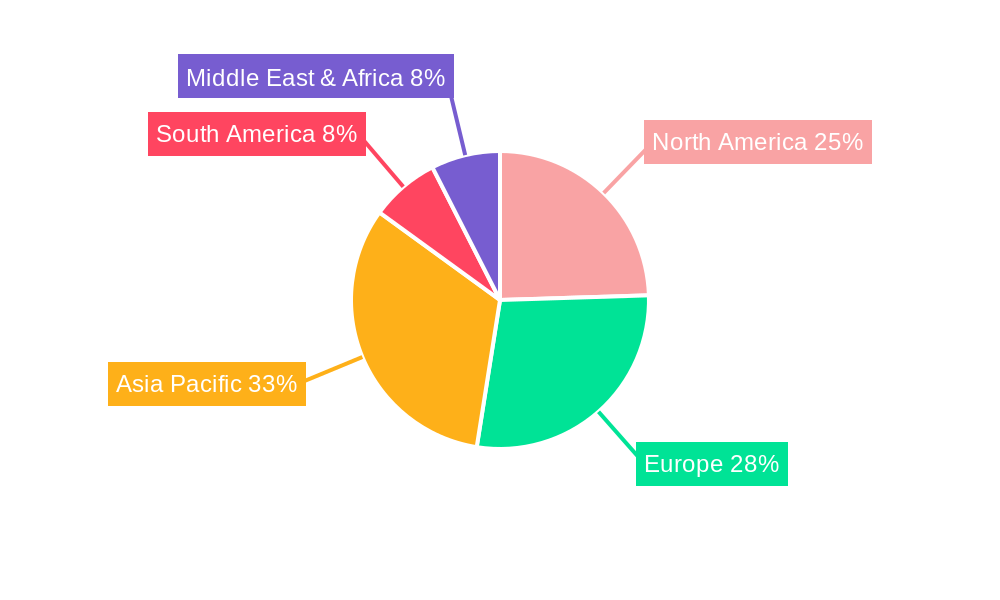
Aluminum Trays Regional Market Share
Geographic Coverage of Aluminum Trays
Aluminum Trays REPORT HIGHLIGHTS
| Aspects | Details |
|---|---|
| Study Period | 2020-2034 |
| Base Year | 2025 |
| Estimated Year | 2026 |
| Forecast Period | 2026-2034 |
| Historical Period | 2020-2025 |
| Growth Rate | CAGR of 5.2% from 2020-2034 |
| Segmentation |
|
Table of Contents
- 1. Introduction
- 1.1. Research Scope
- 1.2. Market Segmentation
- 1.3. Research Methodology
- 1.4. Definitions and Assumptions
- 2. Executive Summary
- 2.1. Introduction
- 3. Market Dynamics
- 3.1. Introduction
- 3.2. Market Drivers
- 3.3. Market Restrains
- 3.4. Market Trends
- 4. Market Factor Analysis
- 4.1. Porters Five Forces
- 4.2. Supply/Value Chain
- 4.3. PESTEL analysis
- 4.4. Market Entropy
- 4.5. Patent/Trademark Analysis
- 5. Global Aluminum Trays Analysis, Insights and Forecast, 2020-2032
- 5.1. Market Analysis, Insights and Forecast - by Application
- 5.1.1. Medical
- 5.1.2. Food and Beverages
- 5.1.3. Automotive
- 5.2. Market Analysis, Insights and Forecast - by Types
- 5.2.1. Disposable Aluminum Trays
- 5.2.2. Standard Aluminum Trays
- 5.2.3. Aluminum Sterilized Trays
- 5.3. Market Analysis, Insights and Forecast - by Region
- 5.3.1. North America
- 5.3.2. South America
- 5.3.3. Europe
- 5.3.4. Middle East & Africa
- 5.3.5. Asia Pacific
- 5.1. Market Analysis, Insights and Forecast - by Application
- 6. North America Aluminum Trays Analysis, Insights and Forecast, 2020-2032
- 6.1. Market Analysis, Insights and Forecast - by Application
- 6.1.1. Medical
- 6.1.2. Food and Beverages
- 6.1.3. Automotive
- 6.2. Market Analysis, Insights and Forecast - by Types
- 6.2.1. Disposable Aluminum Trays
- 6.2.2. Standard Aluminum Trays
- 6.2.3. Aluminum Sterilized Trays
- 6.1. Market Analysis, Insights and Forecast - by Application
- 7. South America Aluminum Trays Analysis, Insights and Forecast, 2020-2032
- 7.1. Market Analysis, Insights and Forecast - by Application
- 7.1.1. Medical
- 7.1.2. Food and Beverages
- 7.1.3. Automotive
- 7.2. Market Analysis, Insights and Forecast - by Types
- 7.2.1. Disposable Aluminum Trays
- 7.2.2. Standard Aluminum Trays
- 7.2.3. Aluminum Sterilized Trays
- 7.1. Market Analysis, Insights and Forecast - by Application
- 8. Europe Aluminum Trays Analysis, Insights and Forecast, 2020-2032
- 8.1. Market Analysis, Insights and Forecast - by Application
- 8.1.1. Medical
- 8.1.2. Food and Beverages
- 8.1.3. Automotive
- 8.2. Market Analysis, Insights and Forecast - by Types
- 8.2.1. Disposable Aluminum Trays
- 8.2.2. Standard Aluminum Trays
- 8.2.3. Aluminum Sterilized Trays
- 8.1. Market Analysis, Insights and Forecast - by Application
- 9. Middle East & Africa Aluminum Trays Analysis, Insights and Forecast, 2020-2032
- 9.1. Market Analysis, Insights and Forecast - by Application
- 9.1.1. Medical
- 9.1.2. Food and Beverages
- 9.1.3. Automotive
- 9.2. Market Analysis, Insights and Forecast - by Types
- 9.2.1. Disposable Aluminum Trays
- 9.2.2. Standard Aluminum Trays
- 9.2.3. Aluminum Sterilized Trays
- 9.1. Market Analysis, Insights and Forecast - by Application
- 10. Asia Pacific Aluminum Trays Analysis, Insights and Forecast, 2020-2032
- 10.1. Market Analysis, Insights and Forecast - by Application
- 10.1.1. Medical
- 10.1.2. Food and Beverages
- 10.1.3. Automotive
- 10.2. Market Analysis, Insights and Forecast - by Types
- 10.2.1. Disposable Aluminum Trays
- 10.2.2. Standard Aluminum Trays
- 10.2.3. Aluminum Sterilized Trays
- 10.1. Market Analysis, Insights and Forecast - by Application
- 11. Competitive Analysis
- 11.1. Global Market Share Analysis 2025
- 11.2. Company Profiles
- 11.2.1 Envases Del Plata
- 11.2.1.1. Overview
- 11.2.1.2. Products
- 11.2.1.3. SWOT Analysis
- 11.2.1.4. Recent Developments
- 11.2.1.5. Financials (Based on Availability)
- 11.2.2 Formacia
- 11.2.2.1. Overview
- 11.2.2.2. Products
- 11.2.2.3. SWOT Analysis
- 11.2.2.4. Recent Developments
- 11.2.2.5. Financials (Based on Availability)
- 11.2.3 Durable Packaging
- 11.2.3.1. Overview
- 11.2.3.2. Products
- 11.2.3.3. SWOT Analysis
- 11.2.3.4. Recent Developments
- 11.2.3.5. Financials (Based on Availability)
- 11.2.4 Nicholl Food Packaging
- 11.2.4.1. Overview
- 11.2.4.2. Products
- 11.2.4.3. SWOT Analysis
- 11.2.4.4. Recent Developments
- 11.2.4.5. Financials (Based on Availability)
- 11.2.5 Artekno Oy
- 11.2.5.1. Overview
- 11.2.5.2. Products
- 11.2.5.3. SWOT Analysis
- 11.2.5.4. Recent Developments
- 11.2.5.5. Financials (Based on Availability)
- 11.2.6 Wyda Packaging (Pty)
- 11.2.6.1. Overview
- 11.2.6.2. Products
- 11.2.6.3. SWOT Analysis
- 11.2.6.4. Recent Developments
- 11.2.6.5. Financials (Based on Availability)
- 11.2.7 Alufoil Products
- 11.2.7.1. Overview
- 11.2.7.2. Products
- 11.2.7.3. SWOT Analysis
- 11.2.7.4. Recent Developments
- 11.2.7.5. Financials (Based on Availability)
- 11.2.8 Confoil
- 11.2.8.1. Overview
- 11.2.8.2. Products
- 11.2.8.3. SWOT Analysis
- 11.2.8.4. Recent Developments
- 11.2.8.5. Financials (Based on Availability)
- 11.2.1 Envases Del Plata
List of Figures
- Figure 1: Global Aluminum Trays Revenue Breakdown (undefined, %) by Region 2025 & 2033
- Figure 2: Global Aluminum Trays Volume Breakdown (K, %) by Region 2025 & 2033
- Figure 3: North America Aluminum Trays Revenue (undefined), by Application 2025 & 2033
- Figure 4: North America Aluminum Trays Volume (K), by Application 2025 & 2033
- Figure 5: North America Aluminum Trays Revenue Share (%), by Application 2025 & 2033
- Figure 6: North America Aluminum Trays Volume Share (%), by Application 2025 & 2033
- Figure 7: North America Aluminum Trays Revenue (undefined), by Types 2025 & 2033
- Figure 8: North America Aluminum Trays Volume (K), by Types 2025 & 2033
- Figure 9: North America Aluminum Trays Revenue Share (%), by Types 2025 & 2033
- Figure 10: North America Aluminum Trays Volume Share (%), by Types 2025 & 2033
- Figure 11: North America Aluminum Trays Revenue (undefined), by Country 2025 & 2033
- Figure 12: North America Aluminum Trays Volume (K), by Country 2025 & 2033
- Figure 13: North America Aluminum Trays Revenue Share (%), by Country 2025 & 2033
- Figure 14: North America Aluminum Trays Volume Share (%), by Country 2025 & 2033
- Figure 15: South America Aluminum Trays Revenue (undefined), by Application 2025 & 2033
- Figure 16: South America Aluminum Trays Volume (K), by Application 2025 & 2033
- Figure 17: South America Aluminum Trays Revenue Share (%), by Application 2025 & 2033
- Figure 18: South America Aluminum Trays Volume Share (%), by Application 2025 & 2033
- Figure 19: South America Aluminum Trays Revenue (undefined), by Types 2025 & 2033
- Figure 20: South America Aluminum Trays Volume (K), by Types 2025 & 2033
- Figure 21: South America Aluminum Trays Revenue Share (%), by Types 2025 & 2033
- Figure 22: South America Aluminum Trays Volume Share (%), by Types 2025 & 2033
- Figure 23: South America Aluminum Trays Revenue (undefined), by Country 2025 & 2033
- Figure 24: South America Aluminum Trays Volume (K), by Country 2025 & 2033
- Figure 25: South America Aluminum Trays Revenue Share (%), by Country 2025 & 2033
- Figure 26: South America Aluminum Trays Volume Share (%), by Country 2025 & 2033
- Figure 27: Europe Aluminum Trays Revenue (undefined), by Application 2025 & 2033
- Figure 28: Europe Aluminum Trays Volume (K), by Application 2025 & 2033
- Figure 29: Europe Aluminum Trays Revenue Share (%), by Application 2025 & 2033
- Figure 30: Europe Aluminum Trays Volume Share (%), by Application 2025 & 2033
- Figure 31: Europe Aluminum Trays Revenue (undefined), by Types 2025 & 2033
- Figure 32: Europe Aluminum Trays Volume (K), by Types 2025 & 2033
- Figure 33: Europe Aluminum Trays Revenue Share (%), by Types 2025 & 2033
- Figure 34: Europe Aluminum Trays Volume Share (%), by Types 2025 & 2033
- Figure 35: Europe Aluminum Trays Revenue (undefined), by Country 2025 & 2033
- Figure 36: Europe Aluminum Trays Volume (K), by Country 2025 & 2033
- Figure 37: Europe Aluminum Trays Revenue Share (%), by Country 2025 & 2033
- Figure 38: Europe Aluminum Trays Volume Share (%), by Country 2025 & 2033
- Figure 39: Middle East & Africa Aluminum Trays Revenue (undefined), by Application 2025 & 2033
- Figure 40: Middle East & Africa Aluminum Trays Volume (K), by Application 2025 & 2033
- Figure 41: Middle East & Africa Aluminum Trays Revenue Share (%), by Application 2025 & 2033
- Figure 42: Middle East & Africa Aluminum Trays Volume Share (%), by Application 2025 & 2033
- Figure 43: Middle East & Africa Aluminum Trays Revenue (undefined), by Types 2025 & 2033
- Figure 44: Middle East & Africa Aluminum Trays Volume (K), by Types 2025 & 2033
- Figure 45: Middle East & Africa Aluminum Trays Revenue Share (%), by Types 2025 & 2033
- Figure 46: Middle East & Africa Aluminum Trays Volume Share (%), by Types 2025 & 2033
- Figure 47: Middle East & Africa Aluminum Trays Revenue (undefined), by Country 2025 & 2033
- Figure 48: Middle East & Africa Aluminum Trays Volume (K), by Country 2025 & 2033
- Figure 49: Middle East & Africa Aluminum Trays Revenue Share (%), by Country 2025 & 2033
- Figure 50: Middle East & Africa Aluminum Trays Volume Share (%), by Country 2025 & 2033
- Figure 51: Asia Pacific Aluminum Trays Revenue (undefined), by Application 2025 & 2033
- Figure 52: Asia Pacific Aluminum Trays Volume (K), by Application 2025 & 2033
- Figure 53: Asia Pacific Aluminum Trays Revenue Share (%), by Application 2025 & 2033
- Figure 54: Asia Pacific Aluminum Trays Volume Share (%), by Application 2025 & 2033
- Figure 55: Asia Pacific Aluminum Trays Revenue (undefined), by Types 2025 & 2033
- Figure 56: Asia Pacific Aluminum Trays Volume (K), by Types 2025 & 2033
- Figure 57: Asia Pacific Aluminum Trays Revenue Share (%), by Types 2025 & 2033
- Figure 58: Asia Pacific Aluminum Trays Volume Share (%), by Types 2025 & 2033
- Figure 59: Asia Pacific Aluminum Trays Revenue (undefined), by Country 2025 & 2033
- Figure 60: Asia Pacific Aluminum Trays Volume (K), by Country 2025 & 2033
- Figure 61: Asia Pacific Aluminum Trays Revenue Share (%), by Country 2025 & 2033
- Figure 62: Asia Pacific Aluminum Trays Volume Share (%), by Country 2025 & 2033
List of Tables
- Table 1: Global Aluminum Trays Revenue undefined Forecast, by Application 2020 & 2033
- Table 2: Global Aluminum Trays Volume K Forecast, by Application 2020 & 2033
- Table 3: Global Aluminum Trays Revenue undefined Forecast, by Types 2020 & 2033
- Table 4: Global Aluminum Trays Volume K Forecast, by Types 2020 & 2033
- Table 5: Global Aluminum Trays Revenue undefined Forecast, by Region 2020 & 2033
- Table 6: Global Aluminum Trays Volume K Forecast, by Region 2020 & 2033
- Table 7: Global Aluminum Trays Revenue undefined Forecast, by Application 2020 & 2033
- Table 8: Global Aluminum Trays Volume K Forecast, by Application 2020 & 2033
- Table 9: Global Aluminum Trays Revenue undefined Forecast, by Types 2020 & 2033
- Table 10: Global Aluminum Trays Volume K Forecast, by Types 2020 & 2033
- Table 11: Global Aluminum Trays Revenue undefined Forecast, by Country 2020 & 2033
- Table 12: Global Aluminum Trays Volume K Forecast, by Country 2020 & 2033
- Table 13: United States Aluminum Trays Revenue (undefined) Forecast, by Application 2020 & 2033
- Table 14: United States Aluminum Trays Volume (K) Forecast, by Application 2020 & 2033
- Table 15: Canada Aluminum Trays Revenue (undefined) Forecast, by Application 2020 & 2033
- Table 16: Canada Aluminum Trays Volume (K) Forecast, by Application 2020 & 2033
- Table 17: Mexico Aluminum Trays Revenue (undefined) Forecast, by Application 2020 & 2033
- Table 18: Mexico Aluminum Trays Volume (K) Forecast, by Application 2020 & 2033
- Table 19: Global Aluminum Trays Revenue undefined Forecast, by Application 2020 & 2033
- Table 20: Global Aluminum Trays Volume K Forecast, by Application 2020 & 2033
- Table 21: Global Aluminum Trays Revenue undefined Forecast, by Types 2020 & 2033
- Table 22: Global Aluminum Trays Volume K Forecast, by Types 2020 & 2033
- Table 23: Global Aluminum Trays Revenue undefined Forecast, by Country 2020 & 2033
- Table 24: Global Aluminum Trays Volume K Forecast, by Country 2020 & 2033
- Table 25: Brazil Aluminum Trays Revenue (undefined) Forecast, by Application 2020 & 2033
- Table 26: Brazil Aluminum Trays Volume (K) Forecast, by Application 2020 & 2033
- Table 27: Argentina Aluminum Trays Revenue (undefined) Forecast, by Application 2020 & 2033
- Table 28: Argentina Aluminum Trays Volume (K) Forecast, by Application 2020 & 2033
- Table 29: Rest of South America Aluminum Trays Revenue (undefined) Forecast, by Application 2020 & 2033
- Table 30: Rest of South America Aluminum Trays Volume (K) Forecast, by Application 2020 & 2033
- Table 31: Global Aluminum Trays Revenue undefined Forecast, by Application 2020 & 2033
- Table 32: Global Aluminum Trays Volume K Forecast, by Application 2020 & 2033
- Table 33: Global Aluminum Trays Revenue undefined Forecast, by Types 2020 & 2033
- Table 34: Global Aluminum Trays Volume K Forecast, by Types 2020 & 2033
- Table 35: Global Aluminum Trays Revenue undefined Forecast, by Country 2020 & 2033
- Table 36: Global Aluminum Trays Volume K Forecast, by Country 2020 & 2033
- Table 37: United Kingdom Aluminum Trays Revenue (undefined) Forecast, by Application 2020 & 2033
- Table 38: United Kingdom Aluminum Trays Volume (K) Forecast, by Application 2020 & 2033
- Table 39: Germany Aluminum Trays Revenue (undefined) Forecast, by Application 2020 & 2033
- Table 40: Germany Aluminum Trays Volume (K) Forecast, by Application 2020 & 2033
- Table 41: France Aluminum Trays Revenue (undefined) Forecast, by Application 2020 & 2033
- Table 42: France Aluminum Trays Volume (K) Forecast, by Application 2020 & 2033
- Table 43: Italy Aluminum Trays Revenue (undefined) Forecast, by Application 2020 & 2033
- Table 44: Italy Aluminum Trays Volume (K) Forecast, by Application 2020 & 2033
- Table 45: Spain Aluminum Trays Revenue (undefined) Forecast, by Application 2020 & 2033
- Table 46: Spain Aluminum Trays Volume (K) Forecast, by Application 2020 & 2033
- Table 47: Russia Aluminum Trays Revenue (undefined) Forecast, by Application 2020 & 2033
- Table 48: Russia Aluminum Trays Volume (K) Forecast, by Application 2020 & 2033
- Table 49: Benelux Aluminum Trays Revenue (undefined) Forecast, by Application 2020 & 2033
- Table 50: Benelux Aluminum Trays Volume (K) Forecast, by Application 2020 & 2033
- Table 51: Nordics Aluminum Trays Revenue (undefined) Forecast, by Application 2020 & 2033
- Table 52: Nordics Aluminum Trays Volume (K) Forecast, by Application 2020 & 2033
- Table 53: Rest of Europe Aluminum Trays Revenue (undefined) Forecast, by Application 2020 & 2033
- Table 54: Rest of Europe Aluminum Trays Volume (K) Forecast, by Application 2020 & 2033
- Table 55: Global Aluminum Trays Revenue undefined Forecast, by Application 2020 & 2033
- Table 56: Global Aluminum Trays Volume K Forecast, by Application 2020 & 2033
- Table 57: Global Aluminum Trays Revenue undefined Forecast, by Types 2020 & 2033
- Table 58: Global Aluminum Trays Volume K Forecast, by Types 2020 & 2033
- Table 59: Global Aluminum Trays Revenue undefined Forecast, by Country 2020 & 2033
- Table 60: Global Aluminum Trays Volume K Forecast, by Country 2020 & 2033
- Table 61: Turkey Aluminum Trays Revenue (undefined) Forecast, by Application 2020 & 2033
- Table 62: Turkey Aluminum Trays Volume (K) Forecast, by Application 2020 & 2033
- Table 63: Israel Aluminum Trays Revenue (undefined) Forecast, by Application 2020 & 2033
- Table 64: Israel Aluminum Trays Volume (K) Forecast, by Application 2020 & 2033
- Table 65: GCC Aluminum Trays Revenue (undefined) Forecast, by Application 2020 & 2033
- Table 66: GCC Aluminum Trays Volume (K) Forecast, by Application 2020 & 2033
- Table 67: North Africa Aluminum Trays Revenue (undefined) Forecast, by Application 2020 & 2033
- Table 68: North Africa Aluminum Trays Volume (K) Forecast, by Application 2020 & 2033
- Table 69: South Africa Aluminum Trays Revenue (undefined) Forecast, by Application 2020 & 2033
- Table 70: South Africa Aluminum Trays Volume (K) Forecast, by Application 2020 & 2033
- Table 71: Rest of Middle East & Africa Aluminum Trays Revenue (undefined) Forecast, by Application 2020 & 2033
- Table 72: Rest of Middle East & Africa Aluminum Trays Volume (K) Forecast, by Application 2020 & 2033
- Table 73: Global Aluminum Trays Revenue undefined Forecast, by Application 2020 & 2033
- Table 74: Global Aluminum Trays Volume K Forecast, by Application 2020 & 2033
- Table 75: Global Aluminum Trays Revenue undefined Forecast, by Types 2020 & 2033
- Table 76: Global Aluminum Trays Volume K Forecast, by Types 2020 & 2033
- Table 77: Global Aluminum Trays Revenue undefined Forecast, by Country 2020 & 2033
- Table 78: Global Aluminum Trays Volume K Forecast, by Country 2020 & 2033
- Table 79: China Aluminum Trays Revenue (undefined) Forecast, by Application 2020 & 2033
- Table 80: China Aluminum Trays Volume (K) Forecast, by Application 2020 & 2033
- Table 81: India Aluminum Trays Revenue (undefined) Forecast, by Application 2020 & 2033
- Table 82: India Aluminum Trays Volume (K) Forecast, by Application 2020 & 2033
- Table 83: Japan Aluminum Trays Revenue (undefined) Forecast, by Application 2020 & 2033
- Table 84: Japan Aluminum Trays Volume (K) Forecast, by Application 2020 & 2033
- Table 85: South Korea Aluminum Trays Revenue (undefined) Forecast, by Application 2020 & 2033
- Table 86: South Korea Aluminum Trays Volume (K) Forecast, by Application 2020 & 2033
- Table 87: ASEAN Aluminum Trays Revenue (undefined) Forecast, by Application 2020 & 2033
- Table 88: ASEAN Aluminum Trays Volume (K) Forecast, by Application 2020 & 2033
- Table 89: Oceania Aluminum Trays Revenue (undefined) Forecast, by Application 2020 & 2033
- Table 90: Oceania Aluminum Trays Volume (K) Forecast, by Application 2020 & 2033
- Table 91: Rest of Asia Pacific Aluminum Trays Revenue (undefined) Forecast, by Application 2020 & 2033
- Table 92: Rest of Asia Pacific Aluminum Trays Volume (K) Forecast, by Application 2020 & 2033
Frequently Asked Questions
1. What is the projected Compound Annual Growth Rate (CAGR) of the Aluminum Trays?
The projected CAGR is approximately 5.2%.
2. Which companies are prominent players in the Aluminum Trays?
Key companies in the market include Envases Del Plata, Formacia, Durable Packaging, Nicholl Food Packaging, Artekno Oy, Wyda Packaging (Pty), Alufoil Products, Confoil.
3. What are the main segments of the Aluminum Trays?
The market segments include Application, Types.
4. Can you provide details about the market size?
The market size is estimated to be USD XXX N/A as of 2022.
5. What are some drivers contributing to market growth?
N/A
6. What are the notable trends driving market growth?
N/A
7. Are there any restraints impacting market growth?
N/A
8. Can you provide examples of recent developments in the market?
N/A
9. What pricing options are available for accessing the report?
Pricing options include single-user, multi-user, and enterprise licenses priced at USD 3350.00, USD 5025.00, and USD 6700.00 respectively.
10. Is the market size provided in terms of value or volume?
The market size is provided in terms of value, measured in N/A and volume, measured in K.
11. Are there any specific market keywords associated with the report?
Yes, the market keyword associated with the report is "Aluminum Trays," which aids in identifying and referencing the specific market segment covered.
12. How do I determine which pricing option suits my needs best?
The pricing options vary based on user requirements and access needs. Individual users may opt for single-user licenses, while businesses requiring broader access may choose multi-user or enterprise licenses for cost-effective access to the report.
13. Are there any additional resources or data provided in the Aluminum Trays report?
While the report offers comprehensive insights, it's advisable to review the specific contents or supplementary materials provided to ascertain if additional resources or data are available.
14. How can I stay updated on further developments or reports in the Aluminum Trays?
To stay informed about further developments, trends, and reports in the Aluminum Trays, consider subscribing to industry newsletters, following relevant companies and organizations, or regularly checking reputable industry news sources and publications.
Methodology
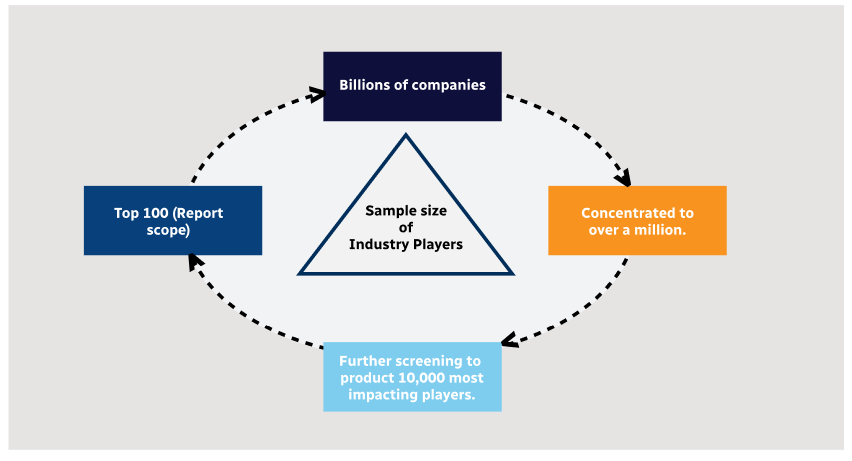
Step 1 - Identification of Relevant Samples Size from Population Database

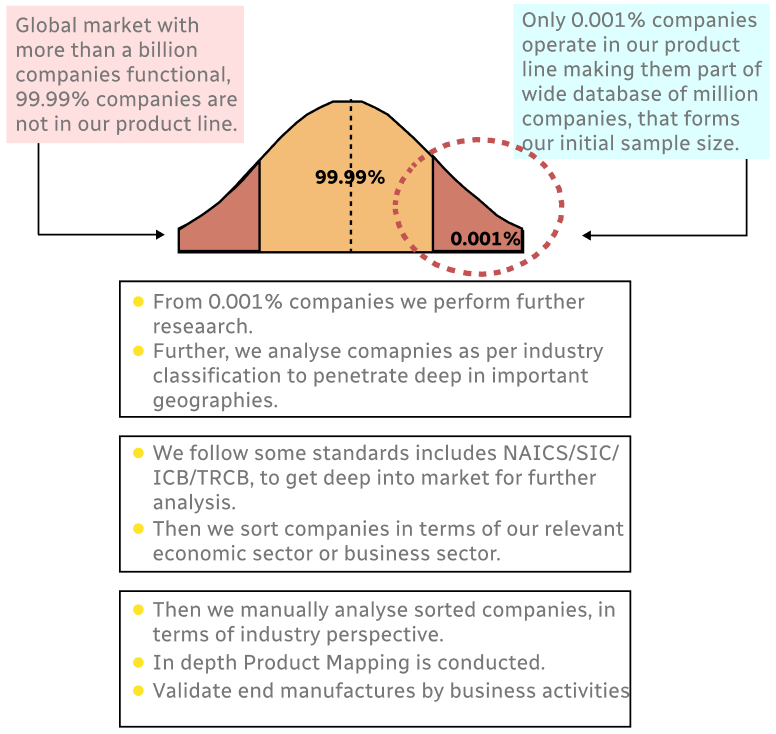
Step 2 - Approaches for Defining Global Market Size (Value, Volume* & Price*)
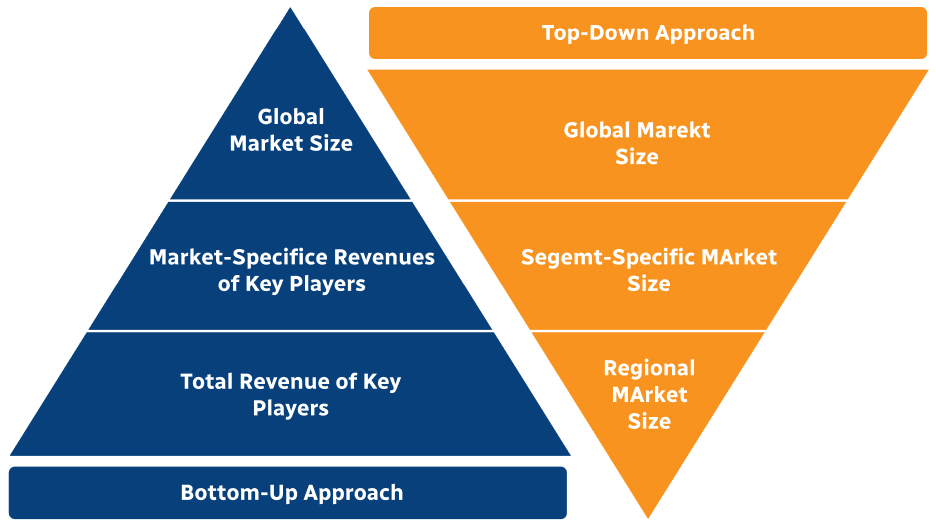
Note*: In applicable scenarios
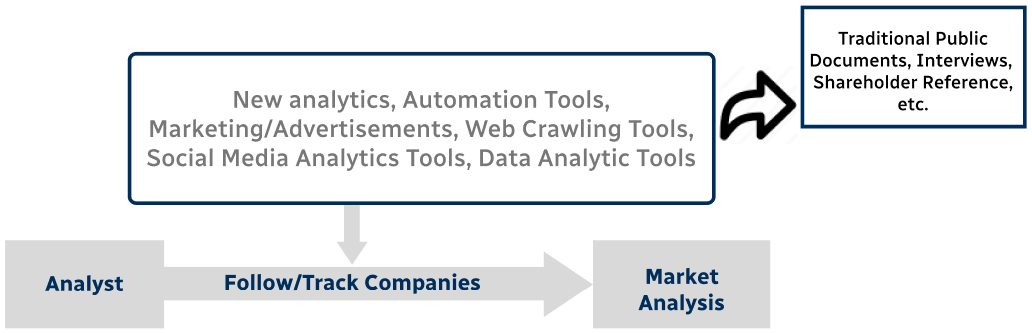
Step 3 - Data Sources
Primary Research
- Web Analytics
- Survey Reports
- Research Institute
- Latest Research Reports
- Opinion Leaders
Secondary Research
- Annual Reports
- White Paper
- Latest Press Release
- Industry Association
- Paid Database
- Investor Presentations
Step 4 - Data Triangulation
Involves using different sources of information in order to increase the validity of a study
These sources are likely to be stakeholders in a program - participants, other researchers, program staff, other community members, and so on.
Then we put all data in single framework & apply various statistical tools to find out the dynamic on the market.
During the analysis stage, feedback from the stakeholder groups would be compared to determine areas of agreement as well as areas of divergence