


Key Insights
The global aircraft landing lamp market is projected for substantial growth, expected to reach $1.303 million by 2025, with a Compound Annual Growth Rate (CAGR) of 5.9% from 2025 to 2033. This expansion is driven by increasing air travel demand, leading to higher aircraft production and a greater need for advanced landing lamp systems. Advancements in aviation technology, focusing on safety and operational efficiency, are also key, fostering innovation in energy-efficient LED lamps with superior illumination and extended lifespans. Key application areas include military aircraft, influenced by defense modernization and security concerns, and the growing commercial aviation sector.
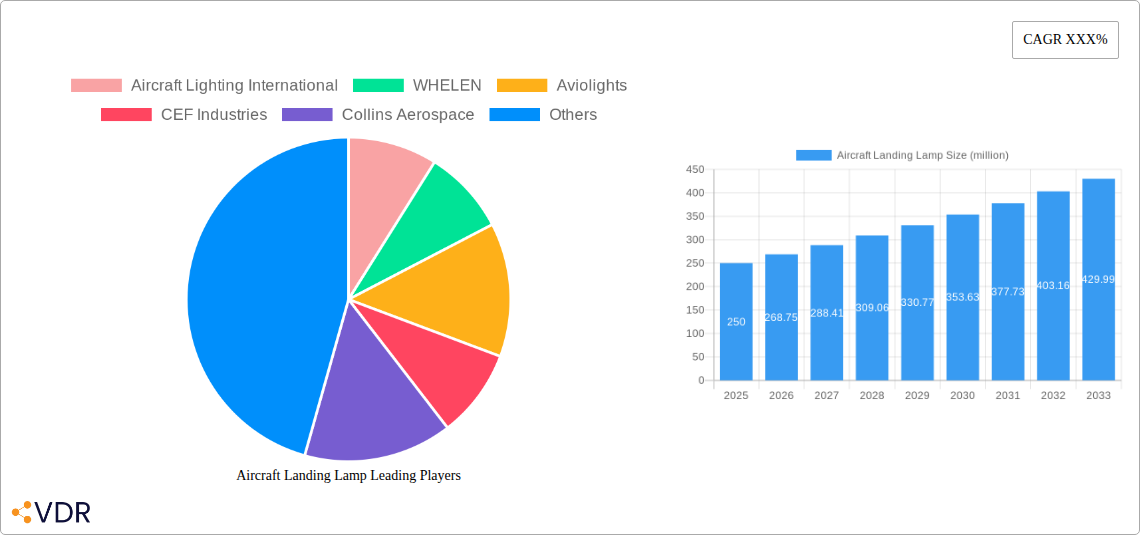
Aircraft Landing Lamp Market Size (In Million)

Market restraints include rigorous regulatory compliance and certification processes, which can extend development timelines and increase costs. High initial investment in advanced lighting technologies and volatile raw material prices also present challenges. Nevertheless, the market is adopting smart lighting solutions with diagnostic capabilities and adaptive brightness for enhanced performance and reduced maintenance. Geographically, North America and Europe are dominant due to established aviation infrastructure and R&D investments. The Asia Pacific region is a significant growth area, propelled by its expanding aviation sector and government support for aerospace manufacturing.
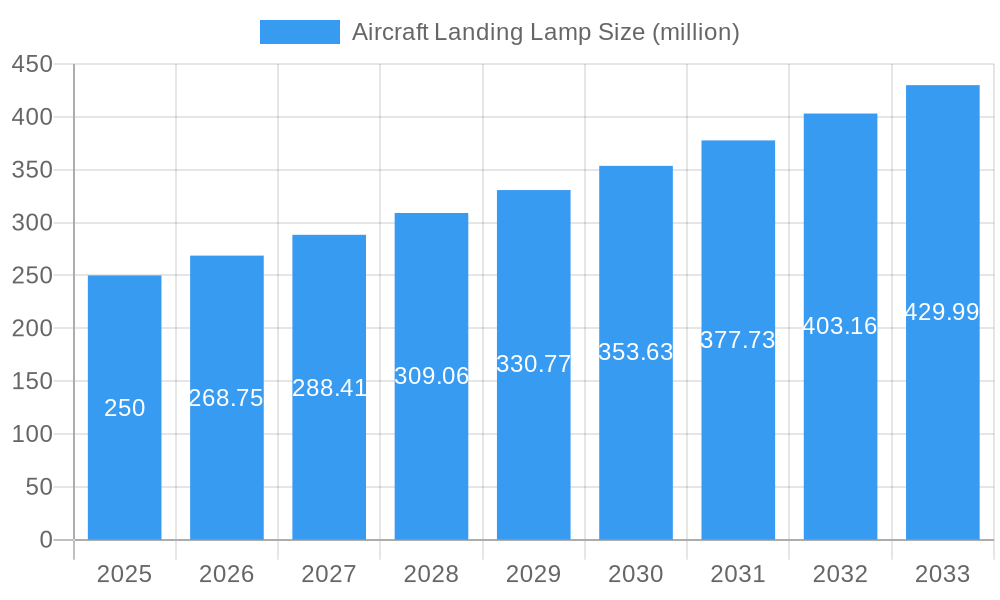
Aircraft Landing Lamp Company Market Share
Aircraft Landing Lamp Market Report: Illuminating the Future of Aviation Safety and Efficiency (2019-2033)
This comprehensive report offers an in-depth analysis of the global Aircraft Landing Lamp market, providing critical insights into market dynamics, growth trends, regional dominance, product innovation, key drivers, challenges, and emerging opportunities. Spanning the historical period of 2019-2024, with a base year of 2025 and a forecast period extending to 2033, this report is an essential resource for stakeholders seeking to navigate the evolving landscape of aviation lighting technology. We meticulously analyze parent and child markets to provide a holistic view, with all market values presented in million units.
Aircraft Landing Lamp Market Dynamics & Structure
The global Aircraft Landing Lamp market exhibits a moderately concentrated structure, with leading players investing heavily in research and development to gain a competitive edge. Technological innovation is primarily driven by the demand for enhanced safety, reduced energy consumption, and improved operational efficiency. The transition from traditional halogen lamps to advanced LED technology represents a significant innovation driver, offering superior brightness, longevity, and lower power requirements. Regulatory frameworks, particularly those set by aviation authorities like the FAA and EASA, play a crucial role in dictating performance standards, safety certifications, and material approvals, influencing product development and market entry. Competitive product substitutes are minimal in this specialized niche, with landing lamps being critical safety components. However, advancements in smart lighting systems and integrated avionics could indirectly impact future lamp designs. End-user demographics are dominated by commercial airlines and military aviation organizations, with increasing demand from the growing business jet segment. Merger and acquisition (M&A) trends are moderate, with consolidation efforts focused on acquiring specialized technology or expanding geographical reach. For instance, the M&A volume in the last two years was approximately 3 deal volumes valued at an estimated xx million units, aimed at consolidating market share and technological capabilities. Barriers to innovation include stringent safety testing protocols, long product development cycles, and the high cost of R&D for certified aviation components.
- Market Concentration: Moderate, with a few key players holding significant market share.
- Technological Innovation Drivers: Enhanced safety, energy efficiency (LED adoption), longer lifespan, and improved visibility.
- Regulatory Frameworks: Strict adherence to FAA, EASA, and other aviation authority standards for performance and safety.
- Competitive Product Substitutes: Limited, but integration with advanced avionics systems is a potential future disruptor.
- End-User Demographics: Commercial airlines, military aviation, and business jet operators are primary consumers.
- M&A Trends: Moderate, focused on technology acquisition and market consolidation.
- Innovation Barriers: Rigorous certification processes, high R&D investment, and long development timelines.
Aircraft Landing Lamp Growth Trends & Insights
The Aircraft Landing Lamp market is poised for robust growth, propelled by escalating global air traffic and the continuous modernization of aircraft fleets. The market size is projected to grow from approximately 450.23 million units in 2024 to an estimated 780.5 million units by 2033, exhibiting a Compound Annual Growth Rate (CAGR) of xx% during the forecast period. This expansion is underpinned by a consistent adoption rate of advanced lighting technologies, with LED lamps rapidly replacing conventional incandescent and halogen variants. The primary driver for this shift is the significant energy savings and extended operational life offered by LEDs, translating into substantial cost reductions for airlines. Technological disruptions, such as the development of more efficient LED chipsets, improved thermal management systems, and integrated diagnostic capabilities within landing lamps, are further enhancing performance and reliability. Consumer behavior, influenced by airlines' focus on operational efficiency and passenger safety, is increasingly favoring products that offer a lower total cost of ownership and superior performance. The market penetration of LED landing lamps, currently at around 65% in 2024, is expected to reach over 90% by 2033. Factors such as increasing demand for longer-haul flights, the continuous introduction of new aircraft models, and the retrofitting of older aircraft with modern lighting systems will contribute to this sustained growth trajectory. Furthermore, the growing emphasis on pilot visibility in challenging weather conditions and during night operations will continue to drive demand for high-performance landing lamps. The market is also seeing a rise in smart lighting solutions that can adapt to ambient light conditions, further optimizing energy consumption and pilot comfort. The anticipated growth of the aviation industry, especially in emerging economies, will also play a pivotal role in expanding the global Aircraft Landing Lamp market.
Dominant Regions, Countries, or Segments in Aircraft Landing Lamp
The global Aircraft Landing Lamp market demonstrates clear regional and segment-specific dominance, driven by a confluence of economic factors, aviation infrastructure, and regulatory landscapes. Commercial Aircraft represent the largest and most influential segment within the Application category, accounting for an estimated 70% of the total market share in 2025. This dominance is attributed to the sheer volume of commercial aircraft operations worldwide, the continuous demand for fleet modernization, and the stringent safety requirements that necessitate high-quality landing illumination. Within the Commercial Aircraft segment, the adoption of LED Lamp technology is overwhelmingly prevalent, capturing approximately 85% of this sub-segment's market in 2025, and is projected to grow significantly.
North America, particularly the United States, currently holds a leading position in the Aircraft Landing Lamp market, driven by its extensive commercial aviation network, advanced aerospace manufacturing capabilities, and significant military aviation spending. The region's robust economic policies, supportive infrastructure development for aviation, and a strong emphasis on technological innovation contribute to its market leadership. The market share for North America in 2025 is estimated at 35% of the global market. Europe follows closely, with a substantial market share of approximately 30%, driven by major aircraft manufacturers and a dense network of airlines. Asia-Pacific is emerging as a high-growth region, with countries like China and India experiencing rapid expansion in their aviation sectors, leading to increased demand for aircraft components, including landing lamps.
Key drivers of this regional dominance include:
- Economic Policies: Favorable government incentives for aerospace manufacturing and aviation expansion in key countries.
- Infrastructure: Significant investments in airport development and air traffic control systems.
- Market Share: North America and Europe leading due to established aviation industries, with Asia-Pacific showing strong growth potential.
- Growth Potential: Asia-Pacific is projected to exhibit the highest growth rate in the coming years due to expanding air travel demand.
- Technological Adoption: Rapid uptake of advanced LED technology across all segments, particularly in commercial aviation.
The Military Aircraft segment, while smaller in volume, is characterized by high-value contracts and a strong demand for specialized, robust lighting solutions designed for extreme operational conditions. The growth in this segment is often linked to defense budgets and geopolitical developments.
Aircraft Landing Lamp Product Landscape
The product landscape of Aircraft Landing Lamps is defined by a relentless pursuit of enhanced performance, durability, and efficiency. Innovations are heavily focused on the widespread adoption and refinement of LED technology. Newer products boast significantly higher lumen outputs, providing superior illumination for enhanced pilot visibility during critical landing phases, even in adverse weather. Advanced thermal management systems are integrated to ensure optimal performance and longevity of LED components, even under demanding flight conditions. Unique selling propositions include ultra-long operational lifespans, often exceeding 50,000 hours, drastically reducing maintenance cycles and associated costs. Technological advancements are also seen in the development of compact and lightweight designs, contributing to overall aircraft weight reduction and fuel efficiency. Future innovations are likely to incorporate smart features, such as integrated diagnostics for real-time performance monitoring and adaptive lighting capabilities.
Key Drivers, Barriers & Challenges in Aircraft Landing Lamp
The Aircraft Landing Lamp market is propelled by several key drivers, including the global expansion of air travel, necessitating continuous fleet expansion and modernization. The inherent safety criticality of landing lamps ensures a consistent demand, amplified by stringent aviation safety regulations worldwide that mandate reliable and high-performance lighting. The ongoing technological shift towards energy-efficient and long-lasting LED technology is a significant driver, offering reduced operational costs for airlines.
Key Drivers:
- Global Air Traffic Growth: Increasing passenger and cargo volumes drive aircraft production and demand for components.
- Fleet Modernization: Airlines continuously upgrade older aircraft with newer, more efficient technologies.
- Safety Regulations: Strict aviation safety standards mandate the use of certified, high-performance landing lamps.
- LED Technology Advancements: Superior efficiency, longevity, and performance of LEDs are compelling factors.
However, the market faces several barriers and challenges. The rigorous certification processes for aviation components, involving extensive testing and compliance with aviation authorities, represent a significant hurdle for new entrants and product development, taking years to complete. High research and development costs associated with designing and manufacturing aviation-grade products can also be prohibitive. Supply chain disruptions, particularly for specialized electronic components, can impact production timelines and costs. Furthermore, intense competition among established players, while driving innovation, can also put pressure on profit margins.
Key Barriers & Challenges:
- Stringent Certification Processes: Long and costly approval procedures for aviation safety components.
- High R&D Investment: Substantial capital required for innovation and product development.
- Supply Chain Volatility: Potential disruptions in the availability of specialized components.
- Intense Competition: Pressure on pricing and market share among key manufacturers.
- Economic Downturns: Global economic slowdowns can impact airline profitability and new aircraft orders.
Emerging Opportunities in Aircraft Landing Lamp
Emerging opportunities in the Aircraft Landing Lamp sector lie in the continuous evolution of LED technology, leading to more energy-efficient and brighter lighting solutions. The growing demand for lighter and more compact landing lamp designs presents an opportunity for manufacturers to develop innovative products that contribute to fuel efficiency and aerodynamic improvements. The increasing focus on smart aviation systems also opens avenues for integrating diagnostic capabilities and advanced connectivity into landing lamps, enabling real-time performance monitoring and predictive maintenance. Furthermore, the expanding business jet market and the growing demand for retrofitting older commercial aircraft with modern lighting systems represent untapped market potential. The development of specialized landing lamps for unmanned aerial vehicles (UAVs) and eVTOL (electric Vertical Take-Off and Landing) aircraft also presents a nascent but promising growth area.
Growth Accelerators in the Aircraft Landing Lamp Industry
Several growth accelerators are poised to propel the Aircraft Landing Lamp industry forward. Technological breakthroughs in solid-state lighting, such as the development of even more efficient and powerful LED chips, will continue to enhance product performance and reduce operational costs. Strategic partnerships between landing lamp manufacturers and avionics system providers can lead to integrated lighting solutions that offer enhanced functionality and seamless integration into aircraft cockpits. Furthermore, the expansion of manufacturing capabilities and distribution networks in emerging aviation markets, particularly in the Asia-Pacific region, will unlock new customer bases and drive market penetration. Government initiatives promoting aerospace manufacturing and innovation, coupled with airlines' increasing focus on sustainability and lifecycle cost reduction, will further accelerate market growth. The continuous demand for enhanced safety and pilot visibility, especially in increasingly complex air traffic environments, will remain a fundamental growth driver.
Key Players Shaping the Aircraft Landing Lamp Market
- Aircraft Lighting International
- WHELEN
- Aviolights
- CEF Industries
- Collins Aerospace
- Oxley Group
- Koito Manufacturing Co, Ltd
- InFlight Entertainment Products
- Interface Displays&Controls
- Heads Up Technologies
- Luminator
- Custom Control Concepts LLC
- Soderberg Manufacturing
- Thiesen Electronics GmbH
- AveoEngineering S.R.O
Notable Milestones in Aircraft Landing Lamp Sector
- 2019: Introduction of advanced multi-chip LED landing lamps offering unprecedented brightness and energy efficiency.
- 2020: Increased adoption of integrated diagnostic systems within landing lamps for real-time monitoring.
- 2021: Significant growth in the retrofitting market as airlines upgrade older fleets with LED technology.
- 2022: Emergence of highly durable, compact landing lamp designs for business jets and light aircraft.
- 2023: Focus on improving thermal management solutions for enhanced LED longevity in extreme conditions.
- 2024: Growing interest in smart landing lamp concepts with adaptive lighting capabilities.
- 2025 (Estimated): Continued dominance of LED technology, with further advancements in lumen output and power efficiency.
- 2026-2033 (Forecast): Expected integration of landing lamps with advanced AI-powered flight systems, potential for self-healing materials, and development of specialized lighting for eVTOLs.
In-Depth Aircraft Landing Lamp Market Outlook
The future of the Aircraft Landing Lamp market is exceptionally bright, driven by an unyielding commitment to aviation safety and operational efficiency. Growth accelerators, including continuous advancements in LED technology, will deliver lamps with superior illumination, extended lifespans, and reduced energy consumption. Strategic collaborations between manufacturers and avionics specialists will foster integrated lighting solutions, enhancing pilot situational awareness and aircraft performance. The expanding aerospace sectors in emerging economies present significant untapped markets, while the ongoing trend of fleet modernization and retrofitting will sustain demand. As air travel continues to rebound and grow, the essential nature of robust and reliable landing illumination ensures a stable and expanding market for innovative Aircraft Landing Lamps, positioning the sector for sustained growth and technological evolution throughout the forecast period and beyond.
Aircraft Landing Lamp Segmentation
-
1. Application
- 1.1. Military Aircraft
- 1.2. Commercial Aircraft
-
2. Type
- 2.1. Ordinary Lamp
- 2.2. LED Lamp
Aircraft Landing Lamp Segmentation By Geography
-
1. North America
- 1.1. United States
- 1.2. Canada
- 1.3. Mexico
-
2. South America
- 2.1. Brazil
- 2.2. Argentina
- 2.3. Rest of South America
-
3. Europe
- 3.1. United Kingdom
- 3.2. Germany
- 3.3. France
- 3.4. Italy
- 3.5. Spain
- 3.6. Russia
- 3.7. Benelux
- 3.8. Nordics
- 3.9. Rest of Europe
-
4. Middle East & Africa
- 4.1. Turkey
- 4.2. Israel
- 4.3. GCC
- 4.4. North Africa
- 4.5. South Africa
- 4.6. Rest of Middle East & Africa
-
5. Asia Pacific
- 5.1. China
- 5.2. India
- 5.3. Japan
- 5.4. South Korea
- 5.5. ASEAN
- 5.6. Oceania
- 5.7. Rest of Asia Pacific
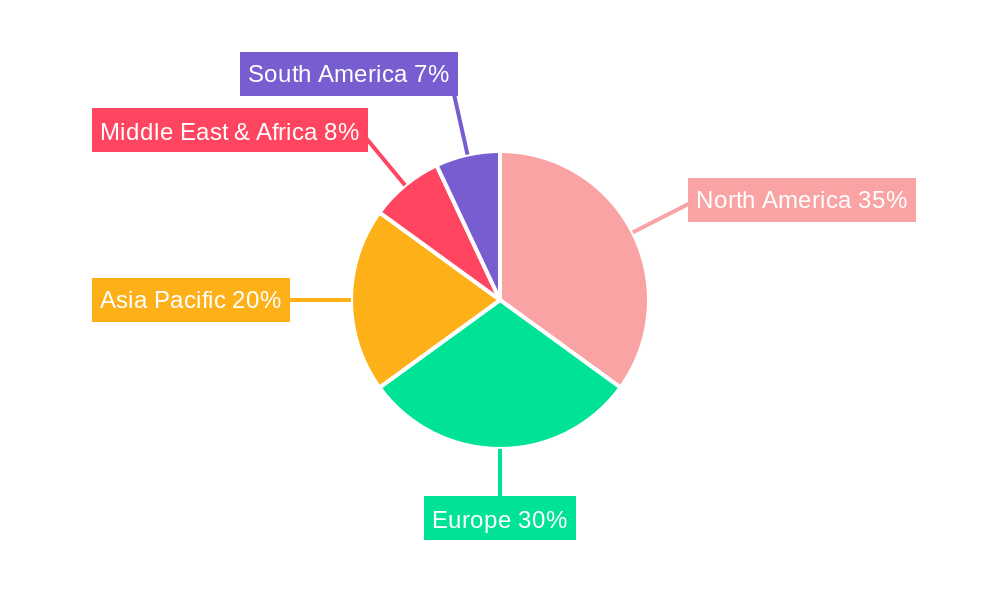
Aircraft Landing Lamp Regional Market Share
Geographic Coverage of Aircraft Landing Lamp
Aircraft Landing Lamp REPORT HIGHLIGHTS
| Aspects | Details |
|---|---|
| Study Period | 2020-2034 |
| Base Year | 2025 |
| Estimated Year | 2026 |
| Forecast Period | 2026-2034 |
| Historical Period | 2020-2025 |
| Growth Rate | CAGR of 5.9% from 2020-2034 |
| Segmentation |
|
Table of Contents
- 1. Introduction
- 1.1. Research Scope
- 1.2. Market Segmentation
- 1.3. Research Methodology
- 1.4. Definitions and Assumptions
- 2. Executive Summary
- 2.1. Introduction
- 3. Market Dynamics
- 3.1. Introduction
- 3.2. Market Drivers
- 3.3. Market Restrains
- 3.4. Market Trends
- 4. Market Factor Analysis
- 4.1. Porters Five Forces
- 4.2. Supply/Value Chain
- 4.3. PESTEL analysis
- 4.4. Market Entropy
- 4.5. Patent/Trademark Analysis
- 5. Global Aircraft Landing Lamp Analysis, Insights and Forecast, 2020-2032
- 5.1. Market Analysis, Insights and Forecast - by Application
- 5.1.1. Military Aircraft
- 5.1.2. Commercial Aircraft
- 5.2. Market Analysis, Insights and Forecast - by Type
- 5.2.1. Ordinary Lamp
- 5.2.2. LED Lamp
- 5.3. Market Analysis, Insights and Forecast - by Region
- 5.3.1. North America
- 5.3.2. South America
- 5.3.3. Europe
- 5.3.4. Middle East & Africa
- 5.3.5. Asia Pacific
- 5.1. Market Analysis, Insights and Forecast - by Application
- 6. North America Aircraft Landing Lamp Analysis, Insights and Forecast, 2020-2032
- 6.1. Market Analysis, Insights and Forecast - by Application
- 6.1.1. Military Aircraft
- 6.1.2. Commercial Aircraft
- 6.2. Market Analysis, Insights and Forecast - by Type
- 6.2.1. Ordinary Lamp
- 6.2.2. LED Lamp
- 6.1. Market Analysis, Insights and Forecast - by Application
- 7. South America Aircraft Landing Lamp Analysis, Insights and Forecast, 2020-2032
- 7.1. Market Analysis, Insights and Forecast - by Application
- 7.1.1. Military Aircraft
- 7.1.2. Commercial Aircraft
- 7.2. Market Analysis, Insights and Forecast - by Type
- 7.2.1. Ordinary Lamp
- 7.2.2. LED Lamp
- 7.1. Market Analysis, Insights and Forecast - by Application
- 8. Europe Aircraft Landing Lamp Analysis, Insights and Forecast, 2020-2032
- 8.1. Market Analysis, Insights and Forecast - by Application
- 8.1.1. Military Aircraft
- 8.1.2. Commercial Aircraft
- 8.2. Market Analysis, Insights and Forecast - by Type
- 8.2.1. Ordinary Lamp
- 8.2.2. LED Lamp
- 8.1. Market Analysis, Insights and Forecast - by Application
- 9. Middle East & Africa Aircraft Landing Lamp Analysis, Insights and Forecast, 2020-2032
- 9.1. Market Analysis, Insights and Forecast - by Application
- 9.1.1. Military Aircraft
- 9.1.2. Commercial Aircraft
- 9.2. Market Analysis, Insights and Forecast - by Type
- 9.2.1. Ordinary Lamp
- 9.2.2. LED Lamp
- 9.1. Market Analysis, Insights and Forecast - by Application
- 10. Asia Pacific Aircraft Landing Lamp Analysis, Insights and Forecast, 2020-2032
- 10.1. Market Analysis, Insights and Forecast - by Application
- 10.1.1. Military Aircraft
- 10.1.2. Commercial Aircraft
- 10.2. Market Analysis, Insights and Forecast - by Type
- 10.2.1. Ordinary Lamp
- 10.2.2. LED Lamp
- 10.1. Market Analysis, Insights and Forecast - by Application
- 11. Competitive Analysis
- 11.1. Global Market Share Analysis 2025
- 11.2. Company Profiles
- 11.2.1 Aircraft Lighting International
- 11.2.1.1. Overview
- 11.2.1.2. Products
- 11.2.1.3. SWOT Analysis
- 11.2.1.4. Recent Developments
- 11.2.1.5. Financials (Based on Availability)
- 11.2.2 WHELEN
- 11.2.2.1. Overview
- 11.2.2.2. Products
- 11.2.2.3. SWOT Analysis
- 11.2.2.4. Recent Developments
- 11.2.2.5. Financials (Based on Availability)
- 11.2.3 Aviolights
- 11.2.3.1. Overview
- 11.2.3.2. Products
- 11.2.3.3. SWOT Analysis
- 11.2.3.4. Recent Developments
- 11.2.3.5. Financials (Based on Availability)
- 11.2.4 CEF Industries
- 11.2.4.1. Overview
- 11.2.4.2. Products
- 11.2.4.3. SWOT Analysis
- 11.2.4.4. Recent Developments
- 11.2.4.5. Financials (Based on Availability)
- 11.2.5 Collins Aerospace
- 11.2.5.1. Overview
- 11.2.5.2. Products
- 11.2.5.3. SWOT Analysis
- 11.2.5.4. Recent Developments
- 11.2.5.5. Financials (Based on Availability)
- 11.2.6 Oxley Group
- 11.2.6.1. Overview
- 11.2.6.2. Products
- 11.2.6.3. SWOT Analysis
- 11.2.6.4. Recent Developments
- 11.2.6.5. Financials (Based on Availability)
- 11.2.7 Koito Manufacturing CoLtd
- 11.2.7.1. Overview
- 11.2.7.2. Products
- 11.2.7.3. SWOT Analysis
- 11.2.7.4. Recent Developments
- 11.2.7.5. Financials (Based on Availability)
- 11.2.8 InFlight Entertainment Products
- 11.2.8.1. Overview
- 11.2.8.2. Products
- 11.2.8.3. SWOT Analysis
- 11.2.8.4. Recent Developments
- 11.2.8.5. Financials (Based on Availability)
- 11.2.9 Interface Displays&Controls
- 11.2.9.1. Overview
- 11.2.9.2. Products
- 11.2.9.3. SWOT Analysis
- 11.2.9.4. Recent Developments
- 11.2.9.5. Financials (Based on Availability)
- 11.2.10 Heads Up Technologies
- 11.2.10.1. Overview
- 11.2.10.2. Products
- 11.2.10.3. SWOT Analysis
- 11.2.10.4. Recent Developments
- 11.2.10.5. Financials (Based on Availability)
- 11.2.11 Luminator
- 11.2.11.1. Overview
- 11.2.11.2. Products
- 11.2.11.3. SWOT Analysis
- 11.2.11.4. Recent Developments
- 11.2.11.5. Financials (Based on Availability)
- 11.2.12 Custom Control Concepts LLC
- 11.2.12.1. Overview
- 11.2.12.2. Products
- 11.2.12.3. SWOT Analysis
- 11.2.12.4. Recent Developments
- 11.2.12.5. Financials (Based on Availability)
- 11.2.13 Soderberg Manufacturing
- 11.2.13.1. Overview
- 11.2.13.2. Products
- 11.2.13.3. SWOT Analysis
- 11.2.13.4. Recent Developments
- 11.2.13.5. Financials (Based on Availability)
- 11.2.14 Thiesen Electronics GmbH
- 11.2.14.1. Overview
- 11.2.14.2. Products
- 11.2.14.3. SWOT Analysis
- 11.2.14.4. Recent Developments
- 11.2.14.5. Financials (Based on Availability)
- 11.2.15 AveoEngineering S.R.O
- 11.2.15.1. Overview
- 11.2.15.2. Products
- 11.2.15.3. SWOT Analysis
- 11.2.15.4. Recent Developments
- 11.2.15.5. Financials (Based on Availability)
- 11.2.1 Aircraft Lighting International
List of Figures
- Figure 1: Global Aircraft Landing Lamp Revenue Breakdown (million, %) by Region 2025 & 2033
- Figure 2: Global Aircraft Landing Lamp Volume Breakdown (K, %) by Region 2025 & 2033
- Figure 3: North America Aircraft Landing Lamp Revenue (million), by Application 2025 & 2033
- Figure 4: North America Aircraft Landing Lamp Volume (K), by Application 2025 & 2033
- Figure 5: North America Aircraft Landing Lamp Revenue Share (%), by Application 2025 & 2033
- Figure 6: North America Aircraft Landing Lamp Volume Share (%), by Application 2025 & 2033
- Figure 7: North America Aircraft Landing Lamp Revenue (million), by Type 2025 & 2033
- Figure 8: North America Aircraft Landing Lamp Volume (K), by Type 2025 & 2033
- Figure 9: North America Aircraft Landing Lamp Revenue Share (%), by Type 2025 & 2033
- Figure 10: North America Aircraft Landing Lamp Volume Share (%), by Type 2025 & 2033
- Figure 11: North America Aircraft Landing Lamp Revenue (million), by Country 2025 & 2033
- Figure 12: North America Aircraft Landing Lamp Volume (K), by Country 2025 & 2033
- Figure 13: North America Aircraft Landing Lamp Revenue Share (%), by Country 2025 & 2033
- Figure 14: North America Aircraft Landing Lamp Volume Share (%), by Country 2025 & 2033
- Figure 15: South America Aircraft Landing Lamp Revenue (million), by Application 2025 & 2033
- Figure 16: South America Aircraft Landing Lamp Volume (K), by Application 2025 & 2033
- Figure 17: South America Aircraft Landing Lamp Revenue Share (%), by Application 2025 & 2033
- Figure 18: South America Aircraft Landing Lamp Volume Share (%), by Application 2025 & 2033
- Figure 19: South America Aircraft Landing Lamp Revenue (million), by Type 2025 & 2033
- Figure 20: South America Aircraft Landing Lamp Volume (K), by Type 2025 & 2033
- Figure 21: South America Aircraft Landing Lamp Revenue Share (%), by Type 2025 & 2033
- Figure 22: South America Aircraft Landing Lamp Volume Share (%), by Type 2025 & 2033
- Figure 23: South America Aircraft Landing Lamp Revenue (million), by Country 2025 & 2033
- Figure 24: South America Aircraft Landing Lamp Volume (K), by Country 2025 & 2033
- Figure 25: South America Aircraft Landing Lamp Revenue Share (%), by Country 2025 & 2033
- Figure 26: South America Aircraft Landing Lamp Volume Share (%), by Country 2025 & 2033
- Figure 27: Europe Aircraft Landing Lamp Revenue (million), by Application 2025 & 2033
- Figure 28: Europe Aircraft Landing Lamp Volume (K), by Application 2025 & 2033
- Figure 29: Europe Aircraft Landing Lamp Revenue Share (%), by Application 2025 & 2033
- Figure 30: Europe Aircraft Landing Lamp Volume Share (%), by Application 2025 & 2033
- Figure 31: Europe Aircraft Landing Lamp Revenue (million), by Type 2025 & 2033
- Figure 32: Europe Aircraft Landing Lamp Volume (K), by Type 2025 & 2033
- Figure 33: Europe Aircraft Landing Lamp Revenue Share (%), by Type 2025 & 2033
- Figure 34: Europe Aircraft Landing Lamp Volume Share (%), by Type 2025 & 2033
- Figure 35: Europe Aircraft Landing Lamp Revenue (million), by Country 2025 & 2033
- Figure 36: Europe Aircraft Landing Lamp Volume (K), by Country 2025 & 2033
- Figure 37: Europe Aircraft Landing Lamp Revenue Share (%), by Country 2025 & 2033
- Figure 38: Europe Aircraft Landing Lamp Volume Share (%), by Country 2025 & 2033
- Figure 39: Middle East & Africa Aircraft Landing Lamp Revenue (million), by Application 2025 & 2033
- Figure 40: Middle East & Africa Aircraft Landing Lamp Volume (K), by Application 2025 & 2033
- Figure 41: Middle East & Africa Aircraft Landing Lamp Revenue Share (%), by Application 2025 & 2033
- Figure 42: Middle East & Africa Aircraft Landing Lamp Volume Share (%), by Application 2025 & 2033
- Figure 43: Middle East & Africa Aircraft Landing Lamp Revenue (million), by Type 2025 & 2033
- Figure 44: Middle East & Africa Aircraft Landing Lamp Volume (K), by Type 2025 & 2033
- Figure 45: Middle East & Africa Aircraft Landing Lamp Revenue Share (%), by Type 2025 & 2033
- Figure 46: Middle East & Africa Aircraft Landing Lamp Volume Share (%), by Type 2025 & 2033
- Figure 47: Middle East & Africa Aircraft Landing Lamp Revenue (million), by Country 2025 & 2033
- Figure 48: Middle East & Africa Aircraft Landing Lamp Volume (K), by Country 2025 & 2033
- Figure 49: Middle East & Africa Aircraft Landing Lamp Revenue Share (%), by Country 2025 & 2033
- Figure 50: Middle East & Africa Aircraft Landing Lamp Volume Share (%), by Country 2025 & 2033
- Figure 51: Asia Pacific Aircraft Landing Lamp Revenue (million), by Application 2025 & 2033
- Figure 52: Asia Pacific Aircraft Landing Lamp Volume (K), by Application 2025 & 2033
- Figure 53: Asia Pacific Aircraft Landing Lamp Revenue Share (%), by Application 2025 & 2033
- Figure 54: Asia Pacific Aircraft Landing Lamp Volume Share (%), by Application 2025 & 2033
- Figure 55: Asia Pacific Aircraft Landing Lamp Revenue (million), by Type 2025 & 2033
- Figure 56: Asia Pacific Aircraft Landing Lamp Volume (K), by Type 2025 & 2033
- Figure 57: Asia Pacific Aircraft Landing Lamp Revenue Share (%), by Type 2025 & 2033
- Figure 58: Asia Pacific Aircraft Landing Lamp Volume Share (%), by Type 2025 & 2033
- Figure 59: Asia Pacific Aircraft Landing Lamp Revenue (million), by Country 2025 & 2033
- Figure 60: Asia Pacific Aircraft Landing Lamp Volume (K), by Country 2025 & 2033
- Figure 61: Asia Pacific Aircraft Landing Lamp Revenue Share (%), by Country 2025 & 2033
- Figure 62: Asia Pacific Aircraft Landing Lamp Volume Share (%), by Country 2025 & 2033
List of Tables
- Table 1: Global Aircraft Landing Lamp Revenue million Forecast, by Application 2020 & 2033
- Table 2: Global Aircraft Landing Lamp Volume K Forecast, by Application 2020 & 2033
- Table 3: Global Aircraft Landing Lamp Revenue million Forecast, by Type 2020 & 2033
- Table 4: Global Aircraft Landing Lamp Volume K Forecast, by Type 2020 & 2033
- Table 5: Global Aircraft Landing Lamp Revenue million Forecast, by Region 2020 & 2033
- Table 6: Global Aircraft Landing Lamp Volume K Forecast, by Region 2020 & 2033
- Table 7: Global Aircraft Landing Lamp Revenue million Forecast, by Application 2020 & 2033
- Table 8: Global Aircraft Landing Lamp Volume K Forecast, by Application 2020 & 2033
- Table 9: Global Aircraft Landing Lamp Revenue million Forecast, by Type 2020 & 2033
- Table 10: Global Aircraft Landing Lamp Volume K Forecast, by Type 2020 & 2033
- Table 11: Global Aircraft Landing Lamp Revenue million Forecast, by Country 2020 & 2033
- Table 12: Global Aircraft Landing Lamp Volume K Forecast, by Country 2020 & 2033
- Table 13: United States Aircraft Landing Lamp Revenue (million) Forecast, by Application 2020 & 2033
- Table 14: United States Aircraft Landing Lamp Volume (K) Forecast, by Application 2020 & 2033
- Table 15: Canada Aircraft Landing Lamp Revenue (million) Forecast, by Application 2020 & 2033
- Table 16: Canada Aircraft Landing Lamp Volume (K) Forecast, by Application 2020 & 2033
- Table 17: Mexico Aircraft Landing Lamp Revenue (million) Forecast, by Application 2020 & 2033
- Table 18: Mexico Aircraft Landing Lamp Volume (K) Forecast, by Application 2020 & 2033
- Table 19: Global Aircraft Landing Lamp Revenue million Forecast, by Application 2020 & 2033
- Table 20: Global Aircraft Landing Lamp Volume K Forecast, by Application 2020 & 2033
- Table 21: Global Aircraft Landing Lamp Revenue million Forecast, by Type 2020 & 2033
- Table 22: Global Aircraft Landing Lamp Volume K Forecast, by Type 2020 & 2033
- Table 23: Global Aircraft Landing Lamp Revenue million Forecast, by Country 2020 & 2033
- Table 24: Global Aircraft Landing Lamp Volume K Forecast, by Country 2020 & 2033
- Table 25: Brazil Aircraft Landing Lamp Revenue (million) Forecast, by Application 2020 & 2033
- Table 26: Brazil Aircraft Landing Lamp Volume (K) Forecast, by Application 2020 & 2033
- Table 27: Argentina Aircraft Landing Lamp Revenue (million) Forecast, by Application 2020 & 2033
- Table 28: Argentina Aircraft Landing Lamp Volume (K) Forecast, by Application 2020 & 2033
- Table 29: Rest of South America Aircraft Landing Lamp Revenue (million) Forecast, by Application 2020 & 2033
- Table 30: Rest of South America Aircraft Landing Lamp Volume (K) Forecast, by Application 2020 & 2033
- Table 31: Global Aircraft Landing Lamp Revenue million Forecast, by Application 2020 & 2033
- Table 32: Global Aircraft Landing Lamp Volume K Forecast, by Application 2020 & 2033
- Table 33: Global Aircraft Landing Lamp Revenue million Forecast, by Type 2020 & 2033
- Table 34: Global Aircraft Landing Lamp Volume K Forecast, by Type 2020 & 2033
- Table 35: Global Aircraft Landing Lamp Revenue million Forecast, by Country 2020 & 2033
- Table 36: Global Aircraft Landing Lamp Volume K Forecast, by Country 2020 & 2033
- Table 37: United Kingdom Aircraft Landing Lamp Revenue (million) Forecast, by Application 2020 & 2033
- Table 38: United Kingdom Aircraft Landing Lamp Volume (K) Forecast, by Application 2020 & 2033
- Table 39: Germany Aircraft Landing Lamp Revenue (million) Forecast, by Application 2020 & 2033
- Table 40: Germany Aircraft Landing Lamp Volume (K) Forecast, by Application 2020 & 2033
- Table 41: France Aircraft Landing Lamp Revenue (million) Forecast, by Application 2020 & 2033
- Table 42: France Aircraft Landing Lamp Volume (K) Forecast, by Application 2020 & 2033
- Table 43: Italy Aircraft Landing Lamp Revenue (million) Forecast, by Application 2020 & 2033
- Table 44: Italy Aircraft Landing Lamp Volume (K) Forecast, by Application 2020 & 2033
- Table 45: Spain Aircraft Landing Lamp Revenue (million) Forecast, by Application 2020 & 2033
- Table 46: Spain Aircraft Landing Lamp Volume (K) Forecast, by Application 2020 & 2033
- Table 47: Russia Aircraft Landing Lamp Revenue (million) Forecast, by Application 2020 & 2033
- Table 48: Russia Aircraft Landing Lamp Volume (K) Forecast, by Application 2020 & 2033
- Table 49: Benelux Aircraft Landing Lamp Revenue (million) Forecast, by Application 2020 & 2033
- Table 50: Benelux Aircraft Landing Lamp Volume (K) Forecast, by Application 2020 & 2033
- Table 51: Nordics Aircraft Landing Lamp Revenue (million) Forecast, by Application 2020 & 2033
- Table 52: Nordics Aircraft Landing Lamp Volume (K) Forecast, by Application 2020 & 2033
- Table 53: Rest of Europe Aircraft Landing Lamp Revenue (million) Forecast, by Application 2020 & 2033
- Table 54: Rest of Europe Aircraft Landing Lamp Volume (K) Forecast, by Application 2020 & 2033
- Table 55: Global Aircraft Landing Lamp Revenue million Forecast, by Application 2020 & 2033
- Table 56: Global Aircraft Landing Lamp Volume K Forecast, by Application 2020 & 2033
- Table 57: Global Aircraft Landing Lamp Revenue million Forecast, by Type 2020 & 2033
- Table 58: Global Aircraft Landing Lamp Volume K Forecast, by Type 2020 & 2033
- Table 59: Global Aircraft Landing Lamp Revenue million Forecast, by Country 2020 & 2033
- Table 60: Global Aircraft Landing Lamp Volume K Forecast, by Country 2020 & 2033
- Table 61: Turkey Aircraft Landing Lamp Revenue (million) Forecast, by Application 2020 & 2033
- Table 62: Turkey Aircraft Landing Lamp Volume (K) Forecast, by Application 2020 & 2033
- Table 63: Israel Aircraft Landing Lamp Revenue (million) Forecast, by Application 2020 & 2033
- Table 64: Israel Aircraft Landing Lamp Volume (K) Forecast, by Application 2020 & 2033
- Table 65: GCC Aircraft Landing Lamp Revenue (million) Forecast, by Application 2020 & 2033
- Table 66: GCC Aircraft Landing Lamp Volume (K) Forecast, by Application 2020 & 2033
- Table 67: North Africa Aircraft Landing Lamp Revenue (million) Forecast, by Application 2020 & 2033
- Table 68: North Africa Aircraft Landing Lamp Volume (K) Forecast, by Application 2020 & 2033
- Table 69: South Africa Aircraft Landing Lamp Revenue (million) Forecast, by Application 2020 & 2033
- Table 70: South Africa Aircraft Landing Lamp Volume (K) Forecast, by Application 2020 & 2033
- Table 71: Rest of Middle East & Africa Aircraft Landing Lamp Revenue (million) Forecast, by Application 2020 & 2033
- Table 72: Rest of Middle East & Africa Aircraft Landing Lamp Volume (K) Forecast, by Application 2020 & 2033
- Table 73: Global Aircraft Landing Lamp Revenue million Forecast, by Application 2020 & 2033
- Table 74: Global Aircraft Landing Lamp Volume K Forecast, by Application 2020 & 2033
- Table 75: Global Aircraft Landing Lamp Revenue million Forecast, by Type 2020 & 2033
- Table 76: Global Aircraft Landing Lamp Volume K Forecast, by Type 2020 & 2033
- Table 77: Global Aircraft Landing Lamp Revenue million Forecast, by Country 2020 & 2033
- Table 78: Global Aircraft Landing Lamp Volume K Forecast, by Country 2020 & 2033
- Table 79: China Aircraft Landing Lamp Revenue (million) Forecast, by Application 2020 & 2033
- Table 80: China Aircraft Landing Lamp Volume (K) Forecast, by Application 2020 & 2033
- Table 81: India Aircraft Landing Lamp Revenue (million) Forecast, by Application 2020 & 2033
- Table 82: India Aircraft Landing Lamp Volume (K) Forecast, by Application 2020 & 2033
- Table 83: Japan Aircraft Landing Lamp Revenue (million) Forecast, by Application 2020 & 2033
- Table 84: Japan Aircraft Landing Lamp Volume (K) Forecast, by Application 2020 & 2033
- Table 85: South Korea Aircraft Landing Lamp Revenue (million) Forecast, by Application 2020 & 2033
- Table 86: South Korea Aircraft Landing Lamp Volume (K) Forecast, by Application 2020 & 2033
- Table 87: ASEAN Aircraft Landing Lamp Revenue (million) Forecast, by Application 2020 & 2033
- Table 88: ASEAN Aircraft Landing Lamp Volume (K) Forecast, by Application 2020 & 2033
- Table 89: Oceania Aircraft Landing Lamp Revenue (million) Forecast, by Application 2020 & 2033
- Table 90: Oceania Aircraft Landing Lamp Volume (K) Forecast, by Application 2020 & 2033
- Table 91: Rest of Asia Pacific Aircraft Landing Lamp Revenue (million) Forecast, by Application 2020 & 2033
- Table 92: Rest of Asia Pacific Aircraft Landing Lamp Volume (K) Forecast, by Application 2020 & 2033
Frequently Asked Questions
1. What is the projected Compound Annual Growth Rate (CAGR) of the Aircraft Landing Lamp?
The projected CAGR is approximately 5.9%.
2. Which companies are prominent players in the Aircraft Landing Lamp?
Key companies in the market include Aircraft Lighting International, WHELEN, Aviolights, CEF Industries, Collins Aerospace, Oxley Group, Koito Manufacturing Co,Ltd, InFlight Entertainment Products, Interface Displays&Controls, Heads Up Technologies, Luminator, Custom Control Concepts LLC, Soderberg Manufacturing, Thiesen Electronics GmbH, AveoEngineering S.R.O.
3. What are the main segments of the Aircraft Landing Lamp?
The market segments include Application, Type.
4. Can you provide details about the market size?
The market size is estimated to be USD 1.303 million as of 2022.
5. What are some drivers contributing to market growth?
N/A
6. What are the notable trends driving market growth?
N/A
7. Are there any restraints impacting market growth?
N/A
8. Can you provide examples of recent developments in the market?
N/A
9. What pricing options are available for accessing the report?
Pricing options include single-user, multi-user, and enterprise licenses priced at USD 3950.00, USD 5925.00, and USD 7900.00 respectively.
10. Is the market size provided in terms of value or volume?
The market size is provided in terms of value, measured in million and volume, measured in K.
11. Are there any specific market keywords associated with the report?
Yes, the market keyword associated with the report is "Aircraft Landing Lamp," which aids in identifying and referencing the specific market segment covered.
12. How do I determine which pricing option suits my needs best?
The pricing options vary based on user requirements and access needs. Individual users may opt for single-user licenses, while businesses requiring broader access may choose multi-user or enterprise licenses for cost-effective access to the report.
13. Are there any additional resources or data provided in the Aircraft Landing Lamp report?
While the report offers comprehensive insights, it's advisable to review the specific contents or supplementary materials provided to ascertain if additional resources or data are available.
14. How can I stay updated on further developments or reports in the Aircraft Landing Lamp?
To stay informed about further developments, trends, and reports in the Aircraft Landing Lamp, consider subscribing to industry newsletters, following relevant companies and organizations, or regularly checking reputable industry news sources and publications.
Methodology
Step 1 - Identification of Relevant Samples Size from Population Database



Step 2 - Approaches for Defining Global Market Size (Value, Volume* & Price*)

Note*: In applicable scenarios
Step 3 - Data Sources
Primary Research
- Web Analytics
- Survey Reports
- Research Institute
- Latest Research Reports
- Opinion Leaders
Secondary Research
- Annual Reports
- White Paper
- Latest Press Release
- Industry Association
- Paid Database
- Investor Presentations

Step 4 - Data Triangulation
Involves using different sources of information in order to increase the validity of a study
These sources are likely to be stakeholders in a program - participants, other researchers, program staff, other community members, and so on.
Then we put all data in single framework & apply various statistical tools to find out the dynamic on the market.
During the analysis stage, feedback from the stakeholder groups would be compared to determine areas of agreement as well as areas of divergence